
What Is Organic Fertilizer and Why Should You Use It?
You've planted your tomatoes, beans, and squash. Everything looks good for the first few weeks. Then mid-July hits—the leaves start yellowing, growth stalls, and yields plummet. Your neighbor's garden three doors down? Thriving. The difference often comes down to one thing: what you're feeding your soil. identifying micronutrient deficiencies chicken manure fertilizer a homemade container mix nutrient-rich black soldier fly frass sulfur as a plant nutrient chicken tractors biodynamic and permaculture methods compared using dog waste as fertilizer rabbit manure iron deficiency in plants what your soil test report is telling you choosing the best manure for your garden seaweed fertilizer remineralizing your soil with rock dust how your soil holds nutrients a lawn that fertilizes itself
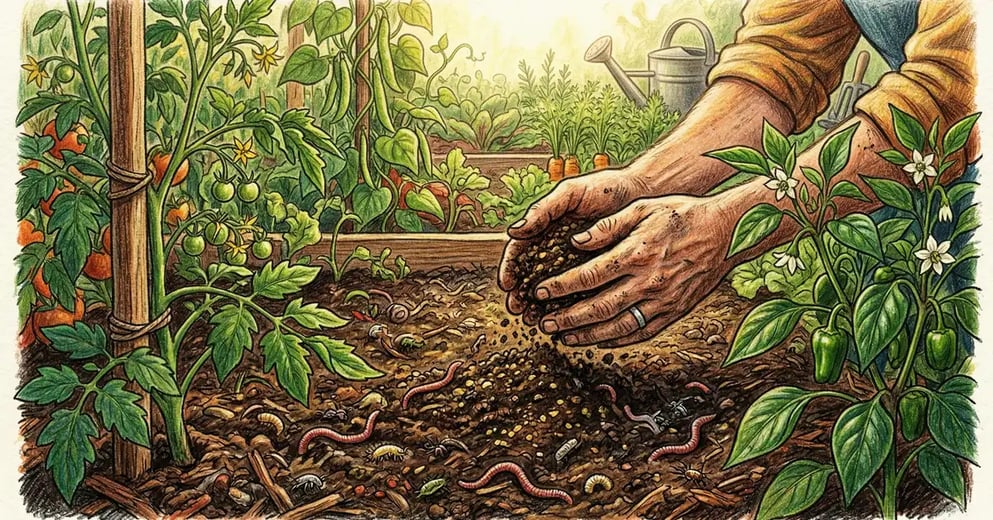
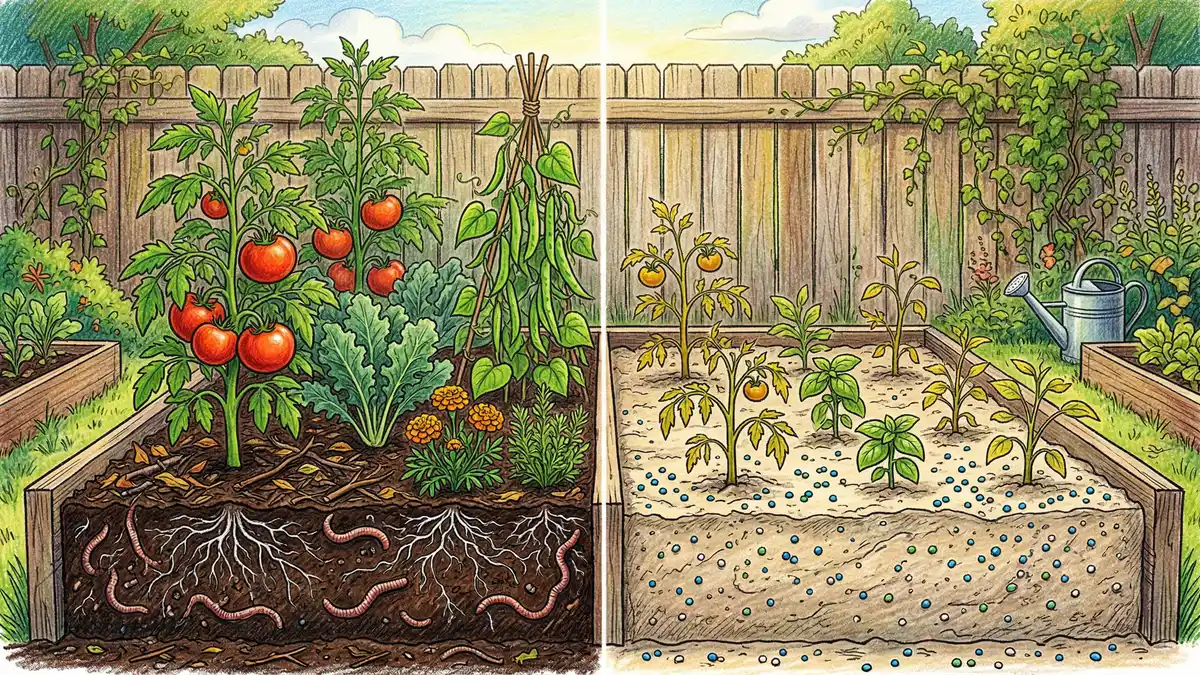
Organic fertilizer isn't just about feeding plants. It's about feeding the living ecosystem beneath your feet. When you apply organic plant food, you're not just delivering nitrogen, phosphorus, and potassium (NPK)—you're inviting millions of microorganisms back to work for you.
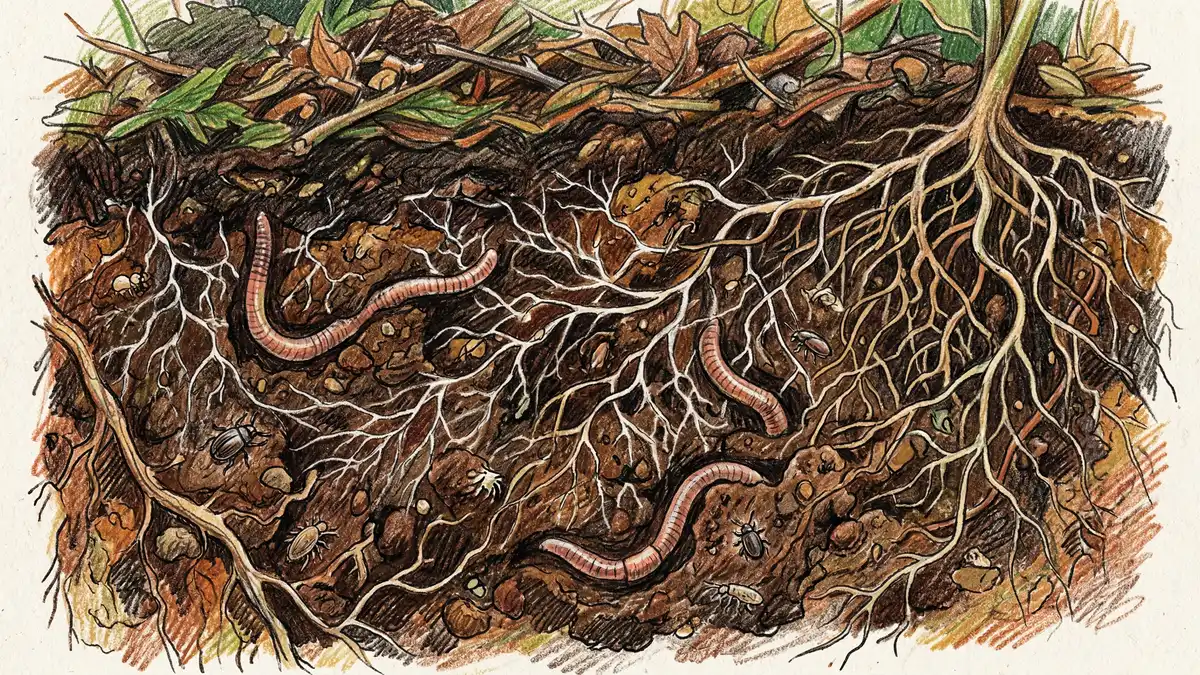
Here's what makes this matter for your yield and ROI: One teaspoon of healthy soil contains more living organisms than there are people on Earth. That's not philosophy. That's biology. And those organisms—bacteria, fungi, nematodes—they mine nutrients from minerals in your soil, make them available to your plants, and do it for free. Synthetic fertilizer skips the middleman. Organic fertilizer builds the middleman into your system.
What You'll Learn
- How organic fertilizer feeds your soil biology—not just plant roots
- Why organic yields outperform synthetic in stress years (drought, pests)
- The 8 organic amendments every grower should know (and how much to apply)
- Step-by-step application timing to maximize nutrient availability
- How to make your own organic fertilizer at home
Key Takeaway
Organic fertilizer builds living soil. Synthetic fertilizer bypasses it. If you want consistent, weather-resilient yields without dependency on chemical inputs, organic fertilizer for vegetables and fruits is your foundation. Your ROI comes from soil that works for you year after year, not from chasing yield spikes that deplete it.
Organic Fertilizer vs Synthetic: What the 40-Year Data Shows
The Rodale Institute's Farming Systems Trial ran for four decades. Same land. Same crops. Organic system on one side, conventional (synthetic) on the other. The results shifted how we think about production.
In years with optimal rainfall and no stress, yields were essentially tied. But when drought hit—the real test of system resilience—organic corn outperformed conventional by 31%. That's not a statistical blip. That's your bottom line when summer heat spikes and water becomes precious.
Why? Because organic fertilizer builds organic matter. Soil rich in organic carbon holds water like a sponge. Synthetic fertilizer is a quick nutrient hit; it doesn't improve soil structure. Over time, synthetic-heavy soils compact, hold less water, and become more vulnerable to stress.
The yield data is even more striking when you zoom in on specific crops. Wheat grown with organic fertilizer shows 26.4–44.6% higher yields compared to unfertilized or conventionally managed systems. Corn, beans, and vegetables show similar patterns when you're managing with organic amendments instead of relying on synthetic salts.
| Factor | Organic Fertilizer | Synthetic Fertilizer |
| Soil organic matter increase | 54.7–110.6% over time | Declines or stays flat |
| Drought resilience | 31% yield advantage in dry years | 10–20% yield drop |
| Water retention | Improves with each season | No improvement |
| Cost per application | $30–80 per 1,000 sq ft (varies) | $15–40 per 1,000 sq ft |
| Soil biology alive | Yes (ongoing benefit) | Suppressed (temporary nutrition only) |
| Carbon footprint (production) | Low (farm-based or compost) | 2.6 gigatonnes CO₂e annually |
Sources:
There's also an environmental reality worth noting: synthetic fertilizer production generates 2.6 gigatonnes of CO₂ annually—about 5% of global greenhouse gas emissions. That's a hidden cost not reflected in your invoice. Organic fertilizer, whether compost-based or derived from plant and animal byproducts, carries a fraction of that footprint.
The Best Organic Fertilizers for Your Garden
Not all organic fertilizer for garden is the same. Different amendments deliver different NPK ratios, and knowing which to use—and when—is the difference between a good harvest and a great one.
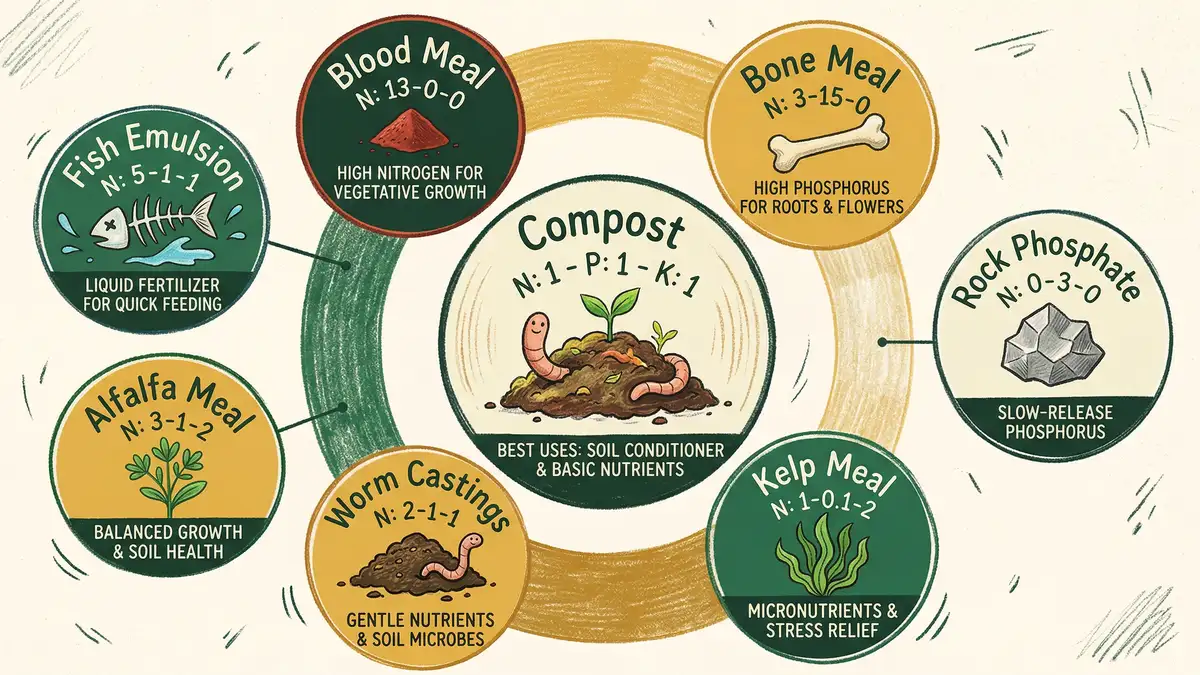
Here are the eight essential organic amendments every homesteader should know:
| Amendment | NPK Ratio | Best For | Application Rate |
| Blood blood meal vs bone meal Meal | 12–0–0 | Leafy greens, rapid N boost | 2–3 lbs per 100 sq ft (0.9–1.4 kg per 9.3 m²) |
| Bone when and how to use bone meal Meal | 3–15–0 | Root crops, flowering, fruit set | 1–2 lbs per 100 sq ft (0.5–0.9 kg per 9.3 m²) |
| Fish Meal | 10–5–0 | Balanced growth, general amendment | 2–3 lbs per 100 sq ft (0.9–1.4 kg per 9.3 m²) |
| Bat Guano | 7–3–1 | Mid-season boost, vining crops | 1–1.5 lbs per 100 sq ft (0.5–0.7 kg per 9.3 m²) |
| Alfalfa Meal | 2.5–0–2.5 | Microbes, soil amendment base | 5–10 lbs per 100 sq ft (2.3–4.5 kg per 9.3 m²) |
| Compost | 0.5–0.5–0.5 (avg) | Soil building, organic matter | 1–3 inches worked in (2.5–7.6 cm) |
| Composted Manure | 1–1–1 (varies) | General fertility, organic matter | 1–2 inches worked in (2.5–5 cm) |
| Kelp kelp meal micronutrient amendment Meal | 1–0–4 plus micronutrients | Trace elements, stress resilience | 1–2 lbs per 100 sq ft (0.5–0.9 kg per 9.3 m²) |
Sources:
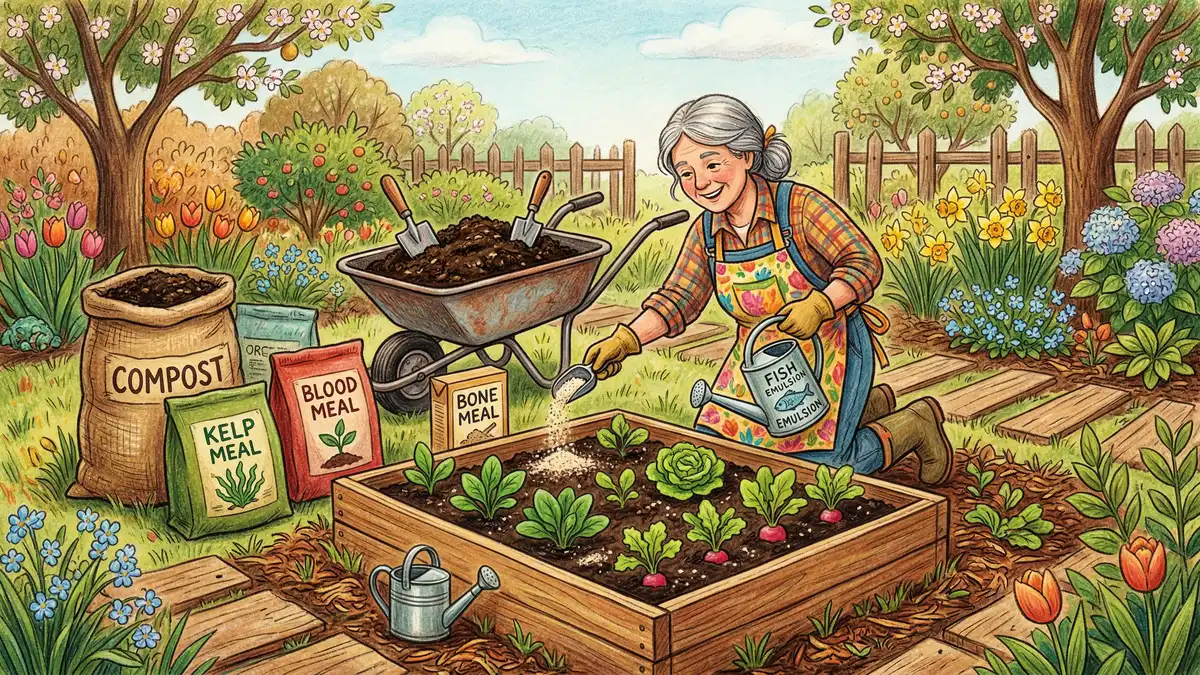
The strategy is layered. For a vegetable garden in early spring, you'd work in 1–2 inches (2.5–5 cm) of compost or composted manure as your base. Then, as plants grow, you apply specific amendments: blood meal for leafy crops, bone meal before flowering, fish meal or bat guano mid-season for sustained growth.
One critical detail: bone meal works best in soils below pH 7. If your soil is alkaline, you'll want to emphasize fish meal, bat guano, and blood meal instead. Testing your soil pH takes 15 minutes and saves months of wasted applications. If you're pairing fertilizer choices with companion planting, knowing your soil's baseline makes every decision more precise.
Mycorrhizal fungi multiply the effectiveness of every amendment you apply. These fungi form symbiotic relationships with plant roots and increase phosphorus availability by 42.6–50.2%. If you're buying an organic liquid fertilizer or granular amendment, look for products labeled "inoculant" or that explicitly mention mycorrhizal cultures. This isn't an add-on; it's a multiplier.
How to Apply Organic Fertilizer the Right Way
Knowing what to apply and knowing when and how are two different skills. Timing matters. Application rate matters. And avoiding the most common mistake—over-fertilization—saves you money and keeps plants healthy.
Test Soil Temperature
Apply manure and slow-release amendments when soil temperature is below 50°F (10°C). Cold soil keeps nitrogen locked up, reducing nutrient loss and leaching. Spring or late-season applications are ideal. Mid-summer applications risk nitrogen volatilization.
Mix into Top 3–4 Inches (7.6–10 cm) of Soil
Work amendments into the root zone. Surface application leads to nutrient loss to volatilization (especially nitrogen). Incorporation ensures microbes and roots can access nutrients as they break down.
Water After Application
Water activates microbial breakdown. It moves nutrients into the soil and reduces ammonia loss. A good soaking (1–2 inches or 2.5–5 cm) is all you need.
Monitor for Over-Fertilization
Signs include burnt leaf tips, purple discoloration, stunted growth, or weak stems. If you see these, stop applications and water deeply to dilute excess salts. More fertilizer isn't always better; it's often the killer of good gardens.
Over-Fertilization Is Silent Sabotage
It's easier to under-fertilize than over-fertilize. Plants can't use excess nitrogen—it leaches into groundwater, pollutes streams, and promotes disease susceptibility. EPA data shows 20% of 50,000 lakes are impacted by nitrogen and phosphorus pollution. More importantly for your garden: over-fertilized plants develop weak cell walls, are more vulnerable to pests and disease, and mature slower. Apply at the recommended rate, observe, then adjust next season based on results.
Join 10,000+ Homesteaders Learning Better Soil Health
Get our free weekly tips on organic fertilizers, composting, and permaculture techniques—straight to your inbox every Sunday.
Send Me Weekly TipsHow to Make Organic Fertilizer at Home
The best organic fertilizer for garden is the one you make. You control quality, save 50–70% of store-bought costs, and cycle nutrients from your own kitchen and yard back into your beds.
Start with compost. Compost is the foundation. Food scraps, leaves, grass clippings, and plant trimmings become dark, crumbly, nutrient-rich soil amendment in 6–12 months depending on method and climate. (Not sure what can go in the pile? We've got you covered.) Only about 10% of nitrogen in compost mineralizes in the first year, so it's a slow-release system—exactly what you want. This is why the Soil Health Guide emphasizes compost as the bedrock of every garden.
If you want faster nutrient availability, brew organic liquid fertilizer. Steep finished compost in water for 24–48 hours, strain, and apply the liquid directly to plant roots. This liquid extract is like a nutrient IV—faster acting than granular compost. You can do the same with alfalfa meal or fish meal.
For more structured composting, explore worm composting (vermicomposting). Worms are nutrient concentrators. Their castings are 5–7 times richer in nutrients than standard compost and packed with beneficial microbes. A 3-foot-square (0.9 m²) worm bin can process a household's food scraps year-round and generate 50–100 pounds (22.7–45.4 kg) of worm castings annually.
If you raise livestock—chickens, goats, or rabbits—their manure is a goldmine. But manure requires composting first. Fresh manure can burn plants and harbor pathogens. Aged, composted manure is safe and incredibly nutrient-dense. Learn the complete composting process to avoid these pitfalls.
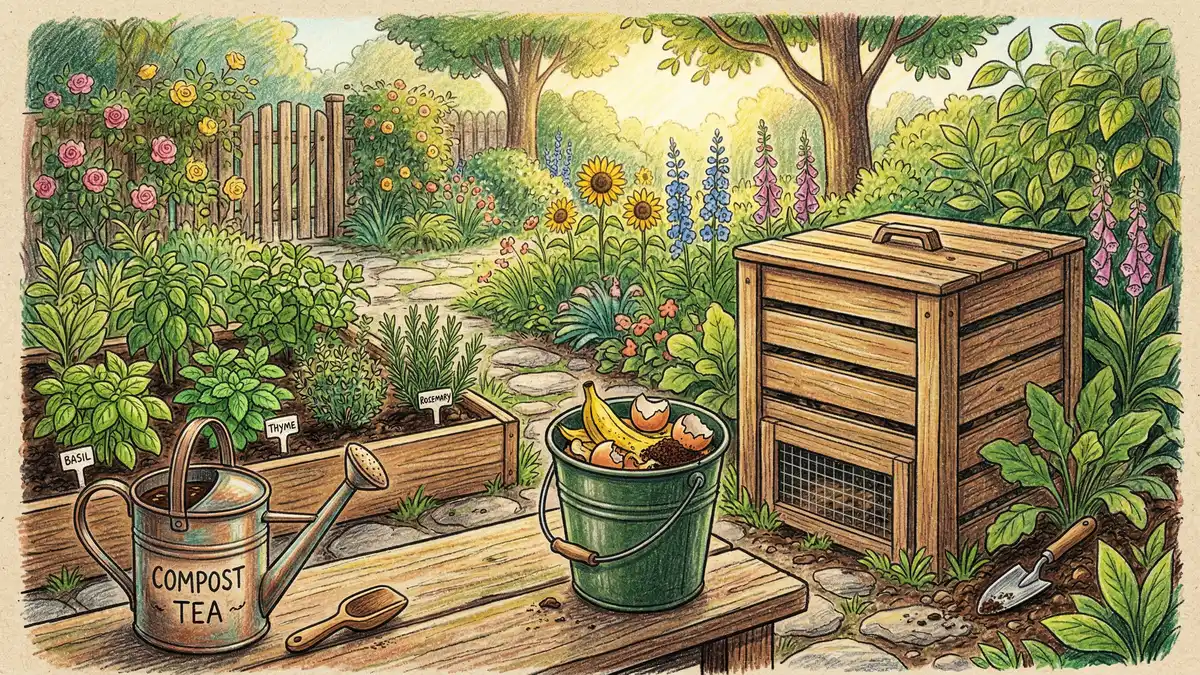
Why This Works: Use and Value Renewable Resources
Permaculture design emphasizes closing nutrient loops. Instead of buying synthetic inputs year after year, you recycle what your land produces. Your kitchen scraps, yard clippings, and livestock manure become soil amendment. Your soil becomes richer. Your plants become more productive. Your costs drop. This is the definition of renewable resources—and it's the opposite of the linear "buy, apply, exhaust" model of synthetic farming.
You don't need a farm to do this. Apartment dwellers can maintain a worm bin in a closet. Suburban gardeners can build a simple three-bin compost system for under $100 in materials. The point is: you're shifting from "consumer of fertilizer" to "producer of fertilizer." That shift changes everything—your costs, your yields, your relationship to your soil.
Key Takeaway
Homemade organic fertilizer is the highest-ROI investment you can make. A $100 compost system can produce $500+ worth of compost and finished amendment annually. You save money, build soil biology, and eliminate dependency on external inputs. That's not just farming; that's resilience.
Frequently Asked Questions
What is the best homemade fertilizer for plants?
Finished compost is the best all-purpose homemade fertilizer. It feeds plants, builds soil organic matter, and supports beneficial microbes. If you want faster-acting results, brew compost tea by steeping finished compost in water for 24–48 hours, then apply the liquid. For even higher nutrient density, harvest worm castings from a vermicomposting bin. Worm castings contain 5–7 times more nutrients than standard compost and excellent microbial populations. You can also layer kitchen scraps (nitrogen-rich greens) with autumn leaves or grass clippings (carbon-rich browns) to build a simple cold compost pile that becomes harvestable amendment in 6–12 months.
How do you make organic fertilizer at home?
Start simple: layer "greens" (food scraps, grass clippings, plant trimmings) with "browns" (leaves, straw, cardboard) in a ratio of roughly 3:1 browns to greens. If you use a bin or enclosed system, turn the pile every 2–3 weeks to speed decomposition; it'll be ready in 6–8 weeks. If you use an open pile and let it sit, expect 6–12 months. You can also make liquid fertilizer by steeping finished compost or manure in a bucket of water, or run a worm bin to harvest nutrient-dense worm castings year-round. The method depends on your space, time, and how quickly you need the fertilizer.
Is organic fertilizer better than synthetic?
Yes, for long-term soil health and yield resilience. The 40-year Rodale Institute Farming Systems Trial showed organic systems outperform synthetic by 31% in drought years. Organic fertilizer builds soil organic matter (which synthetic doesn't), improves water retention, supports beneficial microbes, and increases yields of wheat by 26–44%. Synthetic fertilizer delivers a quick nutrient spike but doesn't improve soil structure. Your ROI with organic comes from compounding soil improvement year after year. Synthetic delivers short-term results at the cost of long-term soil degradation. If you're thinking in years, not seasons, organic wins.
How often should you apply organic fertilizer?
It depends on your amendment and soil. Slow-release amendments like compost are best applied annually (1–3 inches worked in before planting). Faster-acting granular amendments like blood meal are applied once or twice during the growing season (blood meal at leafy growth stage, bone meal before flowering). Liquid fertilizers can be applied every 2–3 weeks if your plants show nutrient deficiency. The key is observing your plants. If leaves are dark green and vigorous, you don't need more. If you see yellowing or stunting, then apply. Soil testing every 2–3 years removes guesswork and prevents over-application.
Is organic fertilizer safe for dogs and pets?
Most organic fertilizers are pet-safe once fully incorporated into soil. However, fresh compost, manure piles, and blood meal can be problematic. Blood meal is attractive to dogs and can cause digestive upset or (in rare cases) bloat. Piles of fresh compost may contain mold that's toxic to pets. The safest practice: work amendments into the top 3–4 inches (7.6–10 cm) of soil, water thoroughly, and keep pets out of the garden for 24–48 hours after application. Once incorporated and watered, finished compost and well-aged manure pose no risk. If you're concerned, consider organic amendments derived from plant sources (alfalfa, kelp, fish meal) rather than animal sources, and always water thoroughly after application.
Resources
- Rodale Institute 40-Year Farming Systems Trial
- USDA ARS: Soil Organisms
- Frontiers in Environmental Science: Organic Fertilizer Efficacy
- Soil Food Web by Dr. Elaine Ingham
- EPA: Nutrient Pollution Sources and Solutions
- Iowa State Extension: Manure Application Timing
- UMass: Guidelines for Organic Fertilization
- OMRI Certification Explained
Ready to Build Living Soil?
Get our free beginner's guide to permaculture gardening building a raised bed growing mix. 12 pages of practical strategies for organic fertilizer, soil health, and yield-boosting techniques you can use this weekend.
Download Your Free Guidepure worm castings
worm composting fermented biological inputs like KNF