
Your tomato plants look fine in spring, then stall when the July heat hits and the rain stops. You add more fertilizer. Yields come up a little, then plateau. By the time you have layered on extra water, extra fertilizer, and extra labor, the math on the home vegetable patch has stopped working. what the mycorrhizal research actually supports
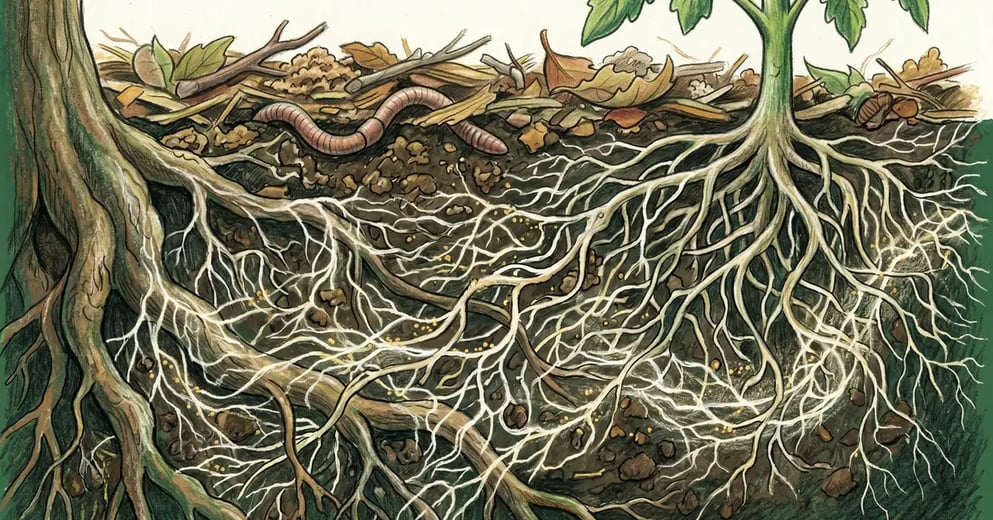
There is a missing piece, and most of it lives underground. Mycorrhizal fungi are microscopic soil organisms that wire themselves directly into plant roots and act as a second, much larger root system. They mine phosphorus from soil volumes your plant roots will never reach, they pump water during drought, and they hold soil aggregates together so rain soaks in rather than running off. They are not a "hack" or a supplement. In undisturbed soil, they are the default plumbing of plant nutrition, and they have been for over 400 million years.
This guide explains what the network actually does, the practices that build it on a homestead, the practices that destroy it, and when (if ever) it makes sense to spend money on a commercial inoculant.
What Mycorrhizal Fungi Actually Are
The word mycorrhiza translates to "fungus root." It describes a partnership where specialized soil fungi colonize plant roots and create an interface for two-way trade. Plants send sugars made during photosynthesis down into the fungus. The fungus sends phosphorus, micronutrients, and water back up into the plant. Both parties actively maintain the relationship. According to Penn State Extension, this is not infection in the disease sense, it is a regulated mutualism that both partners benefit from.
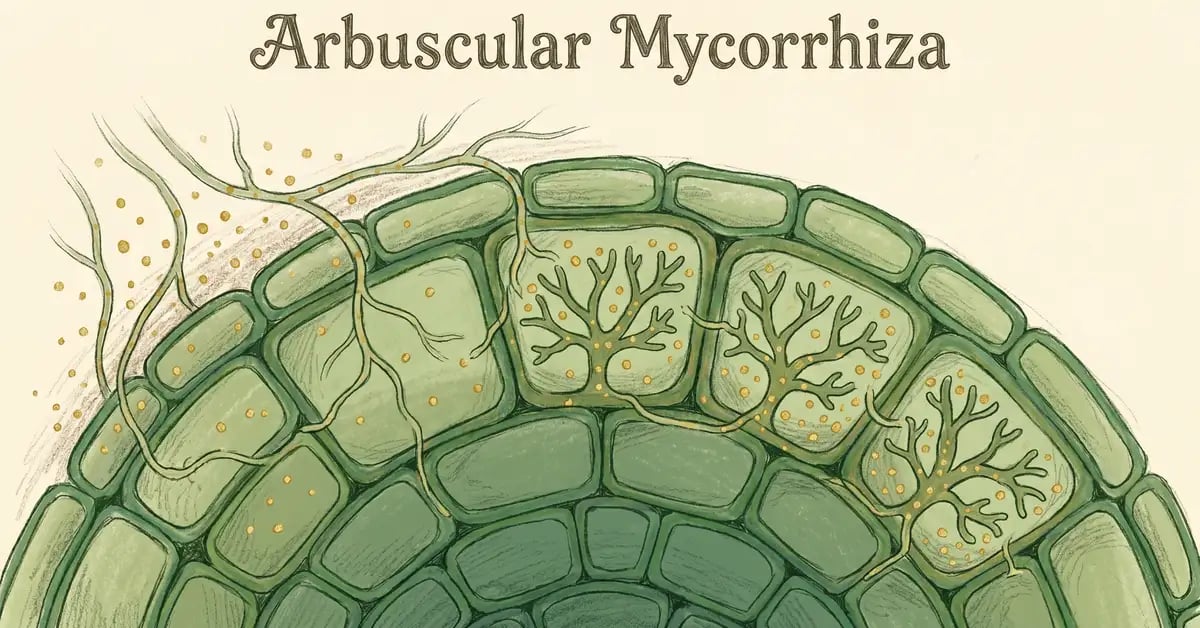
Two types matter for home gardens. Arbuscular mycorrhizae (AMF, sometimes called endomycorrhizae) grow inside root cells of about 80 percent of plant families, including tomatoes, peppers, beans, corn, squash, carrots, and most fruit trees. They form little tree-shaped structures called arbuscules where the actual nutrient swap happens. Ectomycorrhizae (EcM) wrap around the outside of roots and dominate in forest trees like pines, oaks, and birches. A peer-reviewed review in New Phytologist (2015) places the proportion of land plants forming mycorrhizal associations at roughly 80 to 90 percent. The default state of a plant is to have a fungal partner.
What the Fungus Actually Does for Your Plants
Three benefits show up consistently in peer-reviewed work:
Phosphorus delivery. Phosphorus moves through soil at a snail's pace and gets locked up in calcium, iron, and aluminum compounds. Plant root hairs can only access a thin shell of soil around themselves. Mycorrhizal hyphae are 50 times thinner than root hairs and extend 2 to 10 centimeters out from the root, mining a volume of soil up to 100 times larger. A 2021 meta-analysis published in PMC reports that AMF colonization in field crops typically delivers 10 to 40 percent yield improvements under low to moderate fertility, with the biggest gains on phosphorus-limited soils.
Source: PMC, 2021 meta-analysis of AMF effects on crop productivity
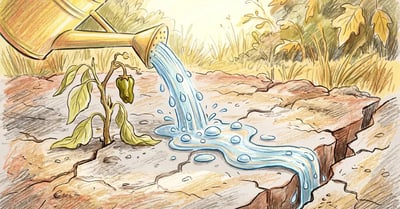
Water and drought tolerance. The same hyphae access soil water far beyond the root zone. A study in Mycorrhiza (2015) documented that mycorrhizal tomato plants maintained 30 to 50 percent higher leaf water content under drought stress compared to non-mycorrhizal controls. For a homesteader managing a dry July, that is the difference between needing to drag hoses every other day and not.
Soil structure via glomalin. Sara Wright, formerly of USDA ARS, identified a sticky glycoprotein called glomalin produced by arbuscular fungi that binds soil particles into stable aggregates. According to the USDA ARS Glomalin brochure, glomalin can account for as much as 27 percent of soil carbon in some agricultural soils, and it is the main reason healthy mycorrhizal soils crumble nicely in your hand rather than pancaking into hardpan.
Source: USDA Agricultural Research Service, Glomalin: Hiding Place for a Third of the World's Stored Soil Carbon (Sara Wright, ARS)
Which Plants Form Mycorrhizal Partnerships (and Which Do Not)
This matters for crop rotation and bed planning. Most of what you grow does form the partnership. A few important families do not.
| Mycorrhizal (host plants) | Non-mycorrhizal (do not host) |
| Tomatoes, peppers, potatoes, eggplant (Solanaceae) | Cabbage, broccoli, kale, mustard, radish, turnip (Brassicaceae) |
| Beans, peas, lentils (Fabaceae) | Beets, spinach, Swiss chard (Chenopodiaceae) |
| Squash, cucumber, melon (Cucurbitaceae) | Amaranth and quinoa (Amaranthaceae) |
| Corn, wheat, oats, rye (Poaceae) | Buckwheat (Polygonaceae, weakly or non-mycorrhizal) |
| Apples, pears, plums, stone fruit (Rosaceae) | Lupines (some) |
| Carrots, celery, parsley (Apiaceae) |
Source: Mycorrhizal status of plant families and genera (curated reference list) and Frontiers in Fungal Biology, 2023 on Brassicaceae non-host biology
Practical implication: planting brassicas, beets, or spinach into a bed does not feed the fungal network. Following a long brassica run with a hungry mycorrhizal crop (tomatoes, corn) can show reduced colonization for a season because the network has had no host. Cycle in a mycorrhizal cover crop (rye, vetch, oats) between non-mycorrhizal runs to keep the network alive.
What Destroys the Network
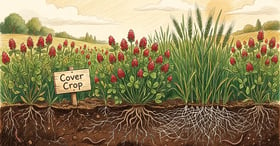
Four management choices reliably knock back mycorrhizal populations. The data is consistent across studies.
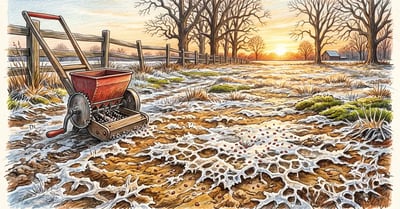
Tillage. Plowing and rototilling physically shear the hyphal network, which can extend meters through the soil. A 2022 review in Frontiers in Agronomy found that conventional tillage reduces AMF colonization by 30 to 50 percent compared to no-till systems, and reduces fungal diversity even further.
Soluble phosphorus fertilizer at high rates. When phosphorus is abundant in the root zone, the plant stops paying the fungus and the partnership shuts down. Penn State Extension notes that soils testing above 50 ppm available P typically show suppressed mycorrhizal activity. Add only what the soil test calls for.
Fungicides and fumigants. Broad-spectrum soil fungicides kill mycorrhizal fungi alongside the targeted pathogens. Pacific Northwest Plant Disease Handbook warns growers to read fungicide labels and avoid soil-applied products where mycorrhizal benefits are valued.
Bare soil and compaction. Mycorrhizal fungi are obligate symbionts. No living host root means no fungus. A bare summer fallow can collapse AMF populations within weeks. Compaction restricts hyphal growth and reduces oxygen.
Why This Works
Mycorrhizal management is the practical expression of David Holmgren's permaculture principle, "Use and Value Renewable Resources and Services." The fungal network is a renewable, free, self-replicating delivery system for phosphorus and water that has been running for 400 million years. Every dollar a homesteader saves by feeding the network rather than the bagged-fertilizer aisle is a dollar that compounds, because the network grows itself in the meantime. The same practices that build mycorrhizae (no-till, continuous cover, moderate inputs) also build soil carbon, water-holding capacity, and earthworm populations. You are not chasing one benefit, you are repairing a default that industrial agriculture broke.
How to Actually Build the Network on Your Homestead
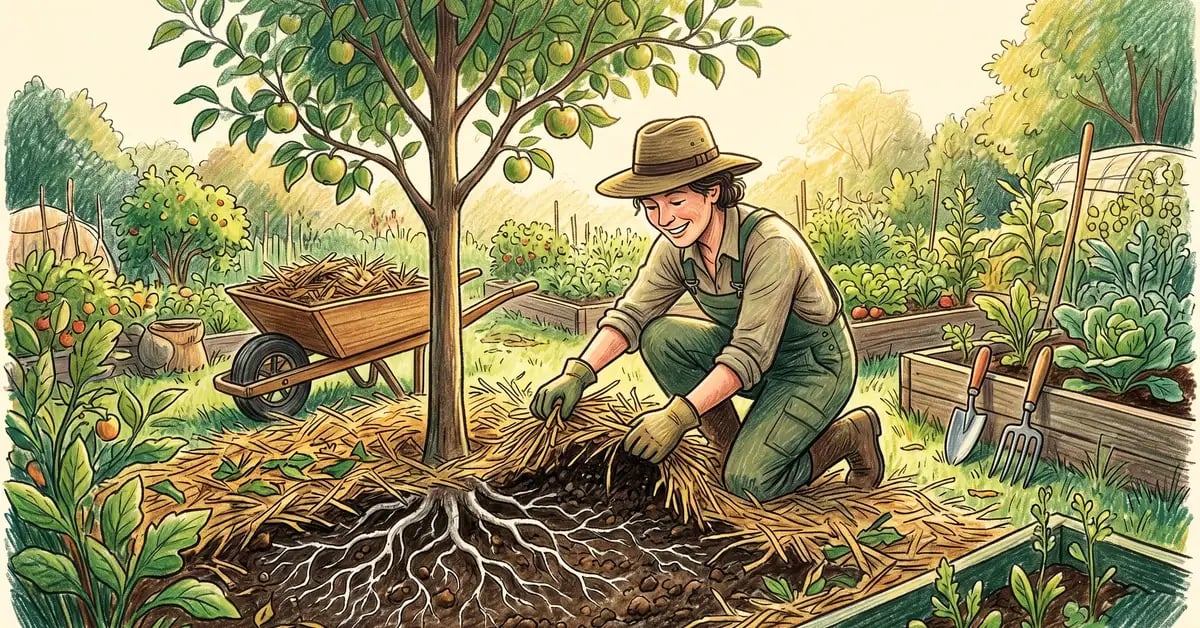
Step 1: Stop tilling. Switch to no-dig or minimum-till beds.
Permanent raised beds or sheet-mulched beds preserve the network. University of Minnesota Extension recommends limiting soil disturbance as the primary lever for soil biology.
Step 2: Keep something living in the soil year-round.
Cover crops are the single highest-leverage action. Cereal rye, oats, vetch, crimson clover, and field peas are all mycorrhizal hosts. Plant them the day you pull a summer crop. Cost: about $20 to $40 in seed per quarter acre, two annual applications.
Step 3: Mulch heavily and continuously.
A 2 to 3 inch layer of straw, shredded leaves, or wood chips keeps soil temperature moderate, holds moisture, and feeds the fungal food web. Bare soil bakes out the network.
Step 4: Test before adding phosphorus.
Get a soil test every 2 to 3 years (most state extension offices run them for $15 to $40). Add phosphorus only if the test shows a deficit. Most US backyard soils are already adequate or oversupplied in P from decades of fertilizer use.
Step 5: Rotate non-mycorrhizal crops carefully.
Do not follow brassicas with a mycorrhizal-dependent crop like corn or tomatoes without an intervening mycorrhizal cover crop. A winter rye crop between cabbage and corn keeps the network primed.
Step 6: Skip the broad-spectrum soil fungicides.
Treat disease problems at the leaf level where possible. Soil drenches with broad-spectrum products can crash the network for a full season.
Are Commercial Inoculants Worth the Money?
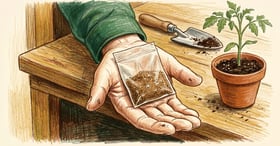
Mixed answer, mostly no. Soils that already have an active fungal community usually have plenty of native AMF spores. A bag of inoculant added to that soil is competing with thousands of native strains better adapted to your local conditions. A community discussion among orchardists citing peer-reviewed work concluded that commercial AMF inoculants rarely improve outcomes in field soil with intact biology.
Inoculants make sense in four specific situations:
- New construction sites or stripped subsoil where biology has been removed
- Container plantings and potting mixes where sterilized media has no native fungi
- Fruit tree planting into a fresh hole, where a teaspoon of inoculant in direct root contact at planting can accelerate establishment
- Following soil sterilization or major fungicide use where native populations have been wiped out
If you do buy one, look for a product with multiple AMF species (Rhizophagus, Funneliformis, Glomus) and a recent manufacture date. Fungal spores lose viability over 12 to 18 months on the shelf. The Rodale Institute also publishes a free on-farm method for growing your own inoculum in trap pots, which beats buying for ongoing use.
Common Mistakes That Stall the Network
- Using inoculant in already-healthy soil. Money down the drain. Native fungi will outcompete the imported strains.
- Heavy phosphorus fertilization before transplanting. The plant stops investing in mycorrhizae for the season. Hold P low and let the fungus do the work.
- Treating mycorrhizae as an annual purchase. The point is to build a perennial network. Once it is in place, you stop buying.
- Expecting instant results. Colonization of new roots takes 2 to 6 weeks. Full network maturity in a newly converted bed takes 2 to 4 years.
- Tilling once a year for "convenience." A single deep tillage event can erase 2 to 3 years of network building.
Get the Weekly Dig
One practical permaculture guide a week, written for gardeners who do this on weekends: permaculture design for real backyards. Free, no spam, unsubscribe any time.
Join the Weekly DigFrequently Asked Questions
What is mycorrhizal fungi in simple terms?
Mycorrhizal fungi are microscopic soil organisms that wire themselves directly into plant roots and act as a second root system. The plant feeds them sugars, they feed the plant phosphorus, micronutrients, and water from soil volumes the plant could not otherwise reach. About 80 to 90 percent of land plants have this partnership in healthy soil.
Is mycorrhizal fungi good for all plants?
For most, yes. The big exceptions are the cabbage family (Brassicaceae), the beet and spinach family (Chenopodiaceae), and a few others including buckwheat. These plants do not form functional mycorrhizal partnerships and will not benefit from inoculant. Everything else in a typical vegetable garden, including tomatoes, peppers, corn, beans, squash, and fruit trees, does benefit.
How do I increase mycorrhizal fungi in my soil naturally?
Stop tilling, keep living roots in the soil year-round with cover crops, mulch heavily, hold phosphorus inputs to what soil tests require, and avoid broad-spectrum soil fungicides. These five habits build native fungal populations over 2 to 4 seasons. No purchased product can substitute for them.
Are commercial mycorrhizal inoculants worth buying?
Usually not in established garden soil. Native AMF populations are typically better adapted than imported strains. Inoculants do make sense in four cases: new construction soil, sterilized potting mixes, fruit tree planting holes, and soil that has been recently sterilized or heavily fungicide-treated.
Can I add mycorrhizal fungi after planting?
Spore-based products need direct root contact to colonize, so the best time is at transplant or seed sowing. Adding inoculant to the soil surface after a plant is established rarely produces colonization because the spores cannot reach root tips. If you missed the planting window, the better path is to feed the existing native population with mulch and cover crops.
How long does it take for mycorrhizae to colonize a plant?
Visible colonization (microscope confirmation of arbuscules in roots) typically appears in 2 to 6 weeks after sowing into mycorrhizal soil. Functional nutrient transfer usually starts at the 3 to 4 week mark. Full network maturity in a newly converted bed takes 2 to 4 years.
Does compost contain mycorrhizal fungi?
Generally no. Hot composting kills most fungal spores. Compost feeds the broader soil food web (bacteria, saprophytic fungi, protozoa) but is not a direct source of mycorrhizal inoculum. Healthy soil under continuous plant cover is the source.
The Takeaway
Mycorrhizal fungi are the underground plumbing that 80 to 90 percent of land plants rely on for phosphorus, micronutrients, water, and drought tolerance. On a homestead, you do not buy a fungal network, you build one by stopping tillage, keeping living roots in the soil year-round, mulching heavily, holding phosphorus inputs low, and steering clear of broad-spectrum soil fungicides. Commercial inoculants are worth it in four narrow cases (new construction, sterilized potting mix, fruit tree holes, post-sterilization recovery) and a waste of money in most established garden soil. Build the network once and it feeds your crops, holds your soil together, and reduces your input bill for the rest of the time you own the place.
Resources
- New Phytologist (2015): Mycorrhizal ecology and evolution review (van der Heijden et al.)
- USDA ARS, Glomalin: Hiding Place for a Third of the World's Stored Soil Carbon (Sara Wright)
- Penn State Extension: Getting to Know Mycorrhizal Fungi
- PMC 2021: AMF and crop productivity meta-analysis
- Mycorrhiza journal (2015): AMF and drought tolerance in tomato
- Frontiers in Agronomy (2022): Tillage effects on AMF
- Frontiers in Fungal Biology (2023): Why Brassicaceae are non-mycorrhizal
- Mycorrhizal status of plant families and genera (reference list)
- Rodale Institute: On-farm production of AMF inoculum
- University of Minnesota Extension: Soil management and health
- Pacific Northwest Plant Disease Handbook: Mycorrhiza
- USDA NRCS: Soil Health
- SPUN: How to encourage healthy mycorrhizal networks in your own soil (Toby Kiers)