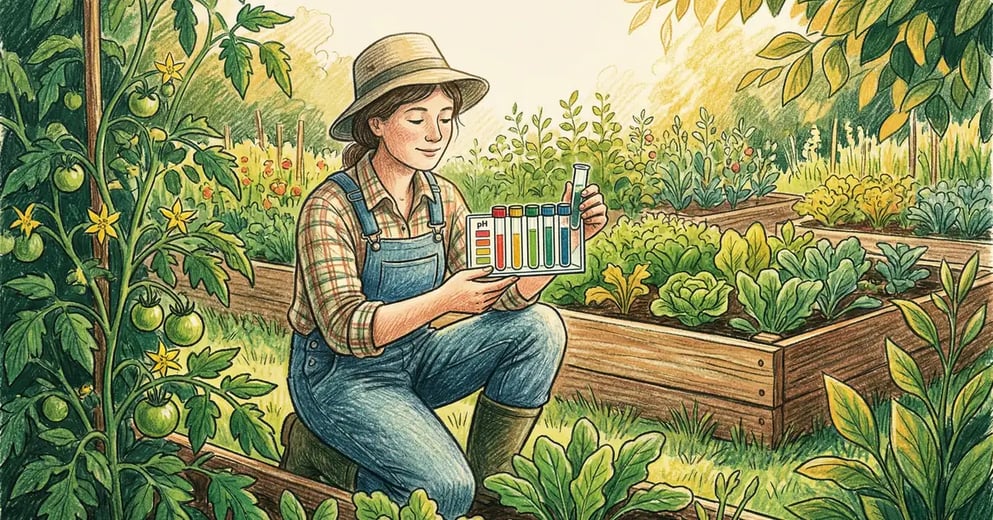

Your tomatoes look pale, your blueberries refuse to flower, and the same fertilizer that worked last year is doing nothing this season. Before you buy more amendments, test your soil pH. It is the single number that decides whether the nutrients already in your soil are available to your plants — or locked up where roots cannot reach them. plant nutrient deficiency mixing your own container potting mix lowering soil pH with sulfur diatomaceous earth's uses and limits using wood ash to raise soil pH clubroot and brassica root crops compost rates for sandy soil yellow leaves with green veins caliche and Southwest soils how to read a soil test report does rock dust actually work what a good CEC in soil looks like what to amend in an established bed
This guide walks you through what soil pH actually is, the ranges your vegetables need, how to test it correctly, and exactly how much lime or sulfur to add to fix it. Every recommendation comes from US university extension services and USDA soil scientists.
What Soil pH Actually Means
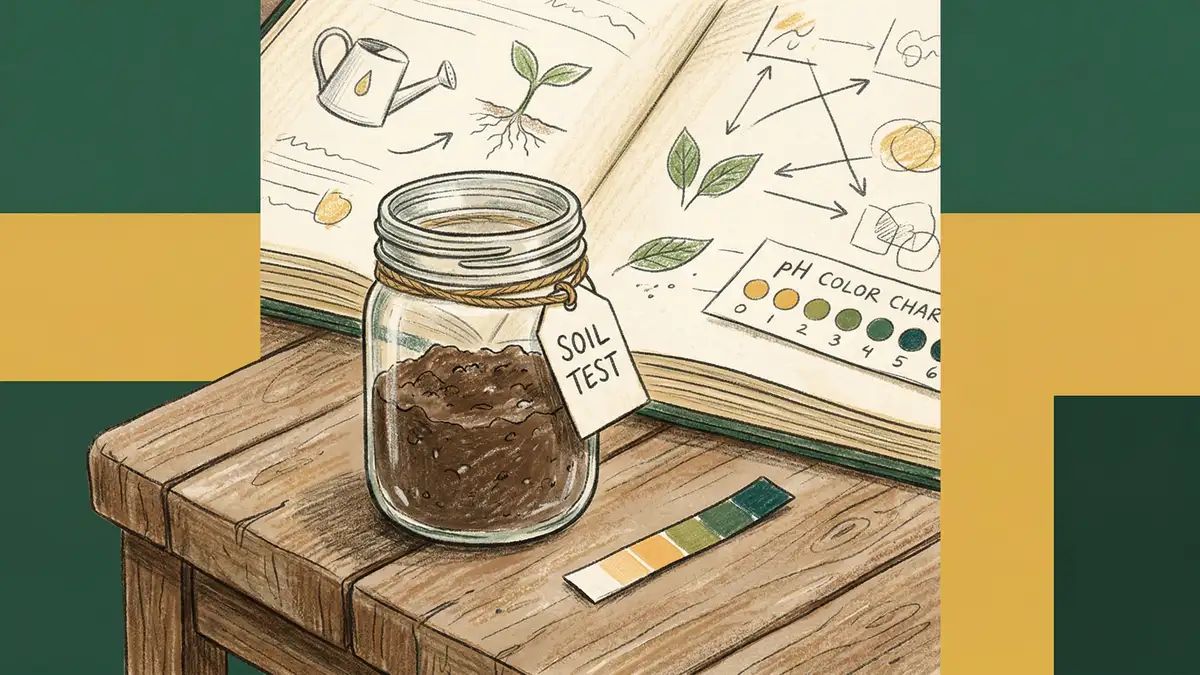
Soil pH is a measure of how acidic or alkaline your soil is, on a scale from 0 to 14. A pH of 7.0 is neutral. Below 7.0 is acidic, above 7.0 is alkaline. The scale is logarithmic, which means a soil at pH 5.0 is ten times more acidic than one at pH 6.0, and one hundred times more acidic than pH 7.0. Small numbers, big differences.
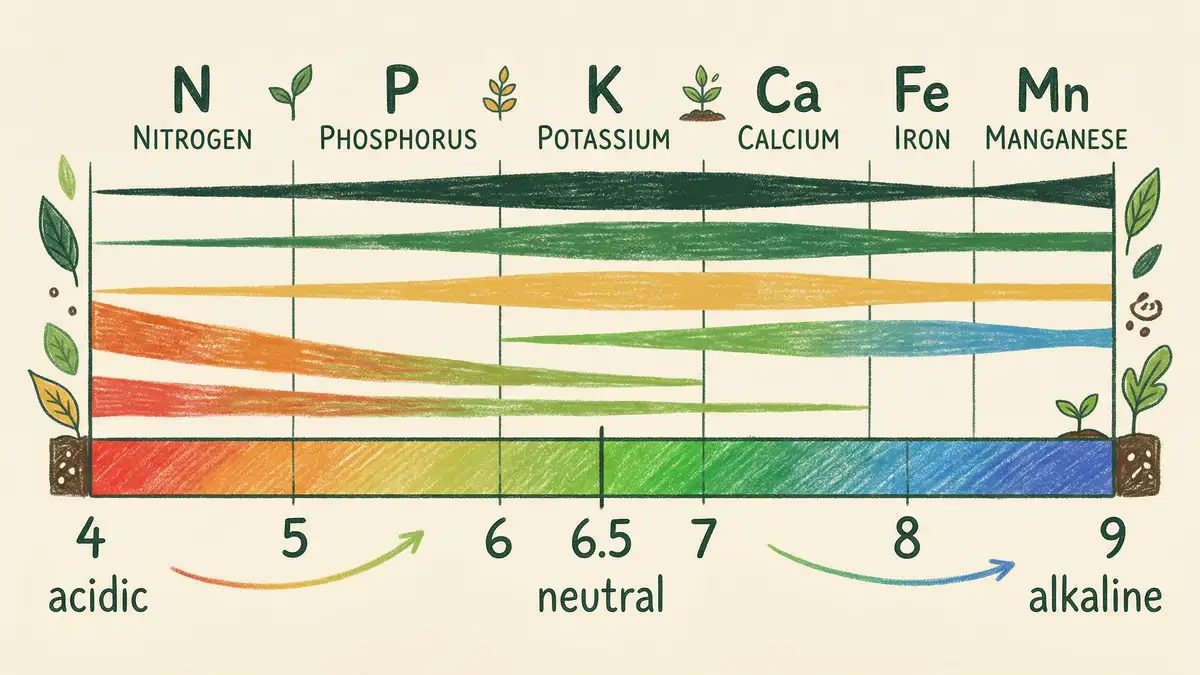
Why does this matter for your garden? Because pH controls nutrient availability. The minerals your plants need — nitrogen, phosphorus, potassium, calcium, iron, manganese, zinc — change their chemical form as pH shifts. At the wrong pH, those nutrients become insoluble. They are still in the soil, but the roots cannot absorb them. You can pour on organic fertilizer all summer and see no improvement until you fix the pH first.
The classic illustration of this is the Truog–Lucas nutrient availability chart, which most US extension services still teach. It shows broad bands of availability for each nutrient across the pH scale, and they almost all converge between 6.0 and 7.0. That convergence is why this range is the gardening sweet spot for vegetables.
Key Takeaway
pH is not a nutrient. It is a gatekeeper that decides whether the nutrients in your soil are available to plants. Fix the pH first, then worry about fertilizer.
Optimal pH for Common Vegetables
Most US extension services recommend a target soil pH of 6.0 to 7.0 for the typical vegetable garden, with 6.5 as a sensible default if you grow a mix of crops. The University of Florida IFAS puts the workable range at 5.5 to 7.0 for commercial vegetable production, while Mississippi State Extension recommends 6.0 to 6.5 specifically for home vegetable gardens. The University of Maryland publishes target pH values for individual crops that you can use to fine-tune for what you actually grow.
| Crop | Target pH | Lime When pH Falls Below |
| Asparagus | 6.8 | 6.2 |
| Beans (lima, snap) | 6.2 | 6.0 |
| Broccoli, cabbage, kale | 6.5 | 6.0 |
| Carrots | 6.5 | 5.8 |
| Onions | 6.5 | 6.0 |
| Peppers | 6.5 | 5.8 |
| Potatoes | 5.5 | 5.0 |
| Tomatoes | 6.5 | 5.8 |
| Blueberries | 4.5–5.2 | — |
Sources:
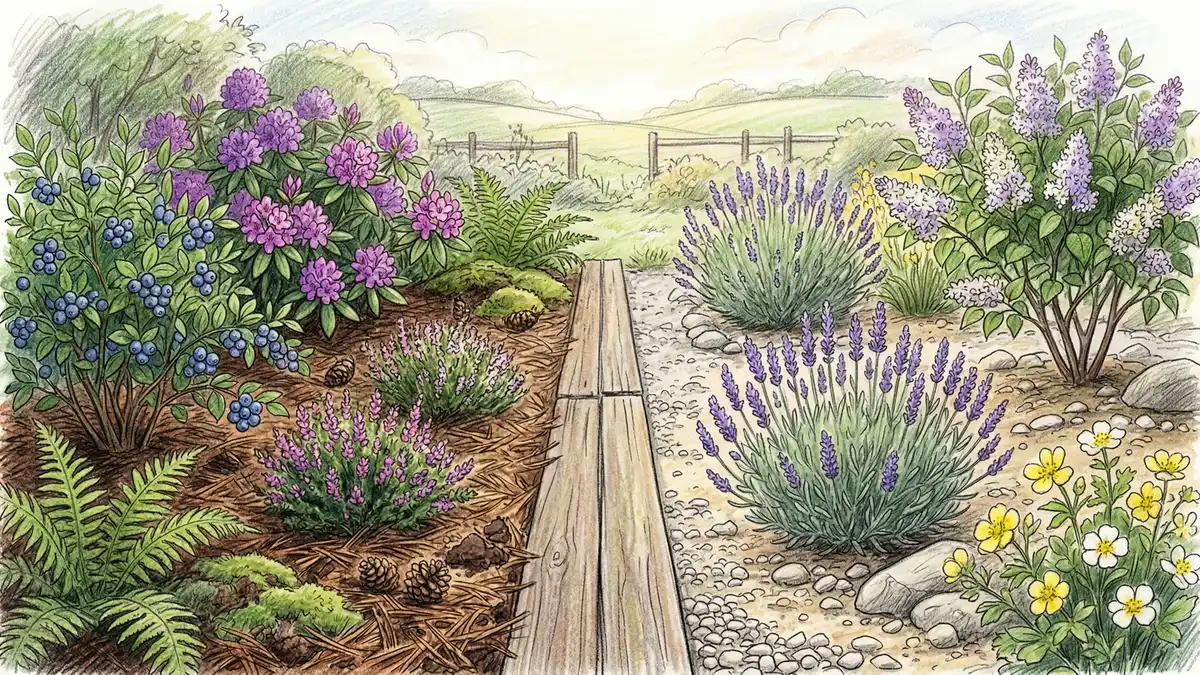
Notice the outliers. Potatoes prefer slightly acidic soil partly because lower pH suppresses scab disease. Blueberries demand a strongly acidic 4.5 to 5.2 because they evolved alongside conifers and rhododendrons in pine-barren soils. If you are planning a mixed bed using companion planting principles, group plants with similar pH preferences together — it is easier to manage one bed at pH 4.8 for blueberries than to fight the chemistry of every soil sample.
Why Soil Becomes Acidic or Alkaline
Soil pH is largely set by climate and parent rock, but gardening choices push it further over time. Knowing the cause helps you predict whether you will need to fight acidity, alkalinity, or both.
In the eastern half of the United States — anywhere with more than about 30 inches of annual rainfall — soils tend to be naturally acidic. Rain leaches calcium and magnesium downward, leaving hydrogen and aluminum behind to dominate the cation exchange sites. The Appalachians, the Northeast, the Southeast, and the Pacific Northwest all share this pattern. If you garden in any of these regions, you should assume your soil starts acidic until a test tells you otherwise.
West of the 100th meridian, the opposite is true. Lower rainfall means less leaching, so calcium carbonate accumulates and pH climbs. Much of the Great Plains, the Mountain West, and the Southwest run alkaline — pH 7.5 to 8.5 is common, and irrigated soils with hard water can push higher. Colorado State Extension publishes detailed guidance on adjusting these naturally alkaline soils.
Beyond geography, four common gardening practices nudge pH the wrong direction. Ammonium-based fertilizers (urea, ammonium sulfate) acidify soil as bacteria convert ammonium to nitrate. Heavy mulching with pine needles or oak leaves slowly adds acidity. Hard tap water raises pH over years of irrigation. And growing the same crop family year after year alters the rhizosphere pH in ways that compound. None of these are deal-breakers, but they explain why a pH that was fine three years ago might need adjusting now.
pH
You have three options, in order of accuracy.
Lab test through your state extension service
Send a sample to a university extension lab. Cost is typically $15 to $25. You will get pH plus organic matter, nutrient levels, and lime or sulfur recommendations specific to what you want to grow. This is the gold standard. Penn State Extension, Cornell, and UConn all run mail-in services. Take 8 to 10 cores from across the bed at 6 inches deep, mix into a clean bucket, and send a single composite sample.
Digital pH meter
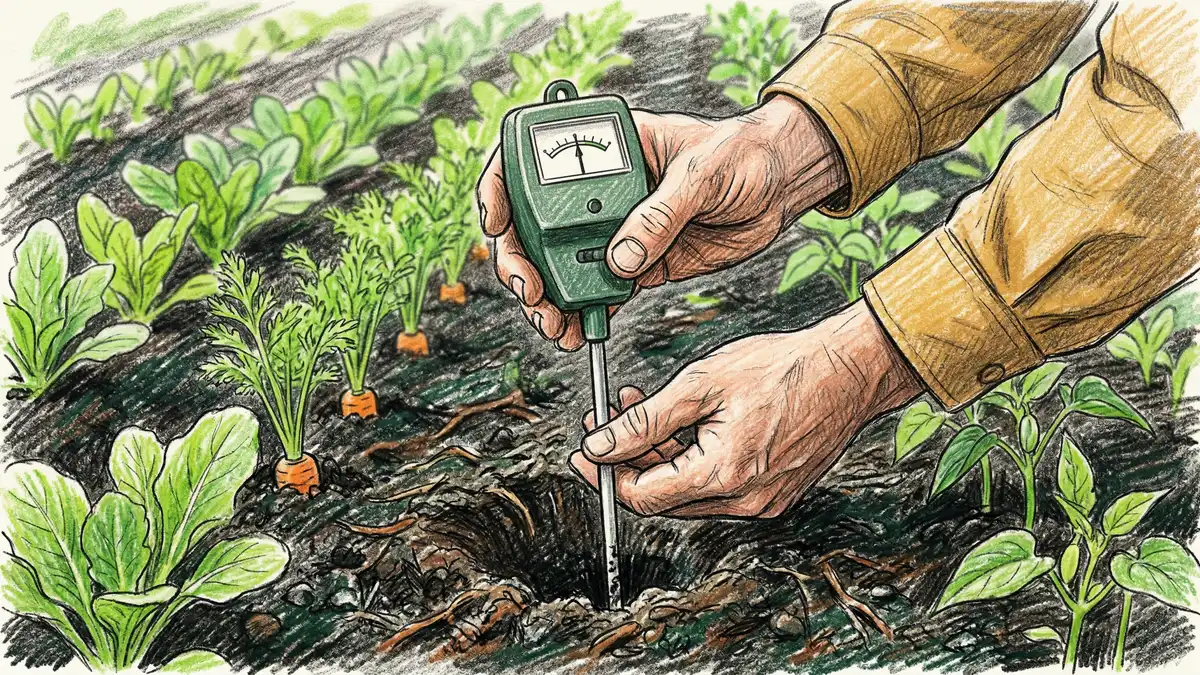
A handheld digital meter ($25 to $80) gives instant readings and is reliable enough for ongoing monitoring once you have a baseline lab result. Calibrate it with the buffer solutions that ship with the unit and re-calibrate monthly. Always test moist soil, never dust-dry.
Color-change test kit
A $10 kit using indicator dye gives you a result accurate to about half a pH unit. Fine for a quick check, but not precise enough to calculate amendment rates from. Use it to decide whether to send a sample to the lab.
For any test, the sampling matters more than the tool. Take cores from at least eight spots in the bed, avoid the edges, skip recently fertilized areas, and remove visible roots and debris. Dry the soil at room temperature before testing — never in an oven, which can shift pH readings.
(Acidic Soil)
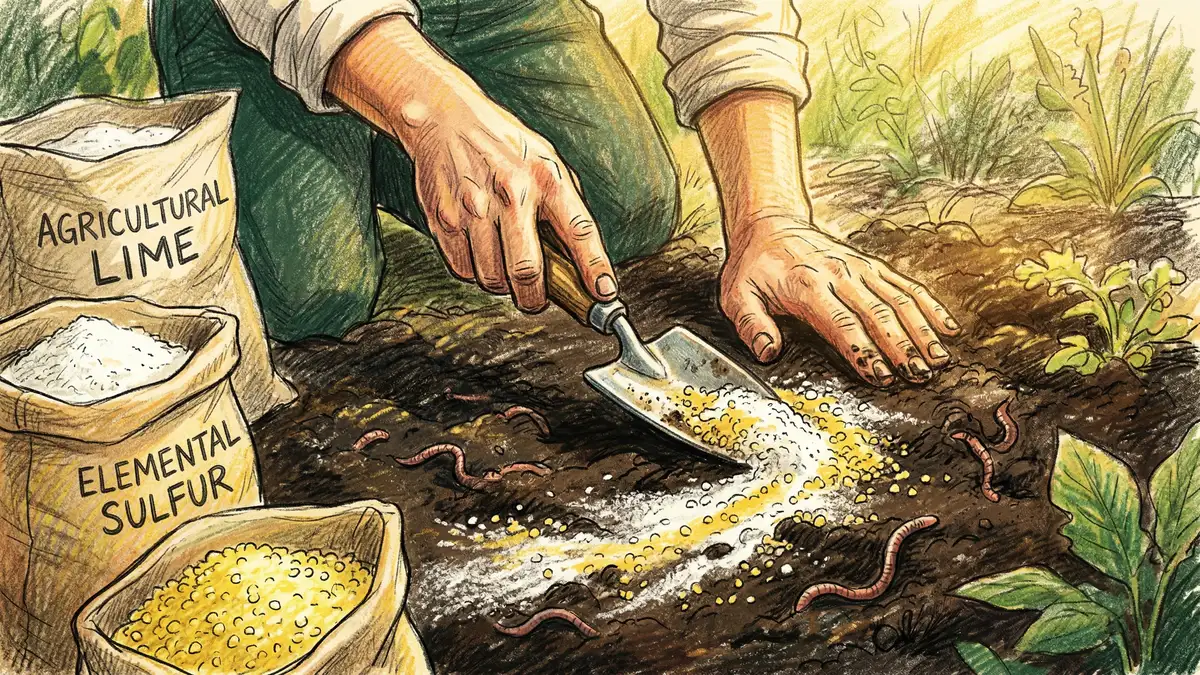
If your test comes back below 6.0, you need to add a liming material. Agricultural ground limestone (calcium carbonate) is the standard choice. Dolomitic limestone adds magnesium too, which is useful if your soil test shows magnesium deficiency. Pelleted lime is easier to spread but otherwise identical in effect.
How much lime depends on your soil texture and the size of the change you need. Sandy soils have low buffering capacity and respond quickly. Clay and silt loams need more lime to move the same number of pH points but hold the change longer. The table below summarizes typical rates from US extension services for raising pH by one full unit.
| Soil Texture | Lime per 100 sq ft | Lime per acre |
| Sand / sandy loam | 3–4 lb | 1.5 tons |
| Loam | 5–7 lb | 2.5 tons |
| Clay / silt loam | 7–9 lb | 3.5 tons |
Sources:
Apply lime in fall if you can, so it has the winter to react. Spread it evenly over the surface and till or fork it into the top 6 inches. A second test the following spring will show how far you have moved the needle. Lime works slowly — expect six to twelve months for the full effect on a loam soil.
How to Lower Soil pH (Alkaline Soil)
If your test comes back above 7.5 and you grow vegetables that prefer slightly acidic conditions, elemental sulfur is the safest amendment. Soil bacteria oxidize the sulfur to sulfuric acid over several months, gradually pulling the pH down. Aluminum sulfate works faster but adds aluminum to the soil and is generally not recommended for food crops.
| Soil Texture | Sulfur per 100 sq ft (per pH unit drop) |
| Sand / sandy loam | 1–2 lb |
| Loam | 2–3 lb |
| Clay / silt loam | 3–4 lb |
Sources:
Never Apply More Than 20 lb of Sulfur per 1,000 sq ft at Once
Excess sulfur can damage soil microbes and burn plant roots. If your soil test calls for more than this amount, split the application — apply half now, retest in 6 months, and apply the rest if needed. Ask Extension recommends this approach for any large pH correction.
Sulfur is slow. In cool soils or compacted clay, it can take a full year to drop pH by a single unit. Water the bed after application to start the bacterial reaction, and retest after six months before adding more. Highly alkaline soils (pH above 8.0) often have free calcium carbonate in them, which acts as a permanent buffer — in those cases, building raised beds with imported soil is usually cheaper than fighting the chemistry.
Why This Works: Observe and Interact
Permaculture's first principle — observe and interact — is exactly what a soil test forces you to do. Instead of guessing at amendments based on what worked for your neighbor, you read the actual conditions of your specific patch of ground and respond to what it needs. A $20 soil test saves you from years of trial-and-error fertilizer purchases and gives you a baseline to track real change against.
Common Soil pH Mistakes
Even experienced gardeners get a few of these wrong.
Adjusting pH without testing first. Adding lime to soil that is already at 7.0 will push it into alkaline territory and lock up iron and manganese. Always test before amending.
Expecting instant results. Lime and sulfur take months to work. Apply, wait, retest. Do not stack amendments hoping to speed things up.
Using wood ash as a routine amendment. Wood ash raises pH faster than lime and adds potassium, but it is easy to over-apply. Use sparingly and never on already-alkaline soil.
Ignoring soil texture. Sand and clay need very different amendment rates. The same recommendation that fixes a sandy bed will barely move a clay one.
Treating one test as the whole garden. pH varies across a single yard — sample each bed separately, especially if you have different mulch or fertilizer histories.
Building Long-Term pH Stability
Lime and sulfur are corrections, not solutions. The real long-term answer is organic matter, which is the central message of our complete soil health guide. Compost, well-rotted manure, and cover crops all buffer pH by increasing the cation exchange capacity of your soil. A bed that holds 5% organic matter will resist drift far better than one at 1%, regardless of starting texture.
Practical habits that build buffering capacity over time include topping beds with one inch of finished compost each spring, growing winter cover crops where the climate allows, mulching with shredded leaves rather than bark chips, and rotating heavy feeders with legumes. None of these change pH overnight, but they make the pH you have more stable and forgiving — which means fewer corrections in future seasons.
Test every two to three years once your beds are established. If you have just fixed a major pH problem, test annually until the new level holds. Note results in a simple log — over five years you will see clear patterns about which beds drift fastest and what causes it.
Frequently Asked Questions
What is the ideal soil pH for vegetables?
Most vegetables grow best at a soil pH of 6.0 to 7.0, with 6.5 as a safe default for mixed beds. The University of Florida IFAS puts the workable range at 5.5 to 7.0 for commercial vegetable production. Outliers include potatoes (5.0–5.5 to suppress scab) and blueberries (4.5–5.2).
How can I test my soil pH at home?
You have three options: a lab test through your state extension service ($15–$25, most accurate), a digital pH meter ($25–$80, good for ongoing monitoring), or a color-change test kit ($10, accurate to about half a pH unit). Start with a lab test for the baseline, then use a meter for follow-up checks.
How much lime do I need to raise soil pH by one point?
For a typical loam soil, expect to apply about 5 to 7 pounds of ground limestone per 100 square feet to raise pH by one full unit. Sandy soils need 3 to 4 pounds. Clay or silt loams need 7 to 9 pounds. Apply in fall, work into the top 6 inches, and retest in spring.
How long does it take for lime or sulfur to work?
Lime takes 6 to 12 months for full effect on most soils. Elemental sulfur typically takes 6 months to a full year, depending on soil temperature and bacterial activity. Both work faster in warm, moist soil. Always retest before applying more.
Can I use vinegar or coffee grounds to lower soil pH?
Vinegar drops pH temporarily but the effect washes out within days, and concentrated applications damage soil microbes. Coffee grounds are nearly neutral once composted (pH 6.5–6.8) and will not meaningfully acidify soil. For real pH change, use elemental sulfur at the rates published by your extension service.
Why are my plants struggling even though my fertilizer is fresh?
The most common cause is pH-induced nutrient lockout. At pH below 5.5 or above 7.5, nutrients become chemically unavailable to roots regardless of how much fertilizer you add. Test your soil before adding more amendments — fixing pH usually solves the problem.
Get the Weekly Dig
One practical permaculture guide a week, written for gardeners who do this on weekends: building living soil without buying it in bags. Free, no spam, unsubscribe any time.
Join the Weekly DigResources
- University of Maryland Extension — Target Soil pH Values for Vegetable Crops (PDF)
- UF/IFAS — Soil pH Range for Optimum Commercial Vegetable Production
- Purdue Extension — A Homeowner's Guide to Soil pH
- Penn State Extension — Soil Testing
- UConn Soil Lab — Plant pH Preferences
- USDA NRCS — Soil Health pH Guide (PDF)
- WVU Extension — Low-Rate Application of Pelleted Lime
- University of Wisconsin Extension — Soil pH and Lime Requirement
- Michigan State Extension — Lime for Michigan Soils
- Ohio State Extension — Soil Acidification: How to Lower Soil pH
- NC State Extension — Calculating Rate of Acidifiers
- Colorado State Extension — Changing Soil pH
- Virginia Tech Extension — Lime: Common Soil Additives to Raise Soil pH
- Delaware Cooperative Extension — Gardener's Guide to Soil pH