
Why Bother with Cover Crops in a Home Garden?
Most weekend gardeners think cover crops are a "real farmer" thing — something you'd plant on 40 acres of soybean ground, not in your 4×8 ft (1.2×2.4 m) raised bed. That instinct is wrong. A single cover-crop season in a home bed can add up to 1% soil organic matter, fix 70–150 lbs of nitrogen per acre (78–168 kg/ha) on a clover or vetch year, and cut spring weed pressure by half before you even start planting. It is the highest-return work you can do in October. a permaculture winter checklist testing your soil first garlic planting windows cover crops for fall undersowing clover in a brassica bed how to tell if it is working
This guide is for the gardener who has 100–1,000 sq ft (9–93 m²) of beds, doesn't own a tractor, doesn't want to wrestle with a tiller, and just wants to know what to plant in the first week of autumn so the bed isn't bare all winter. Everything here is sourced from USDA SARE's Managing Cover Crops Profitably (3rd ed., free PDF), the USDA NRCS species fact sheets, and university extension trial data.
Key Takeaway
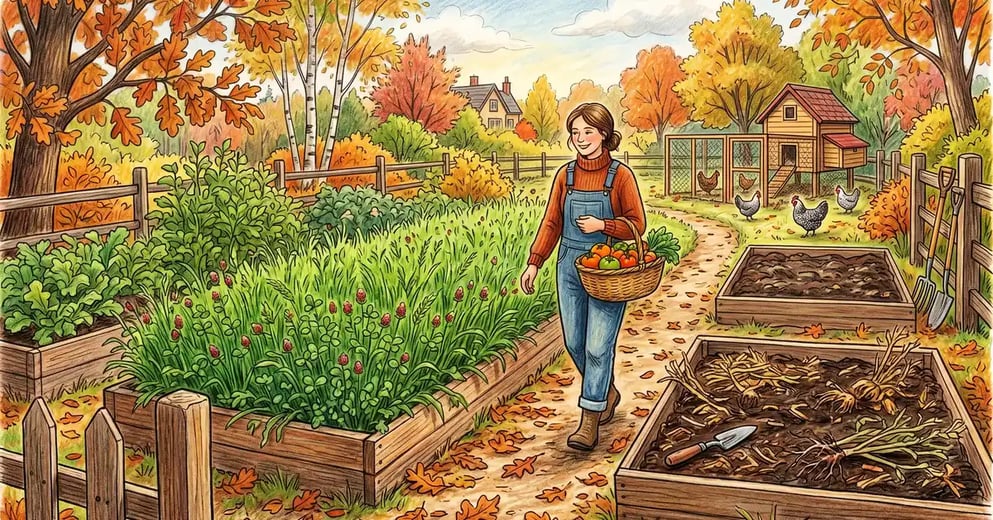
The point of a cover crop is to keep soil covered, alive, and rooted when you're not growing food in it. Bare soil bleeds organic matter, leaches nitrogen, and grows weeds. A cover crop fixes all three in one weekend of seeding.
The 7 Cover Crops Every Home Gardener Should Know
Pick one or two from this list — most home gardeners over-complicate it. The right choice depends on your zone, the season, and what the bed needs (nitrogen, biomass, compaction relief, or quick coverage between summer crops).
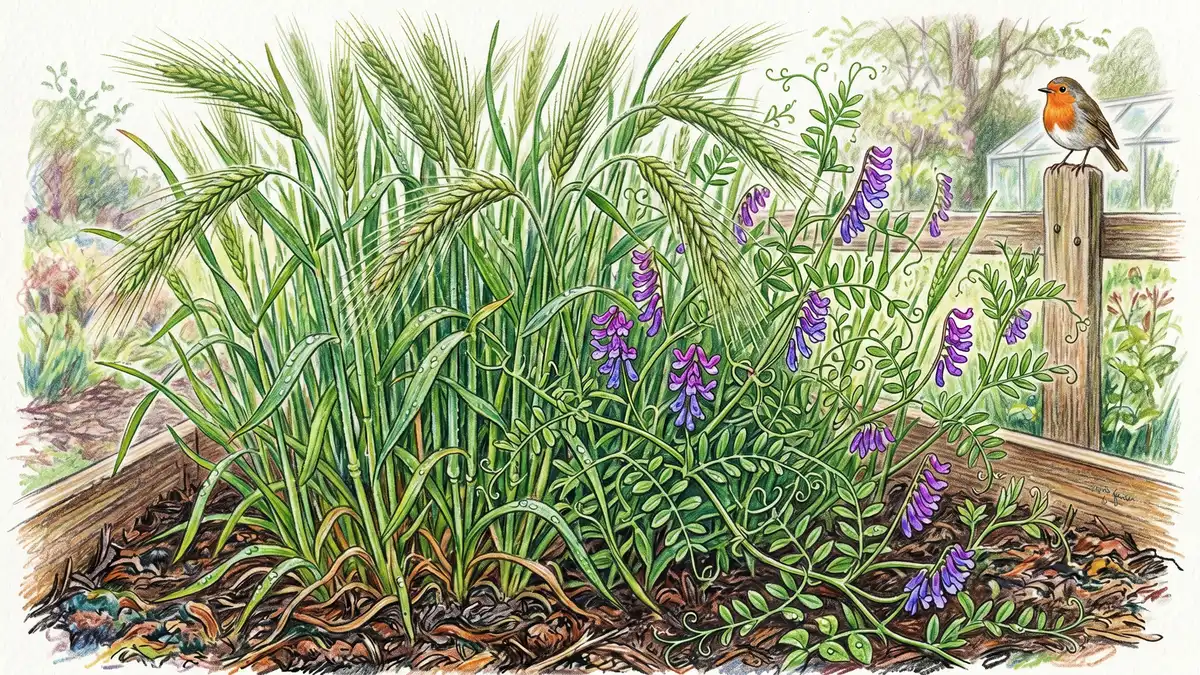
1. Cereal rye (Secale cereale) — the winter workhorse. Cold-hardy to roughly USDA zone 3, germinates in cool soil down to about 33°F (0.5°C), produces enormous root mass, and suppresses weeds via documented allelopathy. A 2024 review in Agronomy Journal documents the multiple mechanisms — physical mat, chemical inhibition via benzoxazinoids, and microbiome shifts — by which cereal rye reliably suppresses small-seeded weeds. Seeding rate roughly 2–3 oz per 100 sq ft (60–90 g per 9 m²). The NRCS Cereal Rye fact sheet covers planting and termination in detail.
2. Hairy vetch (Vicia villosa) — the nitrogen champion. The heaviest legume nitrogen contributor for home beds: NRCS data shows 70–150 lbs N/acre (78–168 kg/ha) when terminated at full bloom. Plant in early autumn (August–September in zones 5–7), pair it with cereal rye for the classic rye-vetch mix. Hold the romance though: UNL CropWatch reminds us that most of that nitrogen becomes available to the next crop only after residue decomposition — not the same week you terminate.
3. Crimson clover (Trifolium incarnatum) — the pretty nitrogen fixer. Easier to terminate than hairy vetch, fixes 70–130 lbs N/acre, and produces stunning crimson flowers in spring that pollinators love. Winter-killed in zones 6 and below; overwinters in 7+. Per the NRCS Crimson Clover fact sheet, seed at about 1 oz per 100 sq ft (30 g per 9 m²) in early autumn.
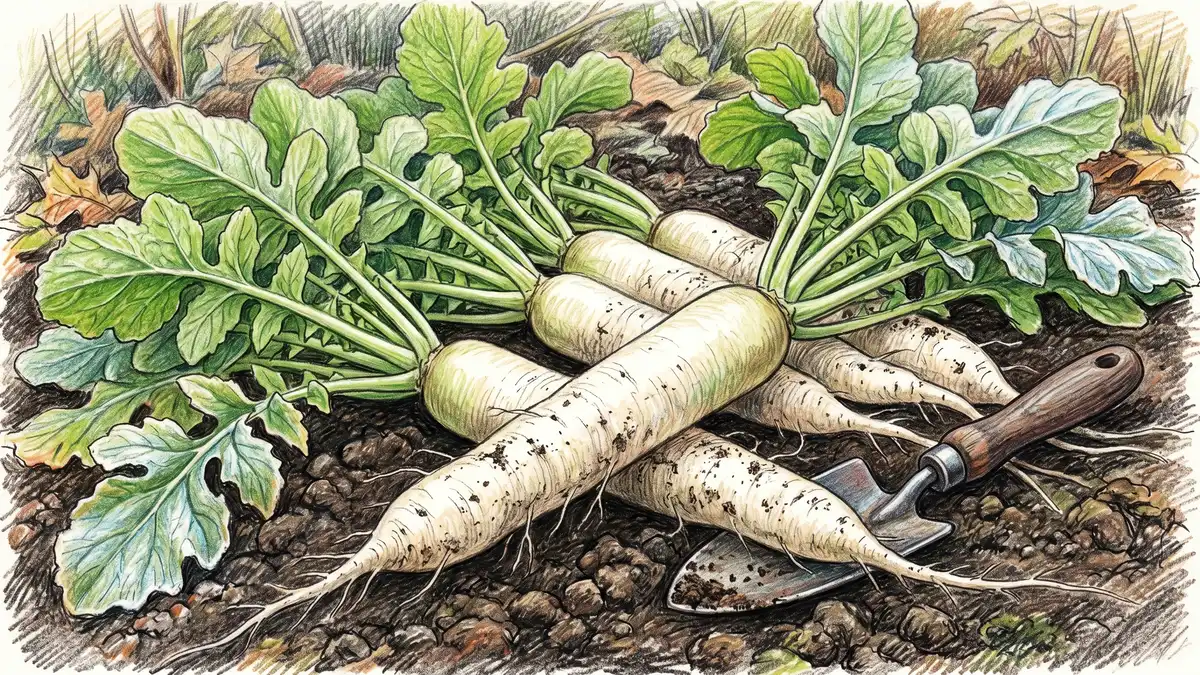
4. Daikon / tillage radish (Raphanus sativus) — the biological tiller. A single daikon root can punch 12–18 inches (30–45 cm) deep, breaking compaction without machinery. University of Arkansas Extension documents the biopore-creation effect that improves drainage and root penetration for the next crop. Plant 6–8 weeks before first hard frost; it winter-kills in zones 5–7, leaving open channels.
5. Field peas / Austrian winter peas (Pisum sativum subsp. arvense) — fast nitrogen, easy termination. Per SARE, peas can fix 90–150 lbs N/acre under good conditions and terminate easily by mowing or pulling. Often mixed with cereal rye or oats.
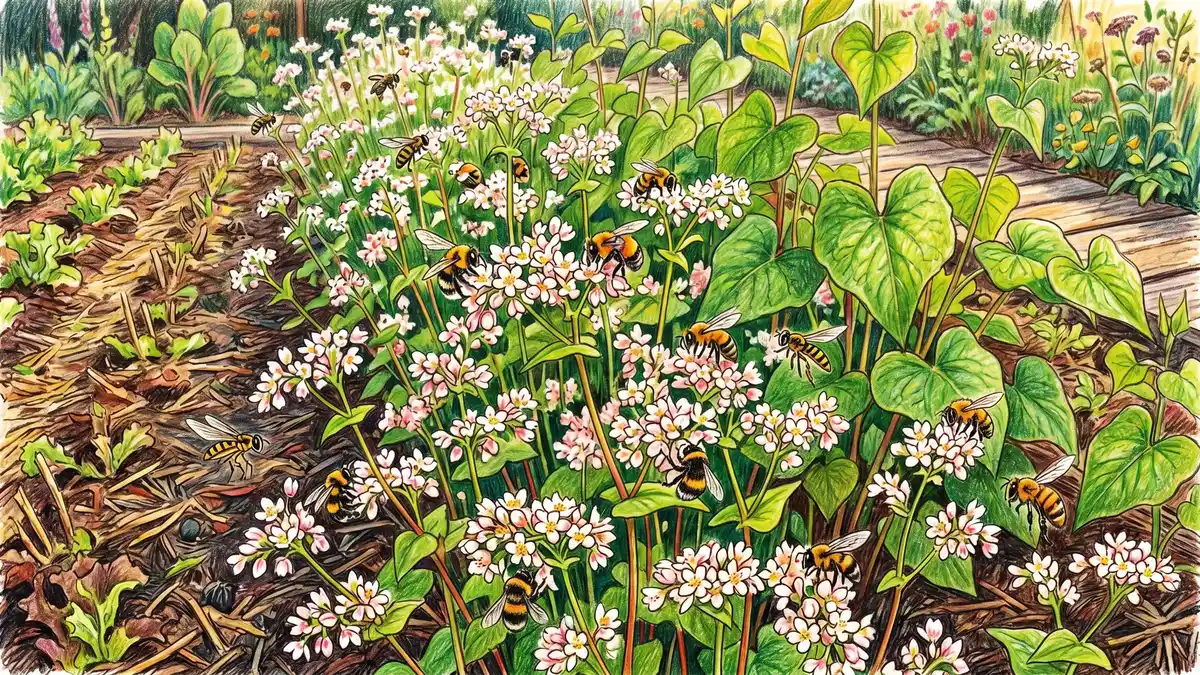
6. Buckwheat (Fagopyrum esculentum) — the summer fixer. Frost-tender, but in 30–45 days it'll fill a vacant summer bed, smother weeds, and bloom heavily for pollinators. The Xerces Society's Pollinator-Friendly Cover Cropping guide (PDF) singles out buckwheat as one of the best home-scale cover crops for native bees and hoverflies. Sow into bare soil after lettuce or peas come out; mow at first flower for fastest decomposition.
7. Oats (Avena sativa) — the easy-mode option. The NRCS Oats fact sheet recommends them as the gardener-friendly winter cover for zones 6 and below — they grow fast, winter-kill cleanly, and leave a manageable straw mat by spring. No termination needed if frost does the work for you.
| Cover crop | Best use | Plant in | Seeding rate / 100 sq ft | How to end it |
| Cereal rye | Winter cover, weed suppression | Early–mid autumn | 2–3 oz (60–90 g) | Mow + tarp at boot stage |
| Hairy vetch | Maximum nitrogen | Early autumn | 1.5–2 oz (45–60 g) | Mow at full bloom; pair with rye |
| Crimson clover | Nitrogen + bloom | Early autumn | 1 oz (30 g) | Winter-kill (zones ≤6) or mow at bloom |
| Daikon radish | Compaction relief | 6–8 wk before frost | 0.5 oz (15 g) | Winter-kill (zones 5–7) |
| Field/winter peas | Quick nitrogen | Early autumn | 4–5 oz (110–140 g) | Mow + drop, pair with rye/oats |
| Buckwheat | Summer gap, pollinators | After last frost | 2–3 oz (60–90 g) | Mow at first flower |
| Oats | Winter cover, easy mode | 6–8 wk before frost | 2.5–3 oz (75–90 g) | Winter-kill (zones ≤6) |
Sources:.
Why This Works: Living Roots, Always
Permaculture's "soil should never be naked" principle isn't a mood — it's a soil-biology mechanism. Living roots feed mycorrhizal fungi, exudates feed bacteria, and the whole soil food web depends on continuous photosynthesis somewhere on the bed. The USDA NRCS soil health framework calls this principle "keep living roots in the soil as long as possible." A cover crop is the simplest way to honour it through winter.
When to Plant: A Quick Zone Guide
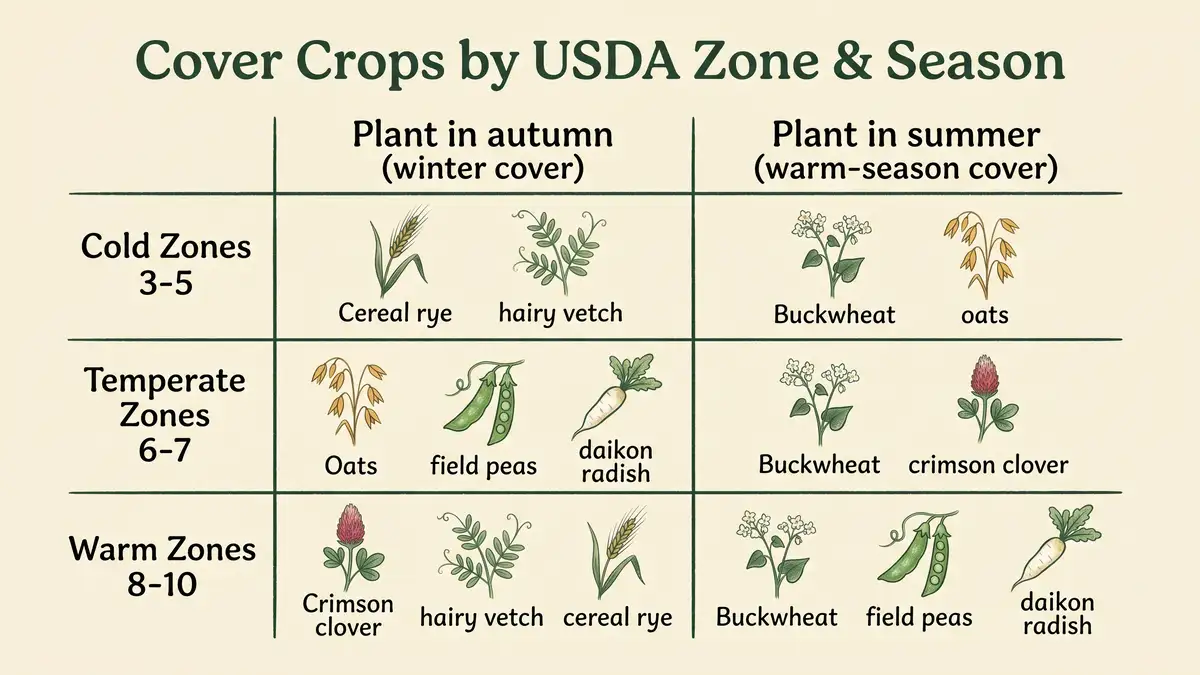
Timing is the part most home gardeners get wrong. Plant a winter cover too late and it doesn't establish before frost; plant a summer cover too early and you waste a productive bed week. Use these windows as your default and adjust ±2 weeks based on local first-frost date.
Cold zones 3–5. Sow winter cover crops 4–6 weeks before first hard frost — usually mid-August to mid-September. Best picks: oats + field peas (will winter-kill cleanly), or cereal rye if you want a strong spring stand. Skip hairy vetch unless you can plant by late August.
Temperate zones 6–7. Sow 4 weeks before first frost — typically mid-September to early October. Best picks: cereal rye, hairy vetch + rye mix, crimson clover, daikon radish. Penn State Extension publishes a county-by-county recommended-dates table that's worth bookmarking.
Warm zones 8–10. You have a longer window — sow winter cover from October into early November. Crimson clover overwinters here; daikon often does too. Summer covers (buckwheat, sorghum-sudangrass) can fill bed gaps from late spring through autumn.
How to Terminate Without a Tractor
Termination is the part where home gardeners panic. The good news: in a small bed you don't need a roller-crimper or a tiller. The four methods below cover every scenario.
Let winter do it (winter-kill species)
Oats, field peas, daikon radish, and crimson clover (in zones 5 and below) all freeze out cleanly. Do nothing — by spring you have a manageable straw mat to plant through. Easiest method by far for the right species.
Mow + tarp (the no-dig classic)
For overwintering covers like cereal rye and hairy vetch: mow or scythe to ground level when the rye is at boot stage and the vetch is in full bloom, then cover with a 6×8 ft (1.8×2.4 m) silage tarp or cardboard for 3–4 weeks. The cover crop terminates anaerobically and you plant straight into the residue.
Crimp + drop (cardboard alternative)
Walk the bed with a flat board or piece of plywood, pressing the cover crop flat. Cut anything still standing with hedge shears. Leave the residue in place as mulch. Plant transplants through the mat 2–3 weeks later. Per the NRCS Cover Crop Termination fact sheet (PDF), terminate 2–4 weeks before transplanting your summer crop.
Chop + drop (the syntropic method)
Cut the cover crop into 3–6 in (8–15 cm) pieces with hedge shears or pruners and leave the chop on the bed. Decomposes faster than crimp-and-drop, gives you faster nitrogen release, requires no tarp. Best for rapid turnaround in a small bed.
Common Mistake to Avoid: Letting It Go to Seed
If your cereal rye, vetch, or buckwheat seeds out in your bed, you have just turned a cover crop into a permanent weed. Terminate before seed set — at flowering for legumes, at boot stage (just before the seed head emerges) for cereal rye, and at first flower for buckwheat. Miss this window once and you'll be pulling volunteers for years.
Cover crops are the bridge from this season's harvest to next year's bed — they fit into every soil and composting rotation we recommend, and they pair naturally with the practices in our soil health guide and no-dig gardening guide. The mulch you'll leave behind after termination is the same idea as the carbon-rich layers in composting for beginners. If you're choosing what to plant after the cover crop, our science of companion planting guide covers what the evidence actually supports. The "living roots, always" idea is one of the foundational permaculture frames covered in 12 permaculture principles, and you'll see the same logic running through our herb spiral guide.
Frequently Asked Questions
When should I plant cover crops in my home garden?
For winter cover, sow 4–6 weeks before your first hard frost. In USDA zones 3–5 that's mid-August to mid-September; in zones 6–7 it's mid-September to early October; in zones 8–10 you have until early November. Penn State Extension publishes a county-level table that pins this down precisely. For summer covers like buckwheat, plant any time after the last frost when a bed comes out of production.
What's the best cover crop for a vegetable garden?
For most home gardeners in temperate zones, the answer is a cereal rye + hairy vetch mix — the rye builds biomass and suppresses weeds, the vetch fixes nitrogen. If you don't want to deal with terminating a vigorous overwintering stand, plant oats and crimson clover instead — both winter-kill in zones 6 and below and leave you a manageable straw mat by spring. Purdue Extension's home-garden guide (PDF) walks through both options.
Can I use cover crops in raised beds?
Yes — cover crops work as well or better in raised beds because the contained area makes termination easy. Pick smaller-biomass species (oats, crimson clover, field peas, buckwheat) over heavy biomass species (mature cereal rye), and reduce the seeding rate by about 25% — the contained soil tends to support denser stands. Cornell Cooperative Extension covers raised-bed adaptations specifically.
How do I terminate cover crops without a tiller or herbicide?
Three options that work in a home bed: (1) let frost kill winter-kill species (oats, crimson clover in cold zones, daikon, field peas) — no work required; (2) mow or scythe overwintering species (rye, vetch) at the right phenological stage and tarp for 3–4 weeks; (3) chop them into short pieces and drop the chop on the bed as mulch. The NRCS Cover Crop Termination fact sheet covers timing windows.
Will cover crops really fix nitrogen for my next crop?
Yes — but probably less than you've been told. UNL CropWatch notes that legume cover crops do fix significant N, but most of it stays in the legume biomass until residue decomposition. Realistic expectation: a hairy-vetch or crimson-clover stand can supply roughly 50–100 lbs available N/acre (56–112 kg/ha) to the following crop after you terminate, which is enough to grow most home-scale vegetables without supplemental fertiliser.
Get the Weekly Dig
One practical permaculture guide a week, written for gardeners who do this on weekends: building living soil without buying it in bags. Free, no spam, unsubscribe any time.
Join the newsletterResources
- USDA SARE — Managing Cover Crops Profitably, 3rd ed. (free PDF)
- Purdue Extension — Cover Crops in the Home Garden (PDF)
- Penn State Extension — Recommended Dates for Fall Cover Crop Planting
- Penn State Extension — Cover Crop Seeding Rates
- USDA NRCS — Cereal Rye Cover Crop Fact Sheet (PDF)
- USDA NRCS — Hairy Vetch Cover Crop Fact Sheet (PDF)
- USDA NRCS — Crimson Clover Cover Crop Fact Sheet (PDF)
- USDA NRCS — Oats Cover Crop Fact Sheet (PDF)
- USDA NRCS — Cover Crop Termination Fact Sheet (PDF)
- Xerces Society — Pollinator-Friendly Cover Cropping (PDF)
- Mechanisms of Weed Suppression by Cereal Rye Cover Crop — peer-reviewed review (Wiley/ACSESS)
- UNL CropWatch — Is Nitrogen Fixation Oversold with Legume Cover Crops?