
Biochar is having a moment, and the questions are everywhere: Is it just expensive charcoal? Can I make it in my backyard? Will my tomatoes actually grow better, or am I about to spend a Saturday burning brush for nothing? The short answer is that biochar is a real, well-studied soil amendment with a 2,000-year track record (the Amazonian terra preta soils), but the way you make it and the way you apply it determine whether it helps your garden or steals nitrogen from your kale for the next two seasons. charcoal in traditional New Zealand garden soils
Here's the practical version: biochar is wood (or other biomass) that has been baked at high temperature without oxygen, leaving a porous black carbon skeleton that lasts in soil for hundreds to thousands of years. That porous structure acts like microscopic apartment buildings for soil microbes, holds water, and binds nutrients. But raw biochar is hungry. It must be charged (soaked in compost, urine, or compost tea) before it goes near plants, or it locks up nitrogen and makes things worse before it makes them better.
Quick answer
Biochar works best on sandy, acidic, or depleted soils where it can buffer pH, hold water, and house microbes. Apply 1 to 5 pounds per 10 square feet (0.5 to 2.5 kg per square meter) of charged biochar mixed into the top 6 inches (15 cm). Skip it if your soil is already alkaline and fertile, the meta-analyses show no temperate-soil yield boost in those conditions. Always charge raw biochar with compost or compost tea before applying.
What biochar is, and what it isn't
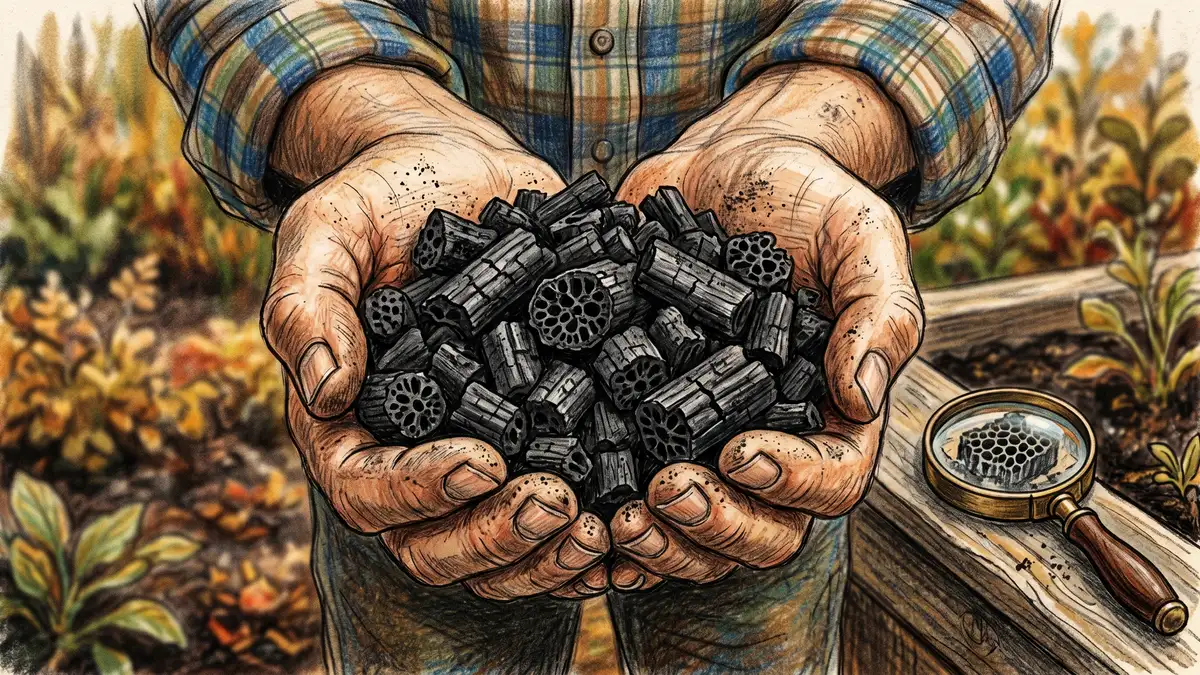
Biochar is the product of pyrolysis: heating biomass (wood, agricultural waste, even nut shells) to between 350 and 700 degrees Celsius (660 to 1,290 F) in a low-oxygen environment. The volatile gases burn off, but the carbon skeleton stays. What you're left with is around 70 to 80 percent stable carbon, riddled with billions of tiny pores per gram of material. USDA ARS researcher Kurt Spokas describes its purpose as carbon sequestration first, soil amendment second.
The difference between biochar and barbecue charcoal is process intent. Charcoal is made to burn cleanly. Biochar is made to be ground up and buried. The pyrolysis temperature, residence time, and feedstock choice are all tuned for soil performance, not flame quality. You can use ordinary lump charcoal as biochar in a pinch (just crush and charge it), but never use briquettes, they contain binders, accelerants, and ash from coal that you do not want in your vegetables.
The historical anchor is terra preta, the dark anthropogenic soils of the Amazon basin. Pre-Columbian peoples added charred biomass plus food and bone waste to nutrient-poor tropical soils, creating a soil profile so productive that 2,000 years later it still outperforms surrounding rainforest soils by 25 to 50 percent. The International Biochar Initiative traces the modern revival to that observation.
Why this works (the permaculture angle)
Biochar is a structural intervention, not a nutritional one. You're building permanent infrastructure in the soil: pore space for air, water, and microbes. Compost feeds biology for one season. Biochar houses biology for centuries. The permaculture move is to think in time horizons longer than this growing season, the same logic that runs through the 12 permaculture principles and through every well-designed food forest.
What biochar actually does in your garden soil
Five documented mechanisms, most clearly summarized in the IBI biochar application guidelines and the Cornell Cooperative Extension Suffolk County biochar program.
| Mechanism | What it does | Best for |
| Cation exchange capacity (CEC) | Holds positively charged nutrients (K, Ca, Mg, NH4) so they don't leach out | Sandy soils that drain too fast |
| Water holding capacity | Up to 20 percent more water retained per cubic meter of soil | Drought-prone or sandy gardens |
| pH buffering | Most biochars are alkaline (pH 8-10), nudging acidic soils toward neutral | Acidic soils below pH 6.0 |
| Microbial habitat | Pore structure shelters bacteria and fungi from predators and drying | Compacted or biologically dead soils |
| Carbon storage | Locks atmospheric carbon in soil for hundreds to thousands of years | Climate-conscious gardeners |
Sources:.
The honest yield numbers are smaller than the marketing suggests. The Jeffery 2017 global meta-analysis in Environmental Research Letters reviewed hundreds of trials and found biochar boosts tropical-zone yields by an average of 25 percent but produces no statistically significant yield gain in temperate latitudes. The earlier Jeffery 2011 meta-analysis found a global average yield improvement of 10 percent. Translation: biochar is a structural soil improvement that pays off most in poor soils. If you garden on rich loam over a deep topsoil layer, the yield bump is small. If you garden on Florida sand or a depleted urban lot, it is meaningful.
How to make biochar at home: three methods
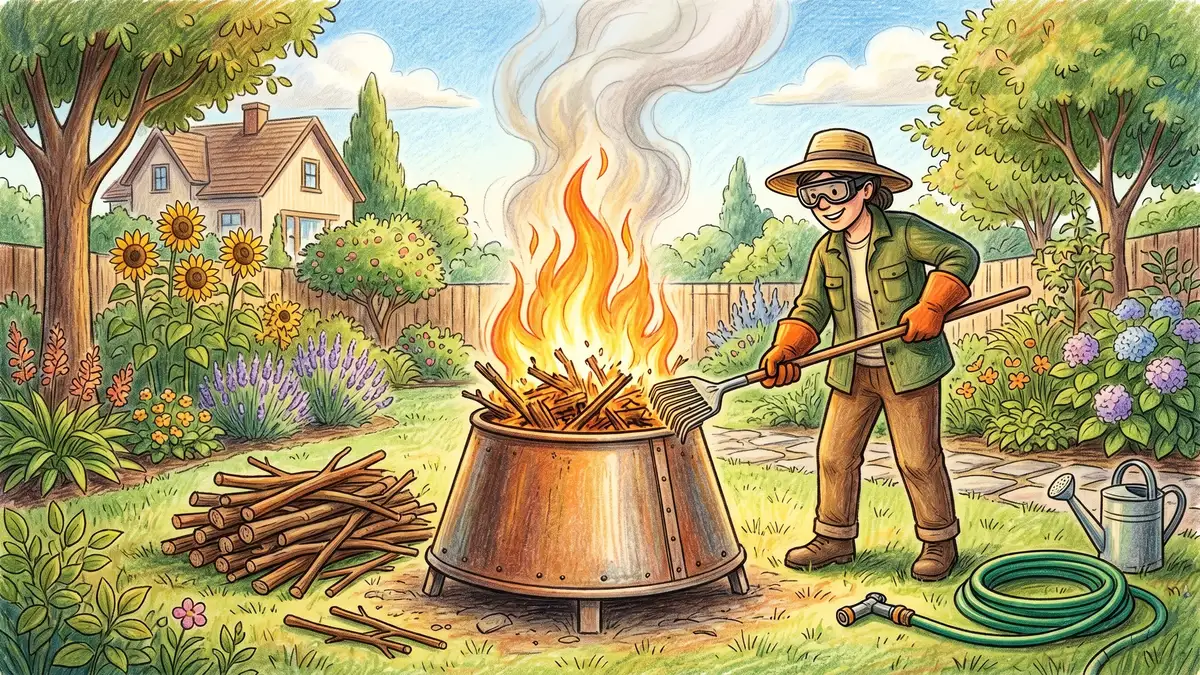
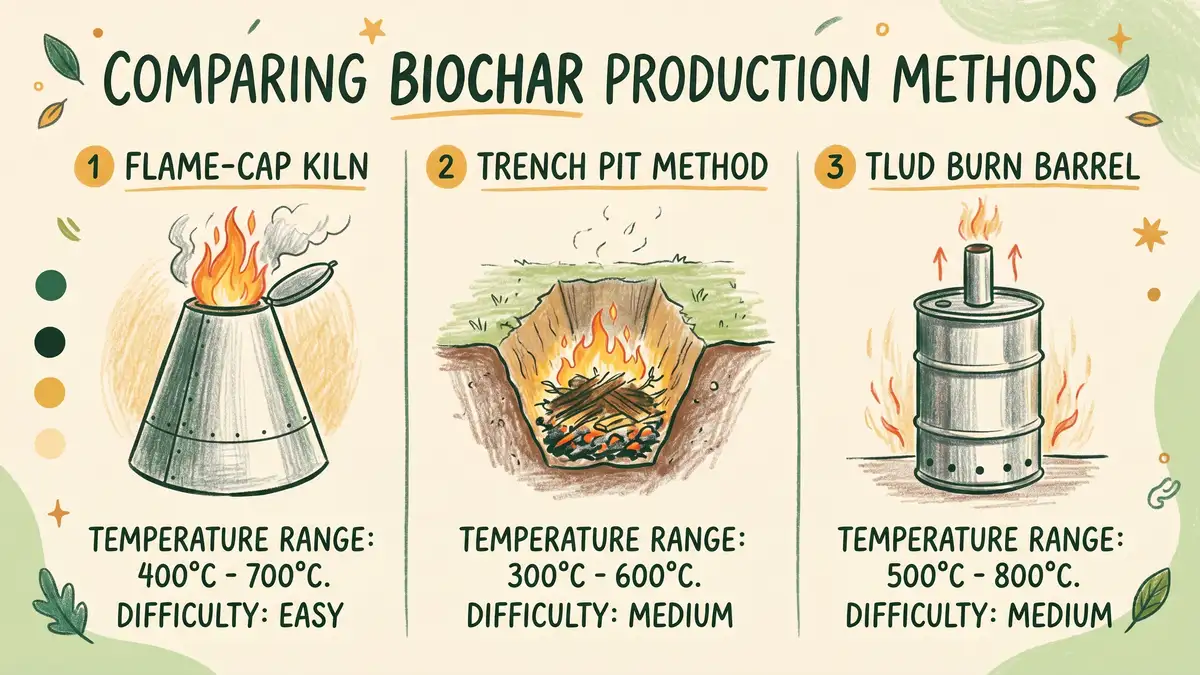
You don't need industrial kit to make decent garden biochar. The three home-scale methods below all rely on the same principle: light a fire from the top, let the flame cap exclude oxygen from the biomass below, and quench with water before the carbon turns to ash. Hands-on time: 2 to 4 hours per batch. Output: enough biochar for a 4 by 8 foot (1.2 by 2.4 m) raised bed in one good burn.
Flame-cap kiln (Kon-Tiki)
Buy or build a cone-shaped metal kiln. Light a small kindling fire in the bottom, then add layers of dry hardwood (1 to 2 inch / 2 to 5 cm pieces) as each layer chars. The flame on top excludes oxygen below, charring the biomass without combusting it. Quench with water when the bottom layer turns silver-grey. Difficulty: moderate. Output: 30 to 50 percent of input biomass volume.
Trench / cone pit method
Dig a V-shaped trench 18 inches deep, 24 inches wide at the top, 6 inches at the bottom (45 by 60 by 15 cm). Light kindling along the bottom. Add wood in layers as each chars. The trench shape replicates the flame-cap effect without buying a kiln. Quench with hose water. Difficulty: easy. Output similar to the kiln but harder to control burn temperature. Ideal for processing storm-felled wood.
TLUD burn barrel (top-lit updraft)
Convert a steel drum (55 gallon / 200 L) by drilling air intake holes around the bottom rim and adding a chimney to the lid. Pack densely with biomass, light from the top. Air flows up through the biomass, gases burn off the top, char accumulates below. Quench from above when the flame dies down. Difficulty: harder to build, easier to run once built. Cleanest burn of the three.
Method specifications synthesized from IBI guidelines and Cornell Cooperative Extension community garden biochar workshops.
Safety and feedstock rules
Never use treated, painted, glued, or laminated wood. The pyrolysis process volatilizes preservatives and creates toxic compounds that end up in your soil. Stick to clean hardwood, fruit prunings, untreated pallet wood, or agricultural waste. Always burn outdoors with a water source ready. Wear safety goggles and a respirator when handling dry biochar, the dust is fine and irritating to lungs.
Charging biochar: the step you cannot skip
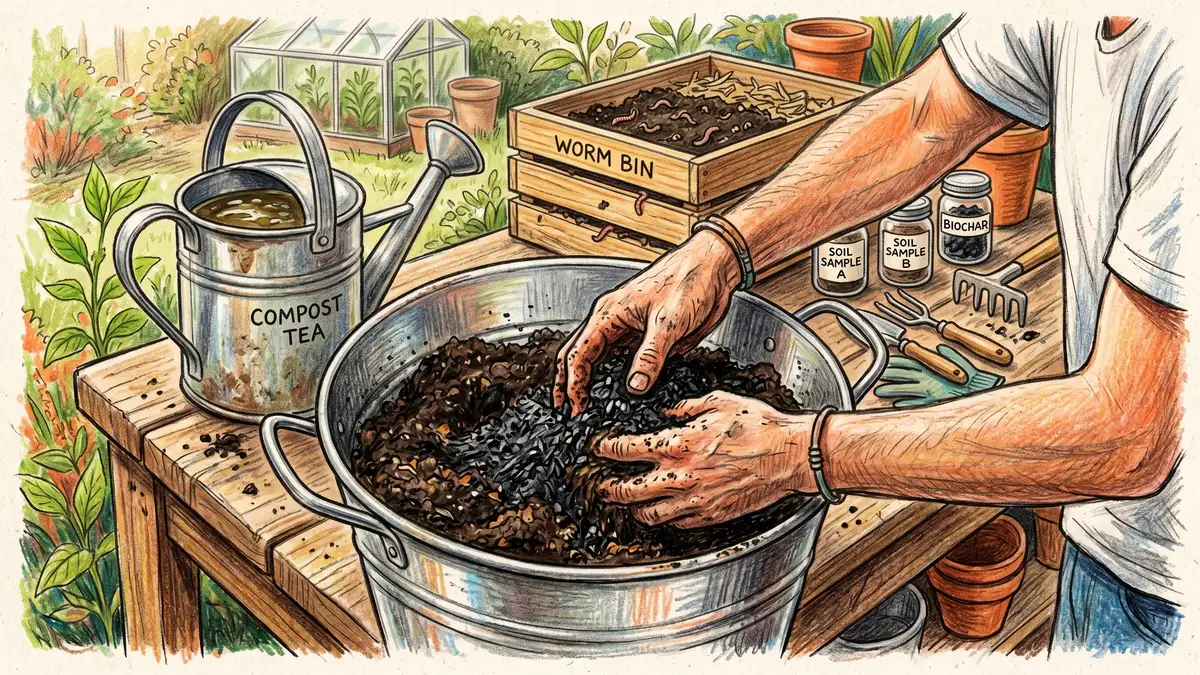
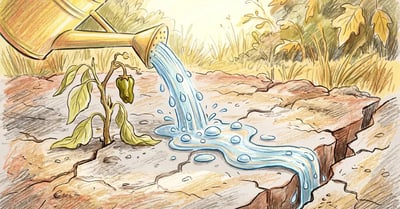
Raw biochar is a sponge. It will absorb water, nutrients, and microbes from whatever environment you put it in. If you bury raw biochar straight in the garden, it pulls available nitrogen out of the soil to fill its empty pores, and your plants go yellow. The fix is to charge it (also called inoculating or activating) before application. Three reliable methods:
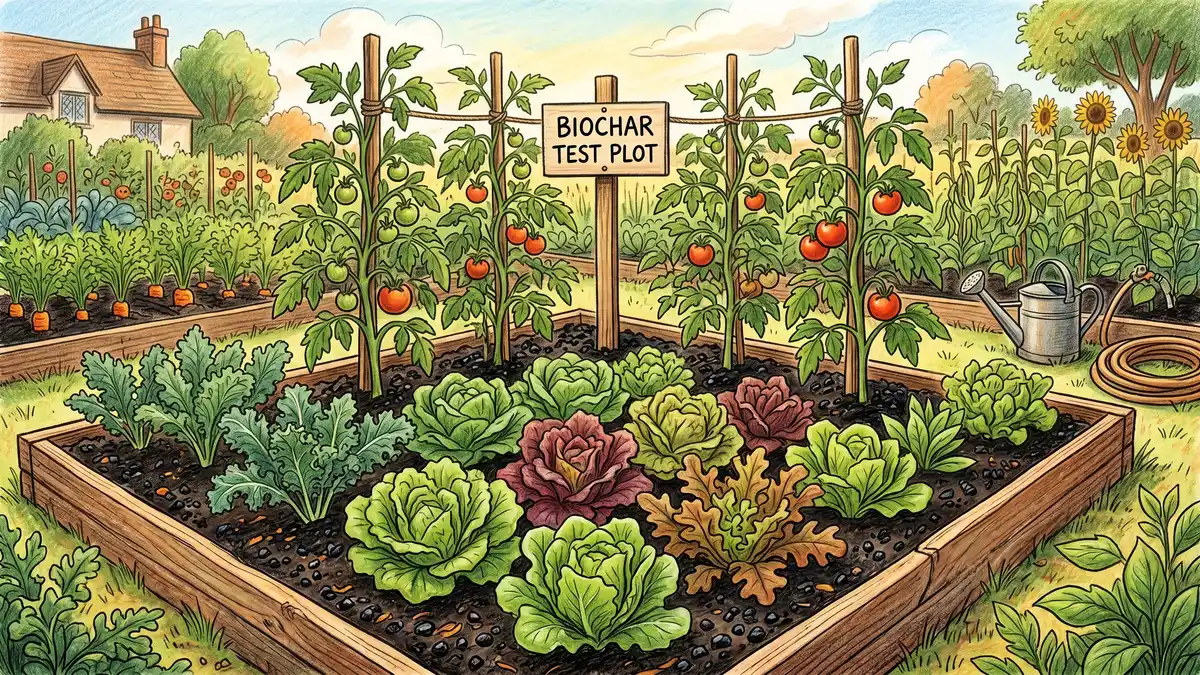
Compost mix. Combine 1 part crushed biochar with 3 to 4 parts finished compost by volume. Let it sit for 2 to 4 weeks, turning weekly. The biochar absorbs the compost's microbial population and soluble nutrients. This is the safest, slowest, and most consistent method.
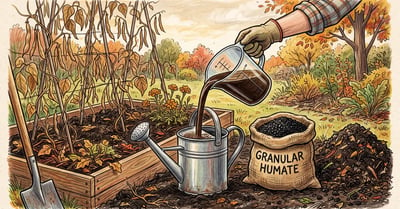
Compost tea soak. Submerge biochar in actively brewing compost tea for 24 to 48 hours. Faster than the dry compost mix but the inoculation depth is shallower. Tea brewing details are covered in our worm tea vs compost tea brewing guide.
Urine-charge (homestead method). Soak biochar in human urine (1 part urine to 4 parts water for safety) for one week, then dry and apply. The urea provides immediate nitrogen, and the biochar binds it for slow release. This sounds gross. It is also remarkably effective and traditional in agroforestry contexts.
How much to apply, and where
Application rates from the IBI application guidelines and Pacific Biochar's rate calculator converge on a practical range:
| Garden context | Charged biochar rate | Mixing depth |
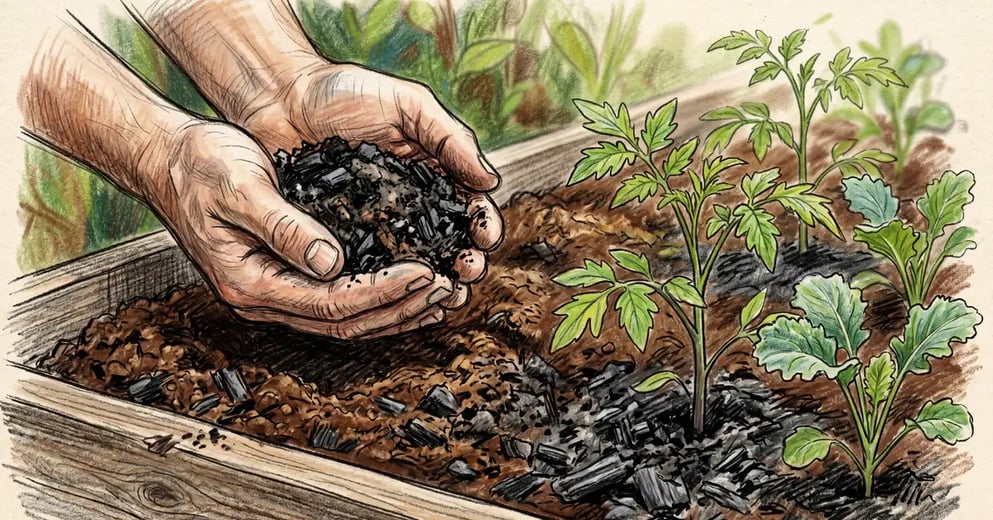
| New raised bed (sandy or depleted soil) | 2 to 5 lb per 10 sq ft (1 to 2.5 kg/m²) | Top 6 inches (15 cm) |
| Existing veg bed (top-up) | 1 to 2 lb per 10 sq ft (0.5 to 1 kg/m²) annually | Top 3 inches (7.5 cm) |
| Container / pot | 5 to 10 percent of total potting mix volume | Mix throughout |
| Fruit tree planting hole | 1 to 2 quarts (1 to 2 L) charged biochar per hole | Mix into backfill soil |
| Lawn renovation | 1 lb per 10 sq ft (0.5 kg/m²) topdressed | Rake into top 1 inch (2.5 cm) |
Sources: WasteX biochar application methods citing IBI; Pacific Biochar application rate calculator.
Practical detail: crush the biochar to roughly the size of grains of rice or smaller before mixing. Larger pieces work but distribute pore space less evenly. Particle sizes under 2 mm have shown the strongest yield response in the Hartpury University biochar trials.
The five most common mistakes
Applying raw uncharged biochar. Causes 1 to 2 seasons of nitrogen lockup. Always charge first.
Using wood from treated pallets, painted boards, or pressure-treated lumber. The PAH (polycyclic aromatic hydrocarbon) load can be high in low-temperature burns from contaminated feedstock. Penn State researchers are actively studying biochar safety for exactly this reason.
Overapplying on already-rich soil. Biochar at greater than 5 percent of soil volume on fertile loam can suppress short-term yields by tying up phosphorus. The Jeffery 2017 meta-analysis is the cautionary read.
Particles too large. Walnut-sized chunks of biochar give you slower benefit and uneven distribution. Crush to grit-size for faster integration with the soil microbiome.
Skipping the charge step because the marketer's bag says "ready to use". Some commercial biochars are pre-charged. Most are not. Read the label. If in doubt, mix with compost for 2 weeks before application anyway.
Get the Weekly Dig
One practical permaculture guide a week, written for gardeners who do this on weekends: building living soil without buying it in bags. Free, no spam, unsubscribe any time.
Join the Weekly DigFrequently asked questions
What is biochar?
Biochar is biomass (wood, agricultural waste, nut shells) that has been heated to 350 to 700 C (660 to 1,290 F) in a low-oxygen environment, converting it to a stable porous carbon. Unlike charcoal, biochar is produced specifically for soil application. It improves water-holding capacity, cation exchange capacity, microbial habitat, and locks atmospheric carbon in soil for hundreds of years.
How is biochar different from charcoal?
The chemistry overlaps, but the production parameters differ. Biochar pyrolysis is tuned for soil-relevant porosity, lower volatile content, and higher stable carbon fraction. Lump charcoal can substitute in a pinch (crush and charge it before applying). Briquettes cannot, they contain coal, binders, and accelerants that should not be in your vegetable garden.
How do you make biochar at home?
Three home-scale methods: a flame-cap (Kon-Tiki) kiln, a V-shaped trench pit, or a TLUD top-lit updraft burn barrel. All three work by lighting biomass from above and using the flame cap to exclude oxygen from the charring layer below. Quench with water when carbon forms but before it burns to ash. Burn outdoors only, never use treated wood.
Does biochar really increase crop yields?
The honest answer is "it depends on your soil." The Jeffery 2017 global meta-analysis found a 25 percent average yield boost in tropical zones but no statistically significant yield response in temperate zones. The mechanism that helps tropical soils (liming acidic soil, adding CEC to leached tropical soil) doesn't apply to fertile temperate loams. Biochar still adds value in temperate gardens through water retention, microbial habitat, and carbon storage, the yield bump is just smaller.
Why do I have to charge biochar before applying it?
Raw biochar is a sponge with no biology in it yet. Buried straight, it absorbs water and nutrients (especially nitrogen) from the surrounding soil, starving plants in the short term. Charging means pre-loading those pores with compost, microbes, and soluble nutrients before application, so the biochar arrives in the soil "full" rather than empty.
How much biochar should I apply per square foot?
For new beds in poor or sandy soil: 2 to 5 pounds of charged biochar per 10 square feet (1 to 2.5 kg/m²) mixed into the top 6 inches. For top-up applications in existing beds: 1 to 2 pounds per 10 square feet annually. For containers: 5 to 10 percent of total potting volume. Always charge first, never apply raw.
Is biochar safe for vegetable gardens?
Yes, when made from clean feedstock at the right temperature. The risk is PAH contamination from low-temperature burns or contaminated feedstock. Burn at 500 C or higher, use only untreated clean wood, and you'll have a soil-safe product. Penn State and IBI offer testing protocols for those who want to verify, see Penn State Extension's biochar research for the safety framework.
Can I use biochar in containers and houseplants?
Yes. In fact, container plants benefit disproportionately because the limited soil volume means CEC and water-holding capacity are at a premium. Mix 5 to 10 percent charged biochar into your potting mix. Pair with our worm castings application guide for the best small-scale soil biology stack.
Resources
- USDA Agricultural Research Service, Biochar program (Kurt Spokas)
- International Biochar Initiative, Application Guidelines (PDF)
- Cornell Cooperative Extension Suffolk County, Biochar Program
- Jeffery et al. 2017, Biochar boosts tropical but not temperate crop yields (PDF)
- Biochar UK, Summary of meta-analyses on biochar yield effects
- Pacific Biochar, Application Rate Calculator
- Penn State University, Biochar safety research program
- Cornell Cooperative Extension Warren County, Biochars and their uses in agriculture
- USDA, Exploring the Benefits of Biochar