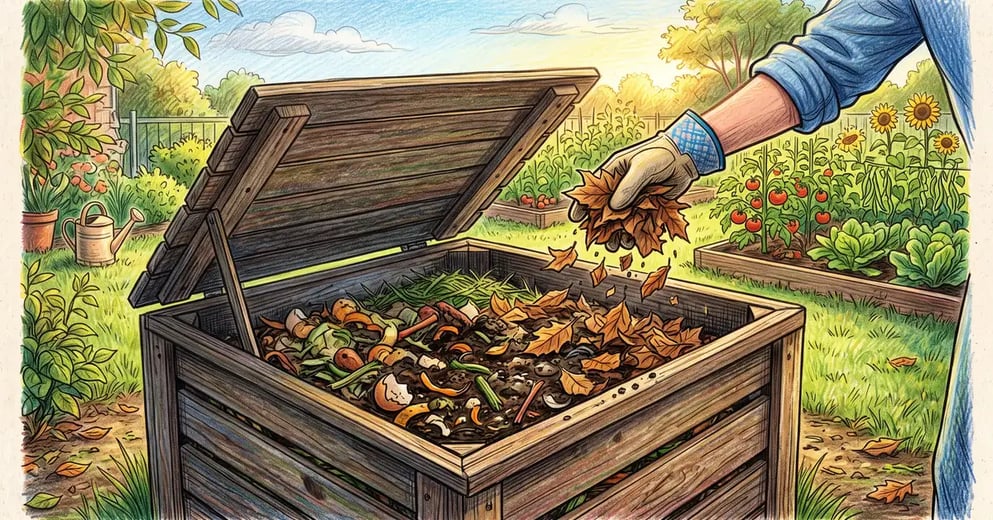

A compost pile that smells is not broken. It is telling you what it needs. Sharp and acrid means one thing. Rotten eggs means something else. Tell those apart and most odor problems take twenty minutes to fix. maggots in your compost pile
Most advice treats "smelly compost" as one problem with one answer, usually "add more browns." Sometimes that is right. Sometimes it makes things worse. Read the smell first, then correct the imbalance behind it. For issues beyond odor, see our compost troubleshooting guide.
What you will learn:
- How to diagnose the pile from the smell alone
- The fix for ammonia versus rotten-egg odor, and why they are opposites
- How much dry material to add per volume of soggy material
- Which ingredients cause odor whatever you do
- What changes in a tumbler, worm bin, or bokashi bucket
Key Takeaway
Every compost odor traces to one of two imbalances: too much nitrogen (ammonia) or too little oxygen (rotten eggs, sewage, sour). Both are fixed with dry carbon and a turn, but the diagnosis tells you how hard to go and whether moisture is also involved.
Why Does My Compost Smell? Start With the Smell Itself
Healthy compost smells like a forest floor after rain. Earthy, slightly sweet, a bit like mushrooms. Anything sharper or sourer is a signal, and its character narrows the cause fast.
Oregon State University Extension separates ammonia odor (too much nitrogen) from rotten-egg odor (too wet and short on oxygen, the pile "putrefying, not decomposing"). Genuinely different failures, different corrections.
| What You Smell | What It Means | First Action |
| Sharp ammonia, like a barn or cat litter | Too much nitrogen, C:N below roughly 20:1, often alkaline | Add 2-3 volumes dry browns, turn, do not add lime |
| Rotten eggs (hydrogen sulfide) | Anaerobic pockets, oxygen under 5%, usually waterlogged | Turn thoroughly, add coarse dry browns, cover from rain |
| Sour, vinegary, like silage | Organic acids from partial anaerobic decay, pile too wet and compacted | Turn and add coarse bulking material for air space |
| Rancid, greasy, garbage-like | Meat, dairy, or oils breaking down anaerobically | Remove what you can, bury the rest deep under browns |
| Nothing at all, materials intact | Pile too dry, too small, or too high in carbon | Water to sponge dampness, add greens, build volume |
Sources: Oregon State University Extension, Gardening With Compost, Cornell Waste Management Institute, Compost Chemistry, Nebraska Extension, Garden Compost
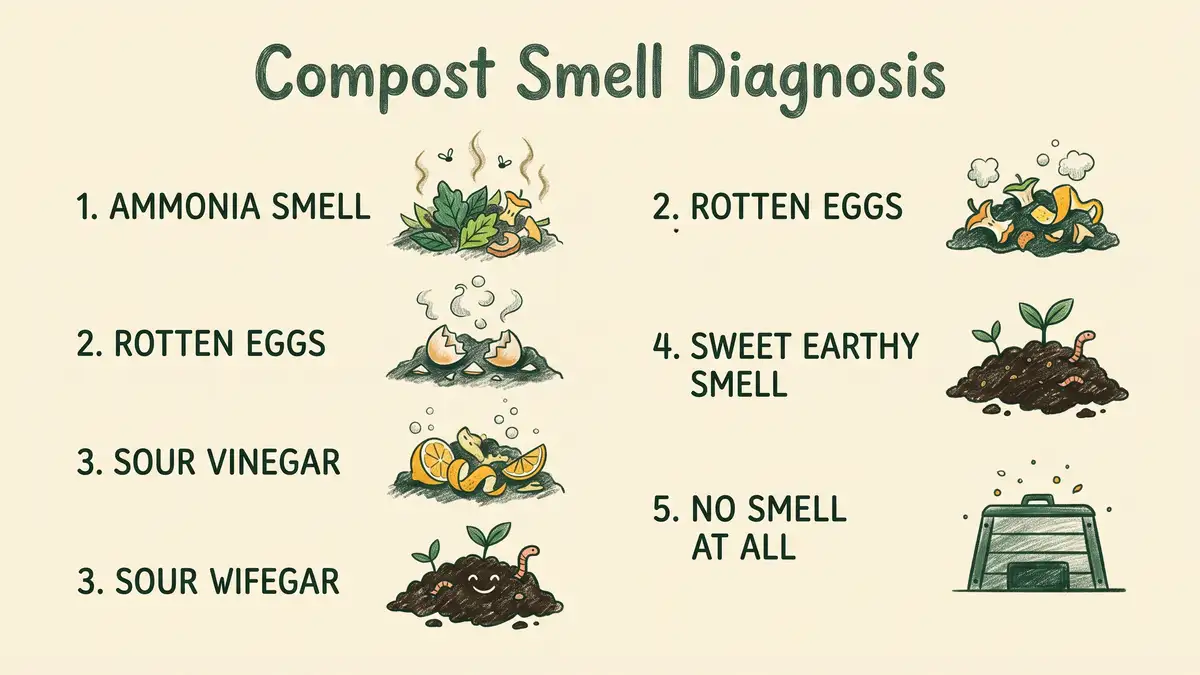
Four of five rows end with "add dry browns and turn," and that is not lazy advice. Dry carbon does three jobs at once: soaks up water, raises the carbon-to-nitrogen ratio, and holds open air channels. Getting the brown to green ratio right is most of the battle.
Compost Smells Like Ammonia: You Have Too Much Nitrogen
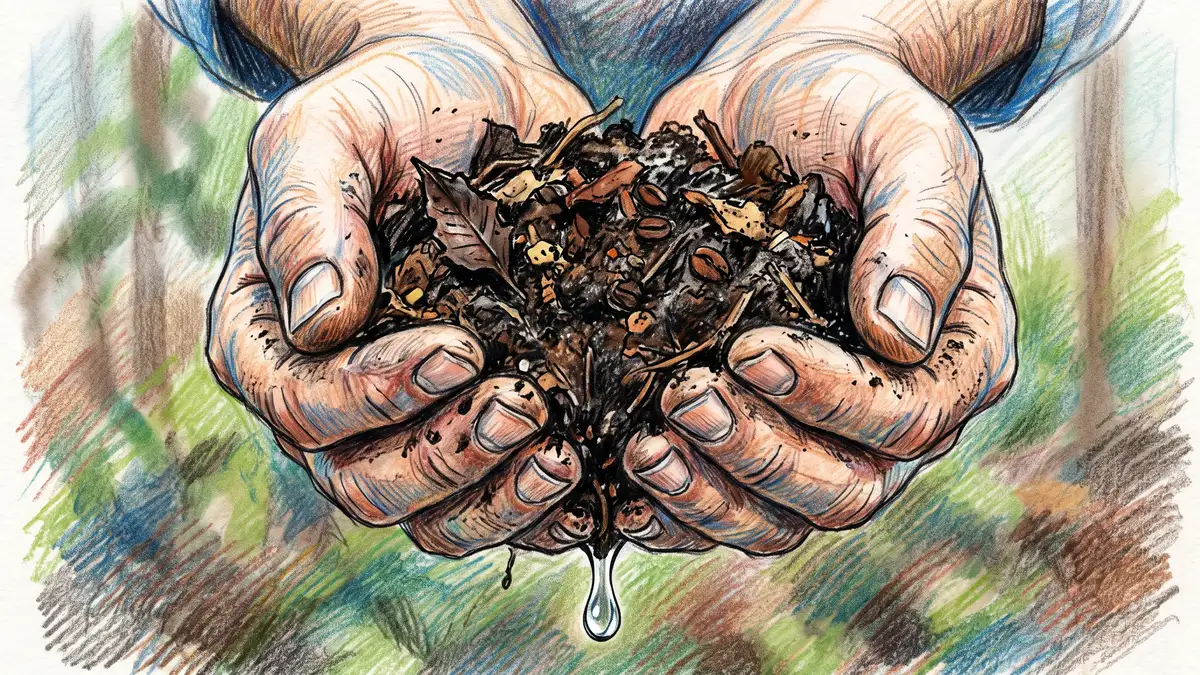
Ammonia smell means the pile is exhaling fertilizer. When there is more nitrogen than microbes can use, the surplus converts to ammonium, and above roughly pH 7.5 at thermophilic temperatures that ammonium leaves as ammonia gas.
Research on composting emissions found nitrogen leaving as gas was over 98 percent ammonia, and a well-run process should hold losses to roughly 10 to 12 percent of total feedstock nitrogen. Every ammonia whiff is nitrogen headed for your tomatoes that went into the air instead. Cornell puts grass clippings at 15-25:1 and fresh manure as low as 5:1, both well below the 25-35:1 range that keeps nitrogen in the pile.
| Material | C:N Ratio | Role in the Pile |
| Fresh manure | 5-25:1 | Strong green, use sparingly and mix well |
| Vegetable scraps | 15-20:1 | Green, mats easily when layered thick |
| Grass clippings | 15-25:1 | Green, the most common cause of ammonia |
| Coffee grounds | About 20:1 | Green, cakes into airtight layers if piled |
| Autumn leaves | 30-80:1 | Brown, the best all-round correction material |
| Straw | 40-100:1 | Brown, excellent for holding air space |
| Wood chips or sawdust | 100-500:1 | Brown, high absorbency, slow to break down |
| Corrugated cardboard | About 560:1 | Brown, shred first, soaks up excess moisture |
Source: Cornell Waste Management Institute, Compost Chemistry
The correction: two to three volumes of dry carbon per volume of the nitrogen-heavy material, mixed all the way through rather than layered on top. An alkaline pile loses ammonia faster, so reach for oak leaves, sawdust, or vegetable scraps rather than anything that raises pH. For the arithmetic, see our guide to calculating C:N ratio.
Why This Works: Closing the Nutrient Loop
Permaculture treats waste as a resource in the wrong place, and ammonia gas is the clearest garden example. The carbon you add is not deodorizer, it is a sponge for nitrogen that microbes hold in their own bodies and release slowly into finished compost. You are catching a nutrient on its way out and putting it back in, the same logic behind mulching and sheet mulching.
Compost Smells Like Rotten Eggs or Sewage: You Have Run Out of Air
This is the opposite problem, and adding nitrogen makes it dramatically worse. Rotten eggs is hydrogen sulfide. Sewage and sour smells are methane and volatile fatty acids, all produced by anaerobic bacteria that take over when pore-space oxygen drops too low. Cornell puts a number on it: aerobic microbes survive down to about 5 percent oxygen, but you want above 10 percent. Nebraska Extension draws the same line, noting anaerobic bacteria below 5 percent break material down slowly while generating methane and rotten-egg odors.
What pushes a pile below that threshold is water plus compaction. Cornell's porosity analysis shows dropping air-filled porosity from 30 to 20 percent cuts oxygen diffusion by about 56 percent. Squash the pile a little and you halve its ability to breathe.
Open the pile completely
Fork it all out onto a tarp rather than turning in place. The anaerobic pockets sit in the wet compacted core, and a half-turn leaves them intact. Expect a strong smell for a few minutes.
Break clumps, then mix in 2-3 volumes of dry browns
Wet grass and scraps form slick mats that neither drain nor breathe, and any clump bigger than a grapefruit will go anaerobic again. For every 5 gallon (19 liter) bucket of soggy material, mix in 10 to 15 gallons of straw, shredded cardboard, dry leaves, or wood chips. Coarse beats fine.
Rebuild to at least 3 x 3 x 3 feet and squeeze-test
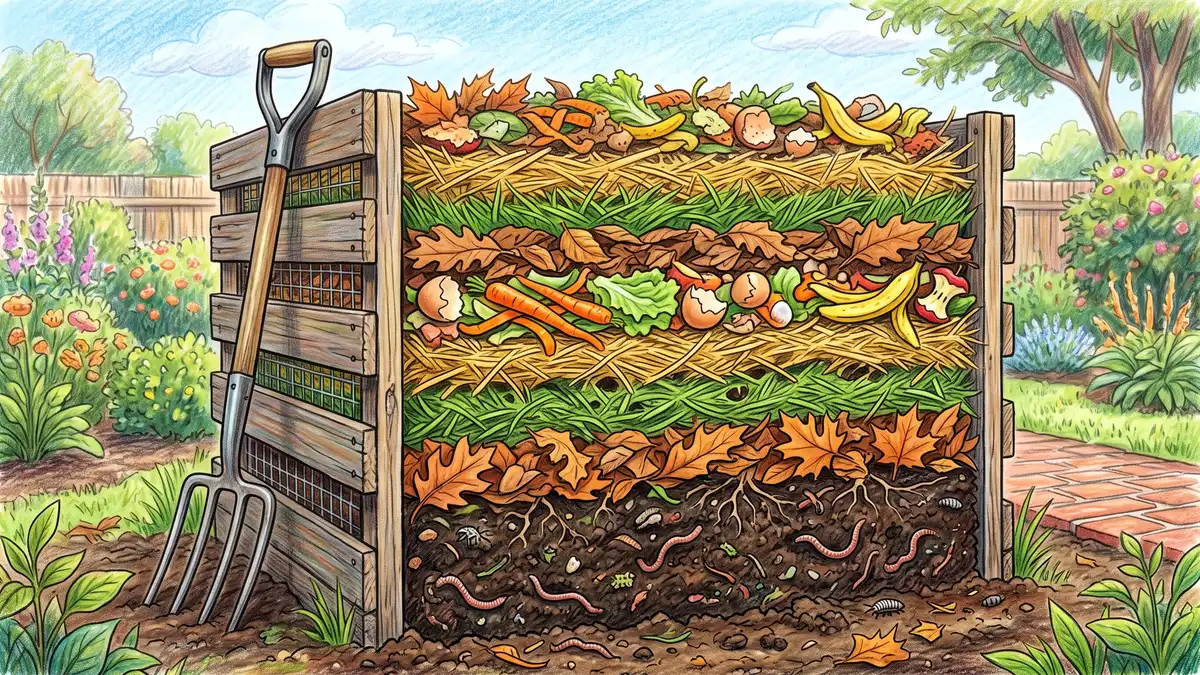
A pile under 27 cubic feet (0.76 cubic meters) will not hold heat. Grab a handful as you rebuild: it should feel like a wrung-out sponge, releasing a drop or two at most. If it drips, add more browns.
Cover against rain, then leave it alone
A breathable tarp keeps rain out while letting water vapor escape. Give it three or four days before judging. Odor usually drops noticeably within 24 to 48 hours once air is back in.
Total time: 20 to 30 minutes, at no cost if you bagged leaves last fall. The pile should heat again, and rising temperature confirms aerobic microbes have taken back over.
Key Takeaway
Both get fixed with dry browns and a turn, but for opposite reasons. Ammonia is a chemistry problem (too much nitrogen). Rotten eggs is a physics problem (no air space), so prioritise coarse material and breaking up clumps over simply adding volume.
Need the gear for this?
Bins and tumblers picked by yard size, with the honest trade-offs for each.
See the compost bin picksWhat Should You Stop Putting In the Pile?
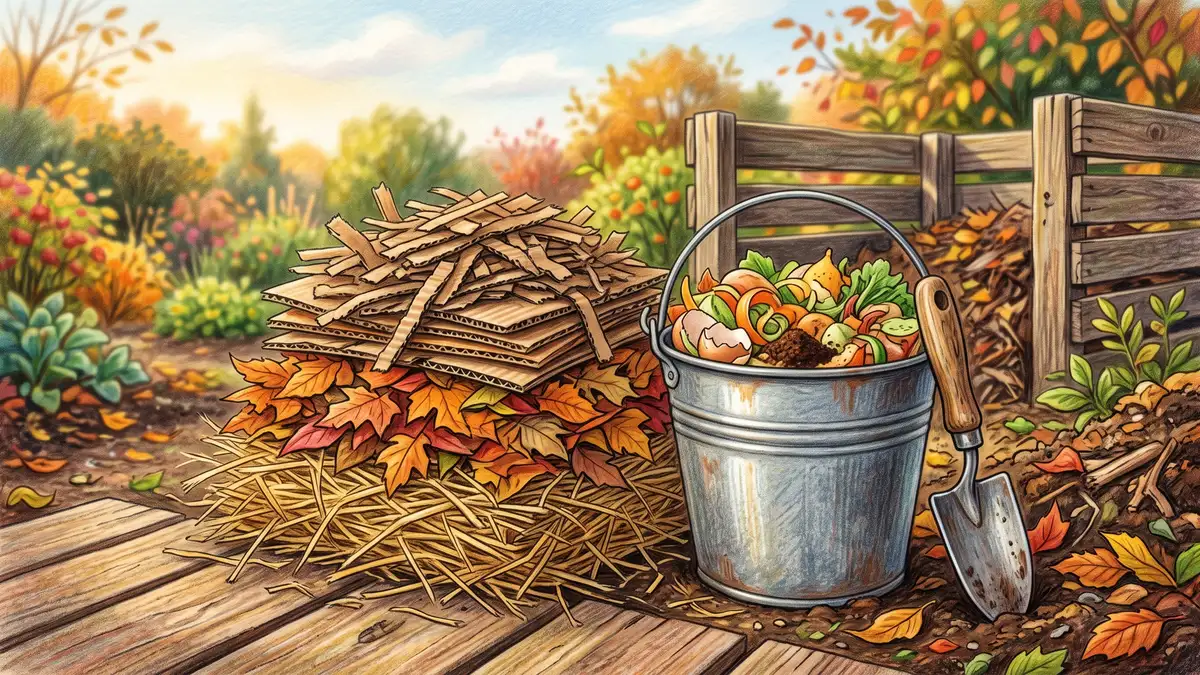
Some materials produce odor no matter how well you manage the pile. Meat, fish, bones, dairy, and cooking oils decompose through pathways that yield genuinely foul compounds, and attract animals while they do it. EPA guidance and most extension services advise leaving them out of a backyard system. Dog and cat waste stays out too, for pathogen reasons rather than odor.
Fresh grass in volume is the other repeat offender, not because grass is bad but because of how it gets added. A full mower bag dumped in as one layer compacts into an airtight green mat within a day. Spread in thin lifts and mixed with leaves, the same grass causes no trouble. For every borderline case, see our yes/no composting list.
Common Mistake to Avoid
Do not add lime to a smelly pile. It is old advice that still circulates and does the opposite of what you want: raising pH shifts the ammonium-to-ammonia balance toward the gas, so Oregon State Extension warns an alkaline pile loses more nitrogen as ammonia, not less. The answer is carbon and air.
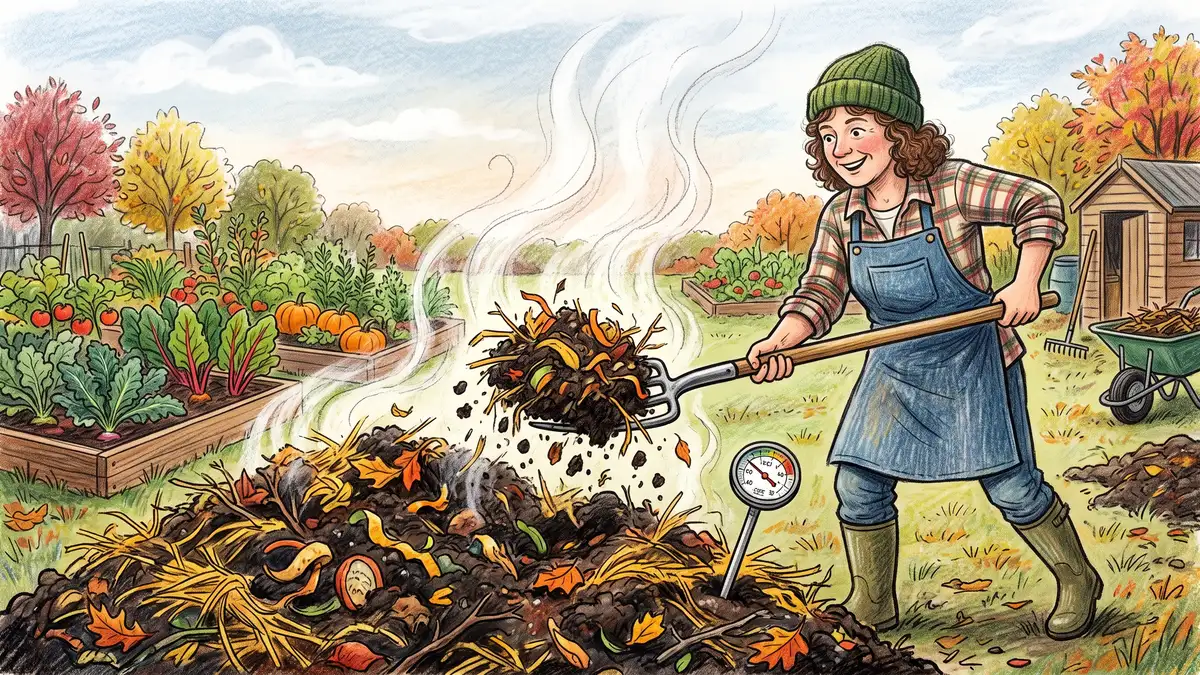
Does the Fix Change for Tumblers, Worm Bins, and Bokashi?
The chemistry is identical, but the correction differs by system. A sealed tumbler is the most odor-prone setup a home gardener owns: no drainage, limited airflow, contents that pack down every rotation. Add shredded cardboard rather than water, and keep the drum two-thirds full so contents tumble rather than slide as a wet block.
A smelly worm bin is almost always overfed: stop feeding for one to two weeks and add dry bedding while the worms catch up, as our worm farm troubleshooting guide explains. Bokashi is the exception. It ferments anaerobically in a sealed bucket, so Washington State University Extension notes it produces very little odor by design and a sour pickled smell is correct rather than a fault. A putrid bucket means the ferment failed, usually from too little bran or a poor seal. See our bokashi guide.
Why This Works: Working With the Microbial Succession
Each system runs a different microbial community, and odor signals that the wrong one has taken over. Permaculture calls this working with succession rather than against it: you are not sterilising or masking anything, you are changing conditions so the organisms you want outcompete the ones you do not. The same principle governs the whole soil food web in your beds.
Frequently Asked Questions
How long does compost smell last after I fix it?
For an anaerobic pile, the worst of it clears within 24 to 48 hours of being opened up and mixed with dry browns, because hydrogen sulfide disperses and oxidises quickly once air reaches it. Ammonia often fades within a day, as soon as the added carbon gives microbes something to bind the surplus nitrogen to. If a pile still smells strongly after four or five days, you did not add enough dry material or the clumps were never fully broken apart.
Is smelly compost bad for plants?
Unfinished, sour-smelling compost can harm plants, so do not spread it yet. Anaerobic decomposition produces organic acids and leaves material low in oxygen and high in soluble compounds that stress roots and seedlings. Fix the pile, let it finish, and use smell as your readiness check: finished compost smells earthy and sweet with no trace of ammonia or sourness. If you need the space now, spread it on a fallow bed to weather for a few weeks first.
Why does my compost smell like poop or manure?
That is usually both failures at once: a nitrogen-heavy pile that has also gone anaerobic, which is what happens when fresh manure or a lot of kitchen scraps sits wet and compacted. Manure runs as low as 5:1, so it needs plenty of carbon to balance. Treat it as the rotten-egg case: turn everything out, break the clumps, mix in two to three volumes of straw or leaves.
My compost bin smells and has flies. Are the maggots a problem?
The larvae in a wet, smelly pile are usually black soldier fly larvae, which Oregon State University Extension classes as beneficial compost helpers rather than pests. They thrive in the same wet, rotting conditions causing the odor, so they are a symptom rather than a cause. Covering scraps with 2 to 4 inches (5 to 10 cm) of dry browns and getting the pile hot discourages them, since they cannot survive above about 113°F (45°C).
How do I stop the pile smelling again next time?
Three habits prevent nearly every repeat. Keep dry browns beside the bin and cover every addition of scraps or grass with 2 to 4 inches (5 to 10 cm). bins with better airflow Never add a full mower bag as one layer. Check moisture monthly with the squeeze test, aiming for 40 to 60 percent. And skip the compost activator: it supplies organisms that were already there rather than the air and carbon they were missing. Still building your system? Start with our beginner's guide to composting.
Get the Weekly Dig
One practical permaculture guide a week, written for gardeners who do this on weekends: composting that actually finishes and soil that feeds itself. Free, no spam, unsubscribe any time.
Join the Weekly DigResources
- Cornell, Compost Chemistry
- Cornell, Ammonia Odors
- Cornell, Inadequate Porosity
- Oregon State Extension, Gardening With Compost
- Nebraska Extension, Garden Compost
- Illinois Extension, How Composting Works
- University of Minnesota Extension, Composting in Home Gardens
- US EPA, Composting At Home
- USDA NRCS, Composting Facility Practice Standard 317
- Oregon State Extension, Soldier Fly Larvae as Compost Helpers
- Washington State University Extension, Bokashi Composting
- Malinska et al. (2014), Biochar Amendment and Ammonia Emission During Composting