
What Is the C:N Ratio, and Why Should You Care?
Your compost pile is really a microbe farm, and like any farm, it runs on a balanced diet. That diet comes down to two ingredients: carbon and nitrogen. The ratio between them, the C:N ratio, is the single biggest lever you control, and it decides whether your pile cooks fast and clean or just sits there cold and slimy. alfalfa meal as a nitrogen green
Microbes use carbon for energy and nitrogen to build proteins and reproduce, as Cornell University's compost chemistry overview explains. Give them too much carbon and they starve for nitrogen, so the pile crawls. Give them too much nitrogen and the excess escapes as smelly ammonia gas. Get the balance right and you get finished compost in a fraction of the time. The good news: you don't need a lab, just a decent rule of thumb and your nose.
Here's what this guide covers:
- The ideal starting ratio and what it actually means
- Which everyday materials are "browns" and "greens" (with real numbers)
- The simple volume recipe that gets you close without weighing anything
- How to read and fix a pile that's too wet, too smelly, or too slow
Key Takeaway
Aim to start your pile near 30 parts carbon to 1 part nitrogen by weight. In the real world that means mixing roughly two to three parts dry "browns" to one part moist "greens" by volume, keeping it as damp as a wrung-out sponge. Everything else is fine-tuning.
What's the Ideal Compost Ratio?
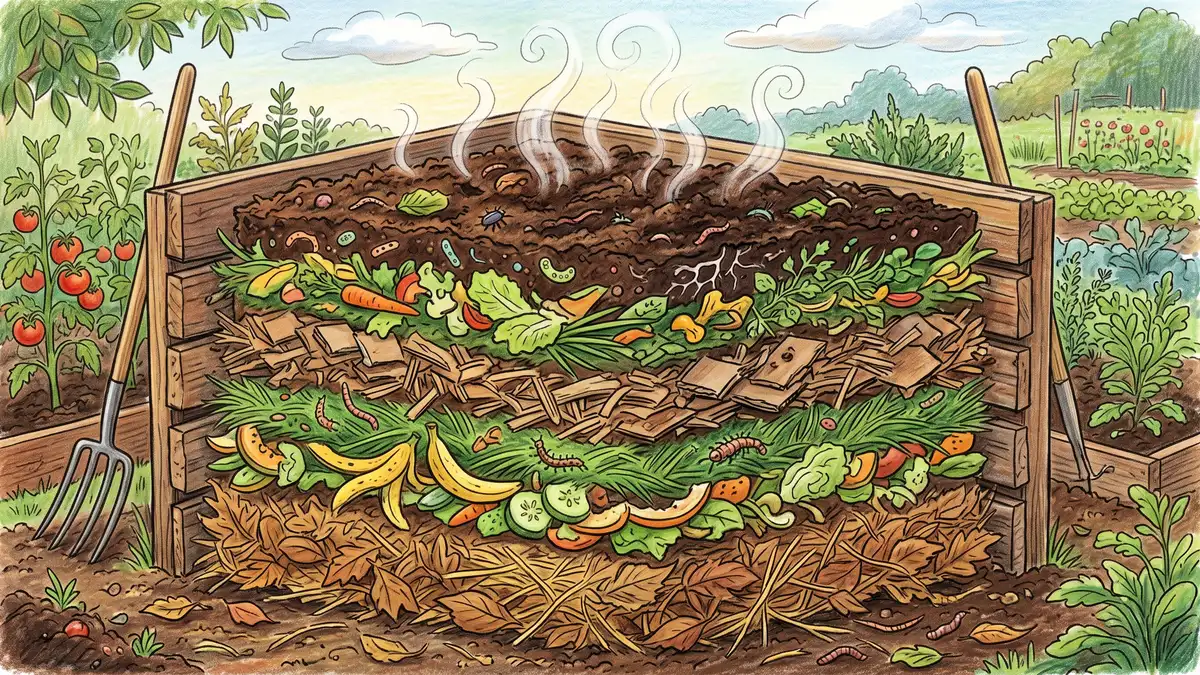
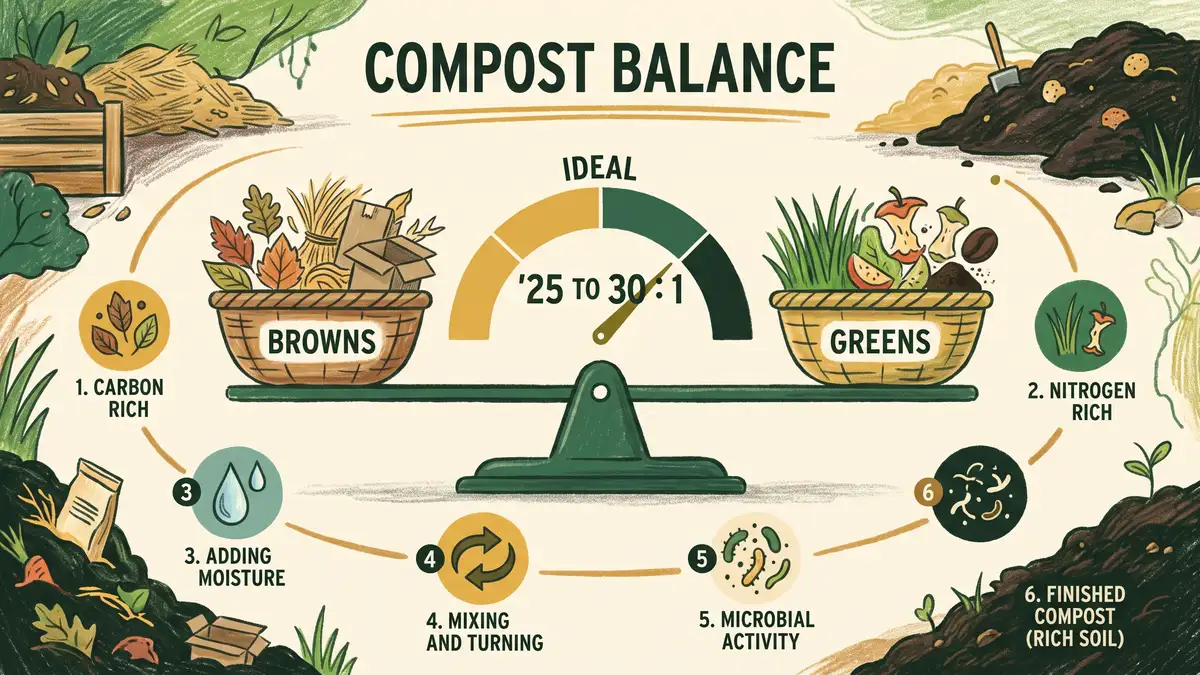
Decades of extension research land on the same number: a starting C:N ratio of 25:1 to 30:1 is the sweet spot for fast, hot composting. Cornell puts the optimum "around 30:1," and Utah State University Extension agrees that 25:1 to 30:1 is ideal, though anything from 20:1 to 40:1 will still work, just faster or slower.
Why 30 and not 10 or 100? Below about 20:1 there's more nitrogen than the microbes can use, and the leftover gasses off as ammonia, which is both a bad smell and a loss of fertilizer. Above about 40:1 there isn't enough nitrogen to fuel a population boom, so the pile stays cool and materials sit around recognizable for months. As the pile works, microbes burn off carbon as CO2 and the ratio naturally falls: Cornell notes finished compost settles around 10:1 to 15:1, which is why mature compost feeds plants instead of robbing them of nitrogen. If you're brand new to this, our complete guide to composting for beginners and our soil and composting hub cover the basics of building a pile.
Browns vs Greens: Which Is Which?
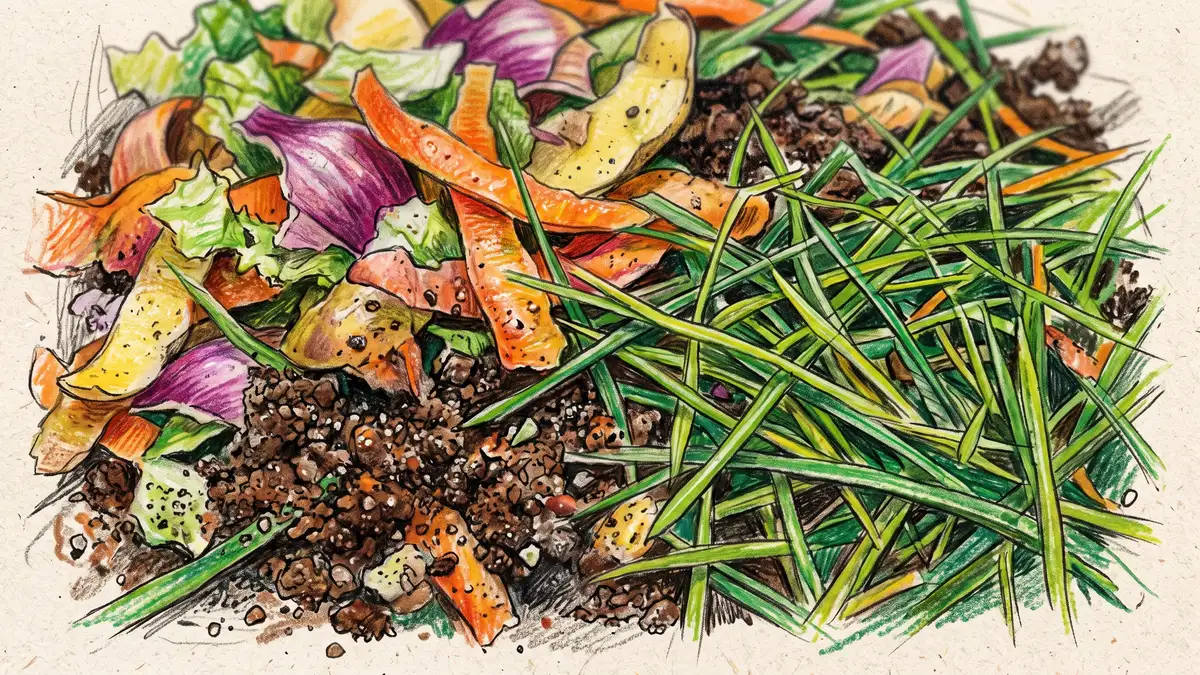
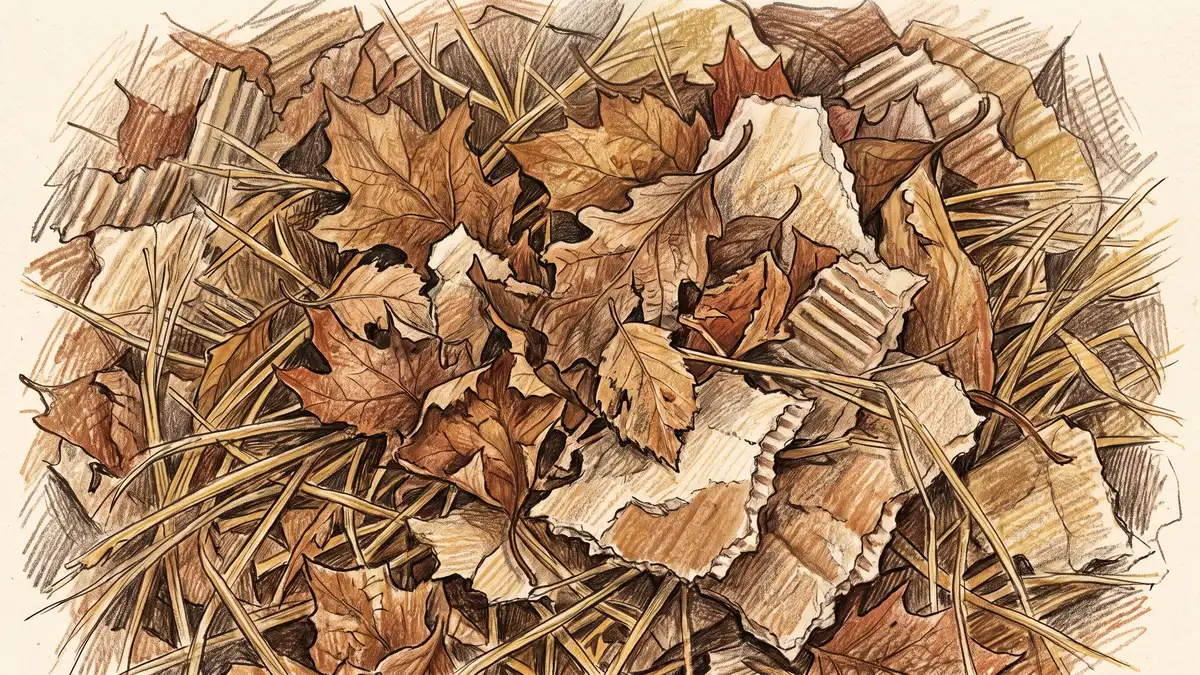
"Browns" are carbon-rich and usually dry; "greens" are nitrogen-rich and usually moist. The confusing part is that the color name doesn't always match the color. Coffee grounds look brown but count as a green, because their C:N is only about 20:1. Cardboard, meanwhile, is a heavy brown at 300:1 or more. When in doubt, ask whether the material is fresh and wet (green) or dry and woody (brown). For a full sortable list, see our guide to what you can and can't compost.
| Material | Approx. C:N | Counts As |
| Dry leaves | 30-80:1 | Brown |
| Straw | 40-100:1 | Brown |
| Cardboard / paper | 150-500:1 | Brown |
| Sawdust, wood chips | 100-600:1 | Brown (use sparingly) |
| Grass clippings | 12-25:1 | Green |
| Food / veggie scraps | 12-20:1 | Green |
| Coffee grounds | ~20:1 | Green |
| Manure (rotted) | ~25:1 | Green |
Sources: Illinois Extension Compost Handout, UNH Extension: Home Composting, Compost Magazine C:N Tables.
Why This Works: The Forest Floor
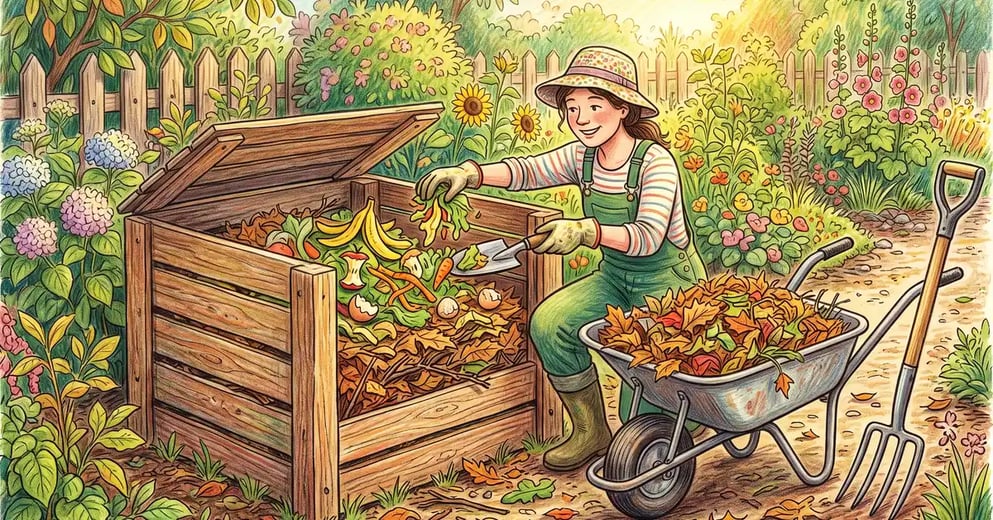
A balanced pile is really an accelerated forest floor. In a woodland, fallen leaves (browns) and green growth decay together, feeding a web of bacteria, fungi, and worms that turn litter into rich humus. USDA guidance on soil biology stresses that this steady mix of carbon and nitrogen is what powers the whole soil food web. When you layer browns and greens, you're recreating that same decomposition engine in a box, which is the heart of the permaculture idea of closing the nutrient loop.
How Many Browns Per Green? The Practical Rule
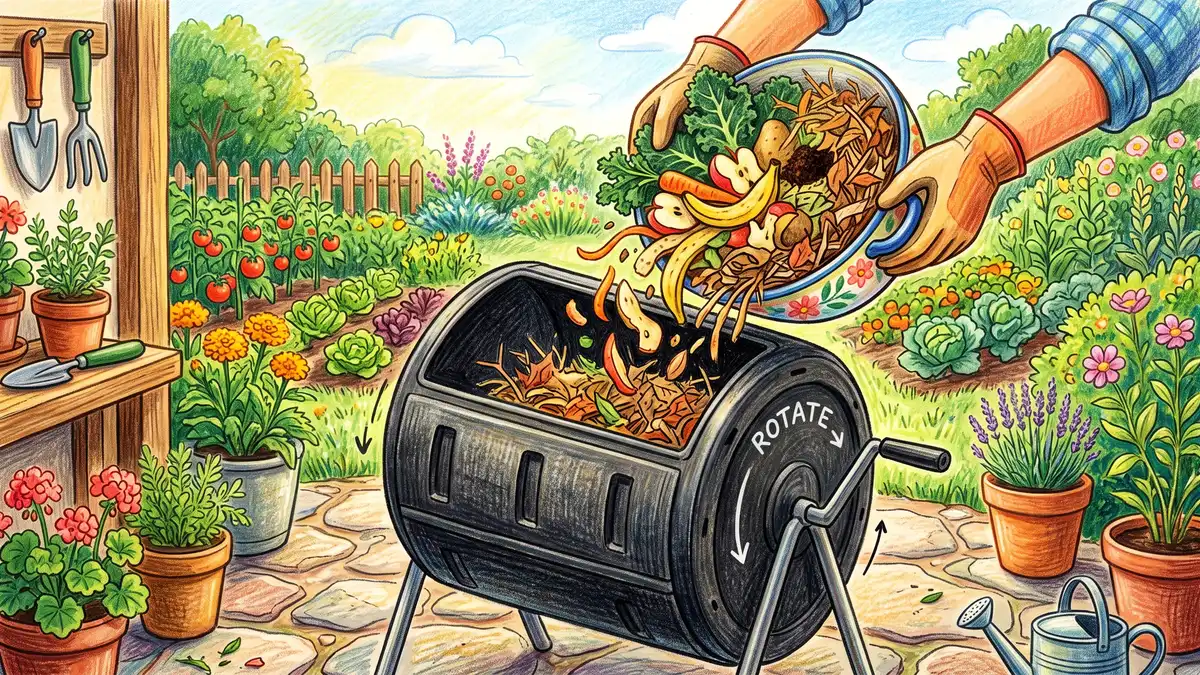
Here's where people get tripped up. The 30:1 target is by weight, but nobody weighs their leaves. So extension services translate it into a volume rule you can eyeball. The EPA recommends two to three times the volume of browns to greens, and covering fresh food scraps with a 4- to 8-inch (10 to 20 cm) layer of dry leaves. Oregon State and Michigan Extension both land on roughly two parts browns to one part greens.
How can 2 parts browns hit a 30:1 mass ratio when leaves alone run 60:1? Because dry browns are light and fluffy while greens are dense and wet. A packed bucket of grass weighs far more than a loose bucket of leaves, so by weight the greens punch above their volume. That's why the volume shortcut works out to roughly the right chemistry without any math. Build a pile at least 1 cubic yard (a 3-foot cube) so it holds heat, keep it damp like a wrung-out sponge, and turn it now and then.
Need the gear for this?
Bins and tumblers picked by yard size, with the honest trade-offs for each.
See the compost bin picksHow Do You Fix a Compost Pile That's Off?
Your pile tells you what it needs, if you know the signals. A sharp ammonia smell means too many greens (C:N too low): add browns and turn it. A cold pile that isn't breaking down means too many browns (C:N too high): add greens like grass or food scraps, and water if it's dry. A rotten-egg smell means it's gone anaerobic from packing down too wet: add coarse browns and turn to get air back in.
Common Mistake to Avoid
Composting a big heap of grass clippings on their own. Fresh grass is a strong green (around 19:1), and piled solo it packs down, goes anaerobic, and turns into a slimy, ammonia-reeking mat. University of Missouri Extension warns that wet, nitrogen-heavy piles can spike toward 170°F and gas off nitrogen. The fix is simple: always mix grass with two to three times its volume of dry browns like leaves or shredded cardboard.
Key Takeaway
Don't chase perfect numbers. Start near 2-3 parts browns to 1 part greens, then let your senses steer: smelly means add browns, cold and slow means add greens. Getting it roughly right still makes excellent compost, and you'll dial it in by feel within a season or two.
Frequently Asked Questions
What is a good carbon-to-nitrogen ratio for compost?
The widely cited ideal starting ratio is 25:1 to 30:1 carbon to nitrogen by weight, with 30:1 as the classic target from Cornell and several university extensions. That balance gives microbes enough carbon for energy and enough nitrogen to multiply quickly, so the pile heats up fast without losing nitrogen to ammonia. Ratios from about 20:1 to 40:1 still compost fine, just faster or slower. As the pile matures, the ratio naturally drops to around 10:1 to 15:1, which is the range of finished, plant-ready compost.
Are coffee grounds a green or a brown?
Coffee grounds are a green, even though they look brown. What matters for composting is nitrogen content, not color, and coffee grounds have a C:N ratio of about 20:1, which puts them firmly in the nitrogen-rich green category alongside grass and food scraps. Because they're fine and moist, they can mat down and smell if piled thickly on their own, so mix them into a pile with plenty of dry browns. Used grounds are close to pH neutral, so they won't dramatically acidify your compost.
Is cardboard a brown or a green?
Cardboard is a brown, and a strong one, with a C:N ratio around 300:1 to 500:1. That makes it a great carbon source and a handy way to soak up excess moisture in a soggy pile. Shred or tear it into small pieces first so it breaks down and doesn't form airtight mats, and remove any plastic tape or glossy coatings. Because it's so carbon-heavy, balance cardboard with vigorous greens like grass clippings or food scraps, or it will decompose very slowly on its own.
What happens if I add too many greens?
Too many greens push the C:N ratio below about 20:1, and the surplus nitrogen escapes as ammonia gas. You'll notice a sharp, cat-litter smell, and often a wet, slumping pile as the fine, moist materials pack down and squeeze out air. Beyond the odor, you're literally losing fertilizer to the atmosphere. The fix is to stir in a generous helping of dry browns (leaves, straw, shredded cardboard) and turn the pile to reintroduce air. Within a day or two the smell should fade as balance returns.
How do I calculate my compost's C:N ratio?
You can estimate it by averaging the ratios of your materials, weighted by how much of each you use. For example, mixing roughly equal parts grass (about 20:1) and leaves (about 50:1) lands near 35:1. In practice, most gardeners skip the math and use the 2-to-3-parts-browns-to-1-part-greens volume rule, which gets close to the ideal for typical leaves, grass, and kitchen scraps. Then they adjust by observation: extension services agree it's better to err slightly high on carbon than to build a nitrogen-heavy, smelly pile.
Get the Weekly Dig
One practical permaculture guide a week, written for gardeners who do this on weekends: composting that actually finishes and soil that feeds itself. Free, no spam, unsubscribe any time.
Join the Weekly DigResources
- Cornell University: Compost Chemistry
- Utah State University Extension: The Composting Process
- University of Illinois Extension: Compost Handout
- Oregon State University Extension: Gardening With Compost
- University of Missouri Extension: Making and Using Compost
- US EPA: Composting at Home
- USDA NRCS: Soil Biology and the Landscape
- UNH Extension: Home Composting Guide
- Compost Magazine: Carbon-Nitrogen Ratio Tables