
Some links below are affiliate links. If you buy through them we earn a commission at no extra cost to you. As an Amazon Associate we earn from qualifying purchases.
What Are Brown and Green Compost Materials?
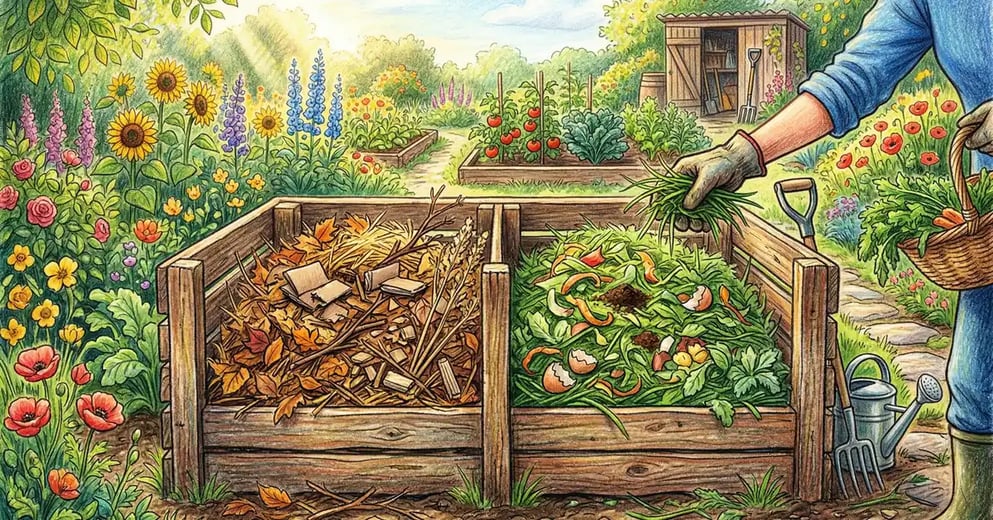
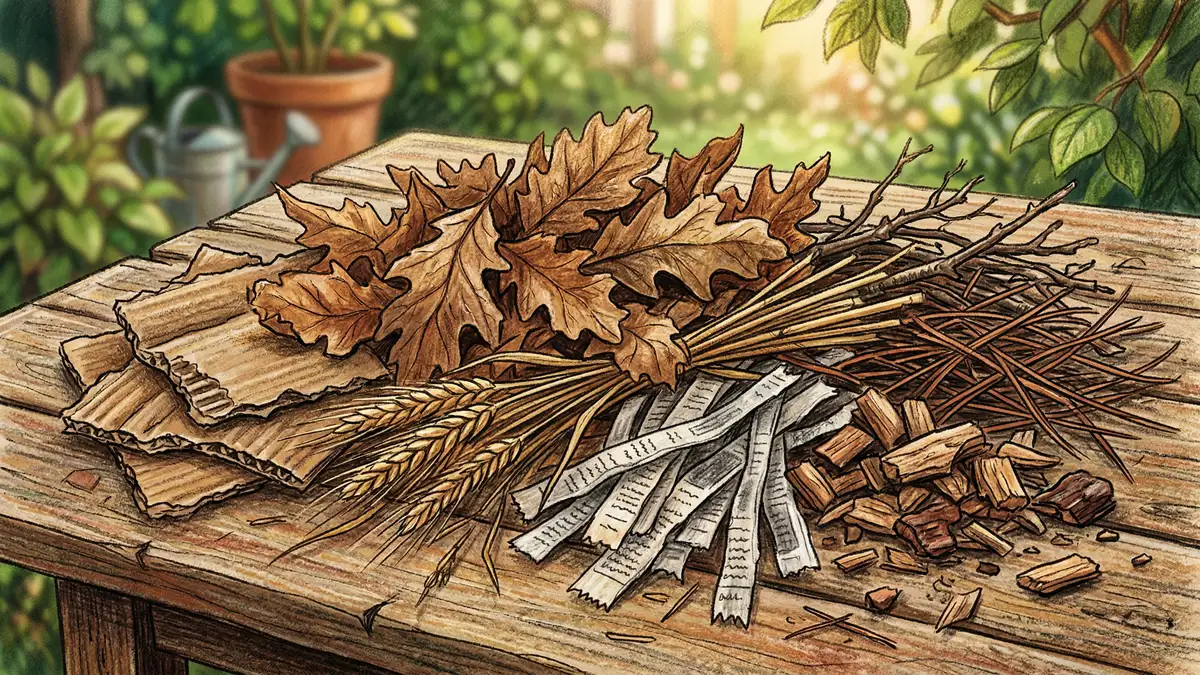
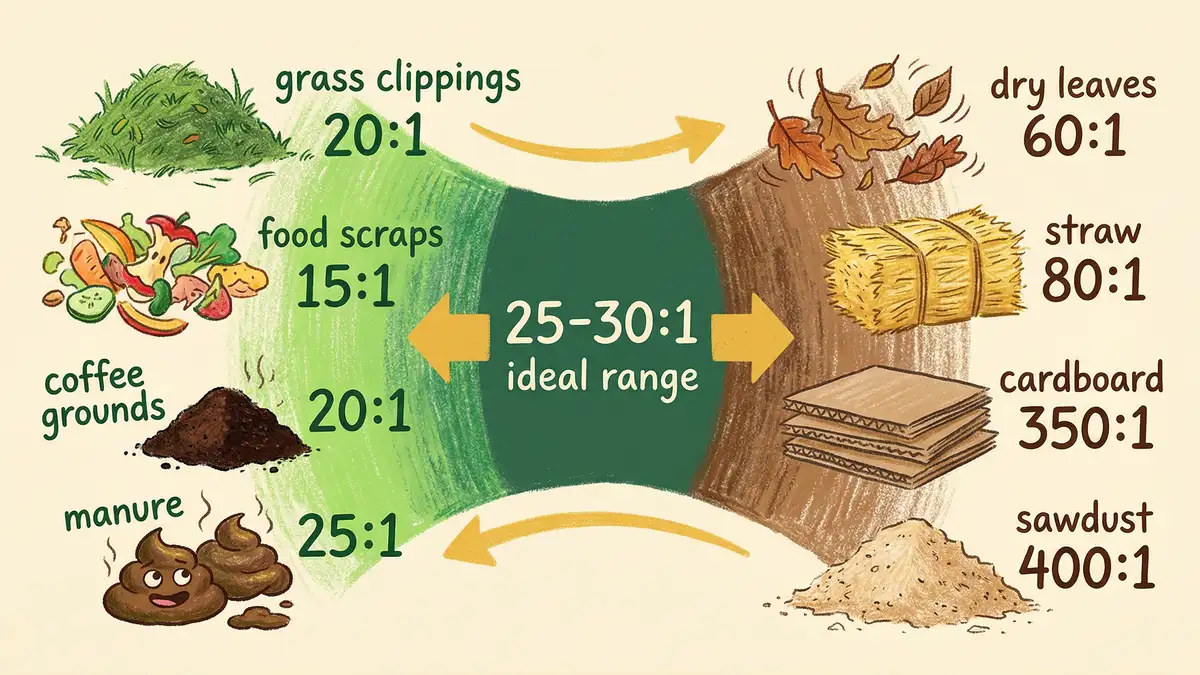
Aim for about 3 parts browns to 1 part greens by volume. That puts you near the carbon-to-nitrogen ratio of 25–30:1 that composting microbes work fastest at. Browns are the dry carbon: fallen leaves, cardboard, straw, plain paper. Greens are the wet nitrogen: kitchen scraps, fresh grass clippings, coffee grounds, manure. An ammonia smell means too many greens. A cold pile that never changes means too many browns. Nothing needs weighing, because browns are bulky and light while greens are dense and wet, so filling by volume lands close enough to the weight ratio that actually matters.
Your compost pile smells like ammonia, or maybe it's barely breaking down at all — and you're not sure what went wrong. The answer almost always comes back to one thing: the balance between brown and green materials. Browns are carbon-rich items like dried leaves, cardboard, and straw. Greens are nitrogen-rich materials like kitchen scraps, grass clippings, and coffee grounds. Getting the mix right is the difference between rich, crumbly compost in a few months and a soggy, stinking pile that sits there all year.
Scientists at Cornell University's composting program recommend starting with a carbon-to-nitrogen (C:N) ratio of roughly 25–30:1 — that's 25 to 30 parts carbon for every 1 part nitrogen by weight. In practical terms, that usually means about 3 parts brown materials to 1 part green by volume in your bin. The EPA reports that only about 5% of food waste in the United States gets composted — and a major reason people give up is a pile that goes wrong because the ratio was off.
What you'll learn in this guide:
- Which everyday materials count as browns and which count as greens — with their actual C:N ratios
- Why the ratio matters for decomposition speed and odour control
- The tricky materials that confuse everyone (coffee grounds, eggshells, hay vs. straw)
- A simple layering method to get the ratio right without measuring anything
Key Takeaway
Most compost problems trace back to ratio. Too many greens and your pile turns slimy and smells like ammonia. Too many browns and it just sits there. Aim for roughly 3 parts brown to 1 part green by volume, and you'll land close to the 25–30:1 C:N ratio that microbes need to work efficiently.
Is It Brown or Green? Quick Answers
Most of the confusion is not about the ratio itself. It is about which side a given material sits on, and colour is a bad guide: coffee grounds are brown and count as a green, hay looks like straw and counts as a green. The table sorts the ones people actually ask about.
| Material | Brown or green | Why |
| Dried autumn leaves | Brown | C:N 40–80:1 once the moisture and the nitrogen have gone |
| Fresh green leaves and prunings | Green | Still full of sap; dry the same leaves and they become browns |
| Grass clippings, fresh | Green | C:N 15–25:1; keep layers under 2 in. (5 cm) or they mat |
| Grass clippings, dried to straw colour | Brown | The nitrogen leaves with the water |
| Straw | Brown | C:N 75–100:1; the hollow stem left after grain harvest |
| Hay | Green | C:N 25–30:1; grass and legumes cut while still nutritious |
| Coffee grounds | Green | C:N about 20:1; behaves like manure despite the colour |
| Paper coffee filters | Brown | Plain paper with no nitrogen left in it |
| Eggshells | Neither | Almost pure calcium carbonate; no effect on the ratio either way |
| Chicken manure | Green | C:N 6–10:1, the most nitrogen-rich green here; age it first |
| Horse manure with bedding | Depends | The manure is a green and the straw bedding is a brown, so a bedded load behaves as roughly balanced |
| Bread and cooked grains | Green | Starchy and wet; bury it under browns or it draws flies |
| Wood ash | Neither | A liming amendment, not a carbon or a nitrogen source |
| Pine needles | Brown | C:N 60–110:1; slow, and slightly acidic until finished |
| Dryer lint, cotton or wool | Brown | Around 100:1; synthetic lint is microplastic and stays out |
| Cardboard, corrugated | Brown | C:N 350–500:1, the most extreme carbon in an average house |
Sources: Cornell Composting, C:N Ratio Reference Table; UC ANR, How to Calculate Carbon-to-Nitrogen Ratio; LSU AgCenter, Composting and the Carbon Nitrogen Ratio.
Two rows carry a caveat worth knowing. Wood ash is alkaline enough to move the pH of a small bin, so it goes in by the handful and not by the bucket, and the wider case for adding wood ash to your garden is a separate question from whether it belongs in the heap. The fresh-versus-dried split runs through the whole table: one material sits on either side depending on how much water is still in it. When you genuinely cannot tell, call it a green and cover it with browns. Too much carbon only makes a pile slow. Too much nitrogen makes it stink.
Why Does the Carbon-to-Nitrogen Ratio Matter?
Composting is a biological process driven by microorganisms — bacteria, fungi, and actinomycetes — that eat organic matter and break it down into humus. These microbes need carbon for energy and nitrogen to build proteins and reproduce. According to the University of Florida IFAS Extension, when the C:N ratio sits near 30:1 on a dry-weight basis, microbes multiply rapidly, generate heat (up to 160°F / 71°C in a hot pile), and convert raw materials into finished compost in as little as 2–3 months.
When you load your bin with too many greens — say, a big dump of grass clippings — the excess nitrogen escapes as ammonia gas, which is what causes that sharp, unpleasant smell. Flip the problem: a pile of nothing but dried leaves (C:N around 60:1) starves the microbes of nitrogen, and decomposition slows to a crawl. The LSU AgCenter notes that while usable results can happen anywhere between 20:1 and 40:1, the sweet spot for active composting remains 25–30:1. The arithmetic behind that range, including how to work out the ratio of a mixed load rather than of one material at a time, sits in our guide to the carbon-to-nitrogen ratio.
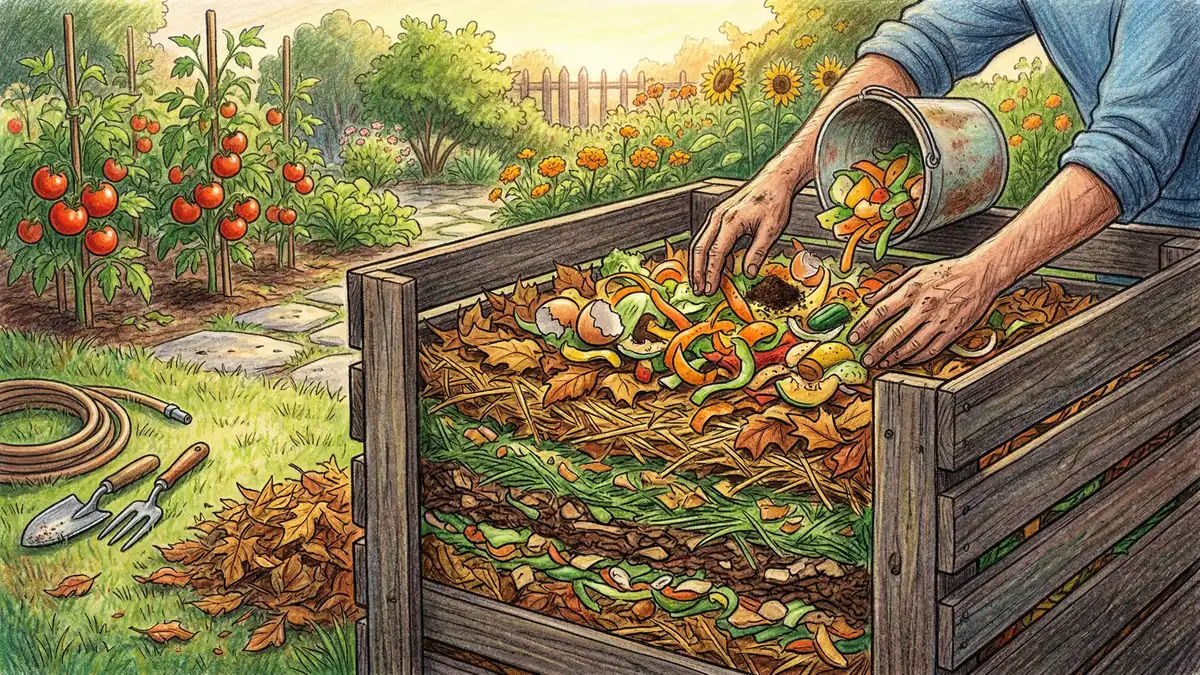
Here's the practical translation: C:N ratio is measured by weight, but you're filling your bin by volume. Browns are typically much lighter and bulkier than greens. A bucket of dried leaves weighs far less than a bucket of food scraps. That's why the common "3 browns to 1 green by volume" rule works — it roughly approximates the 25–30:1 weight ratio without needing a scale. If your compost bin smells fine and heats up within a few days of adding fresh material, your ratio is in the right zone.
Common Brown Compost Materials and Their C:N Ratios
Browns provide the carbon that fuels microbial energy production. They tend to be dry, woody, or fibrous — think autumn leaves, cardboard, and straw. Here are the most common brown materials you'll find around the house and garden, along with their approximate C:N ratios from Cornell's composting research:
| Brown Material | C:N Ratio | Notes |
| Dried leaves | 40–80:1 | Shred for faster breakdown; oak leaves are slower |
| Cardboard (corrugated) | 350–500:1 | Remove tape; tear into small pieces |
| Newspaper (shredded) | 170–200:1 | Modern soy inks are compost-safe |
| Straw | 75–100:1 | Excellent structure; avoid herbicide-treated |
| Wood chips | 400–700:1 | Best for pathways, not fast composting |
| Sawdust | 200–750:1 | Use sparingly; can compact and go anaerobic |
| Pine needles | 60–110:1 | Slightly acidic; mix well with other browns |
| Corn stalks (dry) | 60–75:1 | Chop into 6 in. (15 cm) pieces |
| Paper towels / napkins | 100–200:1 | Unbleached preferred; no grease or chemicals |
| Dryer lint (natural fibre) | ~100:1 | Cotton/linen only — synthetic lint is microplastic |
Sources: Cornell Composting, C:N Ratio Reference Table; EPA, Food Material-Specific Data.
Notice the massive range in ratios — sawdust at 200–750:1 locks up nitrogen much more aggressively than dried leaves at 40–80:1. If you're using high-carbon browns like sawdust or wood chips, you'll need more greens to compensate. For everyday backyard composting, dried leaves and shredded cardboard are the most forgiving browns because their ratios aren't extreme. Particle size does as much work here as the ratio does: shredding your browns first roughly halves the time a pile needs, because microbes eat surface area, not volume. If you're curious about what else you can compost, we have a full yes/no list covering over 100 materials.
Common Green Compost Materials and Their C:N Ratios
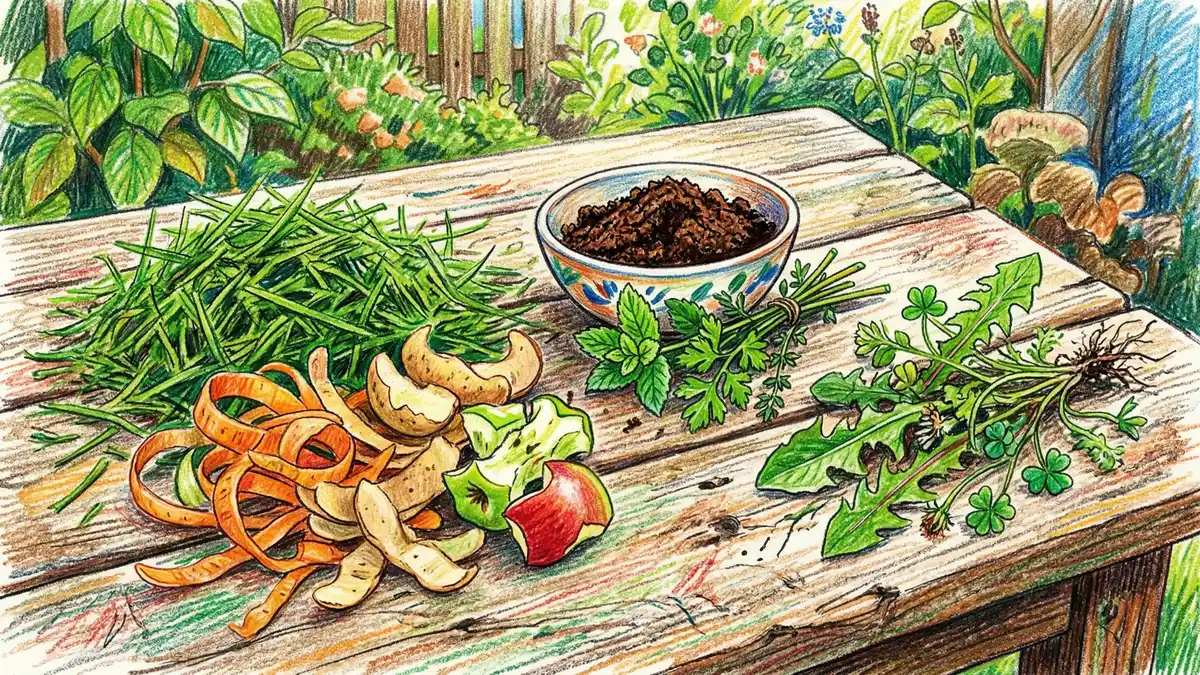
Greens deliver the nitrogen that microbes need to build cell structures and reproduce. They're typically wet, fresh, and often colourful — though the name "green" refers to nitrogen content, not actual colour. Here are the greens most Weekend Gardeners have on hand:
| Green Material | C:N Ratio | Notes |
| Grass clippings (fresh) | 15–25:1 | Layer thinly to prevent matting; dry first if possible |
| Fruit & vegetable scraps | 15–35:1 | Chop large pieces; no cooked food with oils |
| Coffee grounds | 20:1 | Counted as green despite brown colour |
| Fresh garden trimmings | 15–30:1 | Chop woody stems; avoid diseased plants |
| Chicken manure | 6–10:1 | Very nitrogen-rich; use sparingly and age first |
| Horse manure | 25–30:1 | Often mixed with bedding, raising the ratio |
| Seaweed / kelp | 19:1 | Rinse salt; excellent trace minerals |
| Tea leaves / bags | 15–20:1 | Remove staples from bags; some bags contain plastic |
| Alfalfa hay | 12–15:1 | Compost activator; breaks down fast |
| Fresh weeds (no seeds) | 20–30:1 | Only hot-compost weeds with mature seeds |
Sources: Cornell Composting, C:N Ratio Reference Table; Oregon State Extension, Coffee Grounds and Composting.
Fresh grass clippings are the most common green for suburban gardeners, but they compact into anaerobic mats if you add too much at once. Spread clippings in thin layers (2 in. / 5 cm or less) and alternate with browns. Kitchen scraps are the easiest year-round green — banana peels, apple cores, and vegetable trimmings all count. For gardeners building healthy, living soil, finished compost from a well-balanced pile is one of the best amendments you can add. Coastal gardeners can treat kelp meal in the compost pile the same way once the salt is rinsed off, at a C:N near 19:1.
Need the gear for this?
Bins and tumblers picked by yard size, with the honest trade-offs for each.
See the compost bin picksTricky Materials: Brown or Green?
Some materials confuse even experienced composters. Here's where the common ones actually fall:
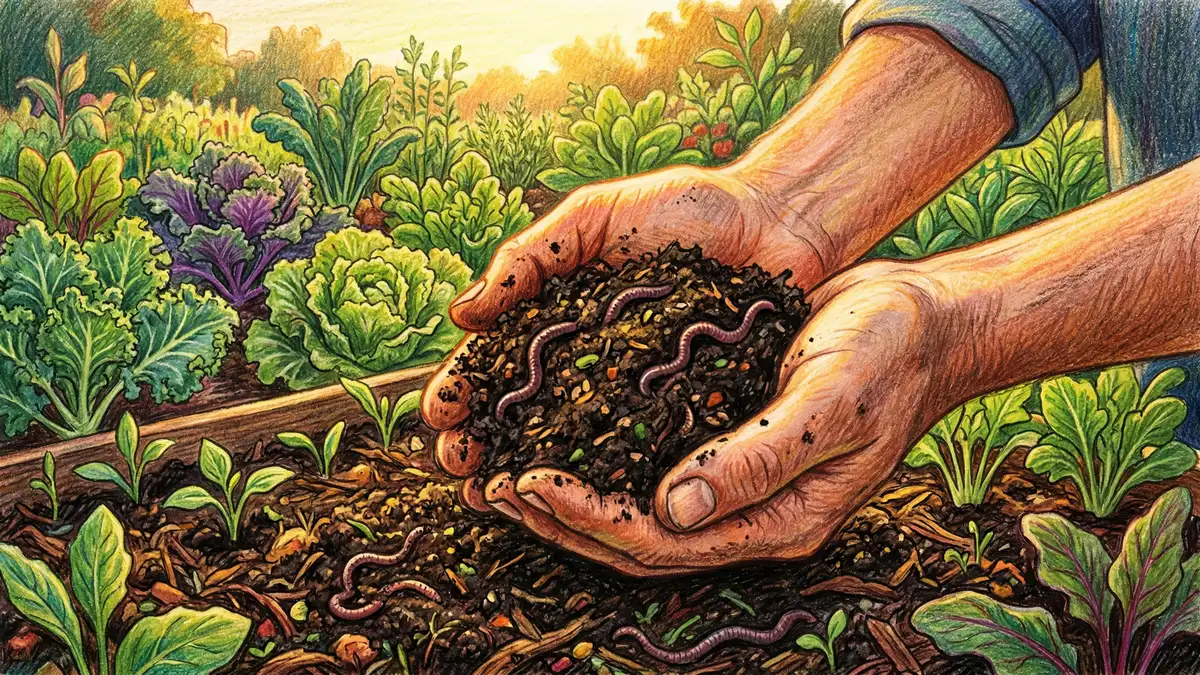
Coffee grounds look brown but are a green (C:N ~20:1). Oregon State University Extension confirms they contain about 2% nitrogen by volume and behave like manure in a compost pile. Paper coffee filters, on the other hand, are a brown.
Eggshells are neither brown nor green — they're almost pure calcium carbonate with virtually no carbon or nitrogen. They won't affect your ratio, but crush them finely so they break down. They do add valuable calcium to finished compost.
Hay vs. straw: Straw is a brown (C:N 75–100:1) because it's the dried, hollow stems left after grain harvest. Hay is a green (C:N 25–30:1) because it's dried grass and legumes cut while still nutritious. Many gardeners confuse the two, but they belong on opposite sides of the ratio.
Dryer lint is a brown if your clothes are cotton, linen, or wool. If you wear mostly synthetic fabrics, skip it — polyester lint is essentially microplastic and doesn't belong in compost that's going into your garden soil. The fabric test for natural-fiber dryer lint as a brown takes two minutes and is worth it if you are not sure what your wardrobe is made of.
Watch Out for Herbicide-Treated Materials
Some straw, hay, and grass clippings carry persistent herbicides (aminopyralid, clopyralid) that survive composting and can damage tomatoes, beans, and other broadleaf crops. Ask your supplier whether herbicides were used, or test a small batch of finished compost on bean seedlings before spreading it widely. The composting for beginners guide covers this in detail.
Why This Works: Feeding the Soil Food Web
In permaculture, compost isn't just a soil amendment — it's an inoculation of the living soil food web. When you balance browns and greens, you're feeding billions of bacteria, fungi, protozoa, and nematodes in the exact proportions they need. The carbon feeds fungal networks (which build long-lasting soil structure), while nitrogen fuels bacterial growth (which makes nutrients plant-available fast). A well-balanced pile produces compost that supports both sides of the soil ecosystem — and that's what builds truly healthy, self-sustaining garden soil over time.
How to Get the Right Ratio in Your Bin
You don't need to weigh or measure anything precisely. Here's a simple layering method that keeps the ratio in the right zone every time you add material to your bin:
Start With a Brown Base
Lay 4–6 inches (10–15 cm) of coarse browns — small sticks, straw, or shredded cardboard — at the bottom of your bin. This creates airflow underneath and prevents the pile from going anaerobic at the base.
Add Greens in Thin Layers
Add your kitchen scraps or grass clippings in a layer no more than 2–3 inches (5–8 cm) thick. Thinner layers prevent matting and help air reach the material.
Cover With Browns — Every Time
After every green addition, cover it with roughly 3 times as much brown material by volume. This locks in the right ratio, suppresses odours, and discourages flies. Keep a bag of shredded leaves or torn cardboard next to your bin so this step is effortless.
Check and Adjust
Ammonia smell? Add more browns. Pile cold and dry? Add greens and water. Rotten-egg smell? Turn the pile to add oxygen — this usually means compaction, not a ratio problem. A worm composting bin is a great alternative if turning a full-sized pile isn't practical for your space.
Key Takeaway
The layering method — greens in, cover with 3× browns — is the simplest way to maintain a healthy ratio without any calculations. If it smells fine and heats up, you're doing it right.
Too Many Browns or Too Many Greens: How to Tell
You will not measure your way to the right ratio. You will read the pile and correct it. Each symptom below has one cause and one fix, and the heap tells you within days whether the correction took.
| What you see or smell | What it means | Fix | How fast it responds |
| Sharp ammonia smell | Too many greens; surplus nitrogen leaving as gas | Fold in two to three times the volume of shredded browns | A day or two |
| Slimy grey matted layers | Too many greens, plus compaction | Break the mat apart and mix dry browns through it | About a week |
| Never warms up, material still recognisable after months | Too many browns; microbes short of nitrogen | Add greens (clippings, scraps, manure) and water | Heat within three to five days |
| Rotten-egg or sulphur smell | Not the ratio: the pile has run out of oxygen | Turn it | Hours |
| Flies, and scraps visible on top | Greens left uncovered | Cover every green addition with browns | Immediate |
| Warm and shrinking fast, then stalling | Ratio is fine, moisture is too low | Water to the wetness of a wrung-out sponge | Two to three days |
Sources: Cornell Composting, Compost Chemistry; University of Florida IFAS Extension, Elements of Composting; Nebraska Extension, Garden Compost Guide.
The asymmetry is the useful part. Too many browns costs you time and nothing else, and the pile recovers in the week you add greens. Too many greens costs you the nitrogen itself, which leaves as ammonia and does not come back, and it is the version that makes the neighbours complain. So when you are guessing, guess brown. If you are already past that point, why your compost smells works through the three smells separately, because each one wants a different correction.
Five Things to Keep Out of the Pile
None of these is a ratio problem, and no amount of browns fixes them. They are exclusions.
- Meat, fish and bones. They do break down, but not before they draw rats, foxes and flies, and a backyard heap rarely holds 140°F (60°C) long enough to be confident about pathogens.
- Dairy, oils and greasy cooked food. Fat coats particles and shuts out the water and air the microbes need, so the pocket it sits in turns anaerobic and sour.
- Cat and dog waste. It carries pathogens that survive garden temperatures, Toxoplasma and roundworm among them. Herbivore manure is fine; carnivore manure is not.
- Diseased plants, and anything herbicide-treated. Clubroot, blight and white rot persist, and aminopyralid and clopyralid pass through composting intact and then kill the tomatoes you spread the finished compost around.
- Glossy or coated paper, and most packaging sold as compostable. The coating is plastic, and industrial compostable film needs sustained heat a garden bin never reaches, so it breaks into fragments rather than down.
The bin makes the ratio easier or harder
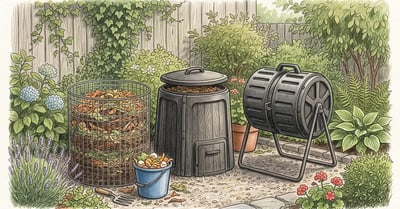
You can hit a 3:1 ratio in a bare heap, but the container decides how much fiddling it takes. Volume is the part people get wrong first: below roughly 3 cubic feet (85 litres) a pile cannot hold its own heat, so it runs cold whatever you feed it and the ratio stops deciding your timeline. Sizing therefore comes before shopping, which is why which compost bin holds enough mass to heat up is the first question in our picks by yard size, ahead of enclosed versus open. Two that suit different problems:
Geobin, 246 gallons, expandable. An open mesh ring you unroll to whatever diameter you need. It is the cheapest way to get a heap big enough to actually heat up, and because it opens flat you can see your layers while you build them. Poor insulation, so it slows right down in a cold winter.
Exaco Aerobin 400, insulated. The opposite trade-off. Insulated walls and a central aeration core mean it keeps working through cold weather without turning, which matters if your greens run wet and you cannot get out there to mix. Considerably more expensive.
Neither fixes a bad ratio. If your heap smells of ammonia you have too many greens, and no container will compost its way out of that.
Frequently Asked Questions
Are coffee grounds green or brown compost?
Coffee grounds are a green compost material despite their brown colour. They have a carbon-to-nitrogen ratio of about 20:1, similar to animal manure. Oregon State University Extension recommends adding them as part of your nitrogen-rich layer and balancing with an equal volume of browns like shredded paper or dried leaves. Paper coffee filters can go in too — those count as a brown. Just avoid dumping large amounts of grounds without browns, as they can compact and become anaerobic.
What is the best ratio of brown to green in compost?
Aim for roughly 3 parts brown to 1 part green by volume. By weight, the target is a carbon-to-nitrogen ratio of 25–30:1, but since most gardeners don't weigh their scraps, the 3:1 volume rule is the most practical guideline. According to the University of California, ratios anywhere between 25:1 and 35:1 produce good results. If your pile is heating up and doesn't smell, you're in the right range — no need to be exact.
Are eggshells green or brown compost?
Eggshells are neither green nor brown — they're almost pure calcium carbonate and contribute virtually no carbon or nitrogen to your pile. They won't change your brown-to-green ratio, so don't count them toward either side. Crush them as finely as possible (a blender works well) because whole shells can take over a year to break down. The calcium they add benefits tomatoes, peppers, and other crops prone to blossom end rot when the soil pH is right.
Is hay brown or green compost?
Hay is a green material with a C:N ratio of roughly 25–30:1 because it's made from grasses and legumes cut while still nutritious. Straw, by contrast, is a brown (C:N 75–100:1) — it's the dry, hollow stem left over after grain harvest. Many composters confuse the two because both look similar, but they sit on opposite sides of the ratio. Use hay as a nitrogen source and straw for carbon and structure. Always check whether either has been treated with persistent herbicides before adding it to your pile.
Where can I get browns for compost?
The easiest sources of brown material are autumn leaves, cardboard boxes, and newspaper. Bag leaves in autumn to stockpile through the year — many neighbours will happily give theirs away. Cardboard delivery boxes (tape removed, torn into pieces) are a year-round supply. Other options include shredded paper from your home office, straw from garden centres, and wood shavings from untreated lumber. Pine needles also work well if you have conifers in your garden, though they break down more slowly than broadleaf leaves.
Get the Weekly Dig
One practical permaculture guide a week, written for gardeners who do this on weekends: composting that actually finishes and soil that feeds itself. Free, no spam, unsubscribe any time.
Join the Weekly DigResources
- Cornell Composting — C:N Ratio Reference Table
- Cornell Composting — Compost Chemistry
- University of Florida IFAS Extension — Elements of Composting
- LSU AgCenter — Composting and the Carbon Nitrogen Ratio
- Oregon State Extension — Coffee Grounds and Composting
- Nebraska Extension — Garden Compost Guide
- EPA — Food Material-Specific Data
- UC ANR — How to Calculate Carbon-to-Nitrogen Ratio