
What Are Black Soldier Fly Larvae, and Why Compost With Them?
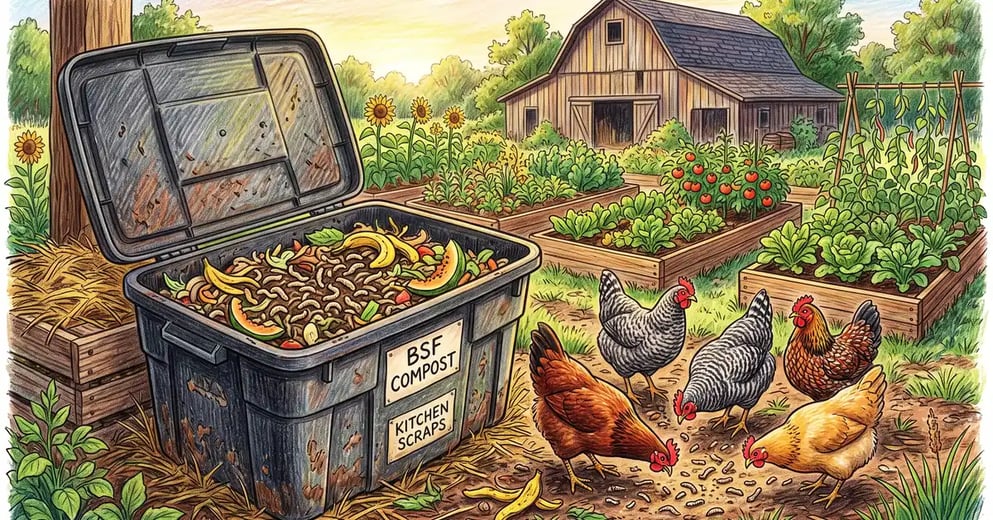
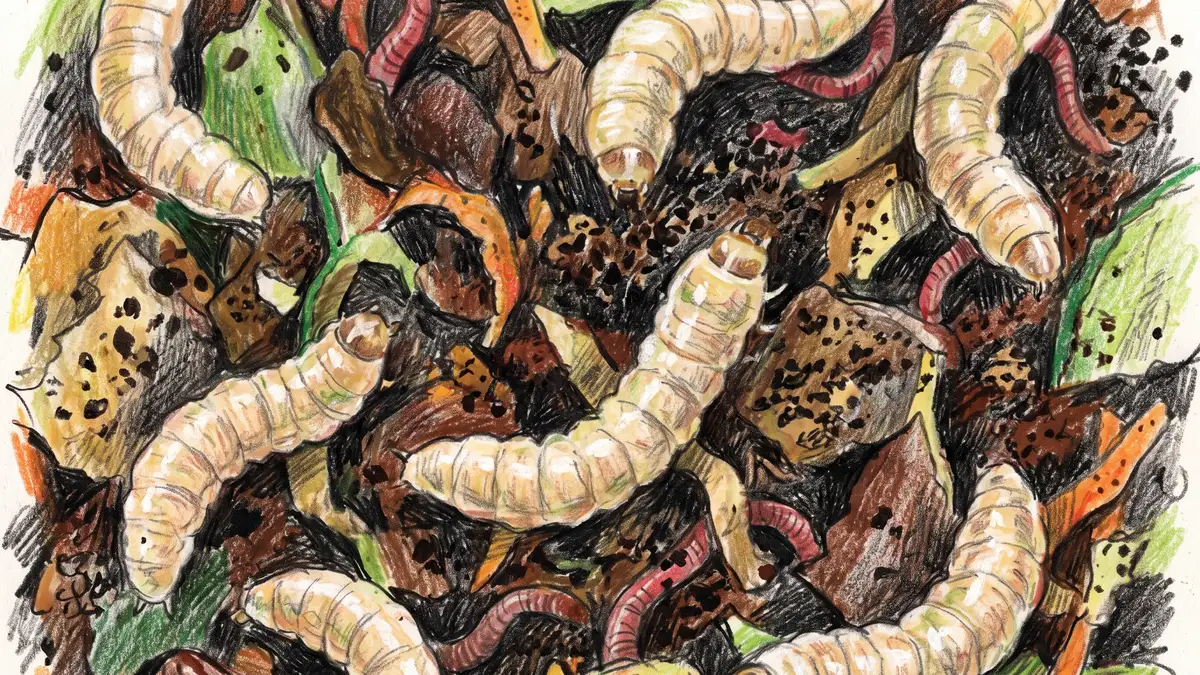
If you keep chickens or a homestead, black soldier fly larvae might be the most productive livestock you're not raising yet. These pale, finger-thick grubs devour food waste faster than any worm bin, and they turn it into two things you'd otherwise buy: high-protein animal feed and rich fertilizer.
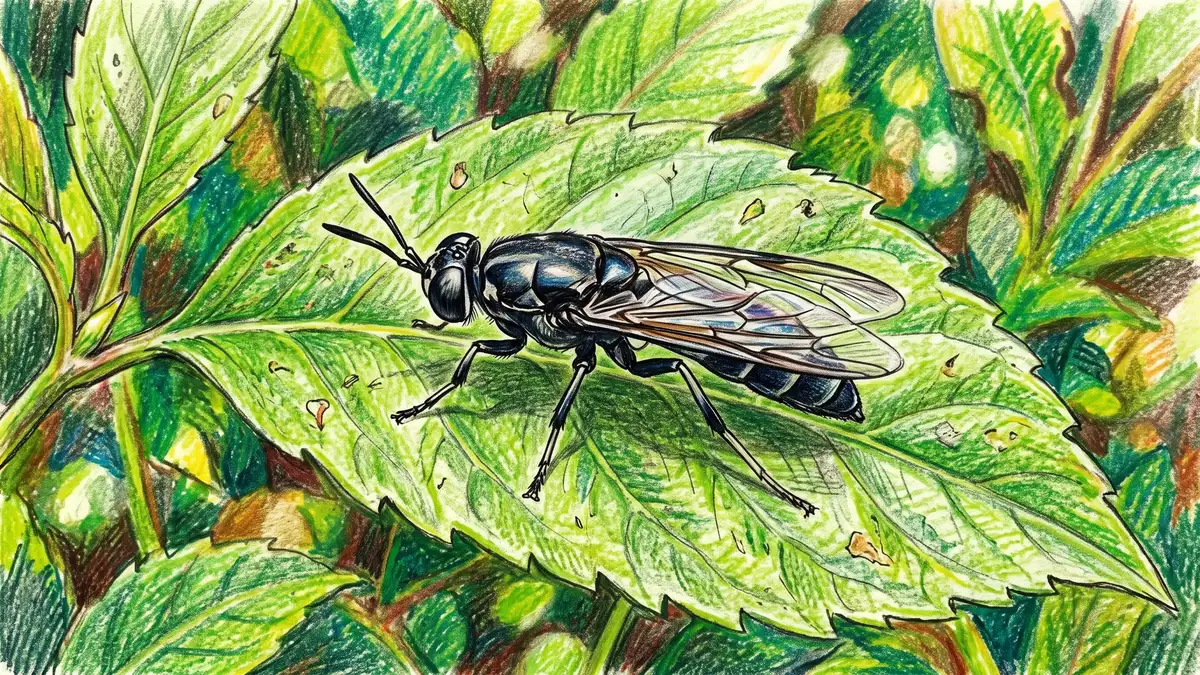
The black soldier fly (Hermetia illucens) is a mild-mannered native across most of the US, and it's nothing like a housefly. The adults don't have working mouthparts, so they don't bite, sting, feed on your food, or spread disease, as the University of Florida IFAS profile explains. In fact, when larvae colonize manure or scraps, they outcompete and suppress houseflies. All the action is in the larval stage, where the grubs eat almost anything organic, including things a compost pile or worm bin can't handle. Let's put them to work.
Here's what this guide covers:
- How fast larvae shrink your waste, and what they produce
- The chicken-feed math that makes them worth it
- How to build a self-harvesting bin (the larvae do the collecting)
- What they can eat, the frass bonus, and cold-climate limits
Key Takeaway
Black soldier fly larvae are a three-in-one homestead tool: they dispose of food and manure waste in days, produce 40%+ protein feed for poultry and fish, and leave behind a nutrient-rich frass fertilizer. One organism, three outputs, almost no labor.
How Fast Do They Process Waste?
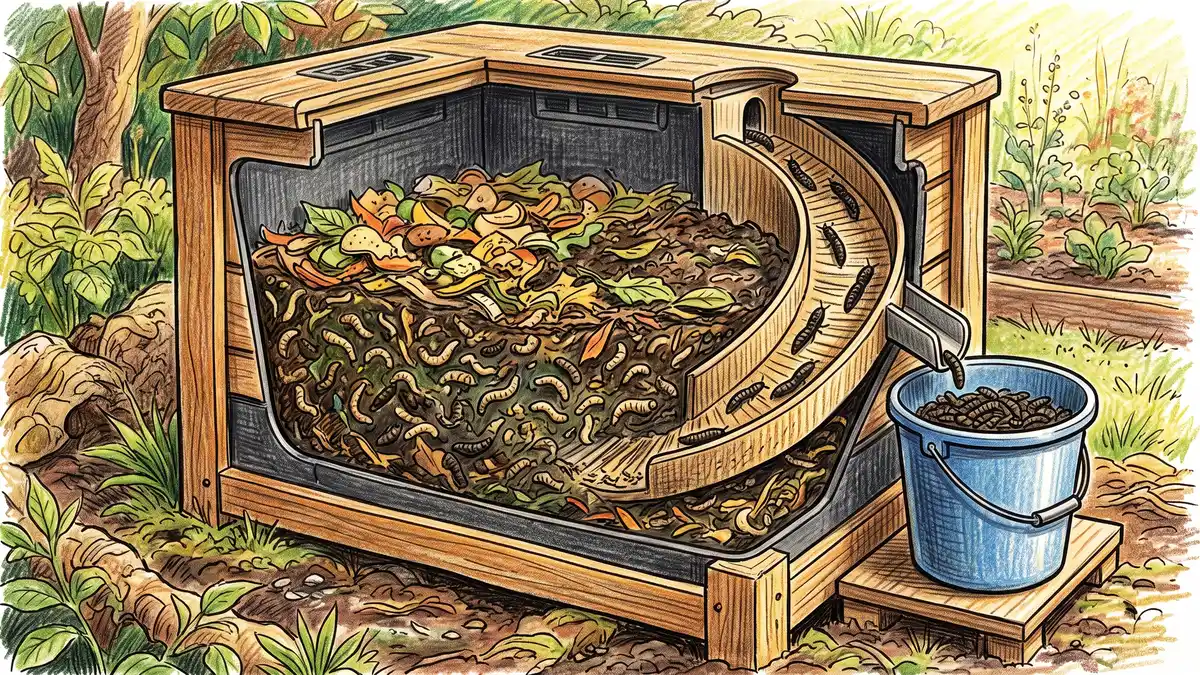
Fast is the whole point. A review of waste-to-feed bioconversion reports that larvae can cut the mass of organic waste by roughly 50 to 80% within 10 to 14 days. To put numbers on the outputs: processing 100 kg (220 lb) of food waste yields about 15 kg of dried larvae, containing roughly 7 kg of protein and 5 kg of fat, plus about 30 kg of frass. The rest leaves as moisture and gas.
Manure is no problem either. In a Texas A&M AgriLife project, about 45,000 larvae consumed 24 kg (53 lb) of swine manure in 14 days and cut its volume roughly in half, then crawled out to harvest themselves. That's the kind of throughput that turns a waste headache into a feed supply. For comparison with slower methods, see our guide to composting for beginners.
| Per 100 kg Food Waste | Output | Use |
| Dried larvae | ~15 kg (7 kg protein, 5 kg fat) | Poultry, fish, reptile feed |
| Frass residue | ~30 kg | Garden fertilizer |
| Moisture & gas | ~55 kg | Waste diverted |
Sources: Waste-to-Feed Bioconversion Review, Texas A&M AgriLife Research.
Free Chicken Feed: The Protein Payoff
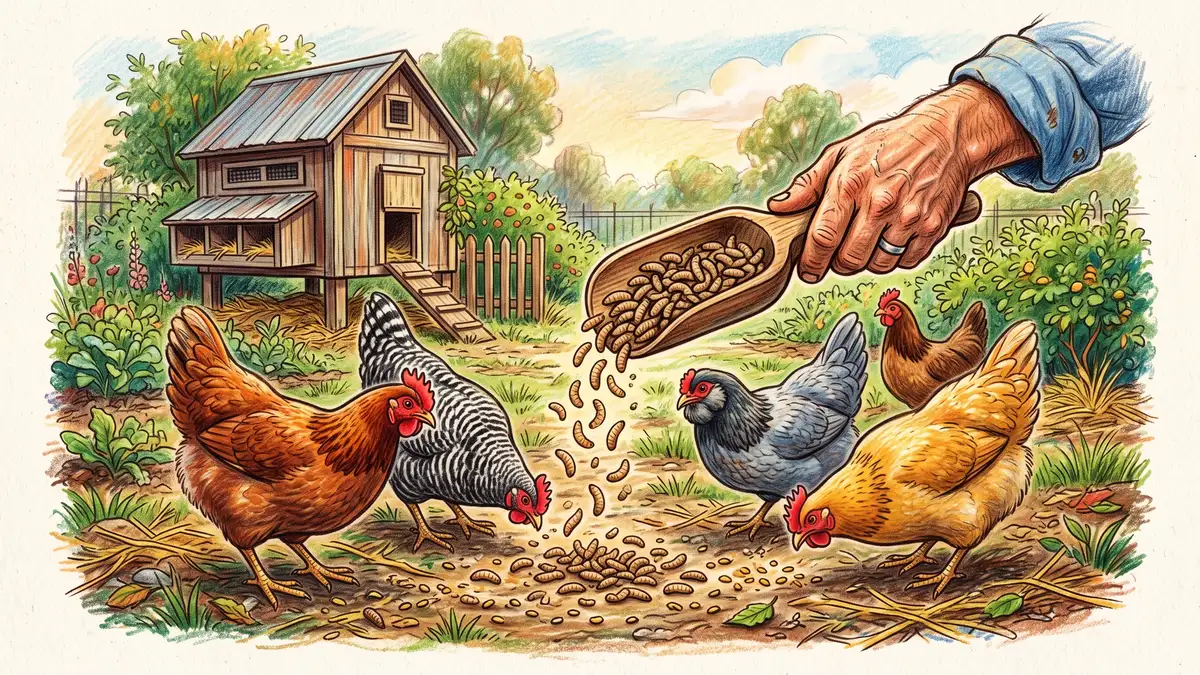
This is where the ROI shows up. Dried black soldier fly larvae run about 40 to 45% protein and 20 to 35% fat, and a review of their nutritional composition puts crude protein anywhere from 32 to 53% on a dry-matter basis. That's comparable to fishmeal and soybean meal, the two ingredients you're paying for in commercial feed, and the fat content is often higher.
Research on black soldier fly larvae in poultry diets finds they can replace a meaningful share of conventional feed protein while supporting normal growth. For a homesteader, that means every bucket of kitchen scraps you'd otherwise toss becomes live protein your hens actually chase down. Chickens, ducks, and fish treat fresh larvae like candy.
Why This Works: Stacking Functions
The homestead value here is that one input does several jobs at once. Food and manure waste become feed; the feed becomes eggs and meat; the leftover frass becomes fertilizer; and the flies suppress pest houseflies for free. Instead of buying feed, buying fertilizer, and paying to haul waste as three separate line items, you collapse them into a single, self-running loop. That's efficiency you can measure at the feed store.
How Do You Set Up a Black Soldier Fly Bin?
The clever part is that mature larvae harvest themselves. When they finish feeding, prepupae stop eating, darken, and instinctively crawl away from the moist food toward a dry place to pupate. A good bin turns that instinct into free labor, per the Purdue Extension composting guide.
Build a moist feeding basin
A tub or bin holds the food waste and larvae in the lower section. Keep it damp but not flooded, and shaded from direct afternoon sun.
Add an exit ramp
Leave a gap at the edge and run a gently sloped ramp (about 30 to 40 degrees) up and out. Prepupae climb it on their own and drop into a bucket.
Let adults in to lay eggs
A vented lid lets wild adult flies enter to lay eggs near the food but keeps larger pests out. In warm regions, wild colonization is often enough to start.
Collect and feed
Empty the collection bucket every day or two. Feed larvae fresh to poultry, or dry or freeze them for storage. Scoop the frass out for the garden.
Need the gear for this?
Bins and tumblers picked by yard size, with the honest trade-offs for each.
See the compost bin picksWhat Can They Eat, and How Do They Compare to Worms?
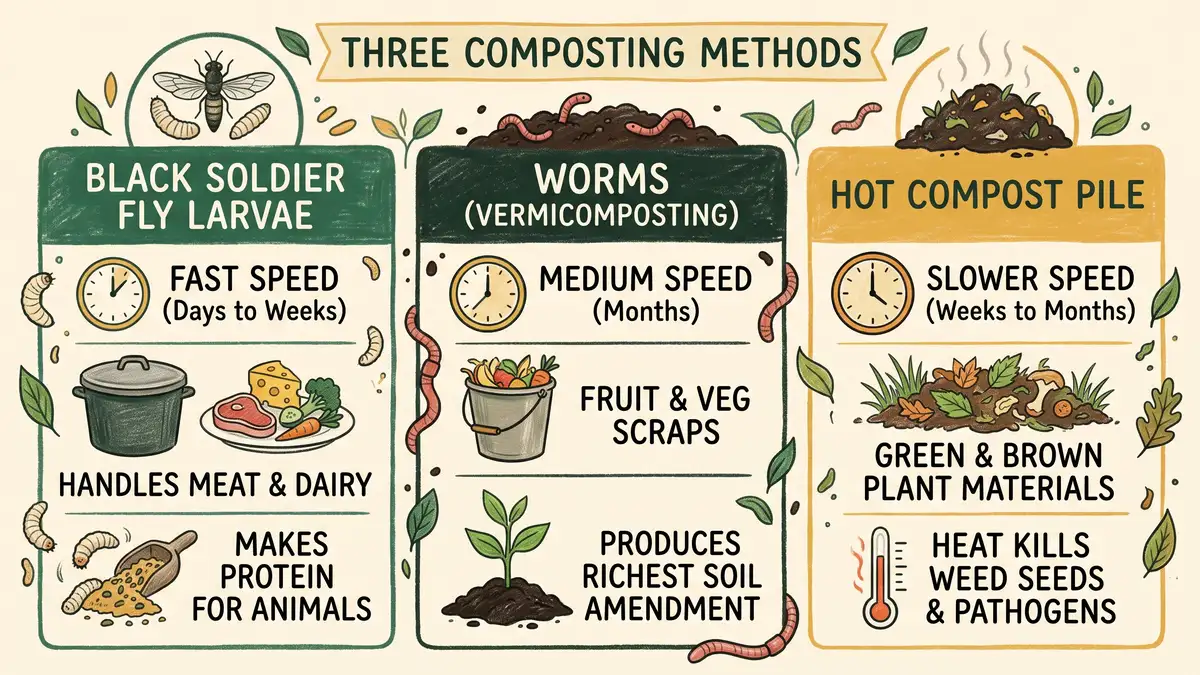
Black soldier fly larvae are generalists, and that's their big advantage over worms. They happily eat meat scraps, dairy, cooked food, and fresh manure, the exact materials that turn a worm bin or open compost pile into a smelly, vermin-attracting mess. Earthworms prefer partially decomposed, fibrous plant material and can't touch most of that list.
That makes the two methods complementary, not competing. Let the larvae strip out the rich, wet, high-energy waste first, then let worms or a compost pile finish the drier residue. Avoid overloading the bin with very woody or high-salt material, and don't expect much action from citrus-heavy or extremely acidic loads.
The Frass Bonus: Free Fertilizer
That 30 kg of leftover frass isn't waste; it's a balanced organic fertilizer. Studies on black soldier fly frass as a fertilizer characterize it as a moderate NPK amendment with good nutrient availability, and field trials have recorded yield improvements around 50% versus inorganic fertilizer in some crops. Better still, research shows larvae-based systems store roughly 30% of the carbon and 55% of the nitrogen in larval biomass while cutting greenhouse gas emissions compared with unaerated compost piles.
Apply frass like any concentrated amendment: a few handfuls per plant or a thin layer worked into the topsoil before planting. Because it's nutrient-dense, don't overdo it. If your larvae fed on manure, treat the frass like any manure product and let it age or apply it well before harvest. It pairs perfectly with the rest of your soil and composting program.
Where Black Soldier Flies Struggle: Cold
These are warm-weather workers. Larvae thrive at about 80 to 95°F (27 to 35°C), development slows sharply below 68°F (20°C), and once ambient temperatures fall consistently below roughly 50°F (10°C), the system shuts down. In northern states, treat a BSF bin as a summer tool and lean on worms or hot composting through winter. Insulating the bin and placing it in full sun can stretch the season, but it won't beat a hard frost.
Key Takeaway
For homesteaders in warm months, a black soldier fly bin is close to free money: it eats the waste worms can't, hands you 40%+ protein feed, and leaves fertilizer behind. Build a simple self-harvesting bin, let the larvae do the work, and fold the outputs into your whole-system nutrient loop.
Frequently Asked Questions
Do black soldier flies bite or sting?
No. Adult black soldier flies don't have functional mouthparts, so they can't bite, sting, or even feed; they live only a week or two to mate and lay eggs. They're not considered agricultural pests or disease vectors, which sets them apart from houseflies. The larvae don't bite either. In fact, black soldier fly larvae actively suppress house fly populations when both compete for the same manure or waste, so a healthy BSF colony can reduce the nuisance flies around a homestead rather than add to them.
What do black soldier fly larvae eat?
Almost any soft organic matter, including many things worms and compost piles can't handle. They devour fruit and vegetable scraps, grains, meat, dairy, cooked food, and fresh manure. That versatility is their main advantage: the wet, protein-rich, high-energy wastes that cause odor and pests in traditional composting are exactly what larvae process fastest. Avoid loading them heavily with woody material, bones, very salty food, or large amounts of citrus. Keep the feed moist but not waterlogged, and add fresh material in manageable batches so the colony can keep up.
Are black soldier fly larvae harmful or invasive?
Not in most of the US, where the black soldier fly is native or long naturalized. The larvae are not harmful to humans, and they behave much like redworms, breaking down organic matter and returning nutrients to the soil. They aren't classed as agricultural pests. The main cautions are practical: don't release large numbers where they aren't already established, and handle manure-fed frass with normal food-safety care. If you're outside their native range, check local guidance before starting a colony.
How are black soldier fly larvae different from composting worms?
Speed and diet. Larvae reduce waste by 50 to 80% in about two weeks, far faster than a worm bin, and they eat meat, dairy, and manure that worms refuse. Worms, on the other hand, tolerate cooler temperatures, work year-round in a basement bin, and produce finished castings that are gentler and more refined. Many homesteaders run both: larvae blitz the rich, wet waste in summer, and worms or hot compost handle the drier residue and the winter load. They're partners, not rivals.
How do I get black soldier fly larvae to start a colony?
In warm regions, you often don't have to buy any. Set up a moist, open bin of food scraps in a sheltered, partly shaded spot, and wild adult flies will find it and lay eggs, especially in late spring and summer. If you want a faster or more reliable start, you can buy live larvae from feeder-insect suppliers. Once a colony is established and self-harvesting, a portion of each generation matures into adults that re-seed the bin, so a well-designed system can largely sustain itself through the warm season.
Get the Weekly Dig
One practical permaculture guide a week, written for gardeners who do this on weekends: composting that actually finishes and soil that feeds itself. Free, no spam, unsubscribe any time.
Join the Weekly DigResources
- Purdue Extension Entomology: Black Soldier Fly Composting Guide
- University of Florida IFAS: Black Soldier Fly (Hermetia illucens)
- Texas A&M AgriLife: Transforming Manure Into Protein
- Waste-to-Feed Bioconversion Using Hermetia illucens Larvae
- Nutritional Composition of Black Soldier Fly Larvae
- Black Soldier Fly Larvae in Poultry Nutrition
- Black Soldier Fly Frass as a Sustainable Organic Fertilizer
- Threshold Temperatures and Thermal Requirements of Black Soldier Fly
- USDA: Automating Black Soldier Fly Rearing for Waste Recycling