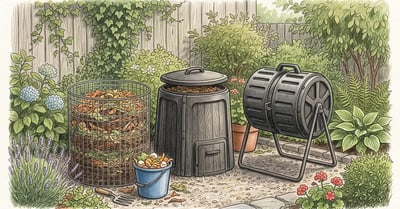

You set up the worm bin, fed it for two weeks, and now it stinks. Or it is crawling with tiny white mites. Or you found half the worms dried out on the basement floor at 3 am. A healthy worm bin smells like a forest floor, attracts almost no pests, and contains its worms perfectly. well-ventilated worm bin designs When it does any of the other three things, the bin is telling you what is wrong.
This guide is the troubleshooting kit. Each of the three most common problems (smell, mites, escape) has a small number of distinct causes, and each cause has a specific fix you can apply in under an hour. Diagnose first, fix second, prevent third.
Key Takeaway
The three most common worm farm problems trace back to the same four variables: too wet, too much food, wrong pH, or wrong temperature. Smell almost always means anaerobic conditions (too wet + too much food). Mite explosions mean too wet and too much fruit. Escape means the bin became uninhabitable (acidic, hot, or starved). Fix the variable, the symptom resolves within a week. Add bedding, reduce feeding, and check moisture before you do anything else.
The healthy worm bin baseline
Before troubleshooting, know what right looks like. A well-run worm bin smells like rich forest soil. The bedding (shredded newspaper, cardboard, or dry leaves) is moist but not dripping. Food scraps are tucked under the bedding, not piled on top. Worms are working in the middle layer, not on the walls or lid. You see white springtails, the occasional roly poly, and a few fungal threads. The bin runs at room temperature.
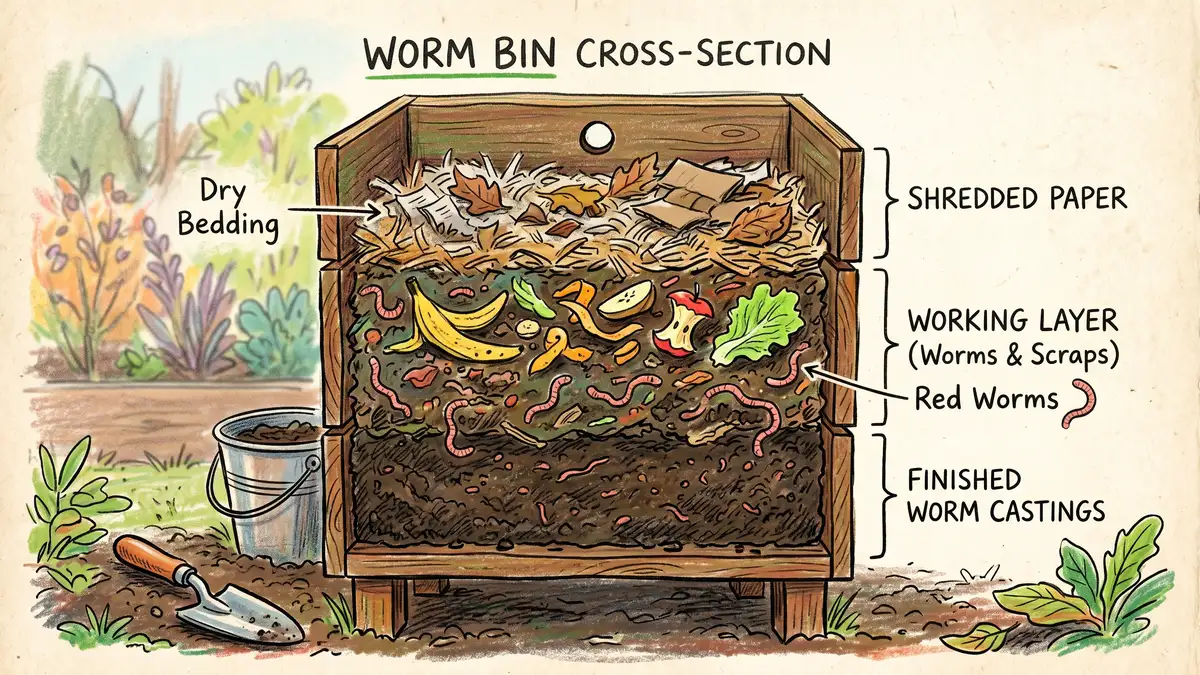
The species in nearly every US backyard worm bin is Eisenia fetida, the red wiggler. Red wigglers eat 25 to 50 percent of their body weight per day in optimal conditions. Urban Worm Company's worm care reference notes that any deviation outside the comfort window stresses the worms and triggers the symptoms covered in the rest of this guide.
Problem 1: smell
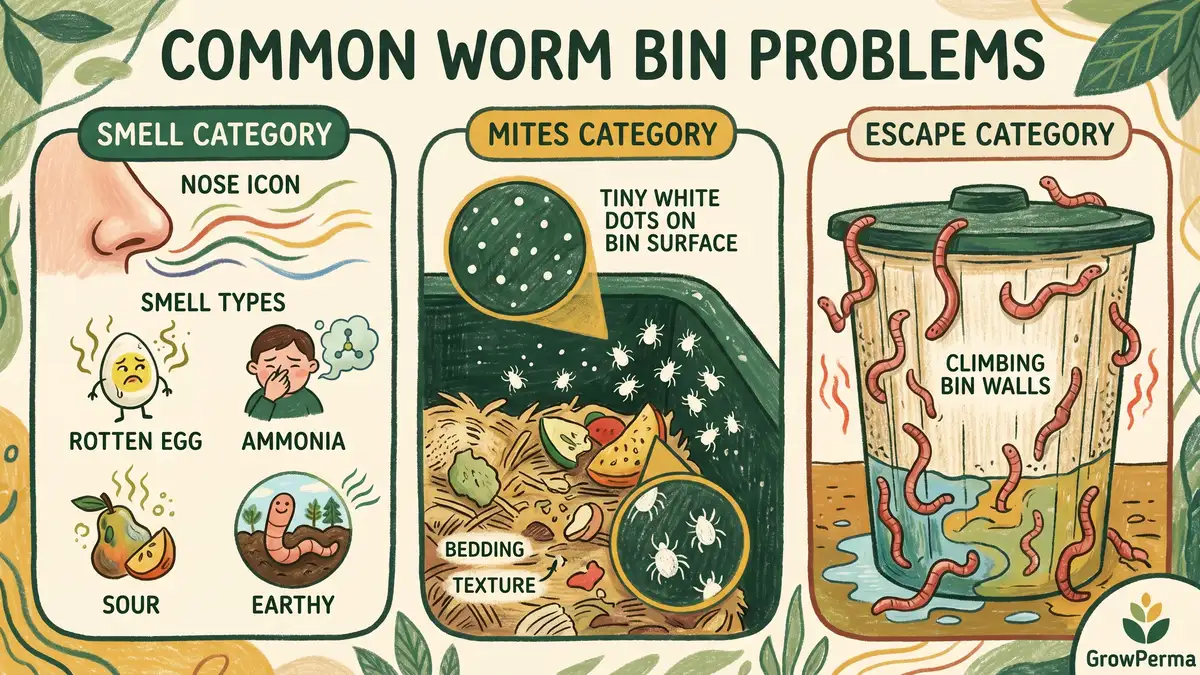
Source: Diagnostic framework adapted from Tumbleweed's seasonal worm farm troubleshooting.
Healthy worm bins do not smell offensive. When yours does, the smell type tells you the cause.
| Smell type | Cause | Fix |
| Rotten eggs (sulfur) | Anaerobic conditions: too wet, compacted | Add dry bedding, fluff with a fork, drill more holes for air |
| Ammonia | Too much nitrogen/protein in food | Stop feeding 1 to 2 weeks, add carbon bedding, remove protein foods |
| Sour vinegar | Acidic pH below 5.5 (citrus, onion, coffee overload) | Add crushed eggshells, baking soda dust, or agricultural lime |
| Sweet sickly rotting fruit | Excess food, not enough worms or bedding | Stop feeding, bury existing food deeper, add bedding |
| Earthy forest floor | Correct conditions | No action needed |
Source: Smell diagnostics cross-referenced from Meme's Worms odor guide and Pacific Composting's smelly bin guide.
Why This Works (the permaculture lens)
Smell is the worm bin telling you the wrong organisms have taken over. A healthy bin runs aerobic decomposition: bacteria and fungi use oxygen to break down food slowly, producing carbon dioxide and water. When oxygen runs out (waterlogged bedding, compacted material, or too much food at once), anaerobic bacteria take over and produce sulfur compounds, methane, and the sour acid that drives worms away. Fix oxygen access and the right microbes return within days. This is the same logic as aerobic composting in general, applied to a smaller faster system.
The bedding-to-food ratio
Most smell problems trace back to one ratio mistake. New worm farmers feed too much and add too little bedding. The fix is the same in every case.
Stop feeding for 1 to 2 weeks
The worms will eat what is already in the bin. Pulling food back gives them time to catch up and lets oxygen return.
Add dry bedding immediately
Shred 2 to 3 inches (5 to 8 cm) of newspaper, cardboard, or dry leaves into the bin. Fluff everything with a hand fork. Dry bedding absorbs excess moisture and brings the carbon-to-nitrogen ratio back into balance.
Bury all food going forward
Tuck food under 1 to 2 in (2.5 to 5 cm) of bedding every time you feed. Exposed food rots faster than worms can process it and invites flies, mites, and smell.
Rotate feeding spots
Feed in one corner this week, the opposite corner next week. Spreading food horizontally rather than dumping in one spot gives worms time to colonise each feeding zone.
Problem 2: mites
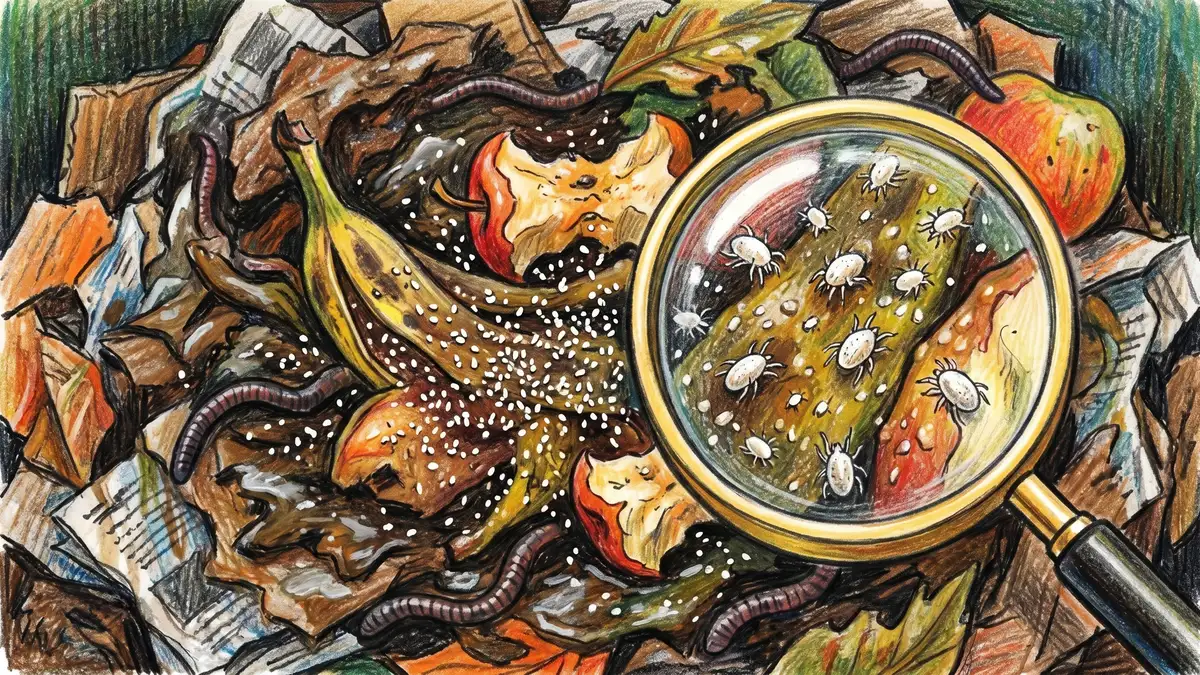
Mites in worm bins are normal. Mites in swarming numbers on every food piece and crawling on the walls is the problem signal.
Pacific Composting's mite guide identifies three common types found in vermicompost:
- White mites (mold mites, Tyrophagus): most common, appear when bin is too wet. They eat decaying food and compete with worms for it. Not directly harmful but indicate moisture imbalance.
- Brown mites (Acaridae family): similar diet to white mites, less common, also signal wet conditions.
- Red mites (parasitic): rare but problematic. They attach to worms and feed on them. Treat as an emergency if you see them.
Distinguish Red Mites from Beneficial Predator Mites
Glossy red or orange mites that move quickly and do not cluster on food are usually predatory mites (good guys). Tiny dull red mites stuck on the worms themselves are parasitic and need immediate action. Larimer County Extension's worm bin pest guide documents both types and notes that parasitic species are uncommon in healthy bins.
How to reduce a mite explosion
A mite explosion is almost always a wetness signal. Fix the moisture, the mite population crashes within a week.
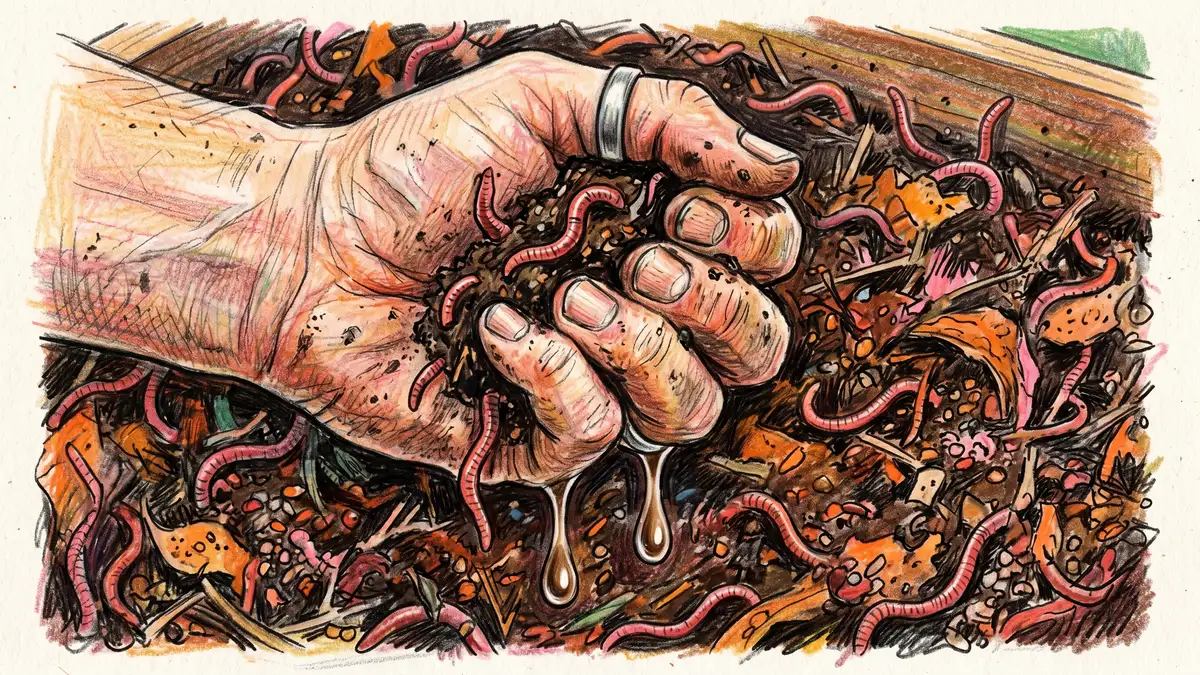
Five tactics that work, in order from gentlest to most aggressive:
- Add a dry bedding layer. 2 in (5 cm) of fresh shredded cardboard on top absorbs surface moisture and buries the food the mites are feeding on.
- Reduce fruit feeding. Skip melon, apple, banana, citrus for 2 weeks. Mites love sugary moist fruit. Feed bedding-friendly things instead (coffee grounds, eggshells, dry leaves).
- Trap with bread. Lay a slice of dampened bread on the bedding for 24 hours. Mites swarm it. Remove and discard. Repeat for 3 to 5 days.
- Trap with melon rind. Same principle, larger surface, fewer applications. The mites gather on the rind. Lift and toss.
- Bin reset. Last resort. Move worms to fresh bedding in a clean bin. Discard or compost the mite-heavy original.
The wrung-out sponge test is the single most useful diagnostic. Grab a handful of bedding. Squeeze hard. If you can drip more than 2 to 3 drops of water, the bin is too wet.
Problem 3: worm escape
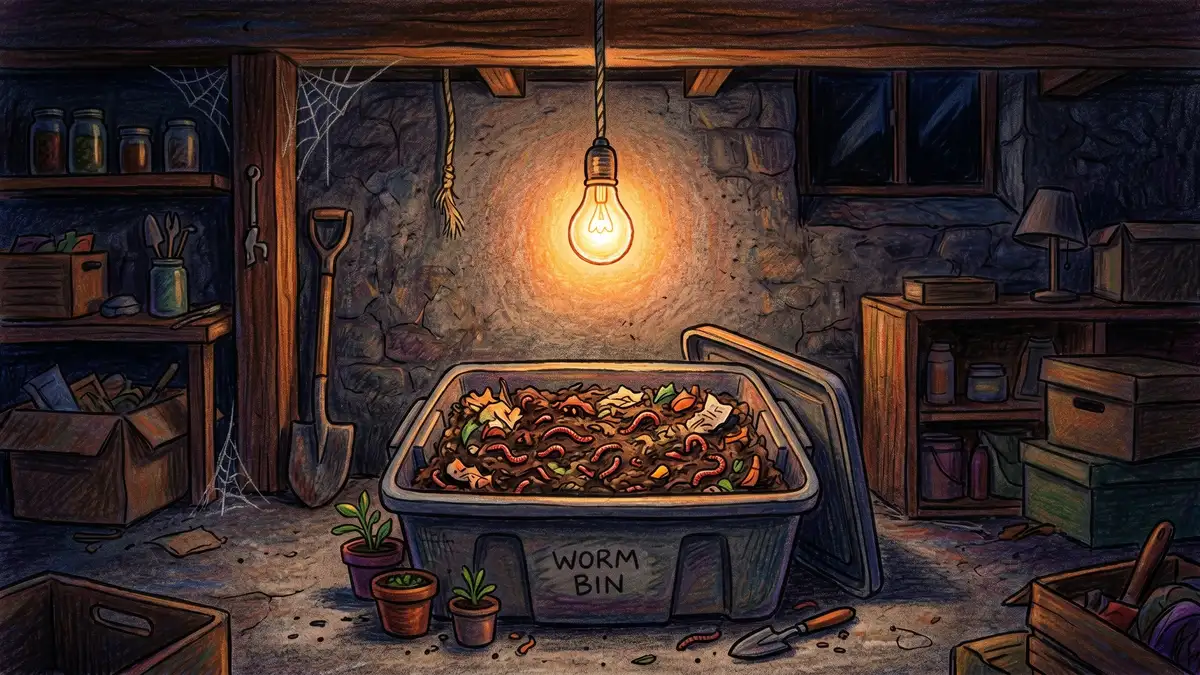
Worms climb out for a reason. They are not exploring. They are running from conditions that are making them sick.
Urban Worm Company's escape guide lists the common triggers in order of frequency: condensation (most common), wrong moisture, wrong pH, wrong temperature, food shortage, and new-bin disorientation. The fixes match the causes.
| Escape cause | Symptom | Fix |
| Condensation on lid | Worms climb to lid underside | Improve ventilation, prop lid open slightly |
| Too wet | Worms on walls and bin floor | Add dry bedding, drill drainage holes |
| Too acidic (pH below 5.5) | Worms massed at one corner | Add crushed eggshells; pause acidic food |
| Too hot (above 85 F / 29 C) | Worms in lower cooler layer or escaping | Move bin to shade; freeze water bottles to nestle in bedding |
| Out of food | Worms dispersed and listless | Add small amount of food in one spot; resume regular schedule |
| First night in new bin | Worms exploring all walls | Leave light on overnight (worms hate light, retreat into bedding) |
Source: All Things Organic's worm bin troubleshooting guide for diagnostic patterns.
The light-on-first-night trick
New worm bins almost always trigger an escape attempt during the first 24 to 48 hours. The worms have just been transported, moved into new bedding, and instinct sends them looking for "real" soil. The standard fix is so reliable it has become worm farming dogma.
Leave a 40 to 60 watt bulb or LED equivalent shining over the open or vented bin for the first 2 nights. Worms hate light and retreat into the bedding. By night 3 they have settled and stop trying to leave. You can then resume normal operation.
Foods that cause most worm bin problems
Never Feed These to a Worm Bin
Five categories cause most of the smell, mite, and pH problems documented above: citrus (lemon, orange, lime peel), onion and garlic (allium oils repel worms), meat and dairy (anaerobic rot, animal attractants), oily or salty foods, and anything heavily processed. Our complete worm food list covers what to feed and what to skip.
Safe staples for a small worm bin:
- Vegetable scraps: carrot tops, lettuce, celery, leafy greens (no onion)
- Fruit (limited): apple cores, banana peel, melon rind in small amounts
- Coffee grounds and filters: ideal staple, neutral pH after brewing
- Crushed eggshells: calcium plus pH buffer
- Tea bags (paper, not synthetic): easy worm food
- Bread and grains in small amounts: feed sparingly to avoid mold flush
Preventing the next problem
Three habits keep a worm bin running smoothly for years:
- Add bedding at every feed. Each food addition gets covered with 1 to 2 in (2.5 to 5 cm) of fresh shredded bedding. The bedding-to-food ratio stays right automatically.
- Weigh feed, do not eyeball. Red wigglers eat 25 to 50 percent of their body weight per day. A pound (450 g) of worms eats 0.25 to 0.5 lb (115 to 230 g) of food daily. Overfeeding is the most common rookie mistake.
- Check moisture weekly with the squeeze test. Adjust by adding dry bedding if too wet or misting if too dry. Five seconds of attention prevents most of the problems in this guide.
For setup and broader vermicomposting context see our vermicomposting beginner guide, our worm bin setup options, and the wider soil health pillar.
Need the gear for this?
The bins that work, the ones that leak, and a DIY build that costs under $30.
Compare worm bin setupsFrequently Asked Questions
Why does my worm farm smell?
A worm farm smells when anaerobic bacteria take over. The two most common causes are too much moisture (waterlogged bedding) and too much food (anaerobic rot). Add dry shredded bedding, stop feeding for 1 to 2 weeks, fluff the bin with a fork, and bury all future food under bedding.
Are mites in a worm bin bad?
White and brown mites are normal in small numbers and indicate active decomposition. They become a problem when populations explode (every food piece coated with mites). The trigger is almost always excessive moisture. Add dry bedding and reduce fruit feeding to reduce them. Red parasitic mites attached to worms are rare but need immediate intervention.
Why are my worms climbing the walls?
Worms climb walls because conditions in the bedding became unfavorable: too wet, too acidic, too hot, or out of food. Diagnose by doing the squeeze test (too wet drips multiple drops), checking pH (below 5.5 is too acidic), checking temperature (above 85 F is too hot), and inspecting food levels. Fix the matching variable.
How do I stop worms from escaping a new bin?
Leave a light shining over the open or vented bin for the first 2 nights after setup. Worms instinctively retreat from light into the bedding. By night 3 they will be settled and the light can come off.
How wet should a worm bin be?
Bedding should feel like a wrung-out sponge. Squeeze a handful: it should hold together and drip 2 or 3 drops of water at most. If water streams out, the bin is too wet. If the bedding crumbles dry, mist with water.
What pH should a worm bin be?
Ideal pH is 6.0 to 7.0. Below 5.5 worms try to escape. Acidity rises when you feed too much citrus, onion, garlic, coffee, or fruit. Buffer by adding crushed eggshells (calcium) or a small dust of agricultural lime. Avoid baking soda in large quantities because it raises pH too sharply.
How long can worms go without food?
Mature red wigglers can survive 1 to 2 weeks without food in established bedding because they consume decomposed bedding itself. Pausing food during troubleshooting (the standard "stop feeding for a week" advice) does not harm them.
Get the Weekly Dig
One practical permaculture guide a week, written for gardeners who do this on weekends: composting that actually finishes and soil that feeds itself. Free, no spam, unsubscribe any time.
Join the Weekly DigResources
- Troubleshooting Worm Farm Problems (Tumbleweed)
- The Truth About Worm Bin Mites (Pacific Composting)
- Smelly Worm Bins: Causes and Solutions (Pacific Composting)
- Why Are Worms Escaping My Bin (Urban Worm Company)
- Mites in Your Worm Bin (Urban Worm Company)
- Troubleshooting Tips for Worm Bins (All Things Organic)
- Banishing Bad Smells in Worm Bins (Meme's Worms)
- Pests and Unwanted Problems in Worm Bins (Larimer County Extension PDF)
- Mites That Bug People (NC State Extension)
indoor apartment worm bins