
Your first frost date is not a date. It is a probability curve, and treating it as a single day on a calendar is the reason so many fall gardens fail by two weeks. how to prepare your garden for winter how to build a root cellar walipini underground greenhouse building a cold frame frost protection for plants season extension with a hoop house bring pepper plants indoors before frost cold hardy vegetables
NOAA does not publish "the average first frost." It publishes the dates by which there is a 10 percent, 50 percent or 90 percent chance of a freeze at four separate temperature thresholds. Once you understand what those numbers mean, planning a fall garden stops being guesswork and becomes a risk decision you actually control.
What you will learn:
- What NOAA's frost probabilities actually mean and how to read them
- The real difference between frost, a freeze, and a hard freeze
- Which crops survive which temperature, sourced from extension tables
- How to count backward from frost to a planting date, and what that method misses
- How microclimate shifts your frost date without moving your garden
Key Takeaway
Plan tender crops against the early end of the frost window and hardy crops against the late end. A 50 percent date means a coin flip, so anything you cannot afford to lose should be harvested before it, not after.
What Does a First Frost Date Actually Mean?

It is a percentile, drawn from at least thirty years of station observations. NOAA's National Centers for Environmental Information publish freeze and frost normals for 1991 to 2020, giving dates at four temperature thresholds (36°F, 32°F, 28°F and 24°F) and three probability levels (10 percent, 50 percent and 90 percent).
The National Weather Service office in Cheyenne spells out how to read those. A 10th percentile date means there is a 10 percent chance the event has happened by then. The 50th percentile is the coin flip. The 90th percentile is the date by which it has almost certainly happened.
The variability is larger than most gardeners assume. Cheyenne's records show the last spring 32°F freeze arriving as early as April 21 and as late as June 8, a spread of nearly seven weeks around a single "average." Fall behaves the same way in reverse. Planning your whole season against one median date is planning to be wrong half the time.
Why This Works: Designing for Variability, Not Averages
Permaculture design tends to plan for the range rather than the mean, which is exactly what a percentile table gives you. Instead of one planting date, you get a window, and you can stack crops across it: tender annuals harvested before the early edge, frost-tolerant crops through the middle, very hardy roots and brassicas carried past the late edge. The garden absorbs a bad year instead of failing in one.
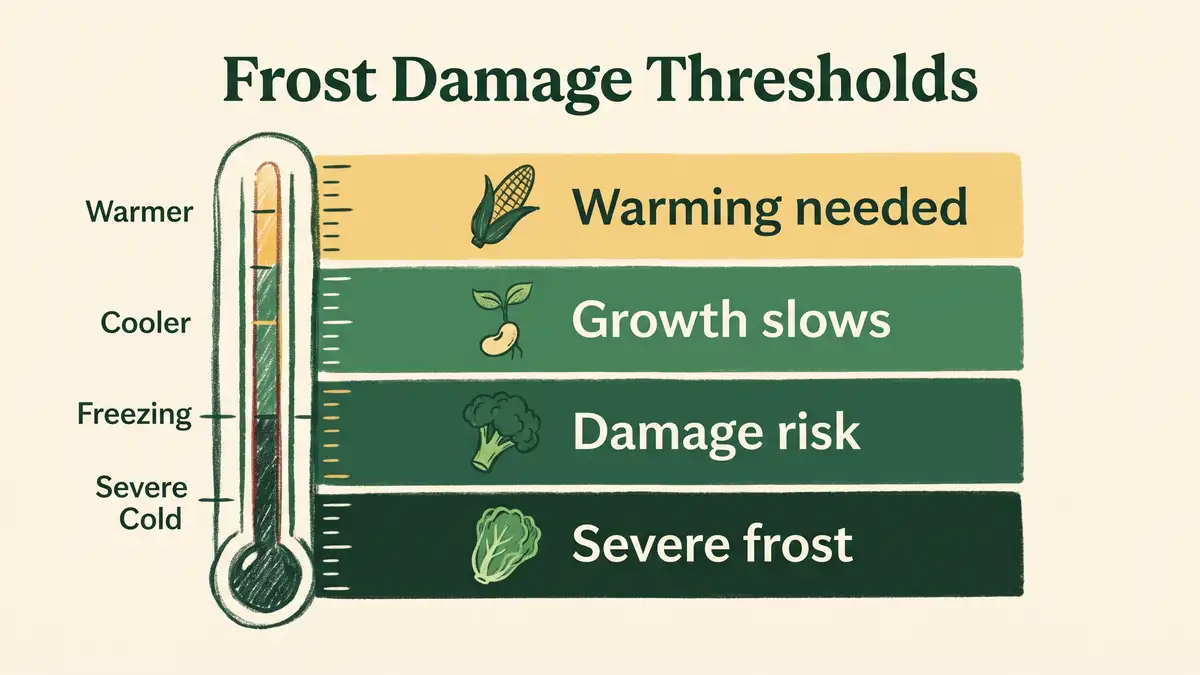
Frost, Freeze, or Hard Freeze? The Numbers Matter
These are three different events with three different outcomes. The National Weather Service defines them precisely, and knowing which one is forecast tells you whether to pick tonight or ignore it.
| Event | Temperature | What Happens |
| Frost | About 33-36°F (1-2°C), calm and clear | Surfaces radiate heat and drop below air temperature. Ice forms on leaves even when the official low stays above freezing. |
| Freeze | 32°F (0°C) or below | Significant damage to unprotected tender plants, worse the longer it lasts. |
| Hard freeze | 28°F (-2°C) or below for an hour or more | Most seasonal vegetation destroyed. Undrained irrigation lines at risk. |
Source: NOAA National Weather Service Duluth, Frost and Freeze Climatology
The first row explains something that confuses people every autumn. A forecast low of 34°F can still frost your garden, because on a clear calm night leaf and soil surfaces radiate heat to the sky and sit several degrees colder than the air at thermometer height. Wind or humidity can prevent frost even at 31°F. The forecast low is a guide, not a verdict.
Which Crops Survive Which Temperature?
Extension services have already sorted this for you. South Dakota State University Extension groups vegetables into three tolerance bands, and Nebraska Extension publishes a closely matching list. Between them you have a working plan for the whole fall.
| Group | Survives | Crops |
| Tender | Damaged at 28-32°F | Beans, sweet corn, cucumbers, melons, okra, peppers, eggplant, pumpkins, summer squash, tomatoes, sweet potatoes |
| Frost tolerant | Light frost, 28-32°F | Beets, carrots, cauliflower, celery, chard, Chinese cabbage, garlic, lettuce, onions, parsley, peas, radish, rhubarb, spinach |
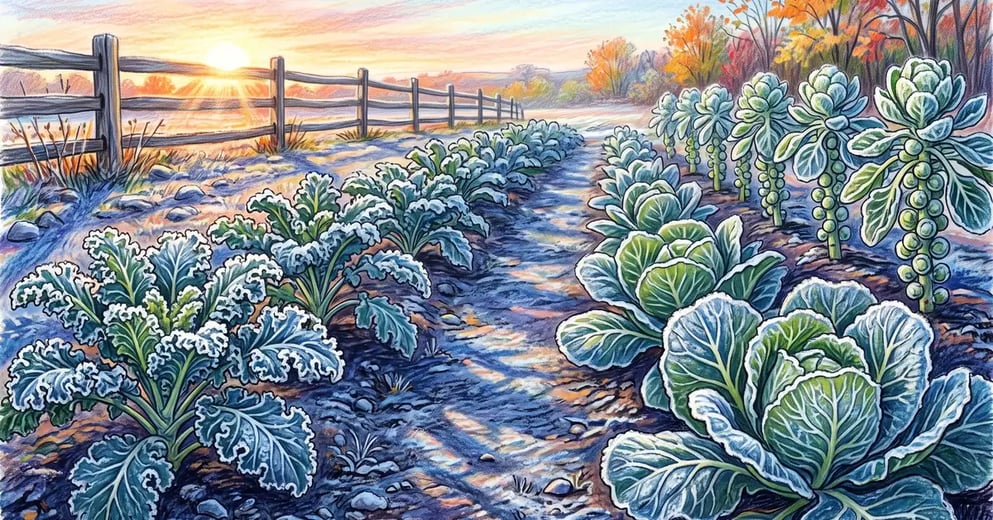
| Very hardy | Below 28°F for short spells | Asparagus, collards, endive, kale, kohlrabi, mustard, parsnip, rutabaga, salsify, turnip, Brussels sprouts, cabbage, broccoli |
Sources: South Dakota State University Extension, Fall Frost Tolerance of Common Vegetables, University of Nebraska Extension, Cold Temperatures Bring an End to the Gardening Season
The interesting part is the bottom row. SDSU notes that root crops develop more sugars once soil temperature drops below about 40°F (4°C), and that Brussels sprouts are often at their best after a light freeze. Those crops are not merely surviving the cold, they are using it. Harvesting parsnips or kale before frost is leaving flavour on the table.
How Do You Count Backward to a Planting Date?
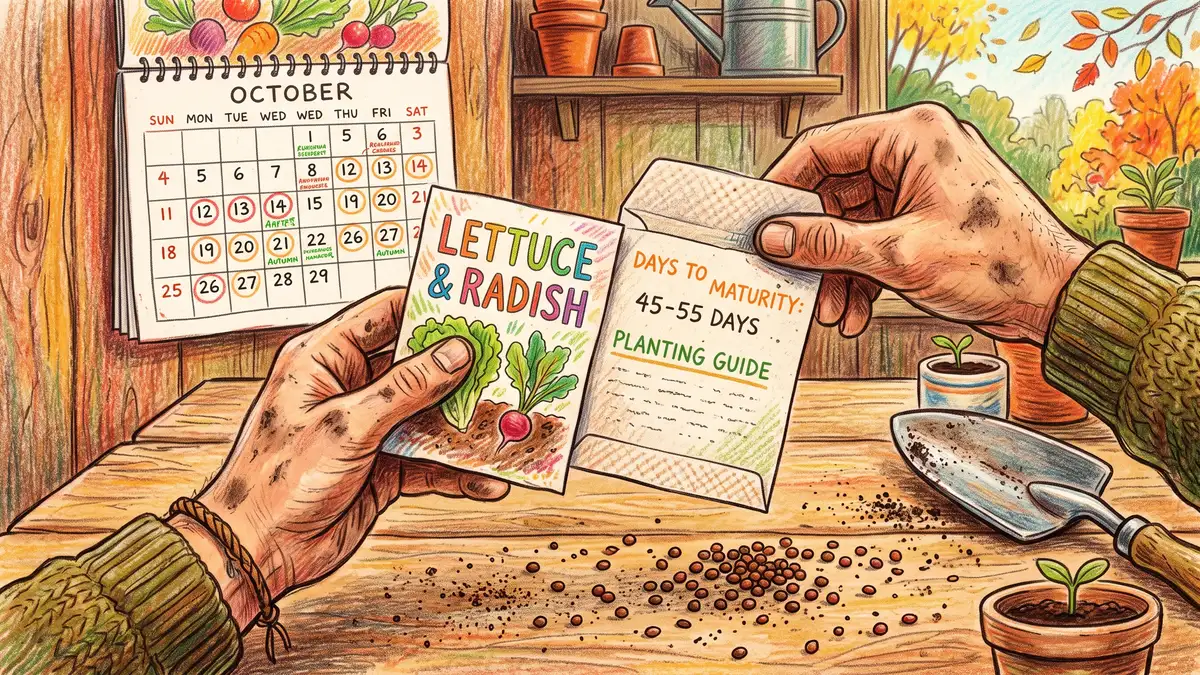
Take days to maturity off the packet and count back from your frost date. Michigan State University Extension puts it plainly: most vegetables can be planted from July through September for a fall harvest, and gardeners should check days to maturity and count backward from the first frost.
That method is right in outline and slightly optimistic in practice, because days-to-maturity numbers are generated from spring and summer sowings under lengthening days. In fall the days shorten and the soil cools, and everything runs slower.
Look up your frost percentiles, not your average
Find the 10 percent and 50 percent dates for 32°F at your nearest station through NOAA's Climate Normals. Write both down. The gap between them is your planning window.
Pick which date each crop is planned against
Tender crops get the 10 percent date, because you cannot afford to lose them. Frost-tolerant crops get the 50 percent date. Very hardy crops can be planned past it entirely.
Add roughly two weeks for slower fall growth
A widely used rule of thumb adds 10 to 14 days to packet days-to-maturity for fall sowings to account for shortening days. We could not source that specific number to an extension publication, so treat it as a sensible buffer rather than a measured constant. The physiology behind it is sound.
Sow into warm soil, not cool air
Late summer soil holds heat long after evenings turn cool, which is why extension fall-planting calendars put most sowings in July and August. Use a soil thermometer at sowing depth rather than judging by how the air feels.
Worked example. If your 50 percent date for 32°F is October 1 and you want a 50-day lettuce, count back 50 days to August 12, then add the two-week fall buffer and sow around July 29. Pair it thoughtfully and our guide to September planting combinations covers what goes alongside.
Can You Move Your Frost Date Without Moving?
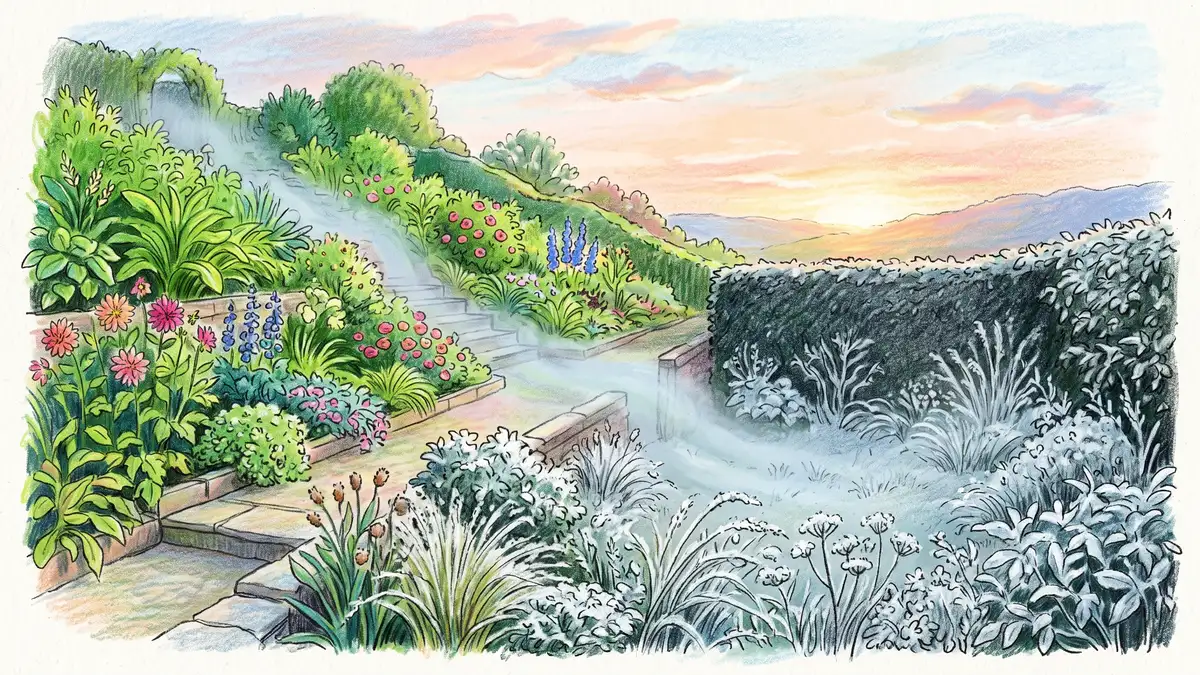
Within your own yard, by a surprising margin. Cold air behaves like water. It drains downhill at night and pools in hollows, so a low corner of the garden can frost days or weeks before ground twenty feet higher up.
Solid hedges and fences across a slope make it worse by damming the flow. A gap at the bottom lets cold air keep moving. South-facing masonry, paved surfaces and water bodies do the opposite, releasing stored heat overnight and holding nearby air above freezing when the open garden dips below.
Map Your Frost Pockets Before You Trust Any Date
Walk out on the first few frosty mornings and note exactly which beds whitened and which did not. That observation is worth more than any published date for your specific site, and it will not change from year to year. Put tender crops on the warm ground and hardy brassicas in the hollow.
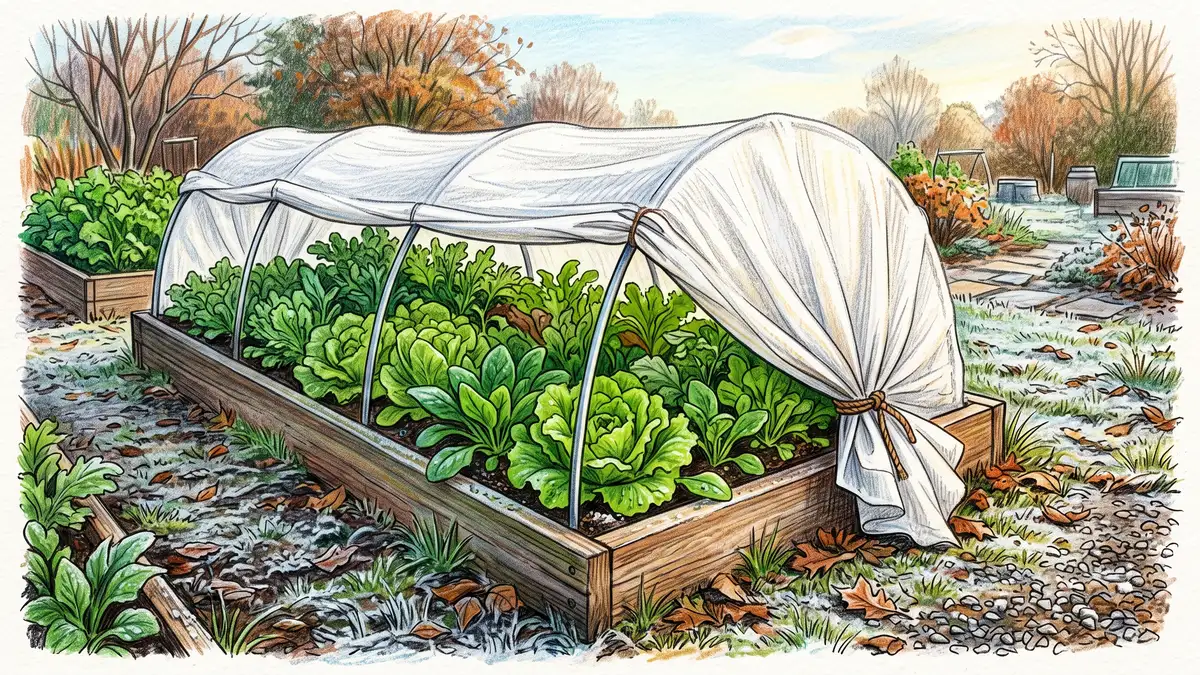
Fabric buys you the rest. UNH Extension puts floating row cover at 2 to 8°F of protection depending on weight: a lightweight fabric around 0.5 oz per square yard adds roughly 2°F, while heavyweight fabric at 1.5 to 2.2 oz per square yard reaches 4 to 8°F. Protection rises with thickness and light transmission falls, so the heavy stuff is for cool-season crops rather than anything trying to ripen.
Key Takeaway
Between crop selection, microclimate placement and a roll of row cover you can shift your effective first frost by two to four weeks without changing your published frost date at all. Mulch does similar work at soil level, which our mulching guide covers.
Frequently Asked Questions
When is the first frost in my area?
Look it up as a range rather than a date. NOAA's National Centers for Environmental Information publish 1991 to 2020 freeze and frost normals giving the 10, 50 and 90 percent probability dates at 36°F, 32°F, 28°F and 24°F for stations across the country. Many regional National Weather Service offices publish the same tables for their local stations in a more readable format. Use the 10 percent date for anything you cannot afford to lose and the 50 percent date for general planning.
What temperature kills a garden?
It depends entirely on the crop. Tender vegetables such as tomatoes, peppers, beans, corn and squash are damaged or killed between 28 and 32°F. Frost-tolerant crops including carrots, beets, lettuce, spinach and chard shrug off that same light frost. Very hardy crops such as kale, collards, parsnip, turnip and Brussels sprouts handle spells below 28°F. A hard freeze, defined by the National Weather Service as 28°F or lower for an hour or more, destroys most remaining seasonal vegetation.
Does frost really make vegetables sweeter?
For some crops, yes, and it is a real physiological effect rather than folklore. South Dakota State University Extension notes that root crops develop more sugars once soil temperature falls below about 40°F, as the plant converts stored starch into soluble sugars that lower the freezing point of its cells. Parsnips, carrots, kale and Brussels sprouts all benefit. SDSU specifically remarks that Brussels sprouts are often best after a light freeze, so hold the harvest rather than rushing it.
How late can I plant a fall garden?
Count backward from your frost percentile using days to maturity, then add roughly two weeks for slower fall growth. Michigan State University Extension puts most fall sowings between July and September. Fast crops give you the most room: radish at around 25 days, spinach and arugula around 40, leaf lettuce around 45 to 50. If you are past the window for direct sowing, transplants and a low tunnel can still get you a harvest.
Should I clean up the garden after the first frost?
Only partly. Remove material from crops that had a documented disease problem this season, and leave healthy stems, seedheads and leaf litter standing as overwintering habitat. Our guide to what to cut back and what to leave sets out the line, and sowing a winter cover crop into cleared beds keeps roots in the ground through the cold. The broader logic is covered in our practical guide to permaculture.
Get the Weekly Dig
One practical permaculture guide a week, written for gardeners who do this on weekends: permaculture design for real backyards. Free, no spam, unsubscribe any time.
Join the Weekly DigResources
- NOAA NCEI, US Climate Normals 1991-2020 (freeze and frost dates)
- NOAA National Weather Service Duluth, Frost and Freeze Climatology
- NOAA National Weather Service Cheyenne, Frost and Freeze Percentile Statistics
- NOAA National Weather Service, Freeze and Frost Occurrence Probability Data
- NOAA NCEI, When to Expect Your Last Spring Freeze
- South Dakota State University Extension, Fall Frost Tolerance of Common Vegetables
- University of Nebraska Extension, Cold Temperatures Bring an End to the Gardening Season
- Michigan State University Extension, Garden Planning Calendar
- University of Minnesota Extension, Planting Vegetables in Midsummer for Fall Harvest
- Oregon State University Extension, Growing Winter Vegetables
- University of New Hampshire Extension, Using Row Covers in the Garden
- University of Wisconsin Horticulture, Floating Row Cover