
Is a hoop house worth building, or is it a big plastic tent that overheats by noon and freezes by midnight? Both, depending on how you run it. A single layer of plastic buys you surprisingly little on a cold night. Add a second layer over the beds and the numbers change completely.
What Is a Hoop House and How Much Warmer Is It?
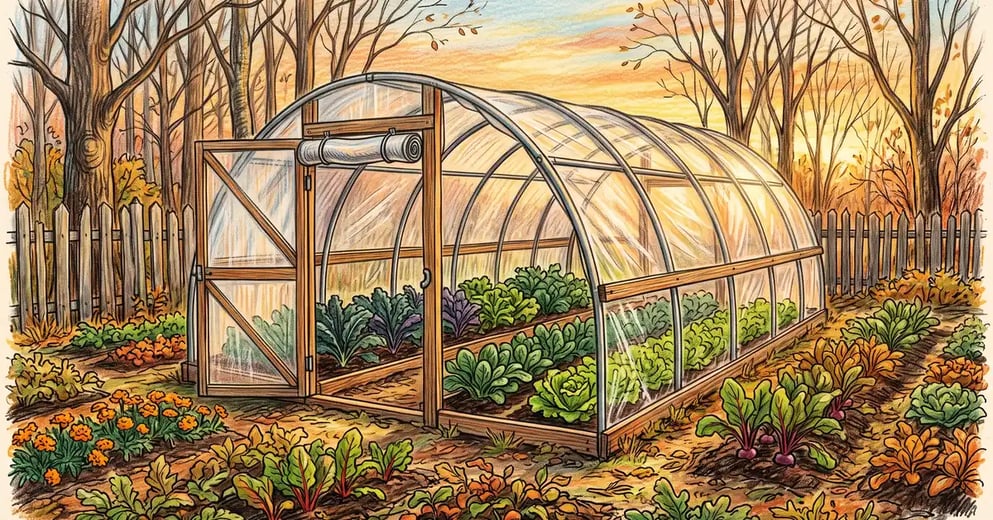
A hoop house is an unheated tunnel of curved bows under one layer of greenhouse plastic, and on a winter night it holds only a few degrees over the outside air. The gain comes by day and from what you put inside.
Utah State University Extension puts it plainly: even well ventilated, a high tunnel runs 10°F to 15°F (6°C to 8°C) warmer by day, while at night it "may vary by just a few degrees warmer." In January it can hit 100°F (38°C) at midday and near 0°F (-18°C) after dark.
Commercial growers say high tunnel, gardeners say hoop house, and USDA NRCS treats them as one thing. Penn State Extension defines it by three features: one layer of 6 mil polyethylene, passive venting through roll-up sides, and removable end walls. A greenhouse adds a double layer and a heater. A low tunnel is the same idea shrunk to 4 ft (1.2 m) over one bed.
What this guide covers:
- Why the second layer matters more than the first
- A home-scale build: bows, plastic, anchoring and cost
- Venting, watering and the salt problem nobody mentions
- Which crops earn their space in an unheated tunnel
Key Takeaway
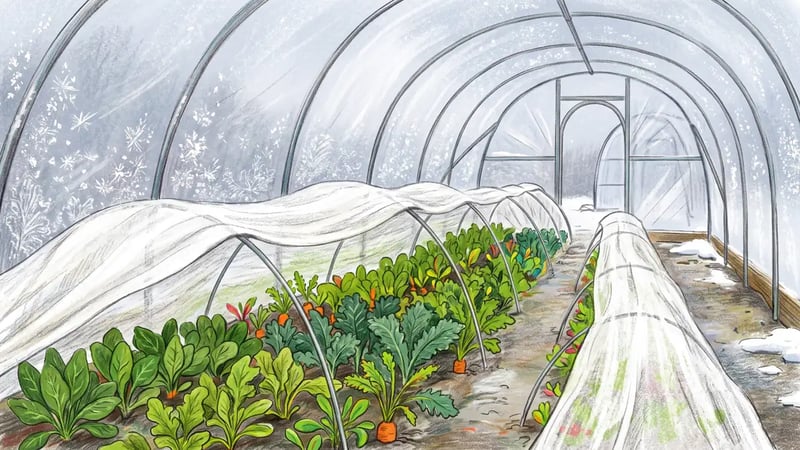
Plastic alone traps daytime sun, not nighttime heat. The structure that actually carries greens through a zone 5 winter is a hoop house with floating row cover draped over the beds inside it, which is what Eliot Coleman means by double coverage.
How Much Does the Second Layer Really Add?
In a multi-site New England trial, a row cover under 6 mil plastic held winter lows 20°F to more than 40°F (11°C to 22°C) above the outdoor minimum. That is the number that makes winter growing possible.
The University of New Hampshire logged tunnels at six sites from zone 4b to 7a over two winters. In Durham, NH, the outdoor low hit -11.9°F (-24°C); under heavy row cover plus greenhouse film it was 13.4°F (-10°C) inside. Two layers of row cover alone managed -6.7°F. The effect was strongest on the coldest nights.
Soil at 4 cm depth stayed above freezing almost all winter inside, while outside it "rarely exceeded 32°F." Roots that never freeze keep leaves alive.
| Structure | Typical Cold Protection | Cost | Source |
| Floating row cover alone | 2-10°F depending on grade | $10-30 | USU Extension |
| Low tunnel, single cover | 2-4°F | $20-100 | USU Extension |
| Cold frame | Medium (2-4 weeks earlier) | $70-200 | USU Extension |
| Hoop house, single plastic | A few degrees at night, 10-15°F by day | $1,000-5,000 | USU Extension |
| Row cover + 6 mil plastic (double) | 20 to 40°F above outdoor low | $0.50-1.00 per sq ft (low tunnel) | UNH trial |
Sources: Utah State University Extension, Extending the Garden Season, UNH, Temperature Moderating Effects of Low Tunnels Over Winter
Coleman's version, shown at the 2007 Common Ground Country Fair: sow hardy greens in early October, hoop and row-cover them, add plastic at Thanksgiving, and "try not to let the temperature go over 80." Our row cover guide covers fabric weights.
Why This Works: Catch and Store Energy
A hoop house does not make heat. It slows the loss of heat the soil banked during the day, and each layer adds a still-air gap that slows it further. Permaculture calls this catching and storing energy, and it is why the soil mass inside matters more than the plastic above it. Purdue notes that condensation on the inner cover improves night insulation by trapping radiant heat off the soil, an "igloo effect" you get for free.
How Do You Build a Home-Scale Hoop House?
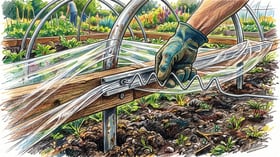
Budget a weekend, two people, and $300 to $1,500 for a 12 to 14 ft wide tunnel, depending on whether you bend PVC or buy steel bows.
The Utah State plan hosted by SARE builds a 14 by 42 ft (4.3 by 12.8 m) tunnel from 1 in schedule 40 PVC bows, 6 mil greenhouse film and a lumber end wall for $463 in materials at 2011 prices, doors extra. Paint the PVC white first; bare PVC shortens the plastic's life.
Site it for sun and drainage
Full sun, nothing shading the south and west sides, and soil that drains. In midwinter a tree casts a midday shadow 2.25 times its height, per Purdue, so keep well clear. Run the long axis east-west north of about 40°N to catch low winter sun, north-south further south.
Set the bows
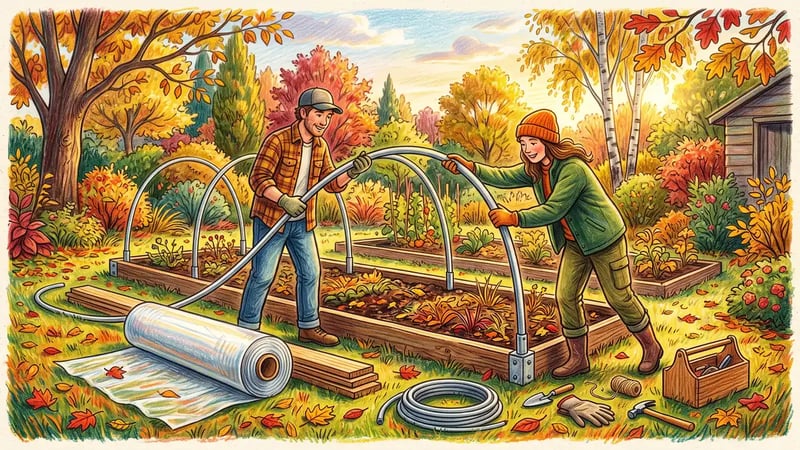
Drive 18 in (45 cm) rebar or ground posts 12 in deep, 4 ft (1.2 m) apart for PVC and up to 5 ft for bent steel conduit, and slide the bows on. Coleman suggests twice the hoops where snow load is expected.
Add a ridge purlin and baseboards
A pipe along the top locks the bows against wind. Baseboards at ground level and a hip board at knee height give you something to fasten plastic to and let the sides roll up.
Cover on a calm, warm day
Use 6 mil UV-stabilised greenhouse film, not construction plastic, which cracks in a season. Pull it tight when warm so it does not sag when cold. Wiggle wire in aluminium channel on the hip boards gives a drum-tight, re-openable fit. USU rates greenhouse film at 5 to 6 years.
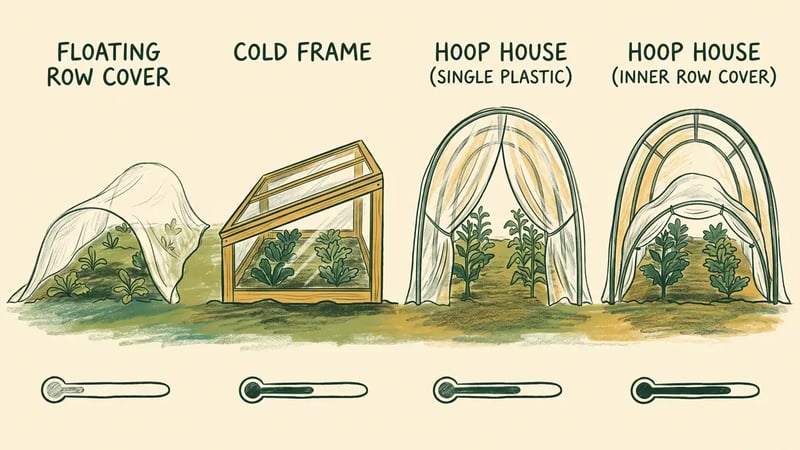
For a few beds a cold frame is cheaper; for serious winter production a walipini is the heavy-duty answer. A hoop house sits between them.
Can You Get One Paid For?
Possibly, if you sell what you grow. NRCS cost-shares high tunnels through the Environmental Quality Incentives Program as a conservation practice. You need a farm number, control of the land, and a documented resource concern, usually plant productivity. A hobby gardener will not qualify; a market gardener with a stand or CSA often does, so call your county service center before buying a kit.
How Do You Manage a Hoop House in Winter?
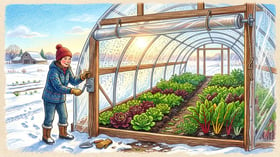
Vent early, water by hand, and pull the row cover back over any night heading below the mid-20s.
Heat kills more winter crops than cold. Purdue's high tunnel guide shows spinach bleached after a 20°F (-7°C) night was followed by 80°F (27°C) inside by early afternoon: frozen soil, roots that cannot pull water, leaves cooking. Open the sides any sunny morning, even in January, and close mid-afternoon to bank heat.
Nothing inside gets rained on, so you water, though in deep winter that may be every few weeks. Light is the quiet cost: Purdue measured 72 percent of outdoor light through single poly and 48 percent under row cover, so heavy fabric comes off on bright days.
Common Mistake to Avoid
Piling on compost every year because "it is organic." No rain means no leaching, so salts build up. Penn State watched soluble salts climb from 0.15 to 0.81 mmho/cm in two years with 1 in of compost a year, and to 1.9 with 2 in, enough to cut pepper yields. Test tunnel soil yearly, and pull the plastic off for a wet month every couple of summers. Our soil and composting guides cover reading that test.
Sweep snow off before it loads the bows. Voles love a warm tunnel; Coleman runs unbaited traps in boxes, and our vole control guide has more.
What Grows in an Unheated Hoop House?
Spinach, kale, mache, claytonia and carrots carry through winter under double cover in zones 5 to 7; tomatoes go in a month early in spring.
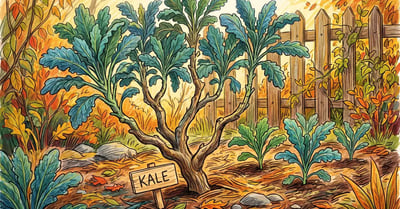
West Virginia Extension's crop list ranks spinach and curly kale as the winter workhorses. Swiss chard dies below 15°F (-9°C), so treat it as a fall crop. Mature lettuce is "difficult to overwinter"; sow it small in October and let it sit for March, as Coleman does. Put tall kale on the north side so it does not shade the rest.
USU reckons a bare hoop house adds about a month at each end of the season; Utah growers set tomatoes inside in March. Pair that with our first frost date guide for the calendar, and our greenhouse crop guide for what justifies a heat bill.
Why This Works: Zone 1 Intensity
A hoop house is a permaculture zone 1 element: the most visited, most managed square footage you own. It needs daily venting an outdoor bed does not, and repays it with the highest yield per square foot all year. Put it by the kitchen door, not the back fence, or the venting will not happen and the crop will cook. The permaculture foundations guide explains how zones organise the rest of the garden around it.
Key Takeaway
Build it once, cover it twice. A $300 to $1,500 tunnel plus $30 of row cover gives zone 5 fresh greens from November to March, if you open the sides every sunny morning.
Frequently Asked Questions
What is a hoop house?
A hoop house is an unheated, walk-in tunnel of curved bows, usually steel conduit or PVC, covered with one layer of 6 mil greenhouse polyethylene and vented by rolling up the sides. Commercial growers and USDA NRCS call it a high tunnel. It sits between a cold frame and a greenhouse: big enough to work in, cheap enough to build in a weekend, but with no heater, so night temperatures inside stay only a few degrees above outside unless you add an inner row cover.
What is the difference between a hoop house and a greenhouse?
Layers and controls. A greenhouse has an inflated double layer or rigid glazing, permanent end walls, a heater and thermostat fans. A hoop house has one plastic layer, passive venting and no heat. Utah State Extension prices a home hoop house kit at $1,000 to $5,000 against $2,000 to $10,000 for a greenhouse, with near-zero running costs versus a winter heating bill. For hardy greens the hoop house wins; for winter tomatoes you need the greenhouse.
How do you build a hoop house with PVC pipe?
Drive 18 inch lengths of half-inch rebar 6 to 12 inches into the ground in two parallel rows, 4 feet apart along each row. Bend 3/4 to 1 inch PVC over the rebar to form arches, add a ridge pole, lumber baseboards and framed end walls with a door. Paint the PVC white so it does not degrade the film, then stretch 6 mil greenhouse plastic over the frame on a warm, calm day and fasten it with wiggle wire or batten strips. Utah State's 14 by 42 foot version cost $463 in materials in 2011.
How much does it cost to build a high tunnel?
Three price bands. A DIY PVC tunnel runs a few hundred dollars: Utah State's 14 by 42 foot plan came to $463 in materials. Steel-bow kits for home growers cost $1,000 to $5,000 by size and gauge. Farm-scale tunnels quoted by the University of Vermont run $2 to $3 per square foot for four-season structures and $0.75 to $1.25 for three-season, with kits from $0.69 to nearly $6 per square foot. Add 25 percent for end walls and site work.
How do you get a free greenhouse from the government?
You do not get one free, but USDA NRCS cost-shares high tunnels through the Environmental Quality Incentives Program (EQIP) for people producing food for sale. You need a farm number from the Farm Service Agency, a deed or lease showing you control the land, and a resource concern the tunnel addresses, typically plant productivity. Rates vary by state; historically underserved producers get a higher rate. Apply at your county USDA service center before building, since work started ahead of a signed contract is not reimbursed.
Get the Weekly Dig
One practical permaculture guide a week, written for gardeners who do this on weekends: permaculture design for real backyards. Free, no spam, unsubscribe any time.
Join the Weekly DigResources
- Utah State University Extension, Extending the Garden Season
- University of New Hampshire, Temperature Moderating Effects of Low Tunnels Over Winter in Cool Climates
- Purdue Extension, Managing the Environment in High Tunnels for Cool Season Vegetable Production
- West Virginia University Extension, Low Tunnels for Beginners
- Utah State University via SARE, Constructing a Low-Cost High Tunnel
- Penn State Extension, High Tunnel Production
- Penn State Extension, Dealing with High Soluble Salt Levels in High Tunnels
- USDA NRCS, EQIP High Tunnel Initiative
- Maine Organic Farmers and Gardeners Association, Coleman's Low Tunnels
- HighTunnels.org, Are High Tunnels for You? (University of Vermont cost figures)