
What Is Mushroom Compost and Why Should You Use It?
Mushroom compost is the straw-and-manure growing medium left over after a commercial mushroom crop. You will also see it sold as spent mushroom substrate, mushroom soil or mushroom manure, and all four names describe the same material. It carries two to three times the nitrogen of garden compost, holds considerably more water, and comes out alkaline at pH 7.2 to 8.0. That last number is why it works so well on tired vegetable beds and why it is the wrong amendment for blueberries. It behaves less like a finished garden compost and more like a mild manure, which is why gardeners compare it with chicken manure compost and reach for it when they are breaking up heavy clay ground.
Pennsylvania alone produces roughly 65% of all US button mushrooms, generating millions of tons of spent substrate every year. Instead of heading to landfill, that material ends up as one of the most nutrient-dense amendments available to home gardeners. Penn State Extension's analysis of 47 commercial SMS samples found an average NPK of 2.1–0.8–1.5 — two to three times richer than typical yard compost.
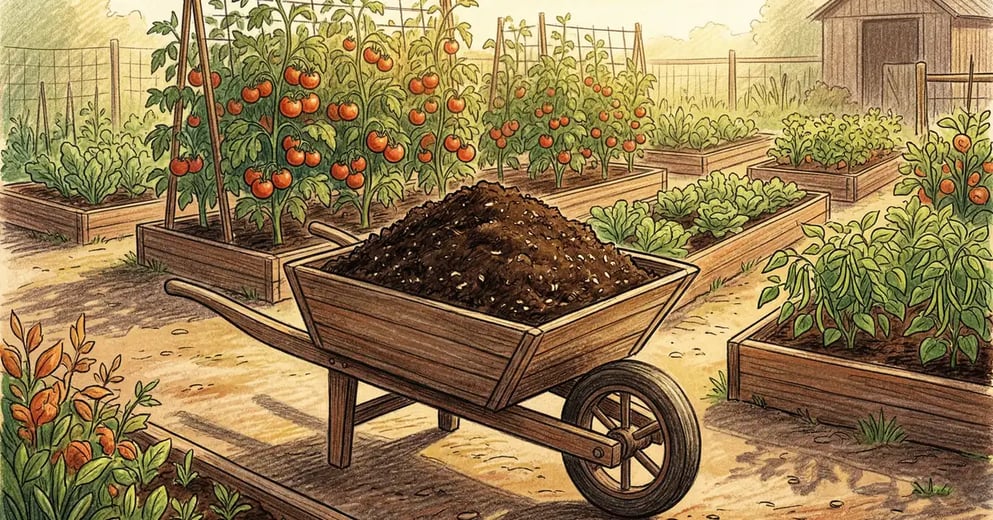
For homesteaders focused on maximising production per square foot, mushroom compost offers a measurable return: tomato yields up 12–18% and potato harvests up 14.6% in university-controlled field trials. Here's how to source it, apply it correctly, and avoid the few pitfalls that trip up first-time users.
What you'll learn in this guide:
- Exactly what goes into commercial mushroom compost and how it compares to regular compost
- Application rates for vegetable beds, top-dressing, and potting mixes — in US measurements
- Which crops deliver the biggest yield gains and which plants to keep mushroom compost away from
- How to test for salt content and pesticide residues before committing a full bed
- Where to buy it and what to expect to pay per cubic yard
Key Takeaway
Mushroom compost is a thermophilic, fungal-rich amendment with 2–3× the nitrogen of regular compost. Age it for 4–6 weeks before use on sensitive crops to reduce salt levels, and avoid acid-loving plants like blueberries. Applied correctly at 1–2 inches (25–50 mm), it delivers measurable yield gains in a single season.
What's Actually in Mushroom Compost?
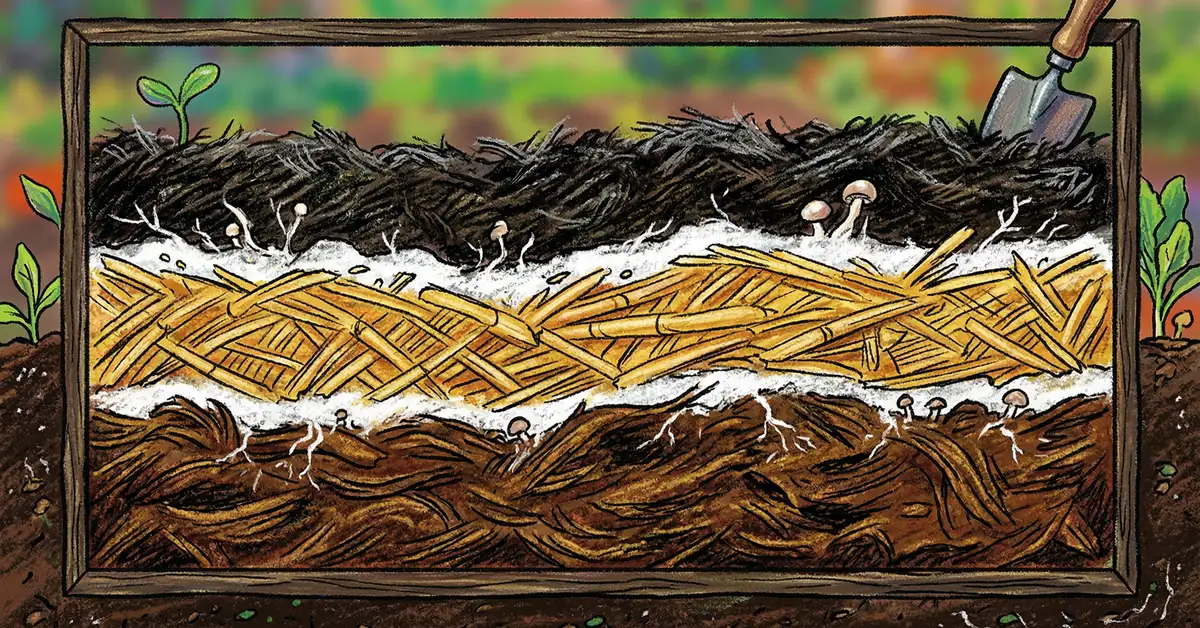
Commercial mushroom compost isn't a single ingredient — it's a carefully engineered growing medium that's been through a multi-phase composting process before mushrooms ever touch it. Understanding the composition helps you predict how it'll behave in your soil.
The production process starts with Phase I composting: raw wheat or rye straw, horse manure, poultry litter, and gypsum are mixed in outdoor windrows and turned for 14–21 days at temperatures reaching 150–170°F (65–75°C). Phase II moves the material into controlled bunkers at 130–140°F (54–60°C) for another 7–14 days. A final pasteurisation step at 150–180°F (65–82°C) kills pathogens and weed seeds before mushroom spawn is introduced.
By the time the substrate reaches your garden, mushrooms have consumed the most readily available sugars and cellulose — but the structural carbon, mineral nutrients, and residual fungal biology remain intact. Here's how the composition breaks down:
| Ingredient | % by Volume | What It Contributes |
| Wheat or rye straw | 45–55% | Structural carbon, organic matter |
| Horse manure (composted) | 15–20% | Nitrogen, microbial inoculant |
| Poultry litter | 5–10% | Additional nitrogen and minerals |
| Gypsum (calcium sulphate) | 2–5% | Calcium, improves granulation |
| Peat moss or coir | 5–10% | Water retention, pH buffering |
Sources: Penn State Extension, Spent Mushroom Substrate as a Soil Amendment (47-sample analysis).
The finished product typically contains 65–75% organic matter with a pH of 7.2–8.0. Compared to regular yard compost (NPK around 0.5–0.2–0.5), mushroom compost delivers roughly three times the nitrogen and double the phosphorus and potassium. It also carries meaningful amounts of calcium (2–4%), magnesium (0.3–0.8%), and sulphur (0.8–1.5%) — micronutrients that many home gardeners overlook but that directly affect fruit set and flavour.
Mushroom Compost vs Regular Compost, Mushroom Soil and Mushroom Manure
Most of the confusion at the supplier yard is a naming problem. Mushroom compost, mushroom soil, mushroom manure and spent mushroom substrate all describe the same material. The manure in the name refers to the horse manure in the original recipe, not to anything added after the mushrooms came off. What genuinely differs between two loads is how long the pile has stood in the open since it left the mushroom house, and that one variable decides whether the material feeds your crop or burns it.
| Material | NPK | pH | Salt (EC) | Best at | Wrong for |
| Fresh mushroom compost, straight from the mushroom house | 2.1–0.8–1.5 | 7.2–8.0 | 2.8–4.2 mS/cm | Autumn spreading on empty beds, where winter rain does the curing for you | Seedlings, transplants, container mixes, anything going in within a month |
| Aged mushroom compost, 4–6 weeks uncovered | 2.1–0.8–1.5 | 7.2–8.0 | 0.8–1.5 mS/cm | Heavy-feeding vegetables, water holding, fungal biology | Blueberries, azaleas, rhododendrons, cranberries and other acid lovers |
| Regular garden compost | about 0.5–0.2–0.5 | Near neutral | Low | General soil building and seed mixes, with no curing needed | Feeding a hungry crop quickly, where its nitrogen runs out first |
Sources: Penn State Extension, Spent Mushroom Substrate as a Soil Amendment; University of Guelph, EC and Salt Leaching in Mushroom Compost.
Read the table across one row and the trade-off is clear enough: mushroom compost is the richer, thirstier, more alkaline material, and ageing is the price of admission. Garden compost asks nothing of you and gives less back. The two are not competitors in a bed, they are a base and a booster.
How Does Mushroom Compost Improve Your Soil?
The biggest measurable benefit is water-holding capacity. Cornell University's 2024 field study found that incorporating SMS at 25% by volume increased water retention by 15–25 percentage points across soil types — sandy loam jumped from 18–22% to 33–38%, and even clay loam improved by 12–13 points. For homesteaders in drought-prone regions, that translates directly into less irrigation and healthier root systems during dry spells.
Mushroom compost also reduces bulk density by 5–12%, which matters in compacted soils where roots struggle to penetrate. Where the compaction sits deeper than an amendment can reach, the mechanical half of the job belongs to a broadfork sized to your bed width, which lifts and cracks the profile without inverting it, so the compost has somewhere to go. After a single season, University of Guelph researchers documented 1.3–1.6× higher water-stable aggregate formation — meaning the structural improvements persist rather than washing away.
What sets SMS apart from most amendments is its fungal-dominant biology. Because it spent weeks as a mushroom growing medium, residual mycelium and fungal spores persist even after ageing. Compared to unamended soil, SMS-treated plots showed 2.1–2.8× higher fungal biomass and 1.4–1.8× higher bacterial biomass. Those fungal networks don't just decompose organic matter — they transport water and nutrients directly to plant roots, acting as a biological extension of the root system itself.
How to Apply Mushroom Compost in Your Vegetable Garden
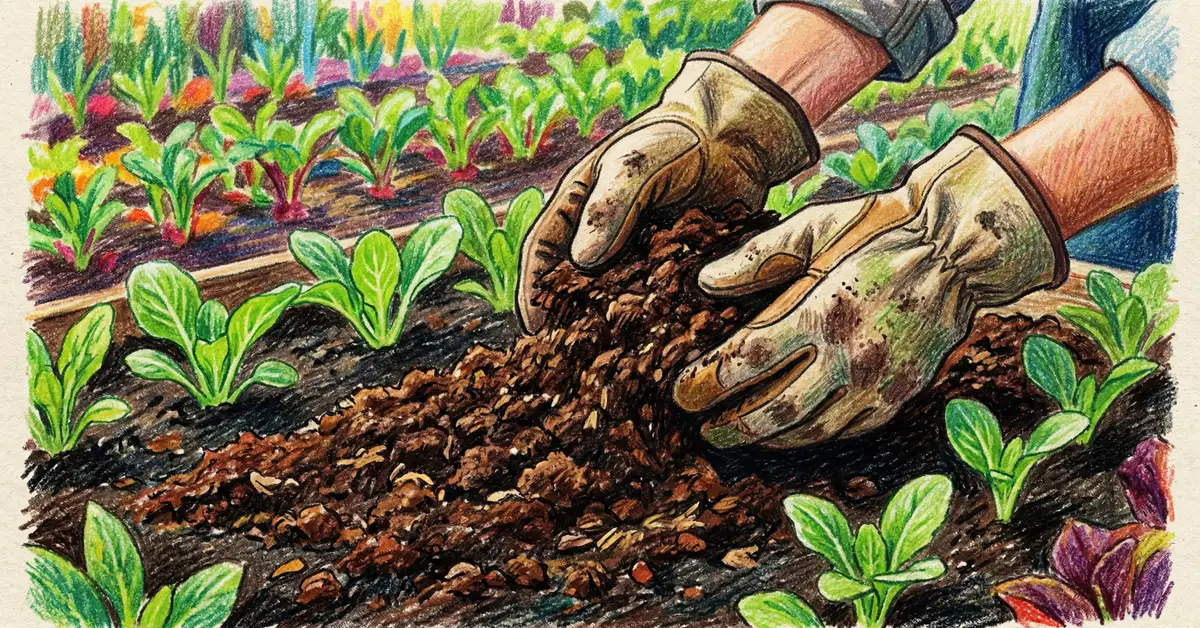
Application rates depend on your goal. For general soil building, work 1–2 inches (25–50 mm) into the top 6–8 inches (15–20 cm) of your beds. For intensive vegetable production, you can push that to 2–4 inches (50–100 mm). One cubic yard of mushroom compost covers approximately 100 square feet (9.3 m²) at 3-inch depth — plan your bulk order accordingly.
| Purpose | Application Rate | Method | Best Timing |
| General soil amendment | 1–2 in. (25–50 mm) | Work into top 6–8 in. | Autumn or 3–4 weeks pre-planting |
| Top-dressing | 0.5–1 in. (12–25 mm) | Spread on surface | Spring, before growing season |
| Mulch layer | 2–3 in. (50–75 mm) | Surface spread, 4 in. from stems | Year-round (refresh annually) |
| Potting mix ingredient | 20–40% by volume | Mix with peat/coir + perlite | As needed |
Sources: Penn State Extension, Spent Mushroom Substrate as a Soil Amendment; Rutgers Cooperative Extension, Mushroom Compost for Vegetable Production.
Autumn application is ideal in most climates. Spreading mushroom compost in September–November gives it 4–8 weeks to weather before spring planting, allowing excess salts to leach naturally through rainfall. Spring application works with aged (cured) material only — apply at least 2–3 weeks before transplanting sensitive crops.
If you're running a no-dig system, mushroom compost works beautifully as the top layer. Spread 1–2 inches on the surface and let worms and soil biology incorporate it over time. Combine it with a straw mulch layer on top for even better moisture retention.
Need the gear for this?
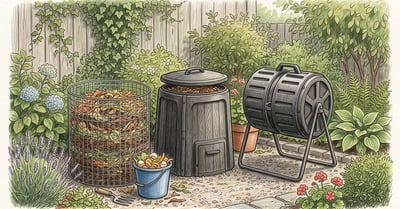
Bins and tumblers picked by yard size, with the honest trade-offs for each.
See the compost bin picksCan You Plant Directly Into Mushroom Compost?
Not into fresh material, and not into a bed that is nothing but mushroom compost. Used neat it drains too freely, pushes the root zone well above pH 7.0, and at 2.8 to 4.2 mS/cm it will scorch the first transplants you put in it. Used as a share of the mix it is one of the better things you can add. Penn State's tomato trials ran at 25 to 30 percent by volume, and that share is a sensible ceiling for a bed fill as well.
| What you are doing | Mushroom compost share | What goes wrong if you push past it |
| Filling a new raised bed | 25–30% by volume, with topsoil and garden compost making up the rest | A bed that dries out between waterings and reads alkaline for its first two seasons |
| Topping up a bed you already garden in | 1–2 in. (25–50 mm) worked into the top 6–8 in. (15–20 cm) | Nitrogen ahead of what the crop can use, and leafy growth instead of fruit |
| Container or potting mix | 20–40% by volume, blended with peat or coir plus perlite | Salt has nowhere to leach to in a pot, so damage shows up faster than in open ground |
| Direct sowing | None in the seed layer. Sow into garden compost and keep the mushroom compost below or alongside | Poor germination that looks like bad seed and is actually salt |
| Transplanting | Aged material only, spread 3–4 weeks before the plants go in | Burnt leaf edges and stalled growth in the first fortnight |
The pattern behind every row is the same. Mushroom compost is at its best where roots will grow into it later, and at its worst where roots are sitting in it today.
Which Crops Thrive With Mushroom Compost?
Not every plant responds equally. Heavy feeders with moderate-to-high pH tolerance benefit most, while acid-loving species can suffer from mushroom compost's alkaline nature. Penn State's 3-year tomato trial at HAREC found that plots amended with 25–30% SMS by volume produced 85.1 tonnes per hectare versus 72.4 for mineral fertiliser alone — a 17.5% yield increase with improved fruit quality (Brix up from 4.2 to 4.6).
University of Maine's potato trials showed a 14.6% marketable yield increase with SMS incorporation, alongside reduced disease incidence — from 12.3% to 8.9%. The competitive microbial community in mushroom compost, particularly Trichoderma and Bacillus species, actively suppresses soil-borne pathogens like Fusarium and Phytophthora.
Best performers: Tomatoes (25–30% by volume, +15–20% yield), potatoes (40–50%, +12–16%), cucurbits like squash and pumpkin (+10–15%), carrots and root vegetables (+8–12% with fewer forked roots), and lettuce for faster harvest times. Tomato companion plants like peppers also benefit, showing 12–18% improvement in fruit set.
Plants to avoid: Blueberries (optimal pH 4.5–5.5), azaleas, rhododendrons, heathers, and cranberries all need acidic soil that mushroom compost's pH 7.2–8.0 directly undermines. These plants develop iron chlorosis — yellowing leaves with green veins — when soil pH climbs above 6.0. If mushroom compost is your primary amendment, stick to pine-based compost or elemental sulphur for these species.
Why This Works: Produce No Waste
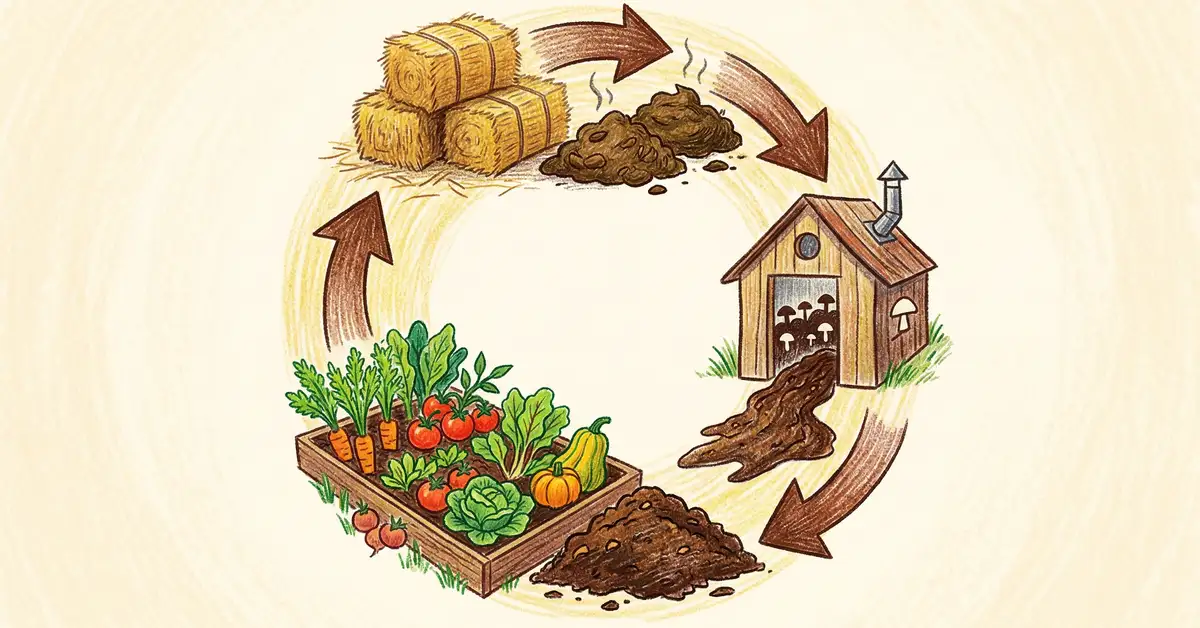
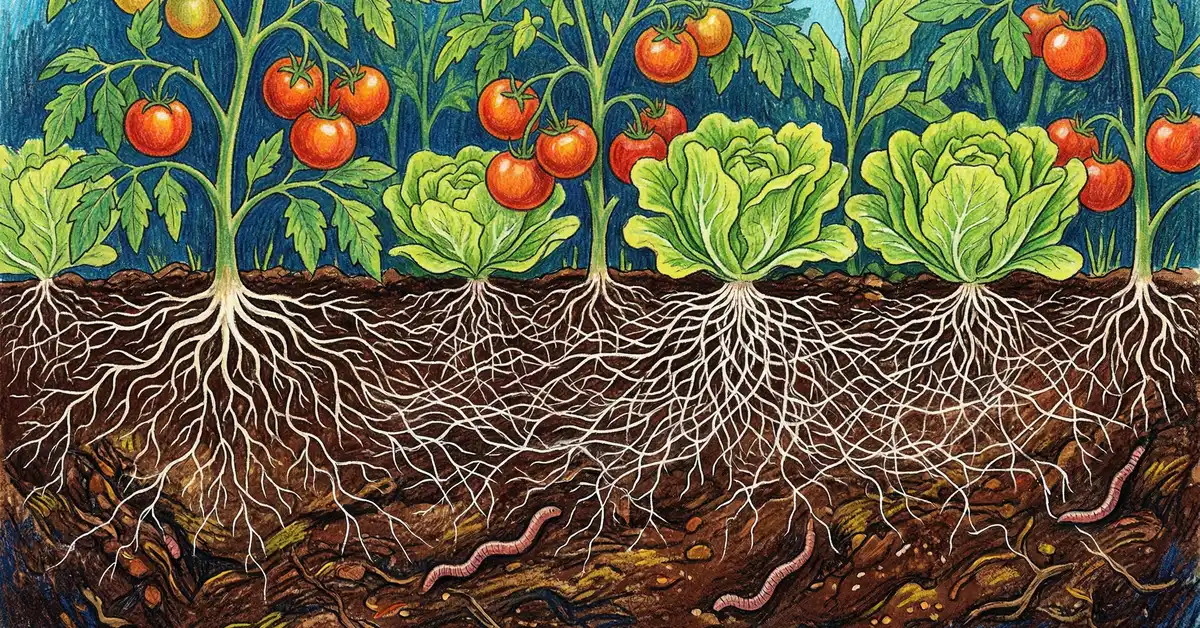
When you spread mushroom compost on your beds, you're closing a nutrient loop that permaculture principle #6 calls "produce no waste." Agricultural residues — straw, manure, poultry litter — become a mushroom crop, and the spent substrate becomes your soil builder. The US and UK combined divert roughly 15 million tonnes of SMS from landfill annually through this cycle. For a homesteader, buying mushroom compost isn't just cost-effective — it's participating in a waste-to-resource loop that builds soil fertility while reducing methane emissions from landfill decomposition.
What Are the Risks of Using Mushroom Compost?
Mushroom compost is safe and well-tested — Penn State's heavy metal analysis of 47 samples found all metals well below regulatory limits — but three issues catch first-time users off guard.
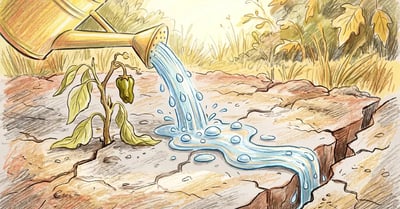
Salt content is the biggest concern. Fresh SMS straight from the mushroom house has an electrical conductivity (EC) of 2.8–4.2 mS/cm — high enough to stunt seedlings and burn leaf edges. The fix is simple: age it for 4–6 weeks in an open pile, exposed to rainfall. This drops EC to 0.8–1.5 mS/cm, well within safe range for vegetables. If you're buying from a garden centre, the material is usually pre-aged. If sourcing directly from a mushroom farm, ask when it was pulled and add curing time accordingly.
Watch for Herbicide Residues
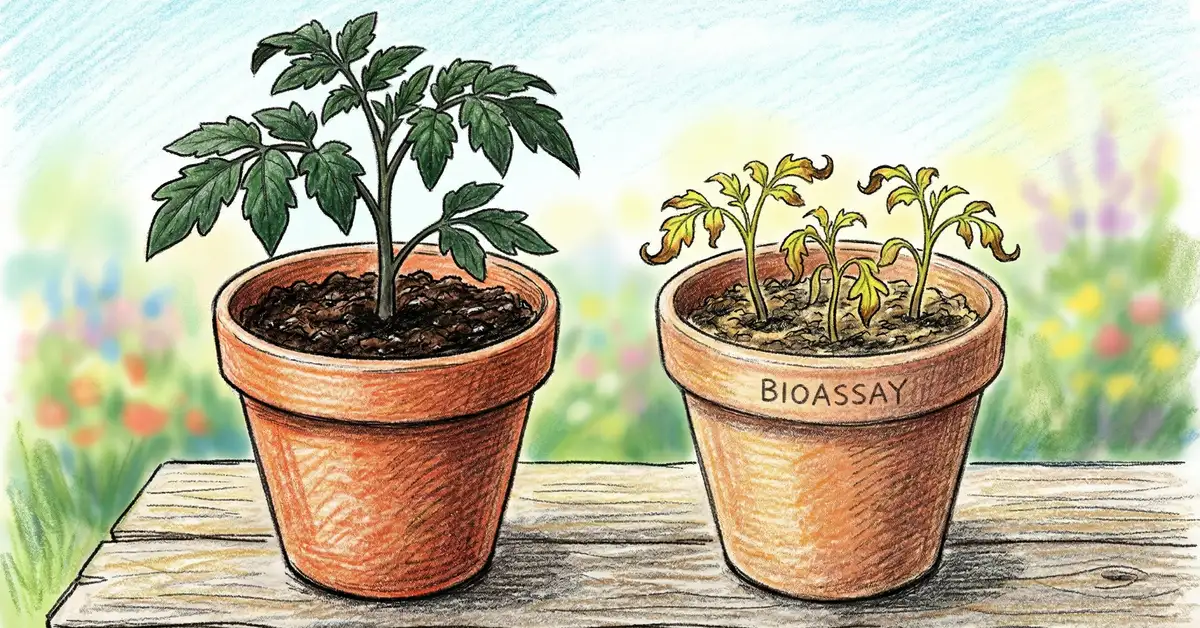
Hay and straw used in mushroom production may carry traces of aminopyralid or clopyralid — persistent herbicides that stunt tomatoes, peas, beans, and cucurbits even at parts-per-billion levels. Before committing a full bed, run a simple bioassay: grow tomato seedlings in a 50:50 mix of mushroom compost and peat for 3–4 weeks. If leaves twist or growth stunts compared to a pure-peat control, the batch is contaminated. Source from commercial operators using certified clean straw to minimise risk.
pH considerations: With a typical range of 7.2–8.0, mushroom compost can lock up iron, manganese, and zinc in soils that are already alkaline. Test your native soil pH before applying. If it's already above 7.0, limit mushroom compost to 15–20% by volume and consider blending with worm castings (pH 6.0–7.0) or peat moss to bring the blend back toward neutral. For a deeper dive on managing alkaline amendments, see our organic fertilizer guide.
Key Takeaway
The salt and pH concerns with mushroom compost are real but manageable. Age fresh material for 4–6 weeks, run a bioassay on your first batch, and test native soil pH before applying. These three steps eliminate 95% of the problems gardeners encounter with SMS.
How to Buy Mushroom Compost Without Getting a Fresh Batch
Search for mushroom compost in the US and most of what comes back is a yard selling it by the cubic yard. The useful question at that point is what condition the material arrives in, because the same product can land on your beds at 2.8 mS/cm or at 0.9, and nothing on the invoice tells you which. Four questions settle it.
When did it leave the mushroom house?
Anything under four weeks is fresh material and needs curing before it touches a crop. A yard that cannot answer this is selling you an unknown.
Has the pile stood uncovered?
Ageing works because rainfall leaches the soluble salts out. A pile kept under a roof has aged on the calendar and not in the way that matters.
Which farm, and what straw?
This is the herbicide question. Aminopyralid and clopyralid travel in hay and straw, and a supplier who knows their grower can tell you whether the straw is certified clean.
Can you take a sample first?
One bucket runs the tomato seedling bioassay described above. Three or four weeks of waiting is cheaper than losing a bed of transplants.
The three buying routes behave differently on all of this. Bagged material from a garden centre is usually pre-aged and the least likely to catch you out. Bulk from a landscape yard is the uncertain one, since the pile may be a blend of deliveries at different ages. Collecting it yourself from a mushroom farm gets you the freshest material of all, which means it is the route that needs the longest cure before you use it.
Frequently Asked Questions
What is spent mushroom compost?
Spent mushroom compost — also called spent mushroom substrate (SMS) — is the growing medium left after commercial mushroom harvesting. It's been through thermophilic composting at temperatures above 150°F (65°C), colonised by mushroom mycelium, and then removed after 2–4 harvests. The result is a nutrient-rich, partially decomposed amendment containing wheat straw, horse manure, gypsum, and residual fungal biology. It typically has an NPK of 2.1–0.8–1.5, roughly three times richer in nitrogen than standard backyard compost.
Is mushroom compost good for vegetable gardens?
Yes — university trials consistently show yield improvements across common vegetables. Penn State documented a 17.5% tomato yield increase and University of Maine found 14.6% more marketable potatoes with SMS incorporation. The key is using aged material (cured 4–6 weeks) to reduce salt levels, and applying at 1–2 inches (25–50 mm) worked into existing beds. Heavy-feeding crops like tomatoes, peppers, squash, and lettuce respond especially well.
Do tomatoes like mushroom compost?
Tomatoes are among the top performers. Penn State's 3-year HAREC trial found that plots amended with 25–30% mushroom compost by volume produced 85.1 tonnes per hectare versus 72.4 with mineral fertiliser alone. Beyond raw yield, fruit quality improved — Brix sugar readings rose from 4.2 to 4.6. The competitive fungi in SMS also help suppress Fusarium wilt, a common tomato disease. Apply aged mushroom compost 3–4 weeks before transplanting for best results.
Is mushroom compost acidic or alkaline?
Mushroom compost is alkaline, typically pH 7.2–8.0. The gypsum and limestone used during the Phase I composting process are the main contributors. This makes it excellent for gardens with naturally acidic soil but problematic for acid-loving plants like blueberries (optimal pH 4.5–5.5), azaleas, and rhododendrons. If your native soil pH is already above 7.0, apply mushroom compost conservatively and test after each season.
How much does mushroom compost cost?
Pricing varies by source and region. Direct pickup from a mushroom farm runs $35–50 per cubic yard — the cheapest option if you're near Pennsylvania, California, or Oregon mushroom country. Landscape suppliers with delivery charge $50–75 per cubic yard with a 1–2 tonne minimum. Bagged retail at garden centres is the most expensive at $8–15 per 2 cubic foot bag, which works out to roughly $90–110 per cubic yard equivalent. For a typical homestead vegetable garden, budget $450–600 for a full-bed application at 1-inch depth.
Get the Weekly Dig
One practical permaculture guide a week, written for gardeners who do this on weekends: composting that actually finishes and soil that feeds itself. Free, no spam, unsubscribe any time.
Join the Weekly DigResources
- Penn State Extension — Spent Mushroom Substrate as a Soil Amendment
- Cornell University Soil and Crop Sciences — SMS Mineralization Research
- Rutgers Cooperative Extension — Mushroom Compost for Vegetable Production
- University of Guelph — EC and Salt Leaching in Mushroom Compost
- USDA NRCS — Pesticide Residue Testing in Compost Materials
- University of Maine Potato Research Program — SMS Field Trials
- UMass Extension Soil and Plant Tissue Testing Lab — Nutrient Analysis Protocols