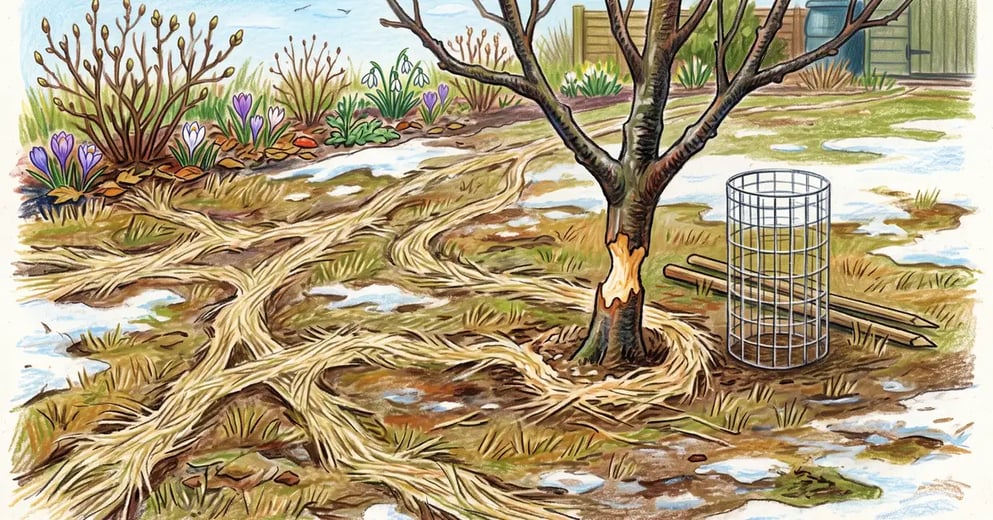

The snow melts and there they are: pale trails of clipped grass looping across the lawn, and a young apple tree with a ring of bark chewed clean off at the base. That tree is already dead. It just does not know it yet. sunchoke beds
Voles are the quiet garden problem, because most of their work happens under snow or under mulch where nobody is watching. The good news is that they are also one of the few garden pests where the non-poison methods are the ones extension services actually recommend first.
What you will find below:
- How to tell vole damage from mole damage, and why the difference matters
- The reproduction numbers that explain why a quiet year turns into an outbreak
- Four control methods with the specifications that make them work
- Why poison is the last resort rather than the first
- The home remedies that extension services have already tested and dismissed
Is It Voles, Moles or Something Else?
This is the most consequential question in the whole article, because the two animals need completely different responses and one of them is not damaging your plants at all.
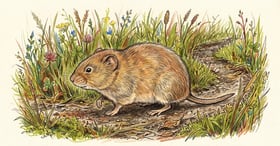
Voles are stocky, mouse-like rodents with short tails, small eyes and small ears. Nebraska Extension describes the giveaway sign as surface runways of closely clipped vegetation, 1 to 2 in (2.5 to 5 cm) wide, visible right after snowmelt, with small holes leading down to burrows.
Moles make raised soil ridges and volcano-shaped mounds, and they eat insects and earthworms, not plants. Nebraska's publication makes the point directly: voles travel through mole tunnels to reach bulbs and roots, and the damage is then blamed on the mole that dug the tunnel.
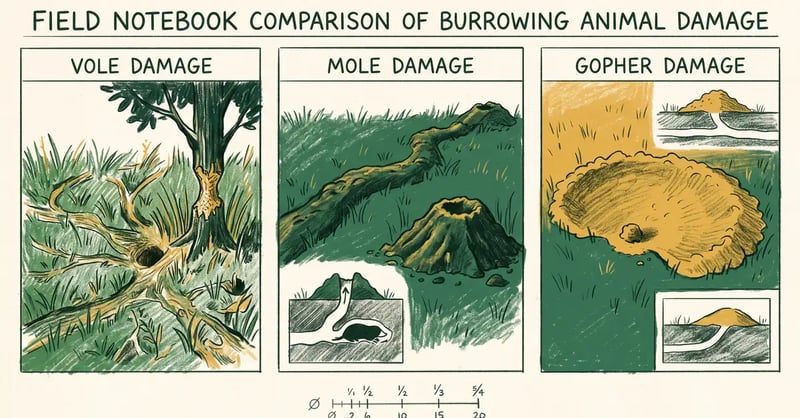
On bark, the tooth marks settle it. Vole gnawing leaves irregular marks about 1/16 in (1.6 mm) wide and 3/8 in (10 mm) long at varied angles. Rabbit damage is neater, with marks about 1/8 in (3 mm) wide in regular rows, and usually higher up.
| Sign | Vole | Mole |
| Surface evidence | Clipped grass runways 1 to 2 in wide | Raised soil ridges and conical mounds |
| Diet | Grass, bark, roots, bulbs, tubers, seeds | Insects and earthworms |
| Plant damage | Girdled trunks, eaten bulbs and roots | Almost none, roots disturbed by tunnelling |
| Peak damage season | Late autumn through early spring | Year round tunnelling |
| Right response | Habitat, exclusion, trapping | Usually tolerate |
Sources: University of Nebraska Extension G887, Controlling Vole Damage, Nebraska Extension, Backyard Farmer: Voles
Why the Population Explodes So Fast
Nebraska's numbers explain the pattern every gardener eventually experiences: three quiet years, then carnage.
Prairie and meadow voles produce 5 to 10 litters a year, averaging 3 to 5 young, with a gestation of about 21 days. One captive meadow vole raised 17 litters in a single year, 83 young in total, and a female from that first litter had 13 litters of her own before she turned one.
Populations run from 10 to 250 voles per acre and peak roughly every four years in North America. A peak typically lasts about a year before crashing. Set against that, life expectancy in the wild is often under two months, which tells you exactly how much predation is normally holding the line.
Why This Works: The Problem Is the Solution
A vole outbreak is not really a vole problem, it is a habitat report. Dense unbroken ground cover, a thick mulch ring against a trunk, and no hunting perch for a hawk within 200 ft (60 m) add up to an invitation. Change those three things and the population falls without you killing anything, because predators do the work. That is the difference between fighting a symptom and reading what the system is telling you, and it sits at the centre of permaculture design.
Four Methods That Work
Extension guidance is consistent about the order. Habitat first, exclusion second, trapping third, and poison only if the first three have failed on a scale you cannot manage.
Clear the cover, especially around trunks
Voles will not cross open ground willingly. Nebraska Extension notes that they are much less likely to traverse weed-free zones 15 ft (4.6 m) wide, and while that is drastic for a garden, the principle scales down. Mow the rough edges. Pull mulch back to leave a clear ring of bare soil 6 to 12 in (15 to 30 cm) around every trunk. And know that voles thrive under plastic weed barrier, which is one more reason to skip it.
Wrap the trees in quarter-inch mesh
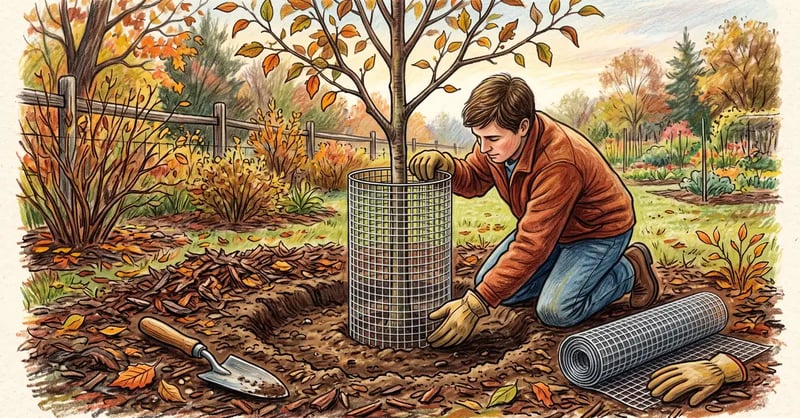
A cylinder of 1/4 in (6 mm) hardware cloth around each trunk, pushed tight to the ground or buried slightly. It must stand higher than your deepest expected snow, drifts included, because voles tunnel through snow and gnaw at whatever height the snow reaches. Overlap the seam by at least 1 in (2.5 cm) and fasten it. Leave the diameter generous so the trunk can thicken, and cover the top so cavity-nesting birds cannot fall in. Galvanised cylinders last about five years.
Fence the beds you care about
For a flower bed or vegetable plot, Nebraska specifies woven wire or hardware cloth of 1/4 in (6 mm) mesh or smaller, about 12 in (30 cm) high, buried 2 to 3 in (5 to 8 cm). Where pine voles are the problem, bury it 6 in (15 cm) because they work underground. Take the fence to 18 in (46 cm) and you exclude rabbits as well.
Trap the runways, two to three per run
Ordinary mouse snap traps work, and trapping is effective where the damaged area is under an acre. Set them perpendicular to a runway with the trigger sitting in the run, or pair two back to back within the run. Bait is not required, though peanut butter mixed with oatmeal on the trigger helps. Cover baited traps with a box or a length of pipe with a 1 in (2.5 cm) hole so birds and squirrels cannot reach them.
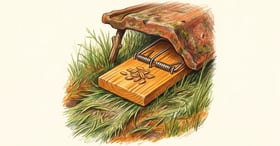
If nothing is caught after two nights of fair weather, the traps are in the wrong place. Move them to a fresh runway rather than waiting.
Recruit the Predators
This is the method with the best long-term economics and the worst instant gratification.
A Western SARE farmer project on rodent control in orchards using raptors compared approaches and found trapping cost about $8.11 per rodent removed, while a barn owl nest box programme worked out at about $0.27 per rodent taken. The catch is timing: owl boxes filled slowly over several seasons, whereas hunting perches were used by raptors immediately and rodent activity near them dropped straight away.
The practical version for a home garden is a tall perch post at the edge of the rough grass, plus leaving the rough grass itself somewhere a hawk can hunt over rather than somewhere a vole can hide under. UC Agriculture and Natural Resources guidance on managing raptors for pest control covers box placement and spacing if you want to go further.

Poison Undoes the Predators You Just Recruited
Rodenticides are the fastest way to knock down a large population and the fastest way to lose the animals that were keeping it down for free. Raptors that eat poisoned rodents can be killed by secondary poisoning, and second-generation anticoagulants such as brodifacoum, difethialone and bromadiolone are the worst offenders. The EPA has restricted consumer access to these products for exactly this reason, and USGS research documents the threat to non-target wildlife. If you have a garden owl, poison is a straight trade of one problem for a worse one.
What Does Not Work
Nebraska Extension is blunt on this point: avoid electronic repellent devices, moth balls and other unregistered products, because no evidence has been produced for their effectiveness on voles. That covers ultrasonic stakes, the vibrating spikes sold in every garden centre, and the internet's rotating cast of home remedies.
Registered repellents containing thiram or capsaicin exist for ornamentals, but they are not registered for food crops, they wash off, they are expensive, and they work least well in winter when food is scarce and voles are hungriest. Which is precisely when you need them.
Flooding burrows and fumigating are both listed as time consuming and largely ineffective against a tunnel network as complex as a vole colony's.
Key Takeaway
If you do exactly one thing this autumn, pull the mulch back from your tree trunks and fit quarter-inch hardware cloth cylinders. A girdled tree cannot be saved, and the guard costs a few dollars. Everything else on this page is optimisation compared with that one job.
Frequently Asked Questions
How do you get rid of voles?
In this order: remove the dense ground cover they shelter in, especially the mulch ring against tree trunks; fit 1/4 in (6 mm) hardware cloth guards around trunks and beds; trap the runways with mouse snap traps at two to three per run; and give hawks and owls somewhere to hunt from. Nebraska Extension considers trapping effective where the damaged area is under an acre. Poison is a last resort, not a first move.
How do you get rid of voles and moles permanently?
You do not, and the honest framing matters. Both are native wildlife with reproductive rates that refill any vacuum you create. What you can do permanently is make your garden a bad place to be a vole: short vegetation, no mulch against trunks, physical barriers on anything valuable, and healthy predator pressure. Moles usually need no action at all, since they eat insects rather than plants.
Why do I suddenly have voles?
Populations are cyclic, peaking roughly every four years in North America, and a peak typically lasts about a year before crashing. A mild winter with deep, persistent snow cover also helps, because snow hides them from predators while they feed on bark. Sudden appearance usually means a population peak has met good habitat, not that something new moved in.
How do you get rid of voles naturally?
Habitat modification, exclusion, trapping and predators are all non-chemical and all supported by extension guidance. Mow, clear the trunk zones, fit mesh guards, set snap traps in the runways, and put up a raptor perch. Skip ultrasonic devices and home remedies, which extension services have tested and dismissed.
Will coffee grounds get rid of voles?
No. There is no extension evidence that coffee grounds, moth balls, human hair, chewing gum or castor oil granules remove an established vole population. Some registered repellents using thiram or capsaicin have a legitimate but short-lived effect on ornamentals, and they are not permitted on food crops.
Do voles damage tree roots or just bark?
Both, and it depends on the species. Meadow and prairie voles mostly girdle trunks at or near ground level, or higher under snow cover. Pine or woodland voles live underground and feed on roots, crowns, bulbs and tubers, which is why their damage shows up as a plant that suddenly wilts with no visible cause above ground.
Get the Weekly Dig
One practical permaculture guide a week, written for gardeners who do this on weekends: pest control that works without a spray bottle. Free, no spam, unsubscribe any time.
Join the Weekly DigAutumn is the window. Guards go on before the first snow, mulch comes back from the trunks at the same time, and the traps come out when you see the first runway. If you are planting trees this autumn, fit the guard the same day you plant, and keep your mulch layer in a doughnut rather than a volcano.
Resources
- University of Nebraska Extension G887: Controlling Vole Damage
- Nebraska Extension Backyard Farmer: Voles
- Western SARE FW09-038: Rodent Control in Orchards Using Raptors
- UC Agriculture and Natural Resources: Managing raptors for increased pest control on farms
- US EPA: Rodent Control Pesticide Safety Review
- USGS: Anticoagulant rodenticides pose threats to non-target wildlife
- Northwest Center for Alternatives to Pesticides: Naturally controlling voles