
What Should You Grow in a Greenhouse?
Most people fill a new greenhouse with whatever they grew outdoors, then wonder why the tomatoes drop their flowers in July and the squash swallows half the structure by August. A hobby greenhouse is not a bigger garden. It is a small sealed box with a steep temperature swing, and the crops that pay you back either love that box or tolerate its extremes. unheated high tunnel
Short answer: grow tall, high-value, long-season crops that go vertical (tomatoes, cucumbers, peppers), plus cool-season leaves and roots that fill the shoulder seasons and winter (lettuce, spinach, chard, kale, radish, carrots). Skip anything that sprawls, needs wind or bees to set fruit, or wants a temperature your other crops cannot live with.
That is where greenhouse growing and companion planting meet. Outdoors, plants that dislike each other can be moved apart. Inside 8 by 12 feet (2.4 by 3.7 m) of glazing every plant shares one air mass, so compatibility stops being a nice idea and starts deciding your harvest. Our complete companion planting chart is the place to start on pairings.
What this guide covers:
- The crops that earn their square footage, with the temperatures they need
- How to split a small greenhouse into a warm end and a cool end
- Which popular vegetables to leave outside, and why
- What you can still be cutting in January without heating
- Which companion plants have real evidence behind them under glass
Key Takeaway
Choose greenhouse crops by temperature compatibility first, yield per square foot second. A crop that grows well but forces you to run the structure at the wrong temperature costs more than the space it occupies.
Which Crops Actually Earn Their Space?
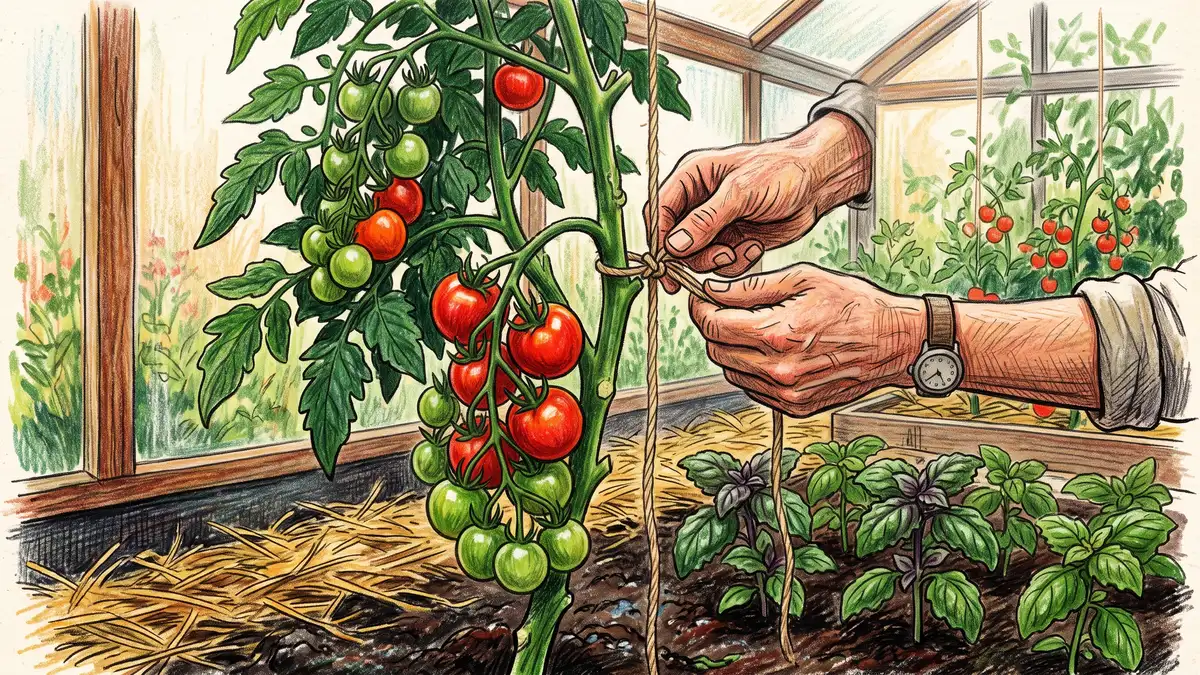
Vertical beats sprawling every time. One indeterminate tomato trained up a string takes about 1.5 square feet (0.14 m²) of floor and produces for four months. A zucchini takes nine square feet and gives you fruit you could have grown outdoors for free.
The second filter is climate. Tomatoes, peppers and cucumbers want the same warm, bright conditions; lettuce, spinach, chard, kale, radish and carrots want it cooler. Group within those two families and ventilation gets simple.
| Crop | Target Day Temp | Damage Point | Notes for Small Structures |
| Tomato | 70-82°F (21-28°C) | 31-32°F (0°C) | Needs flower vibration; drops blossoms above 85°F day / 70°F night |
| Cucumber | 70-85°F (21-29°C) | 31-32°F (0°C) | Choose parthenocarpic varieties so no pollinator access is needed |
| Pepper | 70-82°F (21-28°C) | 31-32°F (0°C) | Will not germinate at 41-50°F soil; 25 days to emerge at 60°F |
| Basil | 70-85°F (21-29°C) | 31-32°F (0°C) | Cut-and-come-again; shares the warm end with tomatoes |
| Lettuce | 60-72°F (16-22°C) | 20-25°F (-7 to -4°C) | Bolts above 75°F; put it nearest the door |
| Spinach | 50-70°F (10-21°C) | 8-12°F (-13 to -11°C) | Hardiest crop here; the backbone of winter cutting |
| Kale | 55-70°F (13-21°C) | 10-15°F (-12 to -9°C) | Slow in low winter light but survives almost anything |
| Swiss chard | 57-70°F (14-21°C) | 15-25°F (-9 to -4°C) | Longest-cropping leaf; one sowing runs eight months |
| Radish | 50-70°F (10-21°C) | Tolerates light frost | 25-30 days to harvest; ideal gap-filler between rotations |
| Carrot | 55-70°F (13-21°C) | Tops 10°F, roots 30°F | Sweetens in cold; needs 10 in. (25 cm) of loose soil |
| Strawberry | 60-77°F (16-25°C) | Blooms frost-sensitive | Trial yield of 1.38 lb (0.63 kg) per plant under a tunnel |
Sources: NC State Extension, Season Extension: Introduction and Basic Principles, University of Minnesota Extension, How Excessive Heat Affects the Vegetable Garden, University of Arkansas, 2025-2026 Strawberry Variety Trial: High Tunnel vs. Field
One number from that NC State table explains most failed early sowings: tomato seed takes 43 days to emerge at 50°F soil but only 6 days at 77-86°F. Peppers will not germinate below 50°F at all. The seed was not dead. The soil was cold.
How Do You Group Crops by Temperature in One Structure?
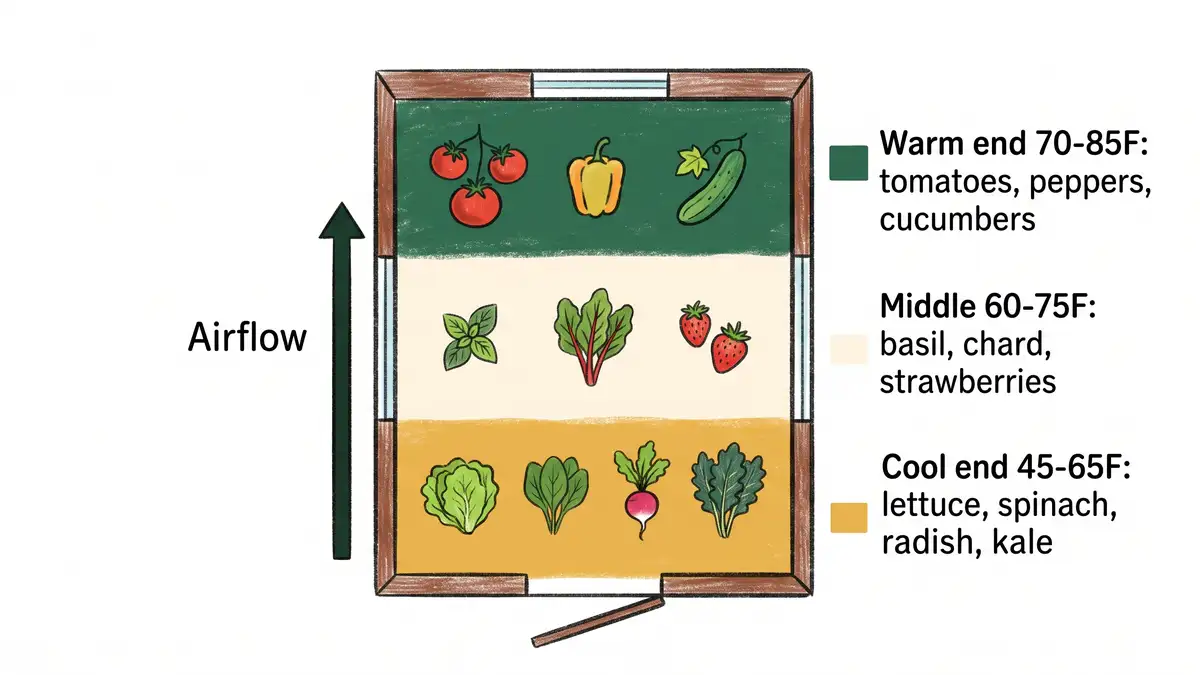
Every greenhouse already has a temperature gradient, whether you use it or not. The back wall furthest from the door runs warmest and most humid. The door end runs cooler and drier, and it drops fastest at night. Plant into that gradient rather than fighting it.
Map the gradient before you plant
Put a min/max thermometer at the back wall and a second by the door for a week. On a sunny day the gap is often 8-12°F (4-7°C). That is your planting plan, and it costs about $20 to measure.
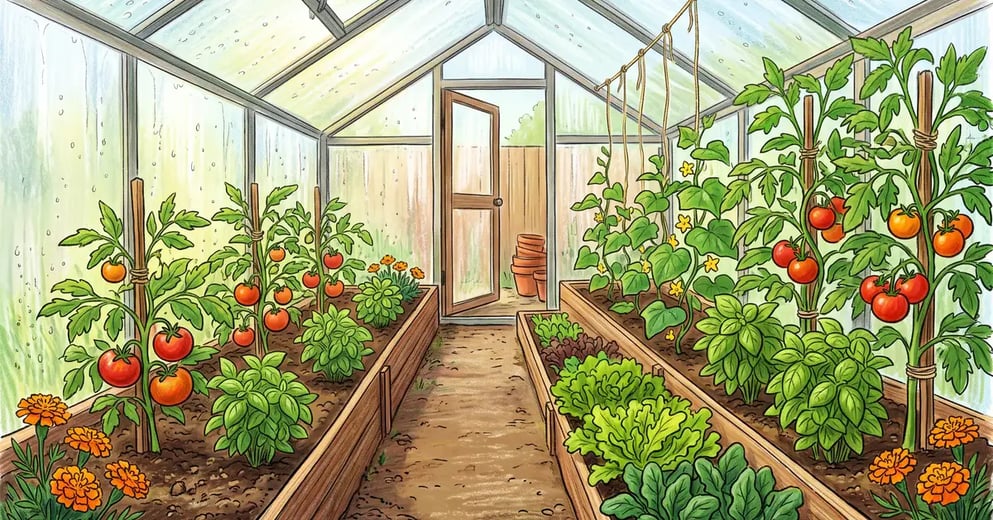
Warm end: tomatoes, peppers, cucumbers, basil
These share a 70-85°F (21-29°C) comfort band. Train everything vertically on strings so the floor stays open and air keeps moving through the canopy.
Cool end: lettuce, spinach, radish, kale
The door end's cooler nights are exactly what stops lettuce bolting. Keep these crops low so they do not shade the fruiting rows behind them.
Vent on a schedule, not a feeling
NC State advises venting clear-plastic structures on calm sunny days once outside temperatures pass 50-60°F (10-16°C). Waiting until it feels hot inside means you have already cooked a flush of tomato flowers.
Why This Works: Zone Planning
Permaculture design places elements by how often you visit them and what conditions they need, rather than in tidy rows. A greenhouse is that idea compressed into 100 square feet. Reading the structure's own warm and cool zones is the same move as siting a herb bed by the kitchen door, at a much smaller scale.
Humidity is the half of this decision most people miss. A 2025 review of powdery mildew found epidemics are driven by moderate temperatures of 59-81°F (15-27°C), relative humidity above 60%, and poor ventilation. That is a precise description of a closed hobby greenhouse in September.
So the crops you cannot mix are not only the ones with clashing temperature needs. They are also the ones with clashing moisture needs. Cucumbers thrive in humid air; basil and peppers mildew in it. Give cucumbers the humid back corner and keep a fan moving air across the rest. And before blaming disease for a struggling crop, read a soil test report, because nutrient problems look remarkably similar.
What Should You Not Grow in a Greenhouse?
Four categories fail reliably enough to name. None are bad crops. They are bad tenants for a small, expensive, climate-controlled box.
Sprawling cucurbits. Zucchini, summer squash, pumpkins and melons take enormous floor area for crops that grow fine outdoors in most of the US, and they need insect pollination. University of Minnesota Extension notes that above 90°F day and 70°F night, cucurbits shift toward male flowers, so you get abundant bloom and almost no fruit. In a sealed structure with no bee access you are hand-pollinating a plant that did not need to be indoors.
Sweet corn. Wind-pollinated, tall enough to shade everything, and it needs a block of at least 12 plants for decent kernel fill. That block is your whole greenhouse, for one meal.
Potatoes and large brassicas. Potatoes give poor yield per square foot and their foliage hosts the same diseases that hit greenhouse tomatoes, since both are nightshades. Cabbage survives to 12-20°F (-11 to -7°C) unprotected, so a cold frame does the job for a fraction of the space.
Common Mistake to Avoid
Do not put mint, oregano or lemon balm directly into a greenhouse bed. Under warm, watered, protected conditions their runners spread far faster than outdoors and will colonise a raised bed within one season. Grow them in pots on the bench, where the confinement does the work for you.
What Can You Grow in a Greenhouse Through Winter?
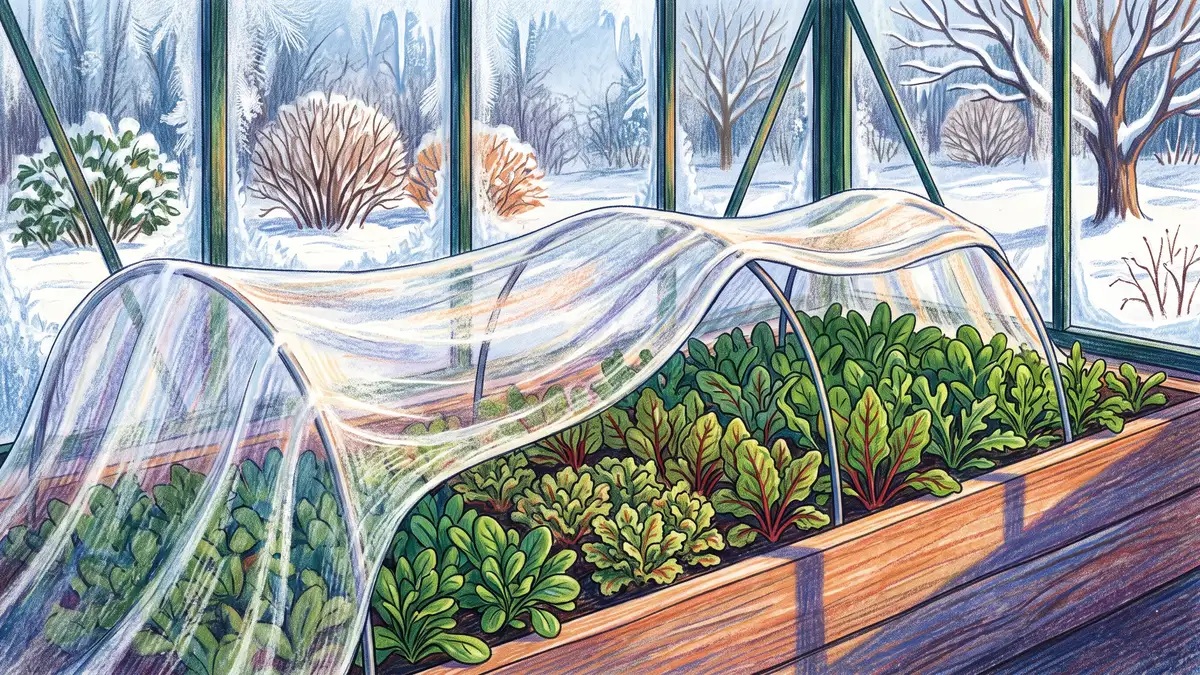
An unheated greenhouse does not keep crops warm. It keeps them dry, wind-free and a few degrees above ambient, and it slows overnight heat loss. Enough for hardy leaves and roots. Nowhere near enough for anything tender.
NC State reports that high tunnels typically allow planting about three weeks earlier in spring and extend the fall season by roughly a month. Adding a floating row cover of 0.5 to 1.25 oz/sq yd inside gives another 2-4°F (1-2°C) of frost protection. Stack those and you have what growers call a tunnel within a tunnel.
A University of New Hampshire winter spinach trial run from 2014 to 2016 logged high tunnel air temperatures from 28.9°F to 77.7°F, with soil at 3 inches (7.6 cm) depth holding between 40.0°F and 72.1°F. Note that soil figure. The ground is the real battery, which is why an established bed outperforms a tray on a bench in January.
Timing matters more than hardiness. Sow winter crops in late summer so plants reach near-full size before daylength collapses. Below roughly 10 hours of daylight growth nearly stops and the structure becomes a refrigerator you harvest from.
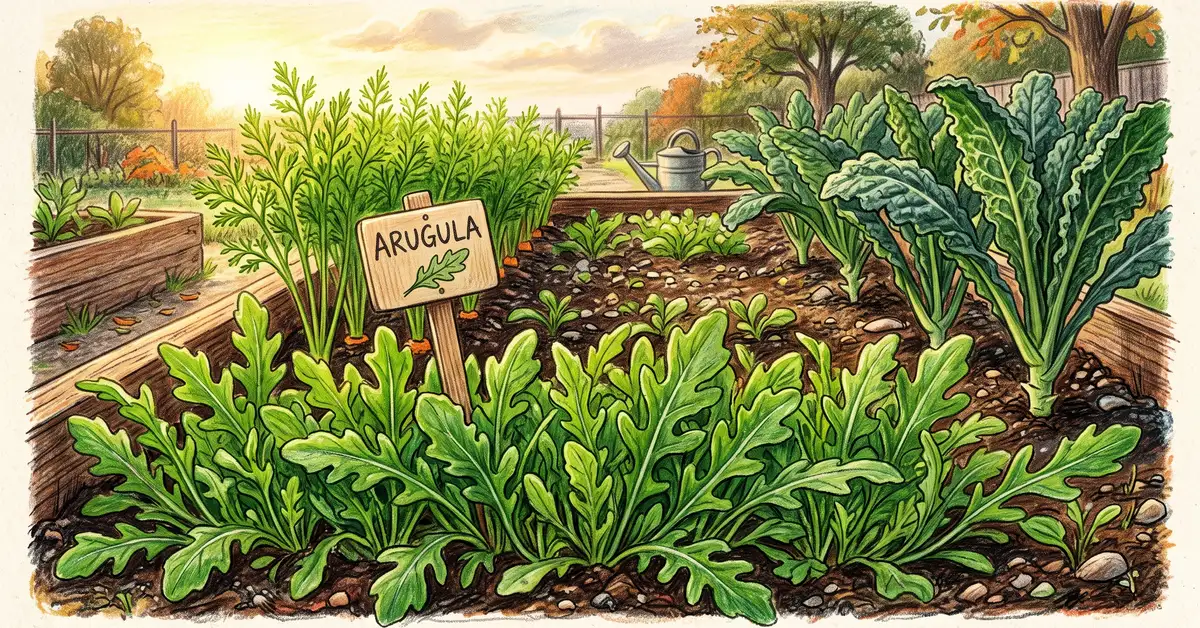
In zones 6 and warmer, spinach, mache, kale, chard, arugula, parsley and scallions hold through winter. Zones 4-5 manage the same with a row cover added inside. To push further, an earth-sheltered walipini design uses ground temperature rather than solar gain to hold the floor warm.
Which Companion Plants Are Worth the Space Under Glass?
Floor area is expensive here, so a companion has to justify itself. Three do.
Basil with tomatoes and peppers. It works partly for the aromatic reason everyone repeats and partly for one nobody mentions: basil wants identical warm, bright conditions to the fruiting crops, so it costs nothing in climate compromise. Our breakdown of why basil belongs almost everywhere covers the evidence in detail.
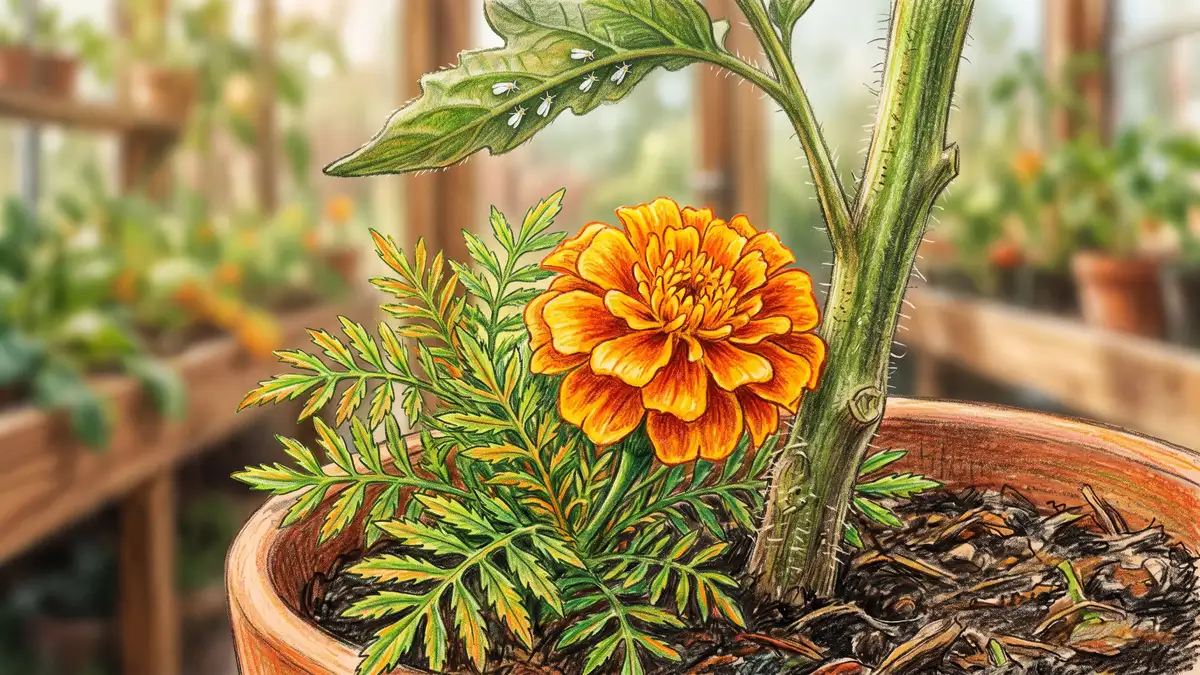
French marigold against whitefly. A 2025 study of Bemisia tabaci on tomato found that Tagetes species including T. patula reduced adult whitefly settlement and egg-laying, working through repellence and a physical barrier effect rather than by killing anything. In an enclosed structure where whitefly compounds weekly, that matters more than it does outdoors. Place them near the door and along bed edges. The science behind marigolds as pest control is stronger for some pests than others, and this is one of the better-supported cases.
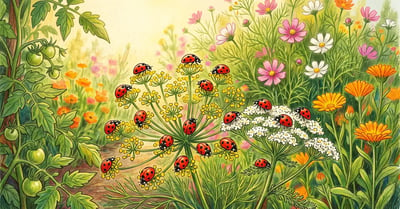
Sweet alyssum for beneficial insects. It flowers almost continuously and feeds hoverflies, lacewings and parasitic wasps. In a closed greenhouse nectar is the limiting factor for the predators you want to keep, so a few plants in the corners keep them working. What does not earn space is a large trap crop: nasturtium works against aphids outdoors but sprawls across your beds under glass. Keep it in a pot by the door.
Why This Works: Stacking Functions
Every plant in a well-designed system does more than one job. Basil is a harvest, a canopy filler and an aromatic deterrent. Alyssum is a nectar source, a living mulch and a beneficial-insect nursery. Under glass, where floor area is your scarcest resource, single-function plants get cut first.
Key Takeaway
Run two crop families, split by temperature, in one greenhouse. Warm-end fruiting crops climbing vertically spring to fall, cool-end leaves and roots filling the shoulders and winter. Add companions only where they cost no climate compromise.
Frequently Asked Questions
What is the easiest thing to grow in a greenhouse for beginners?
Leaf lettuce and radishes. Radishes are ready in 25 to 30 days, tolerate a wide temperature range, and give a fast win while you learn how your structure behaves. Leaf lettuce cut as cut-and-come-again regrows three or four times from one sowing. Both sit at the cool door end, so they teach you the gradient without punishing mistakes. Add tomatoes in your second season, once you have the venting rhythm. Our guide to cool-season leaf and green pairings covers what to grow alongside them.
What can I grow in a greenhouse in winter without heating?
Spinach, kale, Swiss chard, mache, arugula, parsley, scallions, radish and carrots. NC State's hardiness figures put spinach at 8-12°F (-13 to -11°C) and kale at 10-15°F (-12 to -9°C) once fully hardened, which covers most winter nights inside a structure in zones 6 and up. The critical step is sowing in late summer so plants reach near-full size before daylength drops below about 10 hours. After that they hold rather than grow.
Can you grow tomatoes and lettuce in the same greenhouse?
Yes, but not in the same spot at the same time. Tomatoes want 70-82°F (21-28°C) days; lettuce bolts above about 75°F. Run lettuce at the cool door end in spring and fall while tomatoes hold the warm back wall through summer, then hand the structure to greens once the tomatoes finish. In midsummer the cool end still works for lettuce with 30-50% shade cloth, which extension guidance says drops leaf temperature by 10°F or more. Our list of combinations to avoid covers the pairings most likely to cause trouble in tight quarters.
Do greenhouse plants need pollination?
Some do. Tomatoes and peppers are self-fertile but need their flowers vibrated to shed pollen, so tap or shake each truss every two or three days during flowering. Cucumbers are where variety choice saves you the job entirely: University of Minnesota Extension notes that parthenocarpic cucumber varieties bred for greenhouse and hoophouse growing set fruit without any pollination. Leaf and root crops need none at all, since you harvest them before flowering.
Why are my greenhouse tomato flowers falling off?
Almost always heat. University of Minnesota Extension reports flower abortion between 75°F and 95°F, and that sustained temperatures above 85°F by day and 70°F at night make flowers hard to pollinate, so they drop unfertilised. Each flush has a 50-hour pollination window, so a two-day heat spike costs a whole truss. Vent earlier in the morning than feels necessary, add shade cloth from midsummer, and leave doors open overnight during heat waves.
Get the Weekly Dig
One practical permaculture guide a week, written for gardeners who do this on weekends: permaculture design for real backyards. Free, no spam, unsubscribe any time.
Join the Weekly DigResources
- NC State Extension, Season Extension: Introduction and Basic Principles
- University of Minnesota Extension, How Excessive Heat Affects the Vegetable Garden
- University of Minnesota Extension, Fruits and Vegetables That Require Pollination
- University of New Hampshire Extension, Winter Spinach Production in High Tunnels 2014-2016
- University of Arkansas, 2025-2026 Strawberry Variety Trial: High Tunnel vs. Field
- Iowa State University Extension, Using Low Tunnels to Extend the Season
- Njekete et al. 2025, Altered Behavioural Response of Whitefly on Biocontrol Plants
- Geremew et al. 2025, review of powdery mildew management in vegetable production