
How Much Clean Water Are You Pouring Down the Drain?
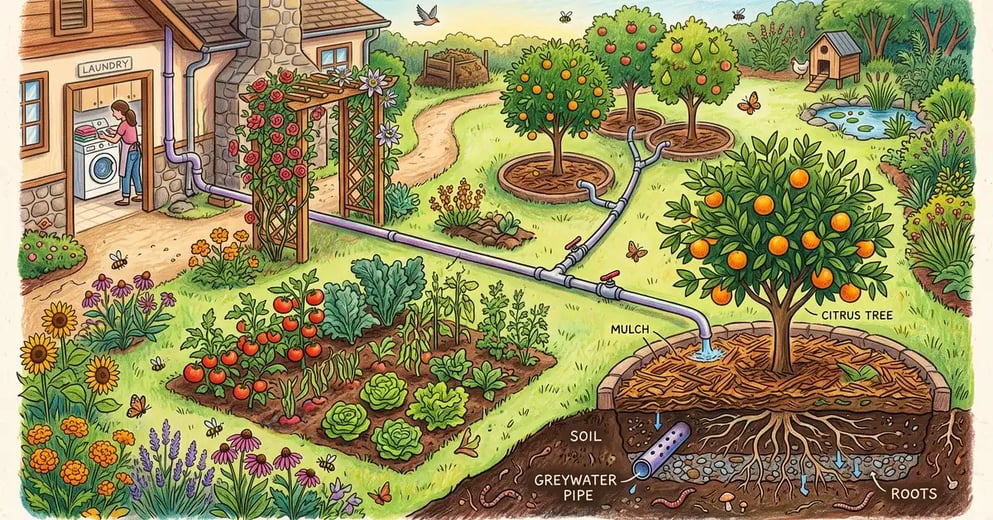
Every time you shower or run a load of laundry, gallons of perfectly good irrigation water disappear into the sewer. In a typical US home, a shower uses about 27 gallons a day and a clothes washer around 22 gallons, according to EPA WaterSense-based data compiled by the Water Footprint Calculator. Roughly half of your indoor water could be captured and put to work in the garden instead. emitter placement around trees growing food all winter in a walipini how to set up drip irrigation composting toilets
That matters because outdoor irrigation already accounts for close to 30% of household water use nationally, and up to 60% in dry climates (Colorado State University Extension). Greywater, the gently used water from showers, tubs, bathroom sinks, and washing machines, lets you irrigate fruit trees and perennials with water you already paid for. Done right, it is one of the most powerful ways to close the water loop in a permaculture garden. Done wrong, it can salt up your soil or run afoul of your local code. Here is how to do it right.
What you'll learn in this guide:
- Exactly what counts as greywater, and why kitchen sink water usually does not
- Three system types, from a five-minute bucket to a branched-drain network
- The non-negotiable design rules: subsurface delivery, mulch basins, no storage
- Which soaps to use, how to manage salt, and how the codes work state by state
Key Takeaway
Greywater is untreated water from showers, tubs, bathroom sinks, and washing machines. The safe, effective way to use it is to send it underground or under mulch to the root zones of fruit trees and perennials, never spraying or storing it, and to choose plant-friendly soaps low in salt and boron. A simple laundry-to-landscape system costs about $150 to $250 and needs no plumbing changes.
What Counts as Greywater (and What Doesn't)
Greywater is untreated household wastewater that has never touched toilet waste. The 2016 California Plumbing Code, Chapter 15, defines it as water from bathtubs, showers, bathroom washbasins, clothes washers, and laundry tubs, while explicitly excluding toilets, bidets, kitchen sinks, and dishwashers (Greywater Action, CA Plumbing Code). Blackwater, by contrast, is toilet wastewater carrying fecal matter and pathogens, and it must go to a sewer or septic system.
Kitchen water sits in a gray area, so to speak. Most US codes lump it with blackwater because grease, food particles, and higher bacterial loads clog pipes and turn foul fast. For a committed gardener, the practical rule is simple: reuse your shower, bath, sink, and laundry water, and let kitchen and toilet water go to the sewer.
| Water Source | Daily Use | Greywater? |
| Shower and bathtub | ~27 gal | Yes |
| Clothes washer | ~22 gal | Yes |
| Bathroom sink | Part of faucet use | Yes |
| Kitchen sink and dishwasher | ~2 gal (dishwasher) | No (grease, food) |
| Toilet | ~33 gal | No (blackwater) |
Sources:
Three Greywater Systems, Simplest to Advanced
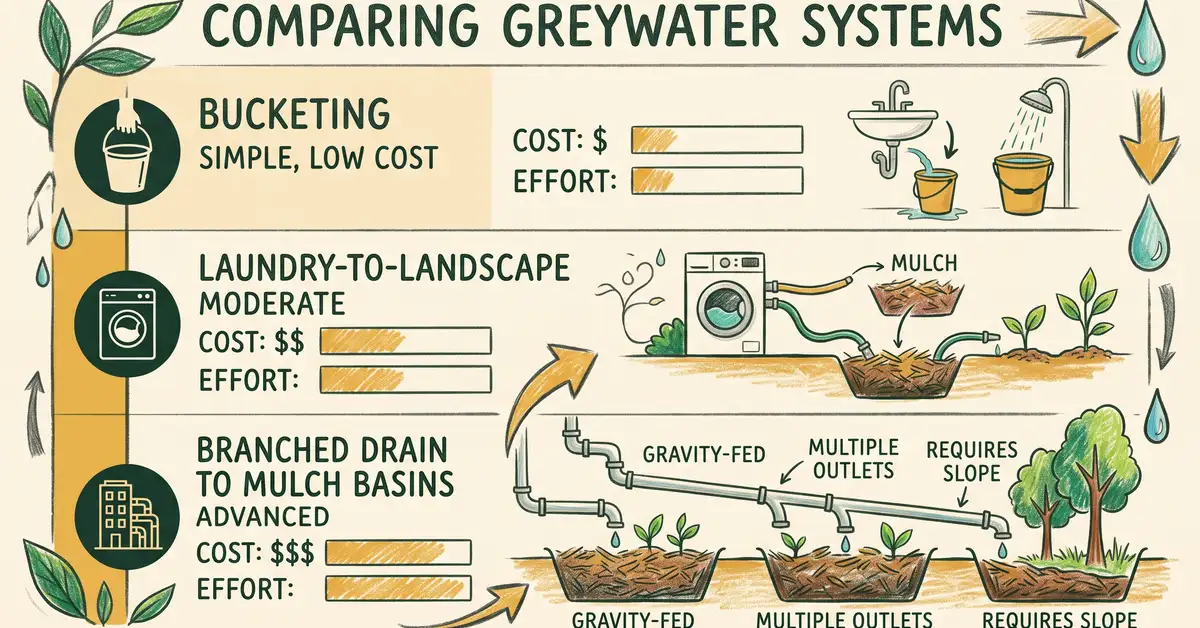
You do not need to re-plumb your house to start. Greywater reuse scales from a bucket you carry to a permanent network of buried pipes. Match the system to your commitment level and your local code.
Bucketing (free, five minutes)
Catch shower warm-up water or bathwater in a bucket and pour it around trees and shrubs. Zero cost, zero permits, and a good way to learn how much water you actually produce. The only rule is to use it the same day.
Laundry-to-landscape (about $150 to $250)
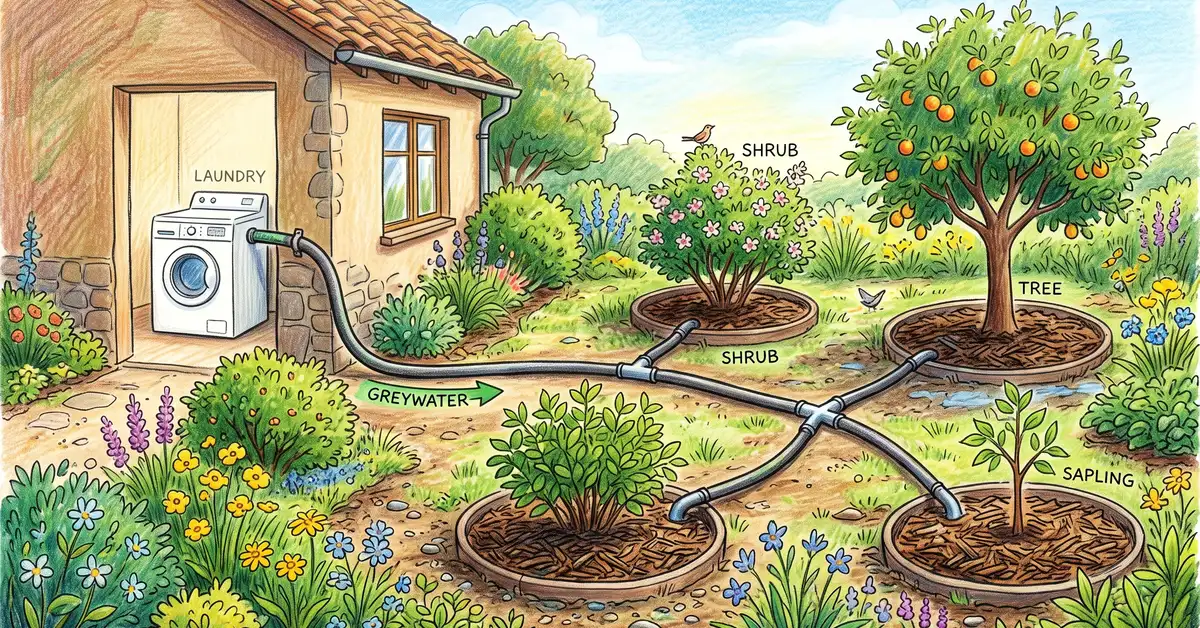
The gardener's favorite, popularized by Art Ludwig of Oasis Design. It uses your washing machine's own pump to push water through a hose out to the garden, with no cutting into household plumbing (Greywater Action). A diverter valve lets you switch back to the sewer for bleach loads.
Branched drain to mulch basins (advanced)
Gravity-fed pipes from shower and sink drains split through flow-splitters and deliver water to a series of mulch basins around trees. Permanent and low-maintenance, but it usually means cutting into drain lines and, in most places, a permit.
Why This Works: Catch and Store Energy
Greywater is a textbook example of the permaculture principle catch and store energy. Water is energy that has already been pumped, treated, and delivered to your home, so sending it to a tree instead of the sewer captures value that would otherwise be lost. It is the same closed-loop thinking behind a tropical banana circle greywater system, scaled to your everyday plumbing.
The Golden Rules of Greywater Design
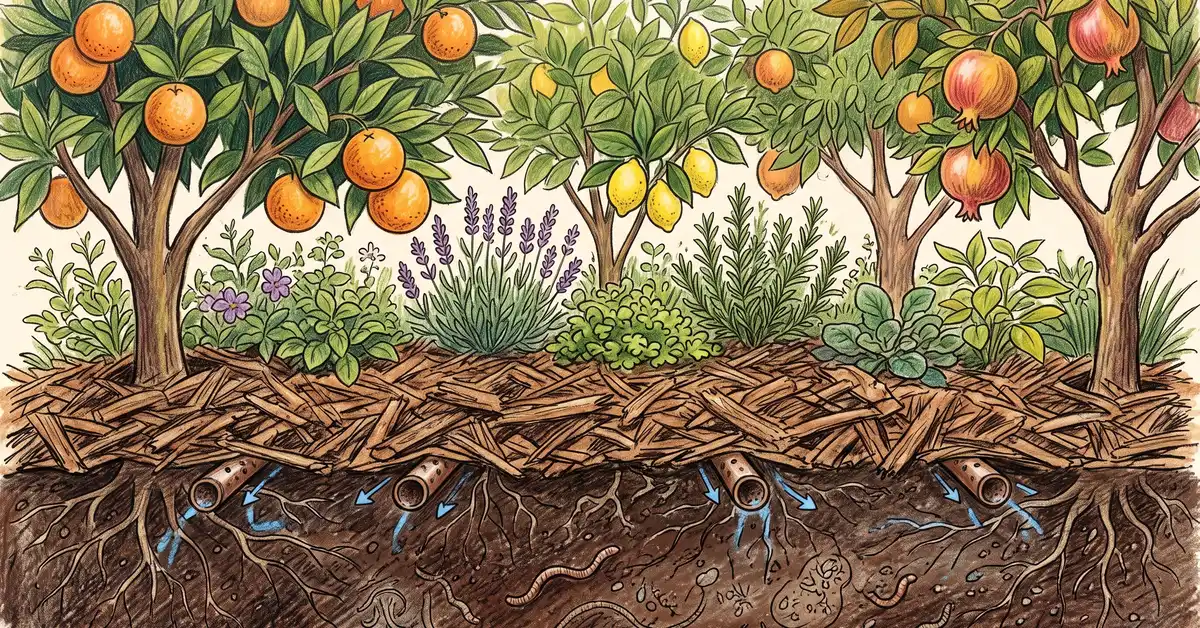
Whatever system you choose, a handful of rules keep greywater safe, legal, and good for your soil. These come straight from state codes and greywater specialists.
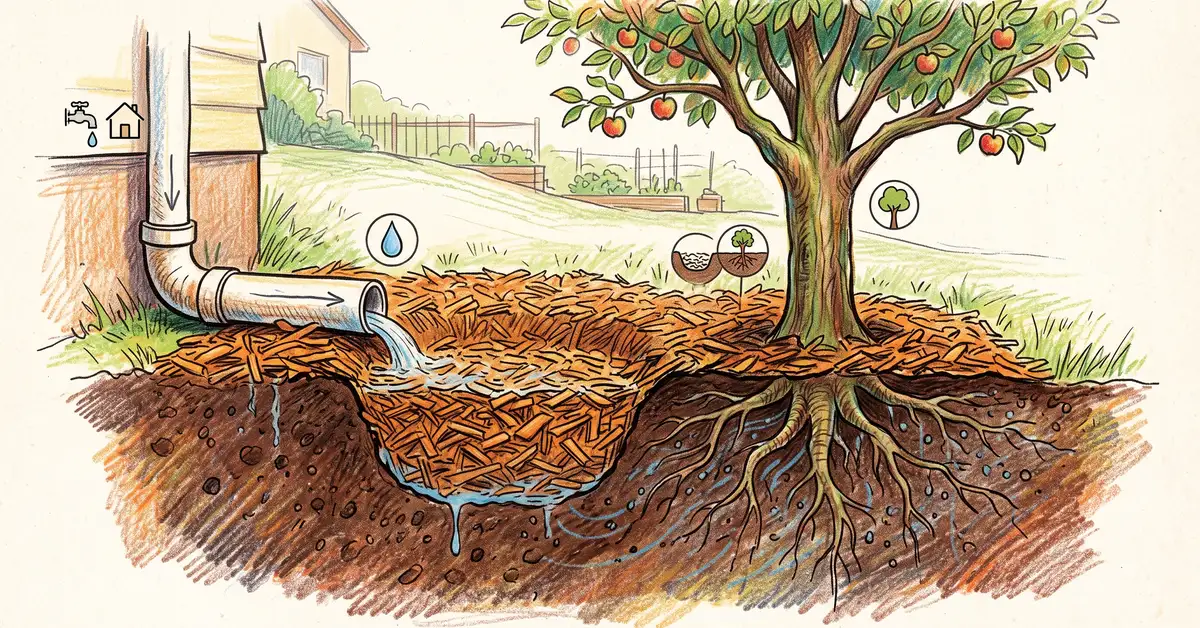
Deliver it subsurface or under mulch, never as spray. Greywater should soak into the soil below a layer of wood chips, not pool on the surface or spray into the air where people could contact it. This is why mulch basins around trees are the standard delivery point.
Use it within 24 hours. New Mexico's code, like most, requires greywater to be used within a day, because stored greywater quickly goes anaerobic, smells, and breeds bacteria (EPA, New Mexico reuse rules). Keep it moving to the plants, not sitting in a tank.
Send it to deep-rooted perennials. Fruit trees, berry bushes, and ornamentals handle greywater beautifully. Spread flows across several mulch basins so no single spot stays soggy, and pair greywater trees with a fruit tree guild to make the most of the moisture.
Never Use Greywater on Root Crops or Raw-Eaten Greens
Keep greywater off the edible parts of vegetables you eat raw, especially root crops and leafy greens, and out of any surface puddles. Skip greywater entirely when someone in the house is ill or when washing diapers, since pathogen loads spike. Subsurface delivery to trees and shrubs sidesteps nearly all of these risks.
Plant-Safe Soaps and Salt Management
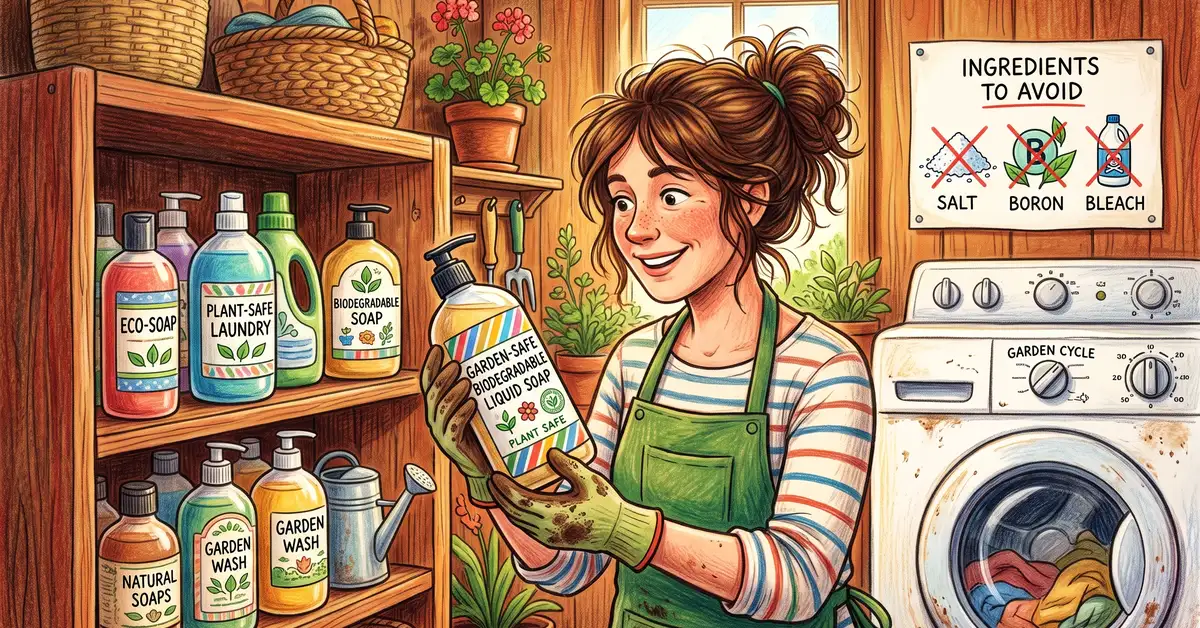
Your greywater is only as plant-friendly as what you put down the drain. Greywater tends to be slightly alkaline and can carry salts, so the products you use matter more than the water itself. Avoid anything with sodium, boron or borax, chlorine bleach, and added salts, all of which build up in soil and stress roots, particularly in dry climates where rain does not flush them away.
Switch to biodegradable liquid soaps and detergents labeled low-sodium and boron-free (liquids generally carry less salt than powders). Even with good products, alternate greywater with fresh rainwater or tap water now and then to leach any accumulated salts through the soil. In arid regions, monitor for salt crusting and white residue, and give greywater-irrigated beds a periodic deep flush. Healthy, living soil rich in organic matter buffers greywater far better than depleted ground.
Is Greywater Legal? Codes by State
Greywater rules vary widely, but the trend across the US is toward allowing simple residential systems without a permit. Always confirm your local rules, but here is the lay of the land in several states.
| State | Simple System Rule | Key Condition |
| California | Laundry-to-landscape allowed with no permit | Meets Chapter 15 criteria |
| Arizona | No individual permit under 400 gal/day | Type 1 general permit conditions |
| New Mexico | No permit under 250 gal/day | Use within 24 hours, no diaper water |
| Colorado | Limited; local adoption required | Denver allows subsurface, non-food only |
Sources:
Key Takeaway
Most states now let you run a simple laundry-to-landscape system without a permit, as long as you keep greywater subsurface, unstored, and off food crops. Start with bucketing or a laundry system, use plant-safe soaps, and send the water to fruit trees and perennials. Check your city and state rules before installing anything permanent.
Frequently Asked Questions
What is greywater?
Greywater is untreated household wastewater that has not come into contact with toilet waste. It comes from showers, bathtubs, bathroom sinks, and clothes washing machines. Because it contains only mild soap residue, skin cells, and lint rather than fecal matter, it is far cleaner than blackwater (toilet water) and can be reused for subsurface landscape irrigation. Most US codes exclude kitchen sink and dishwasher water from the greywater category because grease and food particles raise the bacterial load and clog systems. For home gardeners, the safe greywater streams to focus on are the bathroom and the laundry.
Is greywater safe for plants and vegetables?
Greywater is safe and even beneficial for fruit trees, berry bushes, ornamentals, and other deep-rooted perennials when applied below mulch. The main cautions are about salts and human contact, not plant toxicity. Keep greywater off the edible parts of crops you eat raw, especially root vegetables and leafy greens, and never let it pool on the surface. Use plant-friendly soaps low in sodium and boron, and alternate with fresh water occasionally to flush salts. Applied subsurface to trees and shrubs, greywater irrigates reliably without meaningful risk to the plants or to you.
Are greywater systems legal?
In most US states, yes, at least for simple systems. The clear trend is to allow basic residential greywater reuse without an individual permit. California permits laundry-to-landscape systems that meet its plumbing code with no permit, Arizona allows residential greywater under 400 gallons per day under a general permit, and New Mexico allows under 250 gallons per day without a permit if you use it within 24 hours and exclude diaper water. Rules still vary by state and city, and permanent branched-drain systems often do need permits, so always verify your local code before installing anything beyond bucketing.
What soap can you use with a greywater system?
Choose biodegradable liquid soaps and detergents that are low in sodium and free of boron or borax, chlorine bleach, and added salts. Those ingredients accumulate in soil and damage roots over time, especially in dry climates where rainfall does not rinse them away. Liquid products generally contain less salt than powders. Many brands now market themselves as greywater-safe or plant-friendly. Whatever you use, run a diverter to send bleach or heavily soiled loads to the sewer instead, and periodically water greywater beds with fresh water to leach out any salt buildup.
Can you store greywater for later use?
No, not untreated. Greywater should be used within about 24 hours, a limit written into codes like New Mexico's, because it quickly turns anaerobic, develops a foul smell, and grows bacteria once the oxygen is used up. This is why greywater systems are designed to move water straight to the plants rather than into a holding tank. If you genuinely need to store water, capture rainwater instead, which stays fresh far longer. The rule of thumb with greywater is simple: keep it flowing, keep it subsurface, and let your trees drink it the same day.
Get the Weekly Dig
One practical permaculture guide a week, written for gardeners who do this on weekends: permaculture design for real backyards. Free, no spam, unsubscribe any time.
Join the Weekly DigResources
- Greywater Action - Laundry to Landscape Systems
- California Plumbing Code Chapter 15 - Greywater Definitions
- Arizona Administrative Code R18-9-D701 - Greywater Permit
- EPA WaterReuse - New Mexico Onsite Non-Potable Reuse
- Water Footprint Calculator - Indoor Water Use at Home
- Colorado State University Extension - Landscape Irrigation Water Use
- USGS - Water Use in the United States