
What Are Perennial Vegetables?
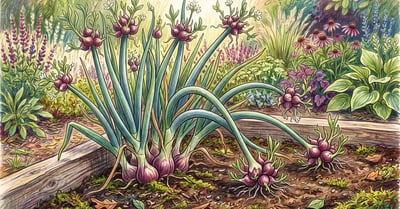
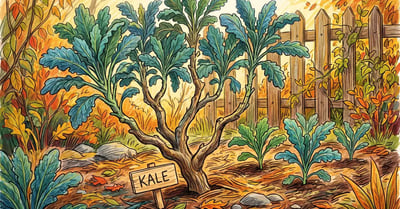
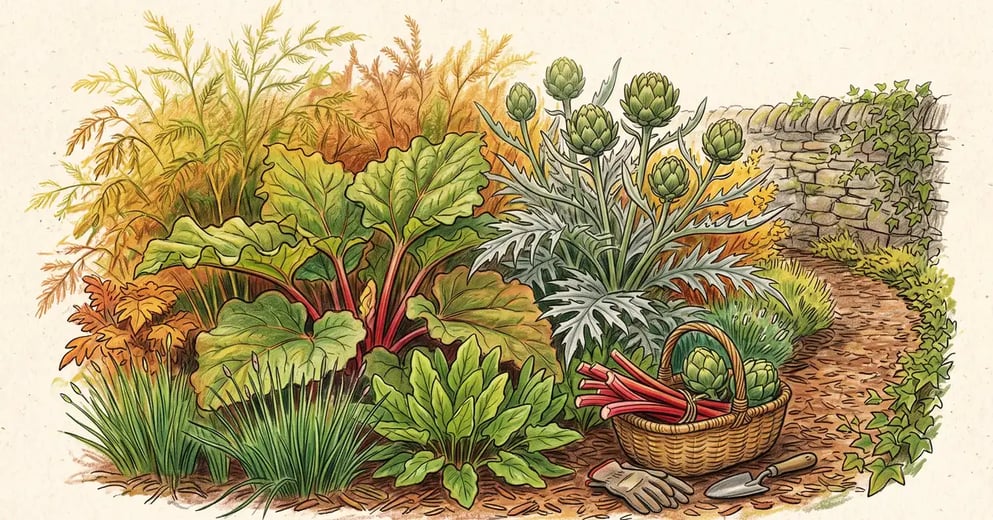
Perennial vegetables are crops you plant once and harvest from for years, instead of starting over every spring. Asparagus, rhubarb, horseradish, sorrel and sunchokes all come back on their own, and most of the annual routine of seed trays, transplanting and bed turnover simply stops applying to them. what to plant beside a rhubarb crown perennial kale Egyptian walking onions
The catch is patience. An asparagus bed you plant this year is not a bed you harvest this year, and the crops that pay back fastest are usually not the ones people are most excited about. Getting the timeline right in advance is most of what separates a productive perennial bed from an abandoned one.
What follows is built on cooperative extension data rather than enthusiasm. Where the numbers come from a specific extension service we have cited it, and where reliable US data does not exist we have said so instead of filling the gap.
What we will cover:
- Realistic establishment timelines for the six crops with solid US extension data behind them
- Which ones to plant or divide this fall, and which genuinely have to wait for spring
- The two that will take over your garden if you let them, and how to contain them
- Why asparagus beds fail, and the June cut-off date that decides next year's crop
Key Takeaway
Perennial vegetables trade time up front for years of low-effort harvest afterwards. Sorrel pays back in the first season. Asparagus asks for two years before you cut a single spear. Plant the fast ones and the slow ones in the same season and you get something to eat while you wait.
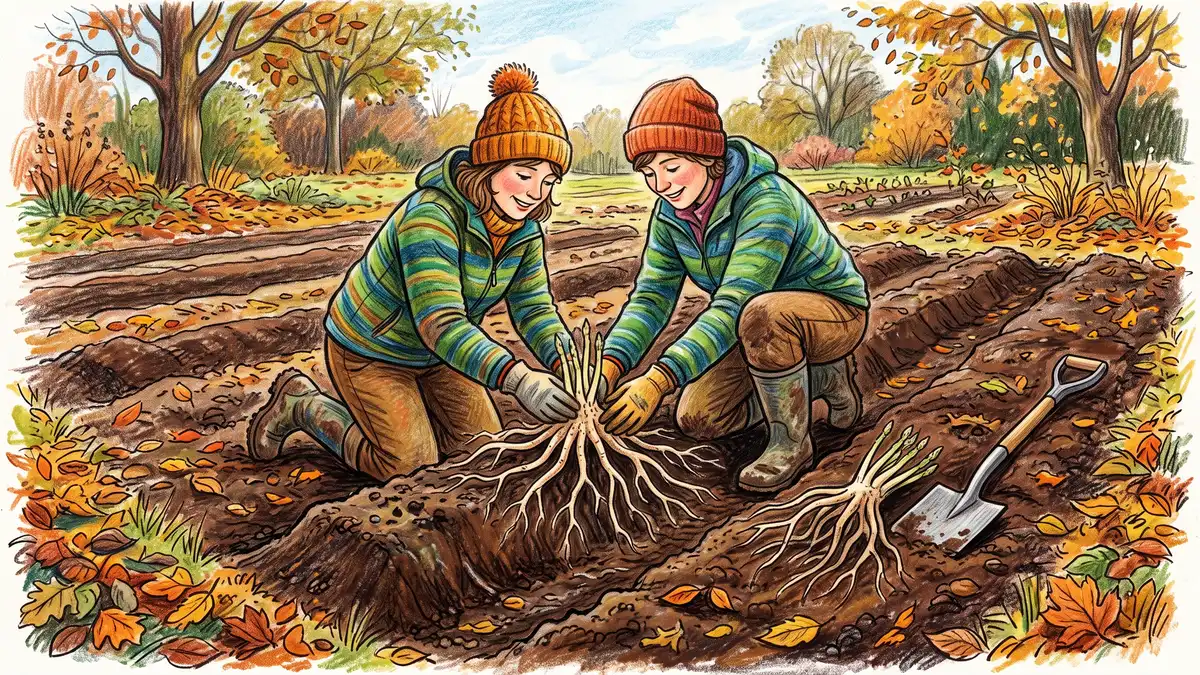
How Long Until Perennial Vegetables Actually Produce?
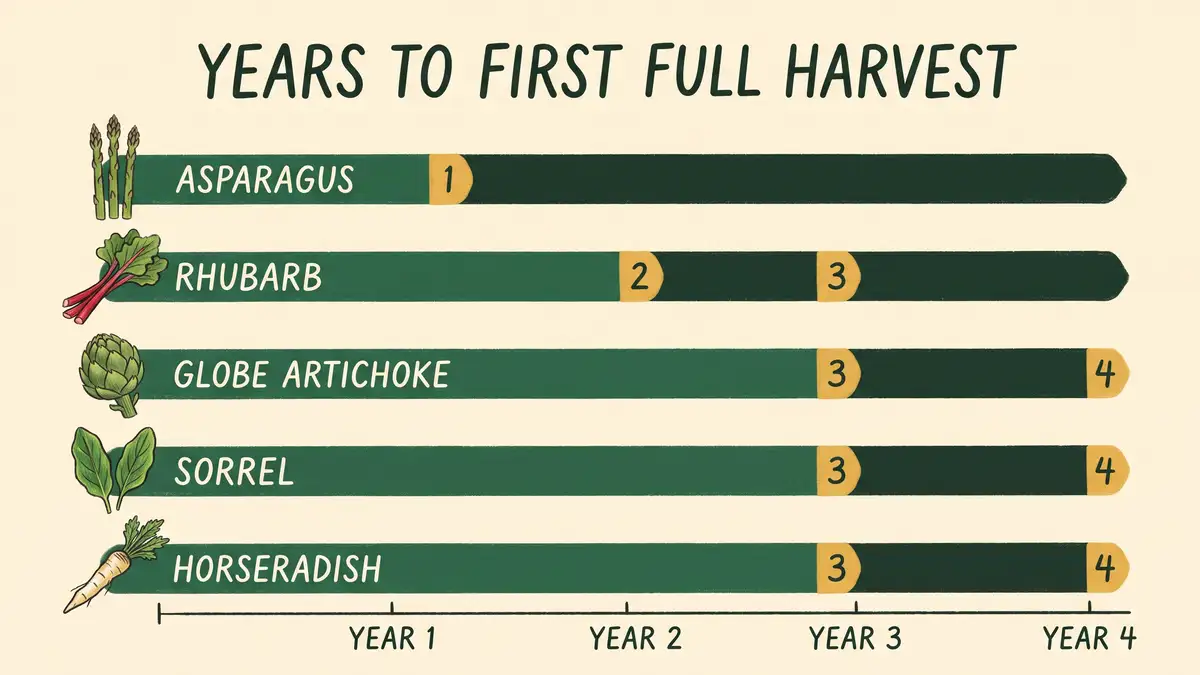
Anywhere from one season to seven years, and the spread is much wider than most planting guides admit. This is the single most useful thing to know before you spend money on crowns and roots.
| Crop | First Full Harvest | Spacing | Notes |
| Sorrel | Same season from seed | 12 in. apart | Hardy to zone 3, first crop up in spring |
| Horseradish | 1 to 2 years | Container or tub | Spring plantings not ready that first fall |
| Jerusalem artichoke | First fall, Sept to Nov | 12-24 in., rows 30-36 in. | Needs 125+ frost-free days |
| Asparagus (crowns) | 2 years | 12 in. buds, rows 3 ft. | 3 years if you start from seed |
| Rhubarb | 3 years | 3 ft. apart, 3 in. deep | No cutting year one |
| Ramps | Not a garden crop for most | Woodland understory | 5-7 years just to first flowering |
Sources: University of Minnesota Extension, South Dakota State University Extension, University of Wisconsin Horticulture, University of Wisconsin Agronomy, UMN Extension, Penn State Extension
Ramps deserve a note. Penn State Extension reports they need five to seven years before they even begin flowering, which is why wild patches collapse under harvest pressure so easily. If you have suitable shaded, calcium-rich ground and genuine patience, plant them. If you are looking for something to eat in the next few years, start somewhere else.
What Should You Plant This Fall?
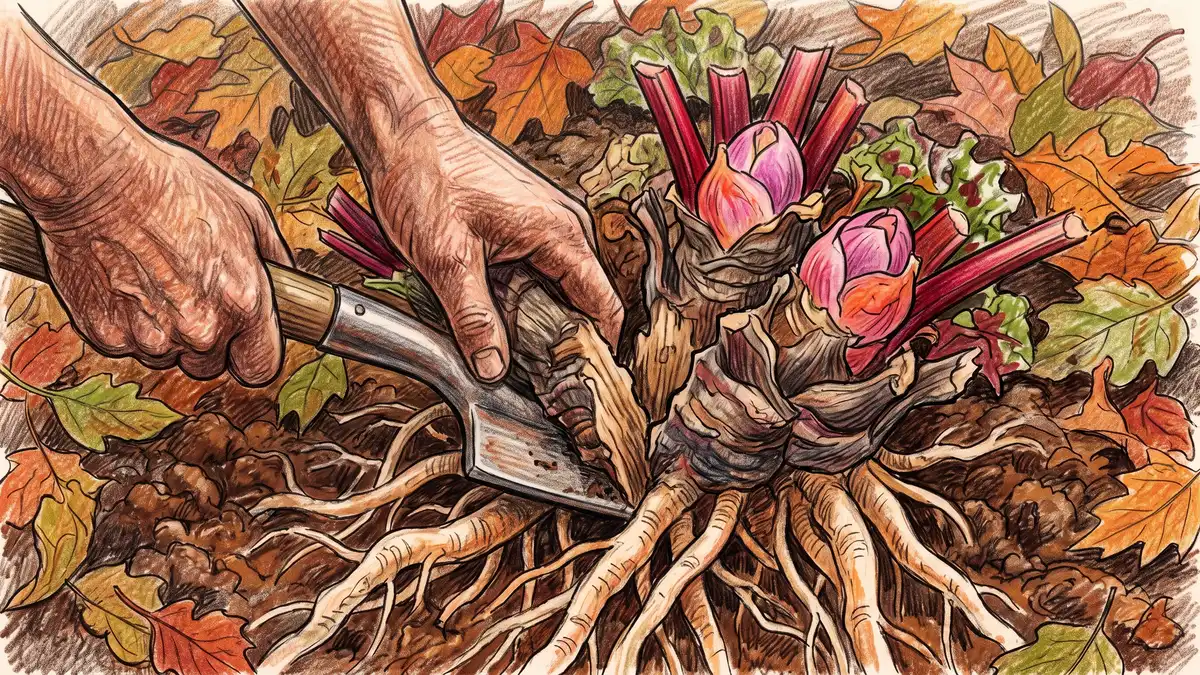
Horseradish and rhubarb division are the real fall jobs. Most of the rest wait for spring, and it is worth being straight about that rather than pretending every perennial goes in during autumn.
Wisconsin Horticulture lists horseradish as plantable in either fall or spring, from root divisions or cuttings. It is hardy across zones 2 through 9, which is a wider range than almost anything else here. Fall is also the best time to harvest it, after frost has killed the leaves back.
Rhubarb is more nuanced. New crowns go in during early spring once the soil is workable, but South Dakota State Extension puts division after fall frosts have killed the leaves as an equally good option to early spring, on a four to five year cycle. Autumn is also when to work well-aged manure in around established plants.
| Crop | Fall Job | Spring Job |
| Horseradish | Plant or divide; harvest after frost | Plant, or harvest before growth resumes |
| Rhubarb | Divide after frost; aged manure around plants | Plant new crowns; divide as alternative |
| Asparagus | Cut back ferns once they yellow | Plant crowns; feed before spears emerge |
| Sorrel | Nothing required | Sow or divide; remove seed stalks |
| Jerusalem artichoke | Harvest tubers, September to November | Plant tuber pieces |
Sources: University of Wisconsin Horticulture, South Dakota State University Extension, University of Minnesota Extension, University of Wisconsin Agronomy
Lift the crown after frost
Wait until the leaves have collapsed. Dig a wide circle well outside the crown so you are cutting roots rather than tearing them.
Split into pieces with visible buds
Each division needs at least one fat pink bud and a decent mass of root. A spade through the woody centre is fine; this is not delicate work.
Replant 3 feet apart, buds 3 inches deep
Set the buds facing up and about 3 inches below the surface, spaced 3 feet apart, in a spot getting 6 to 8 hours of sun.
Mulch and leave it alone
Well-aged manure around the plant after frost, then nothing until spring green-up. Do not harvest at all from a fresh division the following year.
Source: South Dakota State University Extension, Rhubarb: How to Grow It
Why This Works: Perennial Root Systems Hold the Ground
Every time you dig an annual bed you reset the soil: fungal networks broken, structure collapsed, bare surface exposed. A perennial crown sits undisturbed for years, and its roots go far deeper than anything an annual builds in a single season. That is the same reasoning behind a food forest, scaled down to the vegetable bed. You are trading the annual cycle of disturbance for a standing structure that feeds soil biology continuously.
Which Perennial Vegetables Take Over?
Horseradish and Jerusalem artichokes, and both are worth containing from day one rather than fixing later.
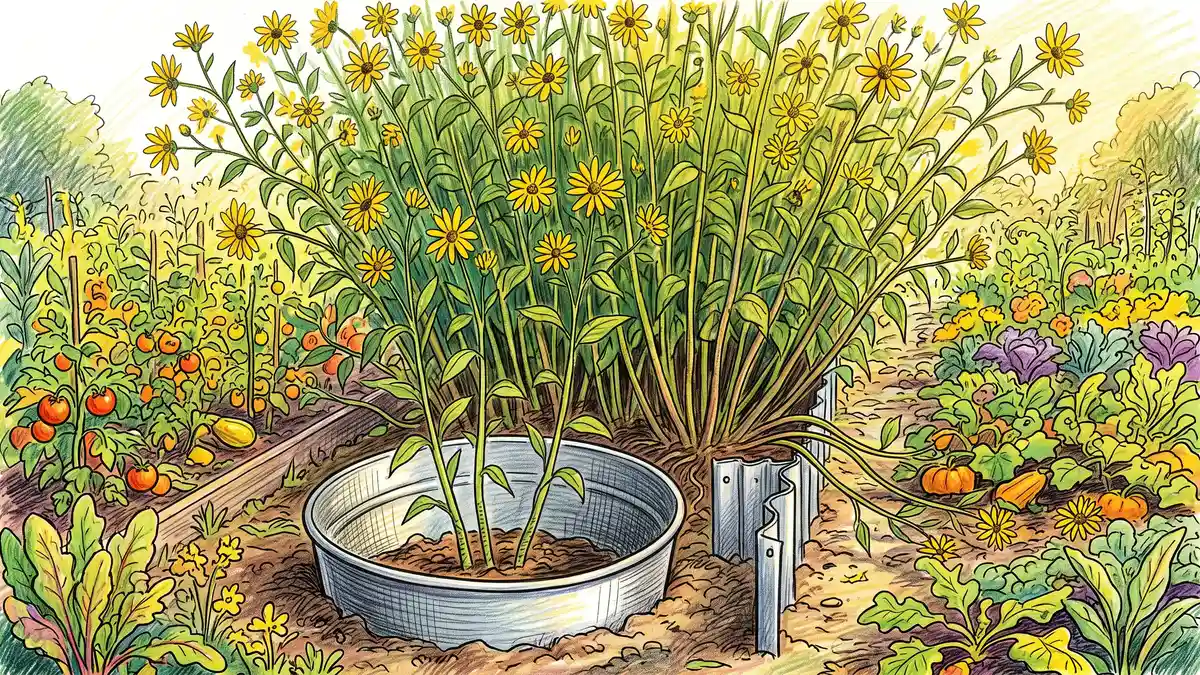
Wisconsin Horticulture is unusually blunt about horseradish: it spreads by underground shoots, out-competes almost everything around it, and is difficult to eradicate once established because the smallest piece of root can grow into a new plant. Their recommended fix is simple and worth doing at planting time. Sink a large plastic tub with the bottom cut out, and plant inside it. A deep container works too.
Jerusalem artichokes are the other one. Michigan State Extension notes they can become invasive and will grow in almost any soil with little water, which is exactly the combination that makes a plant hard to remove. They are also tall and heavy enough to shade out whatever is behind them.
Plan the Containment Before You Plant
Both of these are far easier to contain at planting than to remove afterwards. Sink a barrier or use a dedicated bed you are willing to give over permanently. With horseradish in particular, any fragment left behind when you dig will regrow, so "I will move it later" is not really an option.
What Actually Goes Wrong With Asparagus?
Almost always harvesting too early, harvesting too long, or planting it somewhere too wet. An asparagus bed is a genuine long-term commitment and the first two years of restraint decide how it performs afterwards.
University of Minnesota Extension is specific about the timeline: begin harvesting two years after planting crowns, or three years after planting seed. Then stop cutting spears around June 30 and let the ferns develop for the rest of the season. Those ferns are what rebuild the crown's reserves, and cutting into them is borrowing directly from next year's harvest.
Site matters more than people expect. Asparagus wants fertile, sunny, well-drained soil with depth for deep roots, and shallow or waterlogged ground is where beds quietly fail. On feeding, Minnesota suggests 1 to 1.5 pounds of 10-10-10 per 100 square feet before planting in the absence of a soil test, scratched in no more than an inch deep so you are not damaging the crowns. If you have not tested your soil, that is worth sorting first.
The payoff is real. Oklahoma State Extension puts production at 2,500 pounds per acre or more during a bed's most productive years, and notes explicitly that yield depends on how much top growth is allowed to develop after harvest.
What About Rhubarb in Hot Climates?
Below roughly the Mason-Dixon line, rhubarb stops being a perennial at all. This is the exception that catches out gardeners who move south and expect their old crop to behave.
Texas A&M AgriLife Extension runs it as a winter annual instead: seed indoors mid to late August, transplant outdoors late September or early October, harvest March through May, then pull the plants out. It works, but it is a completely different crop plan and there is no point pretending otherwise.
Rhubarb Leaves Are Not Edible
Only the stalks. Texas A&M AgriLife Extension is clear that rhubarb leaves contain oxalic acid at poisonous concentrations, while the stalks contain very low levels not considered hazardous. Cut the leaves off in the garden and compost them rather than carrying them into the kitchen.
Key Takeaway
Start with sorrel and horseradish this fall, rhubarb divisions if you can get them, and asparagus in spring. That sequence gives you something to harvest within months while the slow crops establish, and it keeps the two aggressive spreaders inside barriers from the beginning rather than after they have escaped.
Frequently Asked Questions
What vegetables are perennial?
The reliably perennial vegetables for most of the US are asparagus, rhubarb, horseradish, sorrel, Jerusalem artichoke and, in woodland conditions, ramps. Several others are commonly listed as perennial vegetables, including sea kale, walking onions, skirret and perennial kales, but US cooperative extension data on them is thin, so treat those as worth experimenting with rather than as established recommendations. Rhubarb is the notable exception to the rule: in hot southern climates it has to be grown as a winter annual.
Which perennial vegetables can I plant in fall?
Horseradish is the clearest fall option, and Wisconsin Horticulture lists it as plantable in either fall or spring from root divisions. Fall is also the standard window for dividing established rhubarb crowns, once frost has killed the leaves back, and for working aged manure in around existing plants. New rhubarb crowns and asparagus are generally early spring jobs. If you want to use the fall productively, dividing what you already have usually beats planting something new.
How long does an asparagus bed last?
Longer than most vegetable plantings, though we would rather not quote a specific figure than repeat one we cannot source to an extension service. What is documented is that beds reach high productivity and that yield depends heavily on how much fern growth is allowed after each harvest. Stop cutting around June 30, let the ferns build the crown's reserves, and keep the bed weeded and fed. Beds decline through mismanagement far more often than through age.
Do perennial vegetables spread and become invasive?
Two of them genuinely do. Horseradish spreads by underground shoots and regrows from the smallest root fragment, which is why Wisconsin Horticulture recommends planting it inside a bottomless tub sunk into the ground. Michigan State Extension warns that Jerusalem artichokes can become invasive and grow in almost any soil with very little water. Both are worth having, but plan containment at planting time. Sorrel spreads mildly and is easily managed by dividing it in spring.
Can I harvest rhubarb the first year?
No. South Dakota State Extension is explicit: take nothing in year one, a few stalks in year two, and expect a proper harvest through May and June from year three onward. Even once established, never take more than a third of the stalks at once and finish harvesting by around July 1. If a plant starts throwing up a lot of flower stalks, that is a stress signal and usually means it is time to divide, which is done on a four to five year cycle.
How much space do perennial vegetables need?
More than annuals, and permanently. Asparagus wants buds about 12 inches apart with rows at least 3 feet apart, so ten crowns need a 10 foot trench. Rhubarb goes 3 feet apart. Jerusalem artichokes want 12 to 24 inches between plants with 30 to 36 inches between rows. Sorrel is the compact one at around 12 inches. Because these beds are not rotated, it is worth thinking about their placement the way you would zone a permaculture garden rather than as part of the annual plan.
What can I grow alongside perennial vegetables?
Asparagus in particular benefits from thoughtful neighbours, since the bed stays in place for years and you cannot rotate your way out of problems. Low-growing herbs and flowers that do not compete for the crown zone work well, and the same logic applies to rhubarb. We cover the specifics in our guide to long-term asparagus bed partners. Avoid anything that will need digging up regularly, because disturbing the soil around established crowns is exactly what you are trying to avoid.
Get the Weekly Dig
One practical permaculture guide a week, written for gardeners who do this on weekends: permaculture design for real backyards. Free, no spam, unsubscribe any time.
Join the Weekly DigResources
- University of Minnesota Extension — Growing Asparagus
- Oklahoma State University Extension — Asparagus Production
- South Dakota State University Extension — Rhubarb: How to Grow It
- Texas A&M AgriLife Extension — Rhubarb, Texas Style
- University of Wisconsin Horticulture — Horseradish (Armoracia rusticana)
- University of Wisconsin Agronomy — Jerusalem Artichoke
- Michigan State University Extension — Jerusalem Artichokes: Tasty and Versatile
- University of Minnesota Extension — Growing Sorrel
- Penn State Extension — Ramps (Allium tricoccum)