
Most pruning advice tells you to prune fruit trees in late winter. That is right for apples and pears, and it is how people kill apricots. critical temperatures at each bud stage
The timing question has two answers, and which one applies depends on whether your tree is a pome fruit or a stone fruit, and on how wet your winters are. Apples and pears are forgiving. Cherries and apricots are not, and the extension services in the wetter parts of the country will tell you to put the saw away until August.
When Should You Prune Fruit Trees?
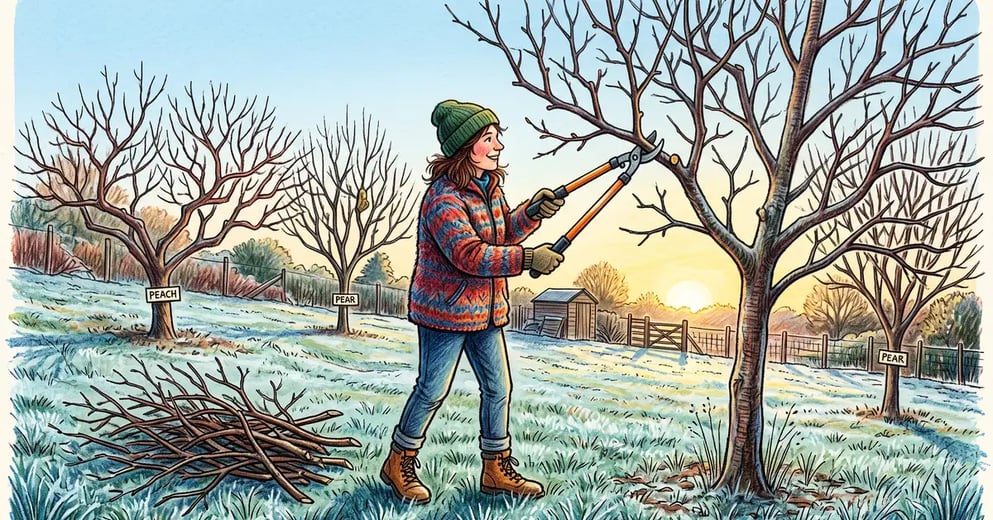
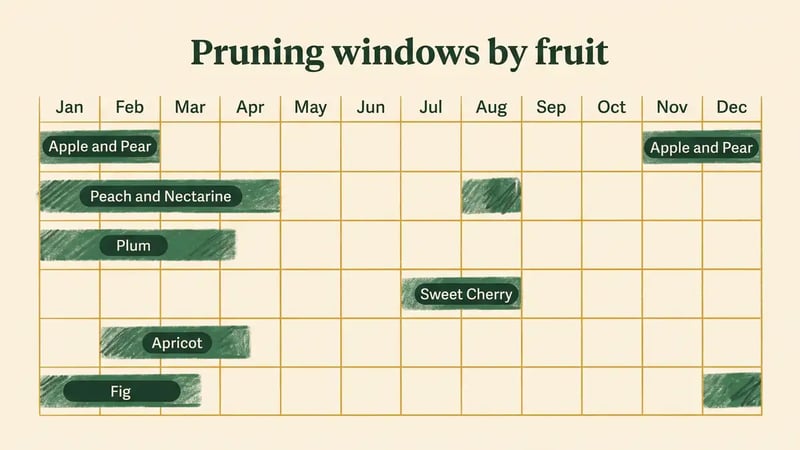
The default answer for apple and pear is late winter, after the coldest weather has passed but before the buds swell. Iowa State University Extension puts that at March through early April for the Midwest. University of New Hampshire Extension phrases the cue rather than the calendar: prune after the deep cold has passed but before the plants come out of winter dormancy.
Both are saying the same thing. Pruning temporarily reduces a tree's cold tolerance, so cutting in January in zone 5 hands the next hard freeze an open wound. Waiting until the tree is close to breaking dormancy means it can start closing the cut almost immediately.
Key Takeaway
Order your pruning by cold hardiness and by disease risk. Apples and pears first in late winter, peaches and nectarines last just before bloom, apricots and sweet cherries not until dry summer weather. The species, not the month, decides.
Why Should Apricots and Cherries Wait Until Summer?
Because three pathogens get in through fresh cuts, and all three need moisture to do it.
Eutypa dieback infects fresh pruning wounds when rain falls in the two to six weeks after the cut. Bacterial canker, caused by Pseudomonas syringae, overwinters in existing cankers and spreads in cool wet conditions. Silver leaf, Chondrostereum purpureum, works the same way on cherries.
The response from UC Agriculture and Natural Resources is blunt: prune apricots and cherries in July and August inland, August near the coast, and time it so you get six weeks of dry weather afterwards. UC IPM's Eutypa guidance adds that if you must cut outside that window, briefly flaming the wound with a propane torch makes it resistant to Eutypa spores.
Washington State's cherry guidance runs the same logic for the Pacific Northwest: delay dormant pruning to January or February, but summer pruning after harvest in dry weather is better still. If you garden somewhere with dry winters, such as much of the interior West, the disease pressure is lower and late-winter pruning is defensible. If your winters are wet, it is not.
| Tree | Best window | Why |
| Apple, pear | Late winter to bud swell | Cold-hardy; fall pruning removes next year's flower buds |
| Peach, nectarine | Just before bloom to 2 weeks after petal fall | Cold-sensitive; lets you judge surviving fruit buds first |
| Plum | Late dormant in dry spells, or after harvest | Cytospora canker needs dry wounds for 2 to 3 weeks |
| Sweet cherry | Summer, after harvest, in dry weather | Bacterial canker enters wet wounds |
| Apricot | July to August | Eutypa dieback infects wounds hit by rain |
| Fig | Late winter, before sap rises | Bleeds heavily if cut during spring sap flow |
Sources: UC ANR, Avoid Pruning Apricots and Cherries in the Cool Season, Penn State Extension peach pruning, Iowa State Extension.
Common Mistake to Avoid
Pruning everything on the same weekend because that is when you have time. Prune the most cold-hardy species first and the least hardy last, and pull the stone fruit out of the winter list entirely if you have wet winters. Michigan State Extension also warns against pruning after late July, which can delay dormancy and set the tree up for winter injury.
What Changes Between Zone 4 and Zone 9?
The cue stays the same and the calendar slides. In zone 4 or 5, "after the deep cold" often means late March. In zone 7 it may be February. In zone 9 the dormant window is short and the constraint flips from cold injury to getting the work done before bud break arrives in January or February.
The cold-zone risk is pruning too early: cuts made before the last severe freeze lose cold hardiness and callus slowly. The warm-zone risk is pruning too late, once sap is moving and buds have opened, which wastes stored energy and provokes soft regrowth.
Missing the window is not a disaster. If buds have opened on an apple you can still prune, you have simply lost a little vigor and some fruit. Skip a year rather than pruning a cherry in a wet April. The same species-by-species logic applies to pruning berry bushes, where the split runs between summer-bearing and everbearing types instead.
Why This Works: Working With Succession, Not Against It
A pruning cut is a signal, not just a removal. The tree reads its root-to-shoot ratio and responds. Dormant pruning leaves the root system oversupplied relative to the canopy, so it pushes vigorous replacement growth in spring. That is the same successional impulse that syntropic growers deliberately trigger with hard pruning as a management tool. In a food forest, you are choosing when to give the system a growth pulse.
Should You Prune in Summer Instead?
Sometimes, and for a different reason than most people assume. Dormant pruning invigorates. Summer pruning dwarfs. Cut a shoot in July and the regrowth below that cut will be far weaker than if you had made the same cut in February.
Worth being precise about the claim, though. The old idea that summer pruning promotes flowering has been tested repeatedly. Michigan State Extension notes that controlled experiments in the 1920s and again in the 1980s did not support it, which is why summer pruning has never been a commercial recommendation. Use it for size control, water sprout removal and getting light into a crowded canopy. Do not use it expecting more flower buds.
Penn State Extension's summer pruning cautions add the limits: prune too heavily in summer and you expose fruit and bark to sunburn, and prune too late in the season and you delay dormancy going into winter.
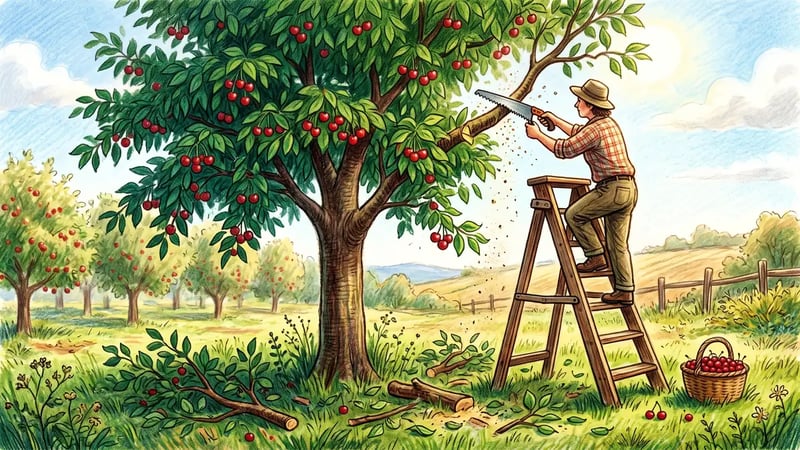
How Do You Actually Make the Cut?
Timing decides whether the wound gets infected. Technique decides whether it ever closes.
Pick the shape before you pick up the saw
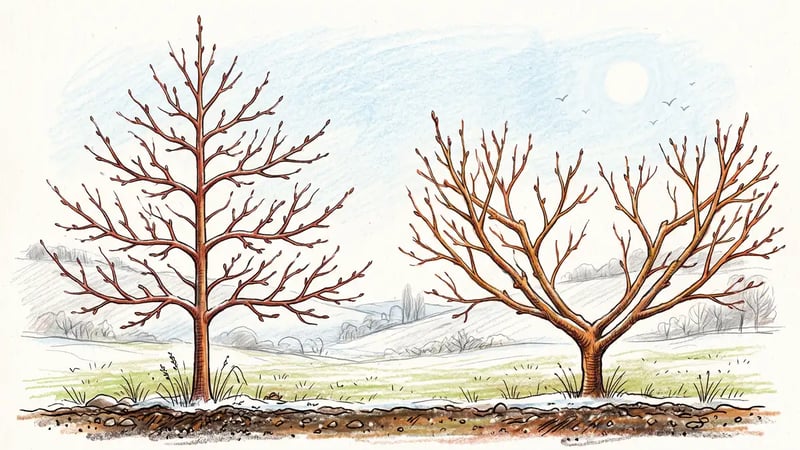
Apples and pears go to a central leader, one trunk with tiered scaffold branches. Peaches, nectarines and most plums go to an open center, a vase of three or four limbs with the middle removed for light. Decide this in the first winter after planting, ideally when you put a bare root tree in the ground, and every later cut follows from it.
Clear the obvious four first
Dead, damaged, diseased and crossing wood, in that order, before any shaping. On many neglected trees this alone is most of the job and it costs the tree nothing.
Cut outside the branch collar
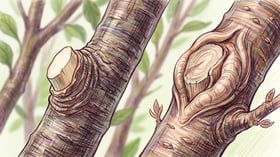
The swollen wrinkled ring where a branch meets the trunk contains the tree's chemical defences. Cut just beyond it, angled slightly. A flush cut removes that zone and lets decay walk into the trunk. A stub leaves dead wood that never closes.
Use three cuts on anything heavy
Undercut a foot out, cut through from above further out to drop the limb, then make the final cut at the collar. Skip this and the falling branch strips bark down the trunk.
Stop at a quarter to a third of the canopy
Removing more in one year triggers a flush of water sprouts that undoes the work. A badly overgrown tree is a three-year project, not a weekend.
Leave the wound alone afterwards. Wisconsin Horticulture Extension is clear that tree paints and wound dressings slow closure and promote decay, and they do not protect the wound regardless of cut size. A correctly placed cut seals itself.
Key Takeaway
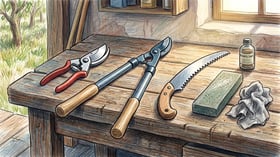
The branch collar does the healing, not you. Cut just outside it, leave it intact, and apply nothing. Sterilize the blade between trees if you are working through anything with visible canker.
Frequently Asked Questions
When should you prune peach trees?
Later than everything else. Penn State Extension recommends pruning peaches from just before bloom to about two weeks after petal fall, which in most US zones means late February through April. Two reasons: peaches are cold-sensitive and early pruning reduces their winter hardiness, and waiting until the buds are visible lets you see how many fruit buds survived the winter so you can adjust how hard you cut. Alabama Cooperative Extension advises against pruning peaches at all between October and January.
When should you prune pear trees?
Same window as apples, late winter before the buds swell, with one extra consideration. Pears are susceptible to fire blight, a bacterial disease that moves into fresh wounds when conditions are warm and wet. Dormant pruning largely avoids that because the bacterium is not active, which is another argument for finishing before growth starts. If you have to remove a fire blight strike during the season, cut well below the visible damage and disinfect the blade between every cut.
When is it too late to prune fruit trees?
For pome fruit, once buds have opened you have passed the ideal point but you have not caused harm. You lose some of the growth response and some fruit from the wood you remove. The genuine deadline is late July: Michigan State Extension warns that pruning after that can delay dormancy and predispose the tree to winter injury. For stone fruit in wet regions the calendar matters far more, because a cut made into wet weather is an open invitation to canker.
How do you keep fruit trees small?
Rootstock does most of the work, and pruning finishes it. A dwarfing rootstock caps the tree's size regardless of how you cut. On a tree already in the ground, summer pruning is the size-control tool because it dwarfs rather than invigorates, while heavy dormant pruning of a tall tree makes it push harder. Espalier training takes the same principle further, holding a tree to a flat plane through repeated summer cuts.
Do young trees need different pruning?
Yes, and this is where most long-term problems are created. The first three years are about structure, not fruit: establish the central leader or open center, choose four to six well-spaced scaffold branches with wide crotch angles, and remove competing leaders. Get the frame right early and the tree can carry an understory guild later without the two competing for light. Heading cuts, which shorten a shoot, produce bushy growth below the cut and are the training tool. Thinning cuts, which remove a whole branch at its origin, open the canopy and are the maintenance tool. A tree given three good years needs very little afterwards.
Get the Weekly Dig
One practical permaculture guide a week, written for gardeners who do this on weekends: food forest and guild designs that produce. Free, no spam, unsubscribe any time.
Join the Weekly DigResources
- Iowa State University Extension: When to Prune Fruit Trees
- University of New Hampshire Extension: It's Pruning Season
- UC ANR: Avoid Pruning Apricots and Cherries in the Cool Season
- UC IPM: Eutypa Dieback in Home Orchards
- Penn State Extension: Peach Tree Pruning
- Penn State Extension: Summer Pruning Cautions
- Michigan State Extension: Late Winter Pruning of Fruit
- Michigan State Extension: Summer Pruning Apples
- Wisconsin Horticulture Extension: Pruning Deciduous Trees
- Oregon State Extension PNW 400: Training and Pruning Your Home Orchard