
Serviceberry is one of the most planted small trees in American landscaping and one of the least harvested. Municipalities line streets with it for the spring bloom and the fall colour. Almost nobody picks the fruit, which is a shame, because a mature saskatoon-type bush can put out 10 to 18 pounds of berries in a good year.
What Is a Serviceberry, and Which One Do You Want?
Serviceberry is the genus Amelanchier, a group of roughly 20 North American species in the rose family. You will also see it sold as juneberry, saskatoon, shadbush and shadblow, and the names get used interchangeably in nursery catalogs. The fruit is a pome, structurally an apple rather than a berry, which is why each one carries a tiny crown at the blossom end.
The split that matters is between the landscape species, grown for form and foliage, and A. alnifolia, the saskatoon, which is the one with a real fruit-breeding programme behind it.
What this article covers:
- Which Amelanchier species and cultivars actually fruit worth picking
- Documented per-plant yields from Montana and Canadian trials
- Spacing for a hedge, a specimen or a small orchard row
- Cedar-apple rust, and the separation distance that matters
- How the fruit compares with blueberry on anthocyanins
Key Takeaway
If you want fruit, plant a named saskatoon cultivar of A. alnifolia, not 'Autumn Brilliance' or whatever the garden centre has in a pot. The landscape hybrids fruit lightly and were selected for leaves.
| Species | Height | Habit | Zones |
| A. alnifolia (saskatoon) | 15-30 ft | Suckering multi-stem shrub | 2-6 |
| A. canadensis (shadblow) | 15-25 ft | Clump-forming large shrub | 3-8 |
| A. laevis (Allegheny) | 15-25 ft | Multi-trunked small tree | 4-8 |
| A. arborea (downy) | 10-25 ft | Most tree-like, single trunk | 4-9 |
| A. × grandiflora 'Autumn Brilliance' | 15-25 ft | Landscape hybrid | 4-9 |
Sources: NC State Extension Gardener Plant Toolbox, USDA NRCS Plant Guide, Amelanchier alnifolia
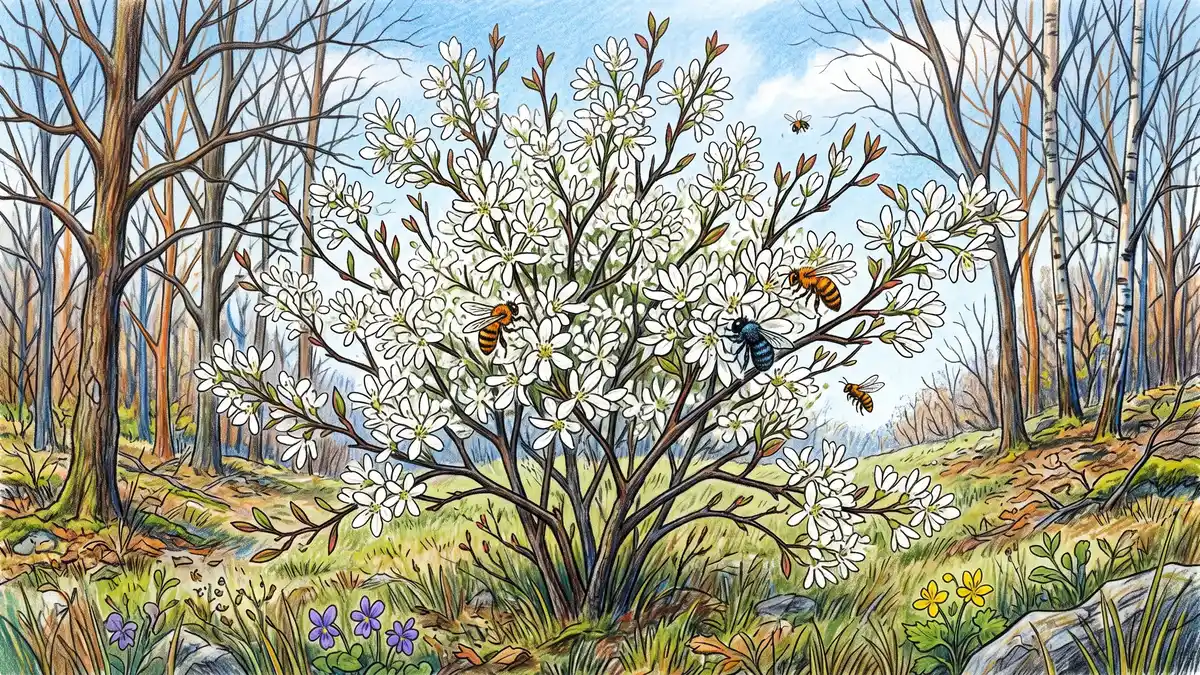
What a Mature Bush Actually Produces
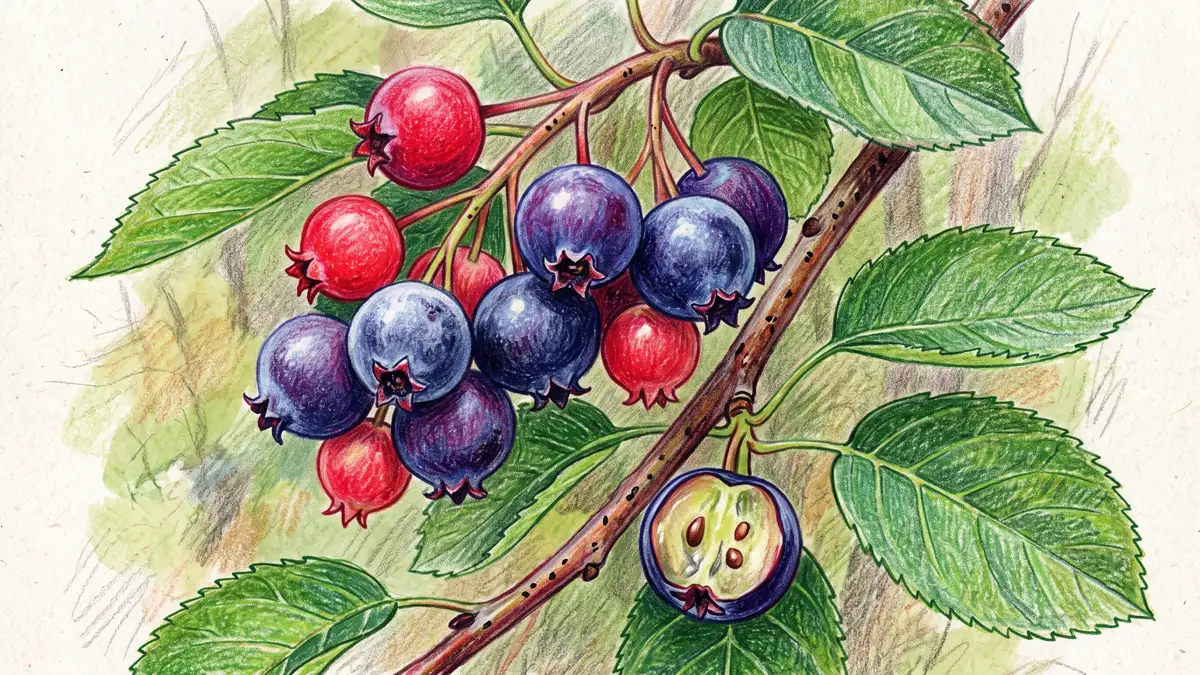
Montana State's Western Agricultural Research Center has the clearest per-plant data. In their trials, 2018 yields ran from about 1.5 to over 10 pounds per plant depending on cultivar, with 'Lee 8' and 'Northline' averaging 11.5 and 11.6 pounds. By 2020 'Smoky' reached 16.7 pounds per plant and 'Northline' 18.3.
Pearson and colleagues, evaluating 15 cultivars at maturity in Canada in 2005, found marketable yields of about 9.0 to 9.2 pounds per plant for 'Pearson II', 'Honeywood' and 'Smoky', against 1.6 to 5.5 pounds for the weaker selections. That spread is the whole argument for buying a named cultivar.
| Cultivar | Documented Yield Per Plant | Notes |
| 'Northline' | 11.6 lb (2018), 18.3 lb (2020) | Later ripening, heavy bearer |
| 'Smoky' | 8.5 lb (2018), 16.7 lb (2020) | Reliable, widely available |
| 'Honeywood' | ~9 lb at maturity | Large fruit, long clusters |
| 'Regent' | Compact, 4-6 ft tall | Best choice for small gardens |
| Commercial orchard average | 2,000-6,000 lb per acre | ~4,000 lb typical |
Sources: Montana State University Western Agricultural Research Center saskatoon trials, Montana State Extension, Growing Serviceberries
Flowers form on wood that is two to four years old, so expect a token crop in year three and a serious one from year five or six. Serviceberries are broadly self-fertile, which is why single-cultivar orchard blocks work, but planting two or more cultivars within about 50 feet improves berry size and staggers the harvest.
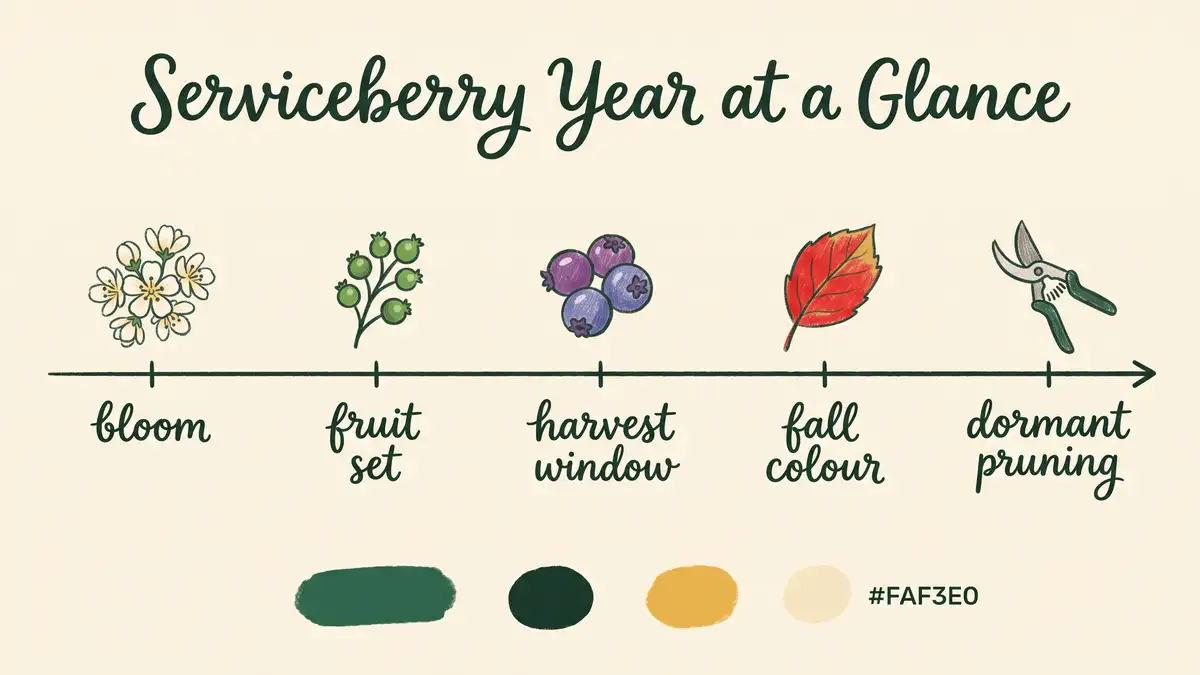
Siting, Spacing and the Pruning That Keeps Yield Up
Give it full sun if you want fruit
Serviceberry tolerates part shade and will grow perfectly well in it. It will also fruit far less. Reserve the shady spots for the ornamental species.
Space by purpose, not by habit
Compact cultivars such as 'Regent' go 4 to 6 ft apart for a productive hedgerow. Allow 8 to 12 ft around taller multi-stem forms and 15 to 20 ft around tree-like species. Orchard rows run 16 to 20 ft apart with 3 to 4 ft in-row.
Water hard for two years
Established plants are notably drought-tolerant, which is the reason they get planted in parking lots. Getting there takes consistent moisture through the first two growing seasons.
Renew, do not shape
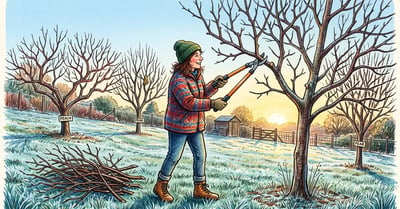
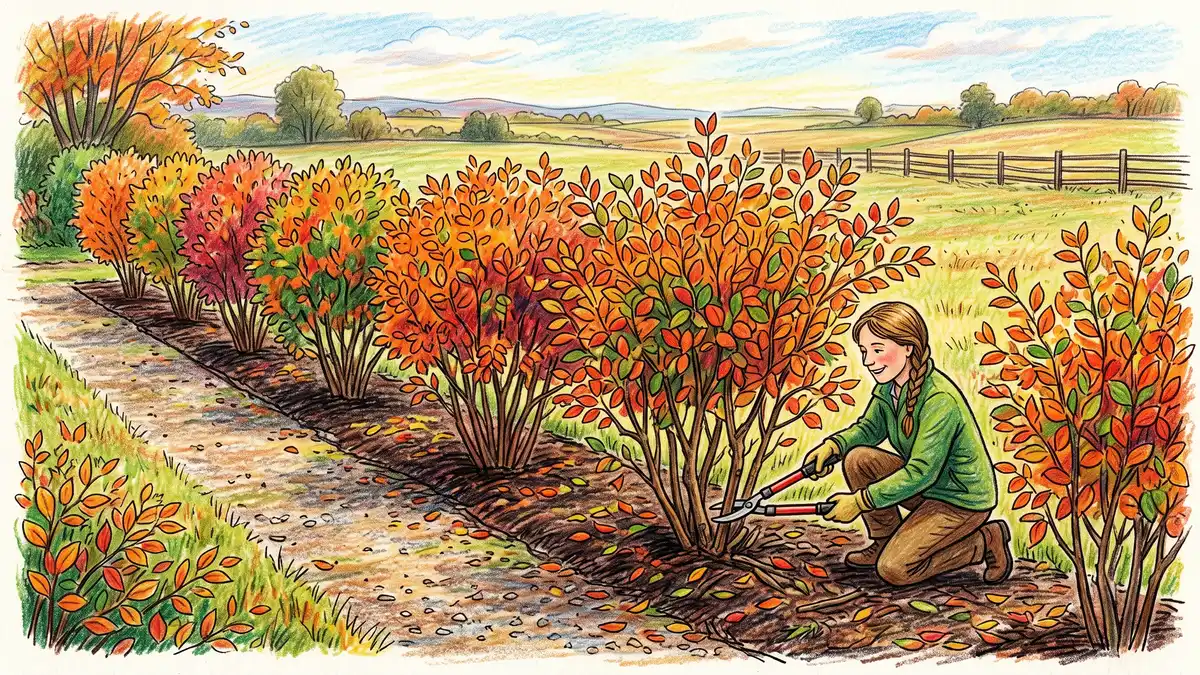
From about year six, cut two or three of the oldest, thickest stems to ground level each dormant season. Because fruiting wood is two to four years old, removing the oldest canes pushes the bush to replace them.
Fall is a good planting window across most of the range. Serviceberry roots readily in cool soil and the spring flush then goes into shoot growth rather than root repair. The general case for planting trees in autumn rather than spring applies here about as cleanly as it does anywhere.
The Two Problems That Cost You the Crop
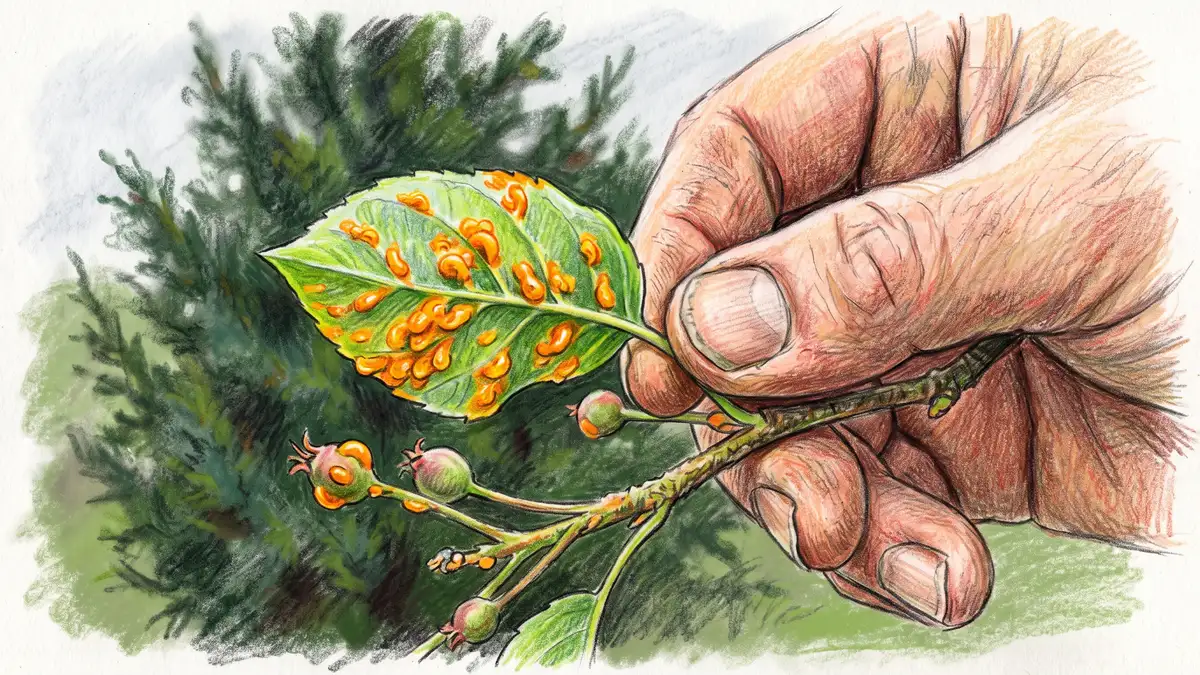
First, rust. Seven Gymnosporangium species can infect serviceberry, and the group includes cedar-apple, cedar-quince and cedar-hawthorn rust. Trees are susceptible from bud break, so flowers and fruit get hit early. Symptoms are orange lesions on leaf undersides that grow spore horns, plus swollen and mummified fruit and shoots that fail to survive winter.
The fungus needs an alternate host, a juniper or eastern redcedar, to complete its cycle. The Pacific Northwest Plant Disease Management Handbook notes that separating the two hosts by half a mile to two miles has been recommended. In most American suburbs that is impossible, which is worth knowing before you buy.
Do Not Plant This Next to Your Junipers
If there is a juniper hedge or a redcedar within sight of your planting spot, expect rust every wet spring. Connecticut's Plant Pest Handbook advises removing nearby junipers where possible. If you cannot, rake and remove fallen leaves, keep the plants vigorous, and accept some fruit loss. Also watch for fire blight, which serviceberry gets like every other pome fruit, and cut infected shoots well below the visible damage. Understory choices matter too, as with any fruit tree guild.
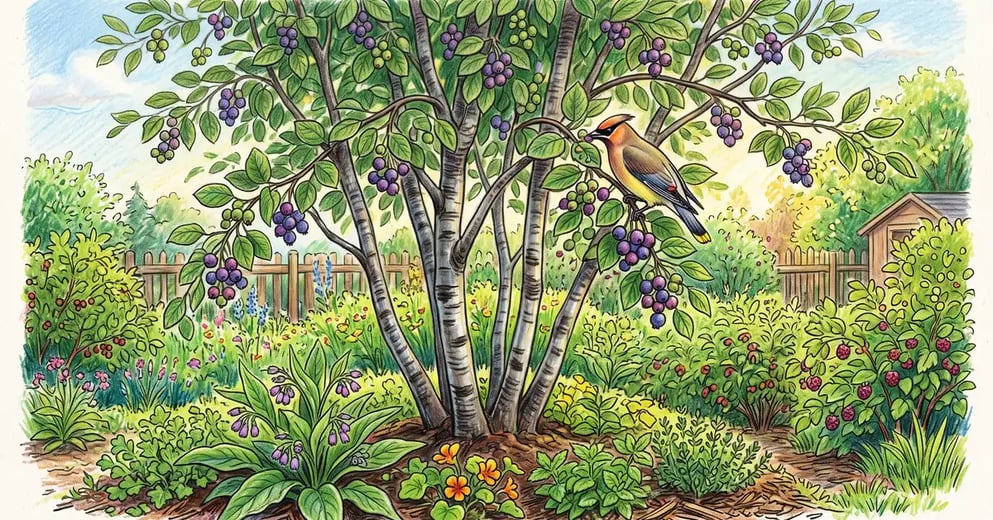
Second, and more reliably damaging, birds. Robins, cedar waxwings, finches and starlings strip a small planting as the berries hit the soft blue stage, and grower reports put unprotected losses at 60 to 95 percent. Netting is the only thing that works. Drape it about a week before harvest, use a fine mesh around half an inch, and get it off promptly. Reflective tape and owl decoys buy you a couple of days at most.
Is the Fruit Any Good?
It is sweeter and more almond-scented than blueberry, with soft seeds that carry a marzipan note when cooked. It cooks better than it eats fresh, which is the honest verdict, and it goes into pies, jam and syrup the way saskatoon has in prairie kitchens for generations.
The nutrition is where it gets interesting. Hosseinian and Beta's 2007 Manitoba comparison found saskatoon and wild blueberry with similar total anthocyanins, 562.4 and 558.3 mg per 100 g. On cyanidin-3-glucoside specifically, saskatoon measured 117.67 mg per 100 g against wild blueberry's 27.48, more than four times as much. Raw saskatoons run about 85 kcal, 5.9 g fibre and 1.4 mg manganese per 100 g.
Why This Works: Stacking Functions
Serviceberry earns its place because it does four jobs, not one. It is among the earliest nectar sources of the year when almost nothing else is open, it feeds a long list of bird species, it gives you fruit, and it holds a boundary as a hedge. That is why it belongs in the shrub layer of a food forest rather than as an isolated specimen, and it pairs well with other options in the shrub layer.
Key Takeaway
Buy a named saskatoon cultivar, give it full sun and no junipers nearby, plan on netting from year four, and renew-prune the oldest stems from year six. Do those four things and you have 10 pounds a bush without spraying anything. For a similar early-season crop, see honeyberry.
Frequently Asked Questions
Is serviceberry poisonous?
No. Serviceberry fruit is edible raw and has been eaten across North America for as long as there are records of it, most prominently as a saskatoon in prairie and Indigenous foodways. The seeds contain trace cyanogenic compounds, as apple, cherry and almond seeds do, at levels far too low to matter when you eat the fruit normally. Every US extension source treats it as an edible landscape plant with no toxicity warnings attached.
Can you eat serviceberries raw?
Yes, straight off the bush. Ripe fruit is soft, deep purple-blue with a dusty bloom, and pulls away from the stem with no resistance. Red berries are not ready. The flavour is milder and sweeter than blueberry with a distinct almond note from the soft seeds. Most people find them pleasant fresh and better cooked, since heat concentrates the sugar and brings the marzipan character forward.
How long until a serviceberry produces fruit?
Flower buds form on wood that is two to four years old, so a nursery plant put in this fall gives you a token crop around year three. Meaningful harvests start around year five or six, and the Montana trial figures of 10 to 18 pounds per plant come from fully mature bushes under drip irrigation with consistent pruning. Compact cultivars such as 'Regent' fruit earlier because they build fruiting wood on a smaller frame.
Do you need two serviceberries to get fruit?
No. Serviceberries are functionally self-fertile, which is why commercial saskatoon orchards are planted as single-cultivar blocks and still crop. That said, extension and grower guidance consistently recommends two or more cultivars within roughly 50 feet, because cross-pollination improves berry size and total yield, and different cultivars spread the harvest over a longer window instead of dumping it all in one week.
What is the difference between serviceberry and juneberry?
Nothing botanically. Juneberry, saskatoon, shadbush, shadblow and serviceberry are all regional common names for Amelanchier species. Juneberry and saskatoon usually refer to A. alnifolia, the western species grown commercially for fruit. Shadbush and shadblow generally mean A. canadensis in the east, named for blooming when shad ran upriver. When you buy for fruit, ignore the common name and check the species and cultivar.
Get the Weekly Dig
One practical permaculture guide a week, written for gardeners who do this on weekends: food forest and guild designs that produce. Free, no spam, unsubscribe any time.
Join the Weekly DigResources
- NC State Extension Gardener Plant Toolbox: Amelanchier
- USDA NRCS Plant Guide: Amelanchier alnifolia (saskatoon serviceberry)
- Montana State University Extension: Growing Serviceberries
- Montana State Western Agricultural Research Center: saskatoon cultivar yield trials
- Pacific Northwest Plant Disease Management Handbook: Serviceberry rust
- Penn State Extension: Amelanchier Diseases
- Connecticut Agricultural Experiment Station: Shadbush Serviceberry pest handbook
- SARE and Cornell: Juneberries, a New Fruit for the Northeast
- North Dakota State University: Juneberry or Saskatoon Serviceberry handbook entry
- Oregon State University Landscape Plants: Amelanchier alnifolia