
What Counts as a Companion Planting Mistake?
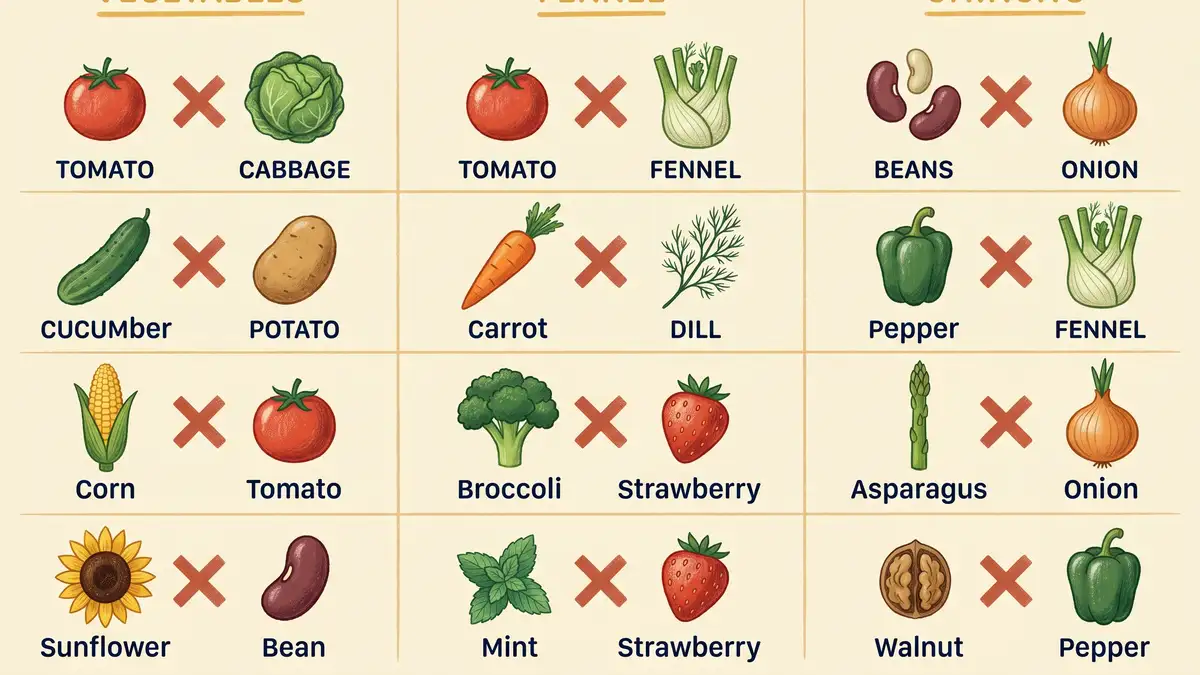
If your tomatoes are stunted next to fennel, your beans look yellow and underperforming beside the onion row, or your potato patch keeps pulling late blight into the tomatoes — you’re probably running into one of the 12 companion planting mistakes below. Companion planting folklore is mostly harmless, but a handful of pairings are genuinely incompatible: they share pests, share diseases, compete for nitrogen, or release allelopathic compounds that shut each other down. claims that do not hold up under research what not to plant next to each other brassica bed planning leek pairings that hold up what actually stops flea beetles
This guide is the extension-verified list of combinations to avoid. Every pairing includes the mechanism (why it fails), the documented yield impact, and a science-backed alternative you can swap in this weekend. For the positive side of the pairing equation, start with our companion planting chart.
What you’ll learn in this guide:
- The 12 vegetable pairings most likely to hurt your garden — with mechanisms, not myths
- What to plant instead, with extension-backed alternatives for every mistake
- Why fennel deserves its own bed (and how far away to put it)
- The black walnut “juglone zone” and how to garden around it
- When spacing, timing, or a raised bed fixes the problem without swapping crops
Key Takeaway
Most companion planting mistakes come from three causes: shared pests and diseases (tomato–potato, carrot–parsnip), allelopathic compounds (fennel, black walnut), and rhizosphere antagonism (beans with onions or garlic). Fix them with spacing, timing, or a better partner — not with folklore.
The 12 Combinations to Avoid (and What to Plant Instead)
Each pairing below was cross-checked against university extension services and peer-reviewed allelopathy data. Where the research reports a range, we cite the range honestly — field conditions matter more than any single number.
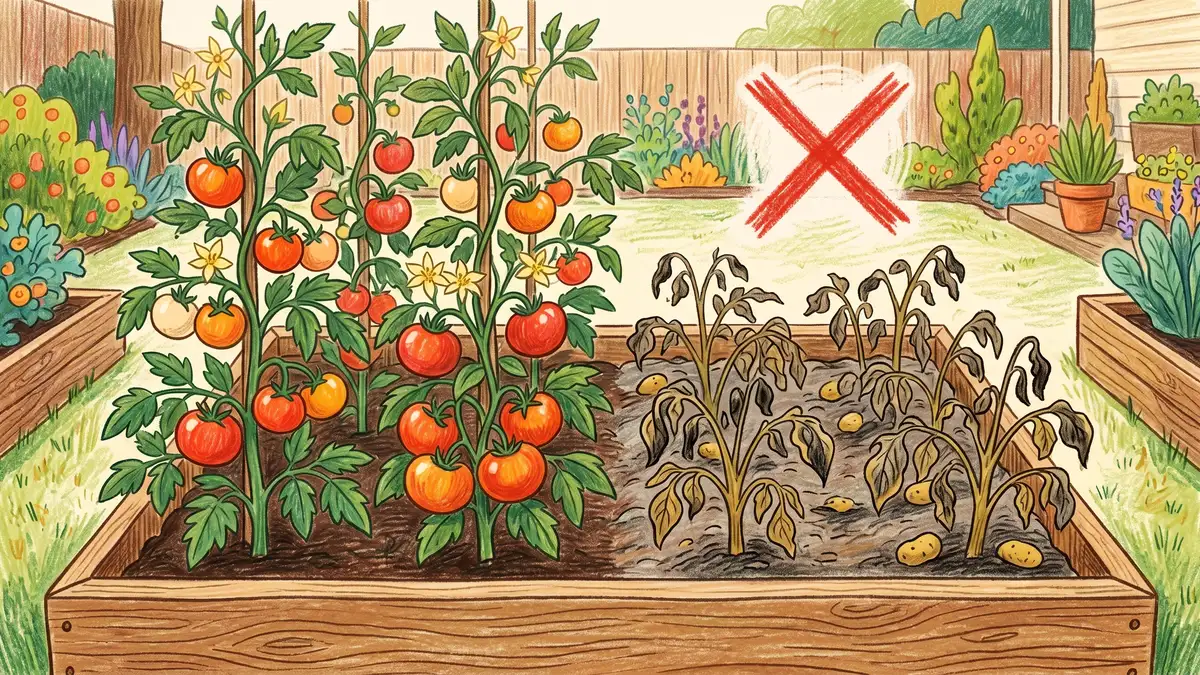
1. Tomatoes + Potatoes — Late Blight & Colorado Potato Beetle
Why it fails: Both are in the nightshade family (Solanaceae), so they share Phytophthora infestans (late blight) and Colorado potato beetle. In a wet season, spores can travel from infected potato foliage to tomato leaves within 5–7 days. Penn State Extension notes that late blight can wipe out an entire tomato or potato crop within a few weeks of infestation.
Try instead: Space the two crops at least 30 feet (10 m) apart, or stagger them in time — plant potatoes 3–4 weeks earlier and harvest before tomato late-blight pressure peaks in July. For tomato-friendly partners, see our full tomato companion guide.
2. Tomatoes + Fennel — Universal Allelopathy
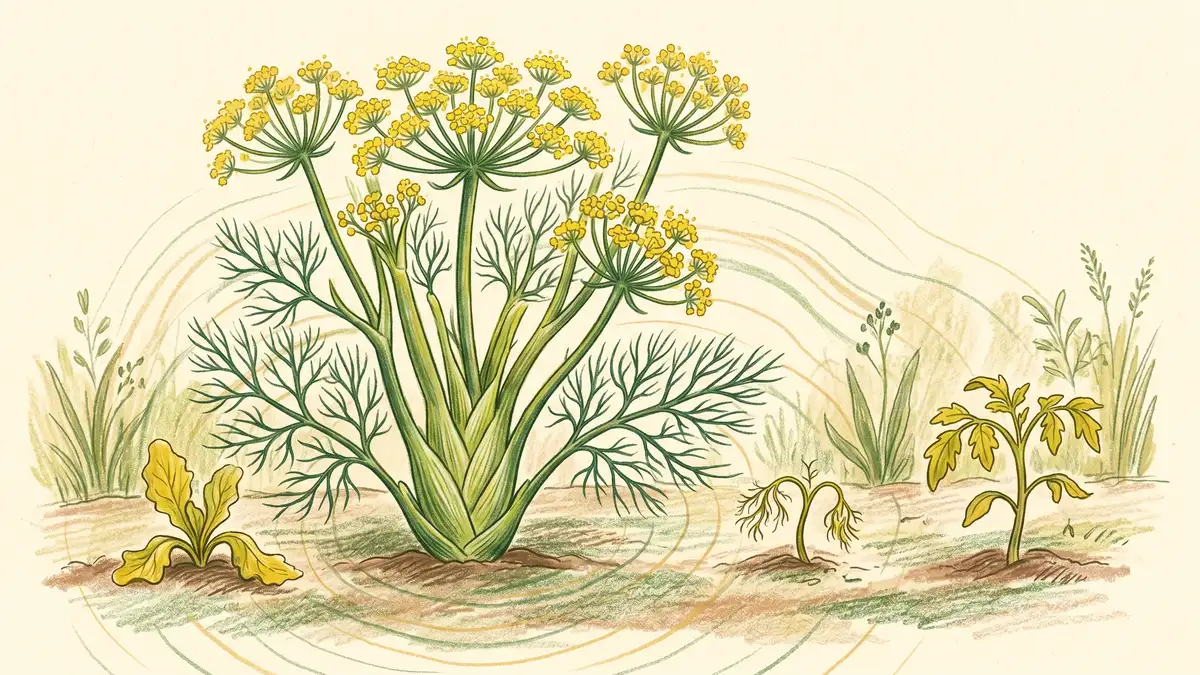
Why it fails: Fennel releases trans-anethole and fenchone from roots and decomposing leaves. These compounds depress germination and stunt most garden crops. Documented germination suppression reaches 40–80% across 21+ sensitive species. The Ask Extension service confirms fennel’s inhibitory effect on seed germination even if the full “universal allelopath” reputation is partially debated.
Try instead: Give fennel its own bed at least 10 feet (3 m) away — perimeter corners or containers work beautifully. Swap in parsley as an aromatic herb companion for tomatoes.
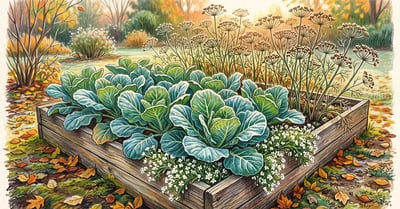
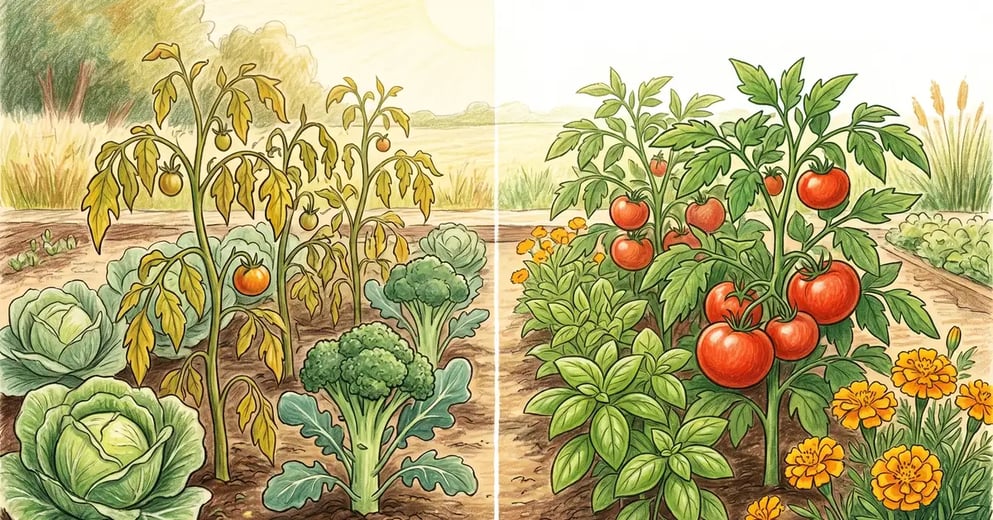
3. Tomatoes + Brassicas (Cabbage, Broccoli, Kale, Cauliflower)
Why it fails: Brassicas are heavy nitrogen feeders (cabbage can pull 180 lb of nitrogen per acre, or ~200 kg/ha), starving tomatoes mid-season. Brassica root exudates also contain glucosinolates that mildly inhibit tomato growth, and both share cutworms. Expect tomato yield reductions of 12–25% when interplanted.
Try instead: Tomato + basil is the classic, and the pairing holds up under Penn State Extension scrutiny — see basil’s role as a universal companion. Keep brassicas at least 6 feet (2 m) away.
4. Tomatoes + Corn — Shared Earworm/Hornworm
Why it fails: Helicoverpa zea moths lay eggs on corn silks, but their larvae readily migrate to tomato fruits, doubling damage on both crops. Tomato fruit losses of 18–35% are typical within 50 feet (15 m) of corn rows.
Try instead: Temporal stagger — plant tomatoes 4–6 weeks after corn so tomatoes ripen after the corn harvest window. Check out the three sisters guild for corn’s correct partners.
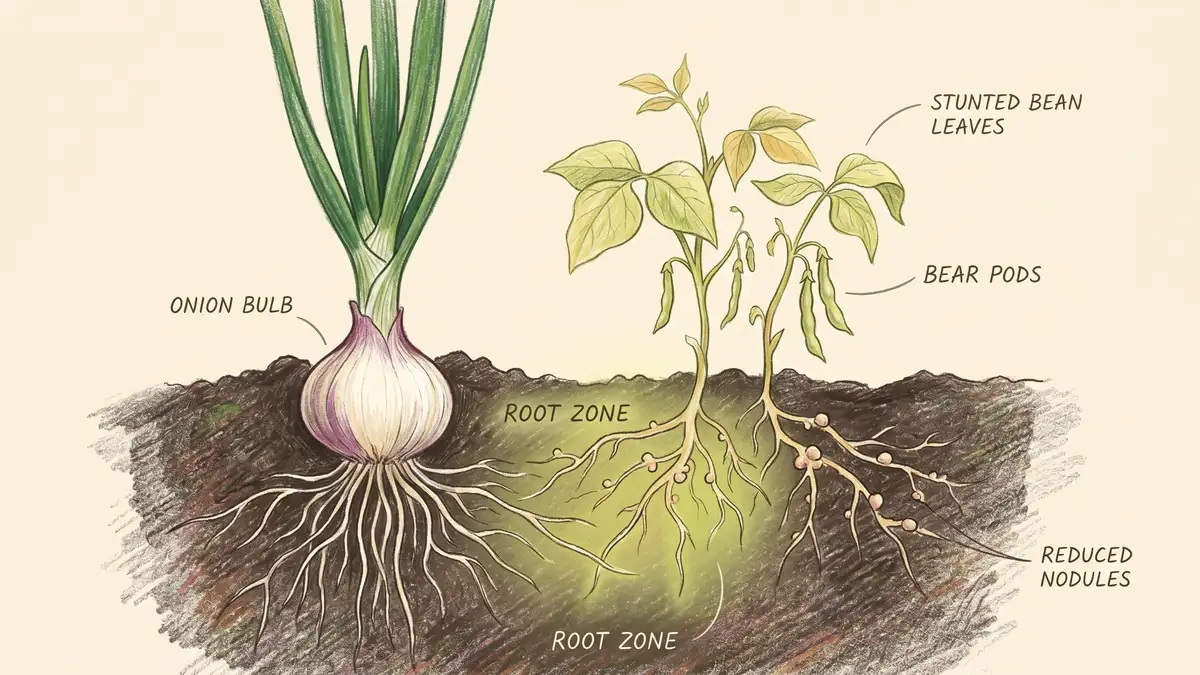
5. Beans + Onions, Garlic, Chives, Leeks
Why it fails: Alliums release volatile sulphur compounds (allicin, diallyl disulphide) that suppress Rhizobium bacteria — the microbes that form nitrogen-fixing nodules on bean roots. The result: beans lose 25–45% of their nitrogen-fixation efficiency and yield drops 15–35%.
Try instead: Beans + carrots pairs cleanly — the two don’t compete for nitrogen and carrots benefit from the nodule-fed nitrogen after the bean harvest. For more, see our companion planting beans guide and the broader nitrogen-fixing plants reference.
6. Beans + Fennel
Why it fails: Double hit — fennel allelopathy drops bean germination by 35–65%, and the stress further compromises nodulation. Root depth overlap adds competition for water and phosphorus.
Try instead: Beans + lettuce. Lettuce tolerates the light shade beans cast and benefits from nearby nitrogen fixation.
7. Carrots + Dill (After Dill Bolts)
Why it fails: Bolting dill emits terpenes (dill ether, limonene) that cue female carrot rust fly (Psila rosae) to lay eggs nearby. Rust fly damage increases 20–40% when mature dill is within carrot rows, per the UC IPM carrot rust fly guide.
Try instead: Carrot + onion works — onion volatiles actually repel carrot rust fly. Plant dill elsewhere, or harvest it young before it flowers.
8. Carrots + Parsnips
Why it fails: Both are in the carrot family (Apiaceae), so Psila rosae colonises both. In co-planted blocks, affected roots jump from ~25% to 45–65%, according to Pacific Northwest Pest Management Handbooks.
Try instead: Carrot + beet. Different families, different pest spectra, complementary root depths. Stagger parsnips into an autumn planting after carrots are harvested.
9. Cucumbers + Potatoes
Why it fails: Cucumber canopy creates a humid microclimate over potato foliage, extending leaf wetness and amplifying P. infestans sporulation. Potato yield loss increases 15–25% under this shade effect.
Try instead: Cucumber + basil. Basil volatiles help repel cucumber pests, and its upright growth avoids shading other crops.
10. Peppers + Brassicas
Why it fails: Same nitrogen-competition story as tomatoes — brassicas outfeed peppers by 30–50% during fruit set, reducing pepper fruit size by 15–25%. Cabbage looper and imported cabbageworm can also drift over to pepper foliage.
Try instead: Peppers pair naturally with carrots and basil. See our companion planting peppers guide for the full roster.
11. Lettuce + Brassicas
Why it fails: Shallow-rooted lettuce loses the nitrogen race and sits under the brassica canopy, cutting photosynthesis by 30–40%. Expect 20–35% lower lettuce yields.
Try instead: Lettuce + peas. Peas throw dappled shade instead of solid canopy, and their nitrogen fixation boosts lettuce leaf production.
12. Fennel + Almost Anything (Plus Black Walnut Juglone)
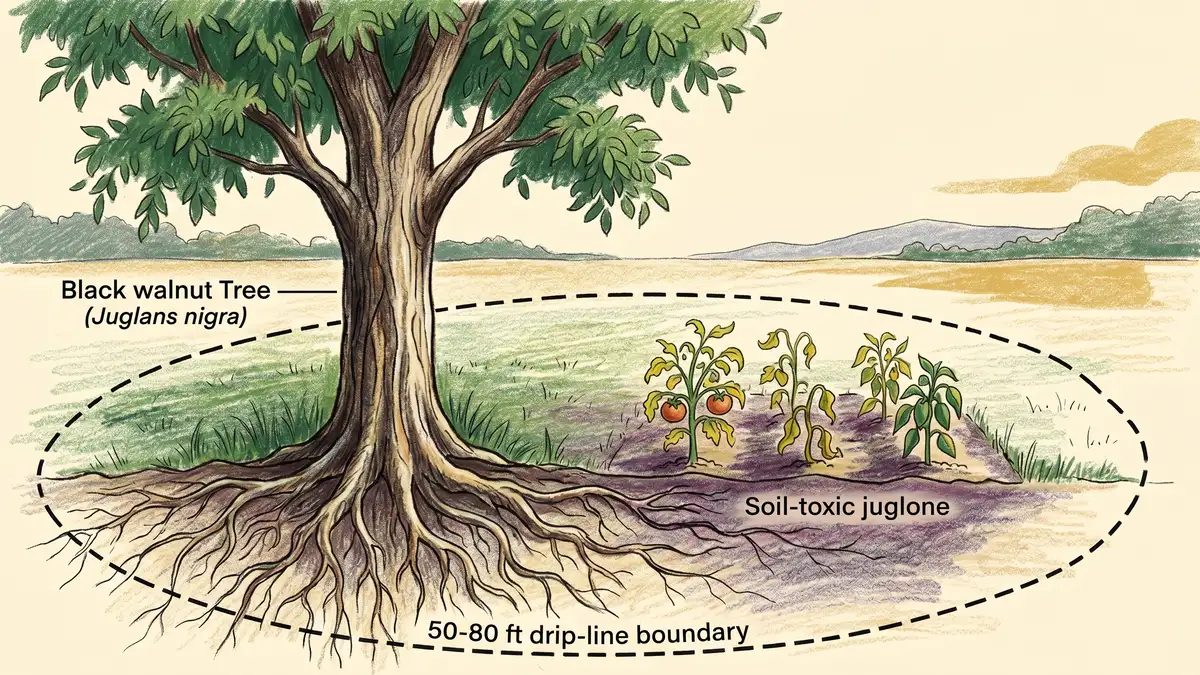
Why it fails: Fennel’s broad-spectrum allelopathy hits lettuce, tomato, beans, peas, carrot, cabbage, broccoli, cucumber, squash, wheat, basil, dill, and coriander. On top of that, if you garden near a black walnut tree (Juglans nigra), expect juglone — a root-secreted toxin that extends 50–60 feet (15–18 m) from the trunk and persists in soil for 2–3 years after tree removal. Highly sensitive crops include tomato, potato, pepper, eggplant, cabbage, and apple per Purdue Extension’s black walnut toxicity bulletin and Penn State Extension.
Try instead: Treat fennel as a perimeter crop in its own bed, 10+ feet (3+ m) from sensitive plants. Under a black walnut’s drip line, grow juglone-tolerant crops only — beets, carrots, corn, onions, garlic, squash, and black raspberries — or build raised beds with 12 inches (30 cm) of imported soil as a barrier.
The Mechanisms: Why These Pairings Fail
Four forces drive most of the incompatibilities above. Naming them helps you evaluate new pairings yourself instead of memorising a list.
| Mechanism | What’s Happening | Example Pairing |
| Shared pest or disease | Both plants host the same pathogen or insect; proximity multiplies pressure. | Tomato + potato (late blight), carrot + parsnip (rust fly) |
| Allelopathy | One plant releases chemicals that suppress germination or growth in others. | Fennel + most crops; black walnut + tomato |
| Rhizosphere antagonism | Volatile compounds disrupt beneficial soil microbes (e.g., Rhizobium). | Beans + onions/garlic |
| Nutrient or light competition | One plant outfeeds or overshadows the other. | Tomato + brassicas; lettuce + brassicas |
Sources:.
Why This Works: Guilds, Not Pairs
Permaculture calls a successful plant community a guild — a small group in which each species supports the others through nitrogen fixation, pest confusion, shade regulation, or pollinator attraction. The 12 mistakes above all break guild logic: instead of stacking functions, they stack stressors. A good pairing is one where each plant does something the other needs, and neither undermines the other.
How to Fix a Bad Pairing Without Ripping Everything Out
You don’t always have to choose between crops. Three tactics solve most conflicts without replanting:
Add Spatial Distance
A 10–30-foot (3–10 m) buffer cuts most pest and allelopathy spillover. Use the gap for a non-competing crop like lettuce, beets, or flowers. In a small yard, a no-dig bed between incompatible crops works just as well as open ground.
Stagger in Time
Plant the earlier crop 3–4 weeks ahead and harvest before the second crop becomes vulnerable. Classic example: potatoes in early spring, tomatoes after summer solstice — the potato harvest closes the late-blight window before tomatoes hit peak risk.
Isolate in Raised Beds
Separate raised beds with cardboard bottoms cut volatile diffusion and soil-splash disease spread by 60–80%. Especially valuable for fennel (a dedicated bed solves the allelopathy problem) and for beans near garlic or onions (a physical soil barrier protects Rhizobium nodulation).
Common Mistake to Avoid
Don’t assume “traditional companion planting charts” are peer-reviewed. Louise Riotte’s classic Carrots Love Tomatoes (1975) predates modern allelopathy research; some of her pairings hold up, several don’t. Trust extension service guides for the science and use folk wisdom as a starting point, not a final answer.
Frequently Asked Questions
What should you not plant next to tomatoes?
Avoid fennel (allelopathy), brassicas like cabbage and broccoli (nitrogen competition), potatoes (shared late blight and Colorado potato beetle), and corn (shared hornworm/earworm). Keep tomatoes at least 30 feet (10 m) from potatoes and away from any black walnut drip line because of juglone toxicity. For a positive list of what works, see our tomato companion planting guide. The single safest universal partner is basil, which handles many pests and has no known negative interactions with tomato root exudates.
What should you not plant next to peppers?
Keep peppers away from brassicas (cabbage, broccoli, kale) because they out-compete peppers for nitrogen and reduce fruit size by 15–25%. Avoid fennel for the same allelopathy reason that applies to tomatoes, and keep peppers outside a black walnut’s juglone zone. Our companion planting peppers guide covers the full worst-list and the best pairings like basil, carrots, onions, and nasturtiums.
What should you not plant next to cucumbers?
Avoid potatoes — cucumber canopy increases potato late-blight pressure by extending leaf wetness. Skip strongly aromatic herbs like sage and mature dill that can suppress cucumber growth, and keep fennel in its own bed. Cucumbers pair well with beans (nitrogen), basil (pest deterrence), radishes (cucumber beetle trap crop), and nasturtiums. Never interplant cucumbers within 5 feet (1.5 m) of a declining potato patch during wet weather — spore splash does the rest.
What should you not plant next to beans?
Keep beans away from the entire onion family — onions, garlic, chives, leeks, and shallots — because their sulphur compounds suppress Rhizobium nitrogen-fixing bacteria. Fennel also harms beans through allelopathy. Bean-friendly partners include corn, squash, carrots, lettuce, and cucumbers. Our bean companion planting guide lays out the full working and non-working pairings in detail.
What should you not plant next to cabbage and other brassicas?
Avoid tomatoes, peppers, and strawberries — they compete poorly against brassicas for nitrogen. Keep beans at a distance too, since brassica root exudates can mildly suppress legume germination. Strong-flavoured alliums like garlic, however, work well with brassicas by deterring cabbage loopers and aphids. Dill and nasturtiums are excellent companions. A good rule: keep brassicas in their own nitrogen-rich bed and rotate them away each year to avoid club root and shared pest build-up.
Why is fennel such a bad companion plant?
Fennel roots and decomposing leaves release trans-anethole and fenchone — two compounds that suppress germination and growth in most garden crops. The effect is documented across more than 21 species, including tomato, lettuce, beans, carrots, cabbage, and cucumber. That’s why permaculture practitioners plant fennel as a perimeter crop in its own bed, at least 10 feet (3 m) away from sensitive neighbours. Harvesting fennel before it flowers reduces volatile production; removing residue promptly limits soil persistence.
How far from a black walnut tree can I plant vegetables?
Black walnut roots secrete juglone, a toxin that affects sensitive crops within 50–60 feet (15–18 m) of the trunk and persists in soil for 2–3 years after the tree is removed. Tomato, potato, pepper, eggplant, cabbage, and apple are highly sensitive. Safe crops within the juglone zone include corn, beets, carrots, onions, garlic, squash, and black raspberries. Raised beds with 12 inches (30 cm) of imported soil and a fabric barrier beneath are the simplest fix if you must garden under a walnut canopy.
Get the Weekly Dig
One practical permaculture guide a week, written for gardeners who do this on weekends: companion pairings that hold up under scrutiny, and the ones that do not. Free, no spam, unsubscribe any time.
Join the Weekly DigResources
- Penn State Extension — Tomato-Potato Late Blight in the Home Garden
- Penn State Extension — Tomato Diseases and Disorders
- Penn State Extension — Working With the Black Walnut
- Purdue Extension HO-193 — Black Walnut Toxicity (PDF)
- Purdue Master Gardener — Late Blight of Tomato and Potato
- UC IPM — Carrot Rust Fly
- PNW Pest Management Handbooks — Parsnip Carrot Rust Fly
- Oklahoma State Extension — Colorado Potato Beetle Diagnostics
- Ask Extension — Bulb Fennel Allelopathy
what not to plant with rosemary