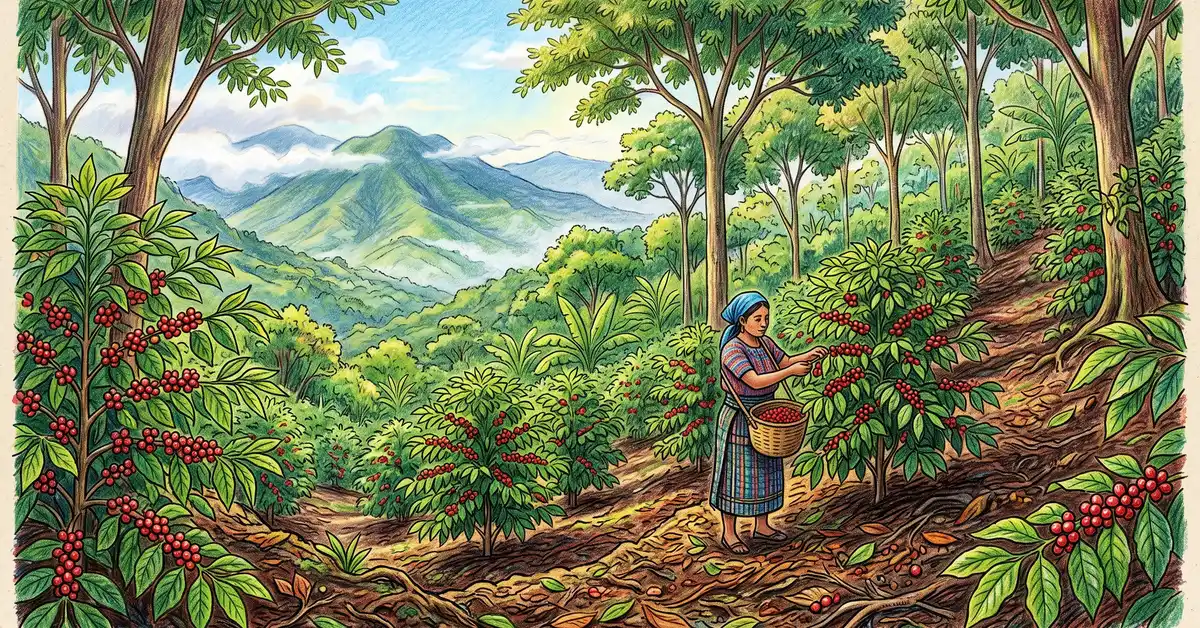

You don't need 200 hectares of degraded Brazilian rainforest to do syntropic agriculture. You can do it in 150 square feet of city backyard. You can do a meaningful version of it on a sunny apartment balcony. The Ernst Götsch method that everyone associates with vast cocoa plantations in Bahia is, at its core, a set of principles about layering plants, planting densely, and pruning hard. Every one of those principles scales down. syntropic agriculture in urban settings
This is the practical guide for an urban or suburban gardener who has read about syntropic farming, found it inspiring, and then run into the question: how would I actually do this in my yard? The short answer is yes, you can, and here is what fits in your space, what to plant, and what to prune.
The Short Version: What Makes a Garden Syntropic
Syntropic agriculture is the regenerative farming method developed by Swiss-Brazilian researcher Ernst Götsch starting in the 1980s on a degraded farm in Bahia, Brazil. Agenda Gotsch's official site defines it as "agriculture that aligns with natural ecosystem dynamics," and our deeper introduction in what is syntropic agriculture walks through the full theory. For our purposes here, four principles matter:
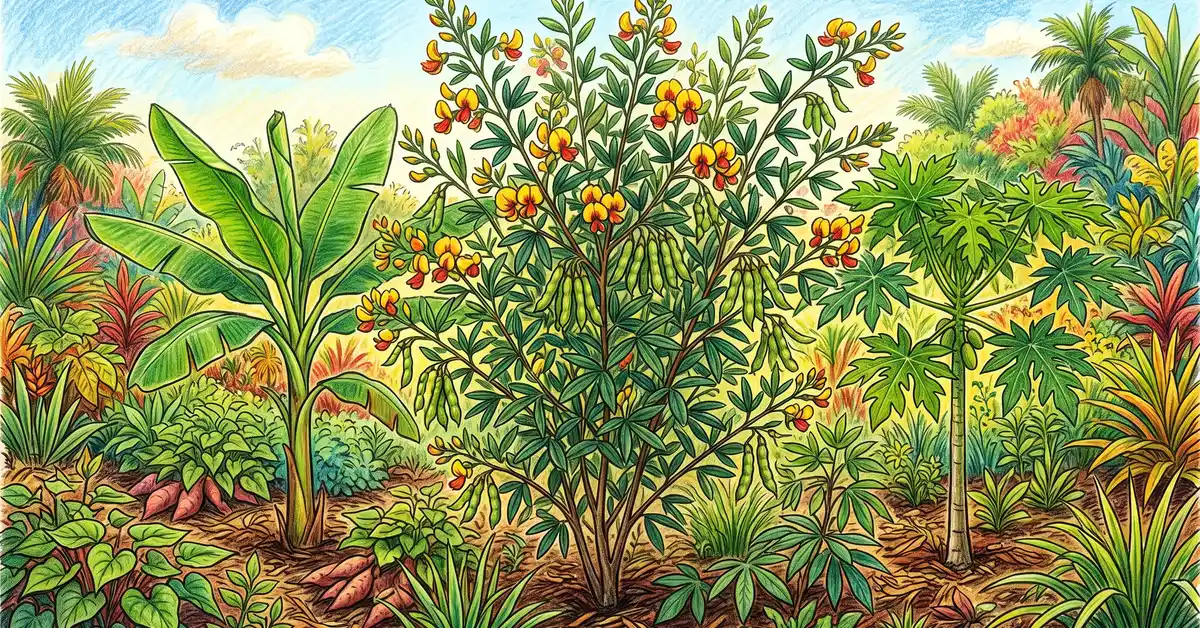
Stratification. Every plant occupies one of four vertical layers: emergent (the tallest, longest-lived), high, medium, and low. A small space can have all four if you choose smaller-statured species.
Succession. Plants follow a time-ordered sequence: placenta crops (fast, biomass-building, 30-90 days), secondary crops (1-3 years), then transitional and climax species. You start dense and let the slower species take over.
Density. Syntropic systems plant 3 to 5 times more individuals per square foot than a conventional vegetable garden. The plants are not competing in any harmful sense; they are cooperatively shading the soil, cycling nutrients, and creating the microclimate the climax species will inherit.
Pruning as primary management. Götsch's own piece, "Pruning instead of fertilizers and irrigation," is the clearest statement of the philosophy. Aggressive periodic pruning, with the cut material left on the soil as mulch, replaces the bag of fertiliser and the irrigation system. This is the single biggest mental shift for a gardener trained in traditional vegetable beds.
Yes, You Can Do This in Small Spaces (Here Is What Fits)
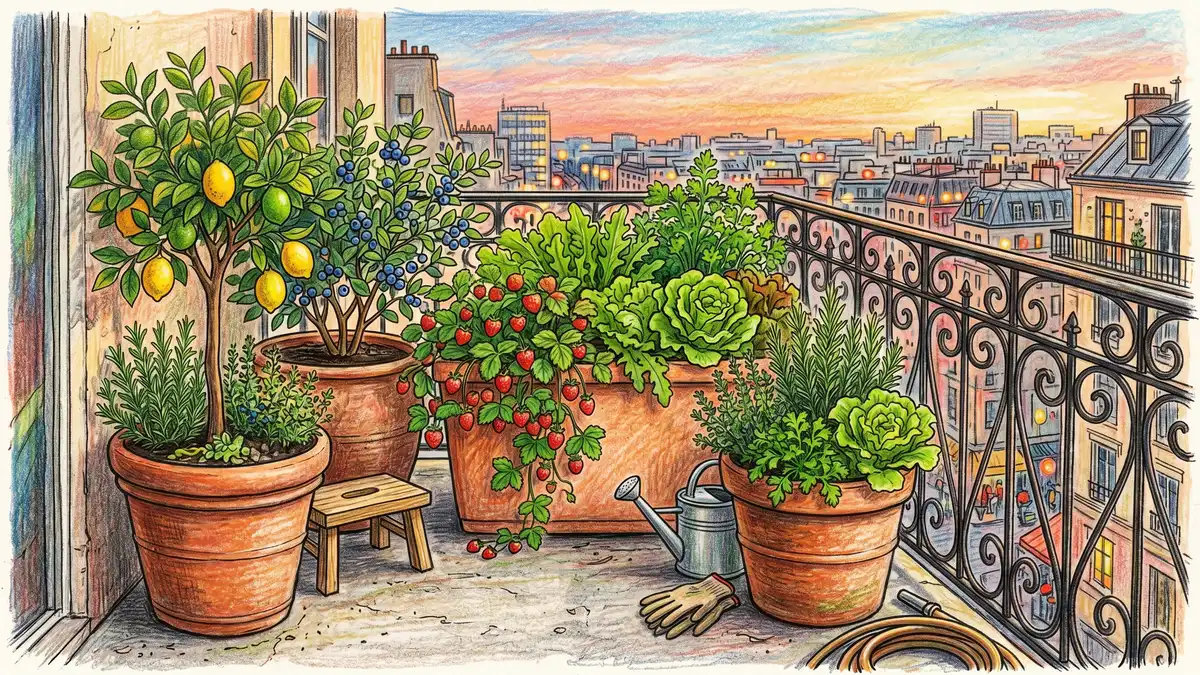
The common myth, perpetuated by photos of Götsch's 1,800-acre demonstration farm, is that syntropic only works at landscape scale. It doesn't. The principles compress.
Balcony (10 to 50 sq ft). Container-only systems. One dwarf fruit tree (lemon, fig, dwarf apple on M27 rootstock) in a 15-25 gallon pot, plus 2-3 large containers around it for berries (blueberry, currant), herbs (rosemary, thyme, oregano), and a salad/strawberry ground layer. Documented container syntropic systems show this working in roughly 30 square feet of balcony. You'll never replace your grocery store, but you can produce real fruit and a daily herb supply.
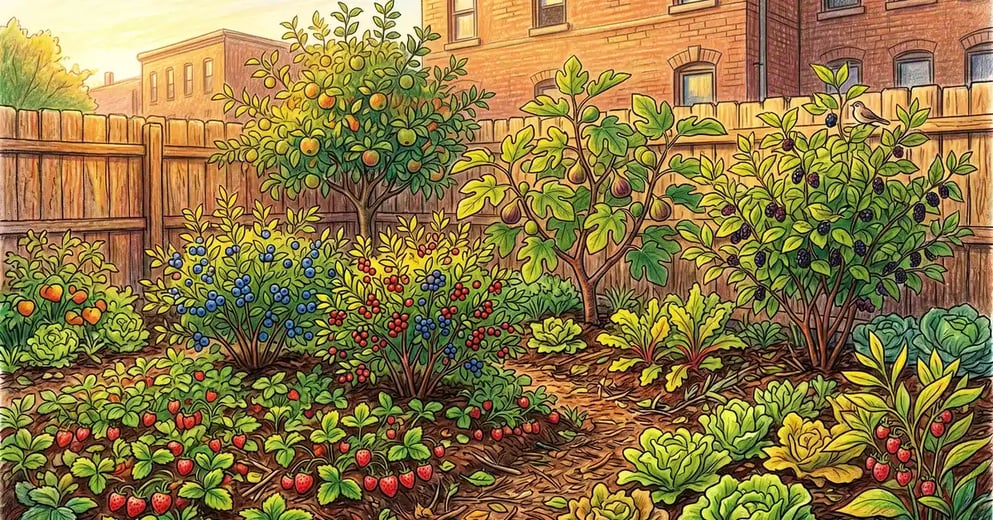
Courtyard or front yard (100 to 300 sq ft). This is the sweet spot. A single in-ground bed of this size can hold all four strata: one or two dwarf fruit trees, three to five berry bushes, a perimeter of herbs and brassicas, and dense placenta plantings of lettuce, radish, and beans filling every gap. Our syntropic garden first steps guide covers the setup sequence in detail.
Small backyard (300 to 1,000 sq ft). Multiple rows or beds. Now you can spread the strata across two or three parallel rows, separated by 3-foot paths, with different climax species in each row. This is where syntropic starts to feel like a miniature food forest.
Community garden plot (typically 100 to 200 sq ft). Same as the courtyard tier, with one constraint: many community gardens prohibit permanent trees. Adapt by using pollarded shrubs (mulberry, hazelnut kept at 6-8 ft / 1.8-2.4 m) as your top stratum instead. WSU Extension's community garden guide covers typical plot rules.
Why This Works: Function, Not Scale
Götsch's principles describe how plants relate to each other and to time, not how many acres you need. A square meter of dense, layered, well-pruned planting does the same ecological work as a hectare doing the same thing. The hectare yields more food in absolute terms, but the per-square-foot biology, soil-building, and water-cycling functions are essentially identical. This is why community gardeners, balcony growers, and small-yard practitioners can practice syntropic with intellectual integrity, not just as a watered-down version.
The 4 Strata, Compressed Into Small Spaces
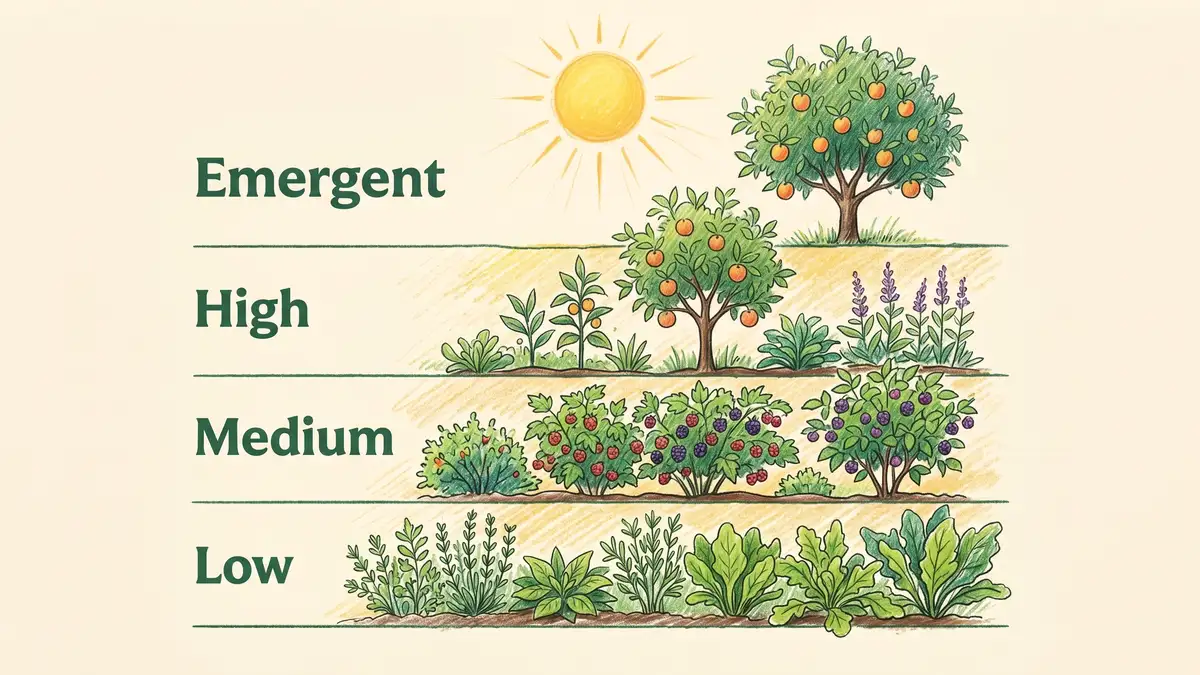
The same four strata Götsch uses at landscape scale work in a 100 sq ft bed if you swap the species for smaller-statured cousins. Götsch's own writing on life cycle, stratification and succession is the original reference.
Emergent (the canopy). In Bahia this is a 30 m timber tree. In your backyard this is a dwarf apple on M27 rootstock (mature height 5-7 ft / 1.5-2 m), a columnar apple, a dwarf pear, an Asian pear, or a dwarf peach. Epic Gardening's dwarf fruit tree round-up covers the rootstocks that actually stay small. For USDA zones 5 and colder, cold-hardy variety lists narrow the choice.
High stratum. Fig, mulberry (pollarded to 6 ft / 1.8 m), hazelnut, semi-dwarf plum or cherry. These are 6-12 ft (1.8-3.6 m) mature with regular pruning.
Medium stratum. Blueberry, currant, gooseberry, raspberry, blackberry, elderberry. Most temperate gardeners can find at least three of these in their climate zone. NCSU Extension's blueberry production guide covers the basics for the most adaptable berry.
Low stratum. Herbs (rosemary, thyme, oregano, sage, mint in containers), strawberries, leafy greens, brassicas. This is where most of your weekly harvest comes from, and where the placenta phase plays out.
Placenta crops (the time element). These are the fast crops that fill every gap during year one, feed you immediately, and condition the soil for the slower species: lettuce, radish, bush beans, sunflowers (yes, even in small spaces, for biomass), buckwheat, mustard, arugula. Götsch is emphatic that skipping the placenta phase is one of the most common mistakes in syntropic adoption.
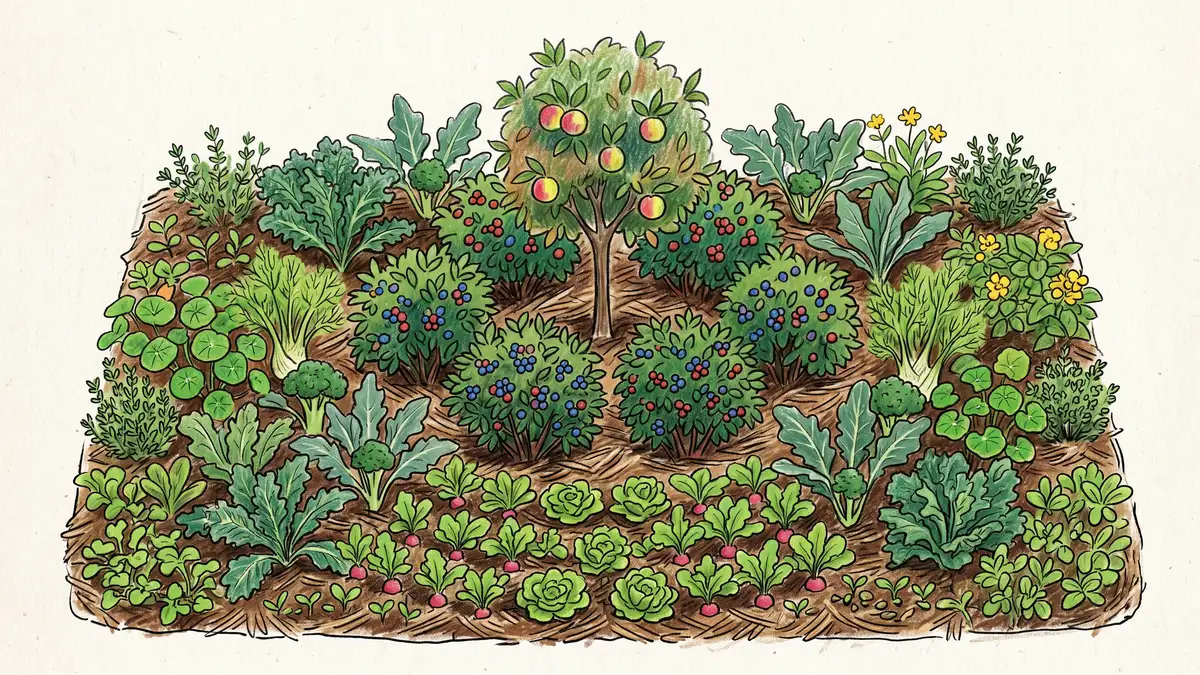
Setting Up a 100 to 300 Square Foot Bed: Step by Step
Sheet mulch the entire area in the fall
Lay cardboard directly on the lawn or existing weeds, then 4-6 inches (10-15 cm) of mixed organic matter on top: compost, straw, leaves, wood chips. By spring the area is ready to plant directly through the cardboard. This is closer to Charles Dowding's no-dig approach than to Götsch's preferred rotary tilling, but it's the right call for a small space where you can't run a tractor.
Plant the emergent and high strata first
Place one or two dwarf fruit trees and your tallest shrubs (fig, mulberry) early in spring. Position the tallest plant on the north side of the bed (in the Northern Hemisphere) so it doesn't shade the lower strata. Stake young trees and prune the leader hard, even at planting, to set a 5-7 ft (1.5-2 m) mature height target.
Add medium stratum berries around the trees
Three to five berry bushes (blueberry, currant, gooseberry) spaced roughly 2-3 ft (60-90 cm) apart, in a loose ring around the fruit tree base. This is denser than traditional planting recommendations, and that is the point.
Pack the gaps with placenta crops and perennial herbs
Lettuce, radish, bush beans, arugula, and buckwheat sown directly into every visible patch of soil. Add rosemary, thyme, oregano, and mint (in pots) along the edge. Aim for zero visible bare soil by 30 days post-planting.
Prune monthly through summer and chop and drop everything
RHS's chop and drop overview covers the technique. Cut back placenta crops as they finish (bush beans, lettuce bolting), prune the fruit tree and berries for shape and air flow, and lay every cutting on the soil as mulch. Do not compost it elsewhere and bring it back. The biomass cycle is meant to happen in place.
Pruning Is Where Most People Get It Wrong
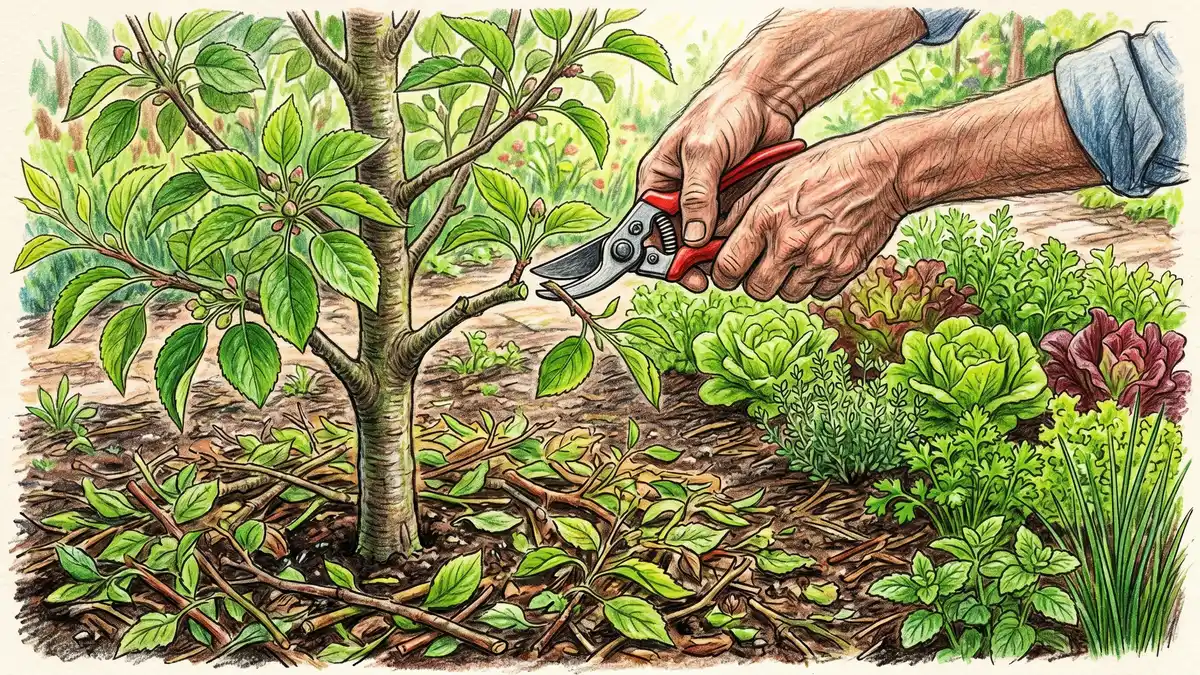
If you take only one thing from Götsch's writing, take this: pruning is not an optional cleanup task, it is the engine of the system. In "Pruning instead of fertilizers and irrigation," Götsch makes the case that hard, periodic pruning sends a signal to the surrounding plants (a hormonal flush, increased solar exposure, fresh biomass on the soil) that mimics the natural disturbance ecosystems evolved with. In a small space this matters more, not less, because there isn't enough mass for slow gradual leaf-fall to feed everything.
The typical adoption mistake is timid pruning. Practitioners trained in conventional fruit-tree pruning take off 10-20 percent of the canopy and call it done. Syntropic pruning often removes 50-70 percent of standing biomass in a single session, with the cut material chopped fine and spread under the trees. Our deep guide to pruning in syntropic agriculture walks through what to cut, when, and how aggressive to go.
Rough schedule for a small temperate-climate syntropic bed:
- Late winter (zones 5-8): hard prune fruit trees and berry bushes, before bud break. Lay all cuttings on the soil.
- Late spring: pinch placenta crops that are bolting, lay them on the soil.
- Mid-summer: medium prune of berries and fruit trees if growth is excessive. Chop and drop.
- Fall: final cleanup pruning, light, with all biomass laid down as winter mulch.
What It Yields and What It Costs
Realistic expectations matter for a curious gardener weighing whether to start. A small syntropic plot is not going to replace your grocery store, but it does produce real food.
| Space | Setup Cost (2026) | Year 1 Yield | Year 3 Yield | Weekly Time |
| Balcony, 30 sq ft | $200-400 | ~5 lb herbs, salad, strawberries | ~15-20 lb + first tree fruit | 1-2 hrs |
| Courtyard, 150 sq ft | $400-800 | ~30-50 lb mixed produce | ~80-120 lb + tree fruit + berries | 2-3 hrs |
| Backyard, 500 sq ft | $700-1,500 | ~80-120 lb mixed produce | ~200-300 lb + tree fruit + berries | 3-4 hrs |
| Community plot, 200 sq ft | $150-400 (often subsidised) | ~40-60 lb mixed produce | ~100-150 lb (pollarded canopy) | 2-3 hrs |
Sources: Practitioner case studies compiled from, and SIT cost-benefit framework analysis of syntropic farming.
Yields drop sharply if you skip the placenta phase or under-prune. A well-managed 150 sq ft bed in year 3 will out-yield a poorly managed 500 sq ft bed.
Want the broader picture of how this fits with permaculture?
Our companion article on explains where the two approaches converge and where they diverge in practice.
Read the ComparisonClimate Zone Adaptations
Götsch's original system was tropical. Translating to temperate North America requires some species substitution. Cold-climate syntropic adaptations are now well documented, and our deeper piece on syntropic agriculture in temperate climates covers the strategy. Quick guidance by USDA zone:
Zones 3-5 (cold). Lean heavily on cold-hardy berries (Saskatoon, currant, gooseberry, hardy raspberry), serviceberry as your high stratum, and accept that the placenta phase will be shorter. Many practitioners switch from annual to biennial placenta cycles here.
Zones 6-7 (cool temperate). The full slate of dwarf fruit trees and most berries are available. Mulberry and fig may need winter protection or container culture so you can move them indoors.
Zones 8-9 (warm temperate). Closest match to Götsch's original conditions. You can run figs, citrus, persimmon, pomegranate as canopy, with year-round placenta crops in many regions.
Zone 10+ (subtropical/tropical). Same species library as the Brazilian original. You can replicate the textbook system closely.
Common Mistakes in Small-Space Syntropic Adoption
Mistake 1: Planting Standard Trees, Not Dwarfs
A standard apple tree on seedling rootstock will reach 25 ft (7.6 m) and shade out everything below within five years. In a 150 sq ft bed this turns your syntropic system into a single fruit tree with bare ground beneath. Always use dwarfing rootstock (M27, M9, G.41) for apples; dwarfing varieties for peach, pear, and plum. Cold-hardy self-pollinating dwarf options are widely available.
Mistake 2: Treating it like a vegetable garden. Conventional vegetable gardening prizes neat rows and a foot of space between plants. Syntropic small-space systems look chaotic by comparison. If you can see soil in mid-summer, you have not planted densely enough.
Mistake 3: Skipping the placenta. The placenta crops (lettuce, radish, bush beans, sunflowers, buckwheat) seem optional because they're "just" annuals. They are not optional. Without them, your perennial transitionals don't get the soil priming and biomass return they need, and the system stalls.
Mistake 4: Watering instead of mulching. A heavy chop-and-drop mulch layer (3-6 inches / 7-15 cm of cut biomass) reduces irrigation needs by roughly 50-70 percent in established systems. Most small-space practitioners over-water in years 1-2 because they're nervous; you'll know you've over-watered when the soil stays soggy and the placenta crops bolt early.
Mistake 5: Trying to apply 1-meter row spacing. Götsch's 1 m row spacing works on a tractor-managed farm. In a 4-foot raised bed, ignore it. Plant in a tight cluster pattern instead, with the strata radiating out from a central canopy species. 7 mistakes in temperate-climate syntropic food forests covers more of these adoption errors.
The Bottom Line
Syntropic agriculture works in small spaces because the principles describe relationships between plants, not minimum acreage. A 100 sq ft bed with one dwarf fruit tree, a few berry bushes, herbs, and dense placenta crops can fully express stratification, succession, density, and pruning-driven biomass cycling. Use dwarfing rootstocks, plant 3-5x denser than feels comfortable, prune hard, and chop and drop everything you cut. Year 3 yields from a well-managed 150 sq ft bed reach 80-120 lb of mixed produce per year, with declining external inputs and 2-3 hours of weekly maintenance.
Get the Weekly Dig
One practical permaculture guide a week, written for gardeners who do this on weekends: food forest and guild designs that produce. Free, no spam, unsubscribe any time.
Join the Weekly DigFrequently Asked Questions
What is the smallest space you can do syntropic agriculture in?
Around 30 square feet (a small balcony or front step) is the practical minimum to express all four strata, using containers for everything. Below that, you can still apply individual principles (dense planting, chop and drop, succession) but you won't have room for an emergent tree. The 100 to 300 sq ft range is the sweet spot for full in-ground systems.
Do I need a fruit tree to call it syntropic?
Not strictly, but you need something playing the emergent role. In a community garden plot or container system that prohibits trees, a pollarded mulberry, a tall pollarded hazelnut, or even a sunflower can fill the emergent stratum in a placenta phase. The strata matter more than the specific species.
How dense should I plant my small syntropic garden?
Three to five times denser than a conventional vegetable bed feels right. If you can see bare soil between mature plants in mid-summer, plant more. Götsch and his followers consistently emphasise that under-planting is a far more common error than over-planting in this system.
Will the trees shade out the lower layers?
Only if you let them. The whole point of aggressive pruning is to keep the canopy controlled so the medium and low strata still get sun. Plan for the dwarf tree to be pruned to 5-7 ft (1.5-2 m), not 10-15 ft (3-4.5 m). For most cultivars on M27 or M9 rootstock this is straightforward.
How does syntropic differ from companion planting?
Companion planting pairs species that benefit each other in the short term (basil with tomatoes, beans with corn). Syntropic adds time and vertical structure: you're not just placing two helpful neighbors, you're choreographing a full ecological succession across years and a complete vertical stack. Our breakdown of syntropic vs permaculture covers the broader theoretical context, and our piece on Ernst Götsch and the science of syntropic farming covers Götsch's primary research.
Can I do syntropic in containers only?
Yes, with caveats. Container systems can express stratification and succession in miniature, but the chop-and-drop biomass cycle is harder to sustain because root volume is limited. Most successful container practitioners supplement with imported compost in years 1-2, then transition toward in-place biomass once the system stabilises.
How long until my syntropic garden produces meaningfully?
The placenta crops (lettuce, radish, beans, herbs) produce within 30-90 days of planting. The medium stratum berries produce in year 2 or 3. The emergent fruit tree typically produces a small crop in year 3 and a meaningful crop by year 4-5. Götsch is famous for the line "the system needs to be installed once; then it works for decades."
What about pests in a dense small-space system?
High plant diversity in syntropic systems generally suppresses pest outbreaks compared to monocultures, but you'll still see aphids, slugs, and the usual urban garden challenges. The standard organic responses (hand-picking, nasturtium trap crops, encouraging birds) apply. Our guide to companion planting for pest control covers the practical interventions.
Resources
- Agenda Gotsch, What Is Syntropic Farming
- Agenda Gotsch, Pruning Instead of Fertilizers and Irrigation
- Agenda Gotsch, Life Cycle, Stratification and Succession
- Agenda Gotsch, 11 Key Phrases of Ernst Götsch
- USDA, Agroforestry Overview
- USDA NRCS, Small-Scale and Urban Agriculture
- USDA NRCS, Conservation Practice Standards
- UC Press Elementa, Agroforestry in Temperate-Climate Commercial Agriculture
- PMC, The Impacts of Agroforestry on Agricultural Productivity
- PMC, Quantitative Appraisal of Agroforestry Studies
- PMC, Species Mixing Promotes Plant Biomass Accumulation
- PMC, Trees Shape the Soil Microbiome of a Temperate Agrosilvopastoral System
- British Ecological Society, Impacts of Polycultural Cropping on Crop Yields and Biodiversity
- SIT, A Cost-Benefit Framework Analysis of Syntropic Farming (PDF)
- WSU Extension, So You Want to Start a Community Garden (PDF)
- NCSU Extension, Blueberry Production Guide
- UMN Extension, Choosing a Strawberry Production System
- Mountain Time Farm, The Economics of Syntropic Agroforestry
- Mountain Time Farm, The Principles of Syntropic Agroforestry
- Propagate Ag, Cold Climate Syntropic Agriculture
- ARC2020, Beyond Agroforestry: An Introduction to Syntropic Farming