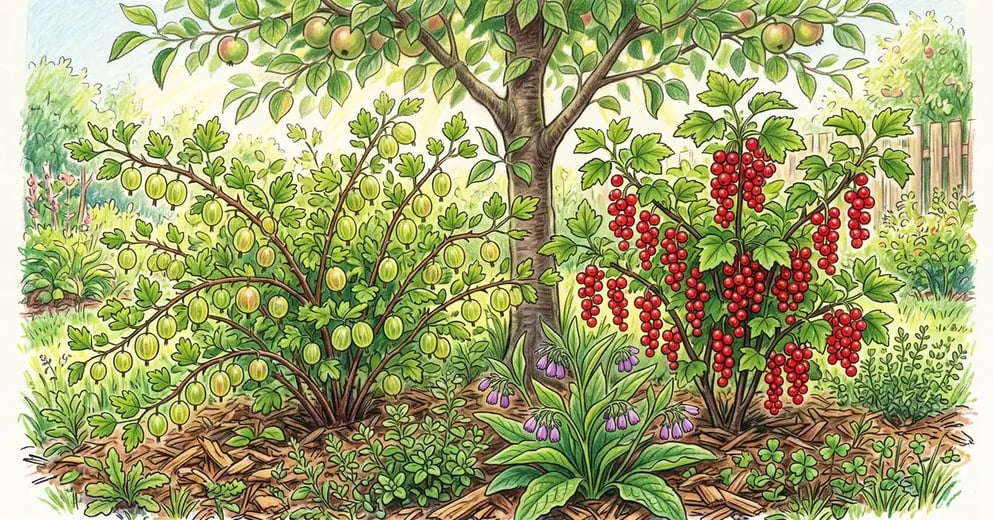

Most fruit wants full sun, which makes the shrub layer of a food forest a hard place to fill. Gooseberries and currants are the exception. They are the rare productive fruit that tolerates the dappled light under an apple or a hazel, and in hot-summer regions they actually prefer it. stratifying seed over winter
They are also the only common backyard fruit that some US states still regulate. Before you plant, you need to know both things: where these shrubs fit in your food forest design, and whether your state lets you put them in the ground.
What you will learn:
- How much shade Ribes really tolerate, and what it costs you in yield
- Realistic pounds per bush, and how many bushes a household needs
- Spacing and placement under an existing canopy
- Which states still restrict planting, and how to check yours
- Why black currants need different pruning than gooseberries and red currants
Key Takeaway
Gooseberries and currants earn their place in a food forest by producing 6 to 10 pounds per bush in light that would starve a blueberry or a peach. Put them where nothing else will fruit, then check your state's Ribes rules before you order plants.
How Much Shade Will Gooseberries and Currants Actually Take?
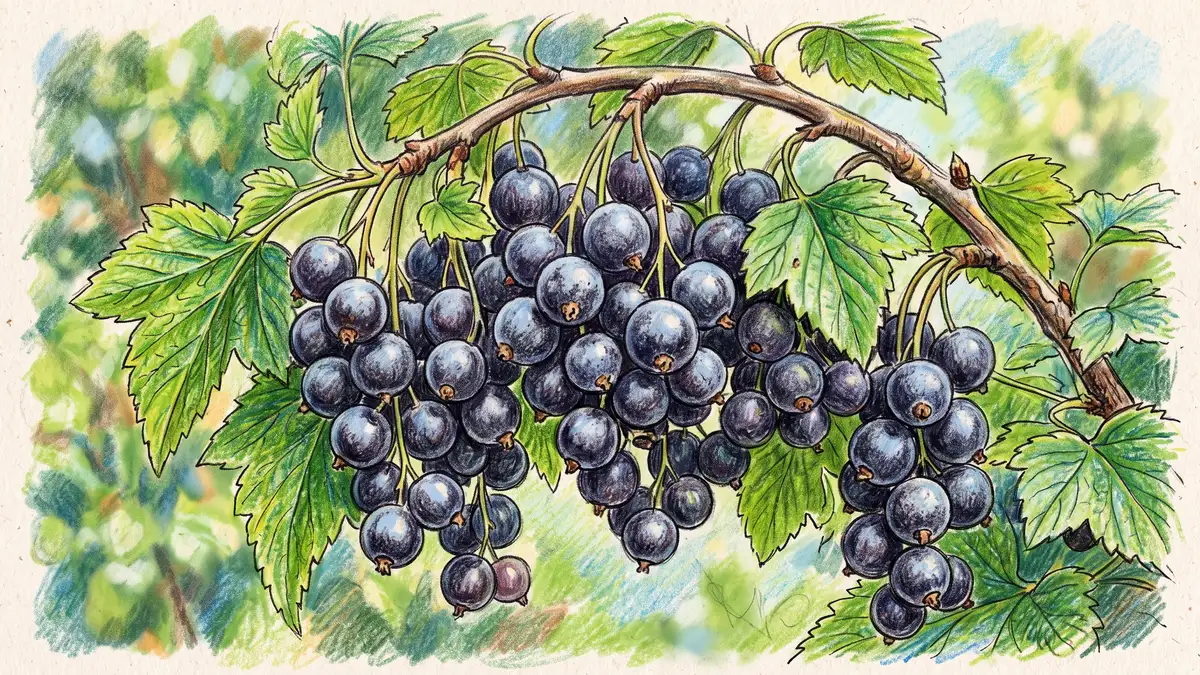
Enough to matter, but not enough to make them a deep-shade crop. Cornell Cooperative Extension states that unlike most other fruits, currants and gooseberries grow well in partial shade and prefer cool, moist growing areas, naming northern slopes, the shaded sides of buildings, and shady arbours as suitable sites.
The University of Minnesota Extension adds the honest caveat: they grow in full sun to partial shade, but you get more fruit in full sun. Utah State University Extension goes further for hot climates, recommending a site that gets some shade during the hottest part of the summer, such as the east side of a wall.
Put those together and the practical rule is this: aim for four to six hours of direct sun, ideally morning sun with afternoon shade. That is precisely the light budget available on the north edge of a young orchard row or beneath a maturing nut tree that has not yet closed its canopy. If you have not mapped your light yet, the seven layers of a food forest is the framework for deciding what goes where.
Why This Works: Niche Stacking
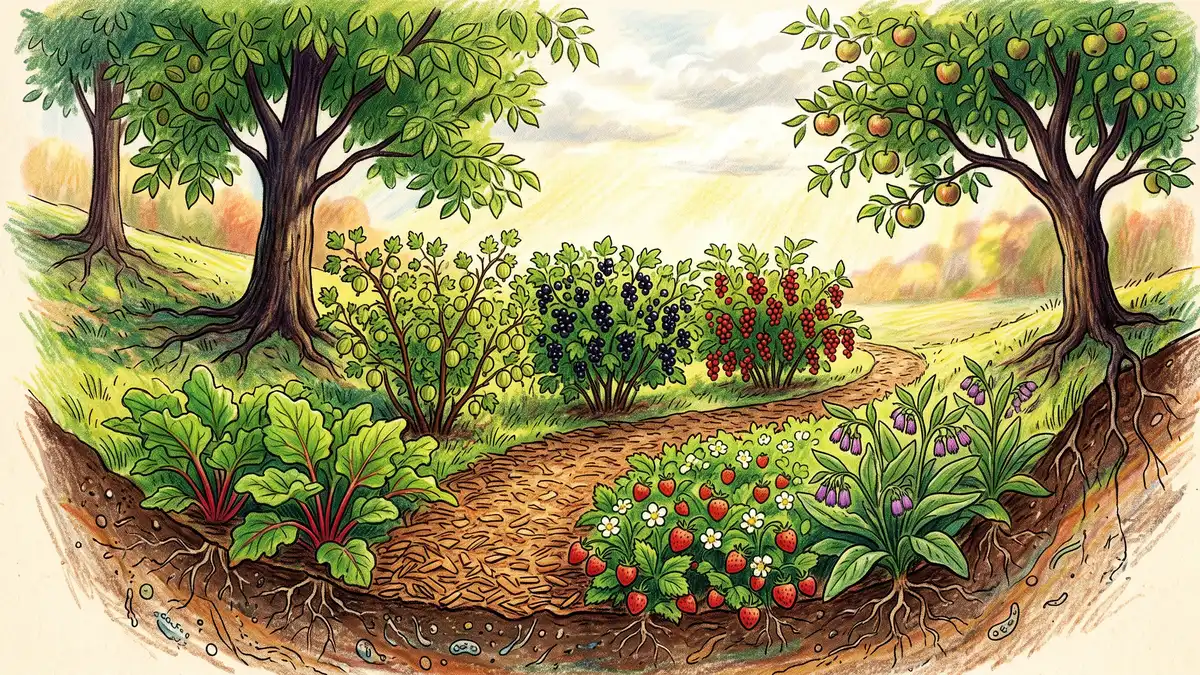
A food forest is only more productive than an orchard if each layer harvests light the layer above did not use. Ribes are the classic example of niche stacking: they evolved as woodland-edge shrubs, so the filtered light under a canopy is their native condition rather than a compromise. That is the same reasoning behind an apple tree guild, just applied to the shrub tier.
What Yield Should You Plan For?
Enough that ten bushes will bury you in fruit. Utah State University Extension puts average yield from one healthy mature gooseberry bush at 8 to 10 pounds (3.6 to 4.5 kg). The University of Minnesota Extension gives a volume figure of up to 4 quarts per mature currant or gooseberry shrub, which is roughly 6 to 7 pounds.
Timing is fast by tree-fruit standards. Minnesota Extension says expect fruit one to three years after planting. Oregon State University Extension is more specific: a light crop the year after planting, with mature production by the third or fourth year.
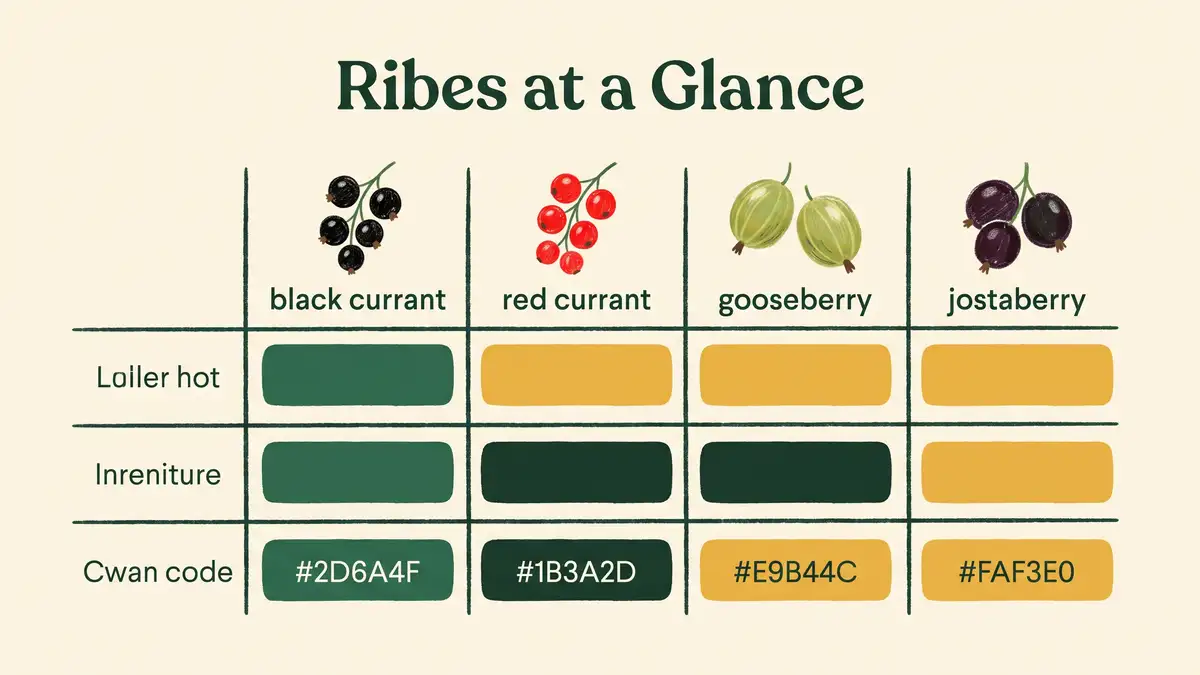
| Crop | Yield Per Mature Bush | Full Production | Best Use |
| Gooseberry | 8-10 lb (3.6-4.5 kg) | Year 3-4 | Fresh, pies, preserves |
| Red or white currant | Up to 4 qt (about 6-7 lb) | Year 3-4 | Jelly, high pectin |
| Black currant | Up to 4 qt (about 6-7 lb) | Year 3-4 | Cordial, jam, freezing |
| Jostaberry | Variable, often disappointing | Year 3-4 | Trial planting only |
Sources: Utah State University Extension, Gooseberries in the Garden, University of Minnesota Extension, Oregon State University Extension EM 9182
Worth flagging the jostaberry row. Oregon State reports that jostaberry cultivars in their coastal trial plots have not yielded well. It is a fun plant and a thornless one, but do not build a production plan around it.
How Do You Space Them Under an Existing Canopy?
Closer than you would space a fruit tree, further than you think for black currants. Cornell recommends 3 to 5 feet (0.9 to 1.5 m) between plants in the row and 8 to 10 feet (2.4 to 3 m) between rows. Utah State gives the same figures for gooseberries.
Oregon State splits it by species: gooseberries and red currants at 3 to 4 feet apart, black currants at 4 to 5 feet, rows 8 to 10 feet. Black currants are simply bigger and more vigorous.
Mature size sits at 3 to 5 feet tall and about as wide, occasionally reaching 5 to 6 feet on good ground. That is small enough to slot between young trees without either crop losing out for the first decade.
Pick the coolest, dampest spots first
North-facing slopes, the north or east side of a building or hedge, and the shaded edge of a canopy gap. These are the sites your sun-hungry crops cannot use.
Work organic matter 6 to 8 inches deep before planting
Oregon State recommends incorporating organic matter 6 to 8 inches (15 to 20 cm) deep. Cornell stresses rich, well-drained soil with good moisture-holding capacity and warns that light sandy soils are a poor fit.
Mulch, and never cultivate deeply
Utah State warns that deep cultivation near gooseberries damages their shallow, fibrous roots, and recommends drip irrigation plus surface mulch instead. Our mulching guide covers depths and materials.
Leave harvest access on at least two sides
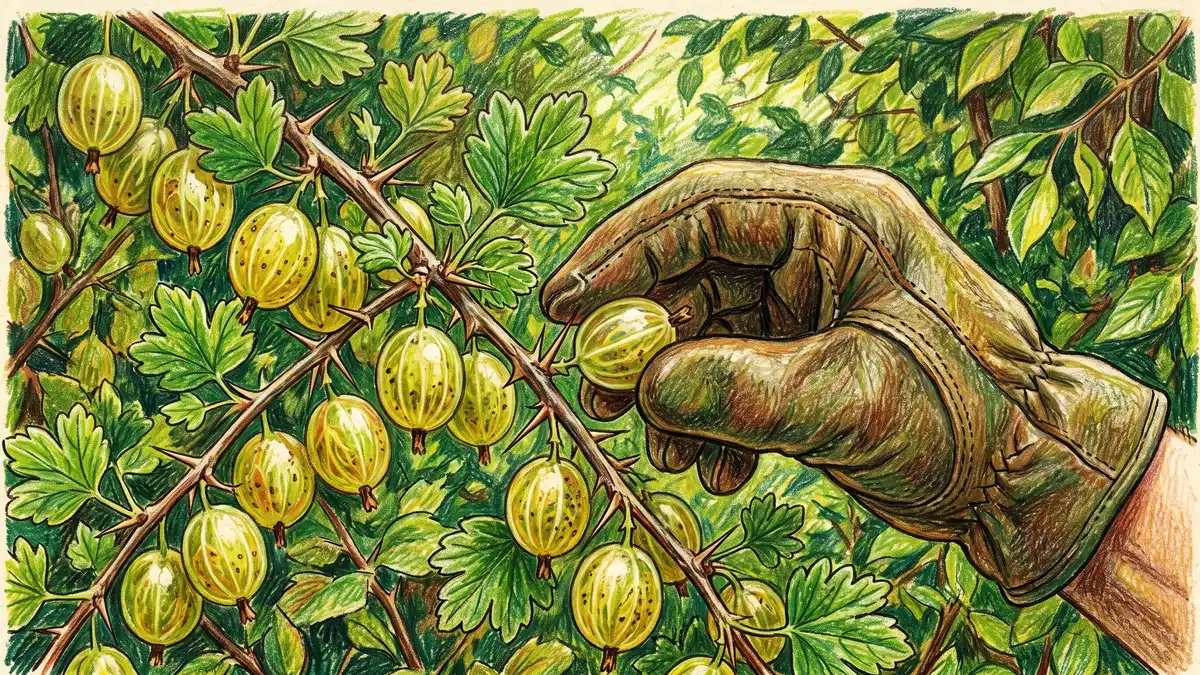
Gooseberries are thorny and currants fruit in the middle of the bush. Plan a reachable path now or you will lose a share of every crop to the parts you cannot get to.
Are Currants and Gooseberries Legal Where You Live?
Usually yes, sometimes with conditions, and it depends on your state. The reason is white pine blister rust, caused by the fungus Cronartium ribicola, introduced to eastern North America around 1909. UMass Amherst explains that the pathogen needs two hosts to complete its life cycle: five-needle white pines and certain Ribes species.
That alternating cycle drove a federal quarantine in the 1920s that banned planting and sale of black currants nationally. Federal restrictions were later relaxed, but state rules did not all follow.
Michigan State University Extension confirms Michigan requires a permit to plant currants and gooseberries. Massachusetts restricts planting in a specific list of towns, published by UMass Extension. University of Maine Extension has fielded enough questions about it to publish a page confirming red currants are allowed there. The pattern is regional, not national, so check your own state department of agriculture before ordering.
Check Before You Buy, Not After
European black currant (Ribes nigrum) is the most susceptible species and the one most often restricted. Where rules apply, they usually permit immune or resistant cultivars such as Consort, Crusader and Titania. Nurseries ship across state lines without checking local ordinances, so the responsibility for compliance is yours.
Why Do Black Currants Need Different Pruning?
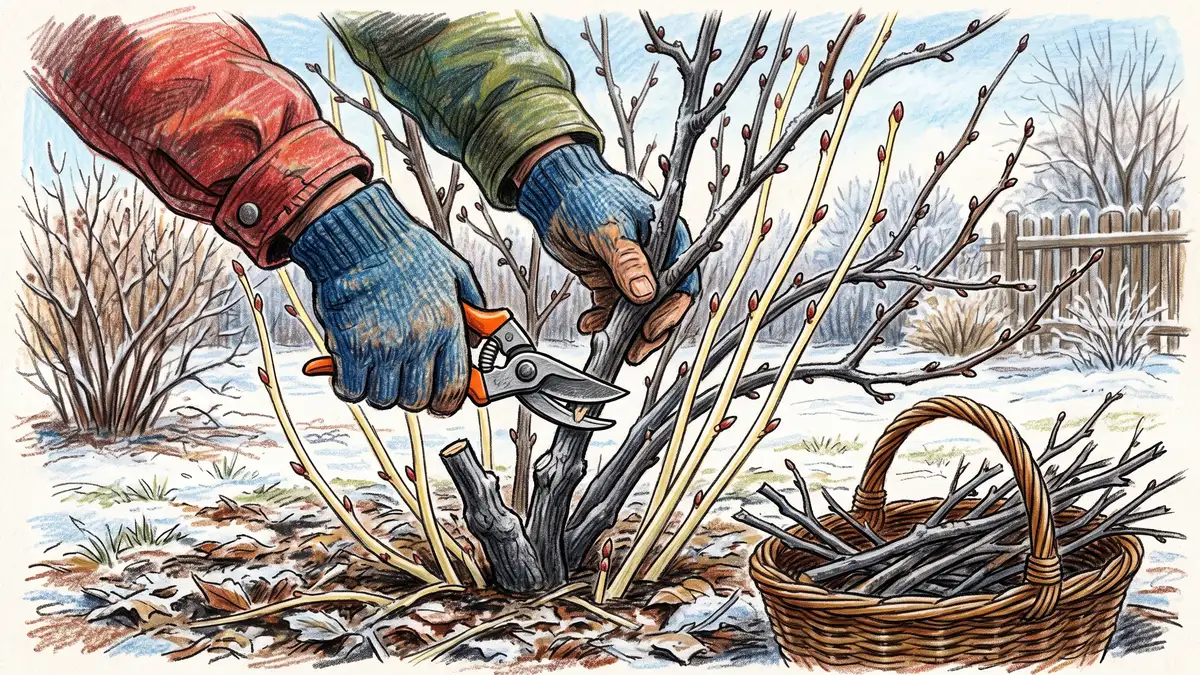
Because they fruit on different wood. Oregon State explains that red currants and gooseberries carry most of their fruit on spurs of two and three-year-old wood. Black currants fruit mainly on wood produced the previous season.
The practical consequence: with black currants you are cutting hard every year to force new shoots. With gooseberries and red currants you are protecting a framework and only removing the oldest canes. Cornell's rule for both is to remove canes older than four years and keep a strong plant at around eight bearing canes, with younger canes always coming through to replace the oldest.
Do it in late winter while the bushes are dormant and you can see the structure. Old wood is darker and rougher; new wood is paler and smoother. That single visual cue is most of the skill.
Key Takeaway
Prune black currants for renewal and gooseberries and red currants for structure. Either way, no cane stays past its fourth year, and a healthy mature bush carries roughly eight bearing canes.
Frequently Asked Questions
Why are gooseberries and currants illegal in some places?
They are an alternate host for white pine blister rust, a fungus introduced around 1909 that kills five-needle white pines. The fungus cannot go pine-to-pine directly, so it needs Ribes leaves as a stepping stone. That biology drove a federal ban in the 1920s protecting the white pine timber industry. Federal restrictions have since been relaxed, but some states kept their own rules. Michigan requires a permit and Massachusetts restricts planting in named towns, so check with your state department of agriculture before you order.
How big do currant bushes get?
Most currants and gooseberries mature at 3 to 5 feet (0.9 to 1.5 m) tall with a similar spread, and on rich soil some cultivars will push to 5 or 6 feet. Black currants are generally the largest and most vigorous, which is why Oregon State recommends spacing them 4 to 5 feet apart while gooseberries and red currants go at 3 to 4 feet. Rows want 8 to 10 feet between them for access. In a food forest that footprint slots neatly between young trees.
Can I grow gooseberries in full shade under a mature tree?
Not really. Partial shade is different from full shade. Cornell describes them as growing well in partial shade and preferring cool, moist sites, but Minnesota Extension is clear that yields rise with more sun. Under a dense mature canopy you will get a living plant and very little fruit. Target four to six hours of direct sun, preferably morning, with shade through the hottest afternoon hours. A canopy gap or the northern edge of a planting works better than the middle of it.
What hardiness zone do gooseberries need?
Utah State University Extension puts most gooseberry cultivars at USDA Zones 3 to 6, surviving mid-winter lows around -40°F (-40°C) and requiring a minimum of 1,000 chill hours for buds to break. That chill requirement is the limiting factor in the South rather than cold. Check your zone against the USDA Plant Hardiness Zone Map, and if you are in Zone 8 or warmer treat these as experimental. Our guide to a food forest in Zone 5 covers the cold end of the range.
How many bushes do I need for a family?
Using Utah State's figure of 8 to 10 pounds per mature gooseberry bush, six bushes gives roughly 50 to 60 pounds per year, which is plenty for fresh eating plus preserves for a household of four. Ten bushes would put you at 80 to 100 pounds, comfortably into surplus territory. Plant a mix of species rather than one: gooseberries and red currants for fresh eating and jelly, black currants for cordial and freezing. For the wider shrub tier, see our roundup of the best berry bushes for food forests.
Get the Weekly Dig
One practical permaculture guide a week, written for gardeners who do this on weekends: food forest and guild designs that produce. Free, no spam, unsubscribe any time.
Join the Weekly DigResources
- Cornell Cooperative Extension, Guide to Growing Currants and Gooseberries
- University of Minnesota Extension, Growing Currants and Gooseberries in the Home Garden
- Utah State University Extension, Gooseberries in the Garden
- Oregon State University Extension EM 9182, Growing Berries on the Oregon Coast
- Washington State University Extension C025, Currants and Gooseberries
- UMass Amherst, White Pine Blister Rust and Ribes Species
- UMass Extension, Currants and Gooseberries: Prohibited Towns in Massachusetts
- Michigan State University Extension, Michigan Permit Requirement for Ribes
- University of Maine Extension, Are Red Currant Plants Allowed in Maine?
- PNW Plant Disease Handbook, Gooseberry and Currant Powdery Mildew
- USDA Agricultural Research Service, Plant Hardiness Zone Map