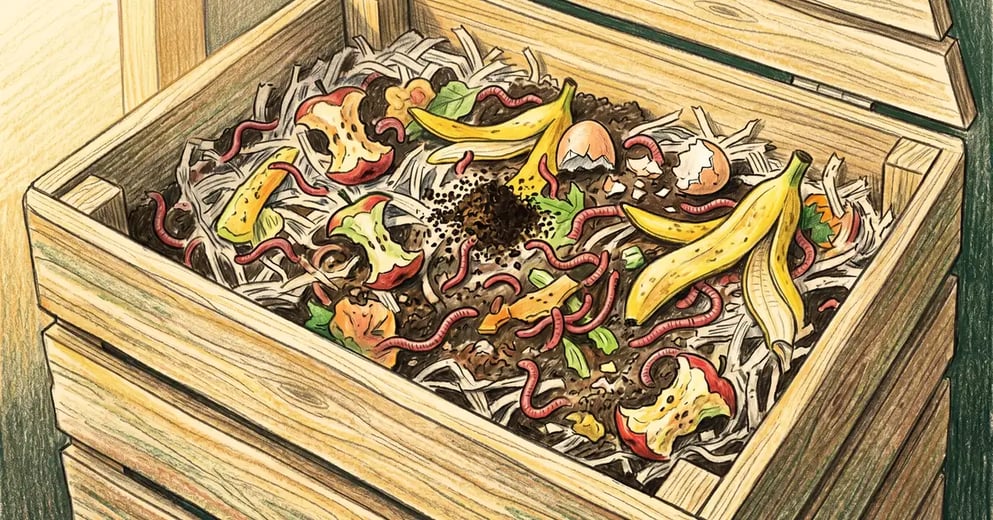

What Can You Feed Composting Worms? The Complete List
Your red wigglers are not picky — but they are specific. Feed them the right things, in the right amounts, and a single pound of worms will process up to half a pound of kitchen scraps a week into the richest plant food on the planet. Feed them the wrong things, and your bin goes sour, the worms try to escape, and your kitchen smells like a forgotten gym bag. banana peel fertiliser myth vs science rabbit manure as worm food
The good news: the rules are short, the science is clear, and almost every feeding mistake is reversible in under an hour. This guide gives you the complete yes-and-no food list backed by Cornell, NC State, UF, and Oregon State research — plus exactly how much, how often, and where to put it.
What you'll learn: the complete yes-food list (including a few you probably didn't know worms love), the never-feed list with the actual biochemical reason for each, how to calculate feeding amounts by worm weight, the pocket-feeding rotation used by commercial vermicomposters, and how to spot overfeeding before it crashes your bin.
Key Takeaway
Composting worms thrive on a mix of soft fruit and vegetable scraps, coffee grounds, crushed eggshells, and shredded brown paper or cardboard. Skip meat, dairy, oily foods, large amounts of citrus, onions, garlic, and any pet waste. Feed roughly half the worms' body weight per week in small, buried portions — and always bury the food under bedding to keep pests out.
Why Worms Don't Actually "Eat" Your Food Scraps
Before you can pick the right foods, it helps to understand something counter-intuitive: worms don't eat food. They eat microbes. Red wigglers have no teeth. They have a muscular gizzard that grinds what arrives in their mouth, but what arrives is almost entirely the bacteria and fungi colonising your decomposing scraps. The peel, the coffee ground, the eggshell — those are the microbes' food. The worms farm the microbes. Red Worm Composting and decades of vermicomposting research confirm that worms derive most of their nutrition from the microbial biofilm coating decomposing matter.
This one fact explains every feeding rule that follows. It is why fresh, whole, dense foods fail — microbes haven't colonised them yet. It is why chopped, frozen-and-thawed, or slightly aged scraps get devoured — the microbes have already done half the work. And it is why oily, salty, and antimicrobial foods poison the bin — they kill the very organisms the worms depend on.
Why This Works — the Permaculture Angle
A worm bin is a miniature food-web: worms at the top, microbes in the middle, organic matter at the base. You aren't feeding one species — you're tending an ecosystem. Every permaculture principle that governs healthy soil applies here in miniature: diversity, decomposition cycles, and working with biology rather than against it. This is why the best worm farmers sound more like ecologists than livestock keepers.
The Yes List: What Composting Worms Love
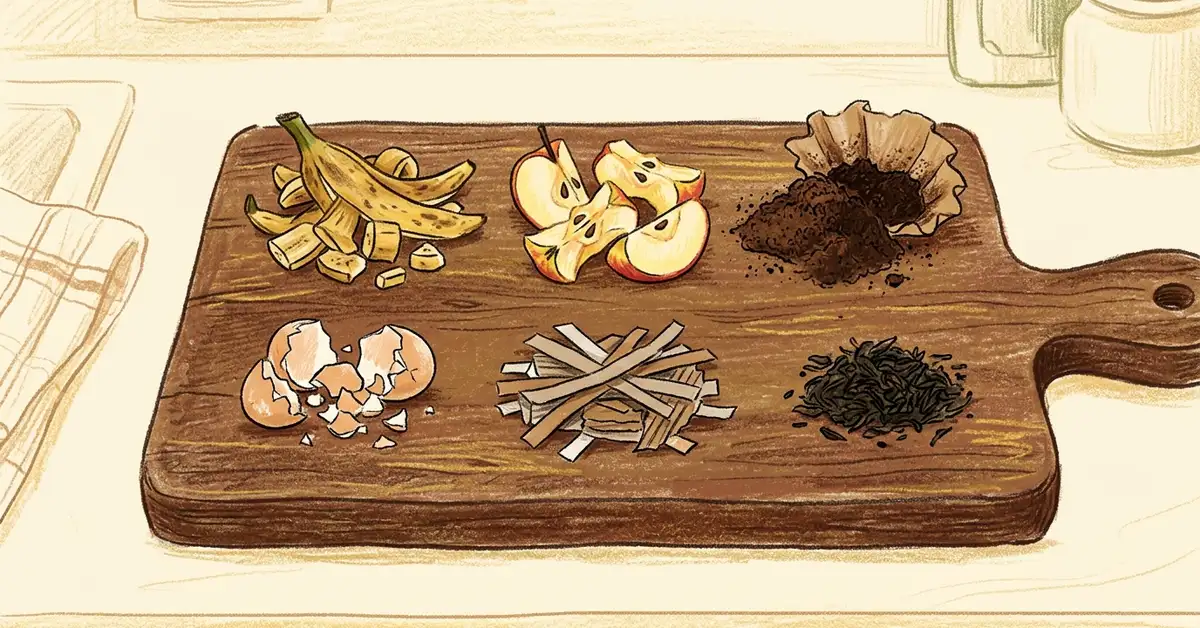
Think of your worm bin's ideal menu in three groups: nitrogen-rich "greens" (kitchen scraps), carbon-rich "browns" (bedding that doubles as food), and mineral helpers (eggshells and similar). A balanced mix across all three keeps moisture, pH, and airflow stable — the three levers that govern everything else.
Fruit and vegetable peels are the mainstay. Banana peels, apple cores, pear cores, melon rinds, cucumber ends, squash skins, lettuce trimmings, broccoli and cauliflower stems, cabbage outer leaves, carrot peelings, and pumpkin guts are all excellent. The smaller you chop them — or better, blend or freeze-then-thaw — the faster the microbes colonise and the faster the worms can feed. Research summarised by Red Worm Composting has shown meaningful improvements in worm growth when feedstock particle size drops.
| Feed Generously | Feed in Moderation | Notes |
| Fruit peels and cores, vegetable scraps, melon rinds, pumpkin | Potato peels (some sprout) | Chop or freeze to speed things along |
| Spent coffee grounds and paper filters | Keep coffee <12% of total bedding | Not acidic once brewed — a common myth |
| Tea leaves, plastic-free tea bags | Commercial tea bags only if certified plastic-free | Standard bags shed microplastics |
| Crushed eggshells | — | Calcium + natural pH buffer |
| Shredded corrugated cardboard, plain newspaper, brown paper | Newspaper with coloured ink is fine; glossy/coated paper is not | Doubles as bedding |
| Aged horse, cow, or rabbit manure (3+ months) | Fresh manure will heat and kill worms | Ask about herbicide-free pasture |
| Stale bread, cooked grains, pasta, rice | Small amounts, mixed in well | Clumps go anaerobic if piled |
| Aged (not fresh) grass clippings, untreated | Always thin layers, never fresh mats | Fresh clippings mat and suffocate worms |
Sources:.
Coffee grounds deserve a special mention. Despite the popular myth, brewed grounds are close to pH neutral and are one of the best nitrogen sources you can give a worm bin. worm bins sized for kitchen scraps Uncle Jim's Worm Farm recommends keeping coffee at under 12% of the bedding volume — any more and potassium levels can climb, interfering with nutrient balance downstream.
Crushed eggshells are the single highest-leverage addition you can make. They are about 33% calcium carbonate, which worms use to build reproductive structures and which acts as a slow-release pH buffer. Red Worm Composting recommends grinding them as finely as possible — a handful of powder stored in a salt shaker is a common trick — and dusting the bin every time you feed.
Tea bags hide a problem most people never notice: many commercial brands are plastic or plastic-bonded. A 2019 McGill study summarised by WasteLoop found that steeping a single plastic tea bag releases roughly 11.6 billion microplastics and 3.1 billion nanoplastics. Loose-leaf tea and certified plastic-free brands are the only forms that belong in a worm bin.
Aged manure — horse, cow, rabbit, sheep, goat — is one of the richest worm foods you can find. Red wigglers earned the common name "manure worms" for a reason. But fresh manure will heat to 150°F as thermophilic bacteria colonise it and will cook your worms. Age it at least three months in an open pile before introducing it. Also ask the source farmer about persistent broadleaf herbicides like aminopyralid — these survive animal digestion and composting and can ruin gardens when applied as finished castings.
The Never-Feed List (And the Science Behind Each One)
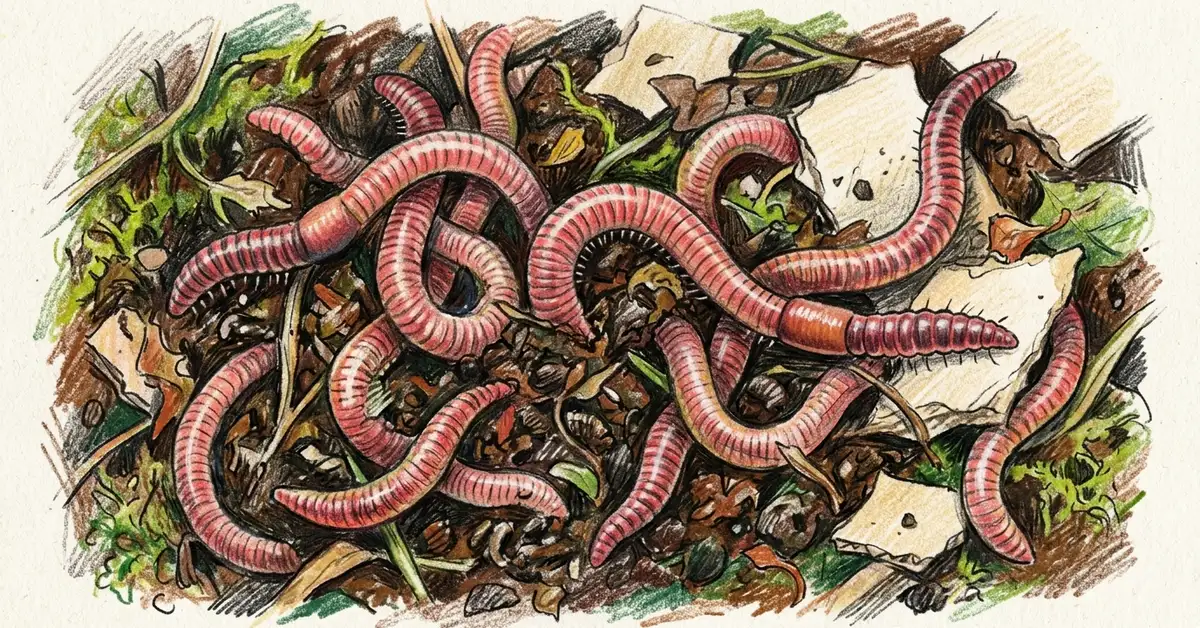
Most "do not feed" lists give you the rules but skip the reasons. Knowing why each item is banned makes it easier to reason about edge cases — and edge cases will come up.
Meat, fish, bones, and poultry fail on three counts at once. They decompose slowly through anaerobic pathways that produce putrid odours, they attract rodents, raccoons, flies, and maggots, and they carry pathogens home worm bins cannot reliably destroy. BioCycle's review of pathogen reduction in vermicompost confirms that only industrial-scale systems holding above 131°F achieve reliable kill rates — home bins do not.
Dairy products — milk, cheese, yogurt, butter — share the rodent-magnet problem and add a second one: dairy fat coats particles and worm skin, physically blocking gas exchange. Worms breathe through moist skin, so a greasy film is effectively suffocation.
Oily and greasy foods, including salad dressings, fried leftovers, and anything sauce-laden, fail for the same reason. If it feels slippery, it does not belong in the bin.
Large amounts of citrus — orange peels, lemon rinds, lime skins — are problematic in volume because of d-limonene, a volatile oil that is toxic to many small invertebrates and is used commercially as an insecticide. Small amounts are fine and get processed. Keep citrus under roughly 10% of total feedings and, ideally, let peels dry on a tray for a day or two to let the oils gas off first.
Onions, garlic, leeks, and shallots contain sulphur compounds that are literally antimicrobial — these are the same compounds that give them their medicinal reputation. Since your bin runs on microbes, flooding it with natural antimicrobials is a bad trade. Small scraps occasionally will not crash anything, but there's no reason to make them a regular input.
Salty foods, pickles, soy-sauced leftovers create osmotic stress. Peer-reviewed research in PubMed describes how hypertonic environments damage the cellular protein networks worms depend on — worms quite literally dry out from the inside.
Dog, cat, and human waste belong nowhere near a worm bin intended for edible-garden use. The CDC identifies dog and cat faeces as carriers of Toxocara roundworms and other zoonotic parasites that can survive composting and infect humans — especially children who play in amended garden soil. Only herbivore manures are safe.
If You Want to Compost Meat and Dairy
There is a home method that handles animal products safely: bokashi fermentation uses lactic-acid bacteria to pickle food waste anaerobically. The fermented output can then be buried in garden soil or added to a hot compost pile — but never directly to a worm bin.
How Much to Feed, and How Often
The old rule says composting worms eat half their body weight per day. In practice, under real home conditions, Urban Worm Company's practical guidance is closer to half their body weight per week — more in a mature bin, less in a young one. A starter pound of red wigglers will comfortably process around half a pound of scraps a week once the bin is established.
Think of feeding in three stages:
Weigh (or eyeball) your first feeding
For a fresh bin with 1 lb of worms, start with about 1–2 oz (roughly a small handful) of chopped scraps. You are feeding the microbes, not the worms — overfeeding a new bin is the #1 cause of early failure.
Use the pocket-feeding rotation
Mentally divide the bin surface into quadrants. At each feeding, pull back the bedding in one quadrant, drop the scraps in, and cover them with 1–2 inches of bedding. Rotate clockwise at each feeding. By the time you come back to quadrant one, the worms have already moved on.
Check before you add more
Before every feeding, look at where you fed last time. If there are still visible scraps from the previous round, skip this feeding. The worms always tell you the answer — they will have eaten or they won't have.
Source: Red Worm Composting — Feeding Worms: When and How Often.
Starting a Brand-New Worm Bin: The First 30 Days
A new worm bin behaves almost nothing like an established one. The microbial community isn't built yet, the worms are stressed from shipping, and the bedding is still decomposing. Treat the first month as a settling-in period.
Set the bedding up 7–14 days before adding worms if you can. Pre-moistened shredded cardboard and aged leaves will begin to grow the fungi and bacteria the worms depend on. When the worms arrive, sprinkle them on top of the bedding in a dim room and leave the lid off for an hour under light — this encourages them to burrow down into their new home rather than trying to escape. Wait 3–7 days before the first feeding so they can recover and acclimate.
For the first four weeks, feed small portions every 5–7 days — roughly 1 ounce of chopped scraps per 100 grams of worms. Resist the urge to "feed them up." An underfed bin grows slowly but rarely fails; an overfed bin fails loudly and fast. Around week four you'll notice faster decomposition, the scent of the bedding will turn earthy and sweet, and you can start scaling up portions. If you're new to the whole process, our complete vermicomposting guide for beginners walks through bin selection, bedding recipes, and species choice step by step, and the red wiggler vs earthworm comparison explains why Eisenia fetida is the right species for indoor bins.
Signs You're Overfeeding (and How to Recover)
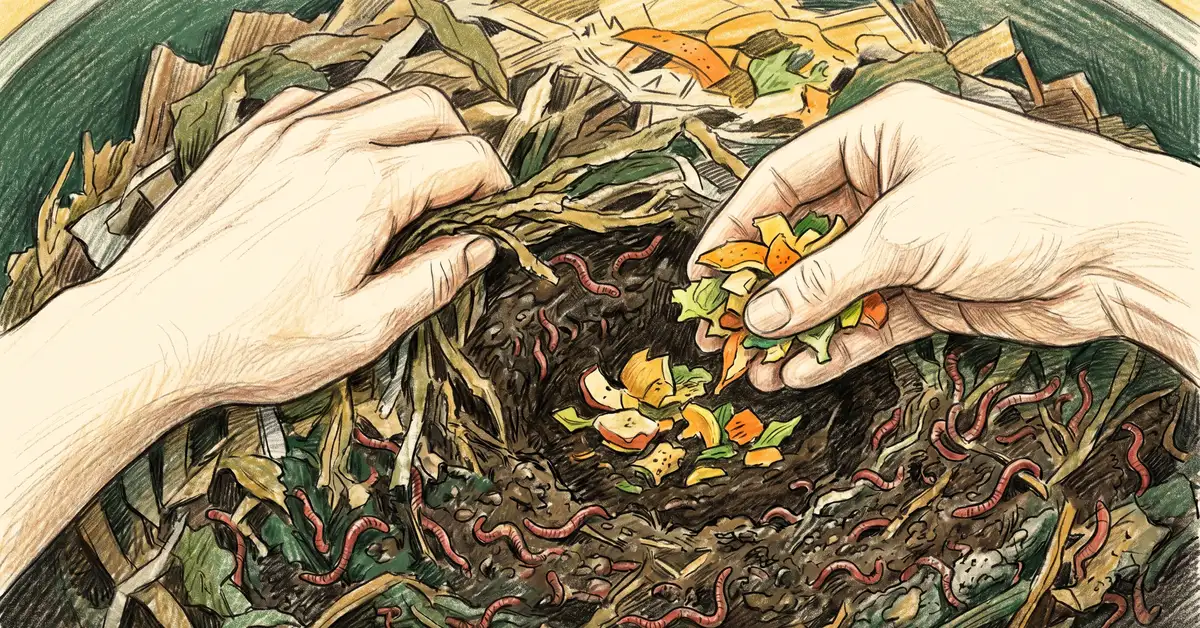
Overfeeding is by a wide margin the most common reason home worm bins fail in the first three months. Worm Farming Secrets identifies the classic telltales: strong ammonia or rotten-egg smell, visible uneaten food 2–3 weeks after adding, white mould covering large patches, fruit flies, standing moisture, and worms clustering at the bin lid or walls trying to escape.
The recovery routine is simple and forgiving. First, stop feeding for 1–2 weeks. Next, lift out any obvious excess scraps and either freeze them for later use or add them to a hot compost pile. Then mix in two or three large handfuls of dry, shredded cardboard to absorb moisture and restore air pockets. Leave the lid cracked for a few hours a day to improve airflow. Within a week the smell should fade; within two, the bin is usually ready to resume feeding — this time at a smaller portion.
If the bin is obviously acidic (worms crawling up walls, sour smell), sprinkle a generous dusting of crushed eggshells or a teaspoon of agricultural lime across the surface. For deeper troubleshooting on balance problems across any compost system, our complete compost troubleshooting guide covers the same four levers — air, moisture, nitrogen, and size — in more detail.
Ready to Build the Best Soil You've Ever Grown In?
Worm castings are the richest plant food you can produce at home — denser than compost, teeming with microbes, and something no garden centre can sell you fresh. If you're new to the whole permaculture soil-building approach, start with our complete guide.
Read the worm castings guide →Frequently Asked Questions
What should I never feed composting worms?
Meat, fish, bones, dairy, oily and greasy foods, salted or pickled leftovers, large amounts of citrus, onions, garlic, spicy peppers in volume, pet and human waste, and any yard waste treated with persistent herbicides. Each one causes a specific problem — pests, anaerobic rot, pH crashes, microbial die-off, or pathogen risk — that a home bin cannot correct quickly.
Can composting worms eat meat, dairy, or bread?
No meat or dairy — they attract pests, create anaerobic rot, and carry pathogens home bins cannot destroy. Bread is a conditional yes: stale bread and cooked grains are fine in small amounts mixed thoroughly with other scraps, but never in piles or large portions, and mouldy bread is actually welcomed by the microbes. If you want to compost animal products, use bokashi fermentation first and bury the output in garden soil, not the worm bin.
Can composting worms eat citrus, onions, or tomatoes?
In small amounts, yes. Citrus peels contain d-limonene, an oil that can stress worms and drop bin pH — keep citrus under 10% of total feed and dry peels on a tray for a day first. Onions and garlic are naturally antimicrobial and will slow the bin if used in volume. Tomato scraps are fine in moderation; their seeds often sprout, which is easier to manage if you chop or freeze them first.
How much should I feed my worm bin per week?
A rough rule: a pound of established red wigglers will process about half a pound of scraps per week. In a new bin (first month), start at roughly a tenth of that — an ounce or two per pound of worms, every 5–7 days — and scale up as you see food disappearing between feedings. Overfeeding is the single fastest way to crash a bin, so when in doubt, feed less.
How long do red wigglers live and how often do they reproduce?
Individual red wigglers typically live one to several years in a well-managed bin. Under ideal conditions, each mature worm can produce up to three cocoons per week, each containing about three hatchlings. Cocoons hatch in roughly 14–23 days, and the new worms reach sexual maturity in 30–45 days. A healthy population can effectively double in about two months if given enough food, bedding, and stable temperatures between 71–89°F (22–32°C).
Resources
- Cornell Waste Management Institute — Vermicompost: A Living Soil Amendment
- Oregon State University Extension — Composting with Worms (PDF)
- UF/IFAS Extension — Vermicomposting
- University of Nebraska-Lincoln Extension — Vermicomposting
- USDA — Let the Worms Do It
- NC State CALS — Rhonda Sherman's Vermicomposting Research
- NC State Extension — Manage Compost Contaminated with Broadleaf Herbicides
- NYC DSNY — Indoor Composting with a Worm Bin (PDF)
- CDC — How Toxocariasis Spreads
- NCBI — d-Limonene Safety Profile
- New York Botanical Garden — Mary Appelhof's "Worms Eat My Garbage" at 35