
What Counts as a "Food Forest Tree" in a Temperate Climate?
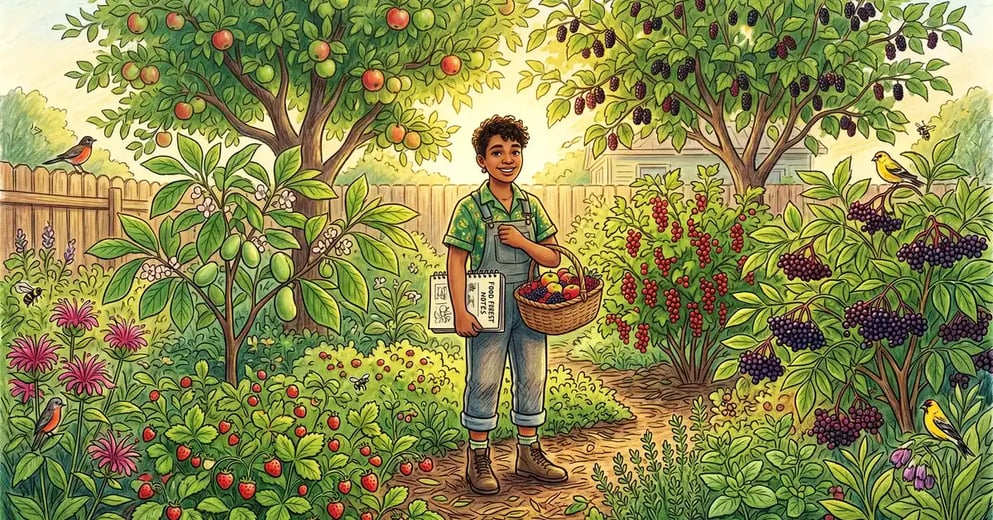
A food forest is a deliberate copy of how a young deciduous forest naturally organizes itself — a tall canopy of long-lived productive trees, an understorey of shorter ones beneath them, a shrub layer below that, and a herbaceous and ground-cover floor underneath. In a temperate food forest (USDA zones 4–8, where most of the continental US sits), the key picks aren't tropical crops shoehorned into a colder climate — they're heritage fruit, native nut, and overlooked species like pawpaw and persimmon that already thrive here. The foundational text — Robert Hart's Forest Gardening (1996) and the modern reference, Dave Jacke and Eric Toensmeier's Edible Forest Gardens (Vol I & II, 2005) — built the species short-lists most temperate practitioners still work from today. when to plant trees in autumn Amelanchier species for edible fruit
The point of this guide is to give you that short-list — the species that have actually performed in real backyard and quarter-acre food forests across zones 4–8, organized by canopy layer so you can plan with the structure in mind. Climate is also shifting underneath us: the USDA Plant Hardiness Zone Map (2023 update) moved roughly half of US locations a half-zone warmer compared to 2012, which means cultivar choices matter more than they used to.
Key Takeaway
Build by layer, not by wishlist. Pick 1–2 canopy trees, 2–3 understorey, 3–4 shrubs, plus ground cover for a typical backyard. Mulberry, pawpaw, elderberry, and hazelnut between them give you yields within 2–4 years while your apple and walnut canopies mature.
Canopy Layer: Apple, Mulberry, Walnut, Pecan
The canopy is the long game — these trees define the food forest for decades. They reach 30 ft (9 m) or more at maturity and need 5–10 years to hit substantial production, so cultivar selection matters.
Heritage standard apple (Malus domestica). Standard rootstock apples grow to 20–30 ft (6–9 m) and can live 50+ years. The NC State Extension plant database covers cultivar selection in detail, but for food-forest contexts the practical pick is heritage cultivars selected for disease resistance and chilling-hour tolerance — Liberty, Goldrush, Williams' Pride, Enterprise. Plant grafted, two cultivars for cross-pollination, USDA zones 4–8.
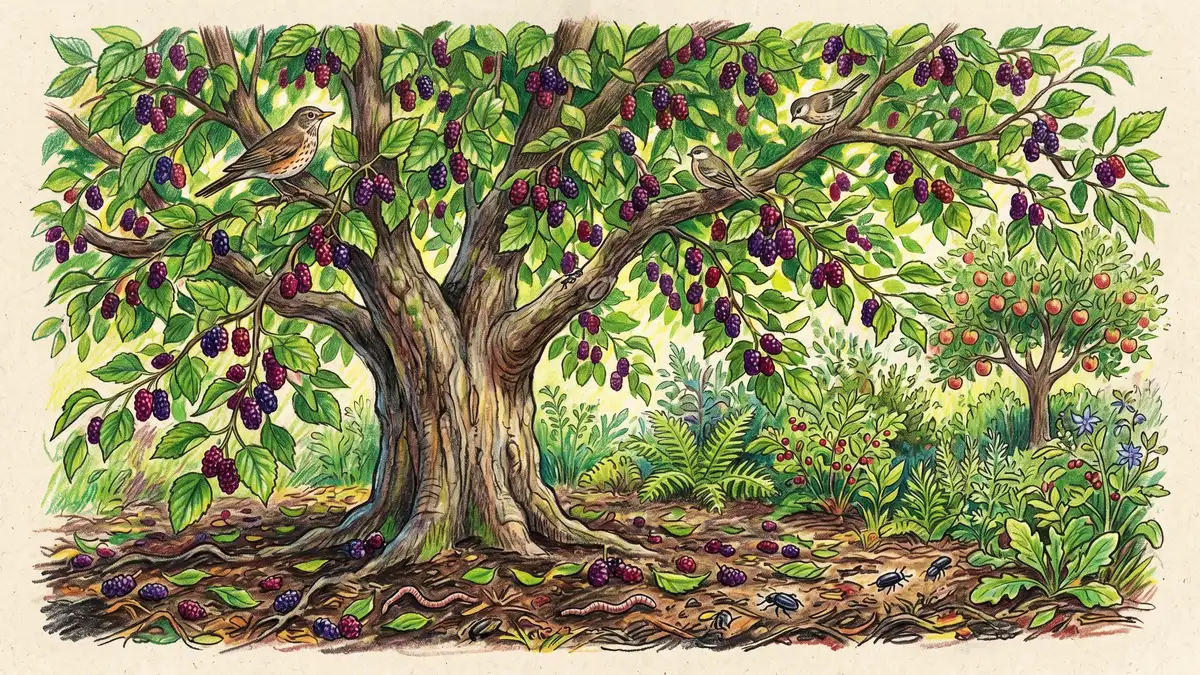
Mulberry (Morus nigra, M. alba, M. rubra). The fastest-yielding canopy tree in temperate zones — often producing within 3–4 years from a 2-year nursery tree. Per NC State Extension, mulberries grow 30–60 ft (9–18 m) and tolerate poor soils. Heat- and drought-tolerant, which makes them a climate-resilience pick. Caveat: ripe fruit drops and stains everything below — site them away from patios and white siding.
Black walnut (Juglans nigra). Native, valuable, and complicated: produces juglone, an allelopathic compound that kills tomatoes, peppers, eggplant, blueberries, and azaleas within roughly 60–80 ft (18–24 m) of the trunk. Penn State Extension publishes a tolerant-vs-sensitive species list that is essential reading before you plant one. If you have the space, walnut anchors a juglone-tolerant guild around it (currants, raspberries, hazelnut, pawpaw, persimmon all tolerate juglone). If you don't, skip it.
Hardy pecan (Carya illinoinensis). The northern-hardy pecan story is real — per NC State Extension, pecans grow well in zones 5–9 with the right cultivar, reach 70–100 ft (21–30 m) at maturity, and produce a high-protein staple crop. The catch: they need 8–12 years to begin substantial production, and cross-pollination cultivars must be chosen carefully (Type I and Type II pollination groups). Long horizon, real payoff.
Understorey Layer: Pawpaw, Persimmon, Plum, Cherry
The understorey lives between the canopy and the shrub layer, growing 15–30 ft (4.5–9 m) tall. This is where you place shade-tolerant fruit trees and the species that fail in commercial orchards but thrive in a polyculture.
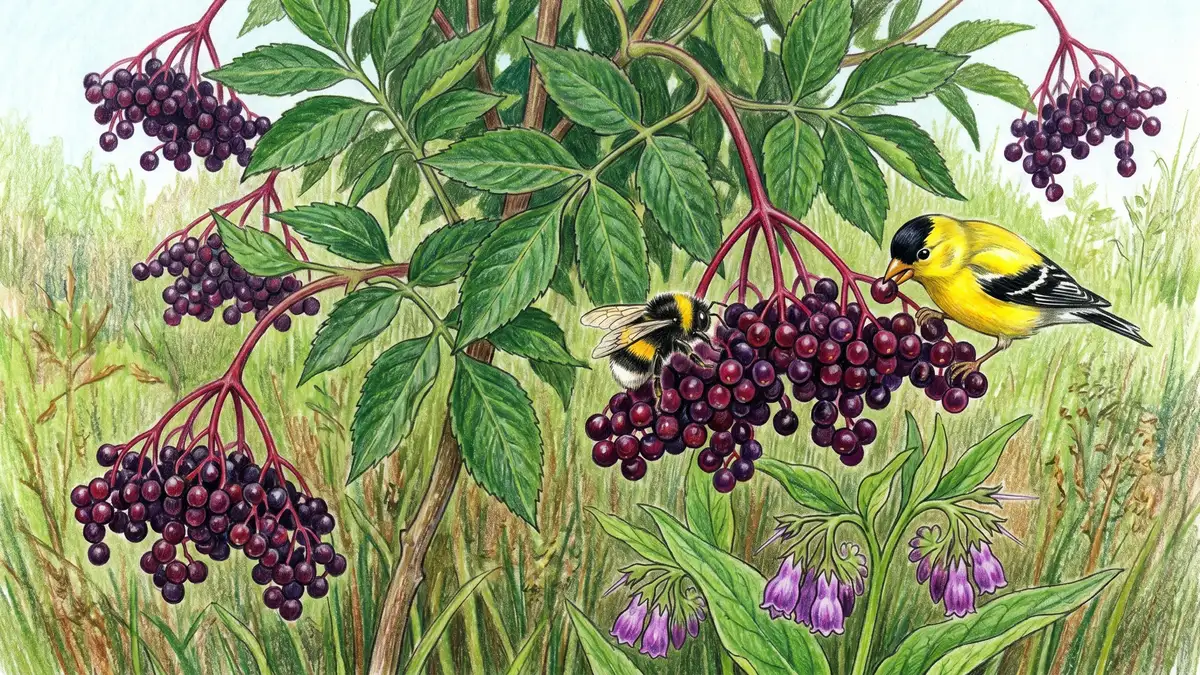
Pawpaw (Asimina triloba). The species every temperate food forest should include. Native to the eastern US, hardy to USDA zone 5, partially shade-tolerant, and produces North America's largest native edible fruit — custard-textured with banana-mango flavour. No serious pests in its native range. Plant at least two seedling-grown trees for cross-pollination; named cultivars (Sunflower, Shenandoah, Susquehanna, NC-1) significantly outperform random seedlings.
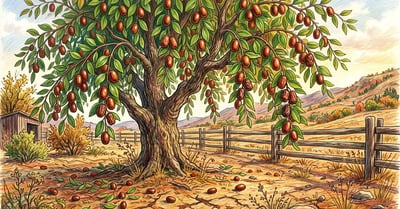
American persimmon (Diospyros virginiana). Native, hardy to zone 5, drought-tolerant, and produces a small sweet fruit that ripens after first frost. Grows 20–60 ft (6–18 m). Pair with named cultivars for early-ripening (Yates, Meader, Prok) and for non-astringent at maturity.
Plums (Prunus americana, P. domestica). American plum (P. americana) is hardy to zone 3 and shrugs off late frosts that wipe out European plum (P. domestica); per the USDA Plants Database fact sheet (PDF), it's an excellent cold-climate pick that doubles as wildlife habitat.
Sour cherry (Prunus cerasus). Hardier and more disease-resistant than sweet cherries (P. avium) — Montmorency and North Star produce reliable backyard yields in zones 4–7 and tolerate partial shade better than sweet cherries. Self-pollinating, which simplifies planting.
Why This Works: Vertical Niche Stacking
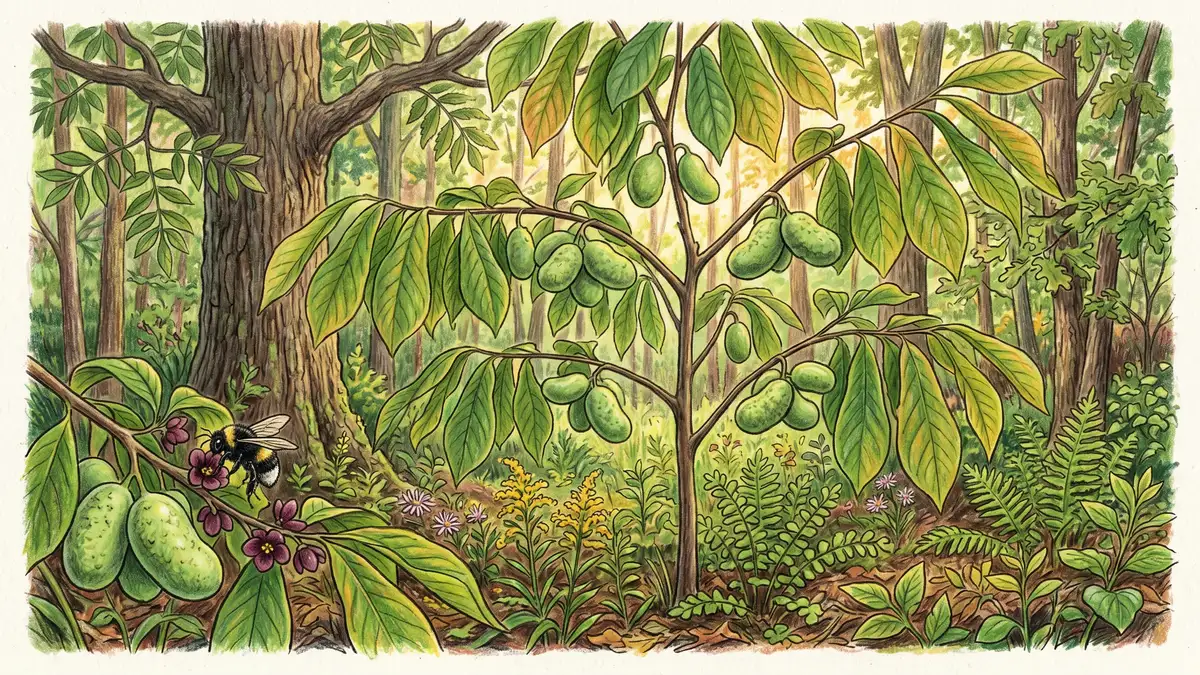
The reason a food forest produces more food per square foot than a row orchard is what permaculture calls stacking functions and what agroforestry literature calls vertical niche complementarity. Each species occupies a different vertical layer (deep root, mid-canopy, ground cover) and a different ecological role (nitrogen fixer, pollinator support, mulch producer, fruit). The USDA National Agroforestry Center classifies this as a multistrata system and lists it as one of five recognized agroforestry practices.
Shrub Layer: Elderberry, Hazelnut, Aronia, Currants, Saskatoon
Shrubs are the fastest-yielding layer — most produce within 2–4 years of planting. Pick 3–4 species for diversity and continuous harvest from June through October.
Elderberry (Sambucus canadensis). Native, hardy to zone 3, partial shade tolerant, reaches 8–12 ft (2.4–3.6 m). High-value medicinal berries, prolific pollinator support. Adams and York are the standard cultivars. One bush produces 12–15 lbs (5–7 kg) of berries by year 3.
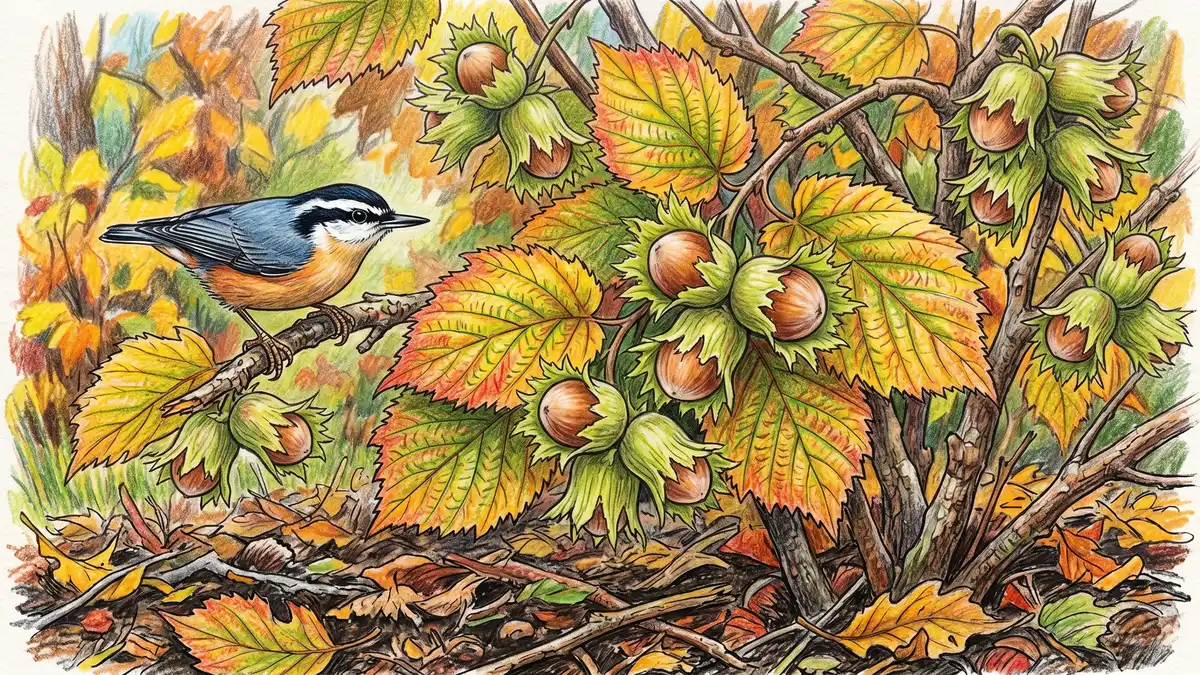
Hybrid hazelnut (Corylus americana × C. avellana). The one shrub that delivers real protein from a food forest. Hybrid varieties developed at Rutgers and Penn State combine the hardiness and disease resistance of native American hazelnut with the larger nut size of European varieties. Hardy to zone 4, fruits in 3–5 years, 8–15 ft (2.4–4.5 m) tall. Plant at least two genetically different bushes for cross-pollination.
Aronia / black chokeberry (Aronia melanocarpa). Native, hardy to zone 3, almost indestructible, with the highest antioxidant content of any temperate fruit. Ugly name, beautiful plant — fall color is spectacular and the fruit dries well for tea or smoothie powder.
Currants and gooseberries (Ribes spp.). Excellent shade-tolerant berries that produce in years 2–3. Caveat: Ribes species are alternate hosts for white pine blister rust and are restricted or prohibited in some US states (notably Maine, New Hampshire, North Carolina). Check your state's regulations before planting.
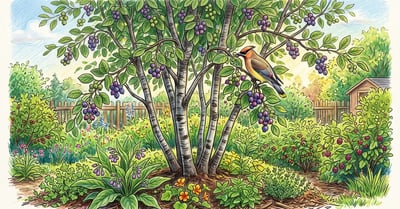
Saskatoon / serviceberry (Amelanchier alnifolia). Cold-hardy to zone 2, native to North America, blueberry-like fruit that ripens in early summer when little else is producing. The classic canary-in-the-coalmine of cold-climate food forests — if anything will produce, this will.
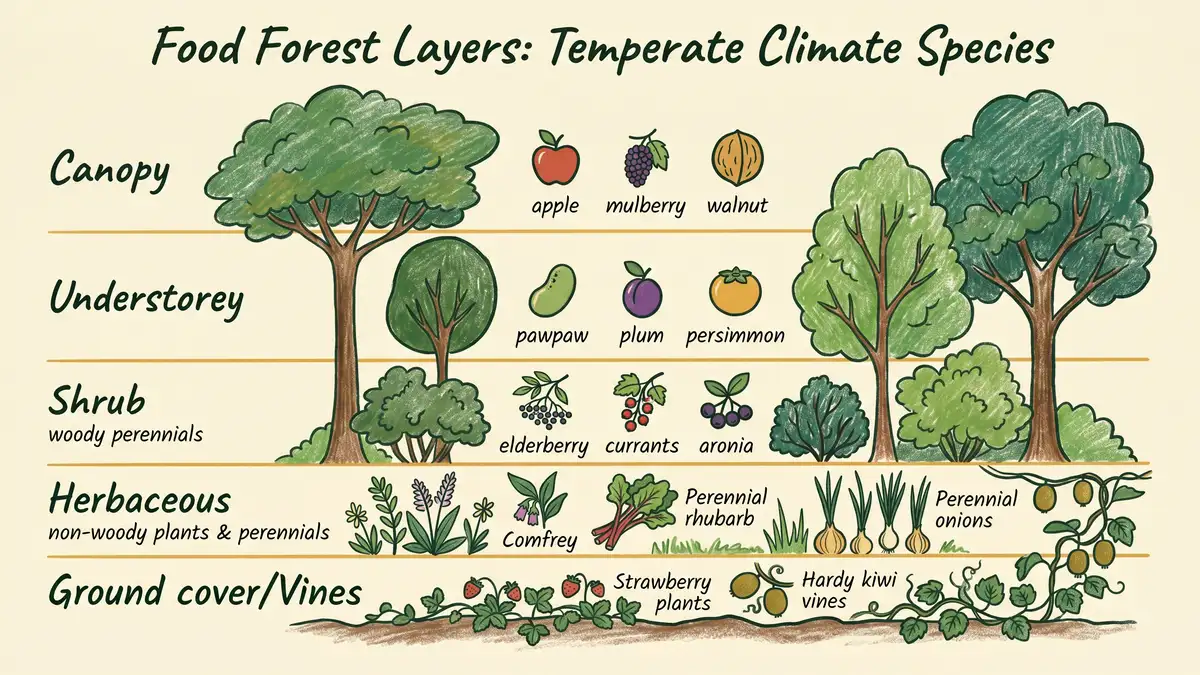
Ground Cover and Herbaceous Layer (Briefly)
The lower layers are short on glamour but long on function. The pattern is: nitrogen fixers, dynamic accumulators, pollinator support, edible ground cover. The classic short list:
| Layer | Species | Function | Hardiness |
| Herbaceous | Comfrey (Symphytum × uplandicum 'Bocking 14') | Dynamic accumulator, mulch source — sterile cultivar so it doesn't seed everywhere | Zones 3–9 |
| Herbaceous | Rhubarb (Rheum rhabarbarum) | Edible perennial stalks, decades of yield | Zones 3–8 |
| Herbaceous | Good King Henry (Blitum bonus-henricus) | Perennial spinach substitute, shade tolerant | Zones 4–9 |
| Ground cover | Strawberry (Fragaria spp.) | Edible carpet, pollinator support | Zones 3–10 |
| Vine | Hardy kiwi (Actinidia arguta) | Climbing edible vine to drape over canopy | Zones 4–8 |
| N-fixer | Goumi (Elaeagnus multiflora) | Nitrogen-fixing shrub with edible berries | Zones 5–9 |
Sources:.
Climate Adaptation: What's Changing and How to Plan for It
The 2023 update to the USDA Plant Hardiness Zone Map shifted about half of US locations a half-zone warmer than the 2012 map. For a tree you're planting in 2026 to harvest from in 2050, that drift matters. Three honest adjustments:
Bias toward heat- and drought-tolerant species
Mulberry, persimmon, jujube (zone 6+), and fig (zone 7+ with winter protection) all tolerate the heat-and-drought summers that are getting more common. Native species generally adapt better than European cultivars selected for cooler growing-season averages.
Pick low-chill apple and stone fruit cultivars
Many heritage apples need 800–1,200 chilling hours; warming winters mean lower chill totals. If you're in zones 7–8, look at low-chill cultivars (Pink Lady, Anna, Dorsett Golden) developed for southern orchards.
Plan for late frosts, not just average lows
Warmer Februaries are pushing apricot and cherry into bloom too early, only for an April frost to wipe the crop. Place sensitive species on north-facing slopes (which warm up more slowly), use thermal-mass walls for microclimate, and choose late-blooming cultivars where they exist.
Diversify, then over-diversify
Mark Shepard's Restoration Agriculture (2013) makes this case explicitly: in a destabilising climate, the only reliable strategy is species and genetic diversity. Plant 8–15 species, not 3 — the food forest should hedge its own bets.
Common Mistake to Avoid: Spacing Like an Orchard
Beginners commonly plant trees on standard orchard spacing (20–30 ft / 6–9 m) and end up with bare zones underneath where the food-forest layers should live. Conversely, dense-planting advocates pack trees in at 6–8 ft (1.8–2.4 m) for "instant" coverage, then watch disease pressure spike and yields collapse by year 5. The peer-discussed sweet spot for backyard temperate food forests, debated thoroughly on Permies forums by experienced practitioners, is to leave roughly 10–20% gap between canopies at maturity — close enough for shade and biodiversity, open enough to keep airflow and yields up.
If you're earlier in your food-forest journey, our food forest guide covers the design framework that holds these species together, and our step-by-step beginner walkthrough shows the actual sequence of work. The vertical-stacking idea connects directly to the 7 layers of a food forest, and these picks pair naturally with our cover crops guide for the establishment years. The science of which species work well together is in the companion planting science guide, and the broader frame sits inside the 12 permaculture principles and the foundational what is permaculture introduction.
Frequently Asked Questions
What's the best canopy tree for a temperate food forest?
If you want yields fast, mulberry — heat- and drought-tolerant, fruiting within 3–4 years, 30–60 ft (9–18 m) at maturity. If you want a long-lived staple with the best overall food-forest fit, a heritage standard apple on disease-resistant rootstock (Liberty, Goldrush). For sites with space and patience, hardy pecan delivers a high-protein crop in 8–12 years. Don't pick black walnut unless you've planned the juglone-tolerant guild around it.
How many trees fit in a backyard food forest?
For a typical 1/8 to 1/4 acre (500–1,000 m²) backyard, plan on 1–2 standard canopy trees, 2–3 understorey trees, 6–10 shrubs, and a continuous ground-cover layer — about 8–15 woody species total. Resist the urge to fit one of every species you see online; over-planting is the most common reason year-5 yields disappoint. Leave 10–20% gap between canopies at maturity.
When should I plant fruit trees in a food forest?
Late autumn (after leaf drop) or early spring (before bud break) for bare-root trees, which establish faster and cost less than container trees. Container-grown trees can go in any time the ground isn't frozen, but spring or early autumn planting is best. The first growing season is the make-or-break window — water deeply once a week through the first summer, mulch 3–4 inches (8–10 cm) thick, and stake only if exposed to wind.
Are nut trees worth it in a small food forest?
Hazelnuts, yes — they're shrub-sized, fruit in 3–5 years, and produce real protein. Walnuts and pecans need substantial space and 8–12 years to substantial production, so they only make sense if you're planning a long horizon. For a typical backyard, a hybrid hazelnut hedge replaces a "nut tree" effectively without giving up the canopy slot to a single tree.
Will a food forest really feed me?
Honestly: not entirely, but it can supply meaningful calories. A well-established quarter-acre temperate food forest produces 200–500 lbs (90–225 kg) of mixed fruit, nuts, and herbs per year by year 7–10. That's a substantial supplement to a household diet — meaningful for fresh produce, preserves, and pollinator/wildlife support — but not enough on its own to replace staple grains and protein crops. Pair it with annual vegetable beds and a good source of grains and legumes for a complete picture.
Get the Weekly Dig
One practical permaculture guide a week, written for gardeners who do this on weekends: food forest and guild designs that produce. Free, no spam, unsubscribe any time.
Join the Weekly DigResources
- Hart, Robert (1996) — Forest Gardening: Cultivating an Edible Landscape (Internet Archive)
- Jacke, Dave & Toensmeier, Eric (2005) — Edible Forest Gardens Vol I & II
- Shepard, Mark (2013) — Restoration Agriculture
- USDA National Agroforestry Center — Agroforestry Practices
- USDA — Agroforestry Overview
- USDA Plant Hardiness Zone Map (2023 update)
- Penn State Extension — Agroforestry
- Penn State Extension — Landscaping Around Walnuts and Juglone-Producing Plants
- NC State Extension — Malus domestica (Apple)
- NC State Extension — Morus alba (White Mulberry)
- NC State Extension — Carya illinoinensis (Hardy Pecan)
- USDA Plants Database — American Plum (Prunus americana) Fact Sheet (PDF)