You want to start a permaculture community project in your neighborhood. Maybe a small food forest in a vacant lot, a shared edible garden behind your church, or something larger like Seattle's Beacon Food Forest. This is the 7-step playbook used by successful US projects: land tenure, governance, funding, design, and the failure modes to avoid in your first 2 years. what to do with your own plot
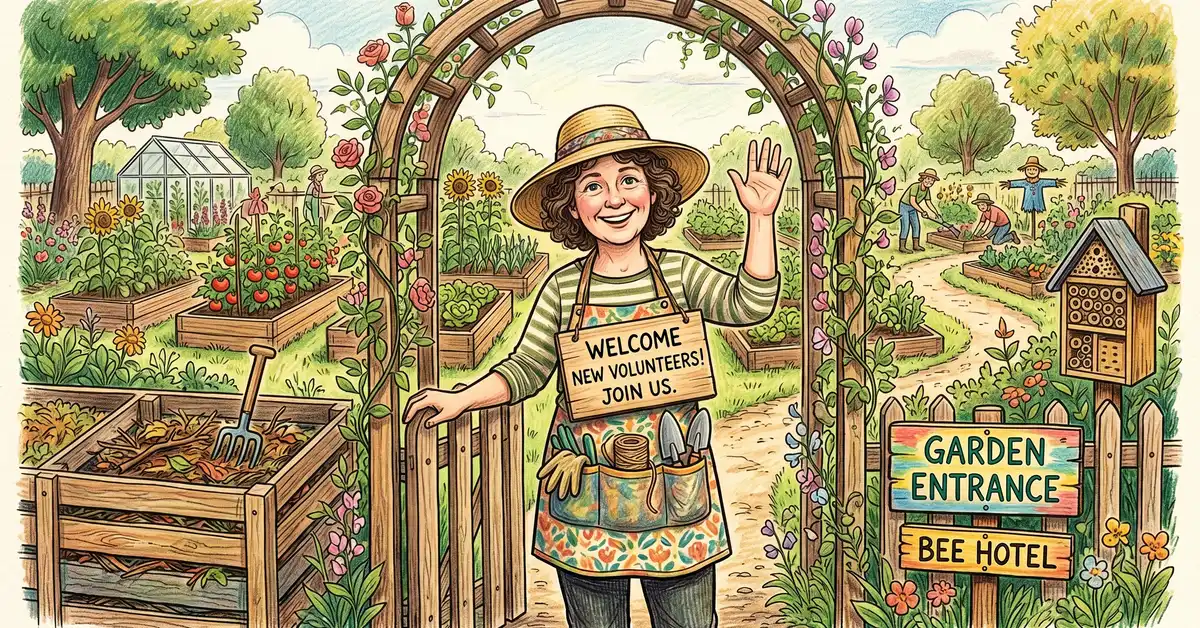
This is not a feel-good think piece. It is a working checklist drawn from how Beacon Food Forest, Boston Food Forest Coalition, and dozens of smaller US projects actually got their first shovel into the ground. Plan on a 6 to 12 month timeline from first conversation to first planting day. Plan on stacking 2 to 4 funding sources. And plan on starting with 3 to 5 committed co-founders, because that is the minimum the data says will survive year one.
What you will get below: a clear definition that separates a permaculture project from a regular community garden, a 7 step launch sequence with US-specific resources, the four land tenure paths, a stacked funding map, governance options sized to project scale, and the common failure modes founders wish they had known about.
Sources: American Community Gardening Association (ACGA) founder survey data; Beacon Food Forest project archive (Seattle Parks & Recreation, Jefferson Park).
What counts as a "permaculture community project"
The terms get used loosely, so set the definition early. A regular community garden in the US usually means individual rented plots, annual vegetables, water from a single spigot, and a sign-up sheet at city hall. A permaculture community project uses whole-site design rooted in the three ethics Bill Mollison and David Holmgren codified in 1978 (Holmgren, Essence of Permaculture, free PDF): earth care, people care, fair share.
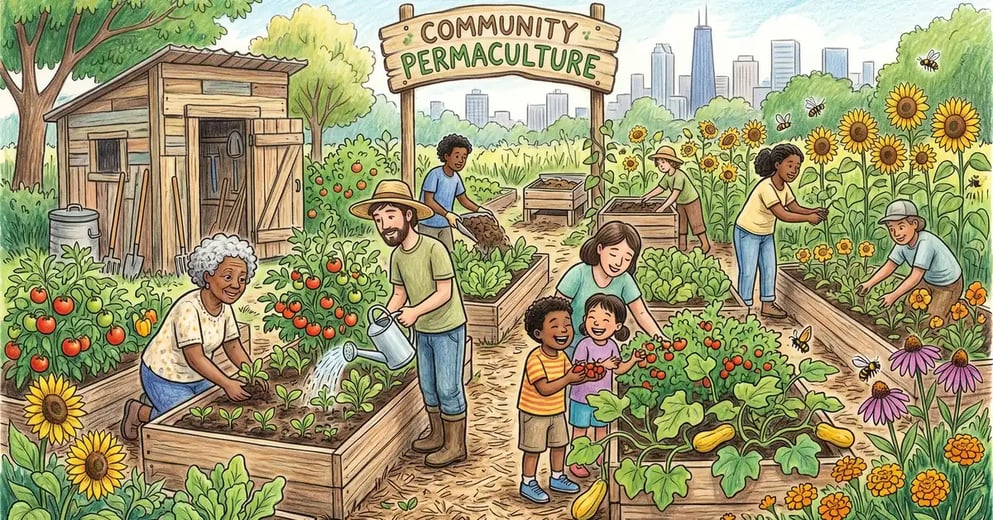
In practice the difference looks like this. The community garden has 30 four-by-eight raised beds. The permaculture project has a layered food forest of fruit and nut trees, a swale catching roof runoff, perennial herb borders, a pollinator strip, a shared tool shed, a covered seating area where the weekly volunteer meeting happens, and a written governance agreement.
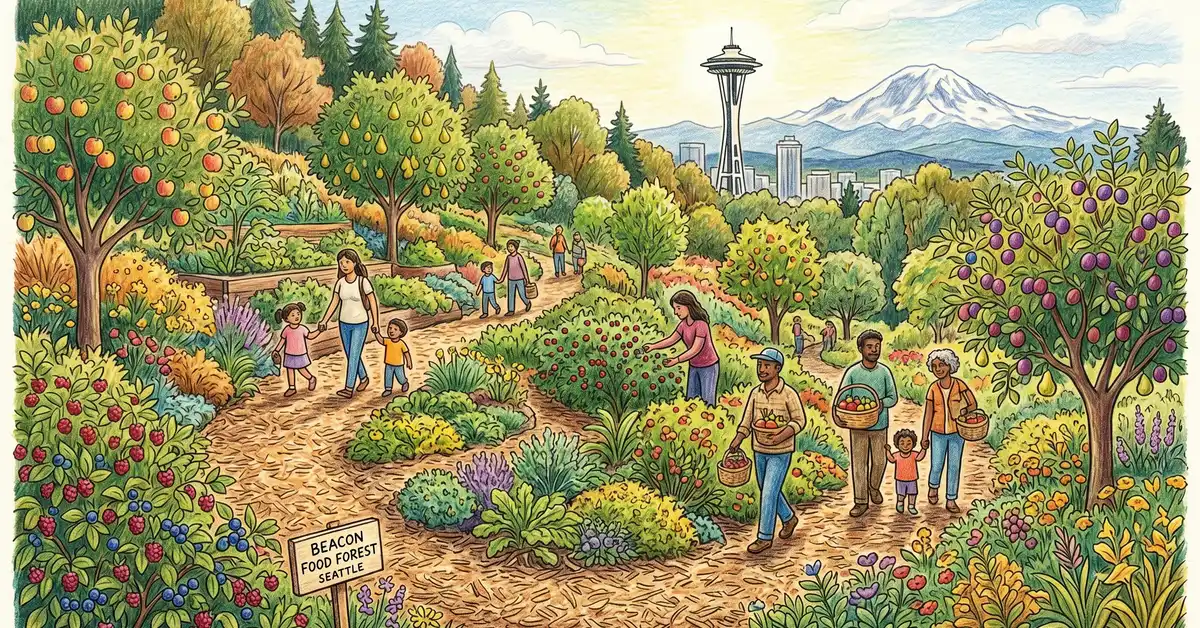
The flagship US example is the Beacon Food Forest in Seattle, which started with a 2009 permaculture design class concept and broke ground in 2012 on 1.75 acres in Jefferson Park. It has expanded to 7 acres and is the largest publicly accessible food forest on US public land. The land is owned by Seattle Parks and Recreation. Volunteers design, plant, maintain, and harvest. No individual plots. Everything is shared, including the harvest.
Other US reference projects: Boston Food Forest Coalition (founded 2014, operates 8 neighborhood food forests on city-owned land), NYC GreenThumb (the largest urban gardening program in the US, supporting roughly 550 community gardens, some with strong permaculture design), and Soul Fire Farm in Petersburg, NY (founded 2010 by Leah Penniman, focused on Indigenous and Afro-Indigenous land restoration).
The 7 step launch sequence
This sequence works for projects from a quarter-acre church yard up to multi-acre public land. Time estimates assume part-time volunteer effort by 3 to 5 founders.
Find 3 to 5 co-founders (week 1 to 4)
The single most important predictor of survival. Solo founders burn out. Pairs collapse when one person leaves. The sweet spot is 3 to 5 people who can meet every other week, share the cost of a domain name and small expenses, and absorb 5 to 10 hours per week of organizing each. Recruit from existing permaculture meetups, faith communities, local ACGA chapter members, transition towns groups, or a master gardener program.
Survey the neighborhood (week 4 to 8)
Knock on 30 to 50 doors within a quarter-mile of your candidate site. Ask three questions: What food do you wish you had access to? What would you grow or learn here? Would you volunteer 2 hours a month? This is also your political insurance. When you apply for permits or grants, a stack of 50 signed survey responses showing neighborhood demand is the difference between approval and "no." This survey step is in the ACGA Starting a Community Garden toolkit.
Secure land tenure (month 2 to 6)
Get at least a 5 year lease before planting perennials. The four common pathways: lease from a municipality (most US cities have urban agriculture programs, see NYC GreenThumb's lease application), partner with a school school food forest for educational gardens or faith community with underused land, transfer through a community land trust like NeighborSpace in Chicago (founded 1996, holds 130+ community gardens in perpetuity), or buy a vacant lot through a city land bank. Detroit, Cleveland, Philadelphia, and Baltimore all sell vacant lots for $100 to $500 plus title fees.
Form a nonprofit or join a fiscal sponsor (month 3 to 9)
Until your annual budget exceeds about $25,000, work under a fiscal sponsor: an existing 501(c)(3) that holds funds for you in exchange for a 5 to 10 percent administrative fee. Find one through your local community foundation or Fiscal Sponsor Directory. Once you outgrow that, file IRS Form 1023-EZ ($275, faster track for budgets under $50K) or full Form 1023 ($600, no budget cap). Add state nonprofit incorporation ($50 to $250) and a $300 to $800 annual liability insurance policy through nonprofit insurers like Philadelphia Insurance.
Design the site (month 4 to 9)
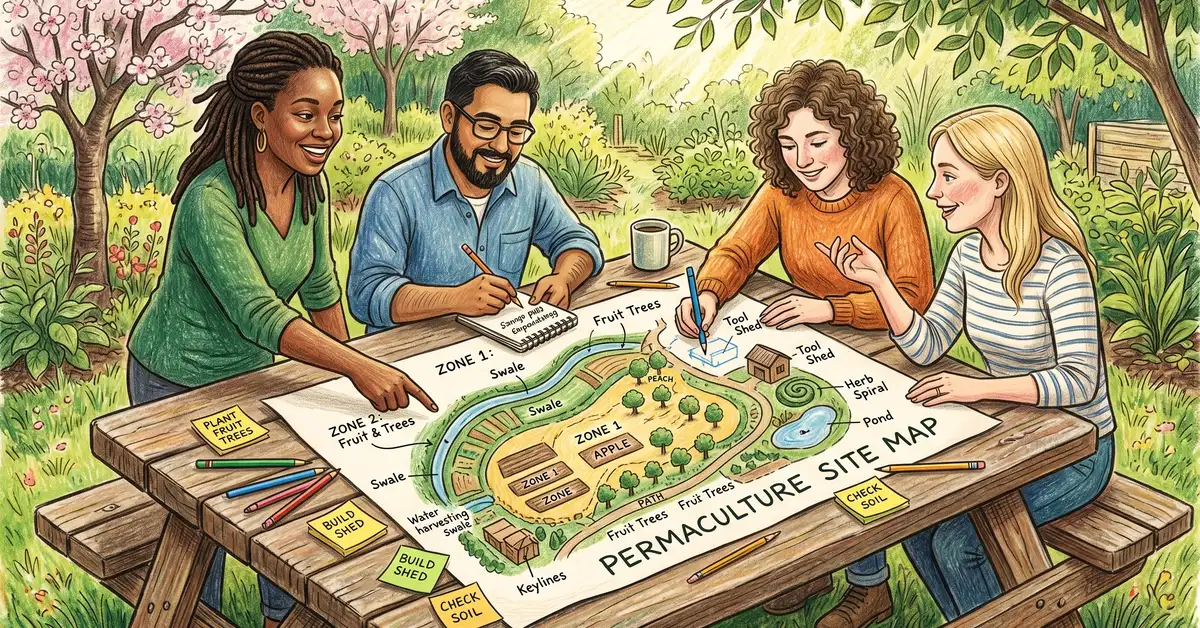
Use Mollison's zone analysis. Zone 1 (closest, most-used) holds annual beds, herbs, and the gathering area. Zone 2 has perennial fruit bushes and dwarf trees. Zone 3 has full-size fruit and nut trees and the food forest layer. Zone 4 holds wildlife corridors, large compost, and woodlot if you have the space. Zone 5 stays wild. Map the site at 1:100 scale. Place water harvesting features (swales on contour, rain barrels at every downspout) before placing trees. Run the design through a Permaculture Design Course graduate or experienced practitioner. See our first permaculture system design walkthrough for the full process.
Stack the funding (month 6 to 12)
Single source funding is the most common reason projects fail in year 2. Stack 2 to 4 sources. The big federal one: USDA Community Food Projects Competitive Grant Program (CFPCGP), $10,000 to $400,000 per project, applications open annually each spring. Add EPA Environmental Justice Small Grants (up to $75,000), local ACGA chapter grants ($500 to $5,000), municipal community garden funds ($1,000 to $10,000 typical), and a crowdfunding campaign ($2,000 to $15,000 typical for a credible neighborhood project on Ioby or GoFundMe). The USDA People's Garden Initiative (relaunched 2022) provides toolkits and small seed funding plus a national network.
Plant in phases and document (month 9 to 18)
Phase one: water access, fencing if needed, annual beds, and 5 to 10 fruit trees. Phase two (year 2): berry bushes, perennial herbs, pollinator strip, tool shed, gathering area. Phase three (year 3 to 5): food forest understory, mushroom logs, hugelkultur beds, signage, education infrastructure. Document everything with dated photos, volunteer hours, harvest weights, and visitor counts. Grant reports need this data, and it is also the proof you take to year 2 funders.
Why this works: the permaculture connection
The 7 step sequence maps directly onto permaculture principle 1 (observe and interact) and principle 4 (apply self-regulation and accept feedback). Steps 1 to 3 are pure observation: who is here, what do they want, what does the land allow. Steps 4 to 7 build the system in slow, small phases so that feedback from each phase shapes the next. This is why projects that try to plant a 2 acre food forest in one weekend usually struggle, while projects that plant 5 trees in year 1 and 50 in year 3 succeed.
The four land tenure paths, ranked
Land tenure is the single most expensive failure mode. Projects that plant trees on a 1 year lease almost always lose the site. Here are the four paths, ranked by typical security.
| Path | Security | Typical cost | Best for |
| Community land trust | Permanent (held in trust) | $0 to $5,000 transfer | Long-term food forest with perennials |
| Municipal lease (5+ yr) | 5 to 25 years renewable | $1 to $1,000/yr | City projects on public land |
| Faith community / school | 5 to 20 years (relational) | $0 plus contributions | Neighborhood-scale projects |
| City land bank purchase | Permanent (ownership) | $100 to $500 plus fees | Detroit, Cleveland, Philadelphia, Baltimore |
Sources: NeighborSpace Chicago intake materials; NYC GreenThumb lease application portal; Detroit Land Bank Authority; Cleveland Land Bank.
Stacking your first year funding
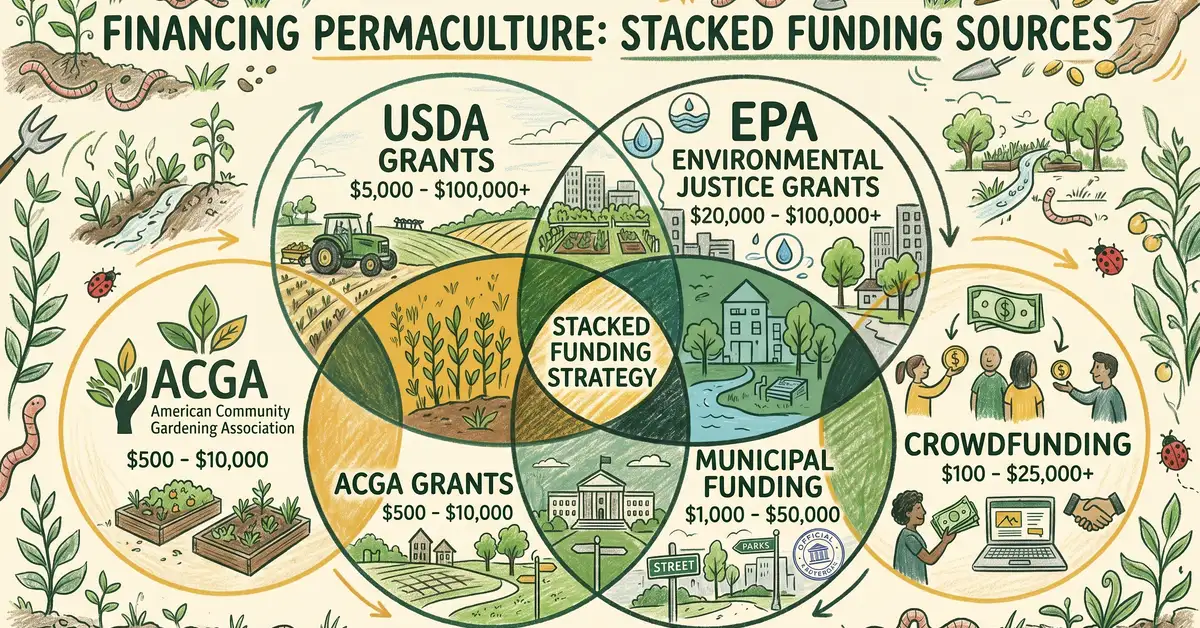
The pattern that works: small grants build the case for big grants. Most successful US projects spend year 1 stacking 4 to 5 small sources ($500 to $10,000 each) then apply for a USDA CFPCGP or EPA Environmental Justice grant in year 2 with that track record. A typical first year mix for a $30,000 project: $5,000 from local ACGA chapter or community foundation, $7,500 from EPA Environmental Justice Small Grants, $5,000 from city community garden fund, $3,000 from a faith community capital campaign, and $9,500 from neighborhood crowdfunding on Ioby (the leading hyperlocal crowdfunding platform for US neighborhood projects).
For larger projects, the USDA CFPCGP awards $10,000 to $400,000 over 1 to 4 years. The USDA People's Garden Initiative connects you to other registered gardens and provides templates for grant applications. Both have a strong preference for projects that demonstrate food access in underserved areas, which is one reason that permaculture community projects in food apartheid neighborhoods often outcompete suburban projects for federal funding.
Governance: pick a model and write it down
This is where projects implode in year 2. The 3 to 5 founders who started together do not agree on how to make decisions when 30 volunteers show up. Pick a model in writing before that happens.
Consensus collective (3 to 10 active members): decisions by full agreement, monthly meetings, no formal board. Works for small projects. Breaks down above 10 active decision-makers because consensus takes too long.
Working groups + steering committee (10 to 50 active members): elected 5 to 7 person steering committee makes daily decisions, working groups (design, education, fundraising) operate within budgets. Most successful US projects use this model.
Formal 501(c)(3) board (50+ active members or budget over $50K): elected board of directors, executive director (paid or unpaid), bylaws and annual meeting. Required once you have employees or substantial assets. Beacon Food Forest moved to this structure as it grew.
Cooperative ownership (where members hold a stake): less common for community gardens, more common for productive farms. University of Wisconsin Center for Cooperatives has templates.
Whatever you pick, write it down. The governance agreement should cover: how decisions are made, how new members join, how disagreements get resolved, what happens to the harvest, how money flows in and out, and what happens to the land and assets if the project ends. A 4 page agreement at the start prevents a 40 page lawsuit at the end.
You can find adaptable templates in the ACGA resource library and at Soul Fire Farm's movement building resources for projects that center racial equity in their governance.
The five most common failure modes (and how to avoid each)
Solo founder burnout. One person carries the project. They burn out in 12 to 18 months. The site reverts to weeds. Fix: 3 to 5 co-founders from day one, with explicit rotation of organizing roles every 6 months.
Short lease. A 1 to 2 year lease feels like a win at first. Then year 3 arrives, the landlord wants the site back, and you lose 3 years of fruit trees that needed another 2 years to bear. Fix: 5 year minimum lease or land trust transfer before planting any perennials.
Single funding source. A $30,000 grant runs out in 18 months. No second grant in the pipeline. Volunteers leave because there is no money for tools or seeds. Fix: stack 2 to 4 sources from day one, even if some are small.
Governance vacuum. The founders never wrote down how decisions get made. When the project grows to 30 active people, the founders' informal authority breaks down. Fix: a 4 page governance agreement at month 3, before the conflict arrives.
Rapid scaling without volunteer base. A grant lets you plant 2 acres in year 1, but you only have 5 reliable volunteers. The site becomes unmaintained, weeds take over, neighbors complain. Fix: phase planting so each year's new infrastructure is matched by 5 to 10 new active volunteers.
Indigenous and equity-centered models to study
Many US permaculture community projects draw on Indigenous and Afro-Indigenous land stewardship traditions that long predate the term "permaculture." Three projects worth studying as references:
Soul Fire Farm (Petersburg, NY, founded 2010 by Leah Penniman): Afro-Indigenous centered farm with food sovereignty programs, free farmer training, and a 80 acre food forest. Reading: Penniman's Farming While Black (Chelsea Green, 2018).
Soil Generation (Philadelphia): Black and Brown-led coalition fighting for Black food sovereignty and land access in Philadelphia, with mutual aid land trust models.
Three Sisters projects across many Indigenous nations: corn, beans, and squash polyculture predates Mollison's framework by thousands of years. The White Earth Land Recovery Project in Minnesota and Akwesasne Freedom School in Mohawk territory are two reference points.
Get the Weekly Dig
One practical permaculture guide a week, written for gardeners who do this on weekends: permaculture design for real backyards. Free, no spam, unsubscribe any time.
Join the Weekly DigA realistic 18 month timeline
Here is what a realistic timeline looks like for a 0.5 to 1 acre permaculture community project on municipal land.
| Months | Phase | Key milestones |
| 1 to 3 | Founding team | 3 to 5 co-founders, candidate site identified, neighborhood survey started |
| 3 to 6 | Land + legal | Lease drafted, fiscal sponsor signed, liability insurance quoted |
| 6 to 9 | Design + funding | Site design complete, first 2 small grants secured, crowdfunding launched |
| 9 to 12 | Phase 1 build | Water access, fencing, annual beds, first 5 to 10 fruit trees planted |
| 12 to 18 | Phase 2 build | Berry bushes, herb borders, tool shed, gathering area, 20+ active volunteers |
Sources: composite from Beacon Food Forest project archive; Boston Food Forest Coalition founding timeline; ACGA case studies.
Frequently Asked Questions
What is a permaculture community project?
A shared piece of land run by neighbors and designed using permaculture principles (zones, water harvesting, perennial polyculture, three ethics). Distinct from a regular community garden because the design is whole-system: water, soil, food, social space, and governance all planned together. Beacon Food Forest and Boston Food Forest Coalition are two flagship US examples.
How do I start a permaculture community garden?
Seven steps: find 3 to 5 co-founders, survey the neighborhood, secure land tenure, form a nonprofit or join a fiscal sponsor, design the site using permaculture zones, fund the build with stacked grants, and plant in phases while documenting everything.
How much does it cost to start a community garden?
Small projects (quarter-acre, raised beds only) cost $3,000 to $10,000. Larger food forest projects (1 to 2 acres) cost $25,000 to $75,000 over the first 2 to 3 years. Stacked grants cover most of this.
How do I get land for a community garden?
Four pathways: lease from a municipality, partner with a school or faith community, get land donated through a community land trust like NeighborSpace in Chicago, or buy a vacant lot through a city land bank for $100 to $500. Always secure a 5 year minimum before planting perennials.
What grants are available for community gardens?
USDA Community Food Projects Competitive Grant Program ($10,000 to $400,000), USDA People's Garden Initiative seed funding, EPA Environmental Justice Small Grants (up to $75,000), ACGA chapter grants ($500 to $5,000), and municipal community garden funds ($1,000 to $10,000). Stack 2 to 4 sources.
How many people do I need to start a community garden?
3 to 5 committed co-founders is the proven minimum for surviving the first 2 years. Below 3, the project usually fails to founder burnout. Above 7, decision-making slows.
What is the difference between a community garden and a permaculture project?
Community gardens typically have individual plots with annual vegetables. Permaculture community projects use whole-site design with zones, water harvesting, perennial polyculture, and shared governance rooted in the three ethics.
Do I need to be a nonprofit to start a community garden?
Not at first. Most projects start under a fiscal sponsor (an existing 501(c)(3)) for 1 to 2 years, then file for their own 501(c)(3) status once annual budgets exceed about $25,000. Filing costs $275 (Form 1023-EZ) to $600 (Form 1023) plus state nonprofit incorporation fees.
Resources
- American Community Gardening Association (ACGA) starting toolkit
- USDA Community Food Projects Competitive Grant Program
- USDA People's Garden Initiative
- EPA Environmental Justice Small Grants Program
- Beacon Food Forest, Seattle (largest US public food forest)
- Boston Food Forest Coalition
- NeighborSpace, Chicago (community land trust holding 130+ gardens)
- NYC GreenThumb (largest US urban gardening program)
- Soul Fire Farm (Afro-Indigenous farm and food sovereignty)
- Ioby (hyperlocal crowdfunding for US neighborhood projects)
- David Holmgren, Essence of Permaculture (free PDF, 2002)