
Can You Safely Compost Dog Waste for the Garden?
If you own a dog, you are looking at roughly three-quarters of a pound (0.34 kg) of waste per day and wondering whether all that could become free fertilizer instead of another plastic bag in the trash. It is a fair question, and the honest answer has two parts. Dog waste can be composted, but only in a hot, carefully managed system, and the finished product should never touch anything you plan to eat.
The reason is health, not squeamishness. Dog feces routinely carries parasites and bacteria that can make people sick, including Toxocara canis roundworm, which the CDC lists among five neglected parasitic infections it targets for public health action. So before you set up a bin, it is worth understanding exactly what you are handling and what it takes to make it safe.
Here's what this guide covers:
- What is actually in dog waste, and why it is riskier than cow or horse manure
- The temperature and time it takes to kill the pathogens (and why most piles miss it)
- The USDA's tested method for composting dog waste the right way
- Safer everyday alternatives if hot composting is not for you
Key Takeaway
Dog waste is a rich but risky material. Only a hot compost pile that reaches 140 to 145°F (60 to 63°C) for several days can reliably kill its pathogens, and even then the finished compost belongs on ornamentals, trees, or lawns, not on vegetables or fruit.
What Is Actually in Dog Waste?
Dog feces is biologically active material that frequently carries organisms capable of causing disease in humans, a group known as zoonotic pathogens. The most talked-about is the dog roundworm, Toxocara canis. The CDC notes it infects essentially all wild and domestic canids, with active egg-shedding most common in puppies, and a global seroprevalence around 19 percent, meaning nearly one in five people worldwide shows prior exposure.
Roundworm is not the only concern. A 2017 multi-laboratory survey published in a peer-reviewed study found Salmonella in 2.5 percent of 2,422 dog stool samples, and nearly half of those dogs showed no diarrhea at all, so a healthy-looking pet can still shed pathogens. Dog waste can also carry E. coli, Campylobacter, Giardia, hookworm, and whipworm. Because many of these have low infectious doses, public health guidance treats every deposit as potentially hazardous.
| Pathogen | Type | Human risk |
| Toxocara canis | Roundworm | Toxocariasis; can damage eyes, liver, lungs |
| Salmonella | Bacteria | Gastroenteritis; carried by ~2.5% of dogs |
| Giardia / Cryptosporidium | Protozoa | Diarrheal illness; tough cysts |
| Hookworm / whipworm | Roundworm | Skin and gut infections |
Sources: CDC Toxocariasis, Reimschuessel et al. 2017 Salmonella survey.
Why This Works: Know Your Inputs
Gardeners compost cow, horse, and chicken manure freely because those animals eat plants, and their waste has a well-studied, more predictable pathogen profile. Dogs are meat-eaters, which shifts the microbial load toward organisms that infect us. In permaculture terms, closing the nutrient loop is a goal worth chasing, but a good design respects which loops are safe to close at home. This one has a hard boundary: keep it out of the food system.
What Does It Take to Actually Kill the Pathogens?
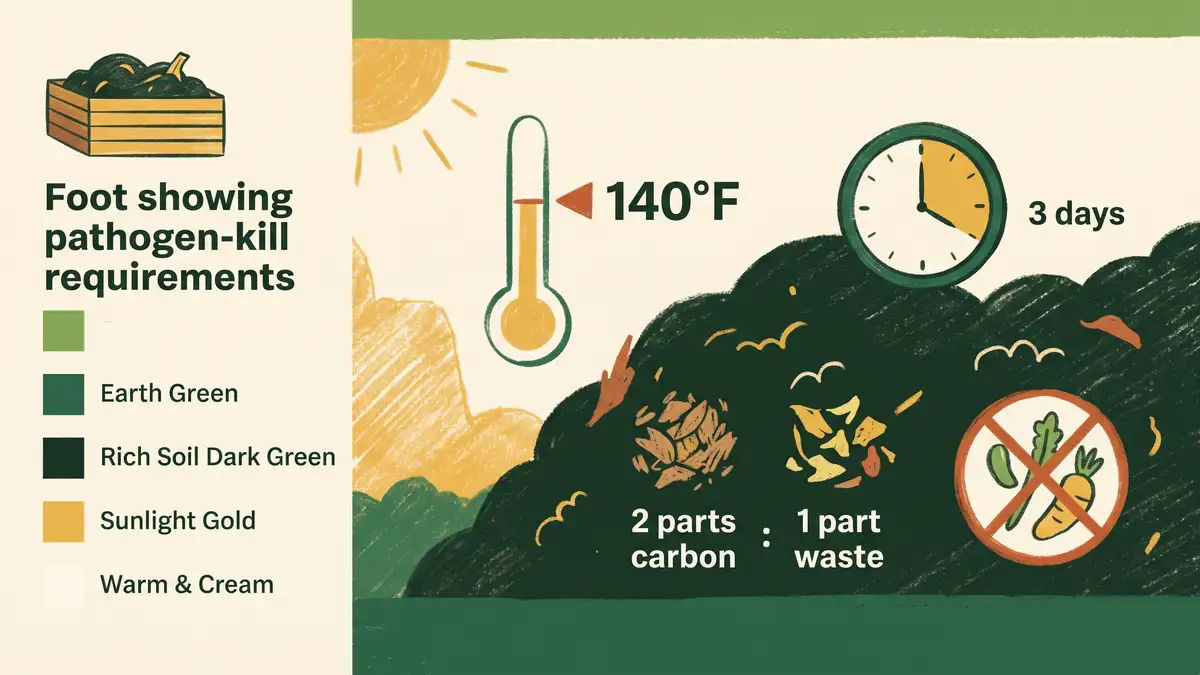
Composting reduces pathogens through sustained heat, and dog waste needs more heat than a casual pile ever produces. The USDA Natural Resources Conservation Service states plainly that the mix must reach about 145°F (63°C) for several days to destroy pathogens. For comparison, the NRCS standard for composting livestock carcasses calls for holding above 130°F (54°C) for 15 days with at least five turnings, and University of Kentucky Extension advises that pet waste must be heated above 140°F (60°C) for three days.
Here is the catch. Extension services from Oregon State to University of Wisconsin both list pet waste among materials you should not put in an ordinary backyard pile, because those piles rarely hold that temperature all the way through. A small bin or an occasional heap of scraps stays cool in the middle and cooler still at the edges, exactly where Toxocara eggs can survive. If you want to compost dog waste, you have to run a real hot-composting system, the kind covered in our guide to building a compost bin.
Never Use It on Food Crops
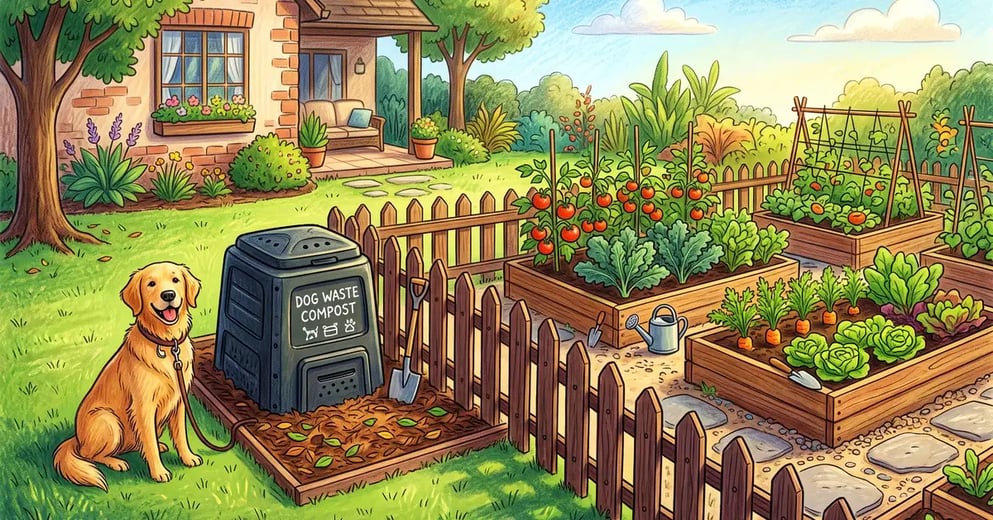
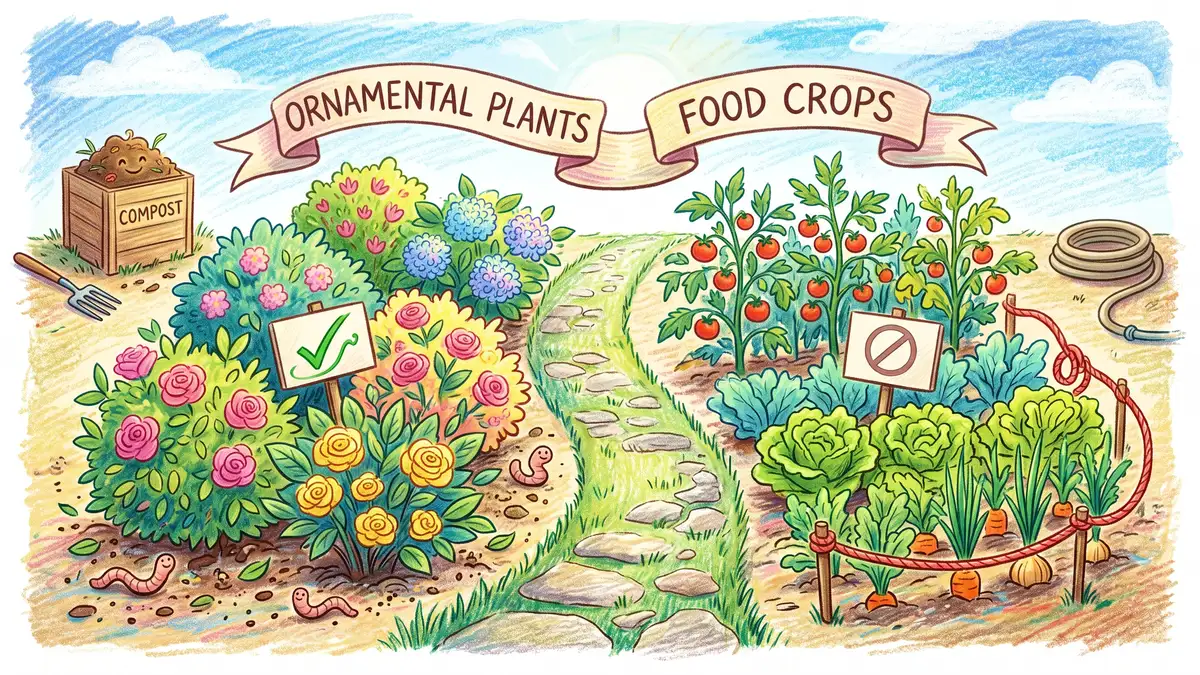
This is the one rule with no exceptions. The EPA and every extension service agree: composted dog waste must never go on vegetables, fruit, herbs, or anything edible, no matter how finished it looks. Roundworm eggs and protozoan cysts are hardy, and the consequences of getting it wrong land hardest on children. Reserve it for ornamentals, shrubs, and tree belts only.
How Do You Compost Dog Waste the Right Way?
If you have the space, the carbon, and the commitment, the USDA's Alaska dog-waste method is the tested playbook. Plan on a dedicated system you never mix with your food-garden compost.
Build a big, insulated bin
You need a pile at least 3 feet (0.9 m) in every dimension to hold heat, sited in full sun and away from where runoff could flow back into the yard. Never compost waste from a sick dog.
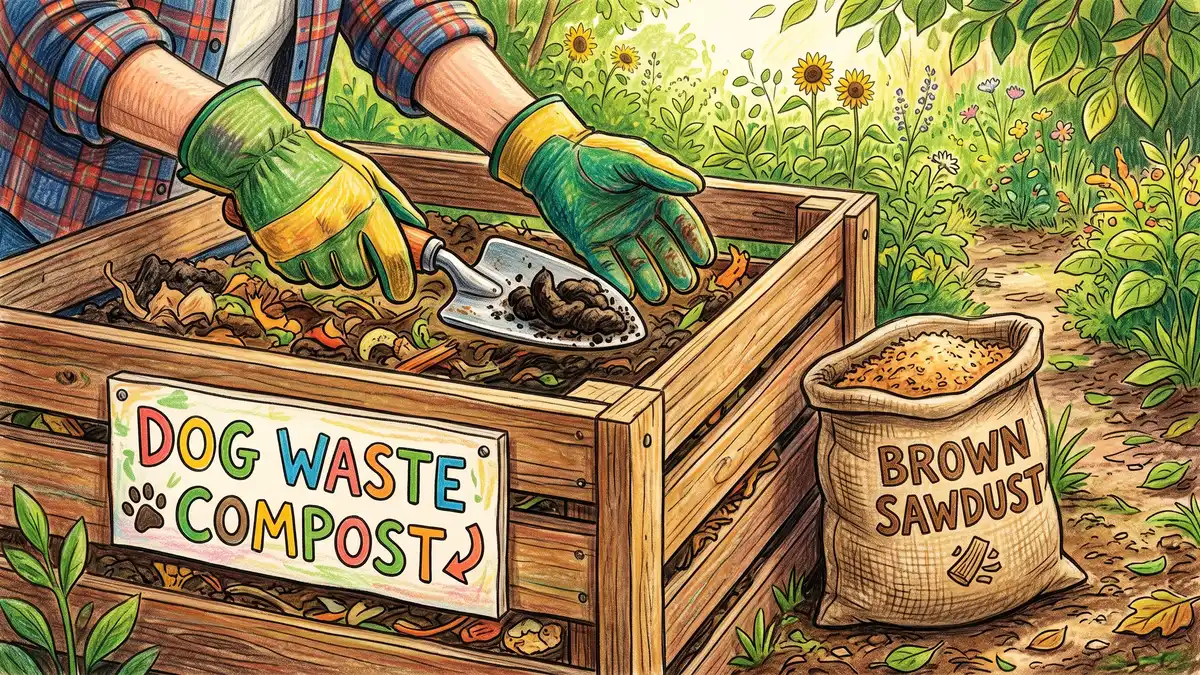
Mix 2 parts carbon to 1 part waste
For every two scoops of dog waste, add one scoop of sawdust, shredded straw, or fallen leaves, and mix each time. Keep it as moist as a wrung-out sponge.
Monitor heat and turn on schedule
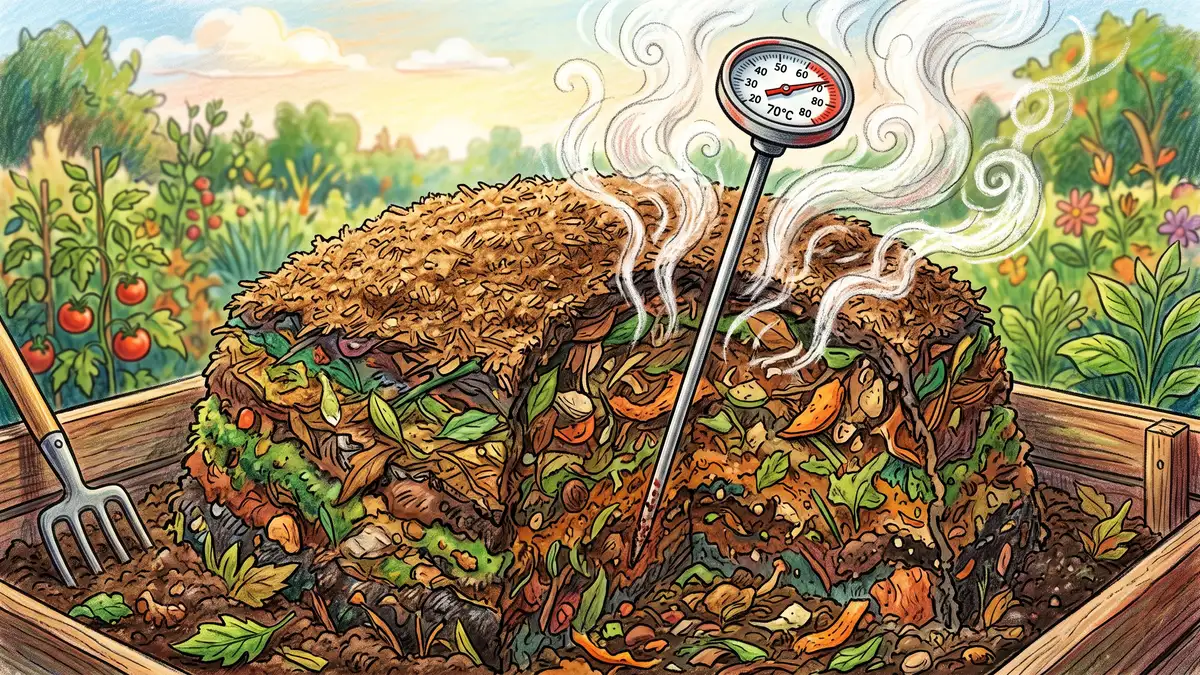
Push a compost thermometer into the center daily and log it. Aim for 145°F (63°C). When the temperature drops, usually after about two weeks, turn the whole pile so the outside moves to the hot center. Repeat over six weeks or more.
Cure for months, then use on ornamentals
Once it stops reheating after turning, let it cure for several months to a year. Then apply it only to flowerbeds, shrubs, or trees, handling it with gloves.
Need the gear for this?
Bins and tumblers picked by yard size, with the honest trade-offs for each.
See the compost bin picksWhat Are the Safer Alternatives?
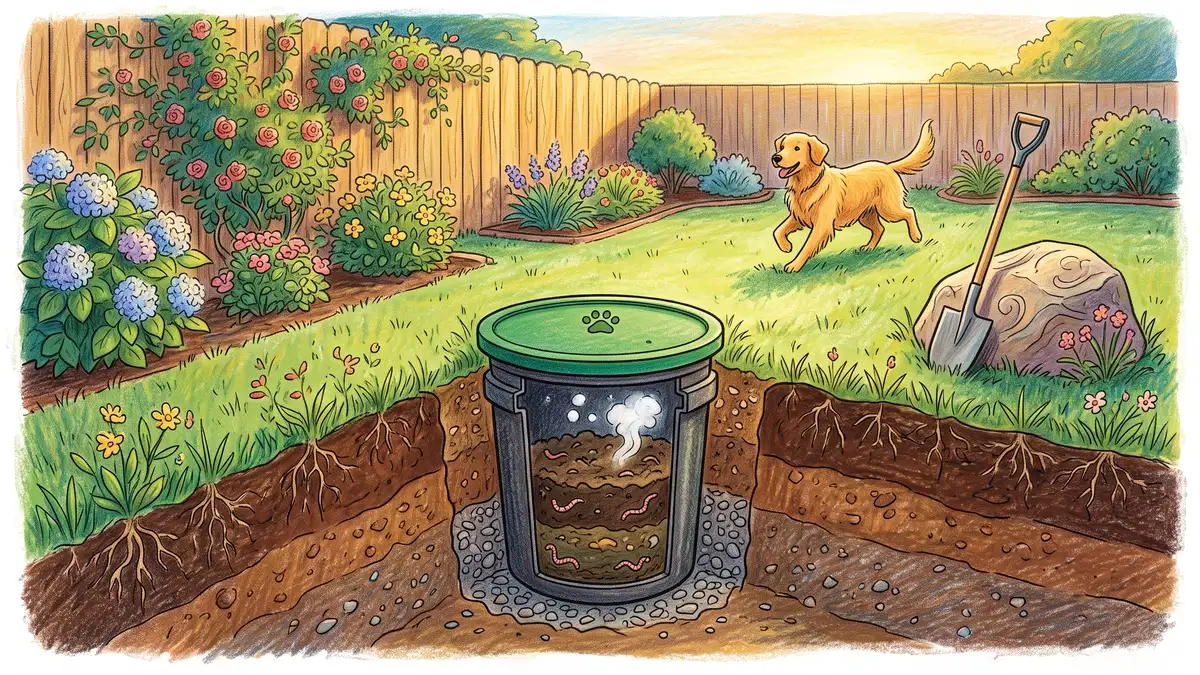
For most weekend gardeners, the realistic answer is to skip garden composting and use a dedicated disposal route instead. The EPA favors two options: flushing waste down the toilet, where it reaches a wastewater treatment plant (not a septic system), or bagging it for the landfill. An in-ground pet-waste digester, essentially a mini septic unit, breaks waste down underground and away from your beds.
This is not just about your garden. The EPA identifies pet waste as a leading source of nutrient and bacterial pollution in urban streams, and University of Kentucky Extension estimates dog waste carries about 3.1 percent phosphorus, so prompt cleanup protects local water too. If you love the idea of recycling organic matter, put that energy into your regular compost pile and a worm bin for kitchen scraps, and let the dog waste go down a safer path. It is a small compromise that fits the permaculture principle of using the right resource in the right place.
Frequently Asked Questions
Can you compost dog poop at home?
Yes, but only in a properly managed hot-composting system, not a regular backyard pile. The USDA's tested method uses a large insulated bin, a mix of two parts carbon to one part waste, and internal temperatures around 145°F (63°C) held for several days, followed by months of curing. Ordinary compost bins and tumblers rarely reach or hold that temperature throughout, which is why extension services list pet waste among materials not to compost casually. tumblers rated for hot composting Whatever method you use, keep the system completely separate from any compost destined for edible plants.
Can you use composted dog waste on vegetables?
No. This is the firmest rule in the entire topic. Even well-finished dog-waste compost can contain hardy roundworm eggs and protozoan cysts that survive imperfect composting, and the EPA and extension services agree it should never be applied to vegetables, fruit, herbs, or any edible crop. Use it only on ornamentals, shrubs, lawns, or tree belts, and always handle it with gloves. The risk falls hardest on young children who play in soil, so the separation between pet-waste compost and food gardens should be absolute.
How long does it take to compost dog waste?
Expect several months at minimum. The active hot phase, with repeated heating to about 145°F (63°C) and turning, takes roughly six weeks or more before the pile stops reheating. After that, the USDA recommends a curing period of several months up to a year so the material stabilizes and any remaining pathogens continue to die off. Rushing this timeline is the main way home systems fail, because a pile that looks finished on the outside may not have held lethal temperatures all the way through.
Why is dog waste treated differently from cow or horse manure?
Diet is the main reason. Cattle, horses, and poultry eat plants, and their manure has a well-studied pathogen profile with established composting protocols behind it. Dogs are meat-eaters, so their waste is more likely to carry organisms like Salmonella and roundworm that readily infect people. Farm manure is also produced at scale with temperature monitoring and curing, while pet waste comes from millions of homes with no oversight. Cat waste is treated as even higher risk because of Toxoplasma gondii, which is especially dangerous during pregnancy.
Does dog poop go in compost or the garbage?
For most people, the garbage or the toilet is the safer choice. Bagging waste for the landfill or flushing it (into a sewer system, not a septic tank) are the two disposal routes the EPA recommends, and both avoid the pathogen risks of home composting entirely. Composting is only worthwhile if you are committed to running a dedicated hot-compost system by the book and you have ornamental areas to use the finished product on. If that sounds like more work than it is worth, you are not alone, and trash or toilet is a perfectly responsible answer.
Get the Weekly Dig
One practical permaculture guide a week, written for gardeners who do this on weekends: composting that actually finishes and soil that feeds itself. Free, no spam, unsubscribe any time.
Join the newsletterResources
- USDA NRCS — Composting Dog Waste (Alaska)
- CDC — About Toxocariasis
- EPA — Pet Waste Management Best Practice
- Oregon State University Extension — Choosing and Using a Composting System
- University of Wisconsin Horticulture — Making and Using Compost
- University of Kentucky Extension — Canine Nutrient Contributions
- Reimschuessel et al. (2017) — Salmonella Prevalence in Dogs
- Colorado State University Extension — Composting