
What Not to Plant Together, and Why Most Charts Get It Wrong
You've seen the chart: a colorful grid of vegetable "friends" and "foes" telling you that onions stunt beans and cabbage sulks near tomatoes. Here's the uncomfortable part. Most of those pairings have never been tested. Mississippi State University Extension warns gardeners to be "mindful of the information you find online, it may or may not be backed by scientific data". are garden planner apps worth it print a chart you can trust
That doesn't mean incompatibility is fiction. A few combinations will genuinely cost you yield, and they fail for four documented reasons: chemical suppression, shared disease, shared pests, and competition for nitrogen, water and light. Know the mechanism and you know whether the fix is distance, time or fertility. That beats a grid of red and green squares, and it pairs with our full companion planting chart.
What you'll get:
- The four mechanisms behind real plant conflict, and how to tell them apart
- Separation distances for black walnut, plus which crops tolerate it
- Rotation intervals for nightshades, brassicas and cucurbits
- Which chart warnings hold up under research and which are folklore
- A five-step layout plan for a four-bed plot
Key Takeaway
Few "never plant together" warnings are evidence-based, and the strong ones come down to allelopathy, shared pathogens, shared pests, or resource competition. Match the mechanism to the fix: chemicals need distance, disease needs time, competition needs fertility.
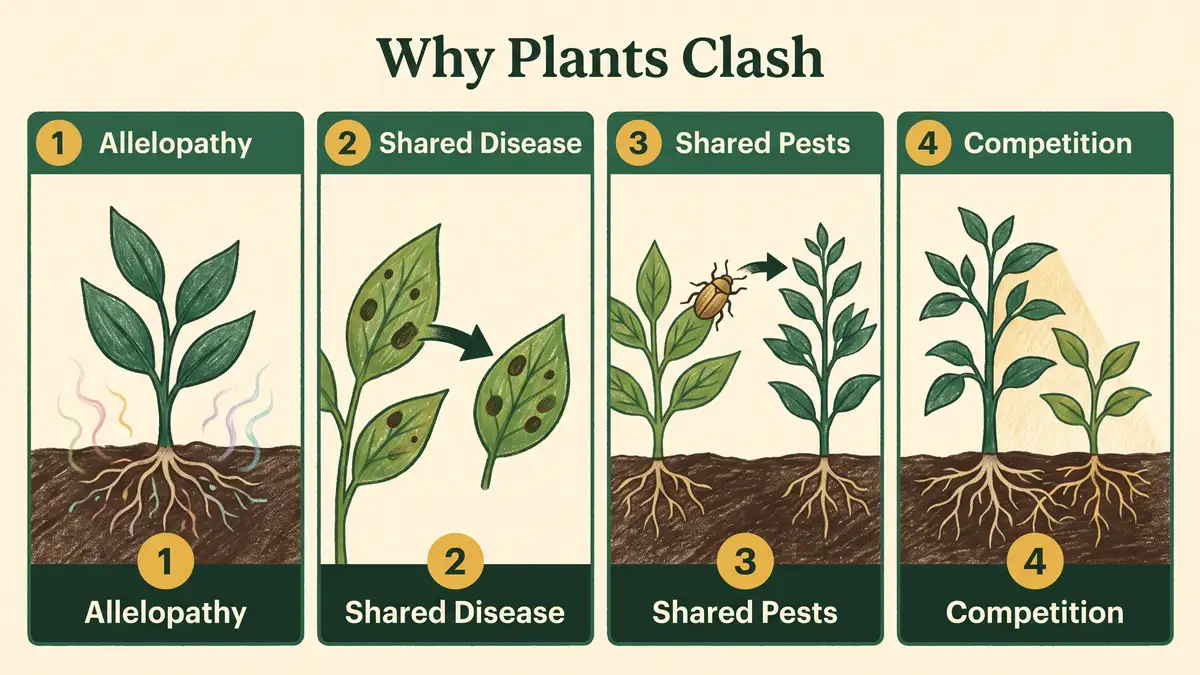
Which Plant Pairings Are Actually Backed by Research?
Start with the strongest evidence and work down. Notice how the well-evidenced entries name a mechanism, while the weak ones describe a vague "stunting."
| Claim | Mechanism | Evidence | What to Do |
| Nightshades near black walnut | Juglone toxicity | Strong | Keep 40 ft (12 m) away or use barrier beds |
| Any brassica in clubroot soil | Soil-borne pathogen | Strong | No brassicas for 5-7 years |
| Tomatoes beside potatoes | Shared late and early blight | Strong | Separate beds, 3-4 year rotation |
| Seeds sown into fresh rye or mustard residue | Allelopathy from residue | Strong | Wait 2-4 weeks after termination |
| Direct-seeded lettuce under fennel litter | Allelopathy from dried leaves | Moderate | Give fennel its own corner |
| Beans stunted by onions | Unspecified | Weak, no data cited | Plant together; watch your own results |
| Sunflowers poisoning beans and potatoes | Claimed allelopathy | Weak, likely shading | Site sunflowers on the north edge |
Sources: Michigan State University Extension, University of Minnesota Extension, USDA NRCS, West Virginia University Extension
That onion row deserves a note. West Virginia University Extension states that "onions and beans should not be interplanted since onion plants stunt the growth of beans", with no study, measurement or mechanism. It shows how a plausible-sounding rule enters the record and gets copied for decades. For the other side of the ledger, see what companion planting research actually supports.
How Far From a Black Walnut Is Safe to Plant?
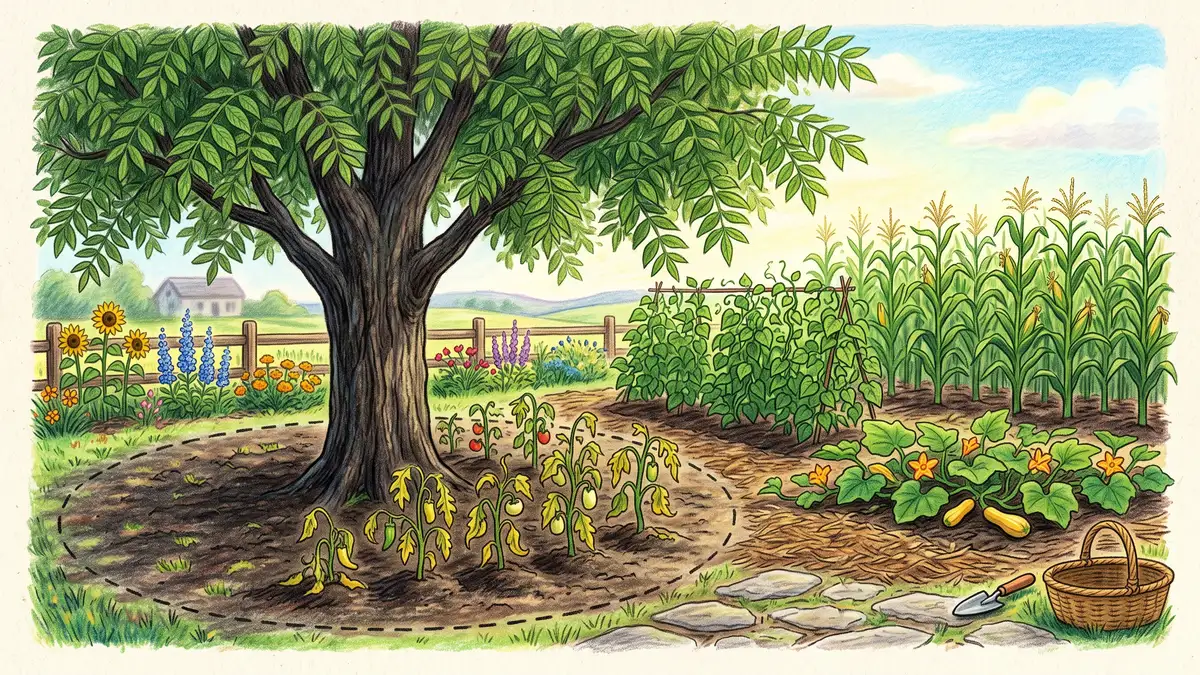
This one destroys a crop outright, and it has the clearest numbers. Black walnut (Juglans nigra) releases juglone from its roots, and rain leaches more from fallen leaves, twigs and husks. Michigan State University Extension is blunt: the walnut always wins, and sensitive plants wilt, yellow and die even with adequate water and fertility.
Roots extend past the visible drip line, out to roughly the tree's height, so a 40-foot (12 m) walnut puts a 30 to 40 foot (9 to 12 m) radius at risk. Penn State Extension adds that juglone toxicity may persist for years after a tree is removed, because decaying roots keep releasing it. Cutting the tree down in March does not free the bed by May.
| Sensitive, Do Not Plant | Tolerant, Plant Freely |
| Tomato, potato, pepper, eggplant | Corn, snap and lima beans, squash, melons |
| Cabbage, asparagus, rhubarb, peas | Onion, garlic, leek, beet, carrot, parsnip |
Sources: Michigan State University Extension, Penn State Extension
No other sunny ground? Build raised beds on a solid base of wood, stone or concrete to exclude tree roots, and keep walnut leaves and shells out of nearby mulch. Budget two hours and $60 to $90 per 4 by 8 foot (1.2 by 2.4 m) barrier bed.
Why This Works: Zone Design
Permaculture design maps a site by what each area offers. A walnut's juglone footprint is a hard constraint on that map, like a frost pocket. Put tolerant crops (corn, beans, squash, alliums) inside the zone and nightshades outside, and the tree stops being a problem. It becomes a boundary you design around.
Why Are Crop Families the Real Dividing Line?
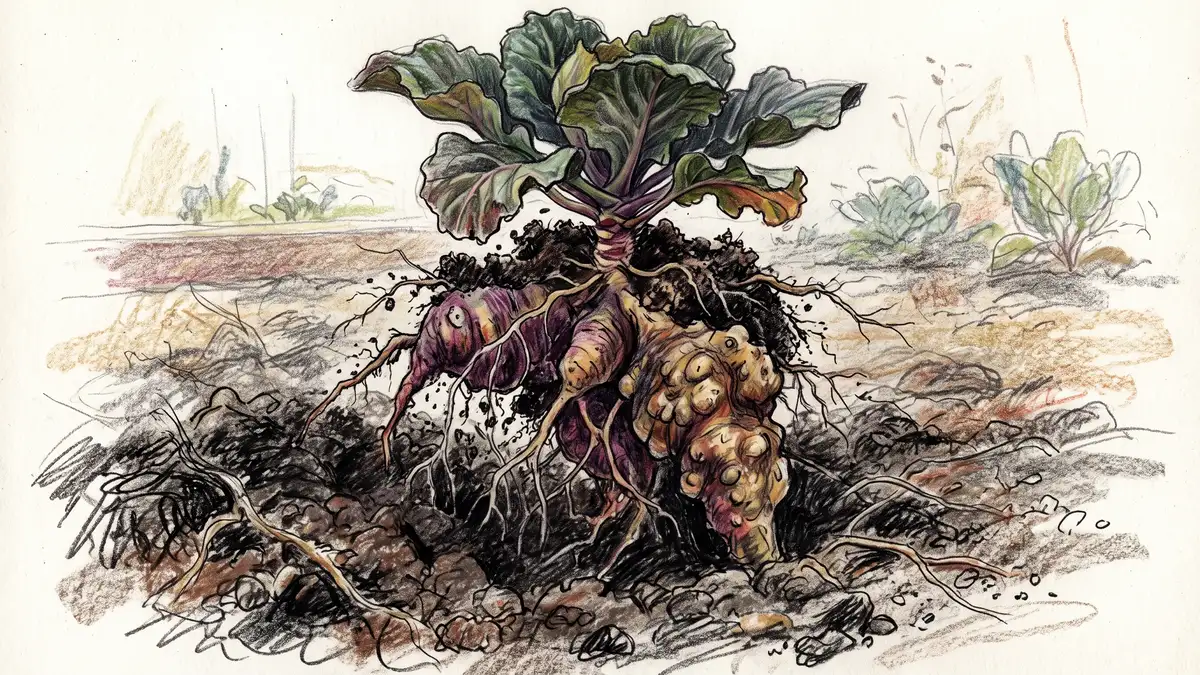
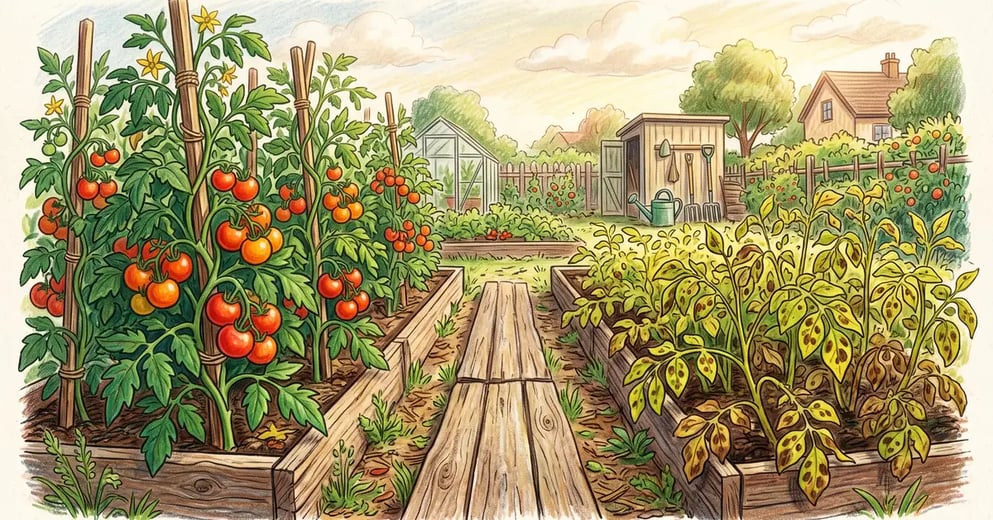
Most genuine incompatibility is not chemistry, it's epidemiology. Tomatoes, potatoes, peppers and eggplant all belong to the Solanaceae and share early blight (Alternaria solani), late blight (Phytophthora infestans), Verticillium wilt and Fusarium wilt. Planting two shoulder to shoulder doubles the susceptible tissue in one spot, and in cool, humid weather an unmanaged late blight outbreak can take close to 100 percent of a crop within days.
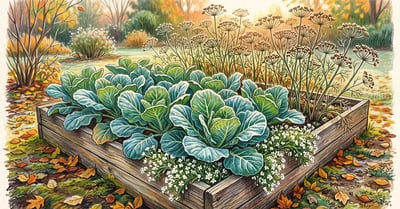
Brassicas have their own version. Clubroot (Plasmodiophora brassicae) produces resting spores that survive for years. University of Minnesota Extension is unambiguous: once clubroot is confirmed, avoid planting brassicas in affected garden areas for 5 to 7 years, and even that reduces rather than eliminates the pathogen. Cabbage, broccoli, kale, Brussels sprouts, radish and turnip all count as one crop for rotation.
Common Mistake to Avoid
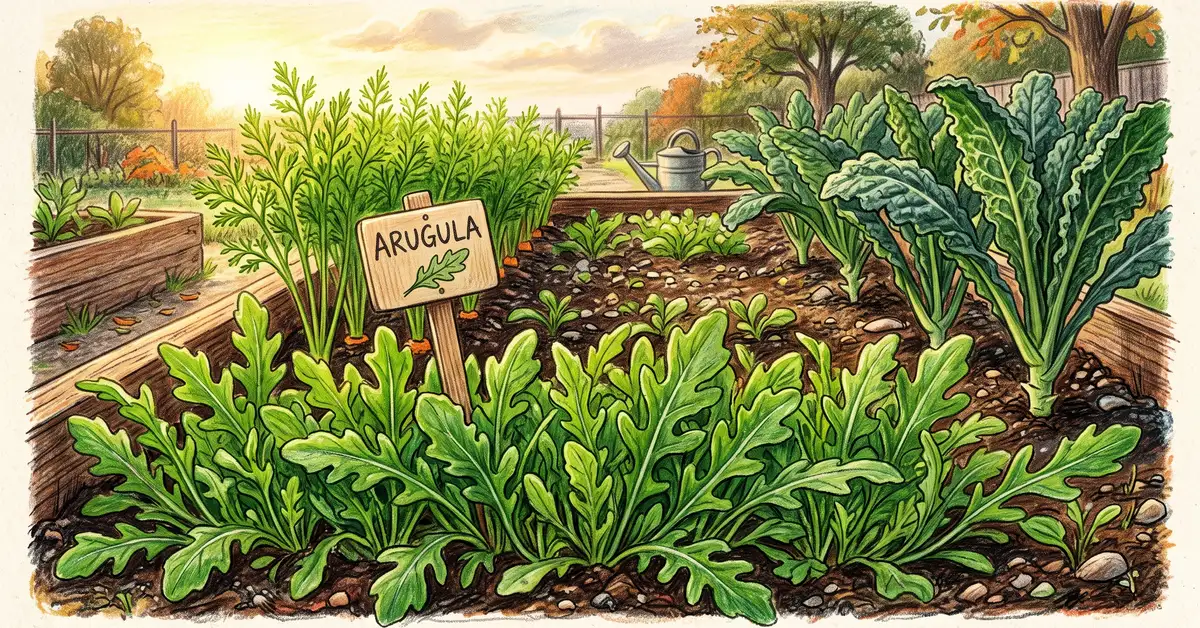
Treating radish, arugula and turnip as "not really brassicas" when planning rotation. They are, and they host clubroot as readily as cabbage. Same slip with tomatillos and ground cherries, which are nightshades and belong in the tomato block.
How Much Competition Is Too Much in One Bed?
Crowding heavy feeders is the quietest way to lose yield. University of Delaware Extension's nutrient removal figures give you something to plan against. Sweet corn at 6 tons per acre removes roughly 48 pounds of nitrogen per acre, and fresh-market cabbage at 100 hundredweight per acre removes about 32 pounds. That works out to roughly 1.1 pounds of nitrogen per 1,000 square feet for corn and 0.7 pounds for cabbage, counting only what leaves in the harvest.
Put corn, cabbage and squash in one unfertilized 4 by 8 foot bed and none will thrive. That's arithmetic, not incompatibility. Feed the bed to match combined demand, or split heavy feeders across beds. Building fertility ahead of the season beats rescuing a stunted crop in July, which is why we lean on winter cover crops and steady compost rather than emergency feeding.
What About Fennel, Rye and Mustard Residue?
Allelopathy is real but short-lived, and it hits germinating seeds hardest. Fennel's antisocial reputation has support. Studying fennel in coastal California, Ruiz and Gliessman found water extracts of leaves and flower stalks at just 2.5 and 5.0 percent concentration by weight inhibited lettuce growth, with air-dried leaves the strongest inhibitors. The danger is the litter, not the living plant.
Cover crop residue behaves similarly. USDA NRCS recommends terminating cereal rye 10 to 14 days before planting corn, while soybeans tolerate heavy residue with no wait. Brassica residue uses different chemistry: a 2024 leaf mustard study found sinigrin made up 79 percent of total glucosinolates, and the cultivar highest in allyl isothiocyanate, at 27.47 micromoles per gram, significantly inhibited lettuce growth. Give any allelopathic residue two to four weeks before direct-seeding carrots, lettuce or spinach.
How Do You Lay Out a Garden Around These Constraints?
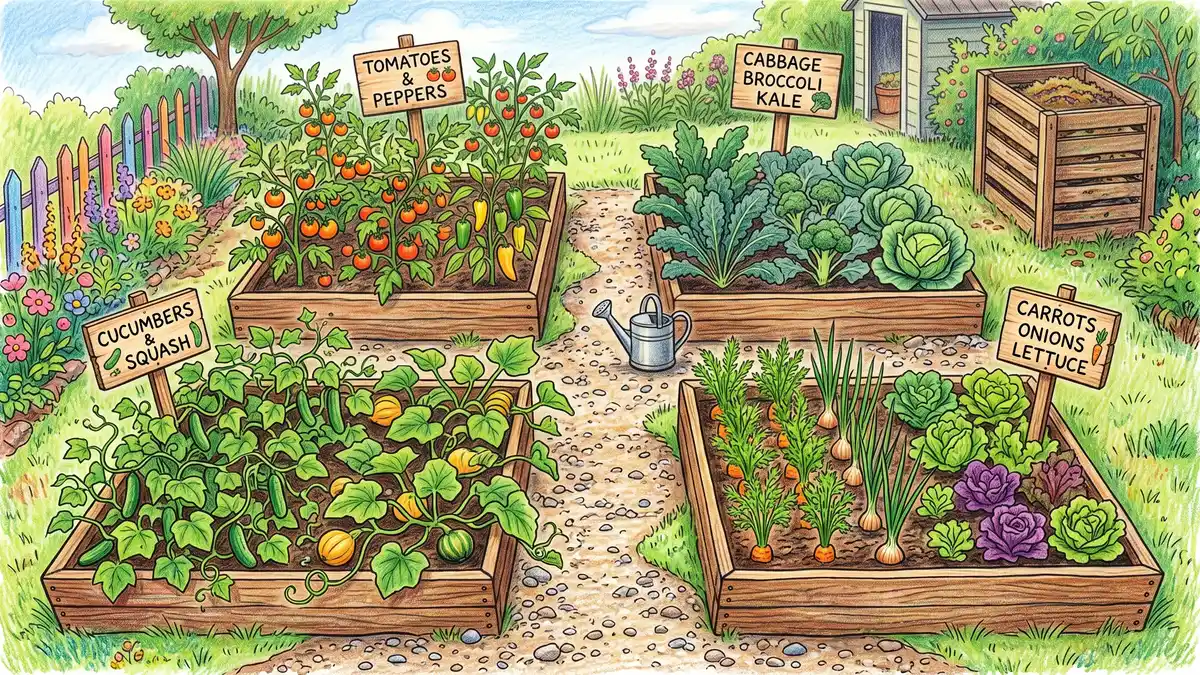
Four beds, four families, rotate one position each year. That single move handles most real incompatibility, and setup takes an afternoon.
Map your hard constraints first
Mark any black walnut and draw a circle at the tree's height in feet. Note where you've had clubroot or wilt. Everything else fits around these.
Assign one crop family per bed
Bed A nightshades (tomato, pepper, potato, eggplant). Bed B brassicas. Bed C cucurbits. Bed D roots, alliums and greens. Legumes go wherever you need nitrogen.
Match fertility to demand
Give the nightshade and cucurbit beds your heaviest compost application, about 2 inches (5 cm) worked into the top 6 inches (15 cm). Root and allium beds need less.
Site tall crops on the north edge
Corn, sunflowers and pole beans belong on the north side so they don't shade shorter crops. Most "sunflowers killed my beans" reports are shading, not toxicity.
Rotate one bed forward each season
A to B, B to C, C to D, D to A gives every family a three-year gap. If clubroot appears, pull brassicas from the cycle for 5 to 7 years and run a five-bed rotation.
If Mixing Is So Risky, Why Does the Three Sisters Work?
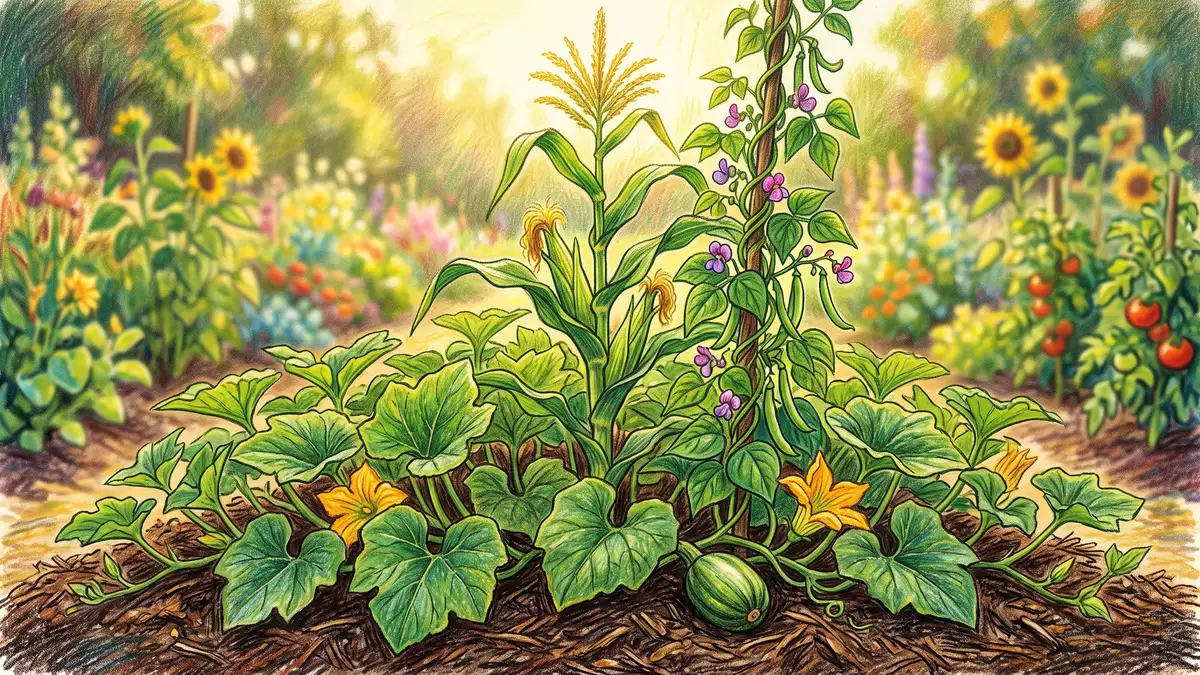
Because the three species occupy different niches instead of competing for one. Corn takes light at height, beans climb it and fix their own nitrogen, squash sprawls low and shades out weeds. Nobody fights for the same resource at the same depth at the same time.
A West Virginia University study on tomato, basil and Brussels sprout intercropping found yield gains depended on planting density and timing, not on combining species someone labelled compatible. Design beats labels, and our guide to polycultures around corn works through the spacing.
Why This Works: Niche Partitioning
In guild design, plants earn a place by filling a different niche: rooting depth, canopy layer, nutrient strategy or harvest window. Incompatibility is what happens when two plants claim the same niche or share the same enemy. Ask what each plant takes and gives back, and most compatibility questions answer themselves.
Key Takeaway
Four beds, one crop family each, rotated a position a year handles most real incompatibility. Add a 40-foot buffer around any black walnut and a 2 to 4 week wait after turning in allelopathic residue, and you've covered nearly every combination with evidence behind it.
Frequently Asked Questions
What should you not plant with tomatoes?
Keep tomatoes away from potatoes, which share late blight, early blight and Verticillium wilt, and out of any black walnut's root zone, since tomatoes are among the most juglone-sensitive vegetables. Separate fennel too, because its dried litter suppresses germinating seeds nearby. Beyond that, most tomato "enemies" in circulating charts are untested. Cabbage next to tomatoes is fine in a fertile, well-spaced bed. The bigger practical risk is crowding, since tomatoes out-compete anything planted too close.
What should you not plant with peppers?
Peppers are nightshades, so the tomato logic applies: keep them out of beds that grew potatoes, tomatoes or eggplant in the last three to four years, and out of walnut root zones. Peppers also dislike heavy shade, so avoid siting them where corn or sunflowers overshadow them by midsummer. Beside tomatoes in a large, well-spaced bed is generally fine, though it concentrates blight-susceptible tissue. Our pepper pairing guide covers partners that do work.
Can you plant zucchini next to tomatoes?
Yes, and it's a reasonable pairing. Different families, so no shared major pathogens, and their growth habits differ enough that a staked tomato and a sprawling zucchini coexist well. The constraint is fertility and space: both are heavy feeders, so allow at least 3 feet (90 cm) between centers and work in 2 inches (5 cm) of compost first. Our squash and zucchini partners guide covers spacing in detail.
Is it true that onions stunt beans?
This appears on many charts, including West Virginia University Extension's, but no study, measurement or mechanism accompanies it anywhere. It most likely entered horticultural tradition, got copied into extension material, and stuck. Plant them together if the layout suits you and watch your results. If beans underperform, check nitrogen, water and shading before blaming the onions. The onion companion guide covers what alliums genuinely contribute.
How long do you wait to replant after clubroot?
Five to seven years with no brassicas in the affected area, per University of Minnesota Extension, and even that reduces rather than eliminates the resting spores. Radish, turnip, arugula, mustard and kale all count. Raising soil pH toward 7.2 with lime and improving drainage both suppress the pathogen, and non-brassica crops grow normally throughout, so the ground is restricted rather than lost. A healthy soil food web also helps suppress soil-borne disease over time.
Get the Weekly Dig
One practical permaculture guide a week, written for gardeners who do this on weekends: permaculture design for real backyards. Free, no spam, unsubscribe any time.
Join the Weekly DigResources
- Mississippi State University Extension: Companion Planting, Myth or Truth?
- Michigan State University Extension: Growing Vegetable Gardens Near Black Walnut Trees
- Penn State Extension: Gardening Around Walnuts and Other Juglone Producers
- University of Minnesota Extension: Clubroot of Brassicas
- USDA NRCS: Allelopathy and Cover Crops
- University of Delaware Extension: Nitrogen Removal by Crops
- Ruiz & Gliessman (2002): Mechanisms of Dominance of Fennel
- Ko et al. (2024): Allyl Isothiocyanate Allelopathy in Leaf Mustard
- Bomford (2004): Garden-Scale Companion Planting Study