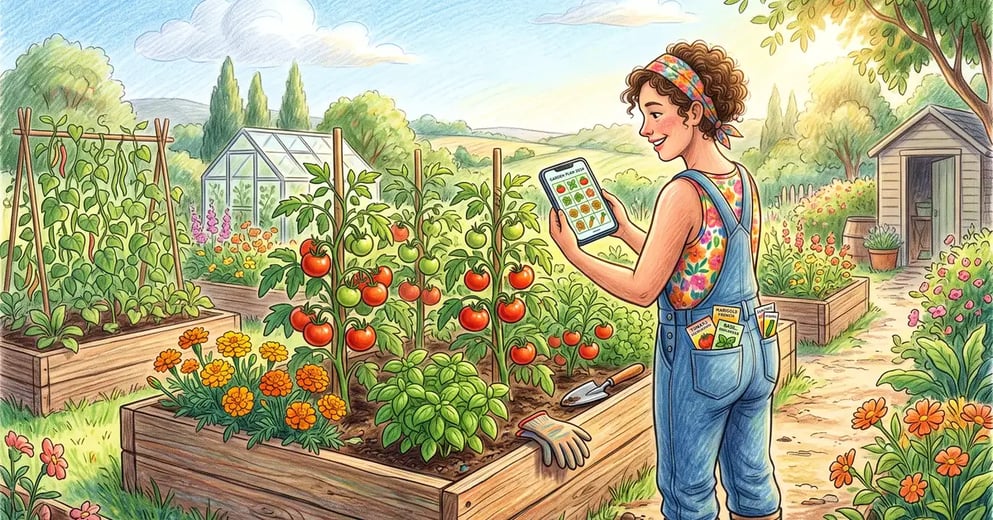

You have probably seen the ads. Draw your beds, drag in your crops, and the app tells you what to plant next to what, when to sow it, and when to harvest. For somewhere between $25 and $50 a year, somebody else does the thinking. a printed chart instead
We have used several of these. The honest answer is that garden planner apps are genuinely good at about half of what they promise, and the half they are weakest at is the half with "companion planting" written on it. Here is how to tell which is which before you subscribe.
What Do Companion Planting Apps Actually Do?
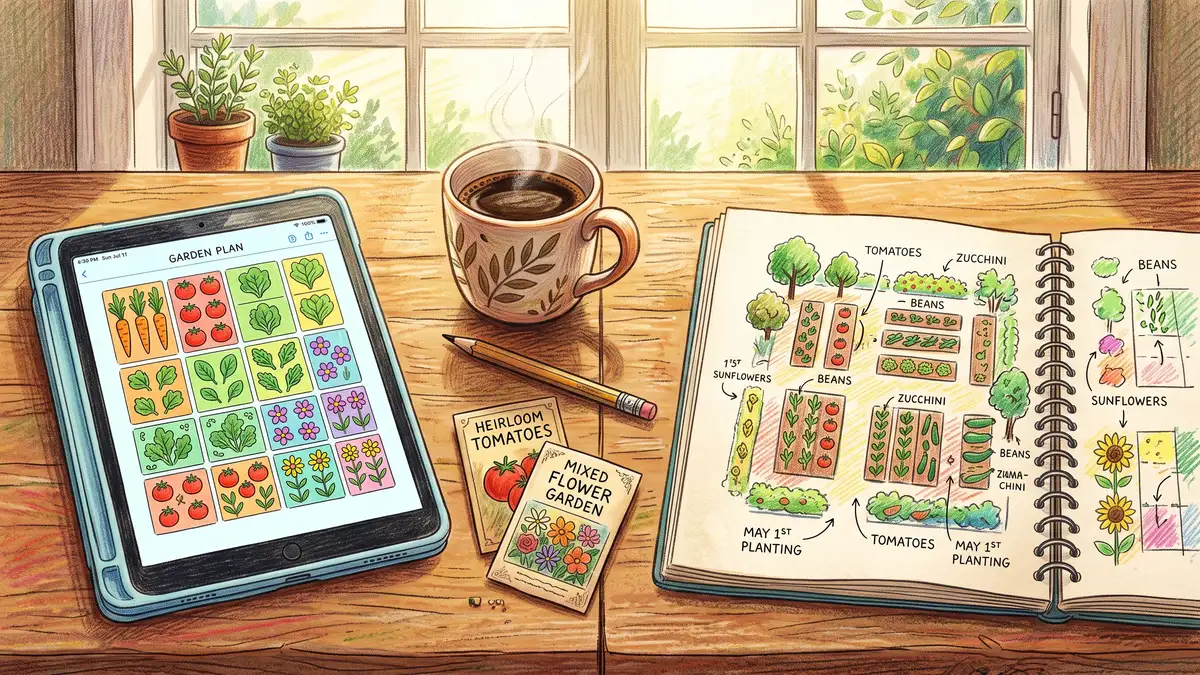
Most garden planning apps bundle four things: a bed layout tool, a planting calendar keyed to your zip code or frost date, a plant database with spacing and days-to-maturity, and a companion planting table that flags "friends" and "foes" as you drag crops around.
The first three are ordinary reference data, and apps handle them well. The fourth is where things get interesting, because that friend-and-foe table is doing something the other three are not: it is making pest and yield claims.
What you'll get out of this guide:
- Where the companion data inside these apps actually comes from
- Which pairings have measured evidence and which are inherited tradition
- The app features that are genuinely worth paying for
- When a free extension calendar beats a $50 subscription
Key Takeaway
Pay for the scheduling and the record keeping, not the companion table. Frost dates, spacing, succession timing and crop rotation are well-evidenced and genuinely tedious to track by hand. The pairwise "plant these together" grid is largely 1970s garden folklore, digitised.
Where Does App Companion Planting Data Come From?
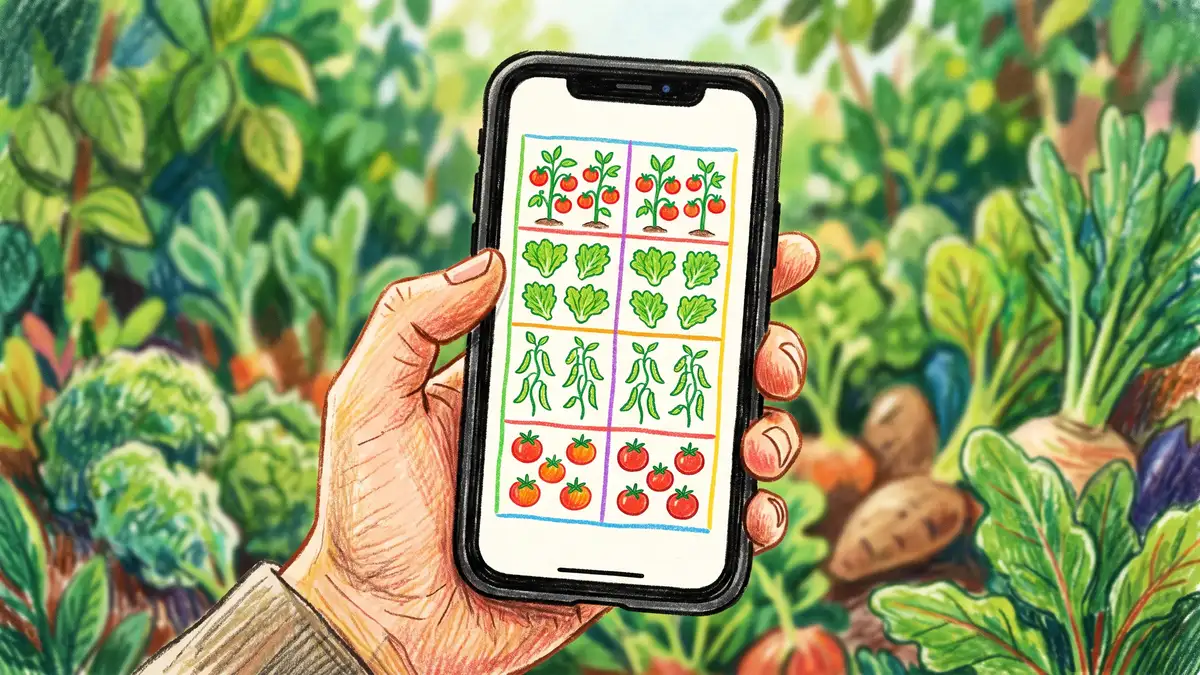
Trace almost any app's companion table back far enough and you arrive at the same place: Louise Riotte's Carrots Love Tomatoes, published in 1975, itself drawing on earlier biodynamic writing. That book compiled traditional pairings into the tidy grid that has been copied, reformatted and eventually coded into software ever since.
Compilation is not the same as testing. Very few of those pairings were ever put through a controlled trial, and the chart carries no distinction between the handful with real research behind them and the many that are simply repeated.
Extension services are noticeably careful here. University of Minnesota Extension leads with mechanisms rather than pairings, and Washington State University Extension's Home Garden Series, written by Linda Chalker-Scott, explicitly frames its purpose as encouraging "scientifically sound" companion practices, which is a polite way of noting that plenty of the popular ones are not. UC Master Gardeners draw the same line between studied and unstudied claims.
Which Companion Pairings Actually Have Evidence?
Some do, and they are worth knowing because they are mechanism-driven rather than mystical. The classic is carrots and onions: Uvah and Coaker (1984) found mixed cropping reduced carrot rust fly attack, most plausibly because onion volatiles disrupt the fly's host-finding. That paper has been cited over 200 times and remains the reference case.
| Claim | Status | What the Research Shows |
| Onions confuse carrot rust fly | Supported | Uvah & Coaker 1984, host-finding disruption |
| Marigolds suppress nematodes | Supported, narrow | Alpha-terthienyl is nematicidal, not a general pest repellent |
| Trap crops divert pests | Supported, conditional | UGA: helps, but does not work for every grower |
| Legumes feed their neighbours | Partly supported | 35-45% of N fertilizer replaced in intercropping systems |
| Basil repels tomato hornworm | Not supported | Some evidence against thrips, none for hornworm |
| Borage improves tomatoes | Not supported | No experimental evidence located |
Sources: Uvah & Coaker (1984), Hamaguchi et al. (2019), UGA Extension C1118, Chen et al. (2026).
The marigold case is a good illustration of how apps flatten nuance. Hamaguchi and colleagues (2019) showed that alpha-terthienyl, an allelochemical from Tagetes roots, genuinely suppresses plant-parasitic nematodes. That is a root-zone effect on a specific soil organism. It is not "marigolds keep bugs off your tomatoes", which is what the chart implies.
Even celebrated systems get revised. The push-pull maize technique was long credited to Desmodium repelling stemborer moths, until Erdei and colleagues (2024) found it does not repel them at all and the benefit comes from another mechanism. If a well-funded agricultural system can be misattributed for two decades, a $40 app's lookup table deserves some scepticism.
Why This Works: Polyculture Over Pairs
Notice that every supported case is about diversity and mechanism, not about two specific plants liking each other. That is the permaculture read on companion planting: you are not matchmaking, you are building a mixed community where pests struggle to find hosts and roots occupy different depths. A guild is a system, not a pairing, which is exactly what a two-column friend-and-foe grid cannot represent.
What Do Garden Planner Apps Genuinely Do Well?
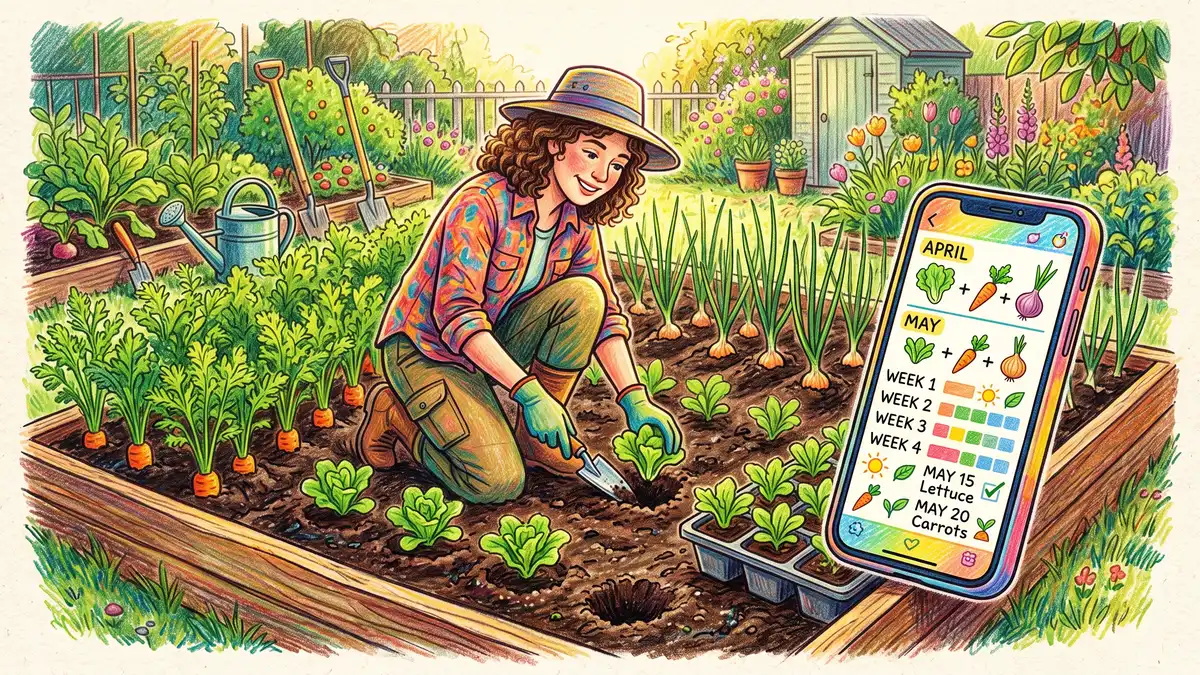
The unglamorous features are the ones worth money. Frost dates, days to maturity, plant spacing and succession intervals are all published reference data, and encoding them correctly is a real service. Working out when to start your third sowing of lettuce so it lands before the heat is tedious arithmetic that software does instantly and correctly.
Crop rotation tracking is the sleeper feature. University of Wisconsin Extension notes rotation reduces insect damage, limits disease development and helps manage fertility, and it works on plant families over multiple years. Almost nobody remembers what was in bed three two seasons ago. An app does.
University of Maryland Extension treats succession and interplanting together for the same reason: the value is in the sequencing and spacing decisions, which are calculable, rather than in the pairing lore, which is not.
Check Your Exit Before You Subscribe
Before you put three seasons of harvest records into an app, find the export button. Garden apps get abandoned regularly, and records trapped in a dead subscription are gone. If there is no way to export your garden history to a spreadsheet or PDF, treat the app as a planning tool only and keep your yield notes somewhere you own.
So Should You Pay for One?
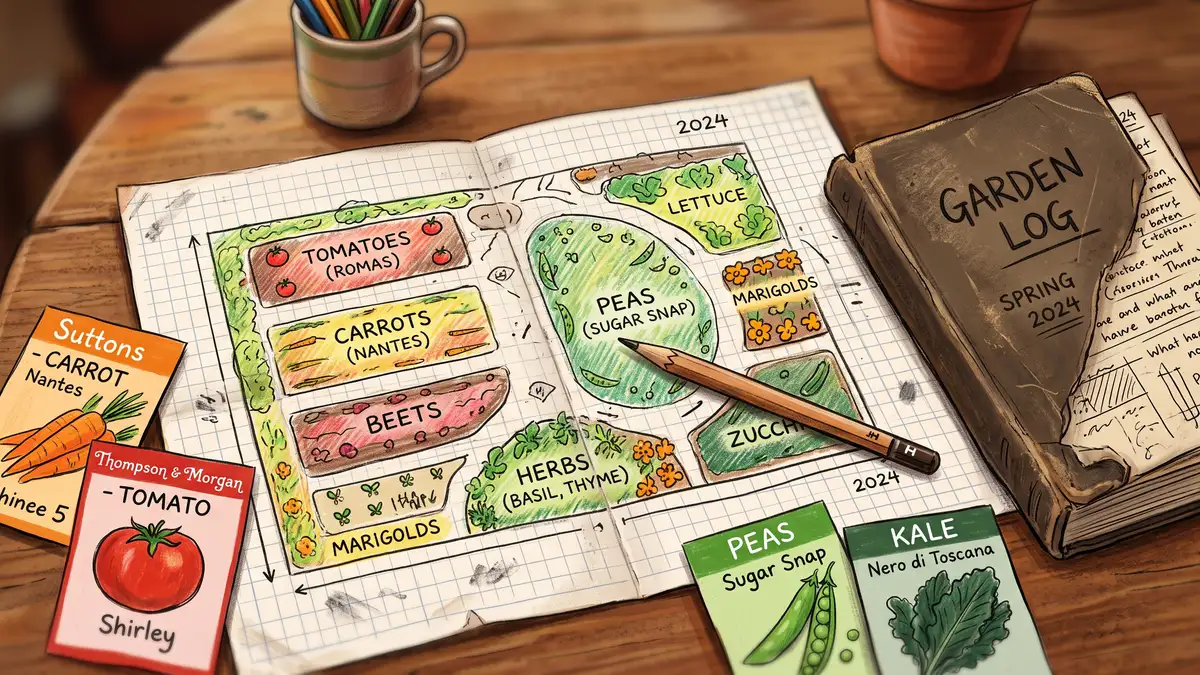
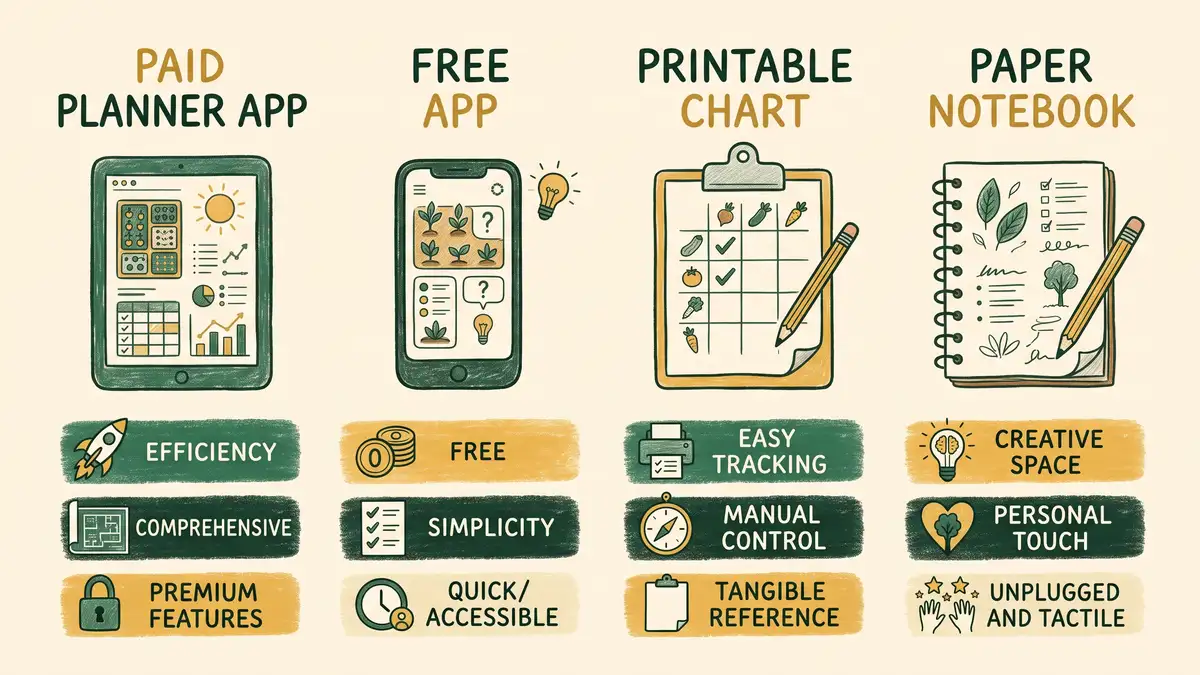
It depends almost entirely on how complicated your garden is. Two raised beds and a handful of crops do not need software. Our free companion planting chart and a notebook cover it, and you will remember your own garden better for having drawn it.
The picture changes with scale. Once you are running successions across eight or more beds, tracking rotation by family, and want yield records year on year, the arithmetic genuinely outgrows memory.
| Your Situation | Recommendation |
| 1-3 beds, few crops | Free chart and a notebook |
| Balcony or containers | Free app tier at most |
| 6+ beds with successions | Paid planner is defensible |
| Market garden or CSA | Paid, and check the export |
| Polyculture or guild design | Paper. Grid tools model this badly |
Sources: pricing observed on official App Store and Google Play listings, August 2026. Subscription costs change frequently, so check the store page before subscribing.
That last row matters for anyone gardening in layers. Nearly every planner assumes rectangular beds of single crops on a grid. If you are designing a permaculture guild with a fruit tree, understory shrubs and ground cover all occupying the same square yard, the software will fight you the entire way.
Frequently Asked Questions
Are companion planting apps accurate?
Partly. Their spacing, frost date and days-to-maturity data is generally accurate, because it comes from published reference sources that are easy to verify. Their companion planting recommendations are much weaker, because most trace back to compiled tradition rather than trials. Extension services including Minnesota, Washington State and UC Master Gardeners all draw a line between mechanisms with evidence and pairings that are simply repeated. Apps rarely draw that line, so a well-evidenced pairing and a piece of folklore appear side by side with identical confidence.
What is the best free option?
For most home gardeners, a printable chart plus your regional extension service's planting calendar. The extension calendar is free, locally calibrated and maintained by people with no subscription to sell. Several apps offer free tiers that handle basic bed layout, which is enough if you want a visual plan without paying. Where free tiers usually stop is multi-year record keeping and succession scheduling, which is exactly the part worth paying for if you need it.
Do these apps handle crop rotation properly?
The better ones do, and it is their strongest feature. Rotation works at the plant family level across several seasons, so it needs a memory longer than yours. Wisconsin Extension notes rotation reduces pest damage, limits disease and helps manage fertility. Check that the app groups by botanical family rather than by loose categories like "greens", because family is what actually determines shared pests and diseases.
Can an app design a food forest or guild?
Not well. Planner apps are built on a square-grid model of annual vegetables in rows, which suits a market garden and suits a food forest badly. Vertical layering, perennials that occupy space for decades, and overlapping canopies do not map onto a grid. Most designers working this way still use paper, tracing overlays or general drawing software. If layered perennial design is your goal, treat a planner app as a tool for the annual beds only.
Does companion planting work at all, then?
Yes, but not the way the charts describe. The evidence supports diversity, trap cropping, host-finding disruption and specific chemistry like marigold root exudates against nematodes. It does not support most pairwise "friends and foes" claims. A mixed, densely planted bed will generally outperform a monoculture on pest pressure. Our guide to what not to plant together covers the incompatibilities that do hold up, which are mostly about competition and shared diseases.
Get the Weekly Dig
One practical permaculture guide a week, written for gardeners who do this on weekends: companion pairings that hold up under scrutiny, and the ones that do not. Free, no spam, unsubscribe any time.
Join the Weekly DigResources
- UMN Extension — Companion planting in home gardens
- WSU Extension — Gardening with Companion Plants
- UC Master Gardeners — Companion planting in the vegetable garden
- UMD Extension — Vegetable succession and companion planting
- Wisconsin Extension — Crop rotation in the home vegetable garden
- UGA Extension — Trap cropping for small-market growers
- Uvah & Coaker (1984) — Mixed cropping and carrot pests
- Hamaguchi et al. (2019) — Nematicidal action of alpha-terthienyl
- Erdei et al. (2024) — Desmodium does not repel stemborer moths
- USDA National Agricultural Library — The Three Sisters