
Squash bugs flattening your zucchini. Aphids curling the kale. Flea beetles turning seedlings into lace. When pests swarm the garden, the usual response is to reach for a spray. Trap cropping offers a smarter move: give the pests a plant they like even better than your crop, let them pile onto it, and deal with them there instead of everywhere. insectary plants Blue Hubbard as a cucumber beetle trap crop shot-hole damage on brassicas arugula companion plants
It sounds too tidy to be real, but the research backs it up. In University of Massachusetts field trials, a simple border of Blue Hubbard squash around the main crop cut insecticide use by up to 94 percent with no loss of yield. This guide covers the trap crops that actually work, where and when to plant them, and the one step most gardeners skip that turns a trap crop into a pest nursery. It builds on the ideas in our companion planting guide.
What you'll learn:
- The best trap crop for each common garden pest
- How far from your crop to plant the trap, and how early
- The critical step that makes or breaks the whole strategy
- Why marigolds are not the pest repellent you were told they are
Key Takeaway
Trap cropping works by attraction, not repulsion. You plant something pests love more than your vegetables, usually along the edge, and they gather there instead. It can cut spraying dramatically, but only if you then remove or treat the trap plants before the pests breed and spill back into your crop. Skip that step and you have simply built the pests a nice home.
Which Trap Crops Stop Which Pests?
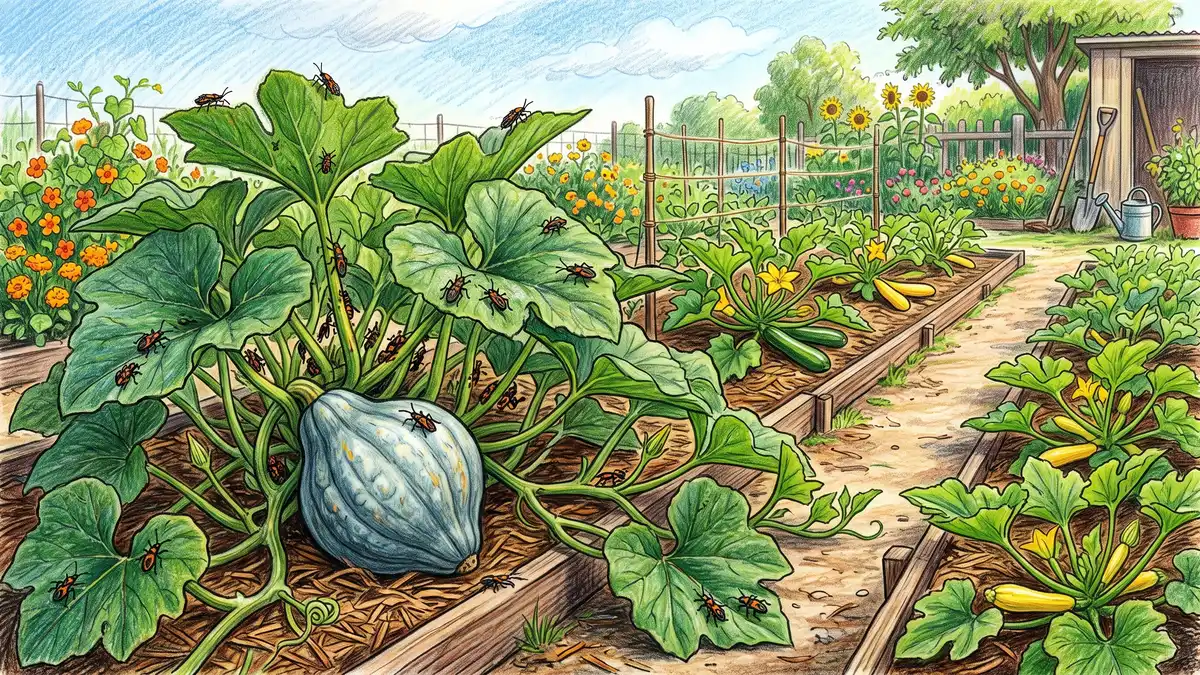
The pairing matters more than anything. A trap crop only works if the pest genuinely prefers it to your vegetables. Decades of extension research have pinned down the reliable matches. The standout is Blue Hubbard squash, which striped cucumber beetles, squash bugs, and squash vine borers find irresistible; a Rutgers demonstration found cucumber beetles only on the Blue Hubbard border and not on the butternut squash in the center.
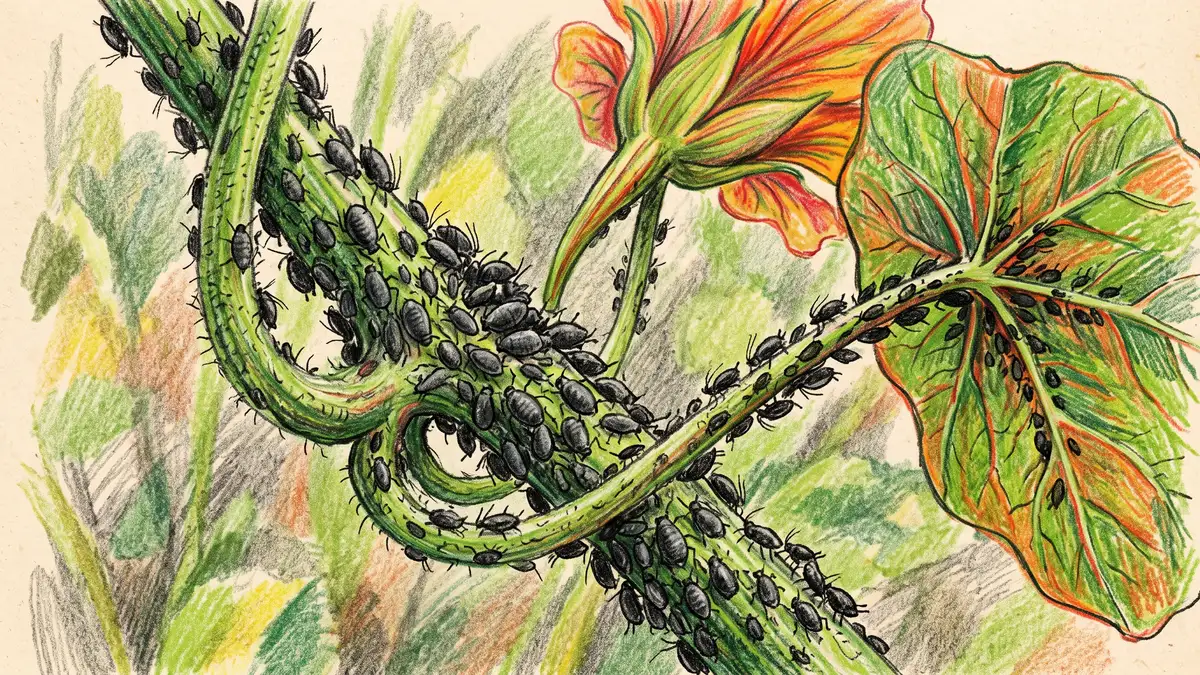
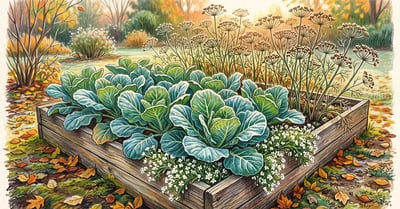
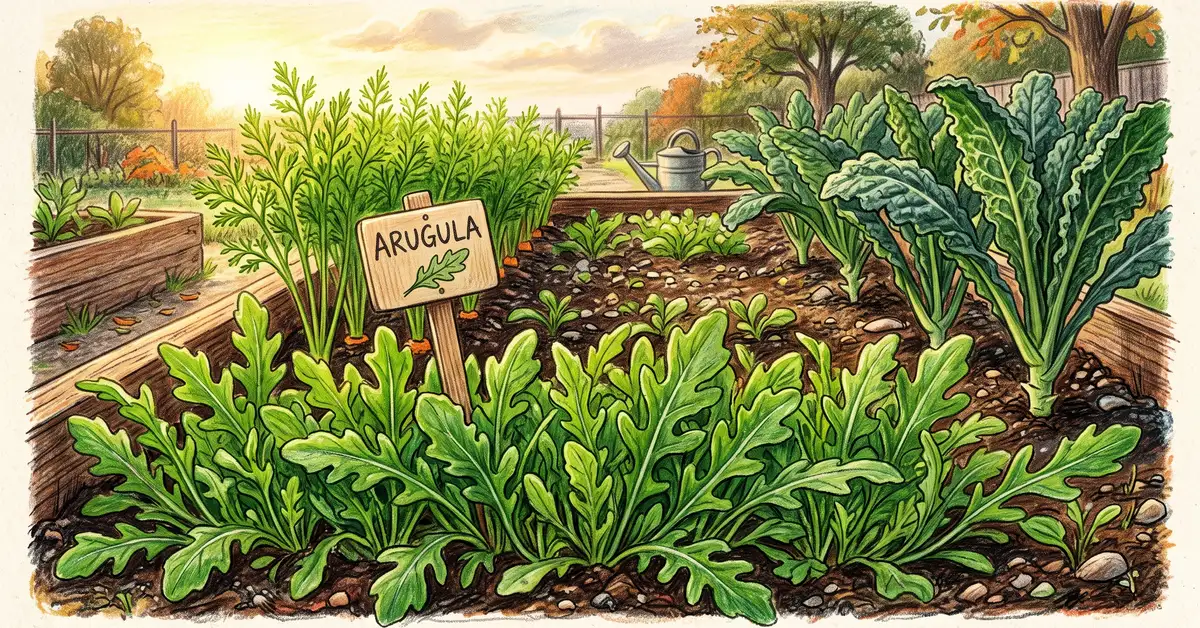
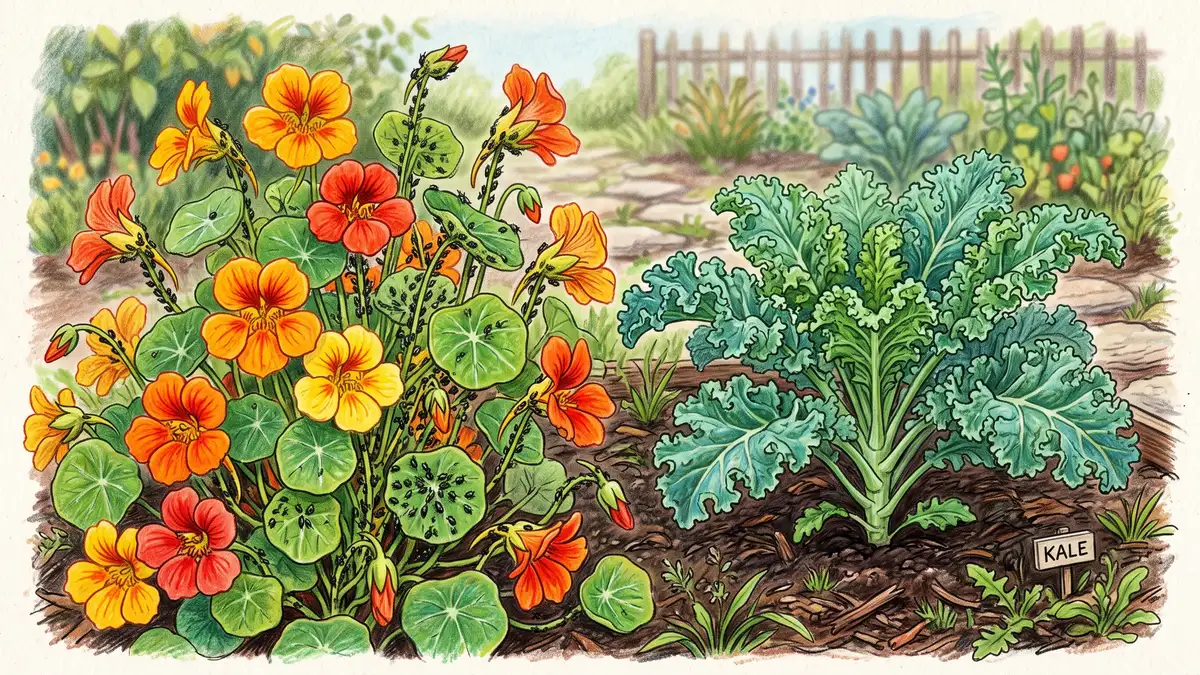
For brassicas, radish pulls flea beetles off your cabbage and kale, and mustard greens draw harlequin bugs. Nasturtiums and calendula soak up aphids, which is why they earn a spot near lettuce and tomatoes. And for the stink bugs and leaf-footed bugs that ruin tomatoes, a row of sunflowers or sorghum at the garden edge catches them first. If aphids are your main headache, our guide to nasturtiums as trap crops goes deeper on that pairing.
| Trap Crop | Pest It Catches | Crop It Protects |
| Blue Hubbard squash | Cucumber beetles, squash bugs, vine borers | Zucchini, summer squash, pumpkins |
| Radish | Flea beetles | Cabbage, kale, broccoli |
| Mustard greens | Harlequin bugs | Collards and other brassicas |
| Nasturtium, calendula | Aphids | Lettuce, tomatoes, peppers |
| Sunflower, sorghum, okra | Stink bugs, leaf-footed bugs | Tomatoes, peppers |
Sources: University of Georgia Extension, University of Minnesota Extension
Where and When Do You Plant Them?
Plant the trap early, on the edge, with a little breathing room from your crop. Get these three things right and trap cropping mostly runs itself.
Plant it about two weeks early
The trap only works if it is bigger and more attractive than your crop when pests show up. University of Georgia Extension suggests sowing the trap crop roughly two weeks before the main crop, and staggering new plantings every two to three weeks for season-long coverage.
Put it on the perimeter
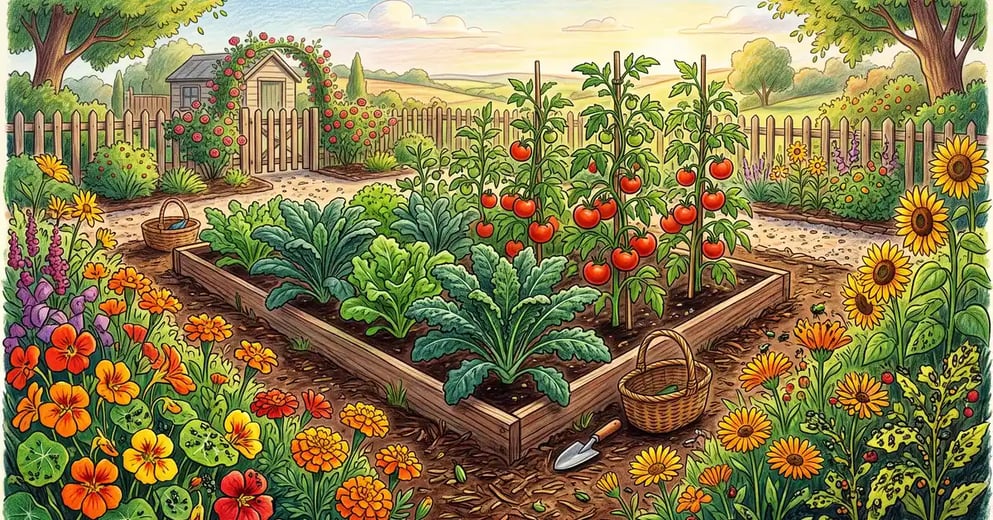
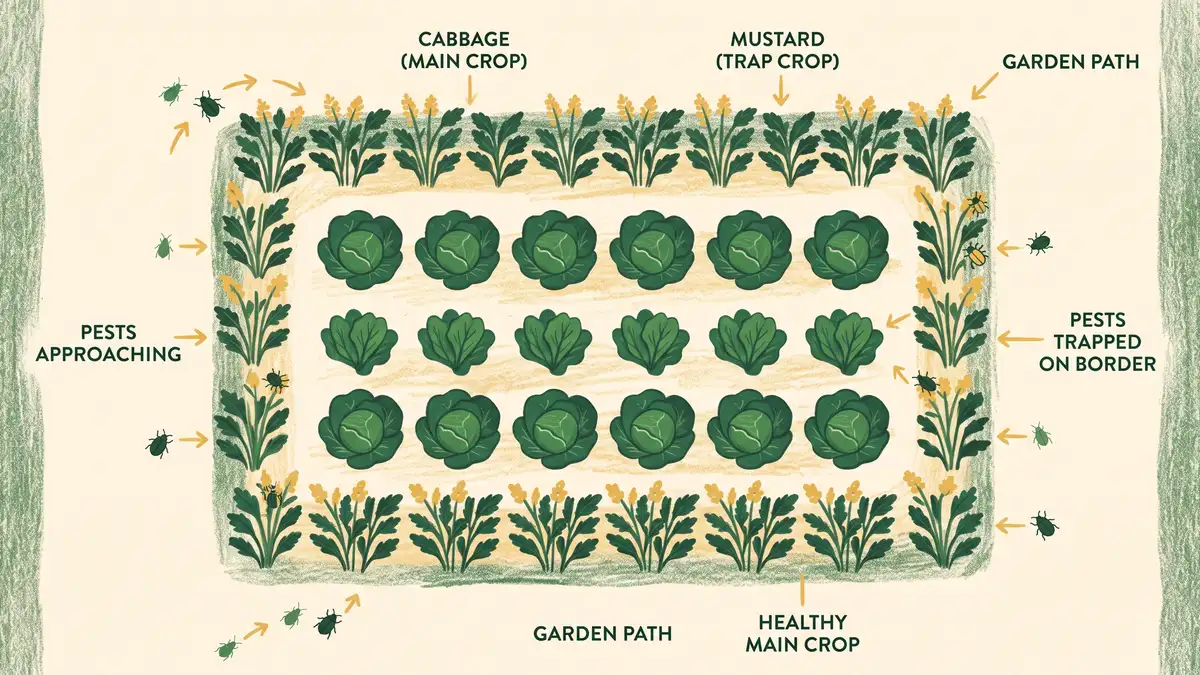
Most garden pests arrive from the edges, so a border intercepts them first. Ring the bed, or plant the trap along the side the pests come from. Two to three rows work better than a thin single line.
Leave a small gap
For mobile pests, a little separation stops them hopping straight onto your crop. Researchers found a roughly 8-foot (2.4 m) gap between a mustard border and collards cut harlequin bug egg-laying fourfold. UGA suggests planting traps 8 to 12 feet (2.4 to 3.7 m) from the crop.
Why This Works: The Edge Effect
Here is the fun part. Most garden pests do not parachute into the middle of your bed; they walk or fly in from the wild edges and hedgerows, following scent and sight until they hit the first tasty plant. A trap crop simply puts that first tasty plant where you want the pests to stop. You are not fighting insect behavior, you are steering it, which is the same read-the-pattern thinking behind good permaculture design.
The One Step Everyone Skips
You have to remove or treat the trap crop, not just plant it. This is where most home trap cropping fails. A trap plant loaded with aphids or squash bugs is not a victory; it is a breeding ground. If you leave it, the pests reproduce and their offspring march right into your vegetables. The whole strategy hinges on dealing with them while they are conveniently concentrated in one place.
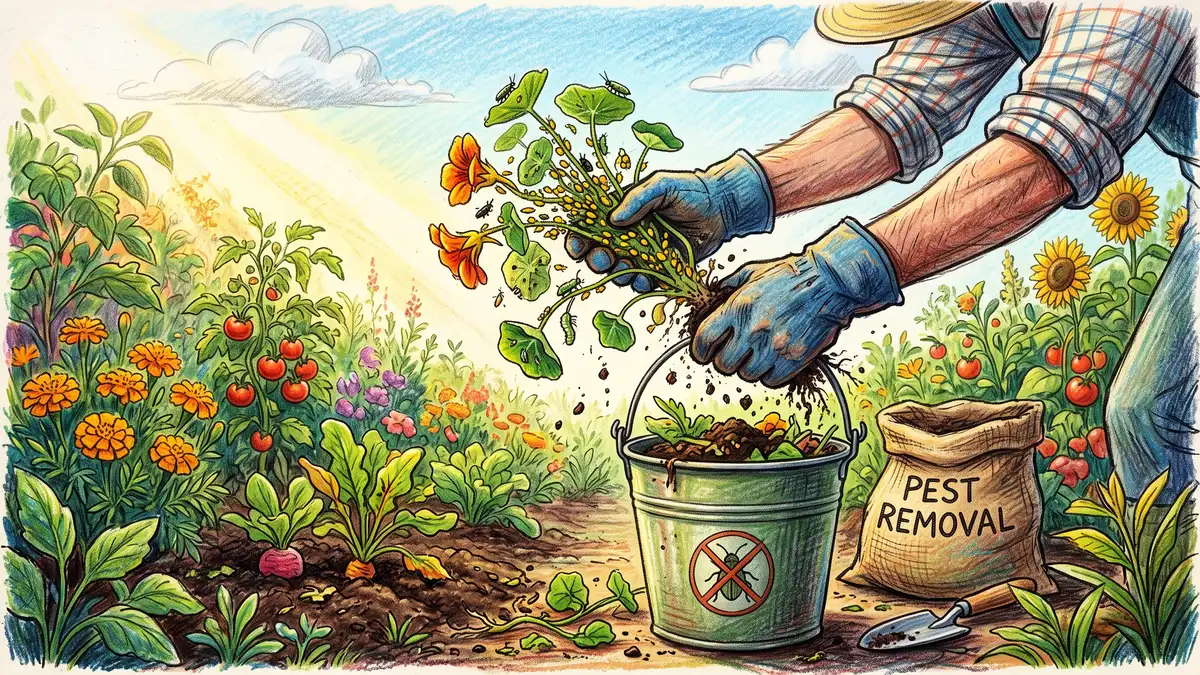
Scout the trap crop every few days. For aphids, snip off the crowded stems and drop them in soapy water, or spray just the trap plants with insecticidal soap. For squash bugs and beetles, hand-pick them or treat only the border; NCAT recommends applying organic controls to the trap crop before beetles migrate into the main patch. When a trap plant is overwhelmed, pull it and bag it. Because everything is in one spot, you spray far less and spare the pollinators and beneficial insects in the rest of the garden.
Common Mistake to Avoid
Do not scatter single trap plants throughout your beds and walk away. Intermingled traps let pests feed on the decoy by day and your crop by night, and an unmanaged trap crop simply grows a bigger pest population that eventually floods your vegetables. Keep traps as a distinct border or block, and commit to checking and clearing them on a schedule. Trap cropping is a tool you tend, not a plant-and-forget fix.
Do Marigolds Really Repel Pests?
Not the way the garden lore claims. Marigolds are the most over-promised plant in the pest-control aisle. Rutgers research found no evidence that marigolds repel pests of cabbage, carrot, or onion, and the USDA lists at least 15 insects that happily attack marigolds themselves. What marigolds genuinely do is different and underground: certain varieties, especially Tagetes patula "Single Gold," release a root compound (alpha-terthienyl) that suppresses root-knot nematodes. Tomatoes grown after marigolds showed fewer root galls and higher yields, but the marigolds must be grown in that spot for at least two months before the tomatoes go in. So plant marigolds for nematode control and to feed beneficial insects, not as an airborne bug shield.
Key Takeaway
Treat trap cropping as one tool in an integrated approach, not a magic bullet. Pair the right trap with the right pest, plant it early on the perimeter with a bit of separation, and above all monitor and clear it. Combine it with row covers, resistant varieties, crop rotation, and healthy soil, and you can grow far more food with far less spraying.
Frequently Asked Questions
What is trap cropping?
Trap cropping is a pest-control method where you plant a "sacrificial" crop that a pest finds more attractive than your main vegetables, so the insects gather on the trap plant instead. You then remove or treat the concentrated pests there, protecting the crop you actually want to harvest. Unlike companion planting, which pairs plants for mutual benefit, trap cropping assumes the trap plant will take heavy damage and may need to be destroyed. It is a core tactic in integrated pest management because it lets you target control precisely, cutting spraying while sparing pollinators and beneficial insects in the rest of the garden.
What is the best trap crop for squash bugs?
Blue Hubbard squash is the most reliable trap crop for squash bugs, and it also draws striped cucumber beetles and squash vine borers. Plant it as a border around or near your summer squash, zucchini, and pumpkins, ideally a couple of weeks earlier so it is the most attractive plant when pests arrive. University of Massachusetts field trials using a Blue Hubbard perimeter cut insecticide use by up to 94 percent with no drop in yield. The key is to then patrol that border: hand-pick or treat the squash bugs concentrated on the Blue Hubbard before they move onto your main crop, and pull heavily infested trap plants.
How far should a trap crop be from the main crop?
For most mobile pests, a modest gap of about 8 to 12 feet (2.4 to 3.7 m) works better than planting the trap right against your crop. In harlequin bug research, a roughly 8-foot separation between a mustard border and collards reduced egg-laying on the collards fourfold and feeding damage about 2.5-fold, because the small distance discouraged pests from commuting between the two. University of Georgia Extension similarly recommends planting trap crops 8 to 12 feet from the vegetables you want to protect. For less mobile pests like aphids, closer clusters at bed edges are fine, as long as you keep the trap plants distinct and managed.
Do trap crops actually work in a home garden?
Yes, when you match the pest correctly and manage the trap. The strongest evidence comes from Blue Hubbard squash against cucumber beetles, where perimeter trap cropping cut insecticide use by 50 to 94 percent in university trials, and from mustard against harlequin bugs. Radish for flea beetles and nasturtium for aphids are widely used and well supported by extension advice and gardener experience. What separates success from failure is management: you must scout the trap crop and remove or treat the pests before they breed and disperse. Trap cropping rarely gives total control on its own, so use it alongside other integrated pest management tactics.
Are marigolds a good trap crop or repellent?
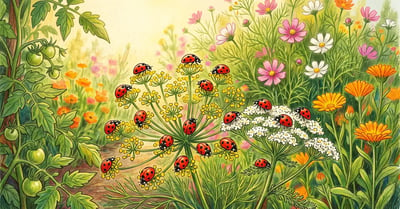
Marigolds are not a general insect repellent, despite the popular claim. Research found no repellent effect against common cabbage, carrot, and onion pests, and marigolds are hosts to many insects themselves. Their real, proven benefit is below ground: certain varieties release a compound that suppresses root-knot nematodes when grown in the same spot for at least two months before a susceptible crop like tomatoes. Marigolds also attract beneficial insects such as hoverflies and ladybugs that prey on aphids. So use marigolds for nematode suppression and to support natural predators, but do not rely on them to keep beetles or aphids off your vegetables.
Get the Weekly Dig
One practical permaculture guide a week, written for gardeners who do this on weekends: companion pairings that hold up under scrutiny, and the ones that do not. Free, no spam, unsubscribe any time.
Join the Weekly DigResources
- University of Georgia Extension — Trap Cropping for Vegetable Growers
- University of Massachusetts — Blue Hubbard Perimeter Trap Cropping (Cavanagh et al.)
- Rutgers NJAES — Perimeter Planting for Insect Pest Management
- Journal of Economic Entomology — Trap Cropping Harlequin Bug (Bier et al., 2021)
- University of Minnesota Extension — Flea Beetles and Radish Trap Crops
- NCAT — Cucumber Beetles: Organic IPM
- Piedmont Master Gardeners — The Repelling Powers of Marigolds: Myth or Fact?