
Some links below are affiliate links. If you buy through them we earn a commission at no extra cost to you. As an Amazon Associate we earn from qualifying purchases.
You've heard nasturtiums "repel pests." That's the wrong frame, and it's why most people who plant them next to vegetables don't see the benefit they expected. Nasturtiums don't repel anything — they attract aphids, cabbage white caterpillars, squash bugs, and cucumber beetles, then absorb the damage instead of your kale. That's a trap crop. Used well, a $3 packet of seed protects $40 worth of vegetables for an entire summer. managing whiteflies with planting what to plant to attract predators stopping cabbage worms on brassicas the predators that clear those aphids
This article walks through how to actually use nasturtiums in a vegetable garden: which pests they divert, where to plant them, which crops benefit most, and the few caveats worth knowing. Same playbook works for raised beds, in-ground rows, and hanging baskets. You can have the seed in the ground in 10 minutes — they germinate fast and bloom in 50–70 days from sowing.
The short answer
Nasturtiums (Tropaeolum majus) are a trap crop, not a repellent. Plant them as a perimeter or scattered border 2–3 weeks before your main crop emerges. Best paired with: cucumbers (cucumber beetles), squash and pumpkin (squash bugs), brassicas — kale, cabbage, broccoli (cabbage white caterpillars and aphids), tomatoes and beans (black bean aphid). Direct-sow seeds 1 inch (2.5 cm) deep, 8–12 in (20–30 cm) apart, after last frost. Dwarf cultivars for raised beds; climbing for fences and trellises. Tolerate poor soil — rich soil grows leaves but few flowers. Annual in zones 2–8; perennial only in zones 9–11.
What a Trap Crop Actually Does
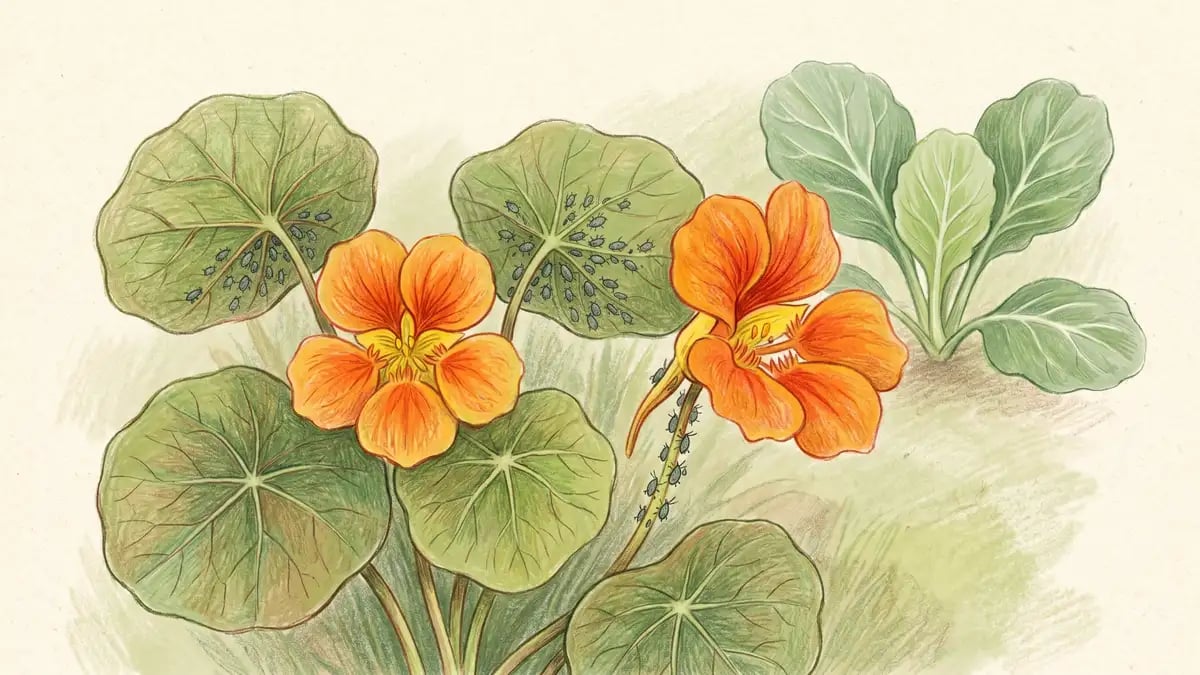
A trap crop is a plant you grow specifically because pests find it more attractive than your main crop. The pests show up, lay eggs on it, feed on it, and largely ignore the vegetables you actually want. You either tolerate the pest population on the trap (which feeds beneficial predators), pull and destroy it when it gets heavily infested, or chop it down at the end of the season.
This is different from a repellent plant, which uses scent or chemistry to push pests away. Nasturtium does almost no repelling. What it does is attract — its leaves and flowers contain glucosinolates (mustard oil compounds) that share chemistry with brassicas, plus rich nectar that pulls aphids and other pests toward it as a preferred host. Peer-reviewed research on the glucosinolate-myrosinase system in Tropaeolum majus documents the chemistry that makes it so attractive to brassica-feeding pests.
The popular gardening literature mostly mislabels nasturtium as "repellent." The accurate term — and the one used in agricultural research — is trap crop or sacrificial plant. Once you understand that distinction, the placement rules in this article will make sense: you put nasturtiums between the pest source and the crop, not directly under your tomatoes hoping for some perfume effect.
The 5 Pests Nasturtiums Actually Divert
| Pest | What it normally damages | Mechanism with nasturtium | Best paired with |
| Black bean aphid (Aphis fabae) | Beans, beets, chard, dock | Strong preferential host — colonies form on nasturtium stems before reaching beans | Bush and pole beans |
| Green peach / cabbage aphid | Brassicas, lettuce, peppers, peaches | Trap crop colonies form on undersides of nasturtium leaves | Brassicas, lettuce, peppers |
| Cabbage white butterfly (Pieris rapae) | Cabbage, broccoli, kale, cauliflower, mustard greens | Adult moths lay eggs on nasturtium glucosinolate-rich foliage instead of brassicas | All brassicas |
| Squash bug (Anasa tristis) | Squash, pumpkin, cucumber | Adults preferentially gather on nasturtium foliage; easier to scout and remove | Squash, pumpkin, watermelon |
| Cucumber beetle (Diabrotica spp.) | Cucumber, cantaloupe, watermelon | Diverted from cucumber feeding; beetles cluster on nasturtium flowers | Cucumber, cantaloupe |
| Whitefly (Trialeurodes spp.) | Tomato, pepper, eggplant, brassicas | Less documented but practitioners report whitefly diversion to nasturtium foliage | Greenhouse and warm-climate vegetables |
Source:, and PubMed — Suppression of diamondback moth with trap crops.
For the cabbage white connection specifically — the pest that destroys most home-grown brassicas — adults choose where to lay eggs based on glucosinolate concentration in leaf tissue. Nasturtium leaves contain higher glucosinolate concentrations than most brassicas, which is why the moths prefer them. Caterpillars hatching on nasturtium will defoliate it instead of your kale. Our flowers in the vegetable garden guide covers a few other flowering trap crops; this one is the strongest.
Why this works (the permaculture insight)
Conventional pest control is subtraction — kill the bugs. Trap cropping is misdirection — design the system so the pests choose the plant you don't care about. Nasturtium does that work continuously, for free, all summer, while also feeding pollinators with its nectar and producing edible flowers and seed pods you can pickle. You're not "fighting pests" — you've turned a pest problem into a flower border with capers as a by-product. That's the difference between gardening as warfare and gardening as ecosystem design.
The 4×8 Bed Layout: Where to Actually Put Them
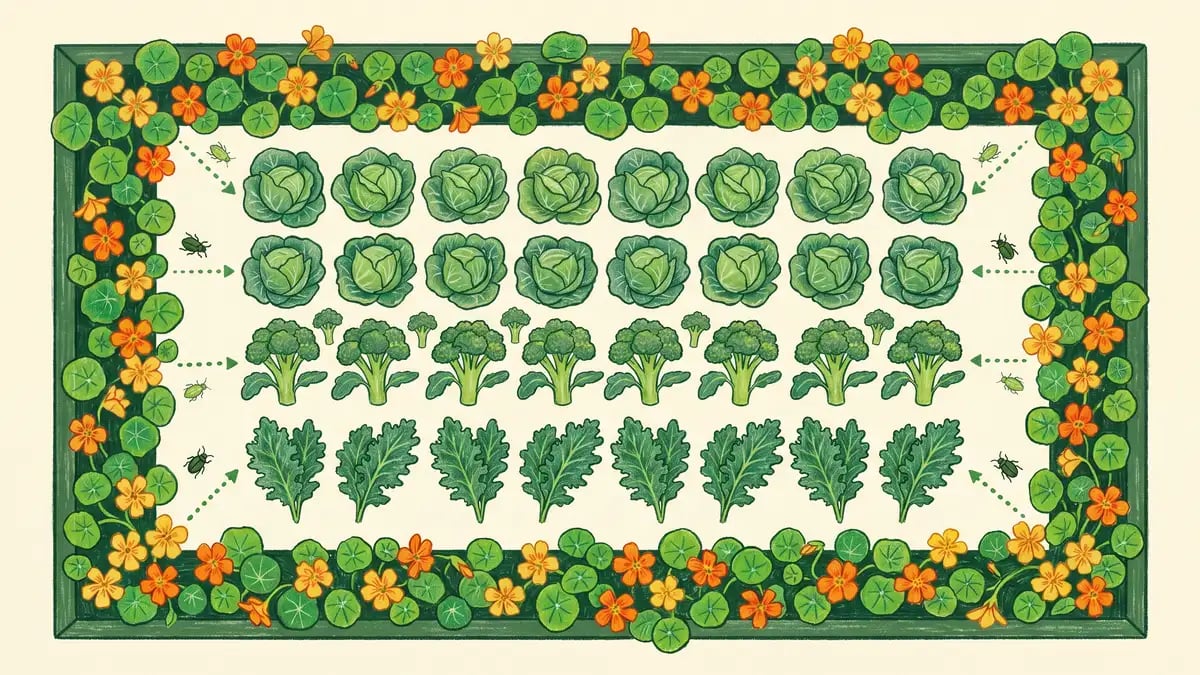
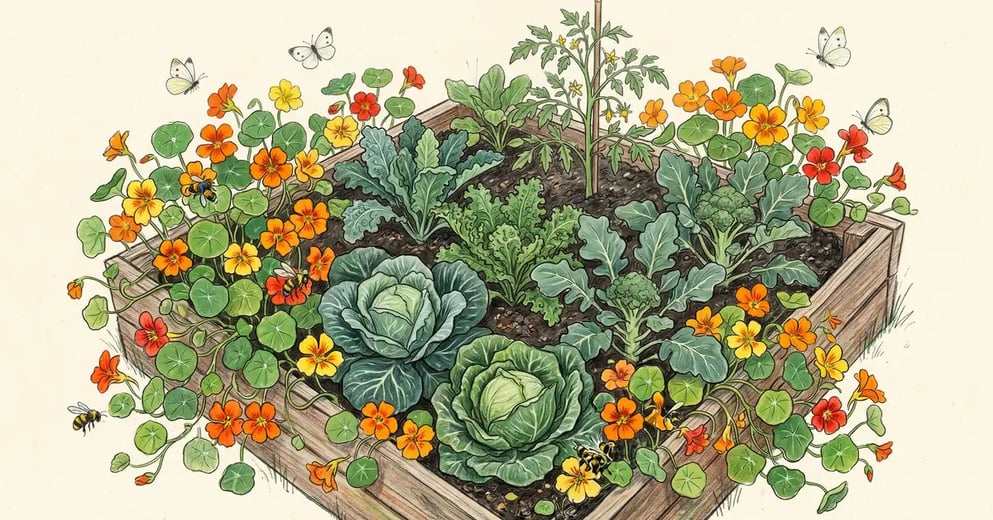
The single most common mistake: planting one nasturtium next to a tomato and hoping for the best. Trap crops work as a perimeter, not a token plant. The nasturtium has to be visually and chemically obvious to incoming pests — that means continuous edge planting, ideally with at least 4–8 plants surrounding the protected crop.
For a typical 4×8 ft (1.2 × 2.4 m) raised bed, the working layout is:
| Position | What goes there | Why |
| 4 corners | 1 nasturtium plant each (4 total) | Catches pests approaching from any direction |
| Long sides (south + north) | 2–3 nasturtium plants spaced 18–24 in (45–60 cm) apart along each edge | Forms a continuous trap border |
| Centre of bed | Your protected crops — brassicas, beans, tomatoes, peppers — at standard spacing | Pests reach the perimeter trap before they reach the crops |
| Optional inner cluster | 1 nasturtium per 4×4 ft (1.2 × 1.2 m) section | Extra trap density for high-pressure pest seasons |
Source: UC Master Gardeners San Diego — Companion Planting Chart and Penn State Extension — Herbs Make Good Plant Partners and Companions.
For climbing nasturtium varieties ('Climbing Mix', 'Moonlight'), train them up the north end of the bed on a fence or trellis so they don't shade the main crops. For dwarf varieties ('Empress of India', 'Alaska Mix'), the perimeter layout above is what you want — they stay 12–18 in (30–45 cm) tall and won't overwhelm the bed.
Timing matters too: plant nasturtium 2–3 weeks before your main crop, so it's already established and producing the chemistry that draws pests when the protected crop emerges. Direct-sow seeds 1 inch (2.5 cm) deep after last frost; soil temperature 55–65°F (13–18°C). Germination takes 7–14 days; first flowers in 50–70 days. The broader timing logic is in our monthly companion planting calendar.
Best Pairings, in Order of Practical Benefit
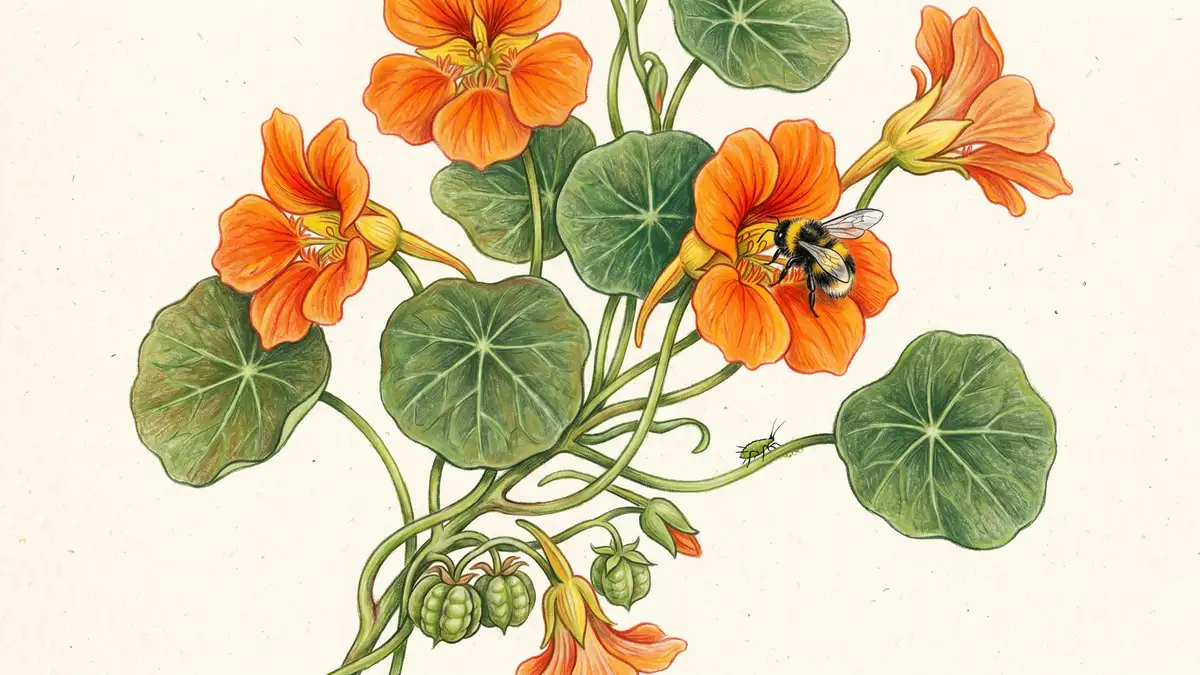
1. Brassicas (broccoli, cabbage, kale, cauliflower, Brussels sprouts). The strongest pairing. Cabbage white moths choose oviposition sites by glucosinolate concentration; nasturtium beats most brassicas on that signal. Pemberton & Hopkins' diamondback moth research documents the same pattern with related trap-cropping systems. Plant 4 nasturtiums around a 4-cabbage block; expect 30–50% fewer caterpillars on the cabbages.
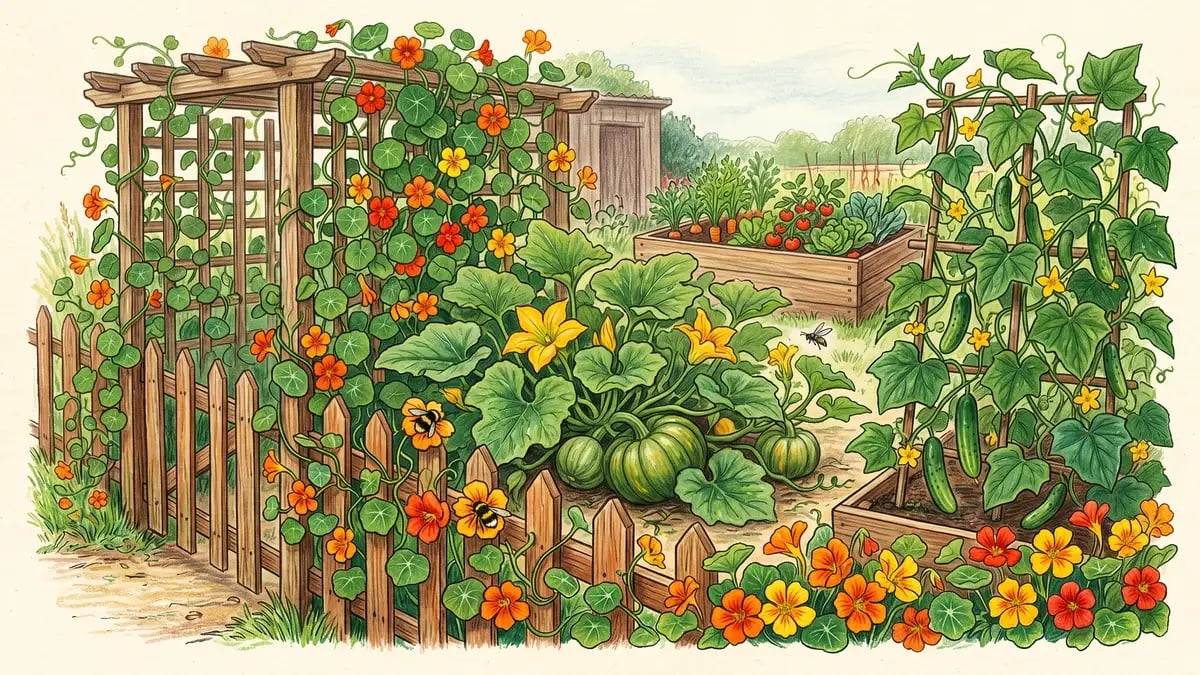
2. Cucumbers, squash, and pumpkins. Cucumber beetles and squash bugs are some of the hardest pests for organic gardeners to control. Nasturtium pulls a meaningful fraction of both. Practitioner reports plus University of Nebraska trap crop research support its use here. Plant climbing nasturtium varieties on the same trellis as cucumbers, or as a border around the squash mound. The Three Sisters cluster (corn + beans + squash) gets a real benefit from nasturtium added at the edges.
3. Beans (bush and pole). Black bean aphid is brutal on broad beans and dwarf French beans in early summer. Nasturtium is its preferred host. Plant a continuous nasturtium border around the bean patch and the aphids will mostly settle on the nasturtium stems instead.
4. Tomatoes, peppers, and eggplant. Aphid and whitefly diversion. Less dramatic than the brassica or cucurbit benefit but still worth doing. Nasturtium also brings hoverflies — the larvae are voracious aphid predators. Our tomato companions guide goes deeper on the full tomato pairing list.
5. Fruit trees and berry shrubs. Nasturtium under apples, pears, currants, and gooseberries provides ground cover, attracts beneficial insects, and mildly traps aphids. Less specifically targeted but a productive use of bare soil under the canopy.
Cultivar Selection: Climbing vs. Dwarf
One choice up front saves you re-planting later. Nasturtium comes in two distinct growth habits, and they suit different jobs.
| Type | Mature size | Best cultivars | Use for |
| Dwarf / bush | 12–18 in (30–45 cm) tall, mounded | 'Empress of India' (deep red), 'Alaska Mix' (variegated leaves), 'Whirlybird Mix' | Raised bed perimeters, container edges, low borders, compact planters |
| Climbing / trailing | 6–10 ft (1.8–3 m) vines | 'Moonlight' (pale yellow), 'Spitfire' (deep orange), 'Climbing Mix' | Fences, trellises, hanging baskets, training up corn or sunflower stalks, ground cover |
| Semi-trailing | 2–4 ft (0.6–1.2 m) sprawling | 'Jewel Mix', 'Tip Top Mix' | Edges of larger beds where mild sprawl is welcome |
Source: Wisconsin Horticulture Extension — Nasturtium (Tropaeolum majus) and Botanical Interests — Nasturtium Sow and Grow Guide.
For most weekend gardeners with a 4×8 ft raised bed, dwarf 'Alaska Mix' or 'Empress of India' is the right call: stays in its lane, doesn't overrun the protected crops, and reseeds politely. Reserve climbing varieties for fence lines and tall trellises.
Where to get seed, and why you only buy it once
Nasturtium seed is one of the few garden purchases you genuinely make a single time. The seeds are large, easy to collect, and the plants self-seed hard enough that most gardeners spend the following years pulling volunteers rather than sowing. Buy one packet of a dwarf mix, let a few pods ripen, and you are set.
For trap-crop use the dwarf types are the right call. They hold the bed edge without climbing into what you are trying to protect. Seed Needs sells a Jewel Mixture (Tropaeolum nanum) that covers the usual orange, yellow and red range.
If a neighbour already grows nasturtiums, ask for a handful of seed pods in late summer instead. It costs nothing and the strain is already adapted to your conditions.
Common Mistakes (and What to Do Instead)
Three things that make nasturtium underperform
Too rich soil. Nasturtium evolved in lean Andean soils. Plant it in compost-heavy beds and you'll get a jungle of foliage with almost no flowers — and fewer flowers means fewer pollinators and a less attractive trap. Plant it in poor or average soil; do not fertilise. Planted too late. If you put nasturtium in the ground at the same time as your cabbages, the cabbages will be more attractive to first-arriving pests because nasturtium isn't yet producing strong volatiles. Plant nasturtium 2–3 weeks before the protected crop. Too few plants. One nasturtium next to a tomato is decoration, not a trap crop. You need a continuous perimeter — 6–10 plants around a 4×8 ft bed — for the trap effect to register on incoming pests.
What about plants to avoid near nasturtium? The widely circulated "what not to plant with nasturtiums" lists are mostly fabricated. A few practical sources note minor tensions with strawberries (different growth habits) and over-vigorous climbing nasturtium near small lettuce. In practice, nasturtium is one of the most universally compatible companions — the only reliable rule is "don't let trailing types swamp short crops".
Edible Bonus: Leaves, Flowers, and Capers
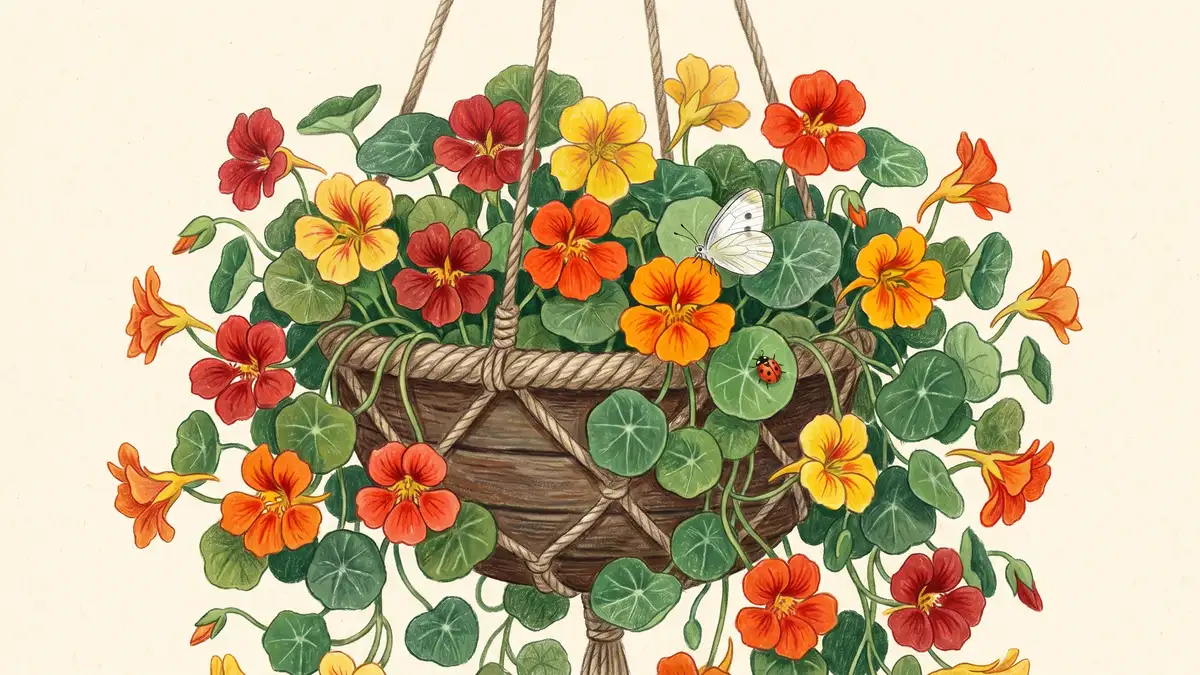
One of the things weekend gardeners discover only after they plant nasturtium: every part of the plant is edible. The leaves taste like watercress with a peppery bite (slightly hotter); the flowers are mild and lightly sweet, and the fresh green seed pods, pickled in vinegar with salt, are a near-perfect substitute for capers.
Forager Chef's nasturtium guide covers harvesting and the caper-pickle technique. Drop a few flowers into a salad, chop leaves into a pesto, or harvest the green pods at marble size and pickle them with white wine vinegar, salt, and a sprig of dill. The plant gives you trap-crop function, pollinator support, and a gourmet condiment from the same square footage.
Practical caveats: don't eat the leaves if you've sprayed any pesticide, even organic. The peppery oils that make nasturtium edible are also what attract aphids — once aphids settle in, you can rinse them off with a strong spray of water before eating, but you may decide to leave the most heavily-infested plants as pure trap crops and harvest from cleaner parts of the patch.
Self-Seeding and What Happens Next Year
Nasturtium is annual in USDA zones 2–8 (perennial only in zones 9–11), but it self-seeds reliably if you let some seed pods dry on the plant in late summer. Pods drop, overwinter on the soil, and germinate the next spring on their own. Wisconsin Horticulture Extension notes the self-seeding habit is reliable through zone 5 with good mulch cover.
To save seed deliberately, let some pods turn from green to tan-brown on the plant, then collect them and dry on a paper towel for two weeks before storing in a paper envelope. Each plant produces dozens of seeds. A single $3 packet typically generates enough self-seeded plants for the next 3–4 seasons of trap-cropping if you let it.
Get the Weekly Dig
One practical permaculture guide a week, written for gardeners who do this on weekends: companion pairings that hold up under scrutiny, and the ones that do not. Free, no spam, unsubscribe any time.
Join the Weekly DigFrequently Asked Questions
What not to plant with nasturtiums?
There are very few real conflicts. Nasturtium is one of the most universally compatible plants in the garden. The minor cautions: trailing/climbing varieties can swamp short crops like lettuce or low herbs if not contained, so keep climbing types on a trellis or at the back of the bed. Strawberries occasionally clash with sprawling nasturtium because both compete for ground space. Beyond those, the "do not plant with" lists circulating online are mostly fabricated — most extension services and peer-reviewed sources flag no real antagonisms.
Where to plant nasturtium in vegetable garden?
As a perimeter or edge planting around your most pest-vulnerable crops. For brassicas, beans, or tomatoes in a 4×8 ft (1.2 × 2.4 m) bed: plant 4 nasturtiums at the corners and 4 more spaced 18–24 in (45–60 cm) apart along the long sides. For squash and cucumbers, plant climbing nasturtium on the same trellis or along a fence next to the cucurbit patch. For fruit trees, plant nasturtium under the canopy as ground cover. The principle is continuous edge — pests have to encounter the trap before reaching the protected crop.
What to plant with nasturtiums?
The proven pairings are brassicas (cabbage, broccoli, kale, cauliflower, Brussels sprouts), cucumbers, squash, pumpkins, beans (bush and pole), tomatoes, peppers, eggplant, and fruit trees. Nasturtium also works well in mixed pollinator borders alongside marigolds, calendula, alyssum, and dill. Keep it away from heavily fertilised beds — rich soil produces foliage at the expense of flowers, and fewer flowers means a less effective trap.
Do nasturtiums attract aphids?
Yes — and that's exactly why they work as a trap crop. Black bean aphid (Aphis fabae), green peach aphid, and cabbage aphid all preferentially colonise nasturtium over many other garden plants. The nasturtium absorbs the aphid pressure that would otherwise hit your beans, brassicas, or tomatoes. You can rinse aphids off with a strong water spray if you want to harvest leaves or flowers; otherwise leave them — they feed ladybug and hoverfly larvae, which is the natural endpoint of the trap.
Can I plant nasturtiums with tomatoes?
Yes. Plant nasturtium as a perimeter around the tomato patch — it traps aphids and whiteflies that would otherwise feed on tomato leaves, and brings hoverflies whose larvae predate aphids directly. Use dwarf cultivars to avoid sprawling onto staked tomatoes; 'Alaska Mix' or 'Empress of India' work well. Plant 4–6 weeks before tomatoes go out so the nasturtium is established and trapping pests by the time tomatoes are vulnerable.
Can you plant nasturtiums with cucumbers?
Strongly recommended. Nasturtium is one of the best cucumber companions because it diverts cucumber beetles (Diabrotica spp.) and squash bugs (Anasa tristis) — two of the hardest pests for organic cucumber growers. Plant climbing nasturtium varieties on the same trellis as cucumbers or train them along a fence next to the patch. The nasturtium flowers also attract pollinators that improve cucumber fruit set. Our companion planting chart covers cucumber-specific pairings in more detail.
Do nasturtiums come back every year?
In USDA zones 2–8, nasturtium is an annual — it dies at first frost. In zones 9–11, it's a tender perennial and will overwinter. However, in most US zones it self-seeds reliably: drop some seed pods in autumn, leave them on the soil, and they'll germinate the following spring without intervention. After the first year you generally don't need to buy fresh seed.
Do nasturtiums repel pests?
Not really — and this is the most important misconception about them. Nasturtiums attract pests, not repel them. They work as a sacrificial trap crop, drawing aphids, cabbage white caterpillars, squash bugs, and cucumber beetles toward themselves and away from the protected crop. The "repellent" label that floats around on social media has no basis in extension or peer-reviewed research. Once you understand they're a trap, the placement and timing rules in this article (perimeter, planted 2–3 weeks early, in poor soil) make sense.
Resources
- Wisconsin Horticulture Extension — Nasturtium (Tropaeolum majus)
- Penn State Extension — Herbs Make Good Plant Partners and Companions
- UC Master Gardeners San Diego — Companion Planting Chart
- Cornell Hort — Garden Nasturtium Study Guide
- RHS — Black Bean Aphid (Aphis fabae)
- PubMed — Glucosinolate-Myrosinase System in Tropaeolum majus
- PubMed — Suppression of Diamondback Moth with Trap Crops
- UNL — Comparison of Insecticide and Trap Crop Management Practices (PDF)
- Wisconsin Horticulture — Hover/Flower or Syrphid Flies
- Bonnie Plants — Nasturtium Zone Planting Guide
- Botanical Interests — Nasturtium Sow and Grow Guide
- GrowVeg — How to Grow Nasturtiums
- Gardener's Path — Common Nasturtium Pests
- Forager Chef — Edible Nasturtium Leaves, Flowers, and Capers