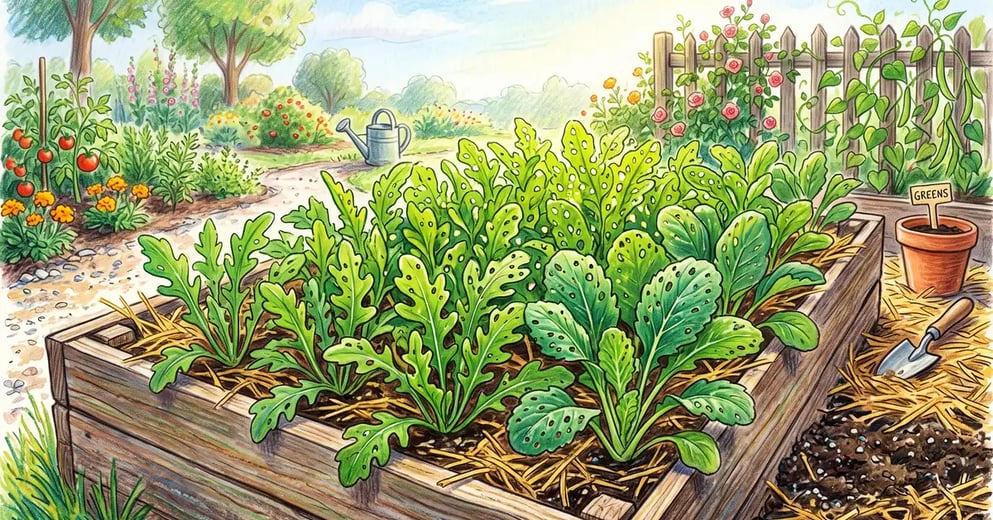

What Is Making Those Tiny Round Holes in Your Leaves?
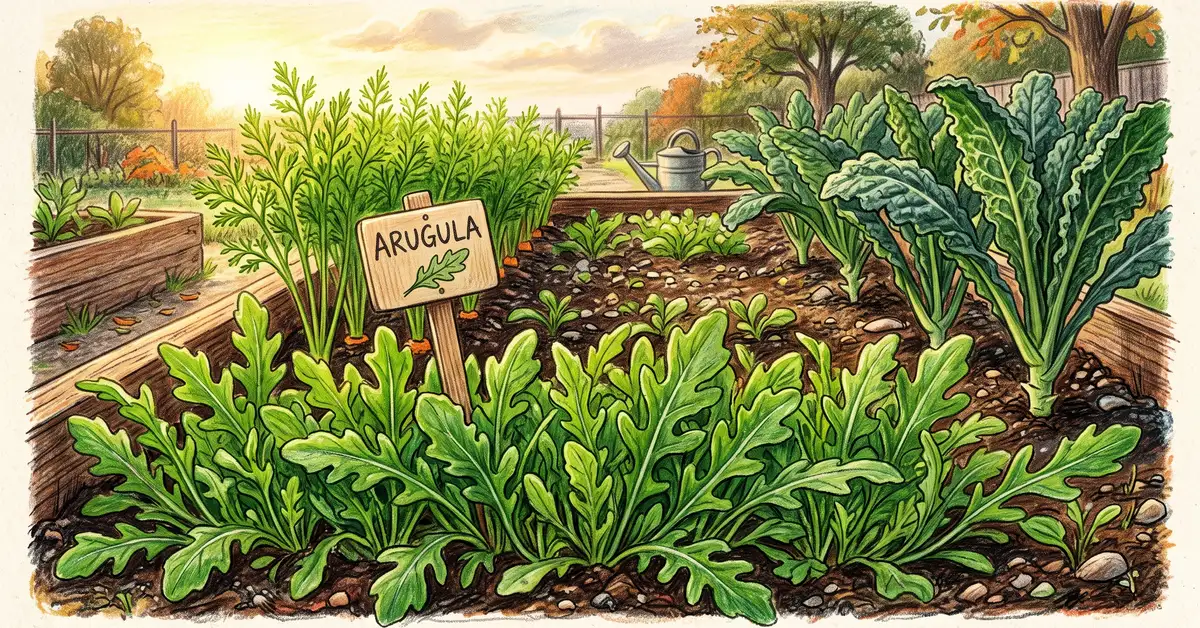
Your arugula came up beautifully. Ten days later the leaves look like someone went at them with a pin. Hundreds of small round holes, light showing through, and when you lean in for a closer look something black springs off the leaf and vanishes. protecting a fall arugula bed floating row cover
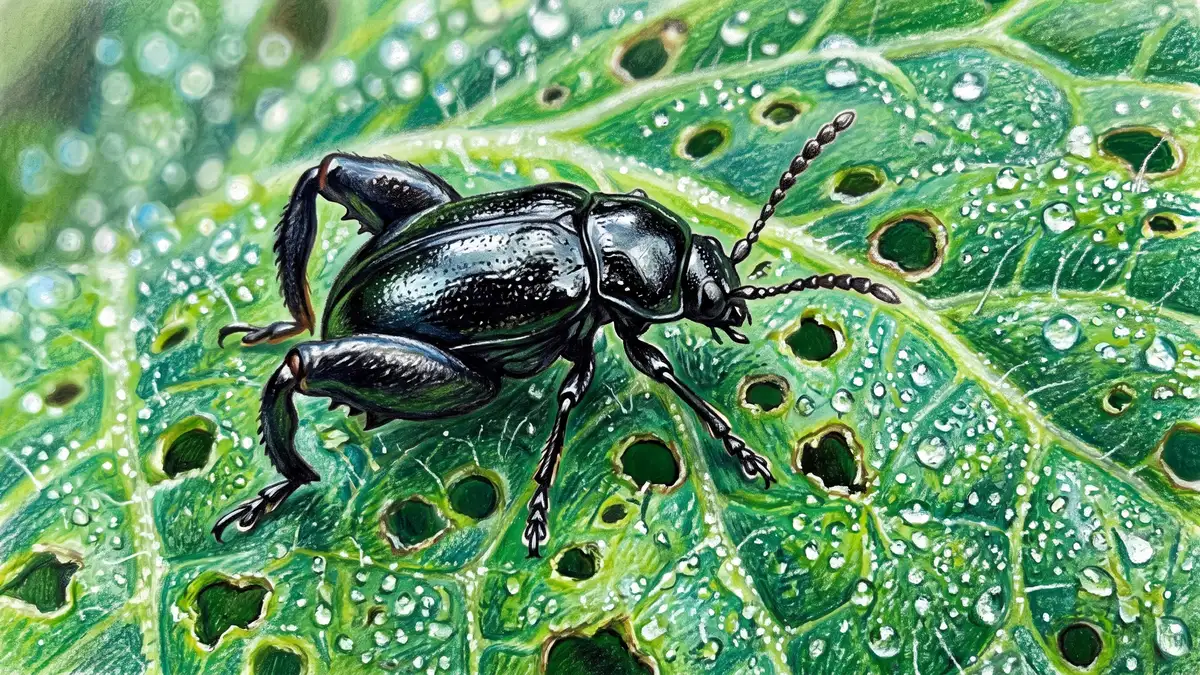
Those are flea beetles, and the jumping is the giveaway. They are tiny leaf beetles, about 2 mm long, with enlarged hind femurs that work like a spring. University of Kentucky Entomology describes crucifer flea beetle as shiny solid black and striped flea beetle as black with a thick amber stripe down each wing cover.
Here is the thing that changes how you handle them: on a mature kale plant, shot-hole damage looks alarming and costs you almost nothing. On a two-week-old seedling, the same feeding rate can kill the plant. Flea beetle control is almost entirely a question of getting seedlings through a narrow window.
What this guide covers:
- Which flea beetle you have, and why host range matters more than looks
- The published action thresholds by crop and plant size, so you stop panicking over cosmetic damage
- Five control tactics, ranked by the strength of the evidence behind each
- Why trap cropping works on flea beetles better than almost any other garden pest
- The difference between plants outgrowing damage and plants resisting it, and which one the data actually supports
Key Takeaway
Flea beetle damage is a seedling emergency and a mature-plant cosmetic issue. Protect the first four to six weeks with netting, get plants large fast, and most of the problem solves itself. Chasing beetles on established kale is wasted effort.
Which Flea Beetle Do You Have?
"Flea beetle" covers several genera that share a body plan and a jumping habit but differ sharply in what they eat. Getting the group right tells you which of your beds are actually at risk.
| Species | Appearance | Hosts |
| Crucifer flea beetle (Phyllotreta cruciferae) | Shiny solid black, ~2 mm | Brassicas only |
| Striped flea beetle (Phyllotreta striolata) | Black with amber stripe per wing cover | Brassicas only |
| Potato flea beetle (Epitrix cucumeris) | Small, dark, matte | Potato, tomato, other solanaceous crops |
| Eggplant flea beetle (Epitrix fuscula) | Small, dark, hairy elytra | Eggplant especially |
| Palestriped flea beetle (Systena blanda) | Larger, pale stripe on each wing cover | Wide host range including beans and cucurbits |
Sources: University of Kentucky Entfact-330, UW-Madison Extension, Springer (2026), Phyllotreta species composition.
The practical upshot: if the holes are in your brassicas, the beetles will not touch your tomatoes, and vice versa. Two separate problems, two separate decisions.
Adults overwinter in soil, leaf litter and sheltered hedgerow debris, then become active in spring once temperatures reach about 50°F (10°C), according to UW-Madison Extension. That is well before most people plant, which is why beetles are waiting when your seedlings emerge. Larvae feed on root hairs underground and rarely matter in a garden; the adults do essentially all the visible damage.
How Much Damage Is Too Much?
This is where most gardeners over-react. Extension programmes have published thresholds, and they are more forgiving than panic suggests.
| Crop and stage | Published action threshold | Source |
| Brassicas, general | 10-20% of leaf area damaged | University of Minnesota Extension |
| Eggplant under 3 in. tall | 2 beetles per plant | UW-Madison Extension |
| Eggplant 3-6 in. tall | 4 beetles per plant | UW-Madison Extension |
| Eggplant over 6 in. tall | 8 beetles per plant | UW-Madison Extension |
| Solanaceous crops, very early season | 5 adults per plant linked to yield loss | University of Georgia IPM |
Sources: University of Minnesota Extension, Brassica Bonanza, UW-Madison Extension, University of Georgia IPM (2025). Several of these are commercial thresholds, not garden-specific.
Notice how the eggplant numbers quadruple as the plant grows from under 3 in. to over 6 in. tall. That scaling is the whole story of this pest.
Crop matters too. NC State Extension notes that eggplant is particularly susceptible, while tomatoes and peppers typically outgrow the injury and rarely lose yield at comparable beetle numbers. If your tomato leaves are pitted and the plant is growing well, do nothing.
Common Mistake to Avoid
Spraying an established brassica bed because the leaves look bad. Once plants are past the four to six leaf stage, waxy-leaved crops like cabbage, broccoli and kale tolerate substantial feeding, damage is restricted mostly to leaf margins, and a spray costs you the lacewings, big-eyed bugs and damsel bugs that eat flea beetles. Judge by plant vigour, not by hole count.
Key Takeaway
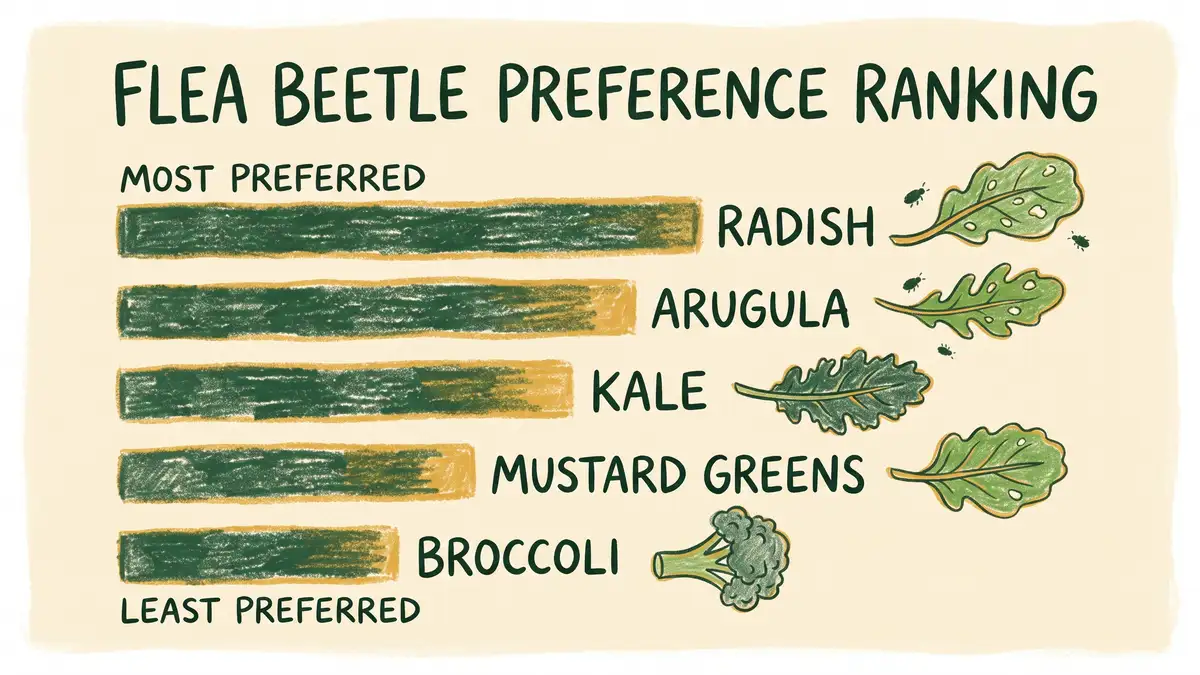
Glossy-leaved brassicas with strong mustard aroma, including mustard greens, bok choy and napa cabbage, stay attractive to flea beetles from planting right through to harvest. Waxy Brassica oleracea crops like cabbage, broccoli and kale are vulnerable mainly as seedlings and become more tolerant as the wax layer thickens.
Five Tactics, Ranked by Evidence
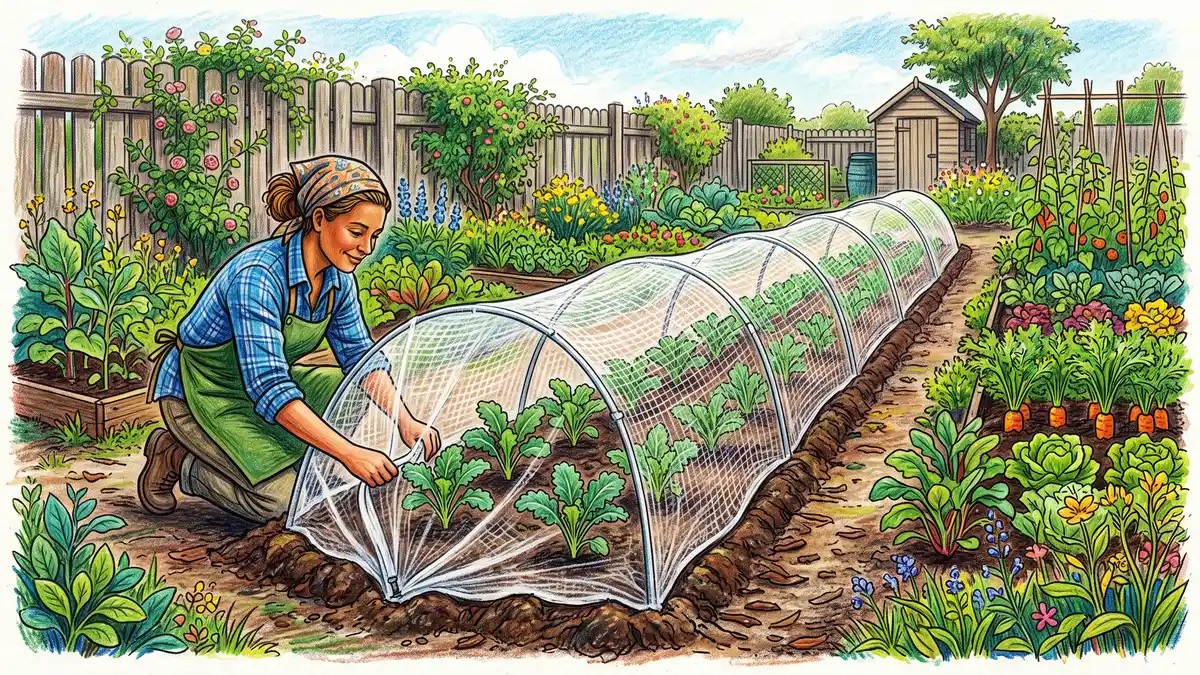
Fine insect netting, sealed on day one
The most consistently supported tactic across extension programmes. It has to go on immediately after seeding or transplanting, before beetles reach the plants, with every edge buried or weighted. Mesh size matters, since flea beetles are small enough to walk through standard row cover with loose weave. Brassicas do not need insect pollination, so covers can stay on right through harvest.
A perimeter trap crop of mustard or daikon radish
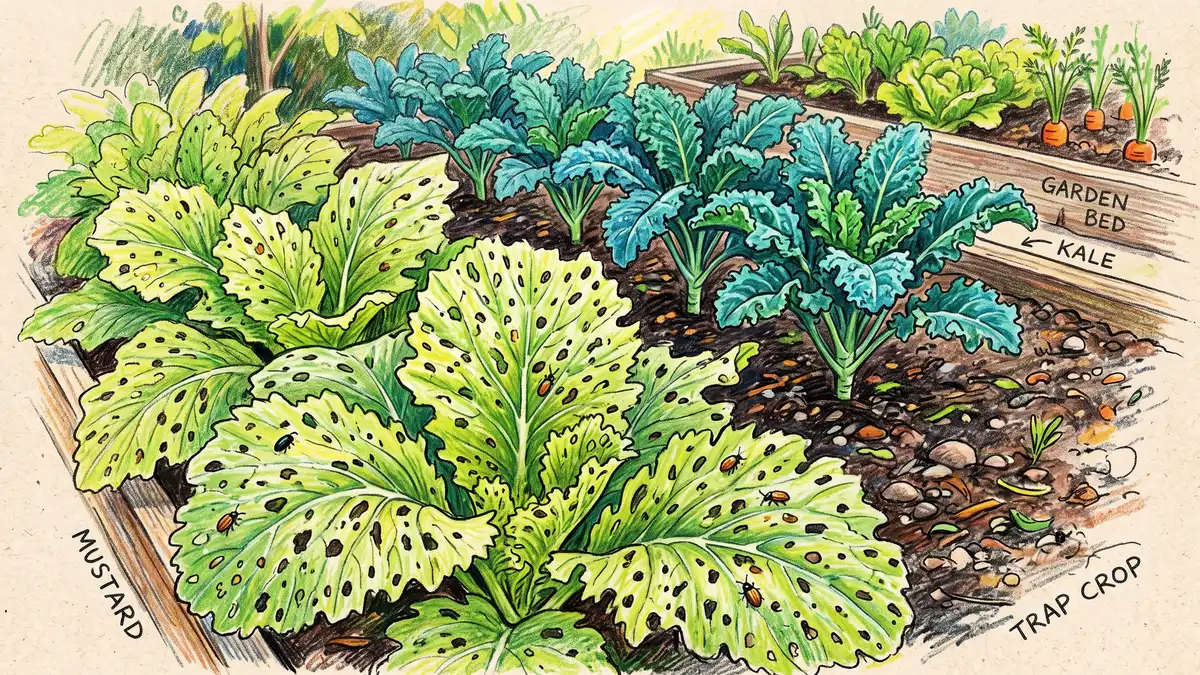
University of Kentucky sets out the parameters clearly: plant the trap crop 1 to 2 weeks before the main crop, give it about 10% of the total planting area, put it around the perimeter, and pick a variety more attractive than what you are protecting. High mustard-oil crops such as daikon radish and mustard greens work; the same principle as trap cropping with sacrificial plants generally.
Transplants, and get them big fast
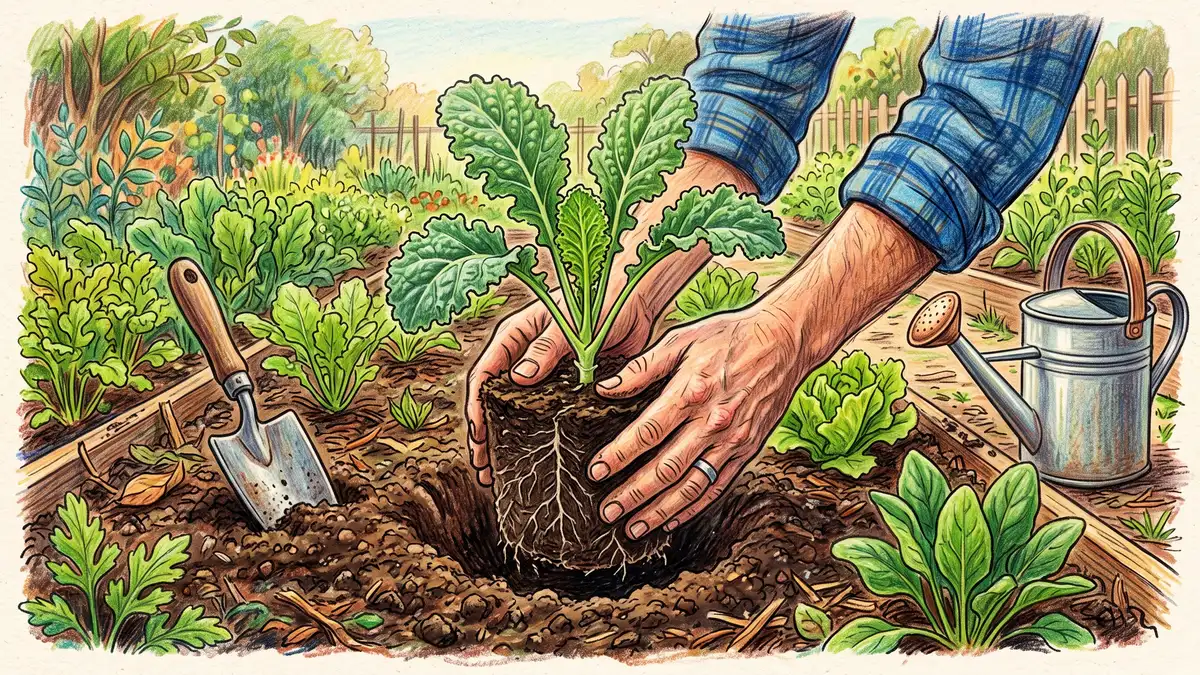
Set out a plant already at four to six true leaves and you skip the vulnerable window entirely. Everything that speeds early growth helps here: warm soil, adequate water, a bed with decent fertility. This is the single highest-leverage change for most gardeners.
Choose waxy over glossy where you can
If flea beetles wreck your garden every year, shift the balance of what you grow. Cabbage, broccoli and kale take less damage than mustard, mizuna and bok choy because their thick waxy cuticle restricts feeding to leaf margins. You are not giving up the glossy crops, just netting those and leaving the waxy ones open.
Targeted sprays, on the trap crop rather than the bed
If you spray at all, spray the perimeter trap crop where the beetles have concentrated. Spinosad and pyrethrin have short residual and hit natural enemies, so a whole-bed application trades a short-term win for a longer-term one. Extension guidance is explicit that a trap crop left untreated eventually stops holding beetles and they move into the main crop.
Biological control deserves an honest note. A native braconid wasp, Microctonus vittatae, parasitises adult flea beetles across North America, and lacewing larvae, big-eyed bugs and damsel bugs all take adults. Entomopathogenic nematodes have been used against larvae in research settings. But extension sources are consistent that parasitism rates are low and that natural enemies alone rarely hold flea beetles below damaging levels on seedlings.
That is not an argument against supporting them. It is an argument for not relying on them during the four weeks that actually matter.
Why This Works: Chemical Signals as Leverage
Crucifer flea beetles are specialists on the glucosinolate-myrosinase system that gives brassicas their mustard bite. Compounds like allyl isothiocyanate, which evolved as a plant defence, have been co-opted by these beetles as a host-finding cue. Trap cropping works because you can out-signal your own crop: a mustard plant shouting louder than your kale pulls the beetles to a place you chose. In permaculture terms this is working with the pattern rather than against it, and it is why trap cropping is far more reliable here than generic repellent planting.
Outgrowing Damage Is Not the Same as Resisting It
You will read constantly that healthy plants in healthy soil do not get attacked by pests. It is worth separating two claims that usually get bundled together, because the evidence for them is very different.
Tolerance is well supported. A larger plant with more leaf area absorbs the same amount of feeding without a proportional yield hit. This is why every threshold table scales with plant size, and why extension guidance concentrates protection on the seedling stage. Growing plants fast genuinely works.
Resistance, meaning that vigorous plants get attacked less, is much thinner. There is no strong controlled evidence that a well-fed brassica experiences lower flea beetle densities than a stressed one. Host preference in this system tracks leaf chemistry and surface wax far more than plant nutrition.
The practical difference matters. If tolerance is the mechanism, your job is speed: warm soil, steady water, good fertility, transplants over direct seeding. If you believe resistance is the mechanism, you might skip the netting on the assumption that good soil will do the work. It will not, at least not in week two.
Why This Works: Resource Concentration
Diversified plantings do reduce specialist pest pressure, and the mechanism is resource concentration. A specialist beetle finds and stays on a dense uniform stand of its host far more easily than on a mixed planting where non-host plants interrupt its search. That is a real effect, well established across many pest systems. But note what it is not: it is not repellence. Interplanting aromatic herbs on the theory that their smell drives beetles away has much weaker support than simply breaking up the block. The same distinction runs through our guides to cucumber beetles and integrated pest management.
Frequently Asked Questions
How do I get rid of flea beetles?
Reach for exclusion first. Cover seedlings and transplants with fine insect netting the day they go in, sealing every edge with soil or weights. Add a perimeter of mustard or daikon radish planted a week or two ahead of the main crop to pull beetles away from it. Then focus on growing plants past the vulnerable stage quickly with warm soil, steady water and transplants rather than direct seeding. Sprays are a last resort and are best applied to the trap crop rather than across the whole bed, since broad applications also remove the predators that help you.
Do flea beetles bite humans?
No. Despite the name and the jumping, flea beetles are leaf beetles with chewing mouthparts adapted for plant tissue. They do not bite people or pets, do not live on animals, and carry nothing that affects human health. If you are being bitten indoors, you are dealing with something else entirely. Flea beetles found in a house have almost always wandered in from the garden and will not establish or reproduce indoors.
Where do flea beetles come from?
Overwintering adults, mostly from your own garden and its edges. They shelter through winter in soil, leaf litter, crop residue and hedgerow debris, then become active once spring temperatures reach about 50 degrees Fahrenheit (10 Celsius), well before most gardeners plant. That timing is why beetles are already present and hungry the moment brassica seedlings emerge. Weedy ground and unmanaged brassica-family weeds nearby give them both shelter and an early food source.
What do flea beetles eat?
It depends on the species, and that determines which of your beds are at risk. Crucifer and striped flea beetles feed only on brassicas and a few closely related plants, so they will never touch your tomatoes. Potato and eggplant flea beetles work the solanaceous crops instead. Palestriped flea beetle has a much wider host range and turns up on beans and cucurbits too. Adults chew the small round shot-holes you see; larvae feed on root hairs underground and rarely cause noticeable garden damage.
Will flea beetles kill my plants?
Seedlings, yes. Established plants, almost never. Heavy feeding on cotyledon-stage plants can kill them outright or stunt them badly, which is why thresholds for young plants are so low. Once a plant is past four to six true leaves it has enough leaf area to absorb the damage, and published thresholds rise sharply with plant size. Eggplant is the notable exception, staying susceptible longer than most. Glossy mustards and bok choy also remain attractive through to harvest, though by then the damage is usually cosmetic.
Does diatomaceous earth work on flea beetles?
Poorly, and it has a real cost. It stops working when damp, which covers most mornings and any irrigated bed, and it kills beneficial ground-dwelling insects indiscriminately. It also does nothing about the adults that fly and jump onto foliage from outside the bed. Netting handles the same problem far more reliably and does not damage your predator community. If you want a low-input approach, put the effort into exclusion, trap cropping and fast early growth instead, alongside the broader companion planting principles in our companion planting chart.
Get the Weekly Dig
One practical permaculture guide a week, written for gardeners who do this on weekends: pest control that works without a spray bottle. Free, no spam, unsubscribe any time.
Join the Weekly DigResources
- University of Kentucky Entfact-330: Flea Beetle IPM in Brassica Production
- UW-Madison Extension: Flea Beetles — identification and action thresholds
- University of Minnesota Extension: Brassica Bonanza — flea beetle thresholds
- University of Georgia IPM: Tobacco flea beetle (2025)
- NC State Extension: Insect management on fruiting vegetables
- Cornell Vegetable Program: Vegetable pest resources
- Springer (2026): Species composition of flea beetles (Phyllotreta spp.)
- Springer (2025): Dead-end trap cropping in pest management
- UF/IFAS Extension: Companion planting and insecticide reduction in the garden