
You want a weedy patch turned into a plantable bed without digging it or spraying it. Two sheets of plastic will do it. Which sheet, and which month you lay it, decides whether you get a clean bed in three weeks or a warm patch of thriving purslane.
What Is Soil Solarization, and What Does It Actually Reach?
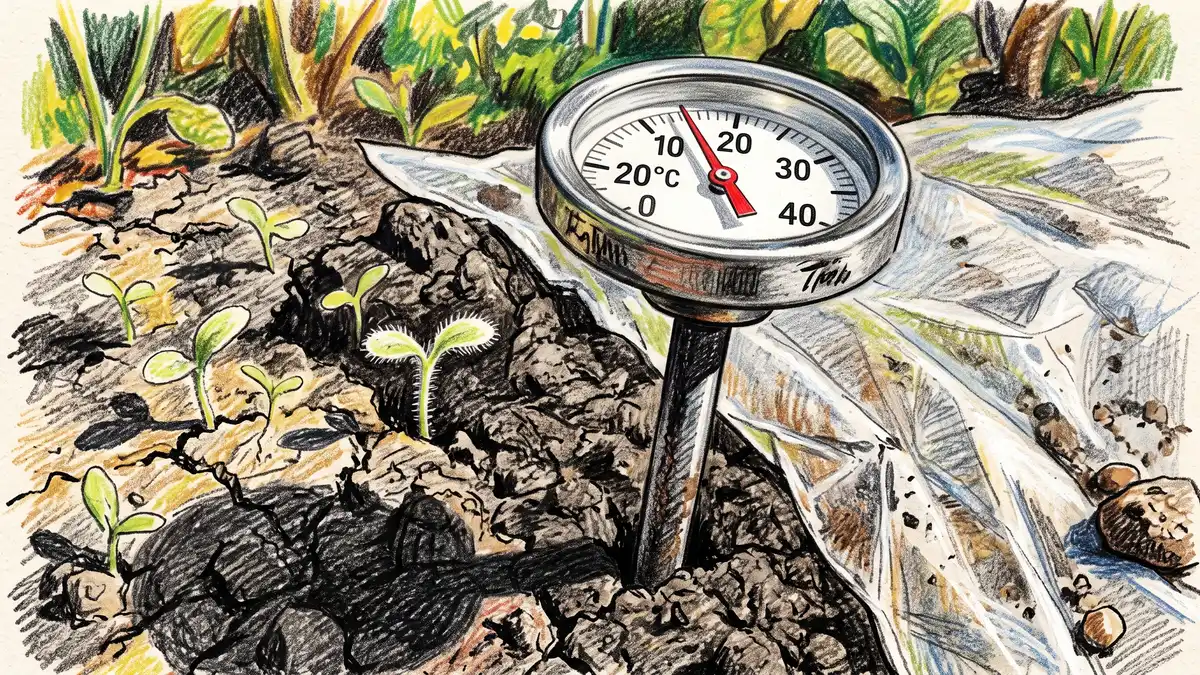
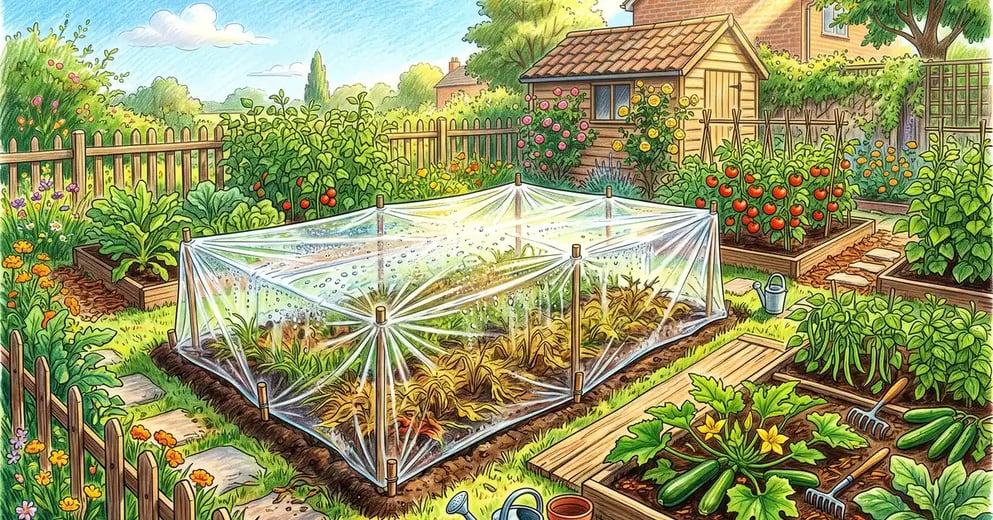
Solarization means covering moist soil with clear plastic in the hottest part of summer. Sunlight passes through the film, the soil absorbs it, and the plastic traps the heat and moisture underneath. You are essentially building a very shallow oven, and the numbers determine whether it cooks anything.
Clear plastic, not black. Black film absorbs the heat itself and radiates much of it back to the air. Clear film lets the radiation reach the soil, which is where you want it.
What this article covers:
- The soil temperatures solarization actually reaches, by depth
- Why tarping works in months when solarization does nothing
- A straight cost and time comparison for a 100 sq ft bed
- Where cardboard sheet mulch fits
- What each method does to earthworms and mycorrhizal fungi
Key Takeaway
Solarization is a heat treatment and needs real summer. Tarping is a light treatment and works any month the soil is not frozen. If you are reading this in autumn, tarping is your method.
| Depth | Max Temperature | Source |
| 2 in (5 cm) | 108-140°F (42-60°C) | UC IPM, California |
| 4 in (10 cm) | 122°F (50°C) | Stapleton, inland CA valleys |
| 8 in (20 cm) | 109°F (43°C) | Stapleton, inland CA valleys |
| 18 in (45 cm) | 90-99°F (32-37°C) | UC IPM, California |
Sources: UC IPM, Soil Solarization for Gardens and Landscapes, Stapleton, UC ANR solarization weed science paper
Read that table as a warning, not a promise. Effective heating happens in the top 4 to 6 inches. Florida IFAS notes that soil deeper than that usually does not get hot enough to kill anything, and that the damaging range starts around 102 to 104°F (39 to 40°C). Anything rooted or seeded below 6 inches survives.
Weed kill is species-specific too. Oregon Department of Agriculture work found annual bluegrass reliably killed at shallow depths, smartweed and redroot pigweed killed to about 2 inches in good years, and common purslane rarely killed beyond the very surface. Purslane is the one that will make you doubt the whole exercise.
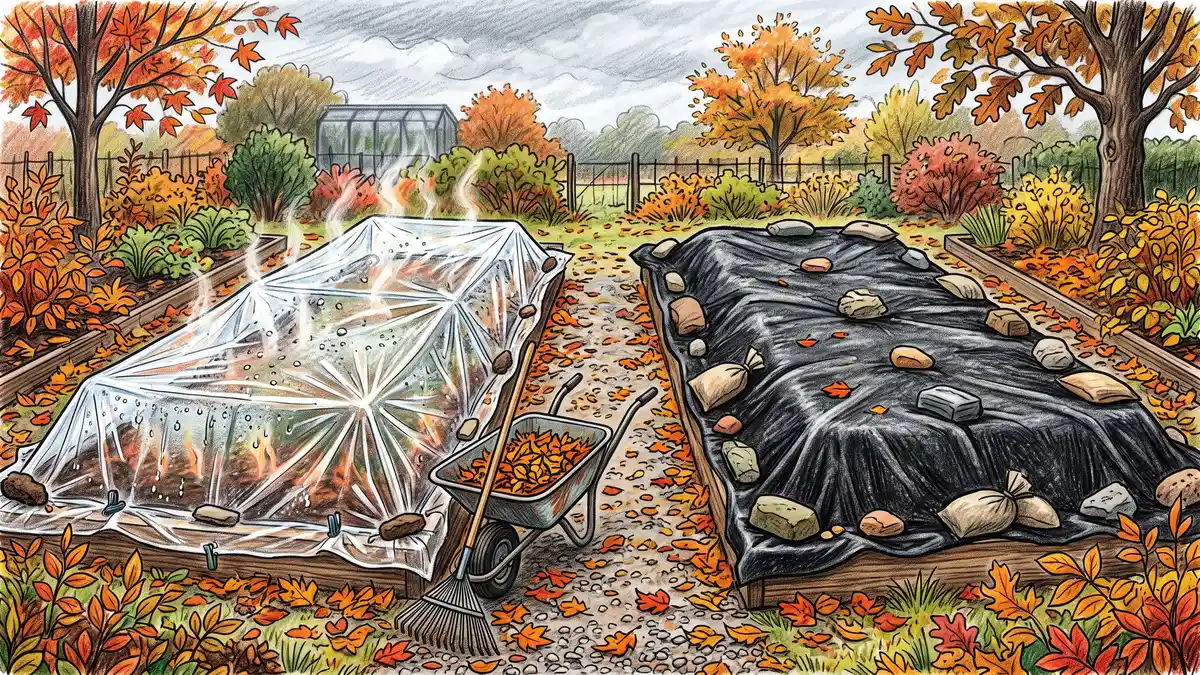
Tarping: The Method That Works When Solarization Cannot
Occultation, or tarping, uses the opposite principle. An opaque black tarp blocks light entirely. Weed seeds near the surface germinate in the warm, moist dark, find no light, and exhaust their seed reserves. Established plants photosynthesise nothing and starve.
Because the mechanism is darkness rather than heat, latitude and season stop mattering nearly as much.
Mow or scythe first
Cut existing growth low. Tall standing weeds hold the tarp off the soil and create gaps where light gets in at the edges.
Water, then cover
Moist soil germinates the seed bank, which is the point. Lay a 5 to 8 mil silage tarp, black side down if it is white-on-black.
Weight every edge
Sandbags, rocks or lumber every few feet. Wind getting under a tarp is the single most common failure, and a lifted corner grows a strip of survivors.
Leave it by season
One week at peak summer, up to three weeks in cool weather. Over winter, leave it from fall until spring planting.
The results are strong. Cornell Small Farms reports that black tarps left in place for three weeks killed all or more than 95 percent of emerged winter annual and summer annual weeds for no-till planting. Brown and Birthisel's Northeast trials found two weeks of solarization cut weed emergence by 83 percent during treatment, with tarping outperforming solarization at one site and losing at another, depending on weed species and soil temperature.
Why This Works: Working With Succession
Tarping does not fight the seed bank, it triggers it. You give the seeds exactly the germination cue they want, then remove the one thing they need next. That is why a tarped bed opens up clean and stays cleaner: you have spent the surface seed bank rather than burying it to wait.
Head to Head on Cost, Time and Season
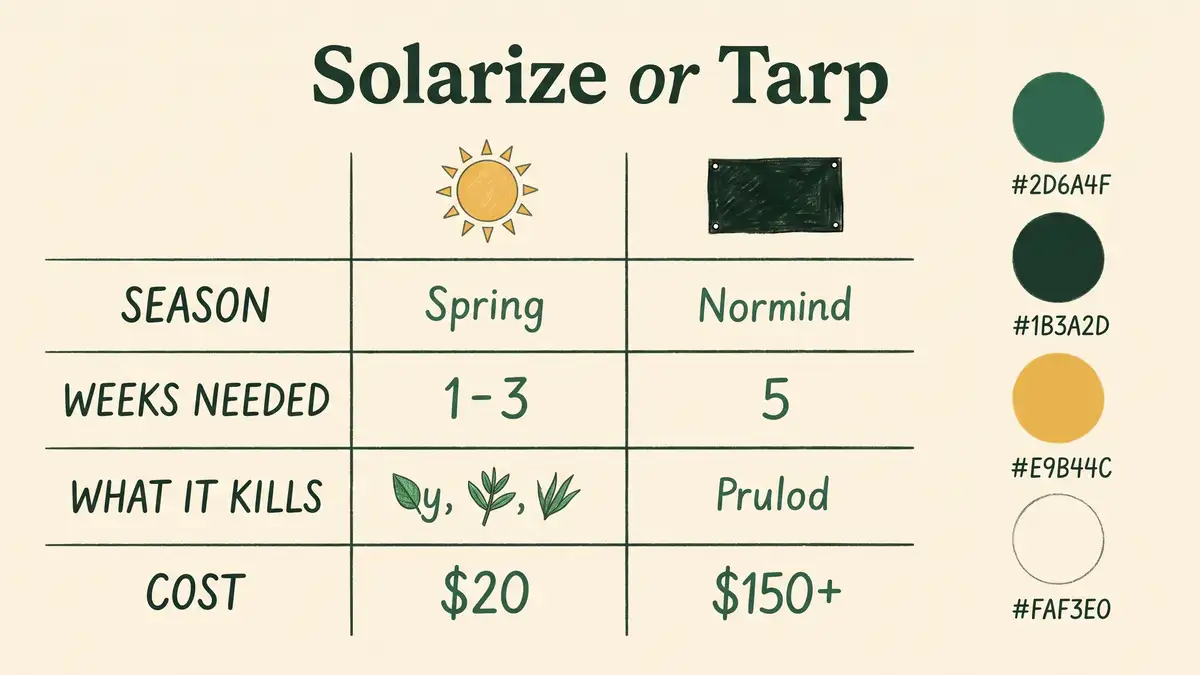
| Factor | Solarization | Tarping |
| Mechanism | Heat, clear plastic | Light exclusion, opaque tarp |
| Season | Peak summer only | Spring through late fall |
| Time needed | 4-6 weeks, up to 8 | 1 week summer, up to 3 cool |
| Plastic | 1-4 mil clear, single use | 5-8 mil, dozens of uses |
| Cost per 100 sq ft | $3-10 | $10-30, then near zero |
| Kills pathogens | Yes, in top 6 in | No meaningful effect |
Sources: Cornell Small Farms, Tarping in the Northeast (2022), UF IFAS, Solarization for Pest Management in Florida
Per treatment, solarization is cheaper. Over five years it is not, because thin clear film degrades in UV, tears into fragments and gets replaced. A silage tarp survives dozens of uses, which is why market growers own tarps and rent nothing.
The one thing solarization does that tarping cannot is disinfest. Where you have a real soilborne problem, verticillium wilt in tomatoes for instance, the heat in the top 6 inches is doing work that darkness never will.
Where Cardboard Fits
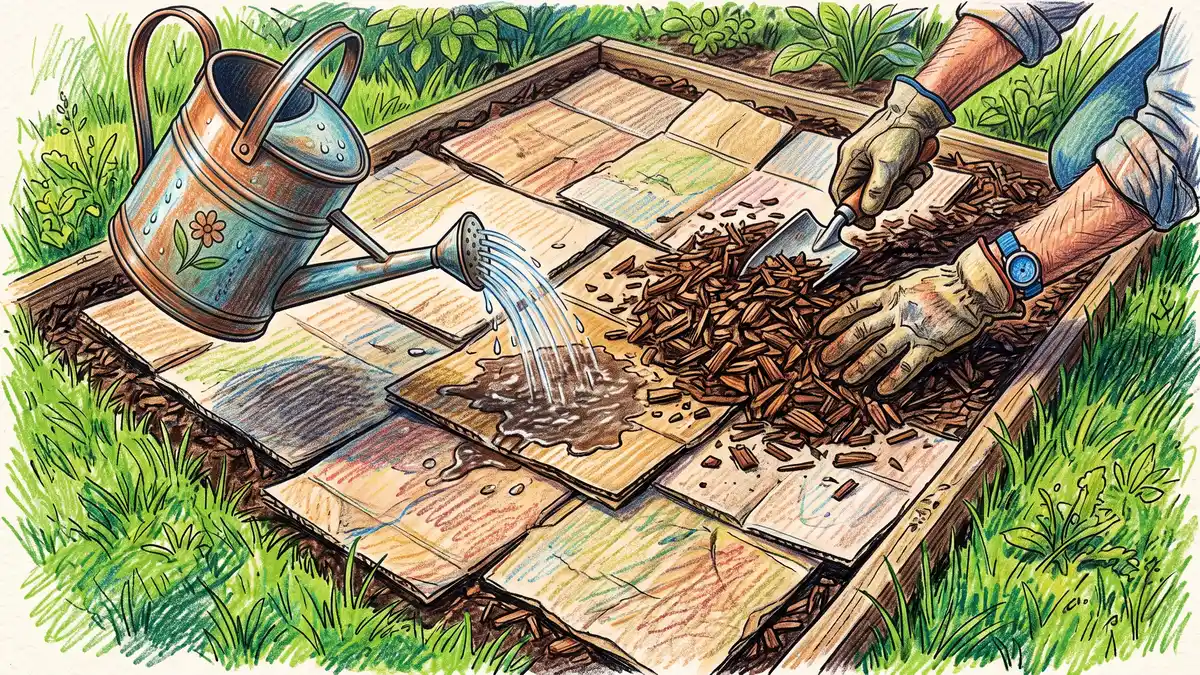
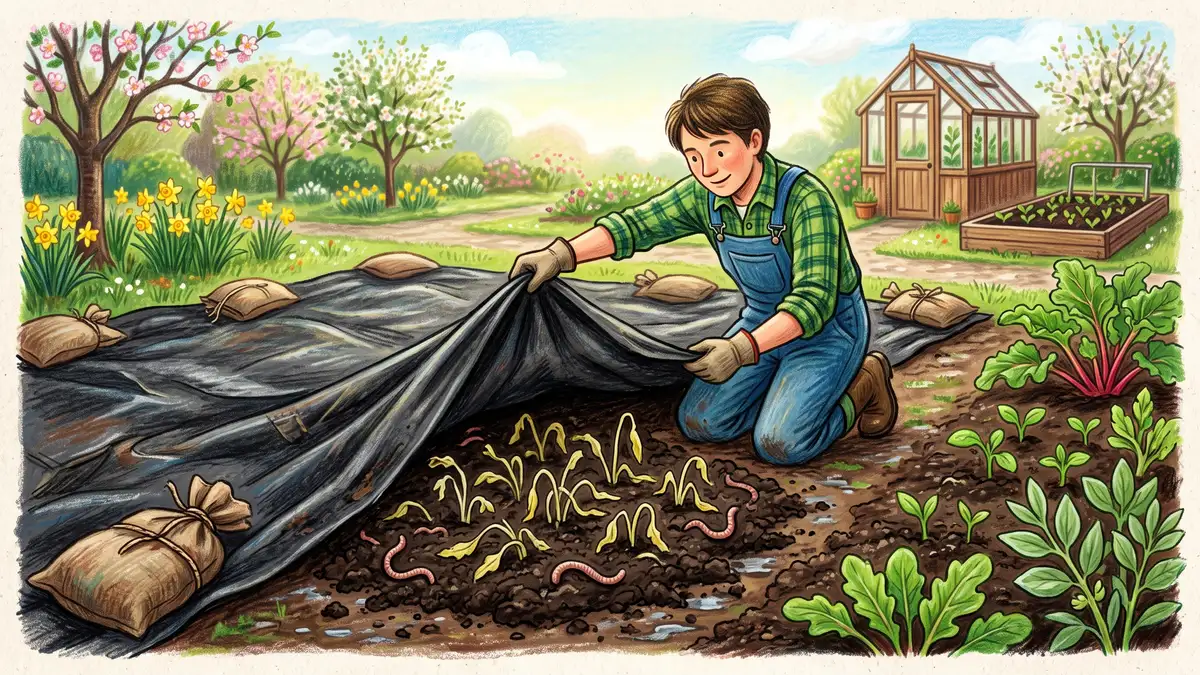
Cardboard under mulch is the slow option and it is free. It suppresses annual weeds well when sheets overlap generously and the mulch layer stays thick, but it takes months rather than weeks and it fails against perennials that push through gaps.
The advantage is that cardboard stays put and becomes soil. It is the right choice when you are converting lawn to bed over a whole season, and it pairs naturally with sheet mulching and cardboard mulch generally. It is the wrong choice when you want to plant in three weeks.
Neither Plastic Method Beats Perennial Roots
Bindweed, quackgrass, Canada thistle, Japanese knotweed and anything else with deep rhizomes will regrow from below the treated layer. Solarization only reaches 4 to 6 inches. Tarping starves top growth but a bindweed root system 10 feet down is not starving in three weeks. For those, plan on repeated tarping over a full season, or dig them.
What This Does to Your Soil Life
Solarization is a disturbance and it is honest to say so. UF IFAS notes that most soil organisms are negatively affected above 39 to 40°C and that solarization affects everything living in the upper 12 inches, including beneficial bacterivore and fungivore nematodes. The recovery evidence is reassuring though: organic matter decomposition was not measurably affected in Ozores-Hampton and Seman-Varner's studies, meaning the decomposer community bounces back fast, and beneficial predators return by the end of the next growing season.
Tarping is gentler. The SARE GNE19-205 trial found no significant difference in available soil nitrate between treatments and inconsistent rather than uniformly negative effects on arthropod communities. If protecting the soil food web is your priority, tarp.
After either method, do not till. Pull the plastic, plant directly, and top-dress with compost. If you solarized, a mycorrhizal inoculant at transplanting is a reasonable precaution, since the fungal network in the top few inches took the heat.
Key Takeaway
Choose by calendar and goal. Midsummer plus a disease problem means solarize. Any other month, or a weed problem alone, means tarp. Both beat rototilling, which chops perennial roots into more perennials and wrecks structure. See the wider picture in our soil health guide.
Frequently Asked Questions
What is soil solarization?
Covering moist soil with clear plastic during the hottest weeks of summer so trapped solar radiation heats the top few inches enough to kill weed seeds, seedlings and many soilborne pathogens. UC IPM records maximum temperatures of 108 to 140°F at 2 inches deep in California, falling to 90 to 99°F at 18 inches. Plastic stays down 4 to 6 weeks, or 6 to 8 in cooler or cloudier locations. It is a heat treatment, so it fails outside real summer heat.
Does soil solarization kill worms?
It affects them, yes. UF IFAS states that most soil organisms are harmed above 39 to 40°C (102 to 104°F), and solarization affects all living things in the upper 12 inches, beneficials included. Earthworms move deeper to escape heat where soil depth allows. Recovery is reasonably quick: decomposition activity was unaffected in published studies, and beneficial predators return by the end of the following season. Tarping is the gentler option if this concerns you.
Can you solarize soil in fall?
Not usefully in most of the US. Solarization depends on high solar radiation and warm air, so it is a June to August technique, and even then it underperforms in maritime climates and at high latitudes. In fall the soil will not reach lethal temperatures. Use an opaque tarp instead, which works by excluding light rather than generating heat and will clear a bed through autumn and over winter.
How long do you leave a tarp on a garden bed?
Cornell's guidance is under one week at the peak of summer and up to three weeks in cooler seasons. Three weeks of black tarp killed all or more than 95 percent of emerged annual weeds in their trials. For a fall-to-spring reset, lay the tarp after clearing in autumn and pull it when you are ready to plant. Longer is not harmful, so err on the generous side in cool weather.
Which is better, clear or black plastic?
They do different jobs. Clear plastic transmits radiation to the soil and is the only correct choice for solarization; black plastic absorbs heat in the film itself and re-radiates much of it to the air, so it heats soil far less. Black or white-on-black opaque tarps are the correct choice for occultation, where the goal is total light exclusion. Using black plastic and expecting solarization results is the most common mix-up.
Get the Weekly Dig
One practical permaculture guide a week, written for gardeners who do this on weekends: building living soil without buying it in bags. Free, no spam, unsubscribe any time.
Join the Weekly DigResources
- UC IPM: Soil Solarization for Gardens and Landscapes
- UF IFAS ENY-062: Introduction to Soil Solarization
- UF IFAS ENY-902: Solarization for Pest Management in Florida
- Cornell Small Farms Program: Tarping resources
- Cornell: Tarping in the Northeast, a Guide for Small Farms (2022)
- North Central SARE: Tarping for Weed Control Guide
- SARE GNE19-205 final report: tarping effects on soil and arthropods
- Oregon Department of Agriculture: pathogen and weed thermal death report
- Stapleton, UC ANR: solarization soil temperature and weed science paper
- FAO: Soil Solarization technical synthesis