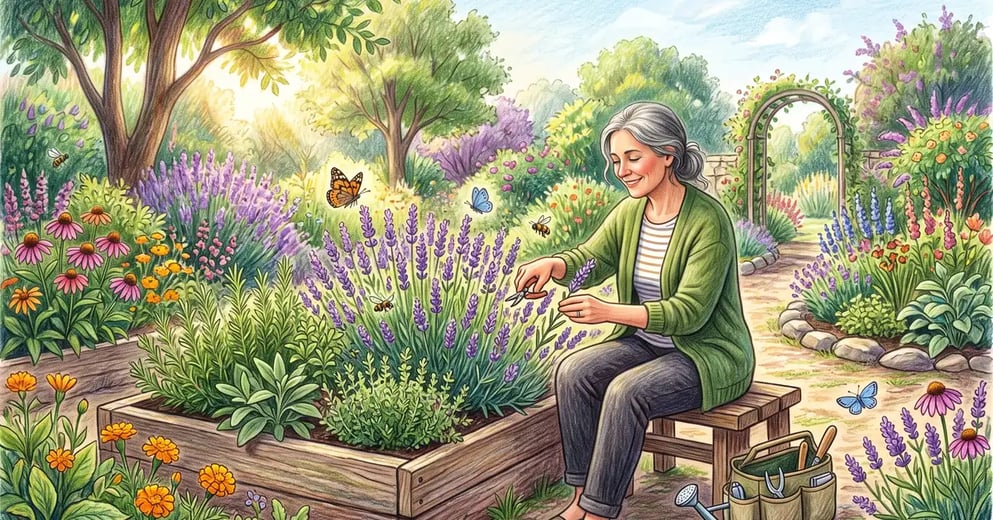

Most of us who garden already know it does something good for the mind. You go out tense and come back in lighter, even if all you did was pull a few weeds. What has changed in the last decade is that psychology and public health research have started to explain why, and permaculture, with its explicit ethic of "People Care," turns out to be a natural framework for gardening that tends the gardener as much as the garden.
This is a grounded look at the evidence for therapeutic gardening: what the studies actually show, the mechanisms behind the calm, and how permaculture design principles help you build a garden that supports wellbeing. One honest note up front, which the research itself is careful about: gardening supports mental health and complements professional care, but it does not replace it.
What this guide covers:
- What horticultural therapy and therapeutic gardens actually are
- The peer-reviewed evidence for gardening and mental health
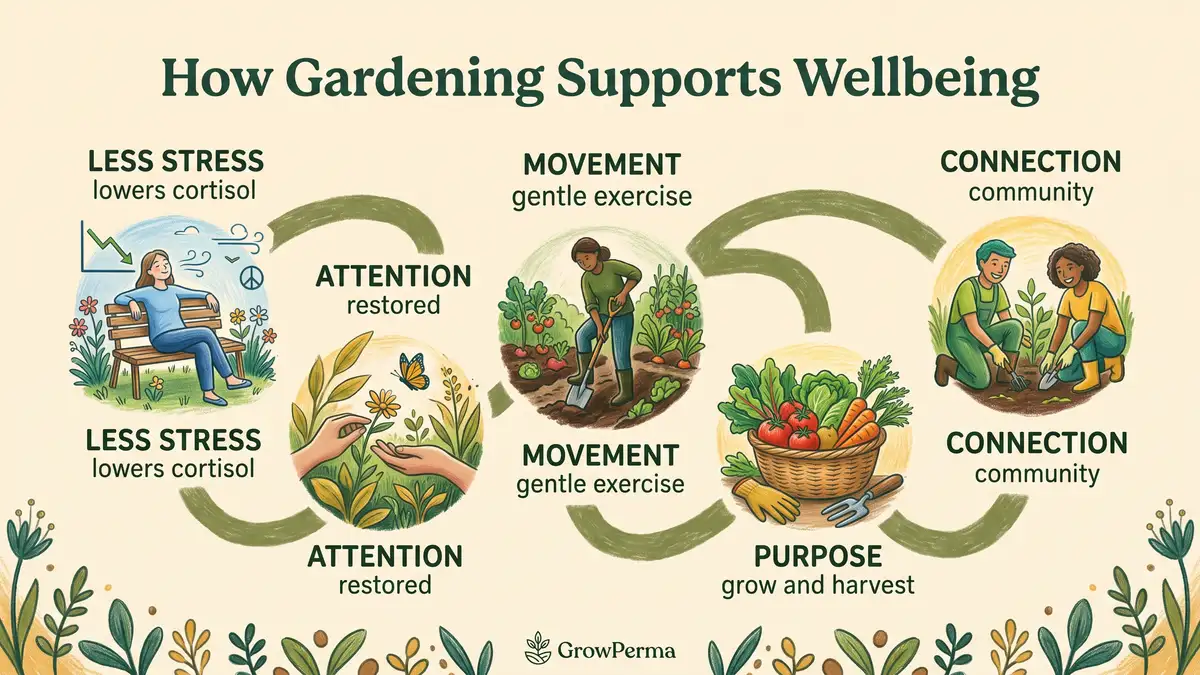
- Why nature restores the mind, from cortisol to attention
- How permaculture's People Care ethic shapes a healing garden
Key Takeaway
Research links gardening with lower stress, anxiety, and depression and higher life satisfaction, working through several mechanisms at once: reduced cortisol, restored attention, gentle movement, purpose, and social connection. Permaculture's People Care ethic gives you a design lens for building a garden that supports the gardener, alongside, not instead of, professional mental health care.
What Is Therapeutic Gardening?
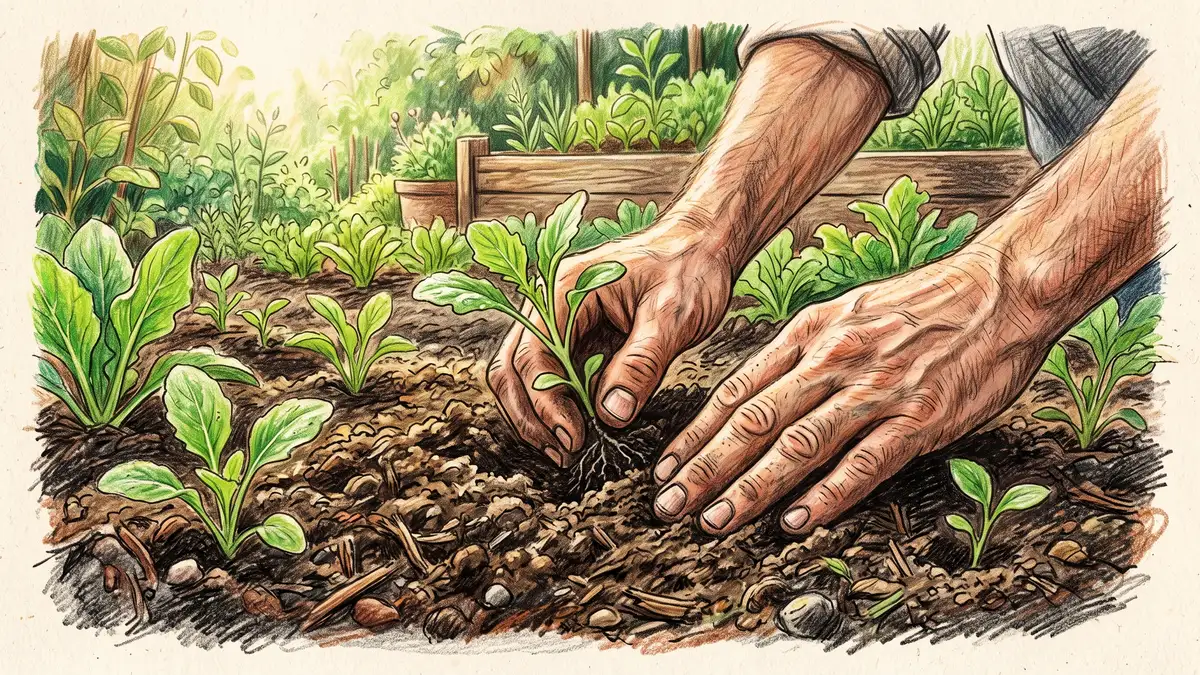
The terms overlap, but they are not identical. The American Horticultural Therapy Association distinguishes formal horticultural therapy, a goal-directed practice led by a trained therapist, from therapeutic and healing gardens, which are spaces designed to support wellbeing whether or not a therapist is present. For a home gardener, the useful idea is that you do not need a clinic to get the benefit; you need a garden designed with your own restoration in mind.
| Term | What It Means | Who Leads It |
| Horticultural therapy | Goal-directed treatment using plant activities | A trained horticultural therapist |
| Therapeutic garden | A space designed to support a group's wellbeing | Designed for a defined population |
| Healing garden | A restorative green space open to all | Often at hospitals or public sites |
Sources: American Horticultural Therapy Association
This maps neatly onto permaculture, which has always treated the garden as a system that meets human needs, not just a food factory. If you have read our practical guide to permaculture, therapeutic gardening is People Care made physical.
What Does the Research Actually Show?
The evidence is stronger and more specific than "gardening is nice." A widely cited meta-analysis by Soga, Gaston and Yamaura, published in Preventive Medicine Reports (2017), pooled dozens of studies and found gardening associated with reductions in depression, anxiety, stress, and mood disturbance, along with increases in life satisfaction, quality of life, and sense of community.
The stress effect shows up physiologically too. In an experiment by Van Den Berg and Custers (2011), people who spent 30 minutes gardening after a stressful task had a greater drop in the stress hormone cortisol, and a fuller return to positive mood, than people who spent 30 minutes reading indoors. That is a small study, but it points to something real: the garden is doing measurable work on your nervous system, not just distracting you.
There is even intriguing, still-early science about the soil itself. Researchers studying Mycobacterium vaccae, a common soil bacterium, have found it can influence serotonin pathways and stress resilience in animal models, prompting the idea that getting your hands in living soil may have a biological upside. It is worth treating this as promising rather than proven, but it fits the broader pattern.
Why Does Gardening Calm the Mind?
No single mechanism explains it; several stack together. This is exactly why gardening tends to outperform any one intervention you could isolate from it.
| Mechanism | How It Helps |
| Attention restoration | Nature's "soft fascination" rests overworked directed attention |
| Lower stress physiology | Time in the garden reduces cortisol and calms the nervous system |
| Gentle movement | Digging and weeding are low-intensity exercise that lifts mood |
| Purpose and routine | Tending and harvesting give structure and a tangible result |
| Social connection | Community gardens reduce loneliness and build belonging |
Sources:
Two ideas underpin much of this. Attention Restoration Theory, developed by Rachel and Stephen Kaplan, holds that modern life drains our capacity for focused, directed attention, and that natural settings, which engage us gently through "soft fascination," let that capacity recover. Alongside it sits the biophilia hypothesis, biologist E.O. Wilson's 1984 proposal that humans carry an innate affinity for living things. Put simply, we are wired to feel better around plants.
Why This Works: The People Care Ethic
Permaculture rests on three ethics: Earth Care, People Care, and Fair Share. People Care is the explicit commitment that a well-designed system should meet human needs, including psychological ones. Therapeutic gardening is not an add-on to permaculture; it is one of its founding ethics expressed in soil. When you design for your own restoration, you are practicing permaculture at full depth, the same holistic thinking behind the 12 permaculture principles.
How Do You Design a Garden for Wellbeing?
Design for calm, ease, and the senses, not just yield. A therapeutic garden lowers the barriers to being out in it and rewards the senses once you are there. A few evidence-aligned moves:
Engage the senses
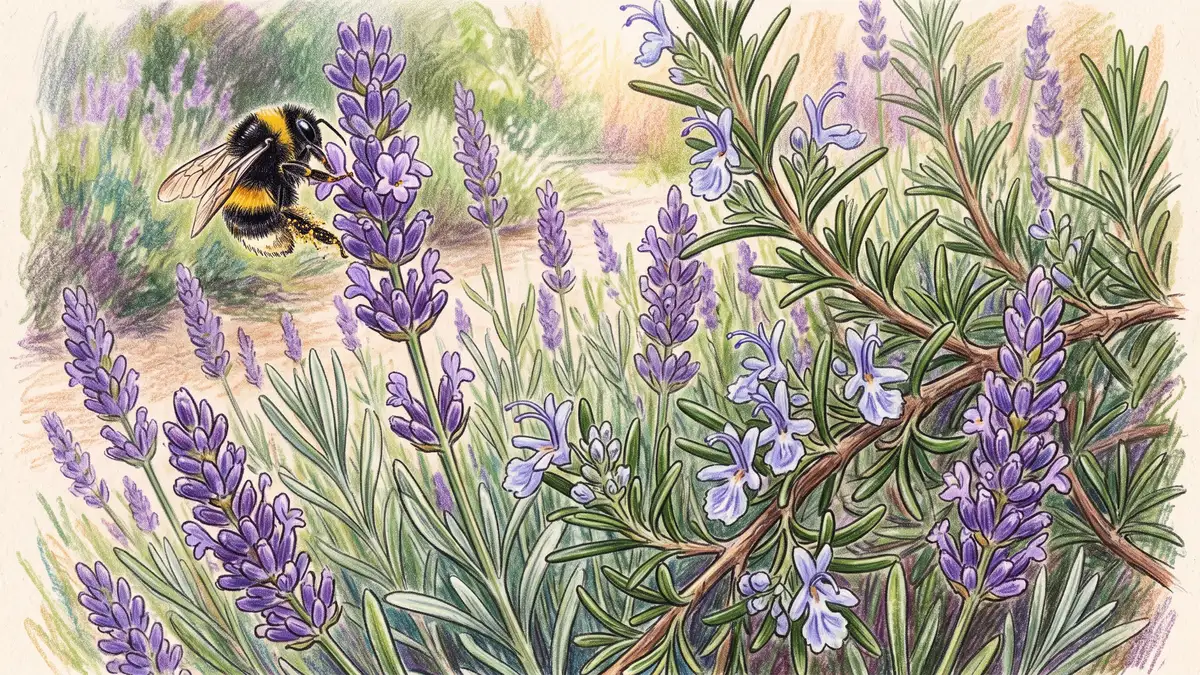
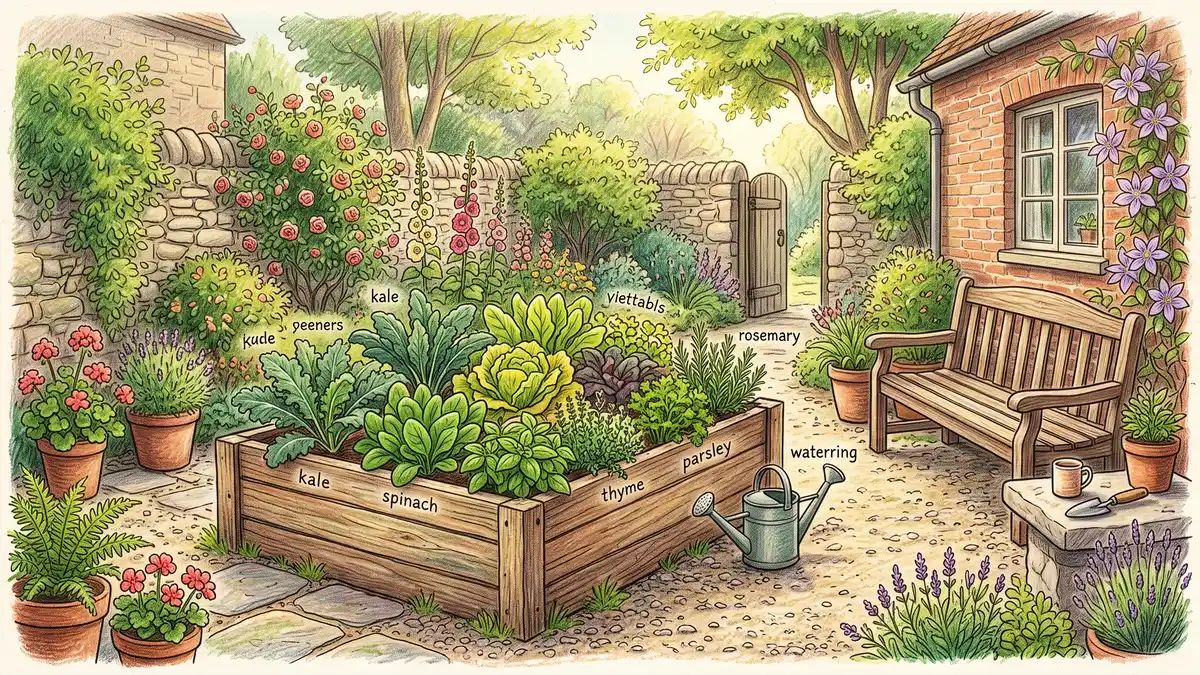
Plant for scent, texture, and sound: lavender, rosemary, mint, ornamental grasses. Fragrance and touch are what make a garden restorative rather than just green.
Make it accessible and forgiving
Use waist-high raised beds and wide, even paths so gardening never feels like a chore. Choose resilient, low-pressure plants so a missed week is not a failure.
Build in a place to simply be
Add a bench in a sheltered, sunny spot. The garden restores you when you sit in it, not only when you work in it.
Invite others in
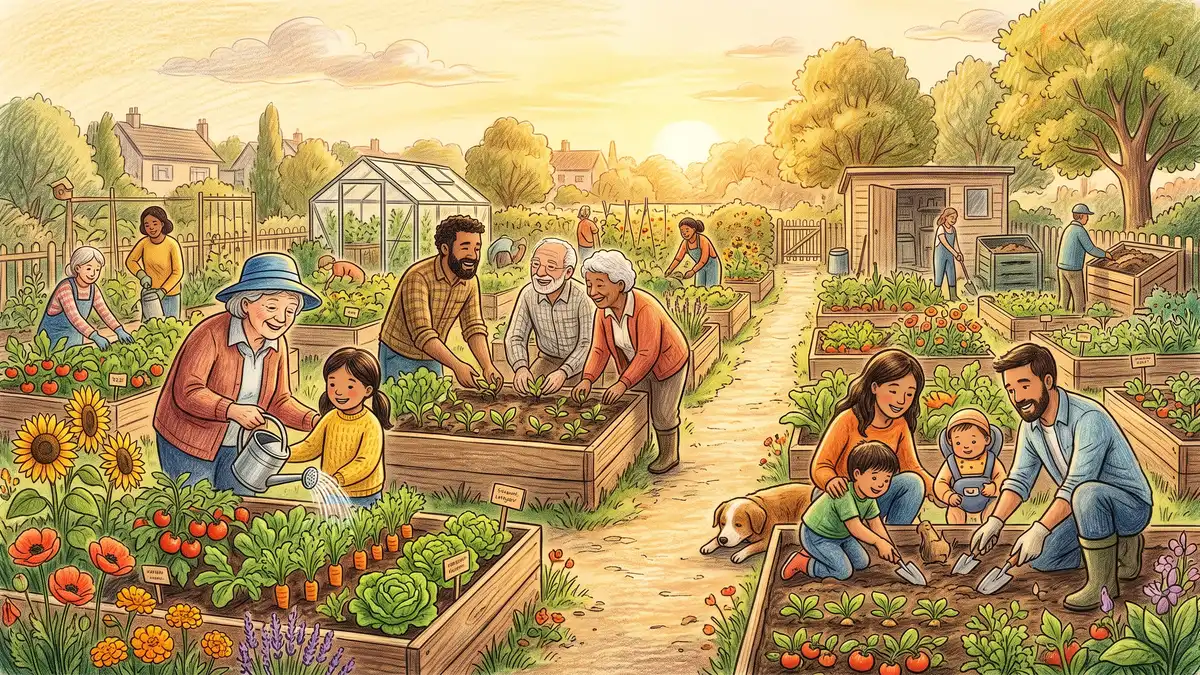
Share a bed with a neighbor or join a community garden. The social connection is one of the best-supported benefits of all.
Notice how each move is also good permaculture: diverse sensory plantings mirror a resilient polyculture, accessible beds reflect thoughtful zone design, and shared growing embodies Fair Share. A wellbeing garden and a well-designed permaculture garden are, more often than not, the same garden. The layered abundance of a food forest is one of the most sensory-rich, low-maintenance forms this can take.
An Important Note
Therapeutic gardening supports wellbeing and can be a genuine source of calm and connection, but it is a complement to, not a substitute for, professional mental health care. If you are struggling with your mental health, please reach out to a qualified professional or a trusted person in your life. The garden is a wonderful ally on that path, not a replacement for it.
Frequently Asked Questions
Why is gardening good for your mental health?
Gardening supports mental health through several mechanisms working together. Time among plants lowers the stress hormone cortisol and calms the nervous system, natural settings restore our depleted capacity for focused attention, and the gentle physical activity of digging and weeding lifts mood. Tending plants also provides purpose, routine, and a tangible harvest, while community gardening adds social connection. A 2017 meta-analysis in Preventive Medicine Reports found gardening associated with reduced depression, anxiety, and stress and increased life satisfaction. It is a rare activity that engages body, mind, and community at once.
What is the difference between horticultural therapy and therapeutic gardening?
Horticultural therapy is a formal, goal-directed practice led by a trained horticultural therapist, often within a clinical or rehabilitation setting, where plant-based activities are used to work toward specific treatment goals. Therapeutic gardening is broader and less clinical: it refers to gardening and garden spaces intentionally designed to support wellbeing, whether or not a therapist is involved. The American Horticultural Therapy Association also describes therapeutic and healing gardens as designed spaces that promote restoration. For most home gardeners, therapeutic gardening simply means growing in a way that tends your own wellbeing.
Does gardening actually reduce stress and cortisol?
There is real evidence that it does. In a 2011 study by Van Den Berg and Custers, participants who gardened for 30 minutes after a stressful task showed a greater decline in salivary cortisol, and a better recovery of positive mood, than those who read indoors for the same time. Broader reviews link gardening and time in nature with lower perceived stress. While individual studies are modest in size, the consistent pattern across physiological measures and self-reports supports the everyday experience many gardeners describe of feeling calmer after time in the garden.
Is the "soil bacteria makes you happy" claim true?
It is intriguing but not fully settled. Researchers studying the soil bacterium Mycobacterium vaccae have found it can influence serotonin-related pathways and stress resilience in animal models, which led to the popular idea that contact with living soil may lift mood. This is promising early science rather than proven human fact, so it is best treated as one plausible thread among the well-established benefits of gardening, not the main reason to garden. The stronger, better-documented benefits come from stress reduction, attention restoration, movement, and connection.
How does permaculture relate to mental health?
Permaculture is built on three ethics: Earth Care, People Care, and Fair Share. People Care makes human wellbeing an explicit design goal, which means a permaculture garden is meant to nourish the gardener as well as produce food. In practice, permaculture design choices, sensory diversity, accessible layouts, resilient low-maintenance plantings, and shared growing, line up closely with what research says makes a garden restorative. So designing a permaculture garden and designing a therapeutic garden tend to lead to the same place: a resilient, welcoming space that supports both the land and the people in it.
Get the Weekly Dig
One practical permaculture guide a week, written for gardeners who do this on weekends: permaculture design for real backyards. Free, no spam, unsubscribe any time.
Join the Weekly DigResources
- American Horticultural Therapy Association — About Therapeutic Gardens
- Soga, Gaston & Yamaura (2017) — Gardening and Health: A Meta-Analysis (Preventive Medicine Reports)
- Van Den Berg & Custers (2011) — Gardening Promotes Recovery from Stress
- European Centre for Environment & Human Health — Attention Restoration Theory: A Systematic Review
- Nature-Based Interventions and Mental Health (NIH/PMC review)
- American Horticultural Therapy Association — Home