
Most permaculture literature quietly assumes you have land: acres to contour, a dam to dig, a forest to plant. But the majority of us live on a quarter-acre suburban block with a mortgage, a lawn, and a fence. That gap is exactly what David Holmgren, the co-originator of permaculture, spent the last decade closing. His answer was not to tell people to move to the country. It was to retrofit the suburbs we already have.
If you know permaculture mainly through Bill Mollison's thick Designer's Manual, Holmgren's body of work is the other half of the founding conversation, and arguably the more useful half for anyone gardening in a built-up place. This is a practitioner's tour of his thinking, from the twelve design principles through to RetroSuburbia, and how to put it to work where you actually live.
Here is what this guide covers:
- Who David Holmgren is and how his approach differs from Mollison's
- The twelve permaculture design principles and why they are thinking tools, not techniques
- The permaculture flower and the concept of energy descent
- What RetroSuburbia actually asks you to do, in three fields of action
- How to start retrofitting your own suburban block this season
Key Takeaway
Holmgren's contribution is a principle-based permaculture: a set of twelve portable design principles plus the argument, developed in RetroSuburbia, that ordinary suburban homes are an underused reservoir of space, water, and sunlight for building a more resilient life.
Who Is David Holmgren?
David Holmgren, born in 1955, is an Australian environmental designer who co-originated permaculture as a student. In the mid-1970s at the Tasmanian College of Advanced Education in Hobart, he worked with his lecturer Bill Mollison on ideas about "permanent agriculture." Their manuscript became Permaculture One (1978), the book that coined the word "permaculture," a contraction of "permanent" and "agriculture," later broadened to "permanent culture."
The two founders then diverged in a way that matters for practitioners. Mollison published Permaculture: A Designer's Manual in 1988, a technique-heavy reference that became the standard course text. Holmgren took far longer, publishing Permaculture: Principles and Pathways Beyond Sustainability in December 2002 after more than 25 years of practice. Where Mollison catalogued methods, Holmgren distilled principles. If you have read our practical guide to permaculture, this is the person who gave the movement its intellectual backbone.
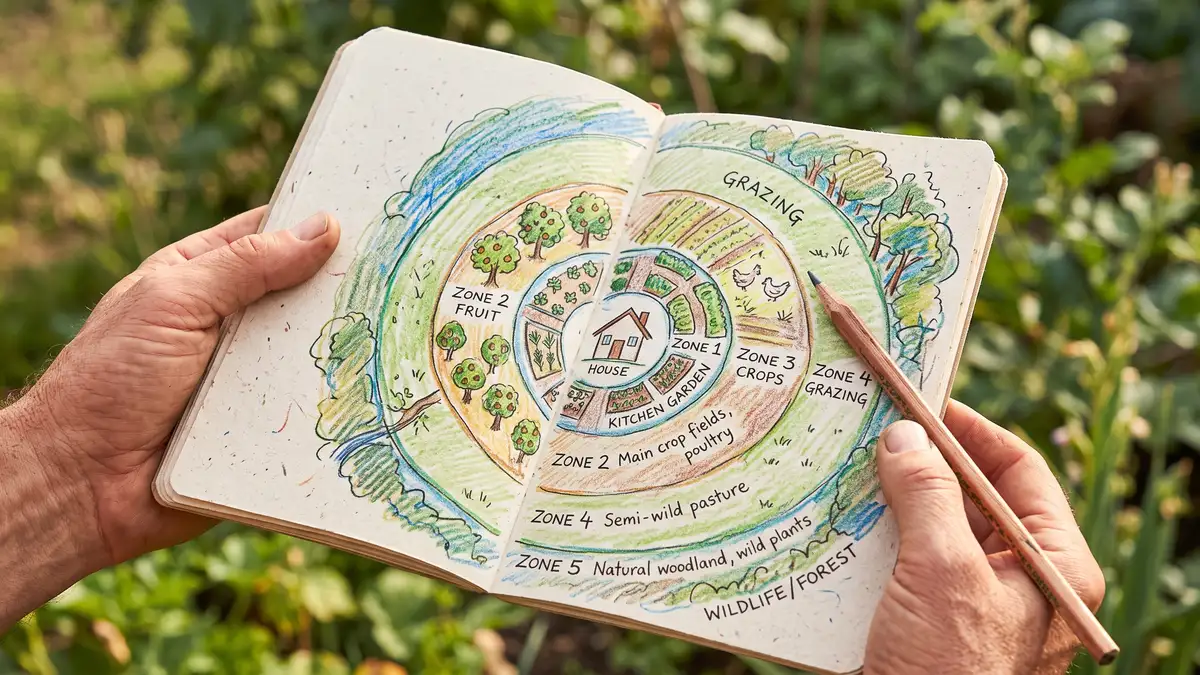
His 2002 book is dedicated to the systems ecologist Howard T. Odum, who died two months before it was published. That dedication is a clue: Holmgren reads permaculture through the lens of energy. He frames it not as organic gardening but as "consciously designed landscapes which mimic the patterns and relationships found in nature," designed to work as high-quality fossil energy becomes scarcer. His long-running demonstration site, Melliodora in Hepburn Springs, Victoria, is a 2-acre (0.8-hectare) homestead he and his partner Su Dennett have run since 1985, and it functions as a decades-long field test of everything below.
What Are the 12 Permaculture Design Principles?
Holmgren's twelve principles are "thinking tools," not a checklist of techniques. Each is paired with a traditional proverb to make it memorable, and each is meant to apply at any scale, from a windowsill to a watershed. The permacultureprinciples.com site, closely associated with Holmgren, describes them as doors into whole-systems thinking rather than fixed rules.
The observation cluster
Observe and interact; catch and store energy; obtain a yield. Watch before you build, bank surplus energy (sun, water, money, goodwill), and make sure the design feeds you now, not only in theory.
The regulation cluster
Apply self-regulation and accept feedback; use and value renewable resources; produce no waste. Build systems that self-correct, lean on renewable flows, and treat waste as a design failure.
The design cluster
Design from patterns to details; integrate rather than segregate; use small and slow solutions; use and value diversity; use edges and value the marginal; creatively use and respond to change.
The full sequence, as Holmgren lists it, is set out clearly on the Permaculture Association's David Holmgren principles page. What makes them powerful is their portability: "catch and store energy" means thermal mass and water tanks in one climate, rooftop solar and a full pantry in another. This is the same logic that makes a food forest work, and you can see all twelve applied to beds and borders in our guide to the 12 permaculture principles with garden examples.
Why This Works: Design from Patterns to Details
Holmgren's seventh principle explains why principles beat recipes. Understand the big patterns first, climate, water flow, how a household actually moves through a day, and the details fall into place. A recipe fails the moment your site differs from the author's. A pattern travels. That is why the same twelve ideas guide a Tasmanian homestead and a Phoenix backyard.
The Permaculture Flower and Energy Descent
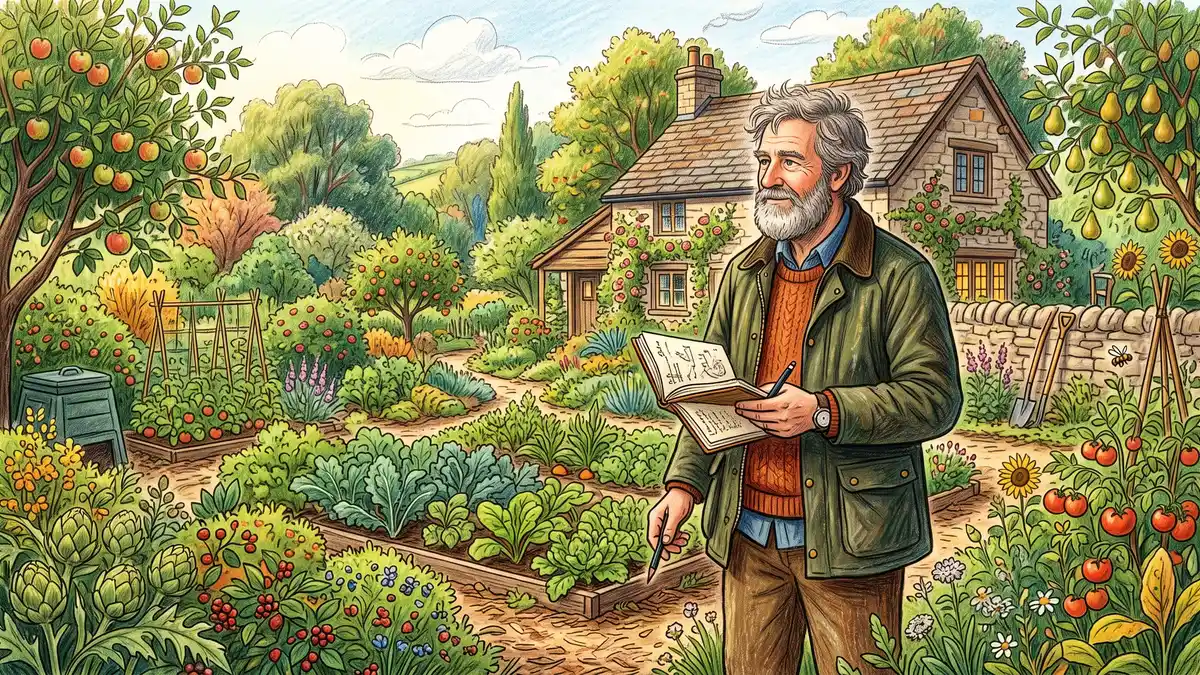
Beyond the garden, Holmgren mapped permaculture across seven domains of human activity in a diagram called the permaculture flower. The ethics, Earth Care, People Care, and Fair Share, sit at the center, surrounded by petals for land and nature stewardship, the built environment, tools and technology, education and culture, health and wellbeing, finance and economics, and land tenure and governance. The permaculture flower page lets you hear Holmgren explain it in his own words.
Running underneath all of it is his concept of "energy descent," the idea that industrial society faces a long decline in cheap, high-quality energy. In his 2009 book Future Scenarios (Chelsea Green, 126 pages), reviewed on Resilience.org, he crosses two variables, the speed of oil decline and the severity of climate change, to sketch four possible futures.
| Scenario | Conditions | Character |
| Brown Tech | Slow oil decline, fast climate change | Centralized, fossil-heavy, top-down |
| Green Tech | Slow oil decline, slow climate change | Renewable transition, still growth-focused |
| Earth Steward | Fast oil decline, slow climate change | Localized, low-energy stewardship |
| Lifeboats | Fast oil decline, fast climate change | Small survival-oriented communities |
Sources:
Holmgren does not claim to predict which future arrives. The point is strategic: permaculture's emphasis on relocalization, diversity, and low-energy design is a sensible hedge across all four. That reasoning is what led him, logically, to suburbia.
What Is RetroSuburbia?
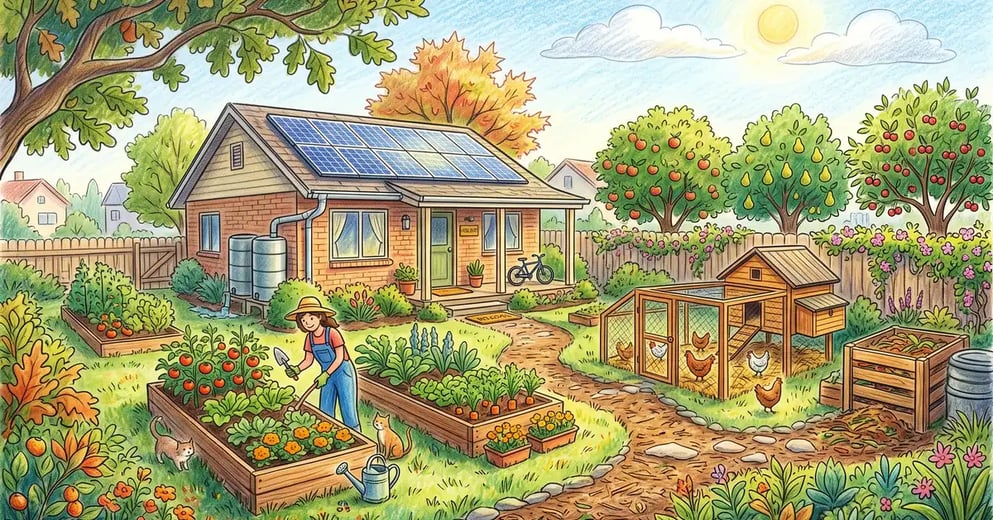
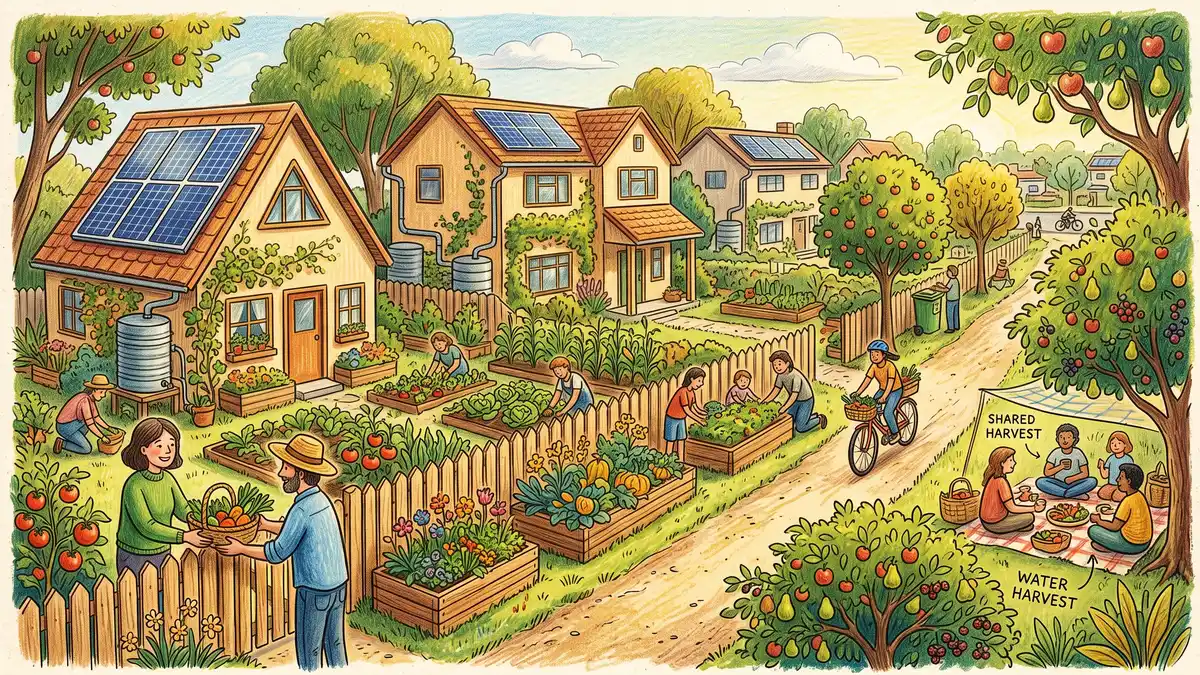
RetroSuburbia: The Downshifter's Guide to a Resilient Future (2018) argues that existing suburbs are a vast, underused resource, not an ecological write-off. Rather than urging people to "go bush," Holmgren makes the case that the embodied energy, space, water, and sunlight already sitting in ordinary neighborhoods can be retrofitted for resilience. The book's own description is candid that it will not teach you to graft a tree; it helps you design the systems that tie your whole home and life together.
The book organizes its 34 chapters into three fields of retrofitting action, confirmed in the RetroSuburbia bushfire extract.
| Field | Focus | Example Actions |
| Built | House and infrastructure | Insulation, passive solar, water storage, reconfiguring rooms |
| Biological | Gardens, trees, animals | Food gardens, fruit trees, chickens, water-harvesting beds |
| Behavioural | Habits and relationships | Sharing, reducing consumption, local livelihoods, housemates |
Sources:
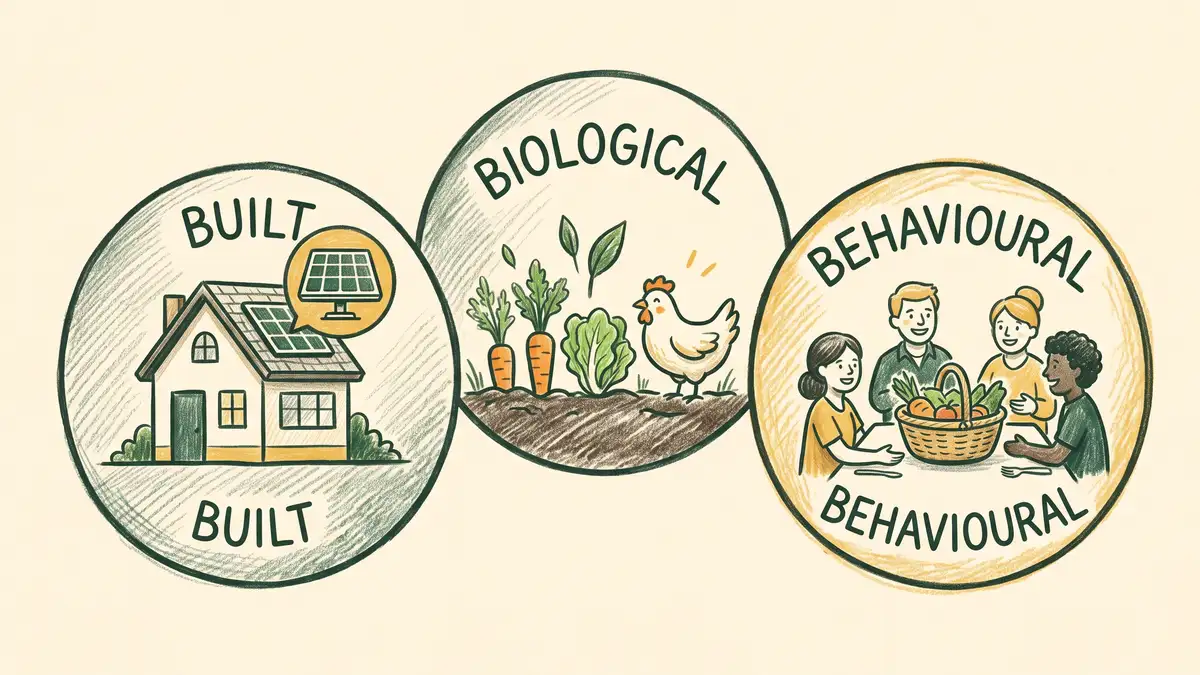
The three fields are designed to reinforce each other. The "A Good Home Forever" case study shows a homeowner who removed internal walls to shrink the space needing heating (built), met water and energy from at least two sources each (built and biological), and committed to cutting possessions by half (behavioural), all at once.
Common Misconception to Avoid
RetroSuburbia is not a call to buy solar panels and stop there. Holmgren's whole argument is that a built retrofit without a behavioural one just makes a high-consumption life slightly more efficient. The behavioural field, sharing, downshifting, building neighbor relationships, is where most of the resilience actually comes from.
How Do You Start Retrofitting a Suburban Block?
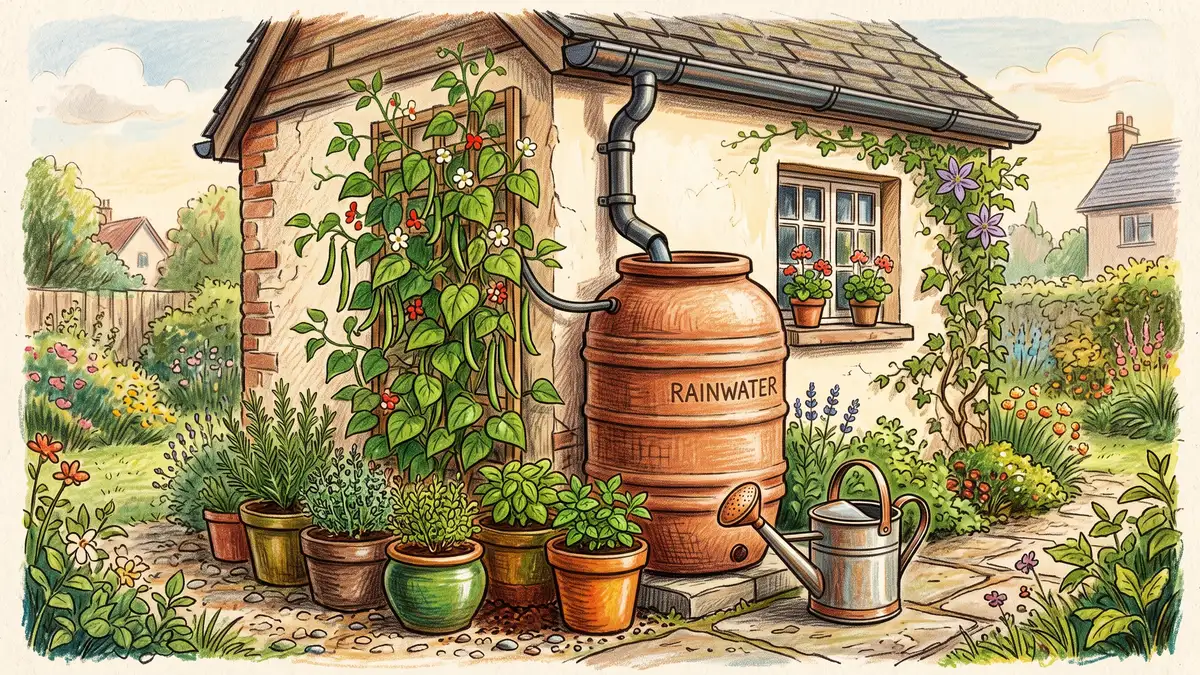
Start with the first principle: observe and interact. Before spending a dollar, spend a season watching your block. Where does the summer sun fall? Where does rain pool or run off? Which rooms sit empty and heated? Holmgren's method is to bank the free flows already crossing your site, then redesign around them, exactly what he demonstrates at Melliodora.
To make the ideas land with families and neighbors, the RetroSuburbia project turned them into stories. "Aussie Street," described on the RetroSuburbia events page, uses more than 100 photos and watercolor drawings to follow four households on one fictional street as they take different downshifting paths. There is a children's book, "Our Street," and a card deck pairing the three ethics and twelve principles with 50 illustrated action cards. The lesson for practitioners: cultural change in a neighborhood needs shared stories as much as it needs swales.
Key Takeaway
You do not need to relocate to practice serious permaculture. Pick one action in each of Holmgren's three fields, a garden bed (biological), a water tank or draught seal (built), and one shared or downshifting habit (behavioural), and you have begun a genuine RetroSuburbia retrofit.
Frequently Asked Questions
What is David Holmgren best known for?
David Holmgren is best known as the co-originator of permaculture, alongside Bill Mollison, following their 1978 book Permaculture One. Among practitioners he is most associated with the twelve permaculture design principles he set out in Permaculture: Principles and Pathways Beyond Sustainability (2002), and more recently with RetroSuburbia (2018), which applies permaculture to ordinary suburban homes. He also developed the "energy descent" framework and the four future scenarios in his 2009 book Future Scenarios, and he runs the long-standing Melliodora demonstration site in Victoria, Australia.
How is Holmgren's permaculture different from Mollison's?
The two co-founders emphasized different things. Bill Mollison's Designer's Manual (1988) is technique-focused, a large catalogue of methods that became the standard permaculture course text. David Holmgren's Principles and Pathways (2002) is principle-focused, distilling permaculture into twelve portable design principles meant to apply at any scale and in any climate. In practice, many designers use both: Mollison for the "how" of specific techniques and Holmgren for the "why" and the overall design logic that decides which techniques belong where.
What are the three fields of RetroSuburbia?
RetroSuburbia organizes its retrofitting advice into three reinforcing fields: built, biological, and behavioural. The built field covers the house and infrastructure, including insulation, passive solar design, and water storage. The biological field covers living systems such as food gardens, fruit trees, and small animals. The behavioural field covers habits and relationships, including reducing consumption, sharing resources, and building local livelihoods and community. Holmgren argues that lasting resilience comes from working all three together rather than treating a solar install or a vegetable bed as a standalone fix.
What does "energy descent" mean in permaculture?
Energy descent is Holmgren's term for the long-term decline in cheap, high-quality fossil energy that he expects industrial societies to face. Drawing on the systems ecologist Howard T. Odum, he treats permaculture as a design response to this transition: as concentrated energy becomes scarcer, decentralized, diverse, and low-energy systems become more valuable. His 2009 book Future Scenarios explores four ways the coming decades could unfold, and argues that permaculture's focus on relocalization and resilience is a sensible strategy across all of them.
Can you practice permaculture in a normal suburban house?
Yes, and that is precisely the argument of RetroSuburbia. Holmgren makes the case that existing suburbs hold underused space, water, and sunlight that can be retrofitted for food production and resilience without moving to the country. Start by observing your block through a full season, then add one action in each field: a productive garden bed, a practical building improvement like a water tank or better insulation, and one behavioural shift such as sharing tools or growing food with neighbors. Small, slow, stacked changes are the permaculture way.
Get the Weekly Dig
One practical permaculture guide a week, written for gardeners who do this on weekends: permaculture design for real backyards. Free, no spam, unsubscribe any time.
Join the Weekly DigResources
- David Holmgren — biography and bibliography (Wikipedia)
- The 12 Permaculture Design Principles — permacultureprinciples.com
- David Holmgren Principles — Permaculture Association (UK)
- The Permaculture Flower: Seven Domains of Action
- RetroSuburbia: The Downshifter's Guide to a Resilient Future
- RetroSuburbia — the three fields of retrofitting (book extract)
- Review: Future Scenarios by David Holmgren — Resilience.org
- Melliodora case study — Permaculture Apprentice