
Raised beds dry out faster than ground-level beds. They have more exposed surface, no connection to deep subsoil moisture, and they heat up from the sides as well as the top. Mulch is the cheapest fix for all three problems, and most gardeners either skip it or get the depth wrong. drip line spacing and run times choosing a pine bark grade what to fill a raised bed with
Here is what to use, how deep to lay it, the one contamination risk that can wipe out a whole bed, and why the wood chip nitrogen warning is mostly wrong.
Should You Mulch a Raised Bed at All?
Yes, with one seasonal exception we will get to. University of Minnesota Extension lists the three benefits plainly: weed suppression, moisture retention, and temperature moderation. In a raised bed all three matter more than they do in the ground, because the bed is a small, exposed volume of soil with nowhere to buffer against extremes.
What you will find below:
- The depth that suppresses weeds without smothering the soil
- A material comparison built around raised beds, not shrub borders
- What the wood chip nitrogen research actually found
- The herbicide residue that survives composting and kills tomatoes
- When to pull mulch back rather than pile it on
Key Takeaway
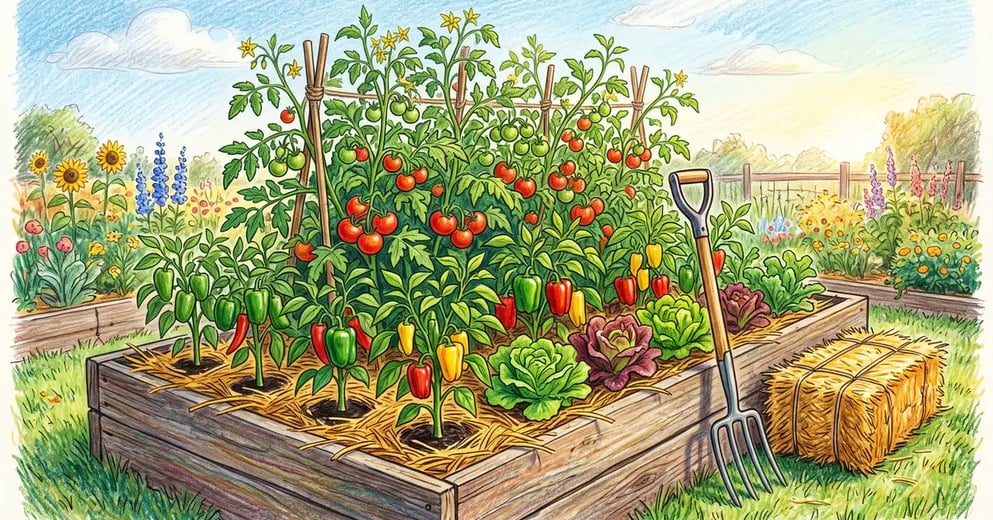
Lay 3 in. (7.5 cm) of straw or shredded leaves, keep a 2 in. (5 cm) ring of bare soil around every stem, and wait until the soil has warmed in spring before you cover it. That is 90 percent of mulching a raised bed correctly.
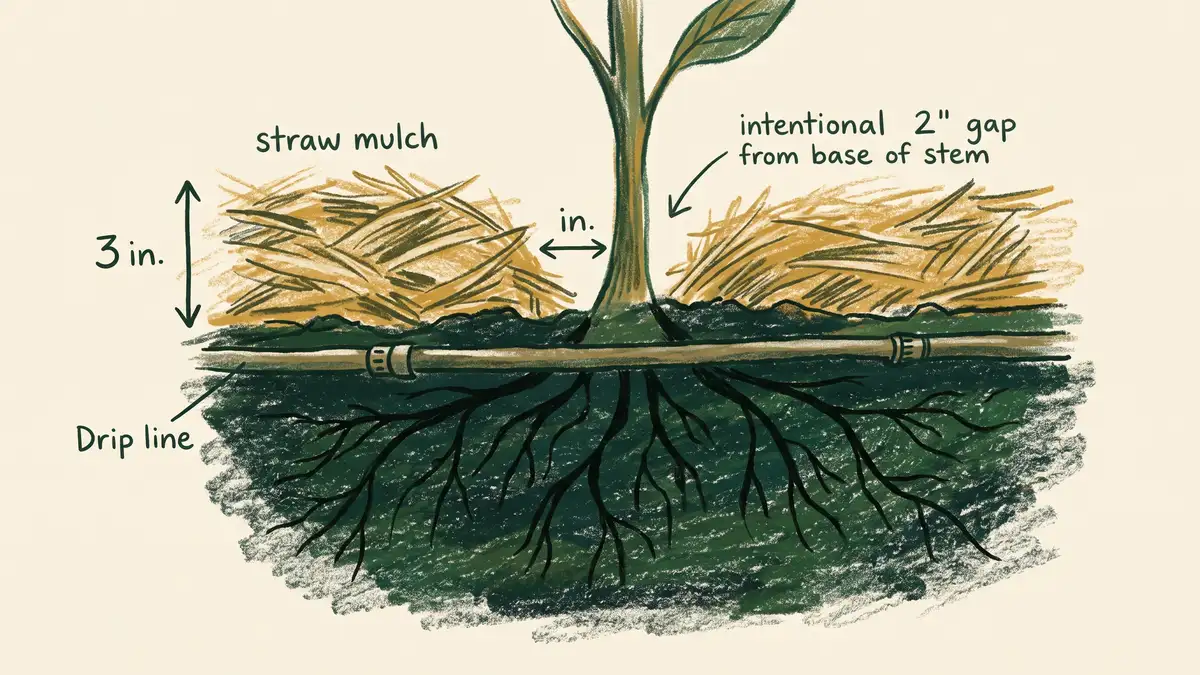
How Deep Should Mulch Be in a Raised Bed?
Two to four inches, with three as the working default. Penn State Extension frames the trade-off well: too little gives limited weed control, too much stops air circulating properly. Below 2 in. (5 cm), light reaches weed seeds and they germinate. Above 4 in. (10 cm), you start creating an anaerobic mat and a permanent slug hotel.
Raised beds pull that range down slightly. In a shallow bed of 8 to 10 in. (20 to 25 cm), 4 in. of mulch is a third of your total soil profile, which is too much. Go with 2 in. in shallow beds and save the deeper layer for beds of 12 in. (30 cm) or more. Fluffy materials settle, so lay straw a little thicker than you want it and let it compress over two weeks.
Why This Works: Mimicking the Forest Floor
A woodland never has bare soil. Leaf litter falls, decays from the bottom, and feeds the layer beneath while shading the surface. Mulching a bed is a compressed version of that same cycle, which is why the depth that works is roughly the depth of natural leaf litter. You are not adding a product, you are restarting a process that bare cultivated soil interrupts.
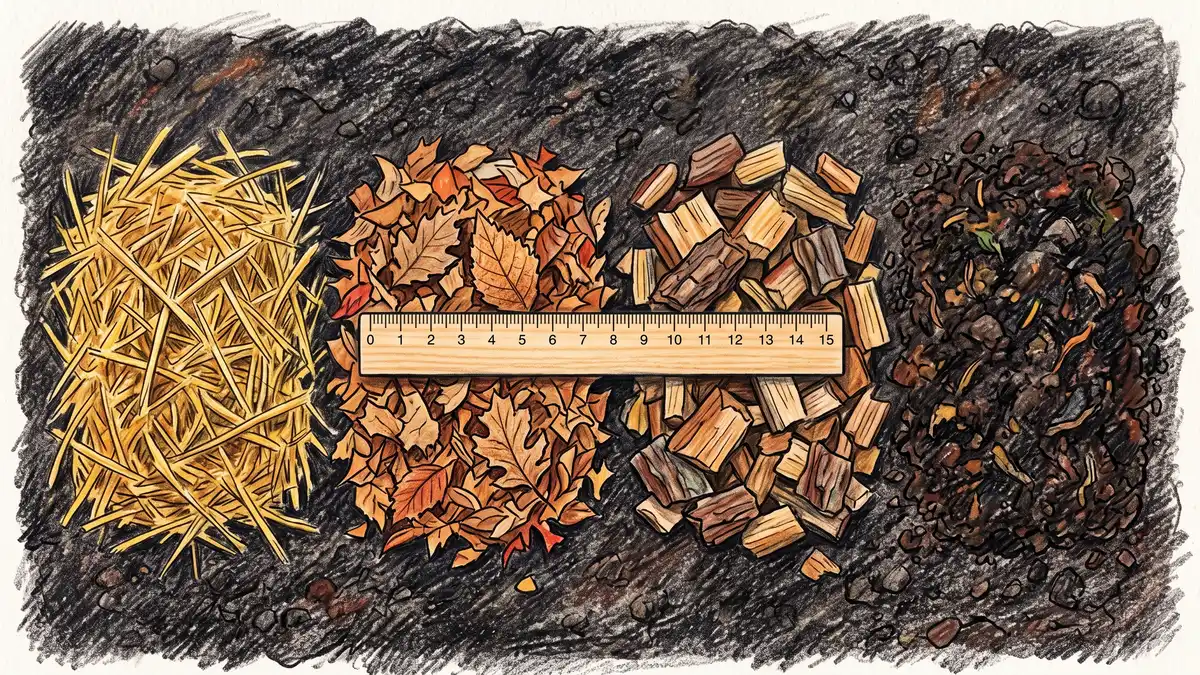
Which Mulch Is Best for a Raised Vegetable Bed?
Ranked for annual vegetable beds specifically. What suits a shrub border often does not suit a bed you replant twice a year.
| Material | Depth | Lasts | Verdict for Raised Beds |
| Straw | 3 to 4 in. | One season | Best all-round. Light, easy to pull back, breaks down into the bed |
| Shredded leaves | 2 to 3 in. | One season | Free, excellent. Shred first or they mat into a waterproof layer |
| Compost as mulch | 1 to 2 in. | Continuous | Feeds well but suppresses weeds poorly; combine with a top layer |
| Grass clippings | 1 in. per pass | Weeks | Fine in thin layers from untreated lawns only |
| Pine needles | 2 to 3 in. | Two seasons | Good, slow to break down; the soil acidification worry is overstated |
| Arborist wood chips | 2 to 3 in. | Two years | Excellent on paths, awkward in annual beds you dig each spring |
| Bark mulch | 2 to 3 in. | Two years | Ornamental material; slow, expensive, no advantage here |
| Hay | Not recommended | One season | Weed seeds plus persistent herbicide risk. Straw is the safer twin |
Sources: Penn State Extension, University of Georgia Extension C984, University of Minnesota Extension
Straw wins for annual beds because you can rake it aside in thirty seconds to sow a row, then rake it back. If you are choosing between the two lookalikes, we compared straw and hay in detail, and the short version is that hay carries seed and straw does not.
Need the gear for this?
Metal, cedar or DIY: what each costs over ten years and where each one fails.
Compare raised bed kitsDoes Wood Chip Mulch Steal Nitrogen From Your Vegetables?
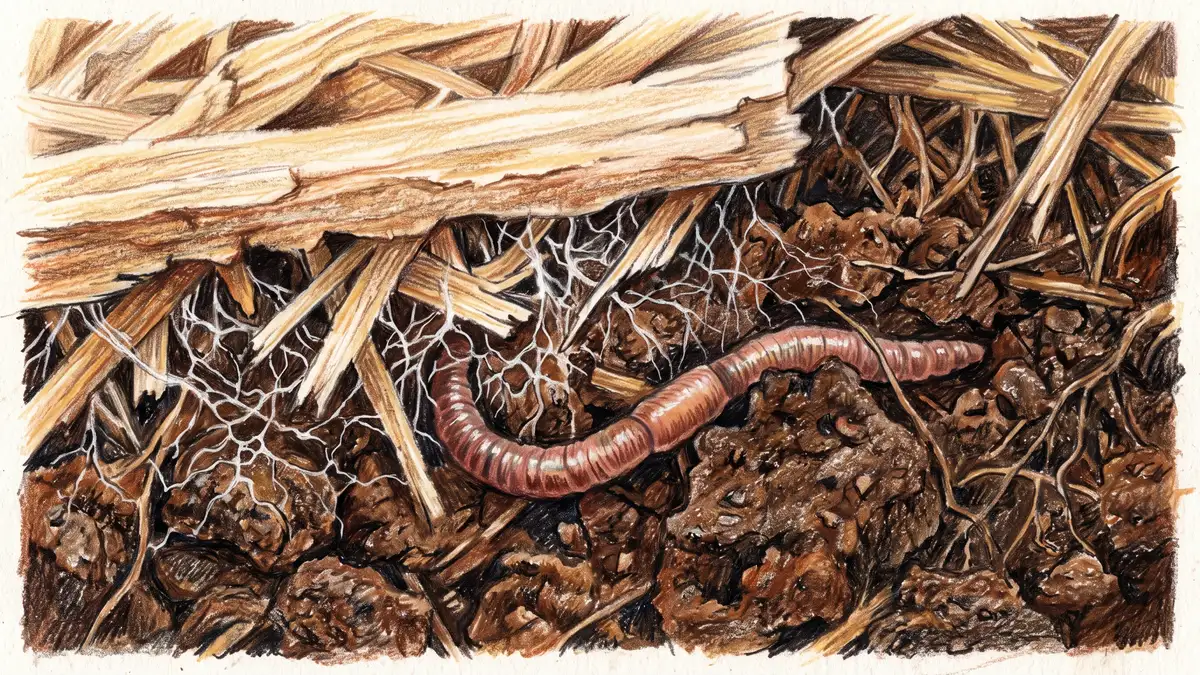
This is the most repeated mulch warning and the most misunderstood. The research, summarised in Linda Chalker-Scott's wood chip literature review at Washington State University, is that nitrogen depletion happens at the boundary between mulch and soil, not through the root zone. The microbes breaking down high-carbon material draw nitrogen from the first fraction of an inch, and that is exactly why wood chip mulch suppresses weed seedlings so well.
Two conditions change the picture. Tilling chips into the soil rather than laying them on top genuinely does tie up nitrogen where roots are, and fine particles like sawdust tie up more than coarse chips because of the surface area. Oregon State University Extension makes the same distinction. So: chips on the surface, never dug in.
The practical catch in a raised bed is not nitrogen, it is workability. Chips take two years to break down and you will be turning that bed over every spring. Put wood chips on paths and around perennials, and keep the annual beds under straw or leaves.
Common Mistake to Avoid
Never mulch with hay, straw, manure or grass clippings of unknown origin. Aminopyralid, clopyralid and picloram survive an animal's digestive tract, survive composting, and stay active for years. NC State Extension documents residual activity in hay after three years of dry storage. Tomatoes, lettuce, beans and peas are the first casualties, with twisted, cupped growth that looks like disease. If you are unsure, run a bioassay: sow pea or bean seed in a pot of the suspect material mixed with potting mix and see what happens before it touches your bed.
When to Mulch, and When to Pull It Back
Timing is where mulching a raised bed differs most from mulching a border. The one seasonal exception is early spring: organic mulch insulates, so a bed you mulched in November will warm up slower than a bare one. In a raised bed, which normally warms early and is one of the reasons you built it, that is a real cost.
Rake it off in early spring
Pull winter mulch to the side two to three weeks before you plan to sow or transplant. Let the sun reach the soil. Push it back once the soil hits about 60F (16C) for warm-season crops.
Mulch after transplanting, not before
Set the plants first, water them in, then lay mulch around them. Mulching first and planting through it leaves gaps you never quite close, and those gaps are where the weeds come up.
Leave the stem collar bare
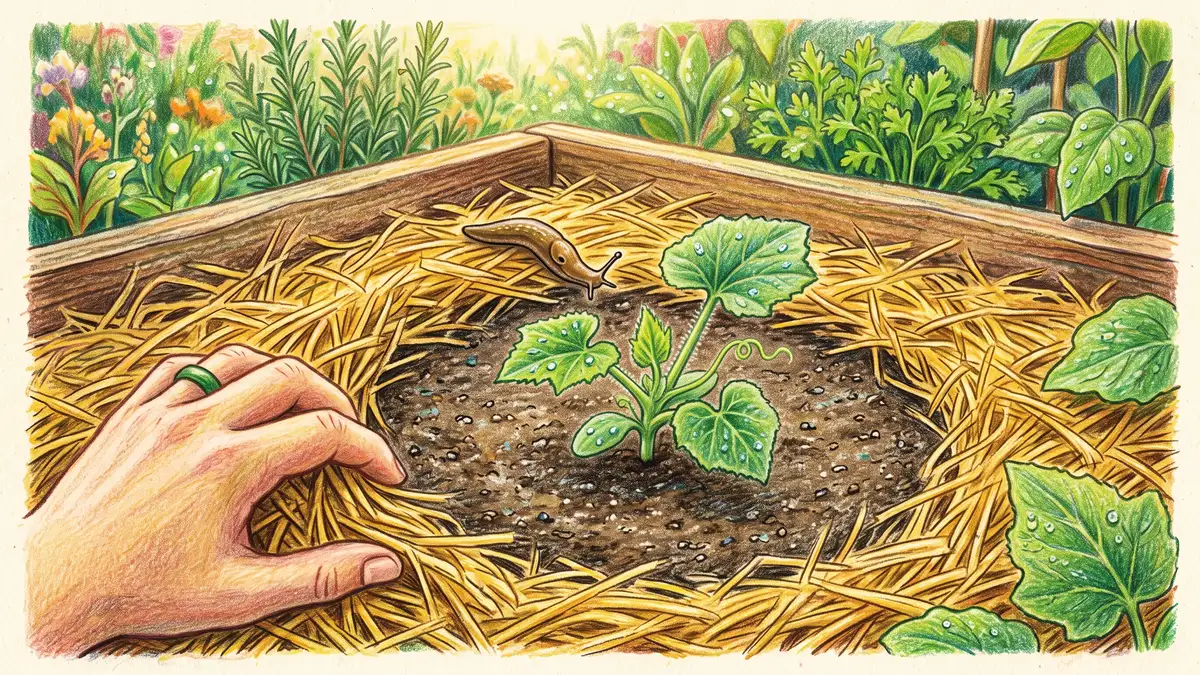
Keep a 2 in. (5 cm) ring of clear soil around every stem. Mulch piled against a stem holds moisture on the bark and invites crown rot, and it gives slugs a covered approach route.
Mulch over the drip line, not under it
If you irrigate, run the drip tape on the soil surface and mulch on top. Water under mulch loses far less to evaporation, and you can lift the mulch to check emitters. The same logic applies if you have built a wicking bed, where mulch stops surface evaporation pulling the reservoir dry.
Top up in autumn
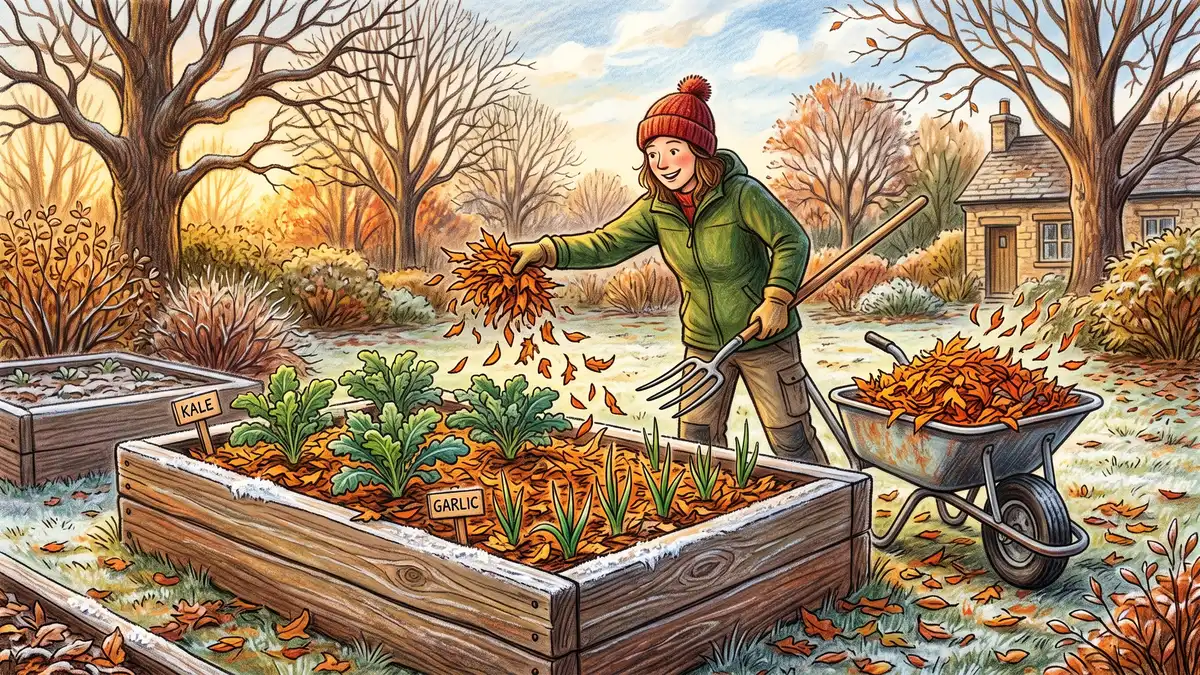
Lay shredded leaves 3 to 4 in. deep once the beds are cleared. Oregon State University Extension notes autumn mulching protects soil structure and heads off the spring weed flush.
Key Takeaway
Mulch is a seasonal tool, not a permanent lid. On in spring after the soil warms, topped up in summer, on again in autumn once beds are cleared, off again the following spring. Beds that stay covered year-round run cold and slow.
Frequently Asked Questions
What is the best mulch for raised garden beds?
Straw for annual vegetable beds. It is light, cheap, easy to rake aside for sowing, and breaks down into the soil within a season. Shredded autumn leaves are just as good and free, provided you shred them so they do not mat into a waterproof crust. Compost works as a nutrient layer but is poor at weed suppression on its own. Save arborist wood chips for paths and perennial plantings, and skip bark, which is an ornamental material with no advantage in a vegetable bed.
Is cedar mulch good for vegetable gardens?
It is safe but not ideal. The allelopathy concern is overstated for surface-applied cedar, and extension reviews of wood mulch have not found the toxicity that the folklore claims. The practical problems are cost and breakdown time. Cedar is milled ornamental mulch that decomposes slowly, so it does not feed the bed the way straw or leaves do, and you will be raking it aside every time you replant. In a perennial herb bed or on paths it is fine.
How deep should mulch be in a raised bed?
Three inches (7.5 cm) is the working number, within a general range of 2 to 4 in. Under 2 in., enough light reaches the soil that weed seeds germinate. Over 4 in., air movement into the soil suffers and you create ideal slug habitat. Shallow beds under 10 in. (25 cm) deep should stay at the 2 in. end, since a thick mulch layer becomes a large fraction of the total profile. Fluffy materials settle, so lay them a bit thicker than the target.
Can you put mulch directly on garden soil?
Yes, and you should. Mulch belongs on the surface, not mixed in. Laying it directly on soil is what creates the moisture barrier and the decomposition interface that feeds soil life. What you should not do is dig high-carbon material such as wood chips or sawdust into the bed, which does tie up nitrogen in the root zone. There is also no need for landscape fabric underneath; in a vegetable bed it blocks the mulch from incorporating and becomes a nuisance within two years.
Does mulch attract slugs and voles?
It can, and this is the honest downside. A permanently damp 4 in. layer is good habitat for both. Keep depth at 3 in. rather than 4, leave the clear ring around each stem, and rake the mulch loose occasionally in wet spells so the surface dries. If voles are a known problem, hardware cloth stapled under the bed before filling is the real fix. A bed that also carries plenty of finished compost supports the beetles and centipedes that keep slug numbers down.
Get the Weekly Dig
One practical permaculture guide a week, written for gardeners who do this on weekends: building living soil without buying it in bags. Free, no spam, unsubscribe any time.
Join the Weekly DigResources
- University of Minnesota Extension: Mulching for soil and garden health
- Penn State Extension: Mulch, a survey of available options
- University of Georgia Extension C984: Mulching vegetables
- Washington State University: Literature on landscape use of wood chips
- WSU Extension: Using arborist wood chips as a landscape mulch
- NC State Extension: Herbicide carryover in hay, manure, compost and grass clippings
- Oregon State University Extension EM 9307: Herbicide-contaminated compost and soil mix
- UMass Extension: Using coloured plastic mulches in the vegetable garden