
What Is a Microclimate, and Why Does Your Yard Have Several?
Your weather app gives your whole neighborhood one temperature. Your garden ignores it. Walk from a sunny south-facing wall to a shady low corner and you can cross several degrees and, over a season, weeks of growing time, all inside one small yard. season extension under glass standing water and mosquito habitat Scottish walled gardens warming soil with sand, gravel and charcoal
That is a microclimate: a pocket where slope, walls, water, and shade push local conditions away from the regional average. The USDA calls these out directly, noting a sheltered spot by a south-facing wall or a low pocket where cold air pools can run warmer or colder than your official zone. A Penn State master gardener puts it in real terms: downtown Gettysburg holds enough heat that its growing season runs a few days longer than a garden five miles away.
For anyone gardening with a changing climate in mind, this is good news. You cannot control the weather, but you can shape these pockets, and that is one of the most powerful, lowest-cost tools you have.
Key Takeaway
Stop treating your yard as one climate. It is a patchwork of warm and cool pockets, and once you can read them, you can put the right plant in the right spot for free. Everything else in this guide is about reading and shaping those pockets. Start with our permaculture foundations guide if the design thinking is new to you.
The Warm Pockets: Walls, Stone, and Water
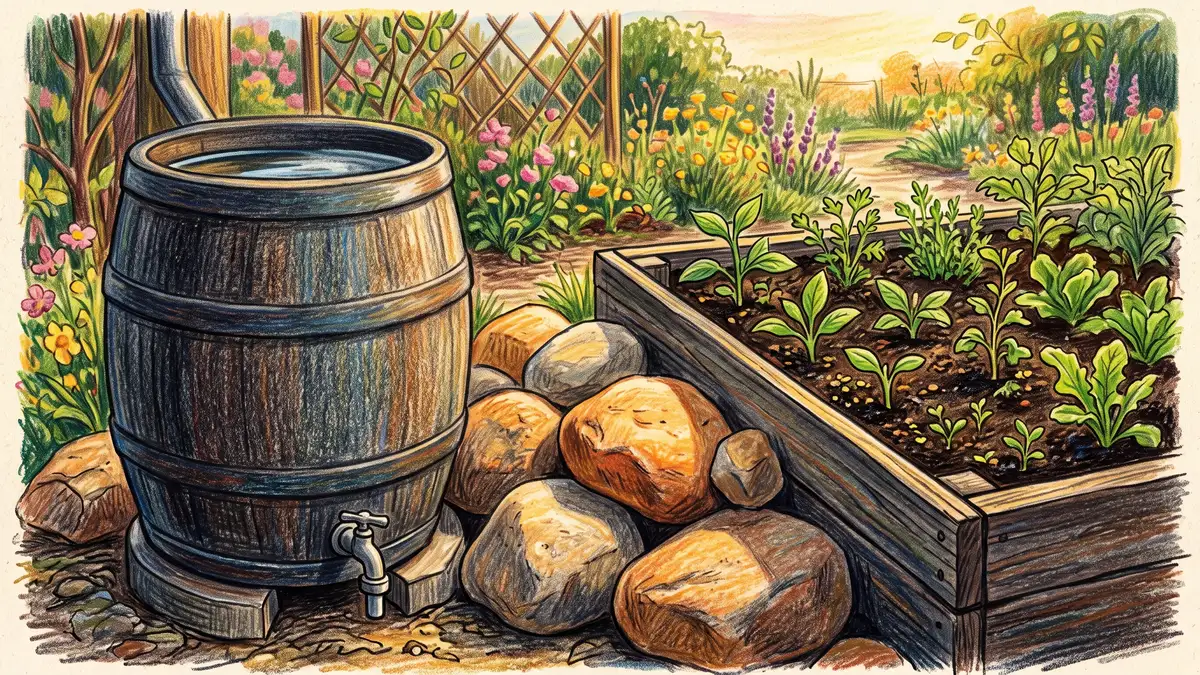
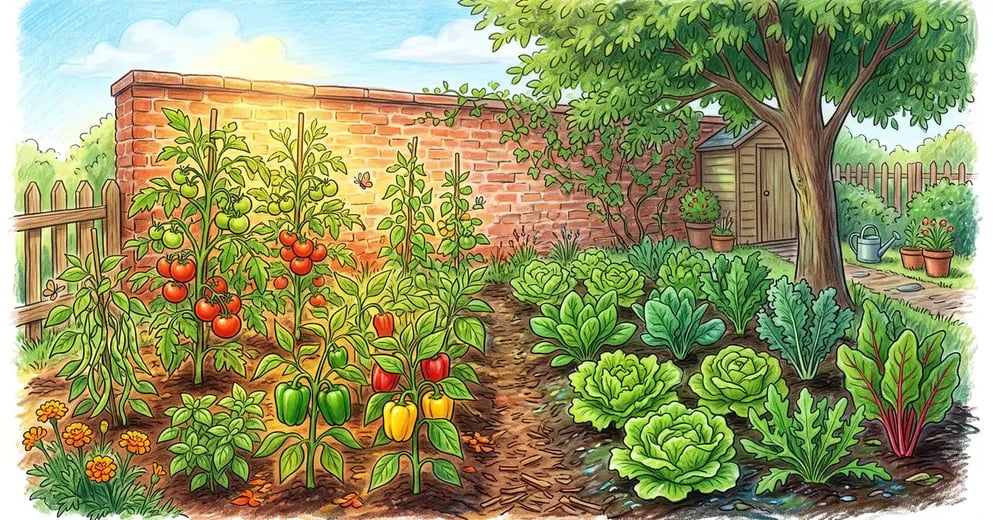
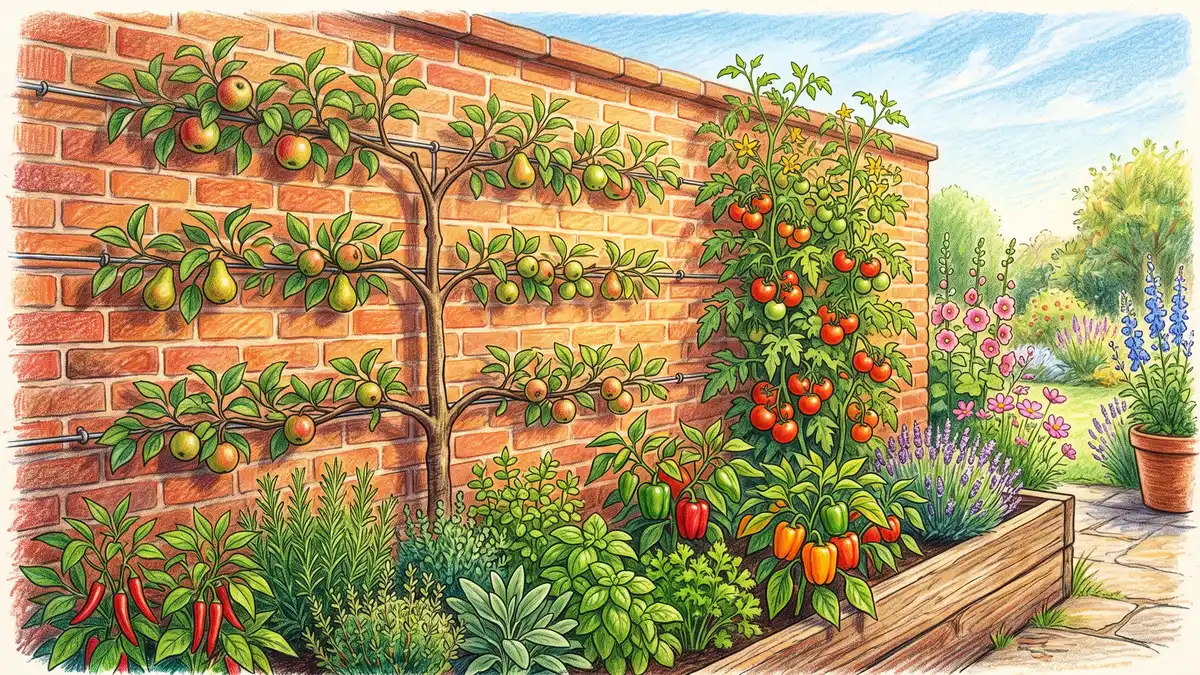
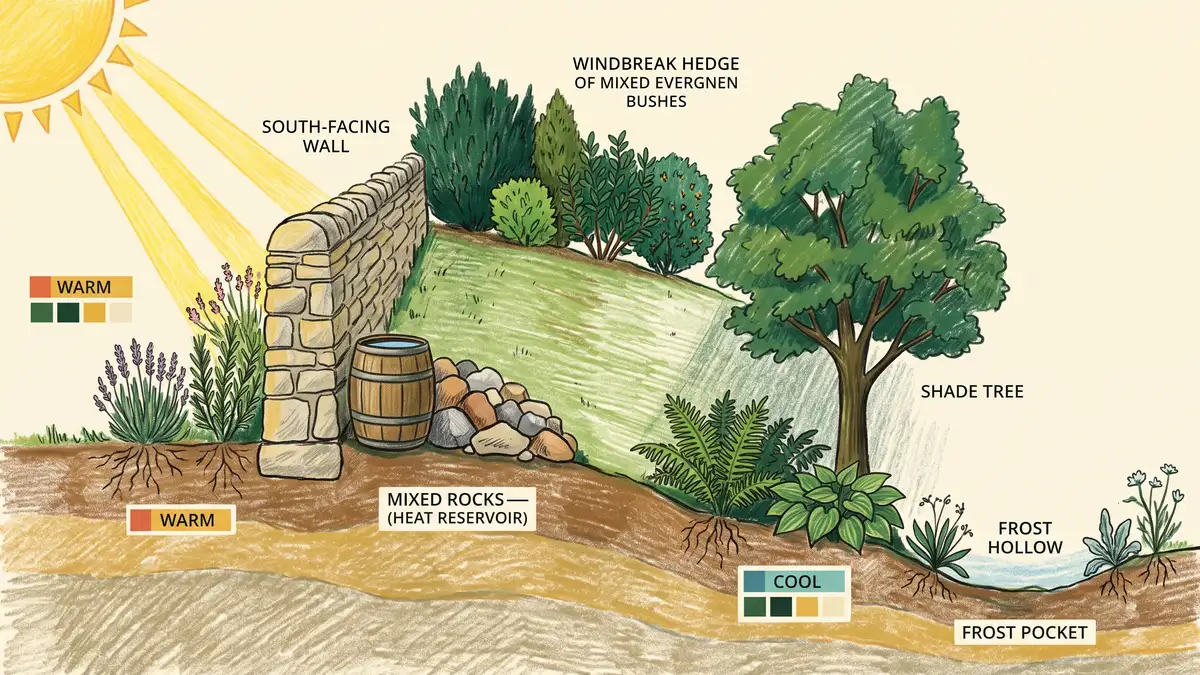
Anything dense and dark stores heat. Brick, stone, concrete, and water soak up the sun all day and release it slowly after dark, warming the air right next to them. That is why a tomato against a south-facing brick wall shrugs off a chilly night that nips the same variety out in the open.
You can build this on purpose. South Dakota State University Extension notes that the thermal mass of a stone or brick wall holds warmth through autumn and extends the season for crops inside it. A dark water barrel or a pile of rocks beside a bed does the same job on a smaller budget.
Aspect matters just as much, and it costs nothing. Colorado State University Extension sums it up: south-facing spots run hot and dry, north-facing stay cool and moist, and east-facing corners are the most moderate, sheltered from harsh afternoon sun. Put your heat-lovers, peppers, basil, eggplant, on the south side, and your lettuce and cilantro where it stays cool.
Why This Works: Catch and Store Energy
This is a core permaculture principle in action. A wall or water barrel captures free solar energy when it is abundant and releases it when it is scarce, at night, in a cold snap. You are not fighting the climate, you are buffering it with materials you already have on site.
The Cold Traps: Frost Pockets and Cold Air Drainage
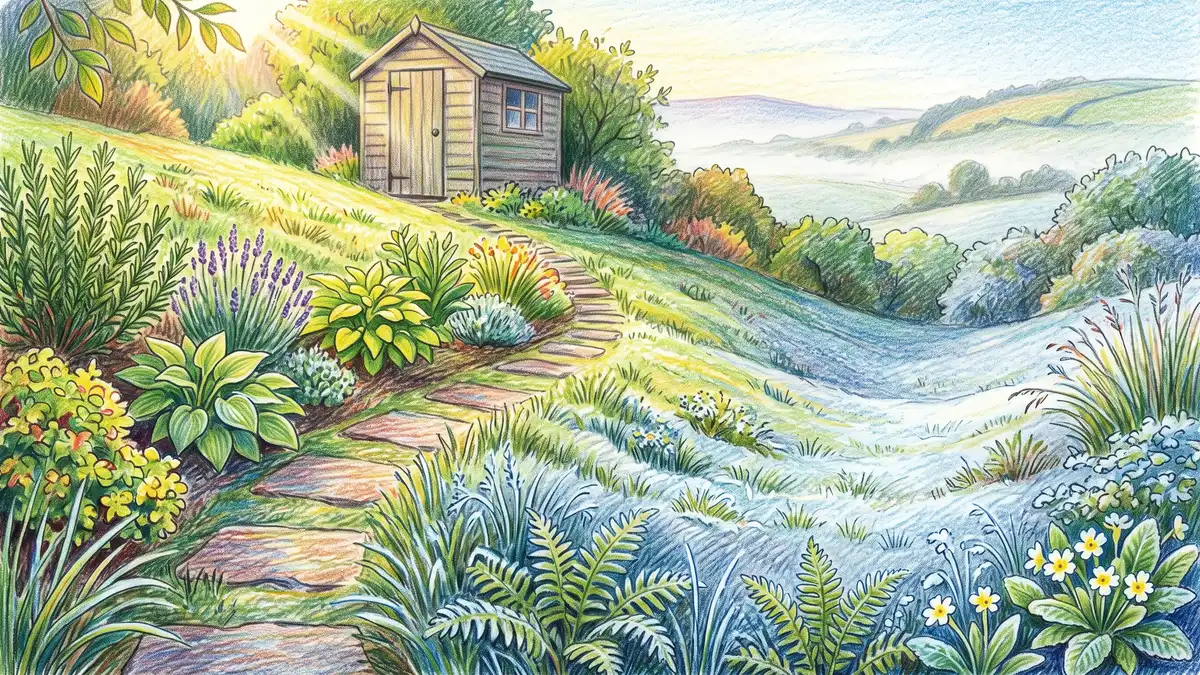
Here is the flip side, and the one that costs people whole harvests. Cold air is heavier than warm air, so on still, clear nights it flows downhill like water and pools in the lowest spot. That hollow at the bottom of your yard is a frost pocket, and it freezes first, hardest, and longest.
The numbers are stark. A Virginia Tech horticultural journal recorded 25°F in a frost pocket while ground just a few feet higher held at 32°F, a 7°F swing over a tiny rise. Cornell Cooperative Extension found that even a 2.5°F average difference between a hilltop and the frost pocket below adds up to 450 growing degree days over a season, enough to decide whether a crop ripens at all.
Don't Plant Tender Crops in the Hollow
Colorado State University Extension is blunt: fruit buds in low spots are more likely to be killed than those on a slope because cold air drains and settles there. Keep fruit trees and frost-sensitive plants out of obvious hollows. A low berm or a gap in a hedge can even steer that cold air past your beds and downhill.
Your Hardiness Zone Is a Starting Point, Not a Verdict
Most gardeners plant by their USDA Plant Hardiness Zone, and they should. But zones are split into "a" and "b" half-zones in 5°F steps, and a microclimate that consistently runs 5°F warmer or cooler effectively shifts your spot half a zone.
Cities feel this hardest. The EPA reports urban areas run 1 to 7°F warmer than nearby rural areas by day and 2 to 5°F warmer at night, with dark roofs reaching up to 66°F above air temperature. A sheltered city courtyard can overwinter plants rated for the next zone up, while its frost pocket behaves a half-zone colder. Same yard, two different zones.
| Feature | Effect | Best For |
| South-facing wall | Warmer, drier, earlier | Peppers, tomatoes, herbs |
| Low hollow / frost pocket | Colder, later thaw | Hardy plants only, storage |
| North side / shade | Cool, moist, stable | Lettuce, greens, ferns |
| Near a pond or barrel | Buffered swings, humid | Frost-sensitive perennials |
| Behind a windbreak | Calmer, less drying | Wind-sensitive crops |
Sources: USDA Plant Hardiness Zone Map, Colorado State University Extension, Mountain Microclimates.
Windbreaks and Shade: Shaping Wind and Sun
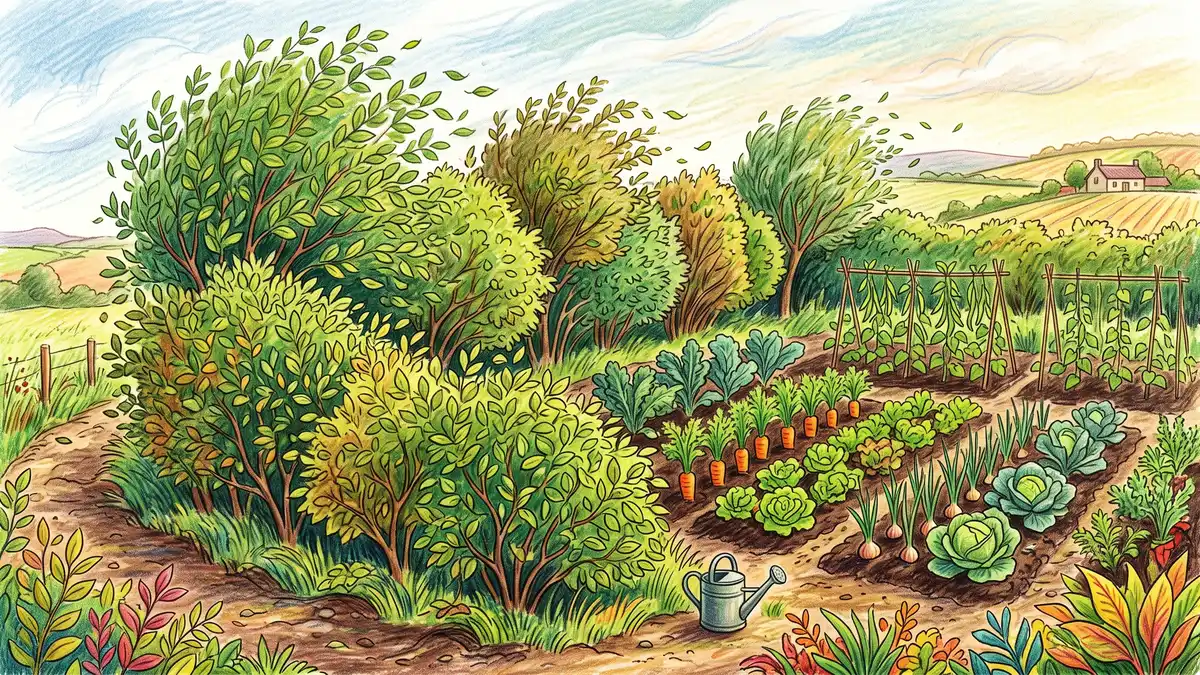
Wind dries soil, strips moisture from leaves, and chills plants on cold days. A windbreak, a hedge or row of shrubs across the prevailing wind, fixes all three. University of Florida Extension reports the sheltered zone behind a barrier reaches 10 to 30 times the barrier's height, so a 10-foot hedge calms wind up to 100 to 300 feet downwind, cutting evaporation and easing water stress. University of Minnesota Extension confirms windbreaks measurably slow downwind air.
Shade is the cooling half of the toolkit. A tree, a trellis of beans, or a stretch of shade cloth drops the temperature underneath and slows water loss. Mulch does it at ground level: University of Missouri Extension notes a 2 to 3 inch layer of straw or wood chips lowers summer soil temperature and conserves moisture. For a warm pocket instead, black plastic mulch absorbs sun and warms the soil for early plantings, while white or silver mulch keeps it cool. Our mulching guide covers which to use when.
How to Map and Build Your Microclimates
You do not need gear or money for this, just attention across a few weeks. The permaculture idea of reading your sun, wind, and water sectors is exactly this skill applied to a whole site.
Watch Where Frost and Dew Land
Cornell Extension suggests setting a couple of min-max thermometers around the yard and noting where frost forms first and melts last. Those are your cold pockets.
Sketch Sun, Shade, and Slope
Mark your south wall, the shady north side, any low hollow, and the direction the wind usually comes from. This rough map is your planting guide.
Put Heat-Lovers in the Warm Spots
Tomatoes, peppers, and basil go against the south wall or near thermal mass. Cool-season greens go to the shady, moister corners.
Protect the Weak Spots
Keep tender plants out of frost hollows. Add a windbreak hedge on the windward edge and shade cloth over heat-sensitive beds in summer. Budget is close to zero.
Key Takeaway
Micro-zoning is climate resilience you can build this weekend. When the weather throws a late frost or a brutal heatwave, a garden with warm walls, cool shade, and protected pockets keeps producing while a flat, exposed one struggles. Raised beds help too, since they warm up earlier in spring. Pair this with permaculture zone design to lay out the whole space.
Frequently Asked Questions
What is a microclimate in a garden?
A microclimate is a small area of your garden where conditions differ from the surrounding average because of local features like a wall, slope, shade, or water. The USDA notes that a sheltered spot by a south-facing wall can be warmer than your zone, while a low hollow where cold air pools can be colder. These pockets can differ by several degrees, and a Virginia Tech study recorded a 7°F gap between a frost pocket and ground just a few feet higher. Reading them lets you match each plant to the spot that suits it.
How do I create a warm microclimate for tomatoes and peppers?
Use thermal mass and aspect. Plant against a south-facing brick or stone wall that soaks up sun all day and radiates heat at night, and add a dark water barrel or rocks nearby for extra stored warmth. South Dakota State University Extension confirms stone and brick walls hold warmth into autumn and extend the season. Black plastic mulch warms the soil for early transplants, and a raised bed against that warm wall heats up fastest of all in spring. Keep these heat-lovers out of shady, low, or windy spots.
What is a frost pocket and how do I avoid it?
A frost pocket is a low spot where cold, heavy air drains downhill on still nights and collects, freezing earlier and harder than higher ground. Colorado State University Extension warns that fruit buds in these low spots are far more likely to be killed than those on a slope. Avoid planting frost-sensitive crops and fruit trees in obvious hollows. You can also steer cold air away with a low berm or by leaving a gap at the bottom of a hedge so the air keeps draining downhill instead of pooling around your plants.
Can a microclimate really change my hardiness zone?
Effectively, yes, for that specific pocket. USDA half-zones are 5°F apart, so a spot that consistently runs 5°F warmer or cooler behaves like the next half-zone. The EPA reports cities run 1 to 7°F warmer than rural areas, so a sheltered urban courtyard may overwinter plants rated a zone warmer. The reverse is true in a frost pocket. Your regional zone is the starting point; your own thermometer readings tell you how each bed actually behaves.
Do windbreaks and shade actually help?
Measurably. University of Florida Extension found the sheltered zone behind a windbreak reaches 10 to 30 times the barrier's height, cutting evaporation and easing water stress across a wide strip downwind. For cooling, University of Missouri Extension notes that a 2 to 3 inch layer of straw or wood-chip mulch lowers summer soil temperature and holds moisture, and shade from trees, trellises, or shade cloth protects heat-sensitive crops during heatwaves. Both are cheap, and both make a garden far more resilient to weather extremes.
Get the Weekly Dig
One practical permaculture guide a week, written for gardeners who do this on weekends: permaculture design for real backyards. Free, no spam, unsubscribe any time.
Join the Weekly DigResources
- USDA: How to Use the Plant Hardiness Zone Maps (microclimates)
- US EPA: What Are Heat Islands?
- Colorado State University Extension: Mountain Microclimates
- Colorado State University Extension: Tree Fruit Basics (cold air drainage)
- South Dakota State University Extension: Keyhole Gardens (thermal mass)
- University of Florida Extension: The Benefits of Windbreaks
- University of Minnesota Extension: Windbreaks
- University of Missouri Extension: Mulches
- University of Missouri IPM: Plastic Mulch Color and Soil Temperature
- University of Minnesota Extension: Raised Bed Gardens
- Penn State Extension: Getting to Know Your Yard's Microclimates
- Virginia Tech Journal Archive: Frost Pockets and Microclimate