
Say "kiwi" and most people picture the fuzzy brown supermarket fruit, a plant that needs a mild California or New Zealand winter and would die in a Minnesota cold snap. But there is a whole branch of the kiwi family built for cold climates, producing smooth, grape-sized berries you pop in your mouth whole, skin and all. For a food forest, these hardy kiwi vines are one of the most rewarding ways to fill the vertical, climbing layer. first-year care for a newly planted tree
The catch is that hardy kiwi is not a plant-and-forget shrub. It is a muscular, fast-growing vine that needs the right variety for your zone, usually a male and a female plant, a genuinely strong support, and a little caution about where it is allowed to spread. This guide covers the hardy varieties worth growing, how pollination works, and how to weave them into a food forest without regret.
What you'll learn:
- The three kiwi species and which one suits your climate
- Named hardy varieties, including a self-fertile option
- Why you usually need both a male and a female plant
- How to trellis, train, and keep hardy kiwi in bounds
Key Takeaway
Hardy kiwi (Actinidia arguta and A. kolomikta) let cold-climate gardeners grow kiwi where the fuzzy grocery type cannot survive. They produce smooth, grape-sized berries eaten whole and thrive as the vine layer of a food forest. In return they demand a very sturdy support, usually a male pollinator, and a few years of patience before they fruit.
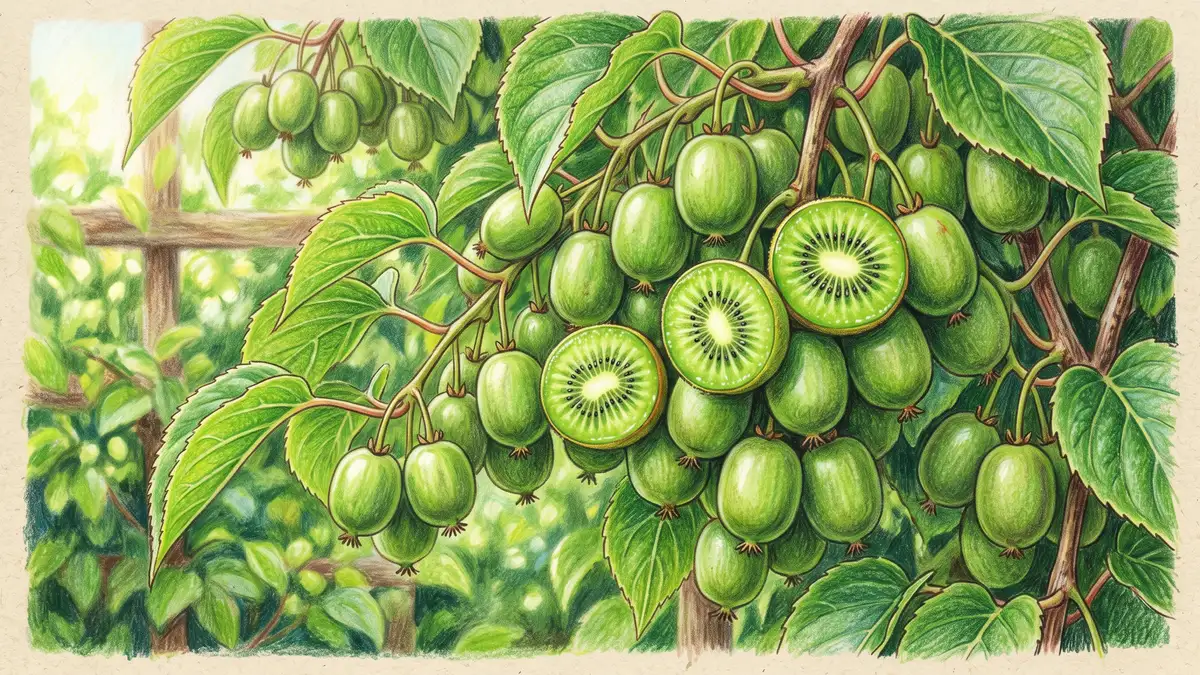
Which Hardy Kiwi Varieties Should You Grow?
Match the species to your winter, then pick a named cultivar. Three Actinidia species matter for US gardeners, and they differ dramatically in cold tolerance. The fuzzy grocery kiwi, Actinidia deliciosa, only handles USDA zones 7 to 9. For colder ground you want the kiwiberries.
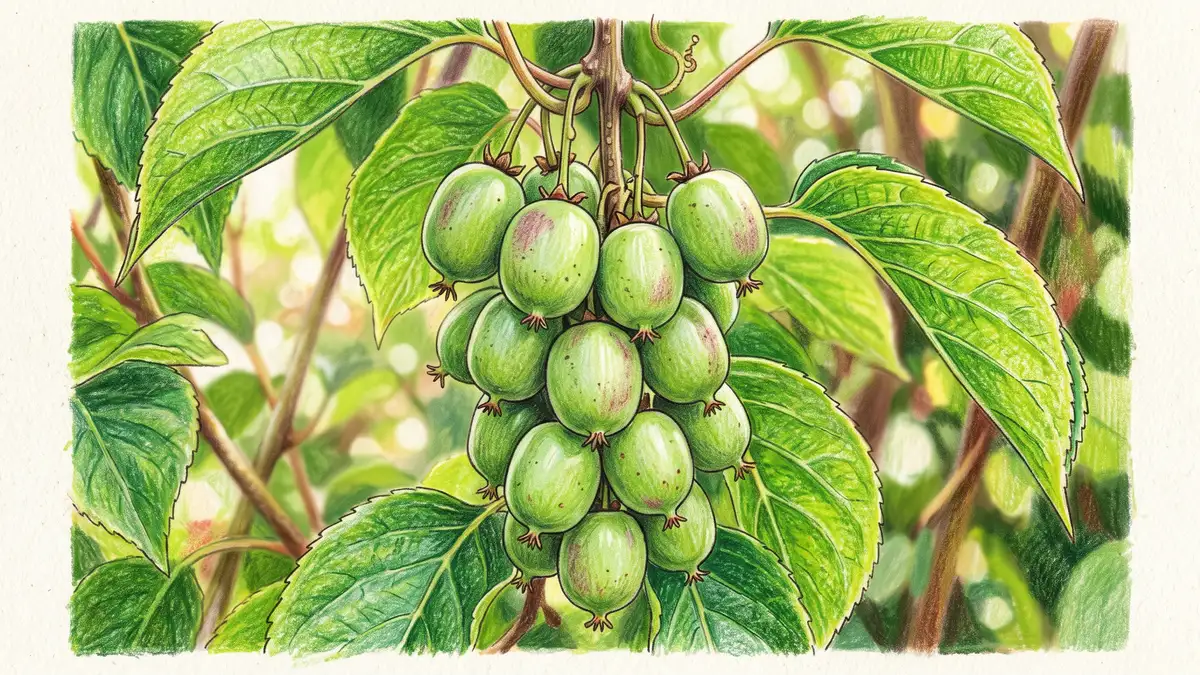
Actinidia arguta, the true hardy kiwi or kiwiberry, survives to about -25°F when dormant and grows across roughly zones 4 to 8. Penn State and Oregon State both point to 'Ananasnaya' (sold as 'Anna') as a classic sweet green-fleshed female, with 'Ken's Red' adding red-blushed fruit and 'Michigan State' a dependable green selection. For the very coldest sites, Actinidia kolomikta, the Arctic kiwi, tolerates roughly -40°F and fruits in zones 3 to 7. Its male vines are famously splashed pink and white, so it doubles as an ornamental. The go-to food forest climber for a Minnesota winter is Arctic kiwi.
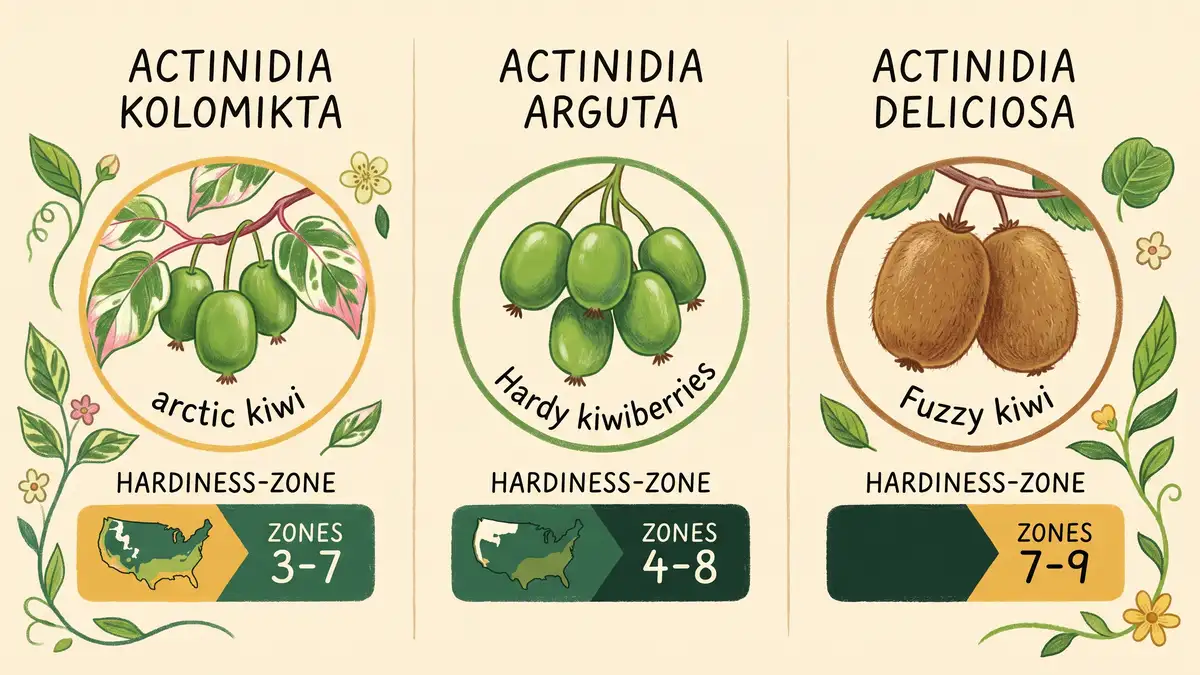
| Species | Common Name | USDA Zones | Fruit |
| A. kolomikta | Arctic kiwi | 3-7 | Small grape-sized, very cold hardy |
| A. arguta | Hardy kiwi / kiwiberry | 4-8 | Grape to cherry sized, smooth skin |
| A. deliciosa | Fuzzy kiwi | 7-9 | Large, fuzzy, not cold hardy |
Sources: Penn State Extension, Ohio State University
Do You Need a Male and Female Plant?
Usually yes, and this trips up a lot of first-time growers. Most Actinidia vines are dioecious, meaning individual plants are either male or female. Only females bear fruit, and they need a compatible male nearby to pollinate them. The efficient part is that one male can service several females; extension guidance suggests roughly one male for every six to eight female vines. Plant only females and you will get flowers and no fruit, a classic disappointment.
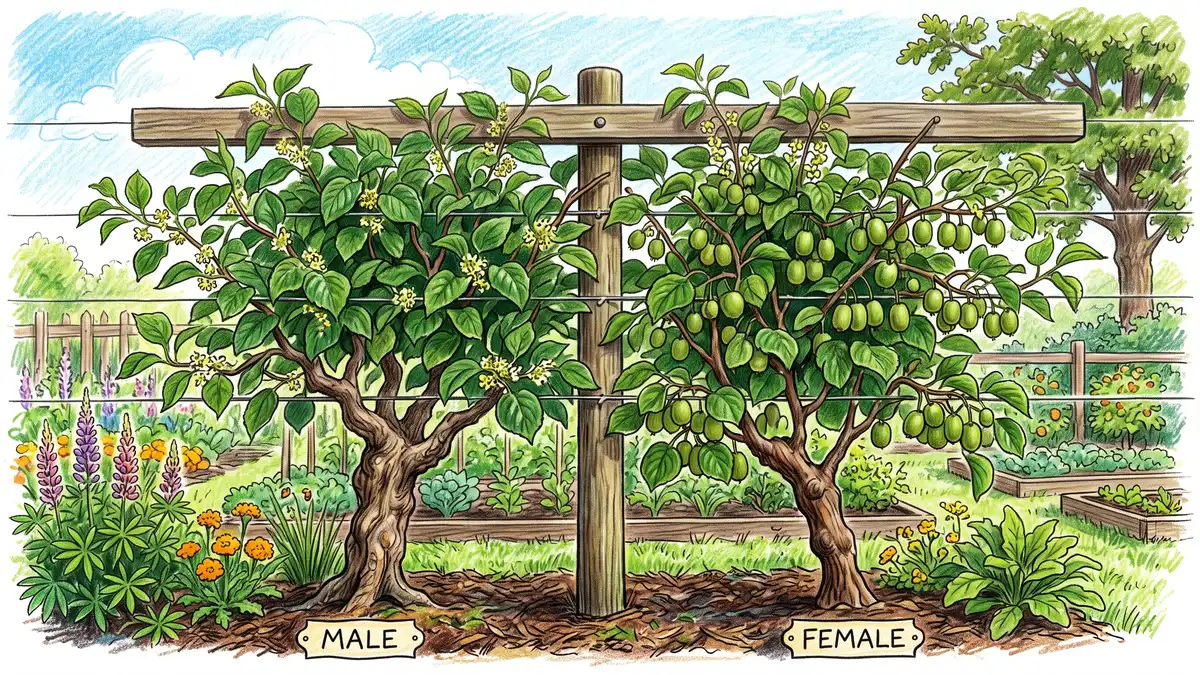
There is one shortcut. The cultivar 'Issai', an A. arguta type, is partially self-fertile, so a single plant can set some fruit on its own. It is hardy to about zone 5, stays smaller, and needs less pruning, but its fruit is smaller and both yield and reliability improve when a male is present. For most food foresters, planting a proven male like 'Arctic Beauty' (for kolomikta) or a named arguta male alongside your females is the dependable route.
Why This Works: Filling the Vine Layer
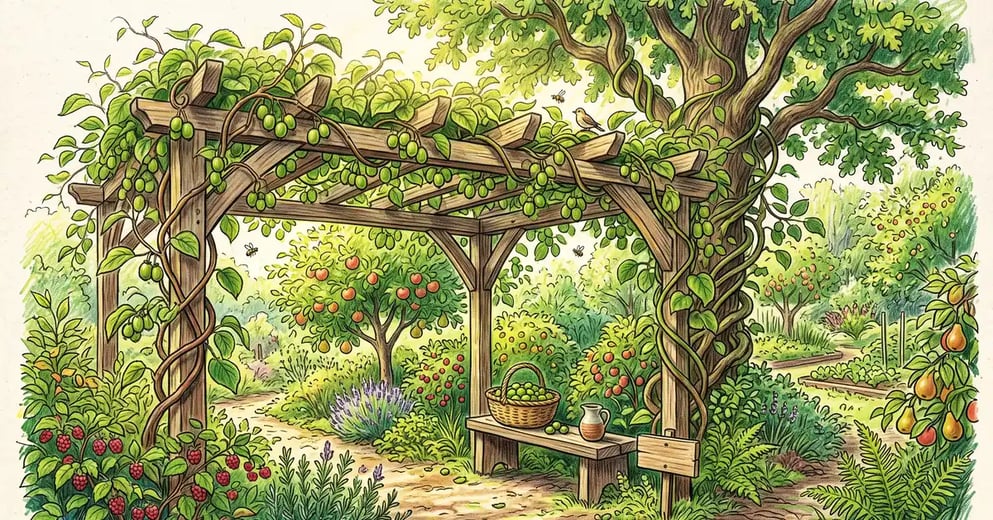
A mature food forest uses every layer, and the climbing vine layer is the one beginners most often leave empty. Hardy kiwi is built to occupy it, scrambling up trees, arbors, and fences to catch sunlight that would otherwise go unused. This is the kind of vertical stacking of functions that sits at the heart of permaculture design and makes a seven-layer food forest so productive. Its early-summer flowers also feed pollinators, so the vine earns its keep well before the first berries ripen.
How Do You Grow and Train Hardy Kiwi?
Respect the vigor and build a support that will last decades. A hardy kiwi can put on 20 feet of growth in a single season, so a flimsy trellis is a mistake you make only once. Here is how to set one up for success.
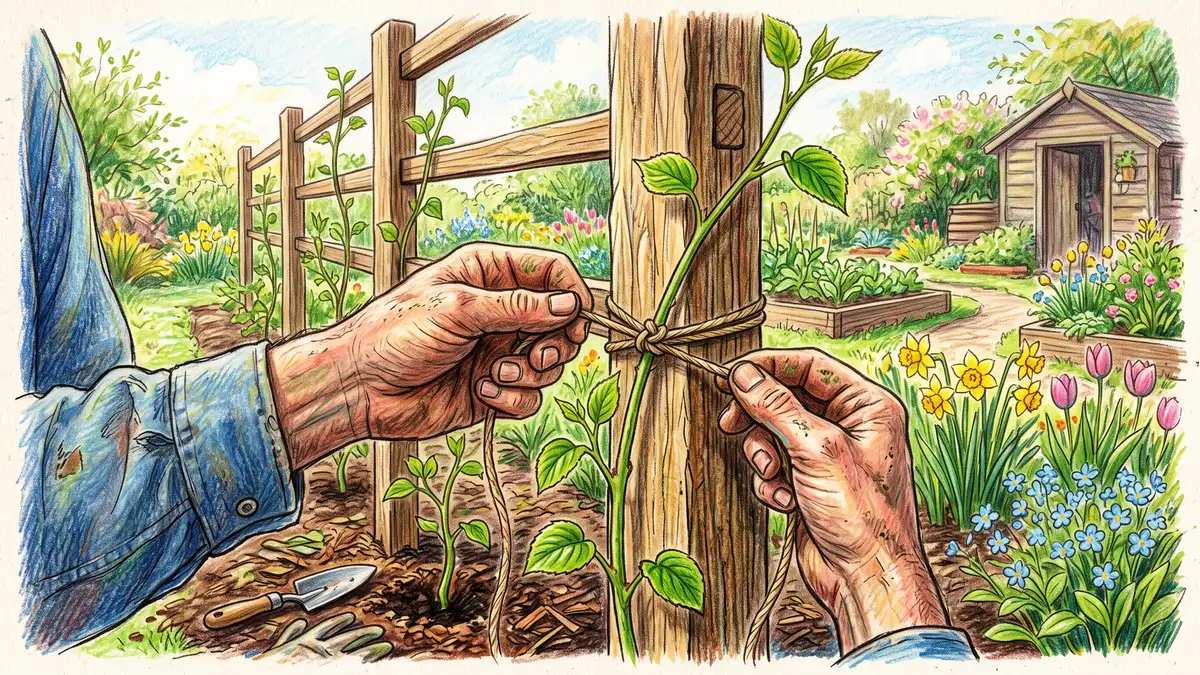
Build a heavy-duty support
Use a strong T-bar trellis, a solid arbor, or a well-anchored pergola. The mature vine gets woody and heavy, and it will pull down anything undersized. Set the structure before you plant.
Site it in sun with good drainage
Give it full sun in cool climates and rich, well-drained soil. In hotter zones near its limit, some afternoon shade helps. Watch for late spring frosts, which can nip the early growth.
Train one trunk, then prune yearly
Train a single main trunk up to the top wire, then let arms run along the support. Prune in winter and summer to control the vigor and keep fruiting wood productive. Expect real harvests in about three to nine years.
Check Before You Plant
Hardy kiwi's vigor has a downside. Actinidia arguta has escaped cultivation and invaded wild woodlands in parts of the eastern US, including New York, New Jersey, Massachusetts, and Maine, where it appears on invasive-plant and do-not-plant lists. Before planting, check your state and regional invasive-species lists, keep vines well away from natural areas, and prune diligently so fruit does not spread seed into the wild.
Key Takeaway
Grow hardy kiwi with your eyes open. Pick the species that matches your winter, plant a male with your females (or 'Issai' if you must have just one), give it a support strong enough to hold a small tree, and be patient for a few years. Site it responsibly, away from wild land, and you gain a long-lived, heavy-cropping vine that turns vertical space into fistfuls of sweet, vitamin-rich berries.
Frequently Asked Questions
What is the hardiest kiwi variety?
The Arctic kiwi, Actinidia kolomikta, is the most cold-hardy kiwi commonly grown, tolerating winter lows of roughly -40°F when dormant and fruiting in USDA zones 3 to 7. That makes it the realistic choice for the coldest parts of the Midwest and Northeast. The hardy kiwiberry, Actinidia arguta, is close behind, surviving to about -25°F across zones 4 to 8. By contrast, the fuzzy grocery-store kiwi, Actinidia deliciosa, is only hardy to about zone 7 and cannot survive a cold continental winter. For very cold gardens, start with Arctic kiwi; for slightly milder ground with a longer season, hardy kiwiberry offers larger fruit.
Do you need two kiwi plants to get fruit?
In most cases, yes. Nearly all hardy kiwi vines are dioecious, meaning each plant is either male or female, and only females produce fruit. A female needs a compatible male planted nearby to pollinate her flowers, and a single male can pollinate six to eight females, so you do not need them one-for-one. The main exception is the cultivar 'Issai', an Actinidia arguta type that is partially self-fertile and can set some fruit alone, though it crops better with a male present. If you plant only unnamed or female vines with no pollinator, you will get plenty of flowers but little or no fruit.
How long does hardy kiwi take to fruit?
Be patient: hardy kiwi typically takes about three to nine years from planting to reach meaningful production. The vine spends its first years building a strong root system and woody framework on its support before it puts serious energy into fruit. Some vigorous named cultivars begin bearing a little in as few as three to four years, while others take longer, especially in colder or shorter-season sites. Good early training, a sturdy trellis, full sun, and consistent pruning all help the vine reach fruiting maturity sooner. Once established, a healthy vine can crop heavily for decades, making the initial wait well worth it.
Is hardy kiwi invasive?
It can be, in certain regions. Actinidia arguta is extremely vigorous and has escaped gardens to invade wild woodlands in parts of the eastern United States, including New York, New Jersey, Massachusetts, and Maine, where it appears on state invasive-species and do-not-plant lists. It can smother native trees and shrubs where it naturalizes. This does not mean you cannot grow it, but you should check your local and state invasive-plant lists first, keep vines away from natural areas and woodland edges, and prune attentively so seeds are not spread by wildlife. In many colder inland regions it is not considered invasive, but responsible siting matters everywhere.
What does hardy kiwi taste like?
Hardy kiwi berries taste much like the familiar fuzzy kiwi but often sweeter and more aromatic, with hints of tropical fruit. The big difference is the eating experience: the berries are grape to cherry sized with smooth, thin, hairless skin, so you eat them whole without peeling, straight off the vine. They are rich in vitamin C and make excellent fresh snacking, and they also work in preserves, salads, and baking. Arctic kiwi tends toward smaller, sweet-tart, very aromatic fruit, while hardy kiwiberry cultivars like 'Anna' offer larger, classically sweet green-fleshed berries. Ripe fruit is soft and best eaten quickly or refrigerated.
Get the Weekly Dig
One practical permaculture guide a week, written for gardeners who do this on weekends: food forest and guild designs that produce. Free, no spam, unsubscribe any time.
Join the Weekly DigResources
- Penn State Extension — Hardy Kiwi for Hearty Climes
- Oregon State University — Growing Kiwifruit (PNW 507)
- University of Minnesota Extension — Kiwiberry
- Ohio State University — Kiwifruit and Hardy Kiwi
- University of Maine Extension — Small Fruits
- Maine Natural Areas Program — Hardy Kiwi Invasiveness
- Philadelphia Orchard Project — Hardy Kiwi Vine
- LIISMA — Hardy Kiwi (Actinidia arguta) Invasive Profile