
Every food forest has a shady problem. You stack your layers, the canopy fills in, and suddenly the ground beneath your trees gets a fraction of the sun it used to. The usual advice is to grab a list of "shade-tolerant" plants and cram them in. The honest truth is more useful: in real shade, most sweet fruit underperforms, but greens, roots, and mushrooms can thrive. Match the plant to the light and the understory becomes productive instead of disappointing.
This guide sorts food forest plants by how much shade they actually handle, using US extension and forest-farming research. You will learn what full sun, part shade, and deep shade really mean in hours, which fruiting shrubs still crop in dappled light, and which woodland crops turn your darkest corners into a harvest. No wishful thinking, just what performs.
What you'll learn:
- What full sun, part shade, and deep shade mean in hours of light
- The fruiting shrubs that tolerate shade, and how much yield you lose
- Woodland greens, roots, and mushrooms for the deepest corners
- How to match each plant to the right light zone
Key Takeaway
Shade favors leaves, roots, and fungi over abundant sweet fruit. Reserve dappled edges and part shade (3 to 6 hours of sun) for currants, gooseberries, and elderberry; save your deepest shade for ramps, woodland herbs, and log-grown mushrooms. Accept that heavy shade will never match full sun for fruit, and design the layer around what actually produces there.
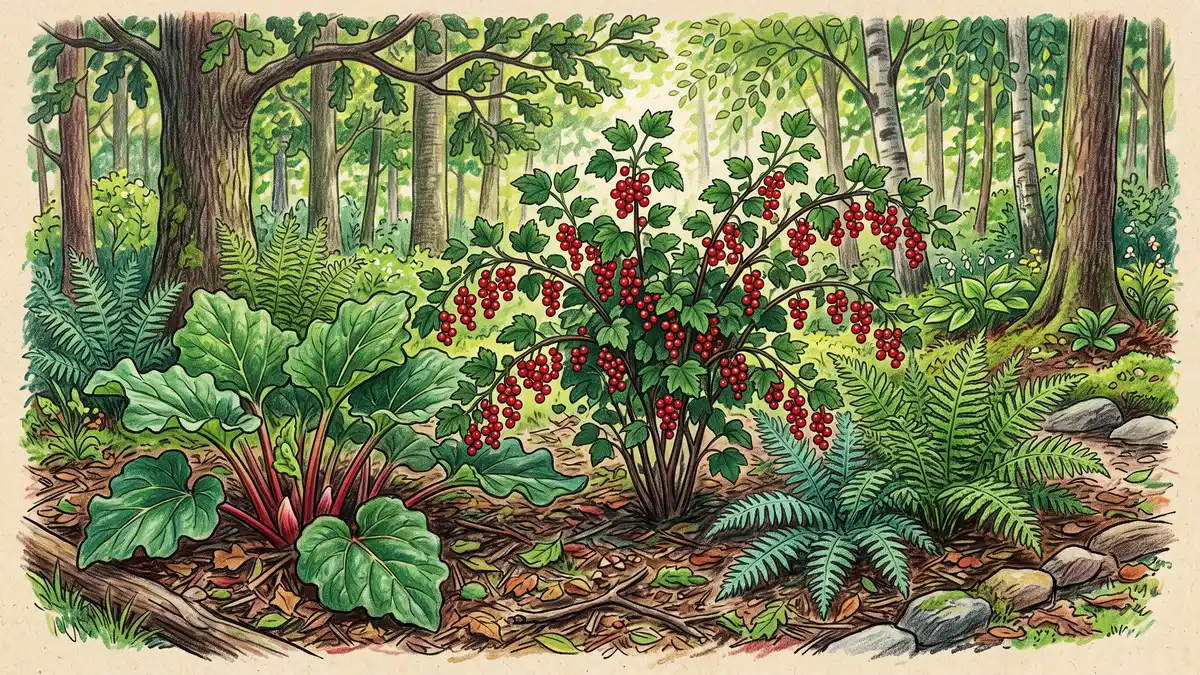
What Do "Full Sun" and "Shade" Actually Mean?
They are best measured in hours of direct sun, not a vague sense of brightness. The UC Master Gardeners of Placer County give the working definitions most extensions use: full sun is six or more hours of direct sunlight, partial shade is roughly three to six hours, and shade is less than about two hours or only dappled, filtered light. There is no official national standard, but these thresholds line up well with how plants actually perform.
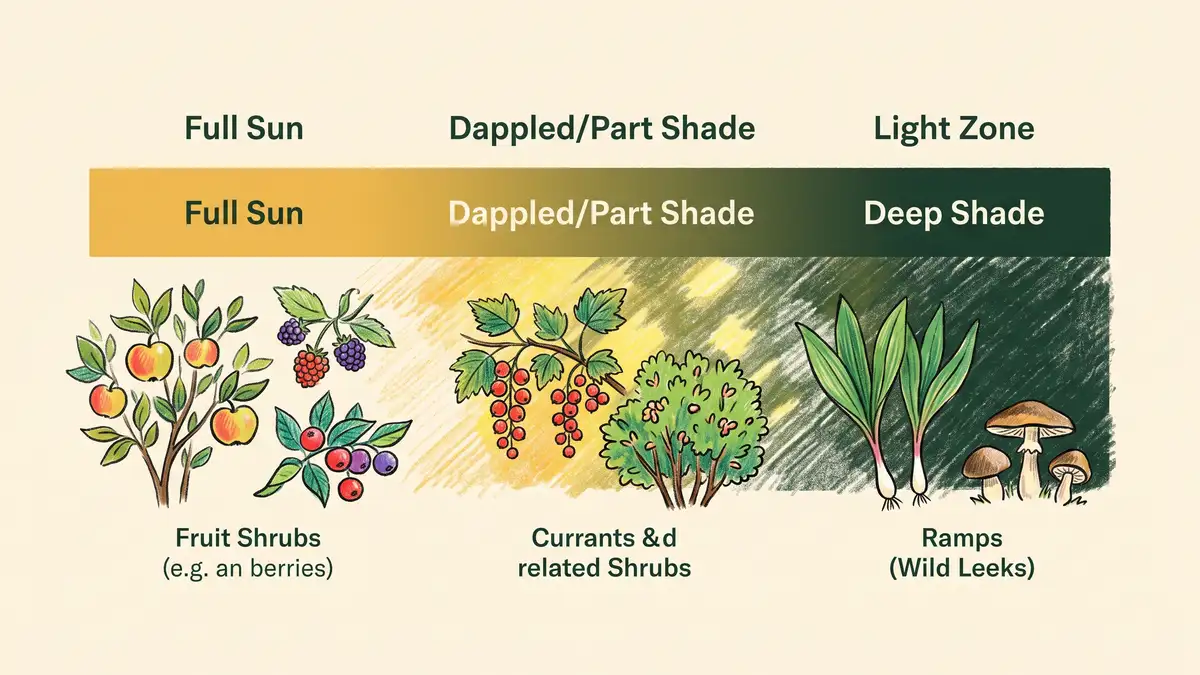
The reason matters: flowering and fruiting take far more energy than growing leaves. As light drops, plants meet their maintenance needs first and cut back on fruit. NC State Extension makes this concrete for blueberries, noting full sun is desirable and up to 50% shade is tolerable, but yield is reduced with increasing shade. That is the rule across the board, and it maps onto the food forest layers: sunny canopy edges for fruit, dappled mid-zones for shade-tolerant berries, and the dark forest floor for greens and fungi.
Why This Works: The Edge Effect
Some of the most productive spots in a food forest are the edges, where the canopy opens and light spills sideways under it. Currants on an east-facing edge catch morning sun and rest in afternoon shade; the dappled band under a high, open canopy gives serviceberries and gooseberries enough light to crop. Reading your garden's edges and light gradients, rather than treating "shade" as one flat condition, is what lets you place each plant where it can actually earn its keep.
Which Fruits Still Crop in Shade?
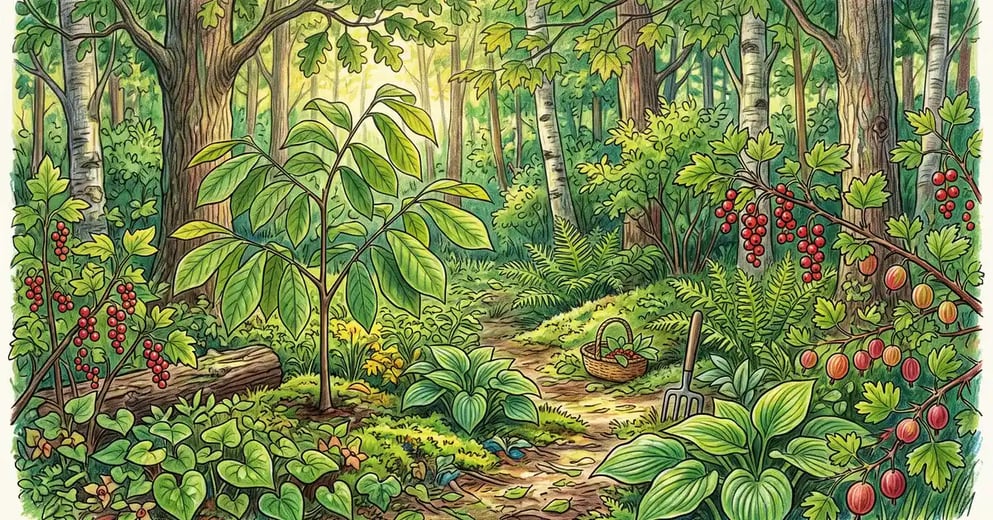
A short but reliable list, led by the Ribes shrubs. Currants and gooseberries are the standouts. Penn State Extension calls them tolerant of partial shade and extremely cold-hardy, and reports a well-established plant yields five to seven pounds (2.3 to 3.2 kg) of fruit. Utah State Extension notes gooseberries actually do well as an understory plant, preferring a spot with afternoon shade in hot summers, like the east side of a wall.
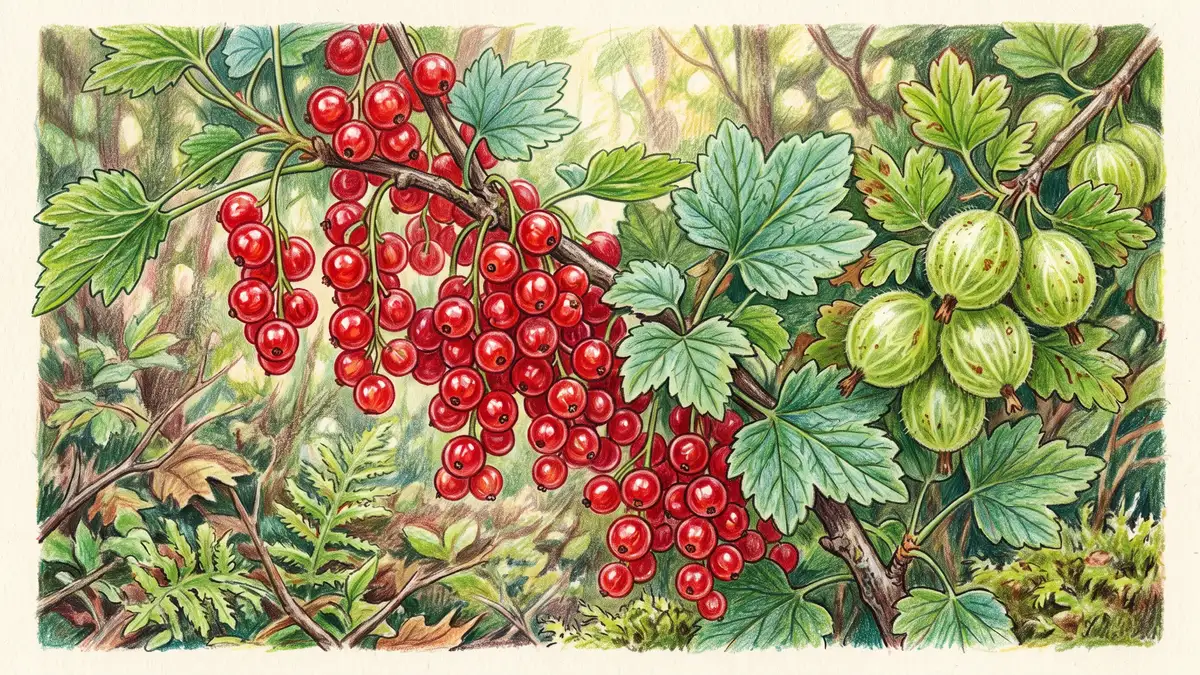
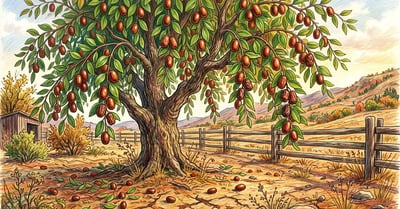
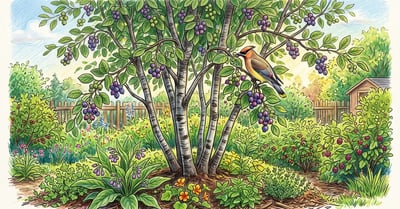
Beyond the Ribes, the picture is one of tolerance with reduced yield. Elderberry grows best in full sun but, per University of Maryland Extension, tolerates some shade and fruits on second-year canes. Serviceberry (juneberry) handles sun to semi-shade. Pawpaw is the interesting case: it is a native understory tree that sprouts happily in shade, yet University of Missouri Extension is clear that full sun is required for optimum fruit production. Shade-grown pawpaw survives and fruits lightly; for real crops, give it light. Alpine strawberries round out the group as a genuinely shade-friendly groundcover.
The Honest Caveat
Most mainstream tree fruits, apples, pears, plums, peaches, and blueberries, genuinely need full sun and will disappoint in shade. Fairfax County's shade-fruit guide puts it plainly: most fruit requires full sun, and even for shade-tolerant crops, fruit quality, sugar, and flavor improve with more light. "Shade tolerant" for fruit almost always means the plant survives and yields less, not that it produces the same crop in the dark. Plan your sweet-fruit trees for your sunniest ground.
What Thrives in Deep Shade?
The woodland specialists: greens, medicinal roots, and mushrooms. This is where a shady food forest stops competing with an orchard and starts doing something an orchard cannot. These crops are adapted to the forest floor, and several are high value.
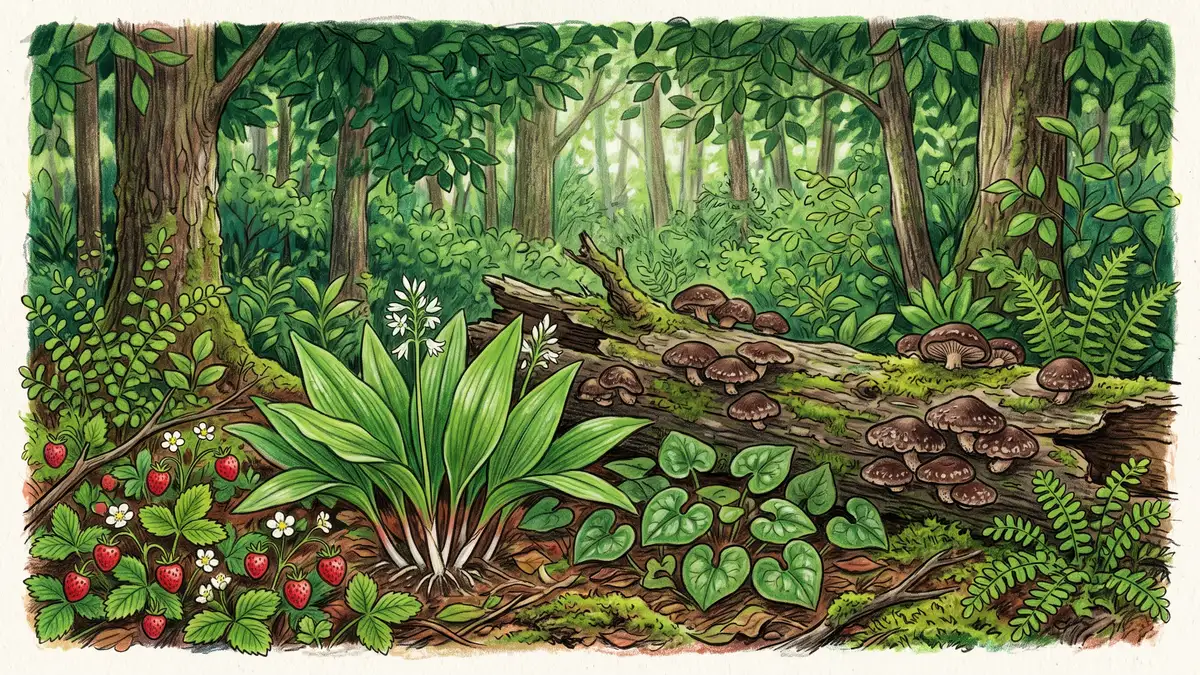
Ramps (wild leeks) are the classic. NC State Extension describes them growing in rich, moist deciduous forest, often on north-facing slopes, leafing out in the brief window before the canopy closes. They are slow and need conservative harvest, no more than 5 to 10% of a patch a year, so treat them as a patient, deep-shade crop. Mint, per University of Florida, actually prefers light or part shade in hot climates, and woodland herbs like wild ginger, sweet cicely, sorrel, and hosta shoots fill the leafy niche.
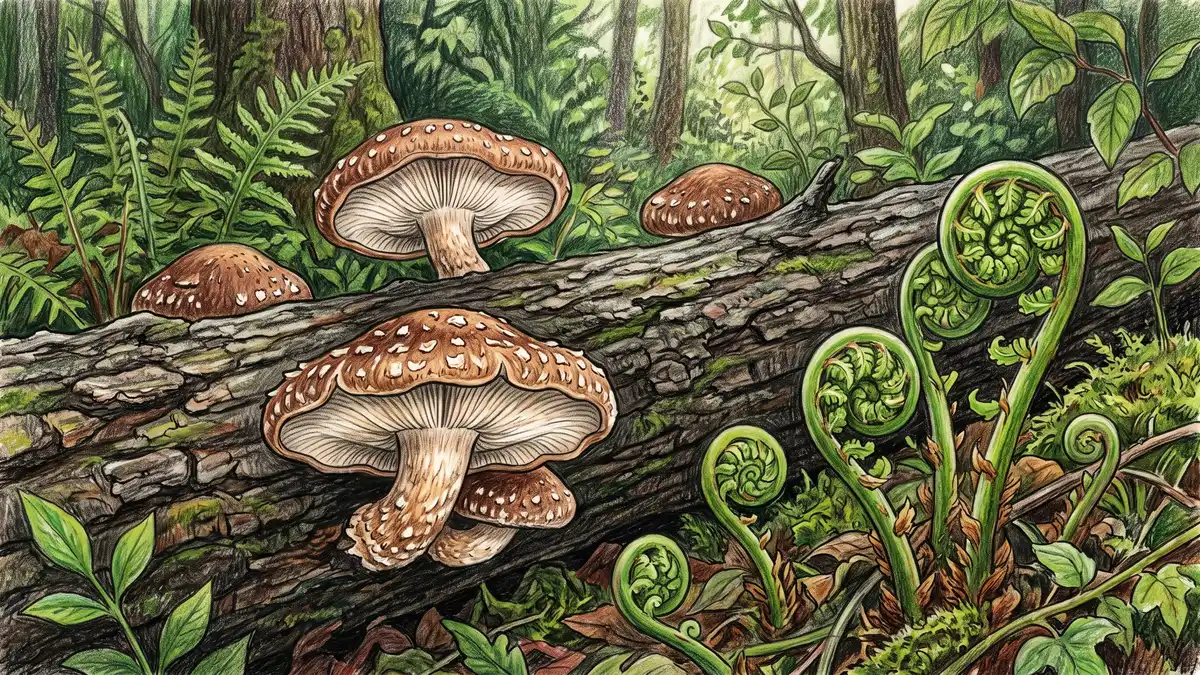
The two high-value crops are worth knowing. American ginseng needs about 75% shade and only 25% of full sunlight, takes five to eight years to reach harvest, and can fetch around $300 a pound dried for woodland-grown root versus $12 to $20 for field-grown. And mushrooms are the ultimate shade crop: Cornell Small Farms reports log-grown shiitake operations of 500 to 1,000 logs yielding 20 to 50 pounds a week from June through October, all grown in shade that would starve a fruit bush. This is the heart of forest farming, which the USDA promotes as intentionally cultivating crops under a managed canopy, and it leans hard on healthy, moist, living soil.
How Do You Match Plants to Light Zones?
Map your light first, then assign each plant to the zone it can produce in. Walk your site on a clear day in late spring and note how many hours of direct sun each area gets. Then follow this rough sorting.
| Light Zone | Roughly | Best Crops |
| Full sun | 6+ hours direct | Apples, pears, blueberries, most tree fruit |
| Part shade / dappled | 3-6 hours or filtered | Currants, gooseberries, serviceberry, elderberry, alpine strawberry |
| Deep shade | Under ~2 hours | Ramps, ginseng, wild ginger, hostas, mushrooms |
Sources:
The design payoff is simple. Keep light-hungry fruit trees in your open, sunny ground and on south edges. Fill the dappled band under a high canopy and the east-facing edges with Ribes shrubs and serviceberry. Hand the deep, north-facing, moist hollows to ramps, woodland herbs, and mushroom logs. Done this way, a food forest has no dead zones, just different jobs for different light, all working together across the full food forest system.
Key Takeaway
The shadiest corners are not wasted; they are a different kind of productive. Once you stop expecting sweet fruit from them and start planting woodland greens, roots, and fungi, deep shade becomes some of the most interesting and highest-value ground in the whole garden.
Frequently Asked Questions
What food forest plants grow in shade?
It depends on how deep the shade is. In partial shade, roughly three to six hours of sun or bright dappled light, currants and gooseberries are the most reliable fruit, yielding five to seven pounds per mature plant, alongside elderberry, serviceberry, and alpine strawberry as a groundcover. In deep shade under a closed canopy, switch to woodland specialists: ramps and other wild alliums, wild ginger, sweet cicely, sorrel, hosta shoots, and ostrich fern fiddleheads for greens, plus American ginseng as a slow, high-value medicinal root. Mushrooms such as shiitake and oyster, grown on inoculated hardwood logs, are the single most productive deep-shade crop. The key is to stop expecting abundant sweet fruit from heavy shade and lean into leaves, roots, and fungi instead, which are genuinely adapted to low light.
Do fruit trees grow in shade?
Most do not produce well in shade. Apples, pears, plums, peaches, and cherries are full-sun crops that need six or more hours of direct light for reliable, good-quality fruit, and they will grow leggy and crop poorly in shade. Even blueberries, which tolerate up to about 50% shade, yield less as shading increases, according to NC State Extension. The main exception among tree crops is pawpaw, a native understory tree that survives and lightly fruits in shade but still needs full sun for a real harvest. If deep shade is what you have, focus your tree fruit on the sunniest spots you can find, use dappled edges for shade-tolerant shrubs like currants, and reserve the darkest ground for woodland greens and mushrooms rather than fighting to fruit a sun-loving tree.
Can you grow currants and gooseberries in shade?
Yes, and they are the best fruiting shrubs for it. Penn State Extension lists currants and gooseberries as tolerant of partial shade and very cold-hardy, producing five to seven pounds of fruit per established plant. Utah State Extension goes further, noting gooseberries do well as an understory plant and actually appreciate afternoon shade in hot-summer areas, such as the east side of a building where they get morning sun and cool later in the day. University of Maryland Extension recommends siting currants, gooseberries, and jostaberries where they get late-afternoon shade to reduce heat stress. For best results, give them morning sun or bright dappled light, keep the soil moist, and prune to maintain a mix of one-, two-, and three-year-old wood, since that is where the fruit forms.
What can I grow in deep, full shade?
Deep shade is the realm of forest-floor crops. For greens, ramps (wild leeks) are the classic Appalachian woodland harvest, along with wild ginger, sweet cicely, sorrel, and the emerging shoots of hostas and ostrich ferns. For a high-value root, American ginseng grows in about 75% shade and can be worth hundreds of dollars a pound as woodland-grown root, though it takes five to eight years and needs careful, legal sourcing. The champion of deep shade, though, is mushrooms: shiitake and oyster mushrooms grown on inoculated hardwood logs produce heavily in shade that would starve a fruit bush, which is why they anchor commercial forest farming. Match these to moist, north-facing, leaf-littered spots and the darkest part of your garden becomes one of the most productive.
How many hours of sun do fruit plants need?
As a rule of thumb, most fruit wants full sun, defined as six or more hours of direct sunlight per day, and the hours do not have to be continuous. Shade-tolerant fruits like currants, gooseberries, elderberry, and serviceberry can produce a worthwhile crop on roughly three to six hours of sun or consistent bright dappled light, though yields and sugar levels rise with more light. Below about two hours of direct sun, most fruiting plants shift their energy to survival and leaf growth rather than flowers and fruit, so that is the point to switch from fruit to shade-adapted greens, roots, and mushrooms. The practical move is to measure the sun hours in each part of your garden on a clear late-spring day, then place each plant in the zone where it can actually produce.
Get the Weekly Dig
One practical permaculture guide a week, written for gardeners who do this on weekends: food forest and guild designs that produce. Free, no spam, unsubscribe any time.
Join the Weekly DigResources
- UC Master Gardeners — Definitions of Light Requirements
- Penn State Extension — Gooseberries and Currants
- Utah State University Extension — Gooseberries in the Garden
- University of Maryland Extension — Less Common Fruits for the Home Garden
- University of Missouri Extension — Growing and Marketing Pawpaw
- NC State Extension — Cultivation of Ramps
- USDA Forest Service — Growing American Ginseng in Forestlands
- Cornell Small Farms — Economic Report for Log-Grown Shiitake
- Fairfax County Tree Stewards — Made in the Shade: Fruits