
What Is a Johnson-Su Bioreactor?
A Johnson-Su bioreactor is a static, no-turn composting system designed to grow a fungal-dominated, biologically diverse compost that you use as a living inoculant rather than a bulk soil amendment. If you have spent years turning hot piles and still ended up with bacteria-heavy compost, this is the method that flips the script. You build a tall, well-aerated column, keep it moist, walk away for about a year, and harvest a dense, clay-like material teeming with fungi.
The design comes from Dr. David C. Johnson, a molecular biologist at New Mexico State University, and his wife Hui-Chun Su Johnson, an engineer, which is where the name comes from. It sits at the heart of their BEAM framework, short for Biologically Enhanced Agricultural Management, described in the widely shared Johnson-Su Composting Bioreactors technical guide. This article covers who built it, why the output is fungal-dominated, how to construct one at home, and how to apply the finished product.
Key Takeaway
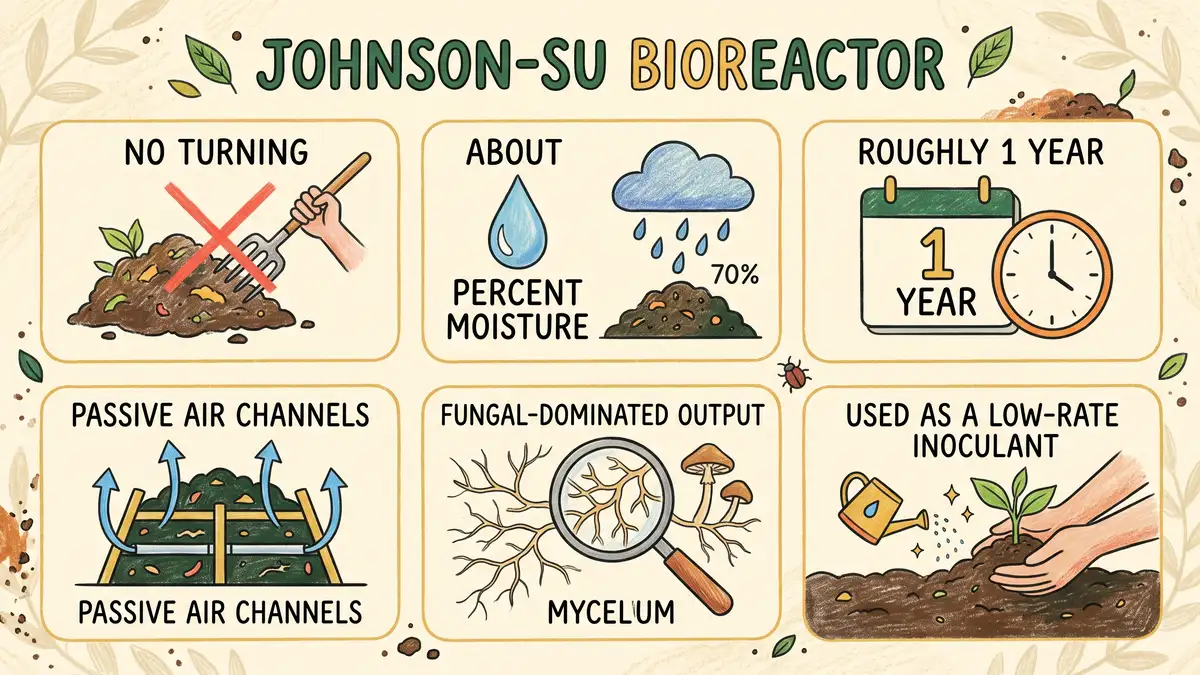
The Johnson-Su bioreactor trades labor for time. There is no turning; aeration comes from the structure itself. The payoff is a fungal-dominated compost you apply at rates as low as 2 pounds per acre (2.2 kg/ha) as a seed coat or extract, feeding soil biology rather than bulk-fertilizing the bed.
Why Does a Johnson-Su Bioreactor Stay Aerobic Without Turning?
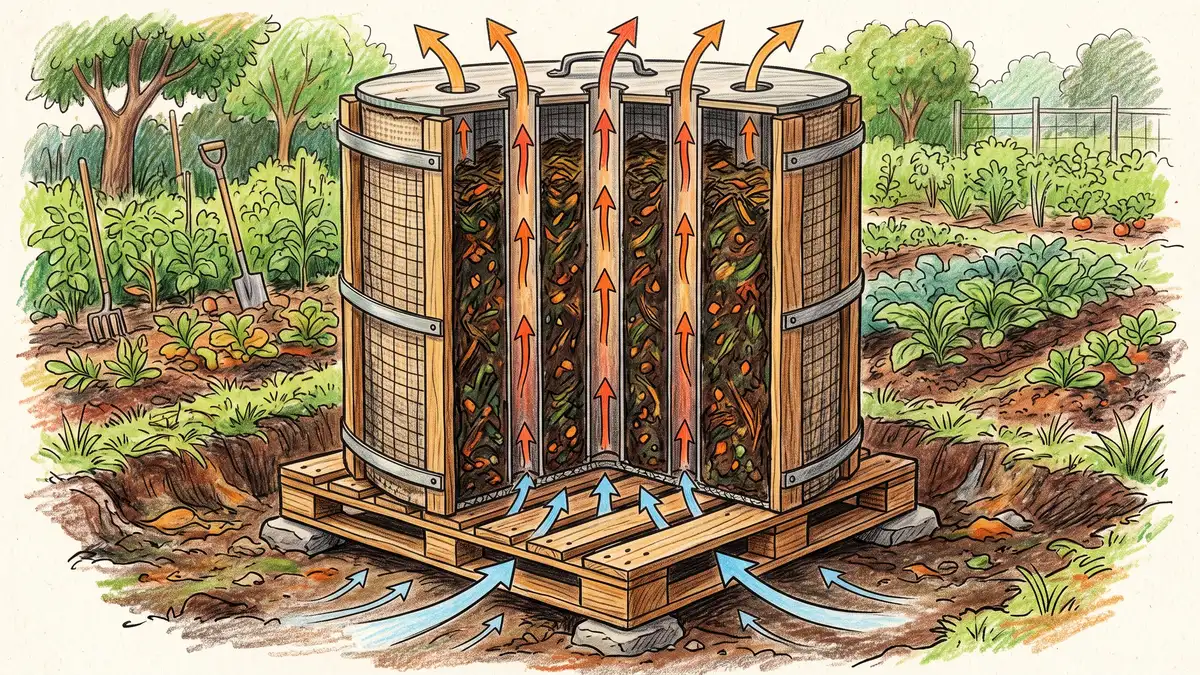
The whole design exists to solve one problem: keeping the entire pile aerobic so fungi thrive and the mass never goes anaerobic. Johnson's rule of thumb is that no part of the compost should sit more than about 10 to 12 inches (25 to 30 cm) from an air source. Three features deliver that. The column sits on a pallet so air rises from below. The walls are porous concrete reinforcing mesh lined with landscape fabric. And several vertical perforated pipes are set in the fresh pile, then pulled out after the first day or two to leave open chimneys running top to bottom.
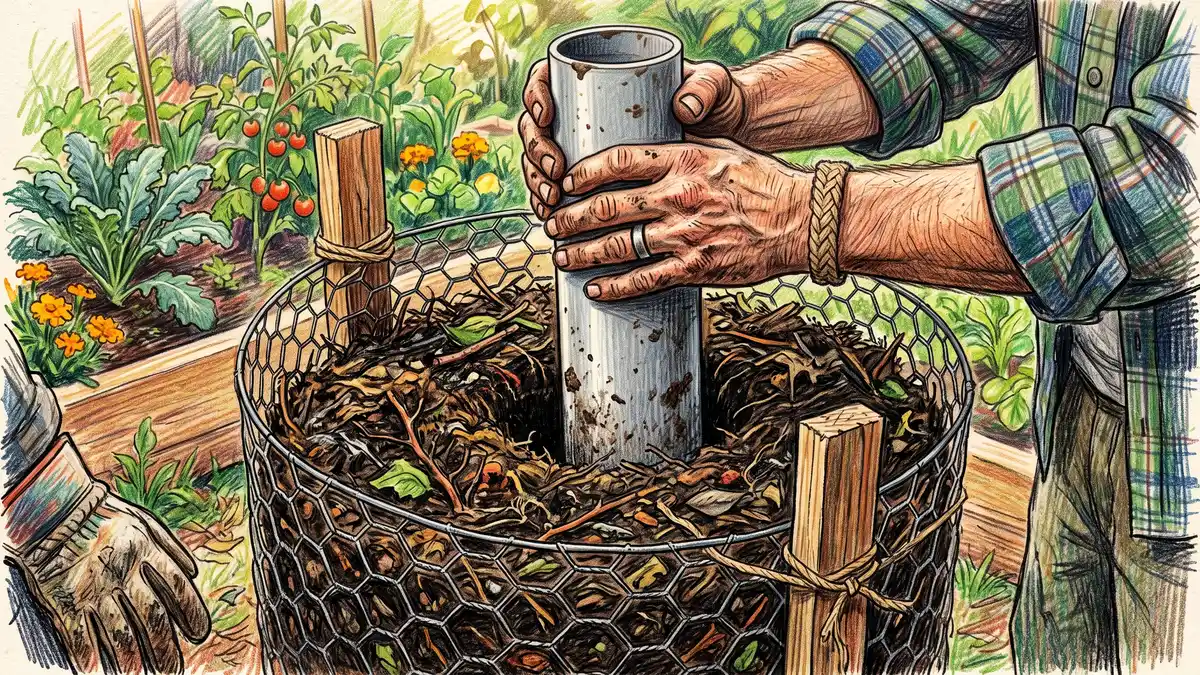
Because oxygen reaches the core passively, the pile can move through its thermophilic, mesophilic, and vermicomposting phases undisturbed. That undisturbed part matters more than it sounds. Every time you turn a conventional pile, you shred the fungal hyphae that are trying to knit the material together. By leaving the bioreactor static for a full year, you let those networks build. Farmers Weekly's on-farm adaptation using an IBC container with drainage pipes follows the same 12-inch aeration principle with different materials.
Why Is the Compost Fungal-Dominated, and Does It Matter?
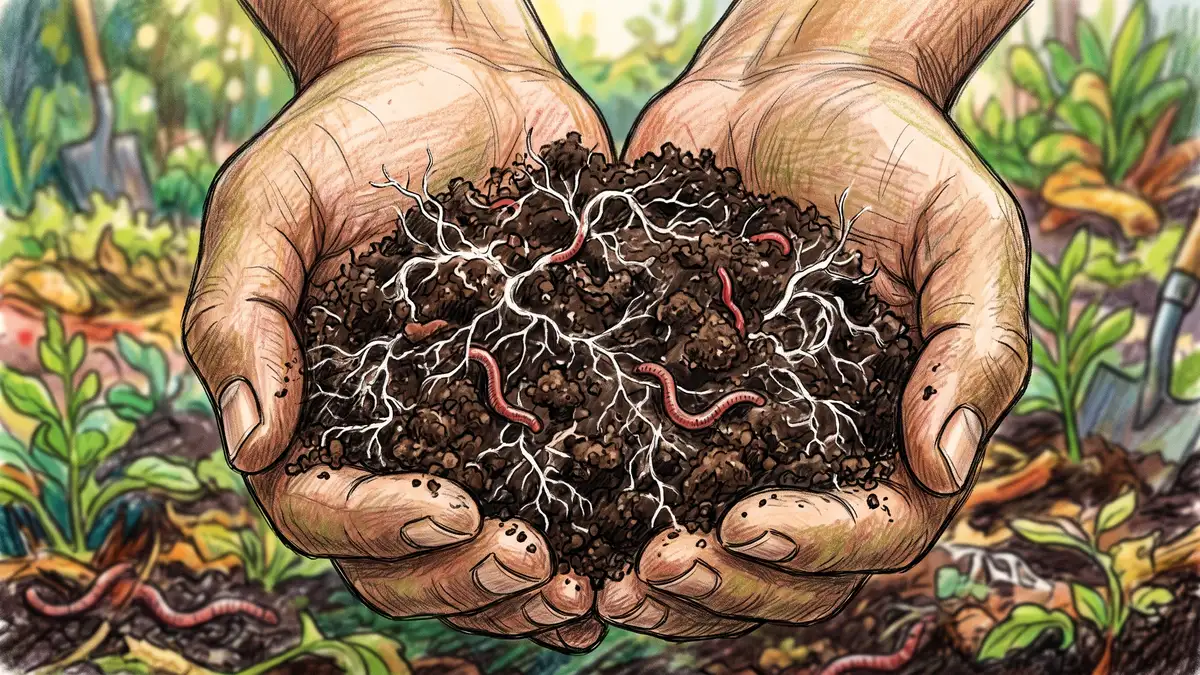
Conventional hot composting, especially with frequent turning and nitrogen-rich feedstock, tends to produce a bacteria-dominated product. The Johnson-Su method deliberately pushes the other way. Practitioners keep nitrogen inputs like fresh grass clippings or manure to roughly 10% or less of the total volume and lean on high-carbon feedstock such as autumn leaves and woodchips, which favors fungi. Growers testing their output with microBIOMETER fungal-to-bacterial assays report noticeably higher fungal biomass than typical compost.
Why chase fungi? Because fungal networks, particularly mycorrhizal and saprophytic fungi, punch above their weight in soil carbon storage and aggregate stability. The USDA Natural Resources Conservation Service notes in its soil health guidance that microbial exudates bind soil aggregates, which regulate water infiltration and protect organic matter from rapid oxidation. Fungi produce glomalin, a sticky glycoprotein that glues aggregates together. A fungal-dominated inoculant is, in effect, a way to seed that machinery into worn-out ground and jump-start the process of building living soil.
| Feature | Johnson-Su | Hot Compost | Vermicompost |
| Turning | None | Frequent | None |
| Time | ~1 year | 1-3 months | 2-6 months |
| Biology | Fungal-dominated | Bacteria-leaning | Bacteria + worms |
| Used as | Inoculant | Bulk amendment | Amendment / tea |
Sources:
Why This Works: The Soil Food Web
Dr. Elaine Ingham's soil food web framework holds that different plants prefer different fungal-to-bacterial balances, with perennials, trees, and no-till systems favoring more fungal soils. The Johnson-Su bioreactor is a tool for shifting that ratio on purpose. Instead of buying biology, you grow a diverse fungal community and reintroduce it, then feed it with living roots and mycorrhizal partnerships. It is a permaculture idea at its core: build the system that makes the fertility, rather than importing the fertility itself.
How Do You Build a Johnson-Su Bioreactor?
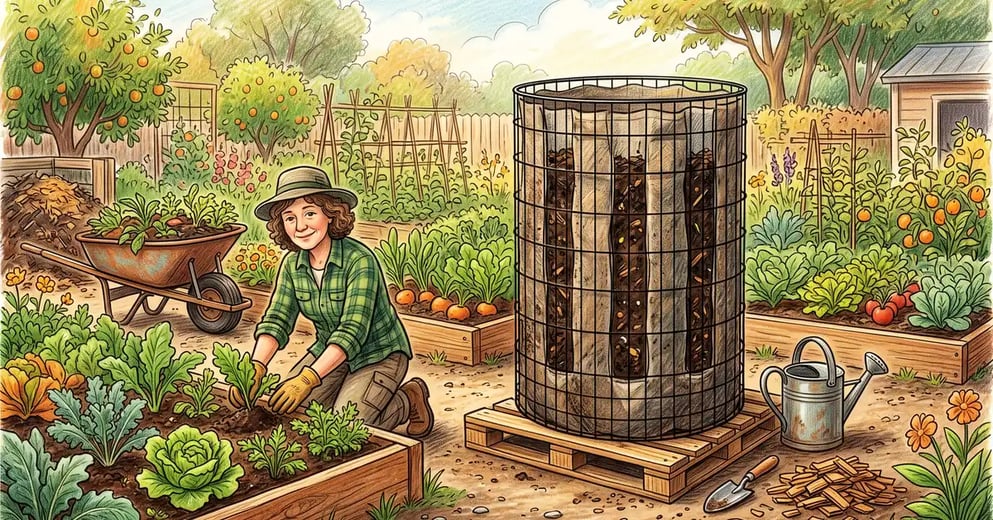
A home-scale unit is inexpensive and takes an afternoon to assemble. Fifth Season Gardening's build guide describes a cylinder about 4 feet (1.2 m) tall from 6-inch reinforcing mesh, lined with 6-foot landscape fabric, on a pallet, filled with roughly 110 five-gallon (19 L) buckets of chopped, wet leaves.
Build the cylinder on a pallet
Form a ring of reinforcing mesh about 4 to 5 feet (1.2 to 1.5 m) tall, line it with landscape fabric, and set it on a pallet so air can rise from underneath.
Set the air pipes, then fill wet
Space vertical perforated pipes so no compost is more than 12 inches (30 cm) from air. Wet your high-carbon feedstock to about 70% moisture as you fill, mixing in 10% or less nitrogen material.
Pull the pipes after a day or two
Once the pile settles enough to hold its shape, remove the pipes to leave open chimneys. This is the last time you disturb it.
Keep it at 70% moisture for a year
Rig a drip line on a timer (about one minute a day) or hand-water several times a week. After the pile cools below 82°F (28°C), add red composting worms (Eisenia fetida). Harvest at about one year, when it looks like damp clay.
Need the gear for this?
Bins and tumblers picked by yard size, with the honest trade-offs for each.
See the compost bin picksHow Do You Use Johnson-Su Compost?
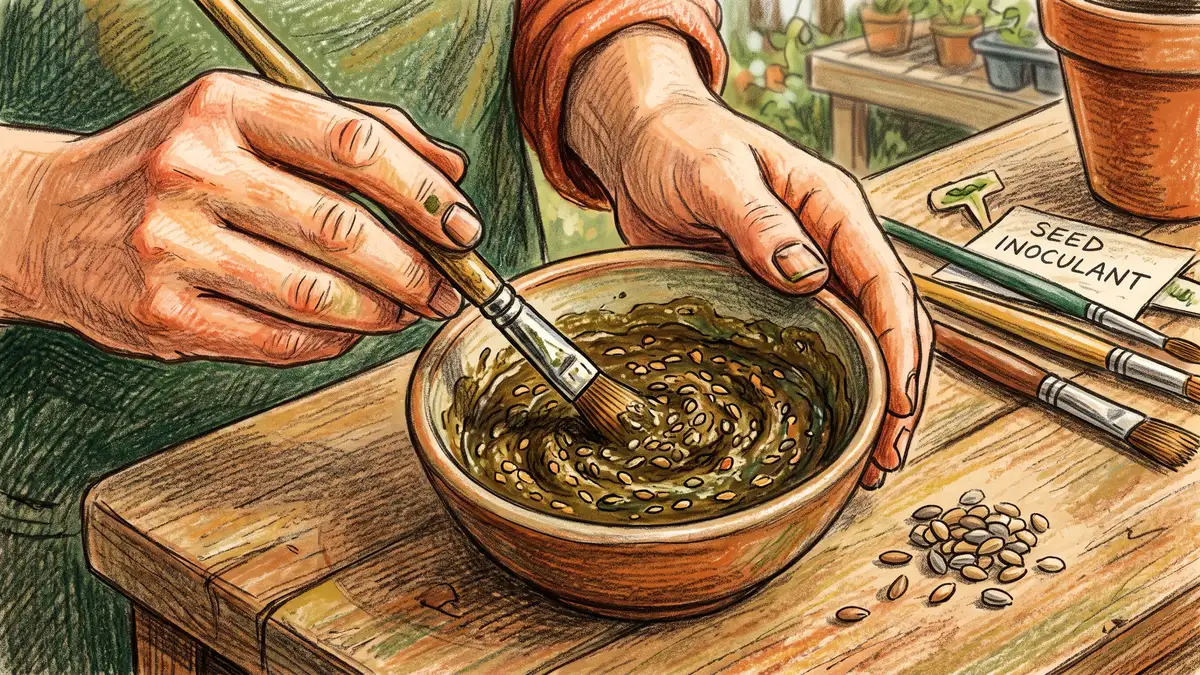
This is where Johnson-Su breaks hardest from ordinary compost. You do not spread it by the wheelbarrow. Because it is a concentrated microbial inoculant, very little goes a long way. Paradise Recreation and Park District's program notes that roughly 2 pounds per acre is enough when added to seed at planting, and Colville Compost reports the same 2 lb per acre rate mixed with water.
The three common delivery methods are a seed coating (roll seeds in a thin compost slurry before sowing), an in-furrow extract (pour a strained liquid extract into the planting furrow), and a foliar or soil drench. All aim to put diverse microbes exactly where roots will form so they colonize the rhizosphere from day one. Practical Farmers of Iowa has even run on-farm trials of Johnson-Su extract on pasture, part of a growing effort to test the method beyond anecdote.
Common Mistake to Avoid
The number one failure is moisture drifting off target. Too dry and the biology stalls; too wet and the core goes anaerobic and starts to smell sour. If water streams out when you squeeze a handful, it is overwatered. Set up reliable irrigation before you fill the bioreactor, not after, because you cannot turn or fix the pile once the pipes are out without undoing the fungal networks you are trying to grow.
Frequently Asked Questions
What is a Johnson-Su bioreactor?
It is a static, no-turn composting structure that produces a fungal-dominated, biologically diverse compost used as a microbial inoculant. Developed by Dr. David Johnson and Hui-Chun Su Johnson at New Mexico State University, it consists of a mesh cylinder lined with fabric, set on a pallet, with vertical air channels that keep the whole mass aerobic without turning. Kept near 70% moisture for about a year, it matures into a dense, clay-like material rich in fungi. It anchors their BEAM approach to regenerative soil management.
How long does Johnson-Su compost take?
Plan on about one year, with a practical minimum of nine months. The long cure is not a bug; it is the point. Microbial populations and species richness increase substantially over the first year, and the compost transitions through hot, mesophilic, and worm-driven phases before it finishes. You will know it is ready when it looks and feels like damp clay, smells rich and earthy, and shows no recognizable plant fragments. Rushing the process gives you a less diverse, less fungal product.
Why is Johnson-Su compost fungal-dominated?
Two design choices drive it. First, the feedstock leans heavily on high-carbon materials like autumn leaves and woodchips, with nitrogen inputs kept to about 10% or less, which favors fungi over bacteria. Second, the pile is never turned, so fungal hyphae can grow into continuous networks instead of being repeatedly shredded. Fungi matter because they build soil aggregates, store carbon, and support the mycorrhizal relationships that perennial and no-till systems depend on. That is why the method targets a high fungal-to-bacterial ratio rather than fast decomposition.
How much Johnson-Su compost do you use?
Very little, because it is an inoculant rather than a bulk amendment. Field programs report rates as low as about 2 pounds per acre (2.2 kg/ha) when applied to seed at planting. Common methods are coating seeds in a thin compost slurry, pouring a liquid extract into the planting furrow, or applying a soil drench. The goal is to place a diverse microbial community where roots will grow, then feed it with living roots and cover crops. A single bioreactor can therefore treat a surprisingly large area.
How is it different from hot composting?
Hot composting is fast and labor-intensive: you turn the pile repeatedly to add oxygen, finishing in one to three months with a bacteria-leaning product spread as a bulk amendment. If you want to compare the two heat-driven approaches directly, see our guide to hot versus cold composting. The Johnson-Su bioreactor is the opposite trade: no turning, a full year, and a fungal-dominated compost used in tiny amounts as an inoculant. One optimizes speed and volume; the other optimizes biological diversity and fungal content.
Does Johnson-Su compost really sequester carbon?
Dr. Johnson reports large soil-carbon gains in BEAM field trials, including desert soils where he measured carbon stocks rising to around 3,200 grams per square meter, and multi-year on-farm increases on the order of several tonnes of carbon per hectare. These are encouraging figures, but the strength of evidence varies, and much of it comes from Johnson's own trials and practitioner reports rather than large independent studies. Treat carbon claims as promising and worth testing on your own ground, not as settled fact. The soil-biology benefits are more consistently documented than the exact carbon numbers.
Get the Weekly Dig
One practical permaculture guide a week, written for gardeners who do this on weekends: composting that actually finishes and soil that feeds itself. Free, no spam, unsubscribe any time.
Join the Weekly DigResources
- Regeneration International: Johnson-Su Composting Bioreactors (technical guide)
- PMC: Adoption of a Biologically-Enhanced Agricultural Management (BEAM) system (peer-reviewed)
- Rodale Institute: Soil Carbon Sequestration (interview with Dr. David Johnson)
- Fifth Season Gardening: How to Build a Johnson-Su Bioreactor
- Farmers Weekly: Building an On-Farm Johnson-Su Bioreactor
- microBIOMETER: Fungal Testing of Johnson-Su Bioreactor Compost
- Practical Farmers of Iowa: Effects of Johnson-Su Compost Extract on Pasture
- USDA NRCS: Soil Health (aggregates, microbial biomass)