
Most gardeners spend years fighting bugs with sprays and never realize the real workforce was already in the yard, waiting for an invitation. The right ladybug eats five thousand aphids in her lifetime. A single hover fly larva clears 100 to 300 aphids in two weeks. A small parasitoid wasp you can barely see takes out 70 to 90 percent of cabbage worm eggs before they hatch. You don't need to buy any of them — you just need to grow what they eat and stop killing what's already there. Two worked examples: cabbage worms, which parasitoid wasps suppress hard, and leaf miners, where spraying usually makes things worse. plants that attract ladybugs
This is the practical playbook: which insects matter most for a backyard garden, how to tell good bugs from bad bugs, the 15 plants that pull them in, the habitat tweaks that keep them, and the five most common mistakes that drive them away. Every claim here is sourced from university extension services and the Xerces Society's beneficial insect research.
Key Takeaway
Beneficial insects do the same job as pesticides — predation and parasitism of pest species — for free, year after year, with no chemical residue. The fastest path to a self-managing garden is plant a season-long succession of umbel-family flowers (dill, fennel, yarrow), leave bare soil patches and brush piles for overwintering, and stop spraying anything broad-spectrum. Within two seasons, your aphid pressure drops by half and your spray bill drops to zero.
Step 1: Know Your Top Beneficials
Eight insect groups do roughly 90% of the natural pest control work in a North American backyard. Knowing them by sight is the difference between celebrating a useful predator and squashing it.
Lady beetles (Coccinellidae). The convergent lady beetle (Hippodamia convergens) is the headline native — bright red-orange with black spots, 5 to 8 mm long. A single beetle eats 50 to 60 aphids a day during peak season and 5,000-plus across her two-to-three-year life. UC IPM documents the lifecycle clearly. Note: the Asian lady beetle (Harmonia axyridis) is also a predator but outcompetes natives, eats other beneficials, and overwinters inside houses — distinguish by the M-shaped white marking behind the head.
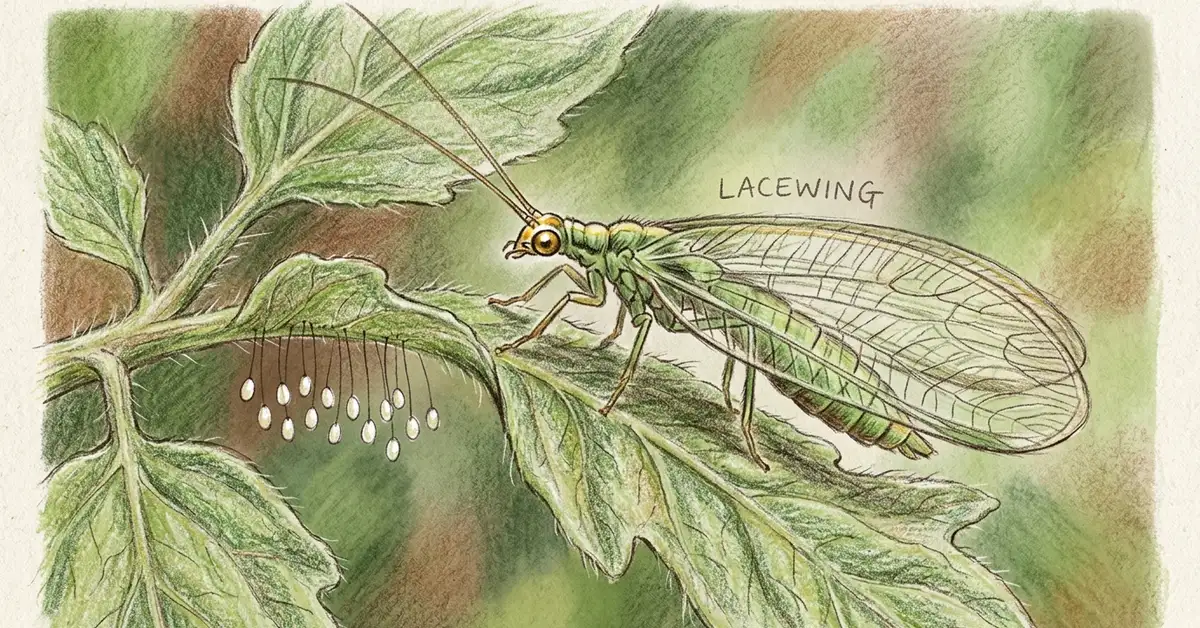
Lacewings (Chrysopidae). Lime-green, lace-veined wings, large compound eyes, about half an inch (12 to 15 mm) long. Larvae are the workhorses — each one consumes 200-plus aphids in a 2 to 3 week development. They lay distinctive eggs on tiny filaments, almost like pearls on stalks, on leaf undersides.
Hover flies (Syrphidae). They look like small bees with yellow-and-black stripes but have one pair of wings, large forward-facing eyes, and short antennae — the giveaway is the hovering, helicopter-like flight pattern. Adults pollinate; larvae are aphid-killing machines, taking 100 to 300 aphids per larva.
Ground beetles (Carabidae). Dark, fast-running, often glossy or iridescent, 5 to 25 mm long. Active mostly at night. They hunt slugs, snails, cutworms, and beetle larvae. Calosoma species (caterpillar hunters) take out 100 to 200 caterpillars annually per beetle. They live in mulch and leaf litter — overly tidy gardens lose them fast.
Parasitoid wasps. Most are tiny (under 3 mm) and harmless to humans. Trichogramma wasps parasitize moth and butterfly eggs at 70 to 90 percent rates in commercial biocontrol settings. Cotesia hits cabbage worm larvae. Aphidius mummifies aphids — if you see hardened tan-colored aphid corpses ("mummies"), that's a successful parasitoid kill, leave them in place.
Minute pirate bug (Orius insidiosus). 2 to 5 mm, black with white patches. Eats 20 to 50 thrips nymphs daily. Survives on pollen during pest lulls, which makes it more reliable than specialist predators.
Spiders (Araneae). Average garden spider eats 30 to 50 insects per month between May and October. A garden with 1,000 spiders per 100 square meters (1,076 sq ft) eliminates 300,000-plus insects annually, per USDA ARS data. Pesticides are particularly lethal to spiders because they accumulate exposure across multiple feeding levels.
Native bees. About 70% of North American native bees are solitary ground-nesters — the bumblebees and honeybees most people picture are a minority. Native bee species pollinate roughly 75% of wild plants, and Xerces Society research values their US agricultural pollination contribution at $15 to $20 billion annually.
Step 2: Tell Good Bugs from Bad Bugs
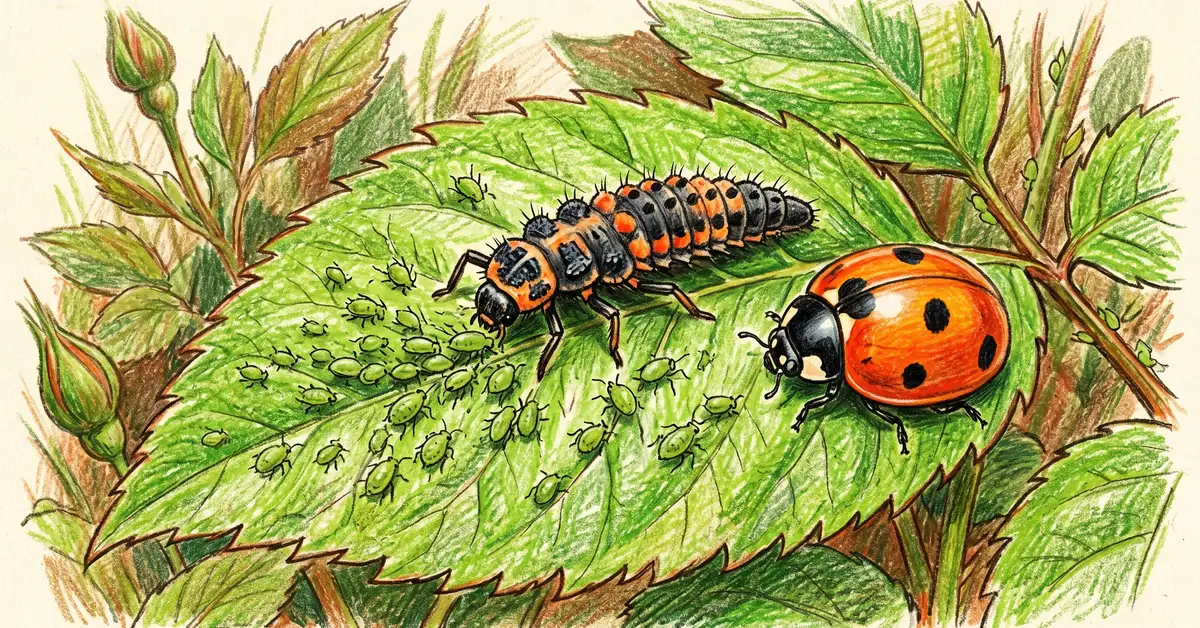
Most accidental beneficial-killing happens at the larva stage, when predators look nothing like their adult forms. Five quick visual cues will save more good bugs than any other piece of garden knowledge.
| You see this | It might be... | Quick tell |
| Tiny "alligator" on aphid-infested plant | Lady beetle larva (good) | Black-and-orange, 6 legs, 2–3 mm, alligator-shaped tapered body |
| Small green lacy-winged insect | Green lacewing (good) | Lime-green wings, delicate veining, half-inch long |
| Tiny wasp probing leaves | Parasitoid wasp (good) | Under 3 mm, cannot sting humans, deliberate probing motion |
| Bee-like insect hovering | Hover fly (good) | One pair of wings (bees have two), large forward-facing eyes |
| Hardened tan aphid carcass on stem | Parasitized "aphid mummy" (good — leave it) | Tan, hardened, hollow-looking — wasp emerged or about to emerge |
| Pill bugs / sow bugs in mulch | Detritivore (mostly good) | Crustacean, eats decaying matter; not a pest in healthy soil |
| Metallic green beetle on leaves | Japanese beetle (pest) | Eats live plant tissue in groups; ground beetles never do |
Source:.
The pill bug myth is worth busting on its own. They're crustaceans, not insects, and they primarily eat decaying organic matter. The "pill bugs are killing my seedlings" complaint usually traces to seedlings that were already damping off from poor drainage — the pill bugs were eating the dead tissue, not the live plant. Improve airflow and drainage instead of treating it as a pest problem.
Step 3: Plant the 15 Insectary Plants That Actually Work
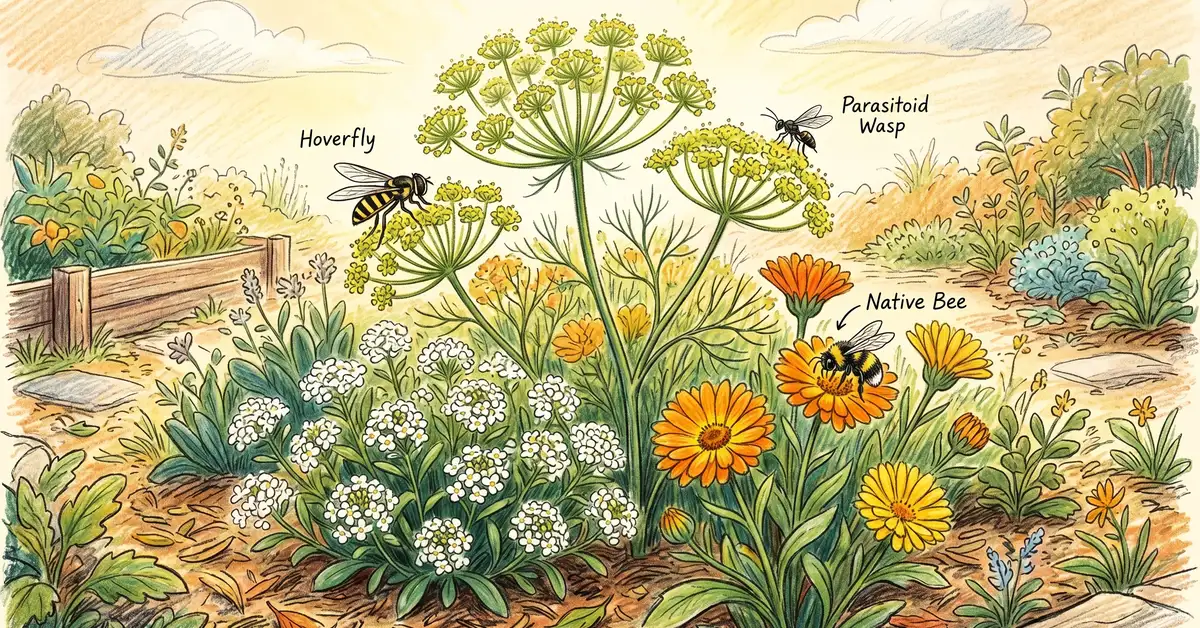
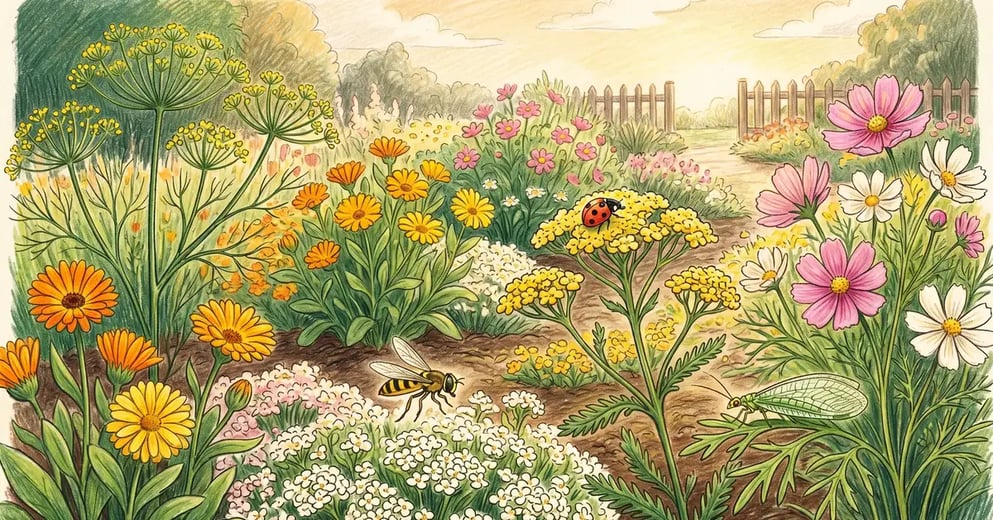
Insectary plants are simply the flowers that beneficial insects prefer for nectar and pollen. UC IPM's insectary plant guide documents why three plant families dominate this list: umbellifers (carrot family), asters (sunflower family), and mints — but only when allowed to flower.
| Plant | USDA Zone | Bloom | Top attractants |
| Dill | 2–11 (annual) | June–Aug | Hover flies, parasitoid wasps, ladybugs |
| Fennel | 6–11 (perennial) | July–Sept | Hover flies, parasitoid wasps, ground beetles |
| Cilantro | 2–11 (cool annual) | May–June | Parasitoid wasps, hover flies, lacewings |
| Parsley | 3–11 (biennial) | May–July (year 2) | Parasitoid wasps, soldier beetles |
| Yarrow (Achillea) | 2–11 (perennial) | June–Sept | Hover flies, ladybugs, lacewings, native bees |
| Cosmos | 2–11 (annual) | July–Oct | Hover flies, butterflies, native bees |
| Calendula | 2–11 (annual) | May–Oct | Hover flies, parasitoid wasps, lacewings |
| Sunflower (native) | 2–11 (annual) | July–Sept | Native bees, soldier beetles, butterflies |
| Coneflower (Echinacea) | 3–11 (perennial) | June–Sept | Native bees, butterflies, parasitoid wasps |
| Oregano (flowering) | 5–11 (perennial) | June–Aug | Native bees, hover flies, parasitoid wasps |
| Thyme (flowering) | 4–11 (perennial) | May–July | Native bees, hover flies, parasitoid wasps |
| Basil (flowering) | 2–11 (tender annual) | Aug–Sept | Native bees, hover flies, parasitoid wasps |
| Buckwheat (cover crop) | 2–11 (annual) | 4–6 weeks post-sow | Hover flies (high), parasitoid wasps |
| Sweet alyssum | 2–11 (annual) | May–Oct | Trichogramma wasps (exceptional), hover flies |
| Native wildflower mix | Region-specific | April–Oct | All beneficial groups |
Source:.
Two strategy notes the literature is clear on. First: let some herbs flower. Most home gardeners harvest basil, oregano, and thyme before they bloom, which is the moment they become useful to beneficials. Plant two or three extras specifically for flowering. Second: sweet alyssum punches above its weight. Penn State Extension research shows Trichogramma parasitoid wasps preferentially feed on alyssum nectar over standard insectary plants — a six-foot border row of alyssum next to your vegetable beds is one of the highest-leverage moves you can make.
Step 4: Build the Habitat That Keeps Them
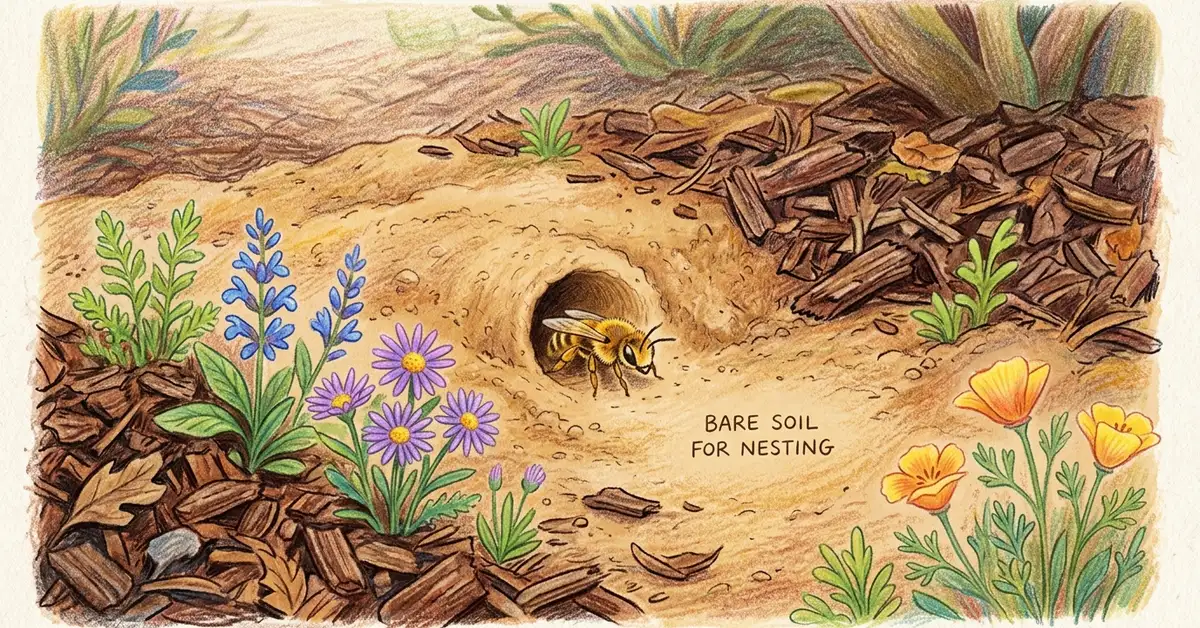
Pollen and nectar bring beneficial insects in. Habitat keeps them across the season and over winter. Five interventions, ranked by ecological return on effort:
Leave a 25 to 100 sq ft (2.3 to 9 m²) bare soil patch
Seventy percent of native bees ground-nest in uncompacted, well-drained soil. Pick a south-facing spot near insectary plants, remove vegetation and mulch, loosen the top 8 to 12 inches (20 to 30 cm), and leave it undisturbed May through August. Year-one residency is sparse (5 to 10 burrows); year-two and three reach 30 to 100-plus burrows in a healthy patch.
Skip the autumn cleanup
Mowed-flat, leaf-cleared gardens lose 40 to 50 percent of beneficial insect biomass overwintering on site. Mow leaves to a 2 to 3 inch (5 to 7.6 cm) shredded mulch, leave it on garden beds October through March, and leave standing dead stems for cavity-nesting bees and overwintering parasitoid wasps. Spring beneficial populations recover two to four times faster in unraked gardens than in tidied ones.
Build a brush pile in a back corner
3 to 4 ft (1 to 1.2 m) diameter, 2 to 3 ft (60 to 90 cm) tall, made from fallen branches and twigs. Leave undisturbed. Ground beetles, rove beetles, parasitoid wasps, and overwintering pupae colonize within one season. Well-built piles raised 6 inches off the ground don't harbor rodents — that's a separate issue caused by food sources, not brush.
Add water — shallow only
A saucer or shallow dish, 1 to 2 inches (2.5 to 5 cm) deep, with pebbles or moss for landing platforms. Refresh twice weekly. Bees, parasitoid wasps, and ground beetles all need accessible water. Keep depth under 6 inches (15 cm) total to avoid mosquito breeding.
Build a reed-bundle bee hotel (cavity-nesting bees only)
Hollow reeds 6 to 8 mm diameter, capped on one end, mounted under an eave or south-facing wall. Clean or replace annually in February or March before bee emergence — uncleaned hotels become disease vectors that cost more bees than they save. Per Xerces Society data, a 100-reed bundle typically hosts 20 to 40 bee cocoons in years one and two.
Source:.
The Year-Round Habitat Cycle
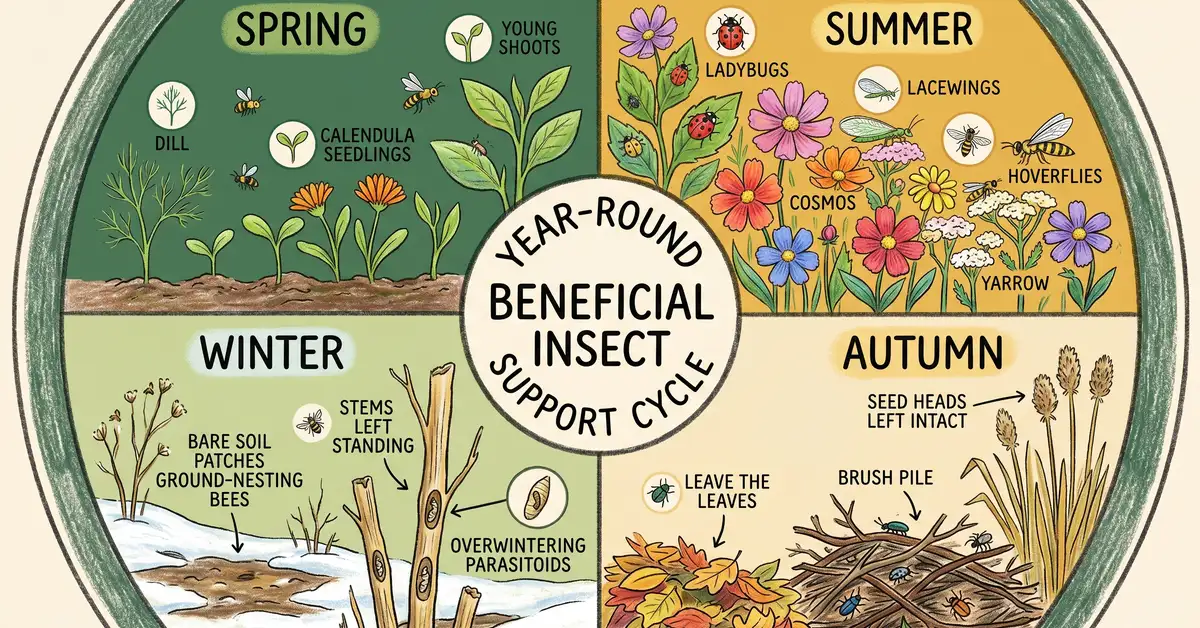
Beneficial insects need something flowering and something hibernation-ready in every month of the year. The infographic above maps the cycle: spring insectary emergence (thyme, parsley year-2, cilantro), summer peak diversity (yarrow, dill, cosmos, alyssum), autumn don't-clean (leaf litter and standing stems), winter bare-soil patches and brush piles holding overwintering pupae and cocoons. Plan all four quarters once and the garden runs itself for years.
Why This Works: The Permaculture Bridge
Conventional gardening treats pests and predators as separate problems — kill the pest, ignore the predator. Permaculture treats them as a system. Every aphid is a meal that supports a ladybug that overwinters in your leaf litter that emerges in April to suppress next year's aphids. The garden becomes a closed ecological loop where the gardener's job shifts from "spray every week" to "design the system once and observe." It's the same principle that runs healthy forests, native prairies, and old-growth food forests — and it's why your fifth-year garden takes a fraction of the labor your first-year garden did. You stopped fighting the ecosystem and started feeding it.
Five Mistakes That Drive Beneficials Away
1) Buying ladybugs. Commercially-collected lady beetles disperse 95% within 24 to 48 hours of release — you're buying flying insects that fly to your neighbor's yard. 2) Spraying neonicotinoids. Sub-lethal doses still cut native bee populations 23 to 48% and persist in soil for 100 to 600 days. 3) Cleaning the garden in fall. You're scraping out 40 to 50% of your overwintering predator biomass. 4) One bloom flush. A garden that flowers only in June supports beneficials only in June. Plan succession from April through October. 5) Mosquito sprays. Broad-spectrum mosquito treatments kill native bees, parasitoid wasps, lacewings, and butterflies indiscriminately.
Get the Weekly Dig
One practical permaculture guide a week, written for gardeners who do this on weekends: pest control that works without a spray bottle. Free, no spam, unsubscribe any time.
Join the newsletterFrequently Asked Questions
What plants attract beneficial insects the most?
Umbel-family flowers (dill, fennel, cilantro, parsley, yarrow) attract the highest diversity of beneficial insects, especially hover flies and parasitoid wasps. Aster-family flowers (cosmos, calendula, coneflower, sunflower) are second. Sweet alyssum punches well above its size for parasitoid wasps. The single most important rule: succession bloom from April through October — not just June.
Should I buy ladybugs to release in my garden?
Generally no. Commercially-collected convergent lady beetles (Hippodamia convergens) disperse 95% within 24 to 48 hours of release because they were collected during winter aggregation and instinctively fly far when released. Cornell Cooperative Extension research is clear that purchased ladybugs almost never establish populations. The dollars are better spent on insectary plants and habitat — they attract resident populations that stay.
How do I attract beneficial insects without a big yard?
Container gardens and small balconies still work. Plant sweet alyssum, a small dill or cilantro pot, a flowering oregano or thyme, and one yarrow plant — that combination alone supports hover flies and parasitoid wasps in a 3 by 3 ft (0.9 by 0.9 m) footprint. Add a shallow water dish. Native bees, hover flies, and small parasitoid wasps will find a balcony four floors up if the plants are right.
What's the difference between good bugs and bad bugs?
Behavior, not just appearance. Beneficial insects either hunt other insects (predators), parasitize them (parasitoid wasps), or pollinate flowers (bees, hover flies, butterflies). Pest insects feed on living plant tissue — they're chewing, sucking, or scraping the plant itself. If you see an insect you don't recognize, watch it for thirty seconds: is it eating leaves, or is it hunting? That answers the question 90% of the time.
Will beneficial insects replace pesticides completely?
For a backyard or homestead garden, in most years, yes — once your beneficial population is established (two to three seasons of insectary planting and habitat retention). University extension data shows well-designed home gardens produce equivalent pest control to 5 to 10 acres (2 to 4 hectares) of spray-dependent conventional crops. There will be occasional spike years (drought, new invasive pest) where targeted intervention is needed — start with insecticidal soap or hand-picking before anything broad-spectrum, and never spray during insectary bloom.
Resources
- Xerces Society — Farming with Native Beneficial Insects
- Xerces Society — Beneficial Insect Scouting Guide (PDF)
- Xerces Society — Habitat Planning for Beneficial Insects
- Xerces Society — Foliage Scouting for Beneficial Insects
- UC IPM — Beneficial Predators
- UC IPM — Insectary Plants
- UC IPM — Beneficial Insects Quick-Reference Card
- Penn State Extension — Beneficial Insects in the Garden
- WVU Extension — Beneficial Insects Commonly Encountered by Gardeners
- UC Davis ASI — Insects: Encourage Beneficials, Deter Pests (PDF)
- USDA People's Garden — Gardening Advice
The fastest beneficial-insect garden begins with one weekend, one packet of dill seeds, one calendula tray, one alyssum strip along your existing beds, and a decision to leave the leaves where they fall this autumn. Year two, your aphid pressure is half. Year three, you'll have stopped reaching for sprays altogether.
If you're brand new to designing a garden this way, start with our permaculture for beginners introduction, then circle back to the first-steps weekend plan when you're ready to put a shovel in the ground. For the broader pest-management-as-permaculture lens, our companion planting guide covers the partner half of the equation, and our soil health guide explains why a garden full of beneficials usually has soil full of microbes. The same principle underpins handling Colorado potato beetle without spraying.