
What Is Winter Sowing?
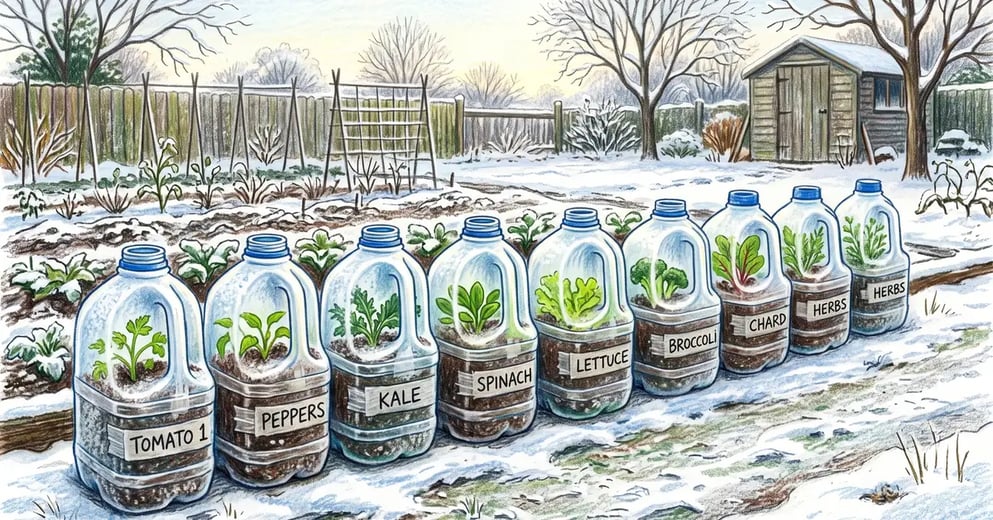
Winter sowing means planting seeds in a covered container, setting it outside in the middle of winter, and walking away. The container works as a miniature greenhouse. Snow and rain water it, freeze-thaw cycles break seed dormancy, and in spring you have seedlings that have never seen the inside of your house. soil blocks instead of pots
No grow lights. No heat mat. No shelf of leggy seedlings under a shop light in February, and no hardening off, because the plants were already outside.
The method was popularised by gardener Trudi Davidoff in the 1990s and has since been picked up by extension services across the northern US. It is now the standard recommendation for native perennials and pollinator plants, which is where it does its best work.
What this guide covers:
- The container build, step by step, including the two details people get wrong
- Why cold matters, and how many weeks specific species actually need
- What to sow, and the crops that are a waste of a jug
- The failure modes: cooking, washing out, premature germination
- How it compares with starting seeds indoors under lights
Key Takeaway
Winter sowing is not a way to get an earlier harvest. It is a way to get tougher seedlings for less money and less fuss, and to germinate native perennials that will not sprout without a cold winter. If you want early tomatoes, you still need lights.
How Do You Set Up a Winter Sowing Jug?
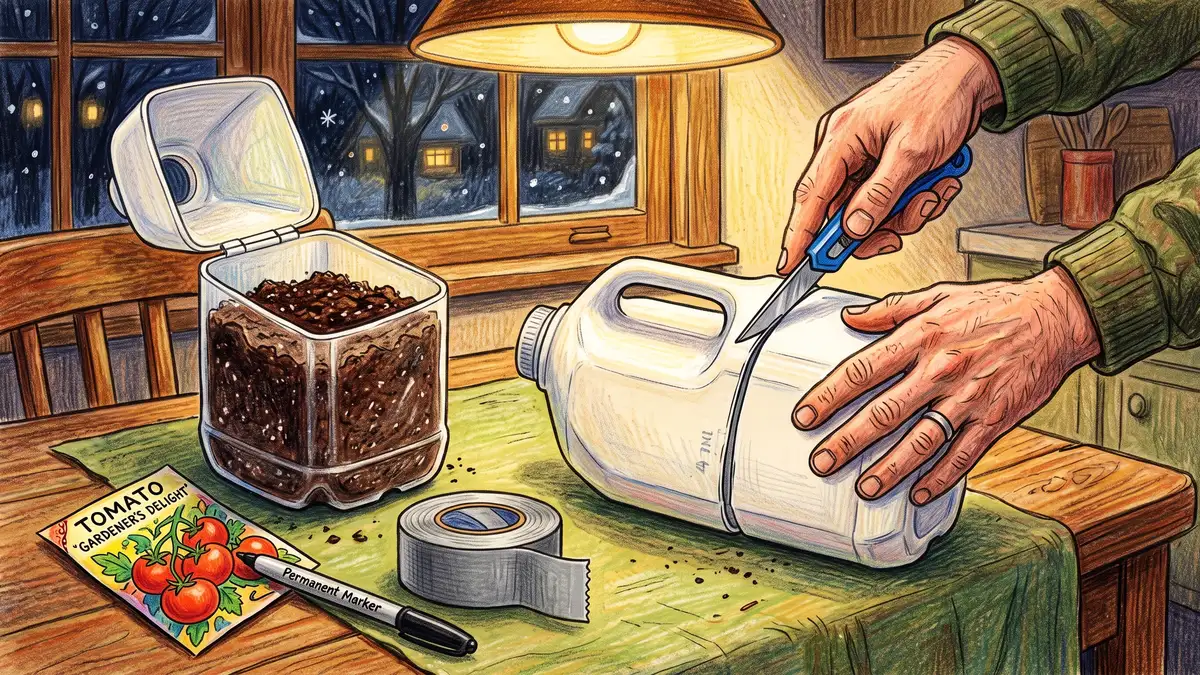
The whole build takes about five minutes per container once you have a rhythm.
Wash the jug and throw away the cap
Warm soapy water, rinse well. The cap goes in the recycling: the open neck is your ventilation and lets rain and snowmelt in. This is the detail people most often get wrong, and a capped jug will cook its seedlings on the first sunny day.
Cut it almost all the way around
Lay the jug on its side and cut horizontally around the middle with a serrated knife or box cutter, leaving about 1.5 in. (4 cm) uncut under the handle. That strip is the hinge, so the top folds back like a lid instead of coming off entirely.
Punch generous drainage holes
Four to six holes in the base with a screwdriver, knife or drill. Skip this and the jug fills with meltwater and the seeds rot. Extension guidance is blunt about it: without drainage, the seeds drown.
Add 3 in. of moistened potting mix, then sow
Potting mix, not garden soil, which compacts and carries weed seed. Moisten it before it goes in. Sow at the depth on the packet and firm lightly. Our DIY container mix recipe works well here.
Label twice, tape shut, set it outside
Permanent marker fades in UV over three months. Write the label twice, once on a tag pushed into the mix and once on the outside, and use a paint pen or laundry marker if you have one. Tape the cut closed with clear duct tape, then put the jug somewhere sunny and open to the weather.
Do Not Put Them Under Cover
A covered porch, a carport or the lee of the house feels protective, and it ruins the method. The jugs need rain and snow falling directly on them, because that is the only watering they get for three months. University of Minnesota Extension puts it simply: place them in a sunny, protected spot where snow and rain will keep the seeds moist. Protected from wind, not from weather.
Why Does the Cold Matter?
Many seeds are built not to trust a warm week in January. A perennial that germinated during a February thaw would be killed by the next freeze, so it evolved a chemical lock: the embryo stays dormant until it has counted enough cold, wet weeks to be confident that winter is genuinely over. That is physiological dormancy, and cold moist stratification is how you pick the lock.
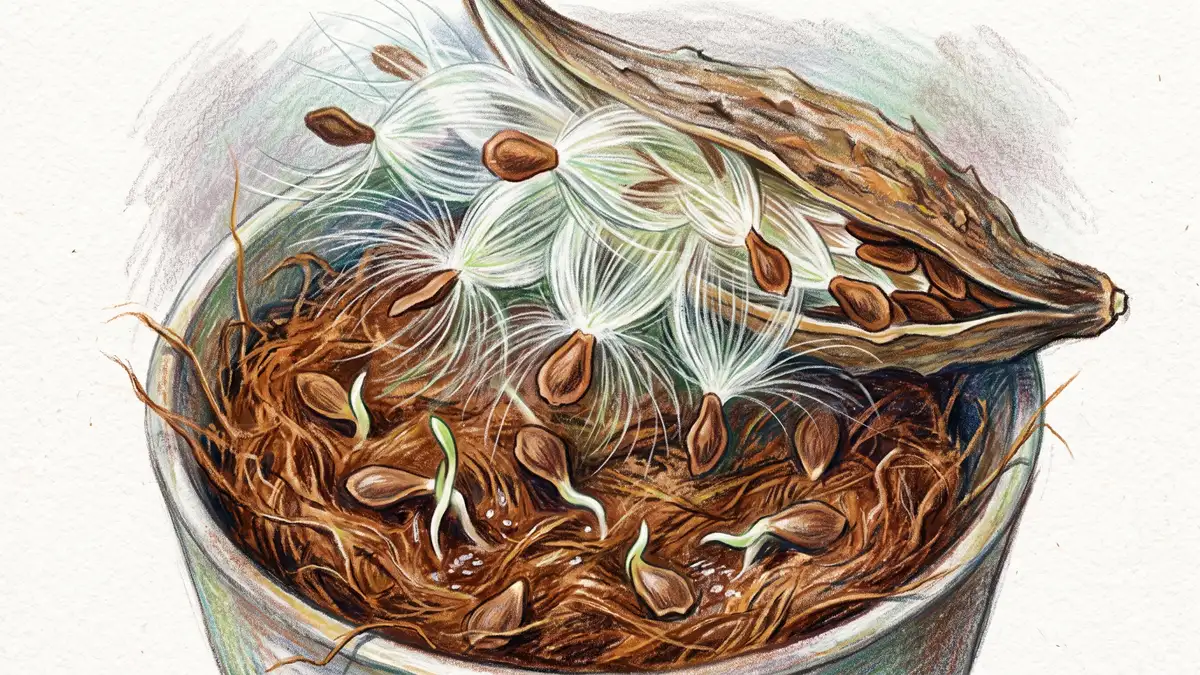
The effective range is roughly 33 to 40°F (0.5 to 4°C) with moisture present, which is exactly what a jug of damp potting mix sitting in a snowbank provides for months at a stretch. It is the same treatment as a bag of seed in the refrigerator, except the weather does it for free and at scale.
How long depends on the species, and the numbers are more interesting than the usual "give it a few weeks" advice. Milkweed shows measurable improvement after just one week, and research indicates germination can keep climbing out to about nine weeks. Echinacea is usually given four to six weeks. Winter sowing sidesteps the guesswork by giving everything the full season.
| Species | Cold Needed | Winter Sow? | Notes |
| Swamp milkweed (Asclepias incarnata) | 3-9 weeks | Yes | Germination keeps improving out to ~9 weeks |
| Purple coneflower (Echinacea purpurea) | 4-6 weeks | Yes | Reliable and forgiving |
| Wild bergamot (Monarda fistulosa) | Cold moist | Yes | Bumblebees and hummingbirds |
| Black-eyed Susan (Rudbeckia hirta) | Cold moist | Yes | Fast, high germination |
| Blazing star (Liatris spicata) | Cold moist | Yes | Monarch and swallowtail magnet |
| Lettuce, kale, spinach | None | Yes | Sow Feb-Mar; cold tolerant, not cold dependent |
| Tomato, pepper, basil, squash | None | No | Frost-tender; no advantage over indoor starting |
Sources: University of Minnesota Extension, Jug It and Grow: Winter Sowing for Pollinator Gardens, Illinois Extension, Seed Stratification: What Seeds Require Cold Treatment, Iowa State University Extension, Milkweed Cold Stratification Process
Why This Works: Use and Value Renewable Resources
A grow-light setup replaces winter with electricity: bulbs for daylength, a mat for warmth, a fan for the wind that would have thickened the stems. Winter sowing does the opposite. It uses the cold as an input rather than treating it as the obstacle, which is the permaculture move of asking what a site already supplies for free before buying a substitute. Our practical guide to permaculture works through more examples of that same question.
When Should You Start, and What Goes Wrong?
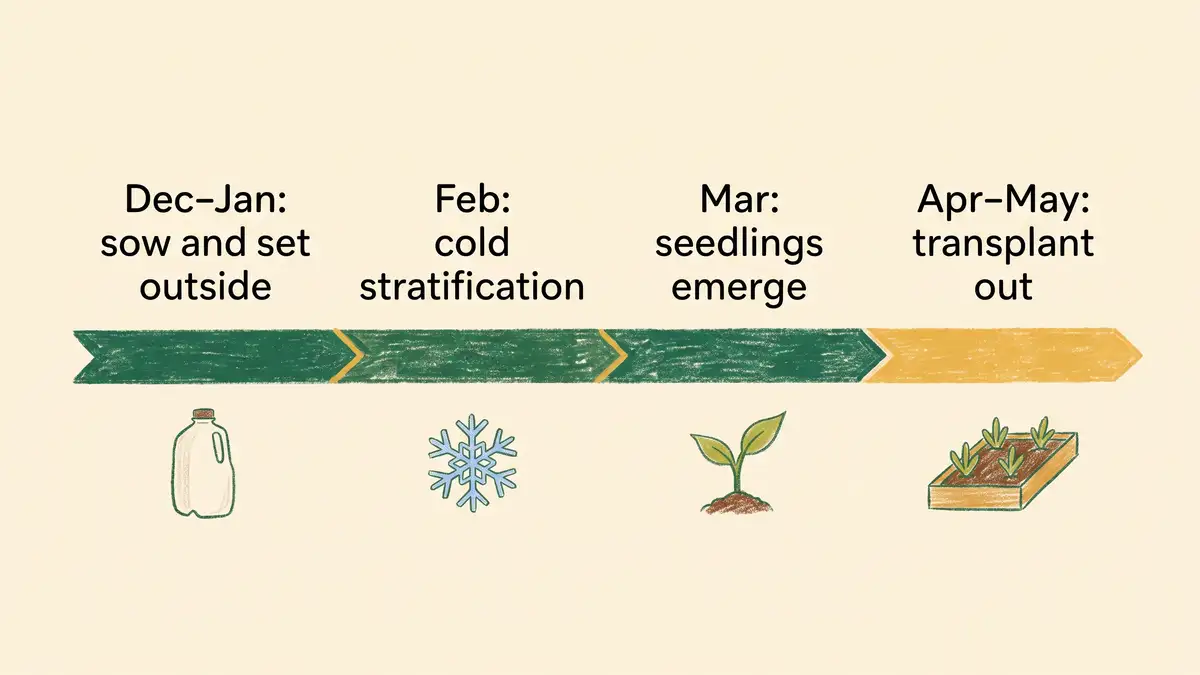
January, for anything that needs cold. University of Minnesota Extension recommends January for perennials requiring stratification and continuing into March for hardy annuals while nights stay cold. Illinois Extension makes the same call, and adds the reason to wait rather than start in December: a warm December spell can trigger germination, and those seedlings will not be hardy enough to survive when the temperature drops again.
That is the single biggest failure mode, and it is worth stating plainly. Early is worse than late here. A jug sown in mid-January in zone 5 will do better than the same jug sown at Thanksgiving.
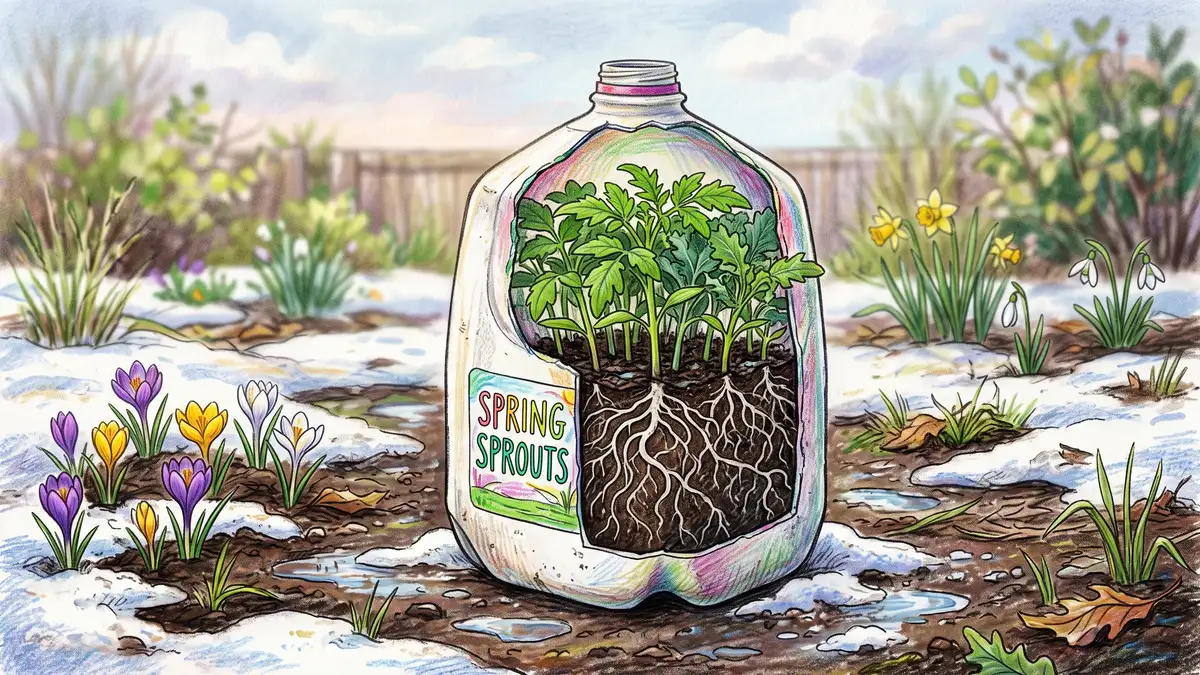
The other three things that go wrong:
Cooking. A sealed jug in late February sun can climb 40°F above ambient in an hour. The open cap neck usually handles it, but once seedlings are up, check on a sunny day and vent by folding the top back.
Drying out. Once spring warmth arrives, the jugs go from self-watering to needing attention every couple of days. Check for condensation on the inside: if there is none in the morning, water it.
Rodents. Mice will chew into a jug for seed. Taping the cut line thoroughly and raising jugs onto a bench or pallet solves most of it.
How Does It Compare to Starting Seeds Indoors?
Not a fair fight on every measure, so here is the honest split.
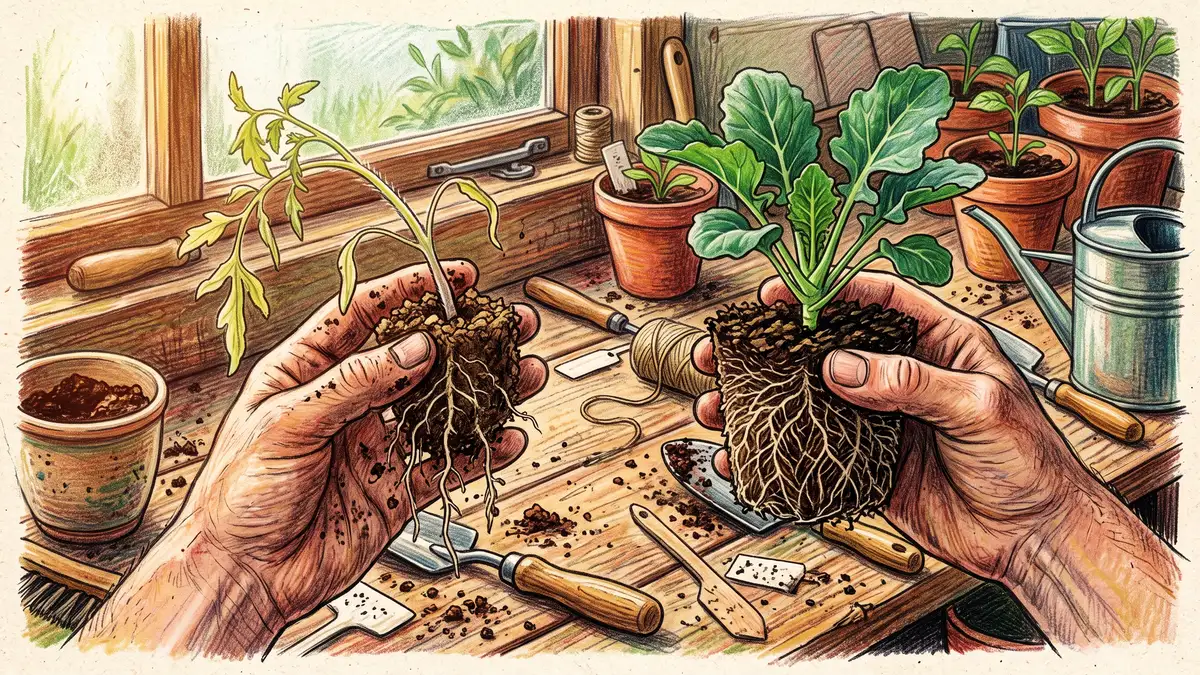
Indoor starting wins on timing and on tender crops. If you need a six-week-old tomato on your last frost date, a shelf and a light does that and a milk jug cannot.
Winter sowing wins on cost, space, labour and seedling quality. There is no lighting rig, no heat mat, no electricity, and no windowsill queue. And the seedlings come out visibly different: short-jointed, thick-stemmed and dark, because they grew in real light with real temperature swings. They also skip hardening off entirely, which is the step most gardeners rush and where the most transplants are lost.
Practical division: lights for tomatoes, peppers, eggplant and basil. Jugs for every native perennial, hardy annual and cool-season green, which is where a pollinator planting gets expensive fast if you buy plugs. Fifty coneflowers from a $4 seed packet is the argument in one line, and it is the same logic as our guide to building a garden on a budget.
Key Takeaway
Do it in January, use potting mix, punch real drainage holes, throw the cap away, and put the jugs where the snow lands on them. Those five things decide whether it works. Everything else is detail.
Frequently Asked Questions
What is winter sowing?
Planting seeds in soil-filled containers, usually recycled milk jugs, and setting them outdoors in winter. The container acts as a miniature greenhouse: it protects seed from birds and rodents while letting rain and snow through the open top. Natural freeze-thaw cycles provide the cold moist stratification many perennials need to break dormancy, and the seeds germinate on their own schedule as spring arrives. No indoor lights, heat mats or windowsill space are required.
When should you start winter sowing?
January for perennials that need cold stratification, continuing into March for hardy annuals as long as nights stay cold. Tender annuals and warm-season vegetables can be sown in the same containers in March or April, since they do not need a cold period. Resist starting in December: a warm spell can trigger germination, and seedlings that come up early will not be hardy enough to survive the next hard freeze. Later is safer than earlier.
What seeds can you winter sow?
Native perennials are the strongest case, since many will not germinate without cold: purple coneflower, swamp milkweed, wild bergamot, black-eyed Susan and blazing star among them. Hardy annuals such as larkspur, poppies, bachelor's buttons and snapdragons work well, as do cool-season vegetables like lettuce, kale, spinach and brassicas sown a little later. Skip tomatoes, peppers, basil, cucumbers and squash: they are frost-tender, gain nothing from cold, and are better started indoors.
Do you have to harden off winter-sown seedlings?
Barely, which is one of the method's real advantages. Seedlings raised in a jug outdoors have already experienced full sun, wind and temperature swings, so they do not carry the soft tissue that indoor seedlings develop under stable light and warmth. The usual practice is simply to open the container fully for a few days before transplanting, on the first genuinely mild spell, and then plant out. Compare that with the seven to ten days of shuttling indoor trays in and out that conventional transplants need.
Why do my winter sown seeds not germinate?
Four common causes, roughly in order. No drainage holes, so the mix waterlogged and the seed rotted. Garden soil instead of potting mix, which compacts to a brick. Containers kept under cover, so they never received the moisture that stratification requires. Or the species simply needs longer than one winter, which is true of several natives and is why some gardeners leave jugs out for a second season rather than emptying them. If nothing is up by late spring, our guide to cold-treating stubborn seed covers the refrigerator method as a backup, and the companion planting chart helps you plan where the survivors go.
Get the Weekly Dig
One practical permaculture guide a week, written for gardeners who do this on weekends: permaculture design for real backyards. Free, no spam, unsubscribe any time.
Join the Weekly DigResources
- University of Minnesota Extension, Jug It and Grow: Winter Sowing for Pollinator Gardens
- Penn State Extension, Starting Seeds in Winter
- Illinois Extension, How to Try Winter Sowing
- Illinois Extension, January and February Are Prime Time for Winter Sowing
- Michigan State University Extension, Winter Sowing in Containers for Michigan Gardeners
- University of New Hampshire Extension, Winter Seeding: A Shortcut to Spring?
- University of Wisconsin Extension Dane County, Winter Sowing Native Wildflower Seed
- Illinois Extension, Seed Stratification: What Seeds Require Cold Treatment
- Iowa State University Extension, Milkweed Cold Stratification Process
- Iowa State University Extension, How to Grow Perennials From Seed
- Xerces Society, Milkweeds: A Conservation Practitioner's Guide