
You have probably seen the headlines: healthy soil could help pull carbon out of the atmosphere and slow climate change. It sounds almost too convenient, a climate solution that also happens to grow better tomatoes. The reassuring part is that the core science is real, well documented by the USDA and soil researchers, and the actions are things you can start in your own backyard this weekend. how to verify soil carbon gains why peat harvesting releases stored carbon terra preta carbon that has lasted a thousand years
The honest part, which most articles skip, is that your garden alone will not reverse climate change. What it can do is stop being part of the problem and start being a small, genuine part of the solution, while building the kind of living soil that makes everything else you grow healthier. Here is how soil carbon sequestration actually works and what to do about it.
What you'll learn:
- How plants move carbon from the air into stable soil
- Why soil holds more carbon than the atmosphere and all plants combined
- The handful of practices that actually build soil carbon
- An honest look at what a home garden can and cannot do for the climate
Key Takeaway
Soil carbon sequestration is the process of plants capturing atmospheric carbon and storing it underground as stable soil organic matter. You build it by keeping soil covered, keeping living roots in the ground, disturbing it as little as possible, and feeding it organic matter. The climate co-benefit is real but modest; the soil-health benefit is immediate.
How Does Soil Actually Store Carbon?
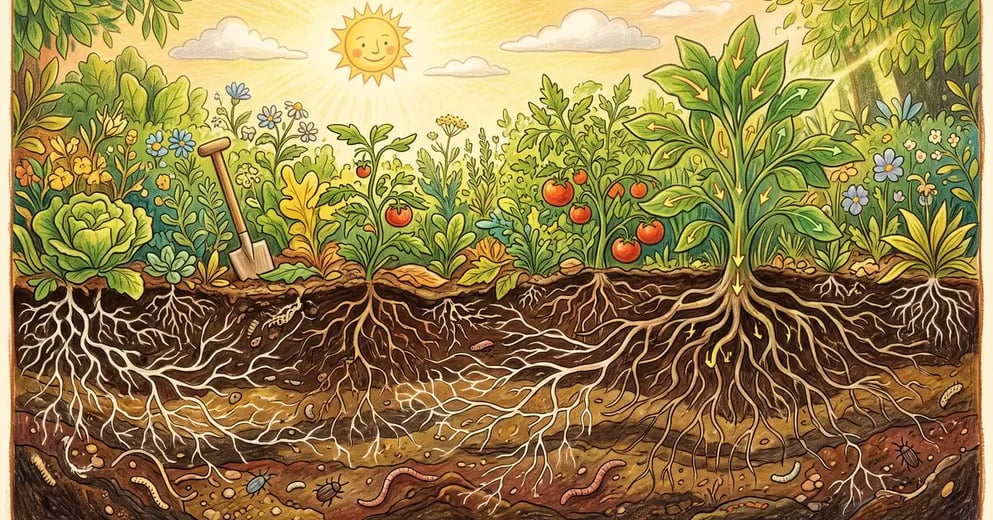
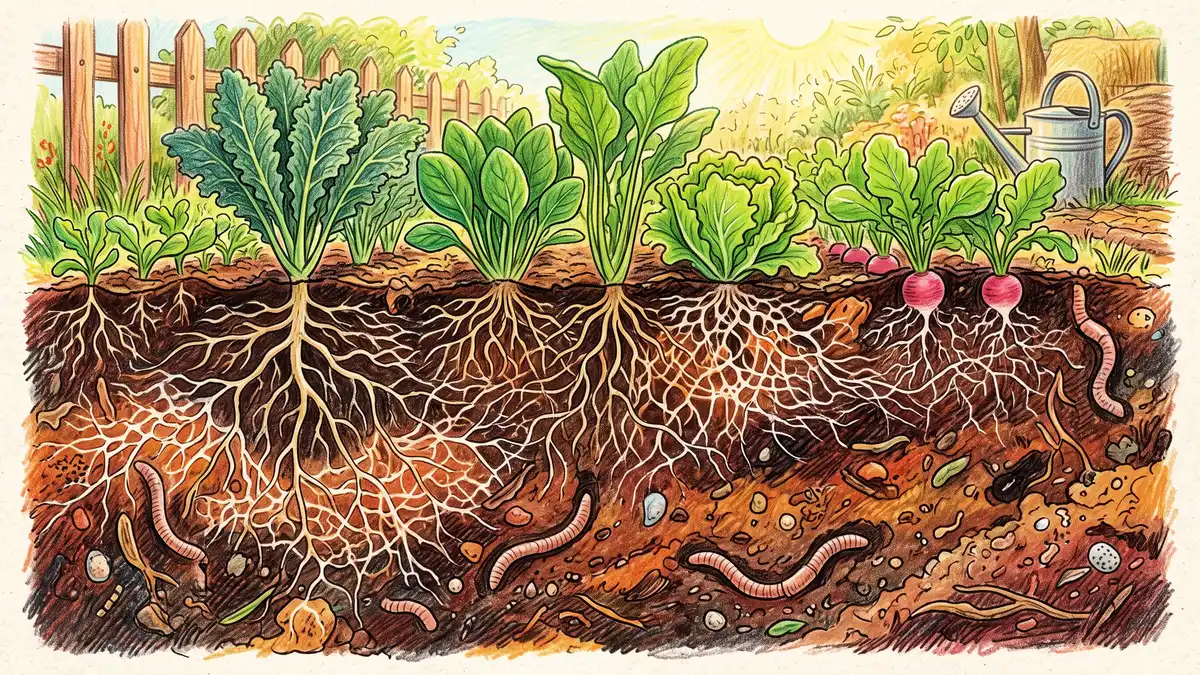
It starts with photosynthesis, but the interesting part happens underground. Plants pull carbon dioxide from the air and use sunlight to build sugars. Rather than keeping all of it, a plant pushes a large share of that carbon, often 20 to 40%, down through its roots as "liquid carbon": sugary root exudates that feed the microbes and fungi living around the roots.
Those microbes are the real carbon bankers. As they consume the sugars and later die, their bodies and byproducts become part of the dark, stable organic matter we call humus. One standout is glomalin, a sticky glycoprotein produced by mycorrhizal fungi that USDA Agricultural Research Service scientists identified as a major, long-lived store of soil carbon. Roughly 58% of soil organic matter is carbon, according to the USDA NRCS, so every bit of humus you build is largely carbon locked away.
The scale is genuinely surprising. The world's soils hold on the order of 2,500 gigatons of carbon, roughly three times the amount in the atmosphere and about four times the amount held in all living vegetation, as summarized by Nature Education. That makes soil the largest carbon reservoir on land, which is exactly why keeping it intact matters so much. When you build living soil, you are not just feeding plants; you are joining the biggest terrestrial carbon cycle there is. Our soil health guide goes deeper on the biology.
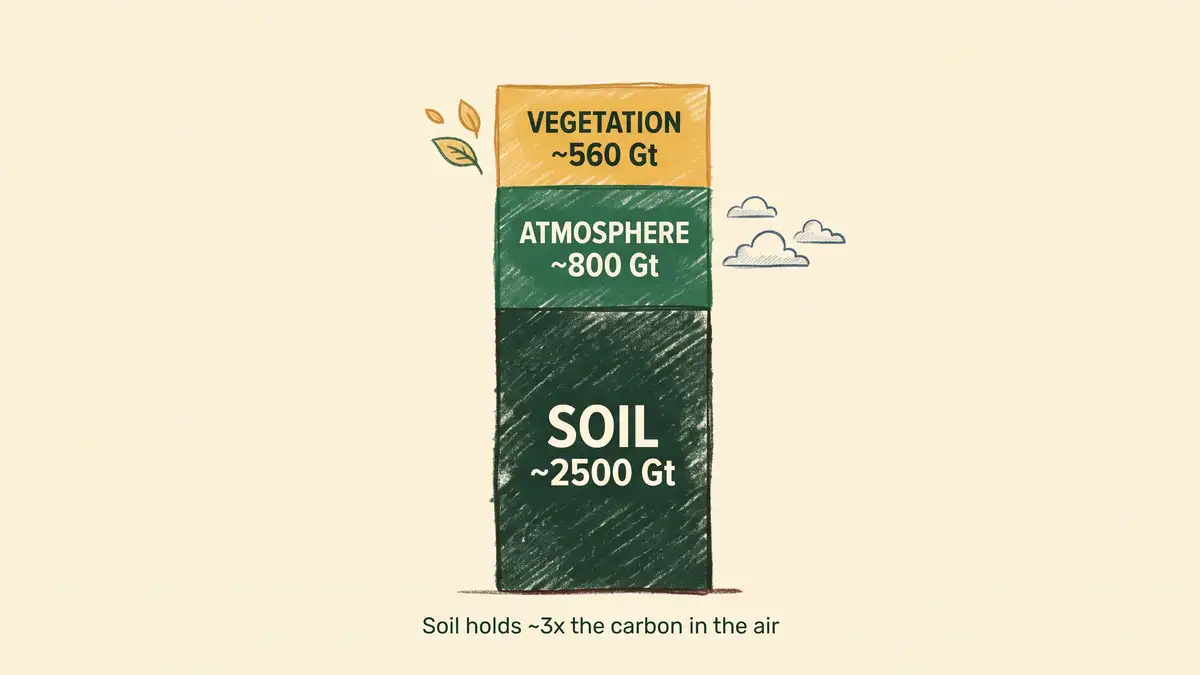
| Carbon Pool | Approx. Size | Relative Scale |
| Soils | ~2,500 Gt | Largest land store |
| Atmosphere | ~800 Gt | About one-third of soil |
| Living vegetation | ~560 Gt | About one-fifth of soil |
Sources:
Why This Works: Closing the Carbon Loop
In a natural ecosystem, carbon flows in a loop: air to plant to soil to microbe and back. Industrial agriculture broke that loop by baring and tilling soil, which oxidizes stored carbon and sends it back to the sky. Regenerative gardening simply reconnects the loop. Every practice below is really one idea, keep the living system running, so carbon keeps flowing downward instead of up.
What Practices Build Soil Carbon?
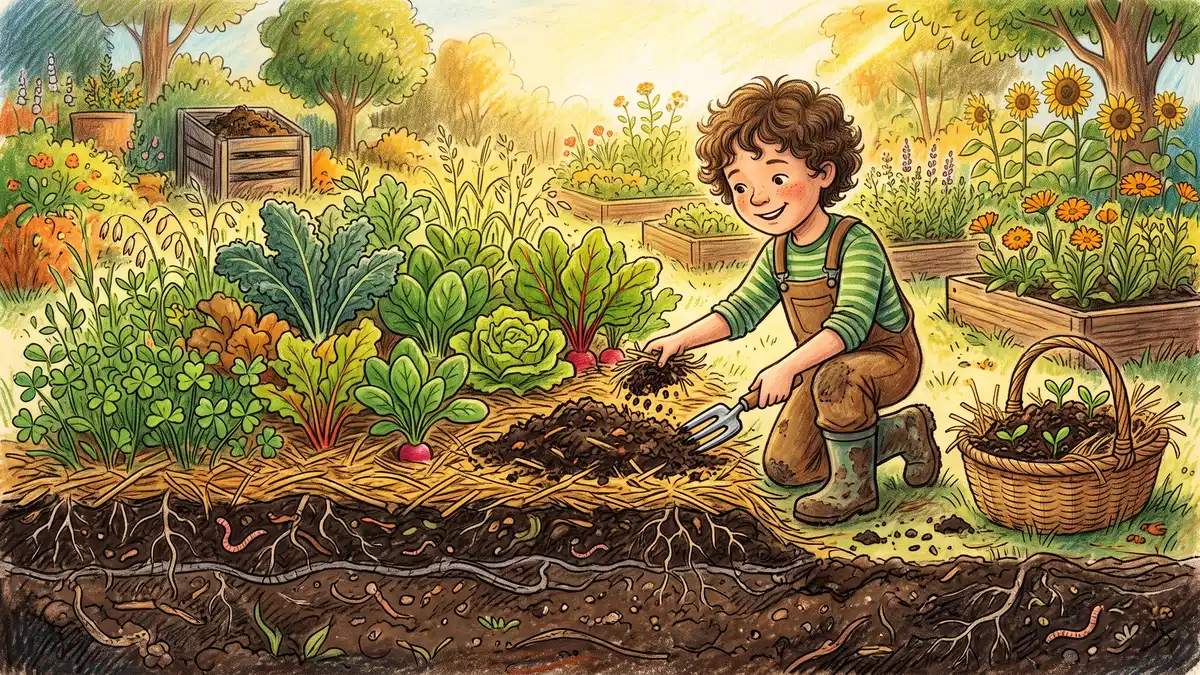
Four habits do most of the work, and none of them require special equipment. The IPCC's report on climate change and land identifies soil carbon management as one of the more cost-effective land-based ways to reduce atmospheric carbon, and the same principles scale right down to a raised bed.
Stop tilling
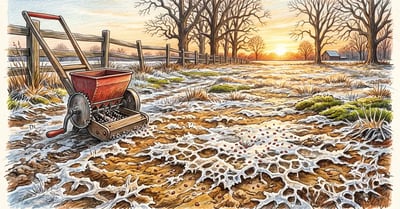
Tilling floods soil with oxygen, which lets microbes burn through stored carbon and release it as CO2. Going no-dig protects the fungal networks and humus that hold carbon in place, as USDA research on no-till confirms.
Keep living roots in the ground
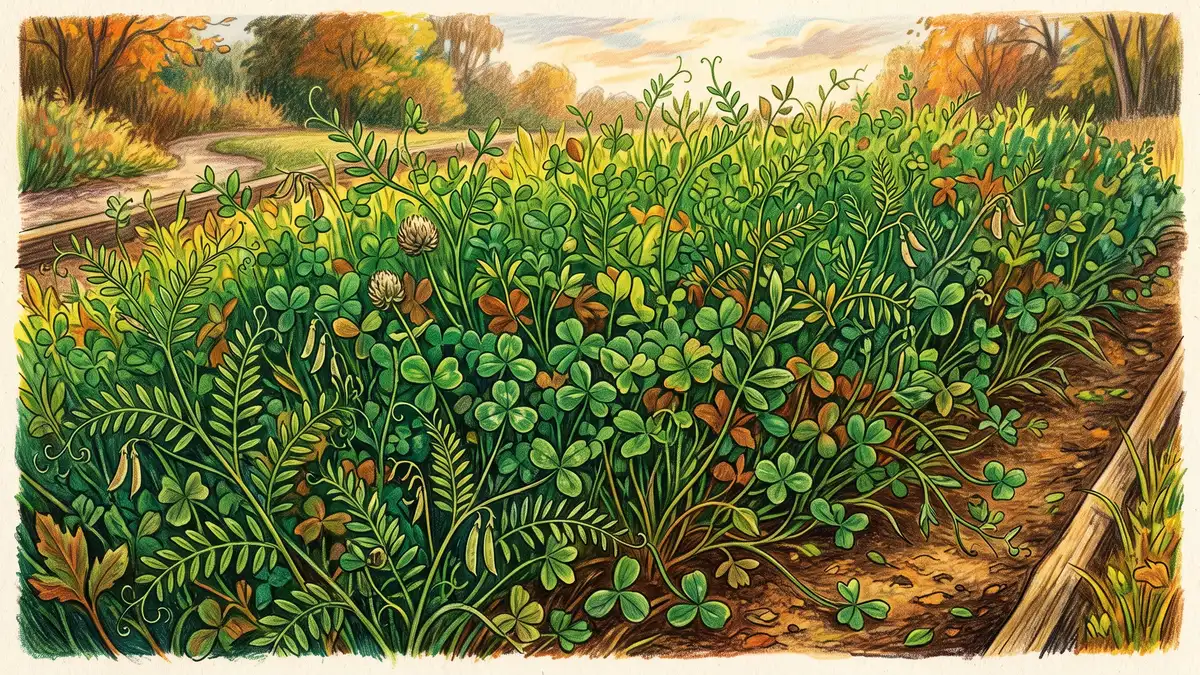
Bare soil sequesters nothing. Plant cover crops in the off-season and choose perennials where you can, so roots are always feeding carbon to the soil, even in winter.
Keep the soil covered
Mulch with leaves, straw, or wood chips. Cover protects soil life from heat and erosion and slowly adds its own carbon as it breaks down.
Feed it organic matter
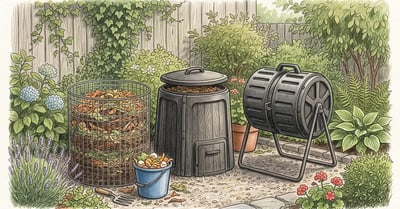
Add compost. It directly imports carbon and, more importantly, fuels the soil food web that builds stable humus. This is where your kitchen scraps come full circle.
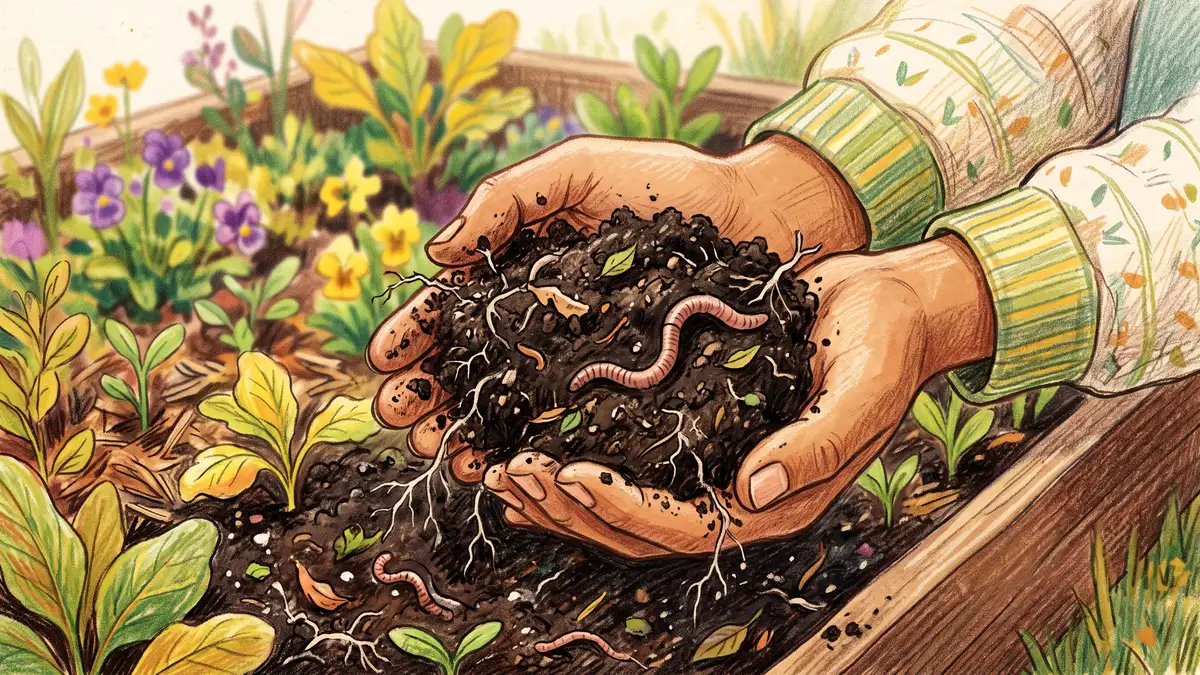
There is a bonus that lands closer to home than the climate. Building soil organic matter dramatically improves how much water your soil can hold: the NRDC, citing NRCS figures, notes that each 1% increase in soil organic matter can help an acre of soil hold roughly 20,000 more gallons of water. That means a garden that shrugs off drought and needs less irrigation. The long-running Rodale Institute Farming Systems Trial, running since 1981, has documented how regenerative organic systems build soil carbon while staying productive. If you already practice no-dig gardening, you are most of the way there.
How Much Difference Does a Garden Really Make?
This is where honesty matters more than hype. A single home garden sequesters a modest amount of carbon, and soils eventually reach a saturation point where they stop absorbing more. Gains are also reversible: till your bed or leave it bare, and the carbon you banked goes straight back to the atmosphere. Anyone promising your vegetable patch will offset a transatlantic flight is overselling it.
What is fair to say is that the global potential is significant when many people and farms act together. That is the thinking behind the international "4 per 1000" initiative, launched at the 2015 Paris climate talks, which points out that increasing the carbon in the world's soils by just 0.4% per year could meaningfully slow the rise of atmospheric CO2. Your garden is one small deposit in that account, and it comes bundled with better yields, less watering, and healthier food. The same regenerative logic drives high-carbon systems like carbon sequestration in syntropic systems, and it all begins with composting your own organic matter.
Watch Out for Carbon Hype
Be skeptical of products or programs claiming huge, certain carbon offsets from home gardening or single soil amendments. Soil carbon is slow to build, hard to measure, and easy to lose. Focus on the practices, not the marketing math, and let the climate benefit be a welcome side effect of great soil.
Frequently Asked Questions
How is carbon stored in soil?
Plants capture carbon dioxide from the air through photosynthesis and send a large share of that carbon, often 20 to 40%, down through their roots as sugary exudates. Soil microbes and mycorrhizal fungi feed on these sugars and convert the carbon into stable organic matter, or humus. A fungal glue called glomalin, identified by USDA scientists, is one long-lasting store. About 58% of soil organic matter is carbon, so building humus is effectively locking carbon underground for years to decades.
Can my home garden really fight climate change?
To a small but genuine degree, yes. A single garden sequesters a modest amount of carbon, and the effect reverses if the soil is tilled or left bare. Your garden will not offset a large carbon footprint on its own. But when many gardeners and farmers build soil carbon together, the global potential is significant, which is the basis of the international "4 per 1000" initiative. The honest framing is that your garden stops adding to the problem and makes a small positive contribution, alongside real benefits like drought resilience.
Does no-till or no-dig gardening store more carbon?
Yes. Tillage introduces oxygen that lets microbes rapidly burn through stored soil carbon and release it as CO2, and it also destroys the fungal networks that help stabilize carbon. No-dig methods keep that structure intact, so more carbon stays put. USDA research on no-till supports this, and no-dig also protects earthworms, improves water infiltration, and reduces weeds. It is one of the single most effective changes a home gardener can make for soil carbon.
How do I increase organic carbon in my soil?
Focus on four habits: stop tilling, keep living roots in the ground year-round with cover crops and perennials, keep the soil surface covered with mulch, and add compost regularly. Each one either adds carbon directly or keeps the soil biology running so it can build stable humus. Adding compost and mulch gives the fastest visible results, while no-dig and continuous plant cover protect what you have built. Consistency over several seasons matters more than any single amendment.
How much water can healthy soil hold?
Quite a lot more than degraded soil. According to figures from the USDA NRCS cited by the NRDC, each 1% increase in soil organic matter can help an acre of soil hold roughly 20,000 additional gallons of water. For a home gardener, that translates into beds that stay moist longer between waterings, tolerate dry spells better, and shed less runoff during heavy rain. It is one of the most practical reasons to build soil carbon, entirely separate from the climate benefit.
Get the Weekly Dig
One practical permaculture guide a week, written for gardeners who do this on weekends: building living soil without buying it in bags. Free, no spam, unsubscribe any time.
Join the Weekly DigResources
- USDA NRCS — Soil Organic Matter fact sheet
- Nature Education — Soil Carbon Storage
- USDA Agricultural Research Service — Glomalin and soil carbon
- USDA Climate Hubs — No-Till: Science and Practice
- NRDC — Organic Matter Can Improve Your Soil's Water Holding Capacity
- Rodale Institute — Farming Systems Trial
- IPCC — Special Report on Climate Change and Land
- University of Arizona Extension — Cover Crops and Carbon Sequestration