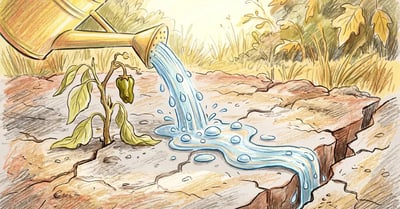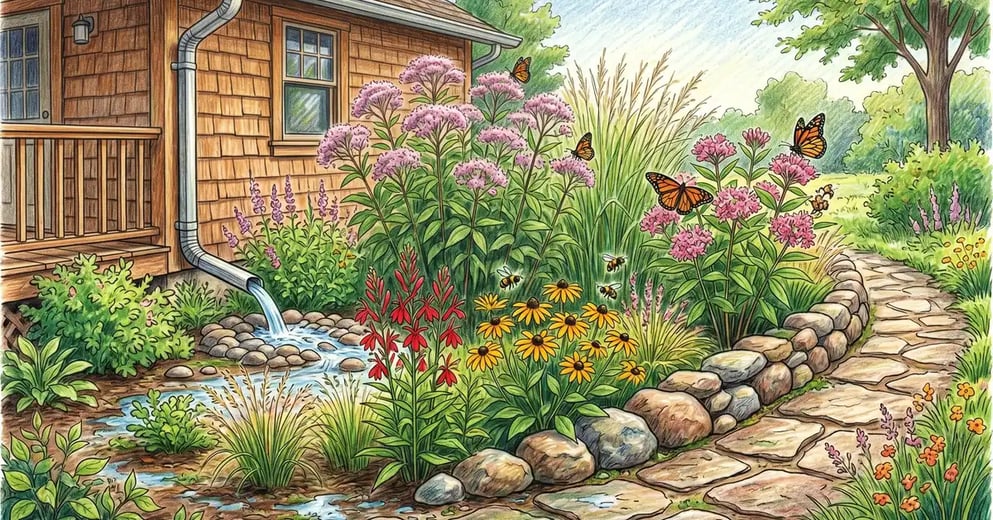

A 1,000 sq ft (93 sq m) US asphalt roof sends roughly 600 gallons (2,270 liters) of water into the nearest storm drain every time 1 inch (2.5 cm) of rain falls. Multiply by the 30-plus inches that hit most US states each year and you are dumping 18,000+ gallons (68,000+ liters) of free water annually. A rain garden catches that runoff, slows it down, spreads it across a planted basin, and sinks it into the ground where it belongs. greywater systems for the garden Here is how to design one that actually works.
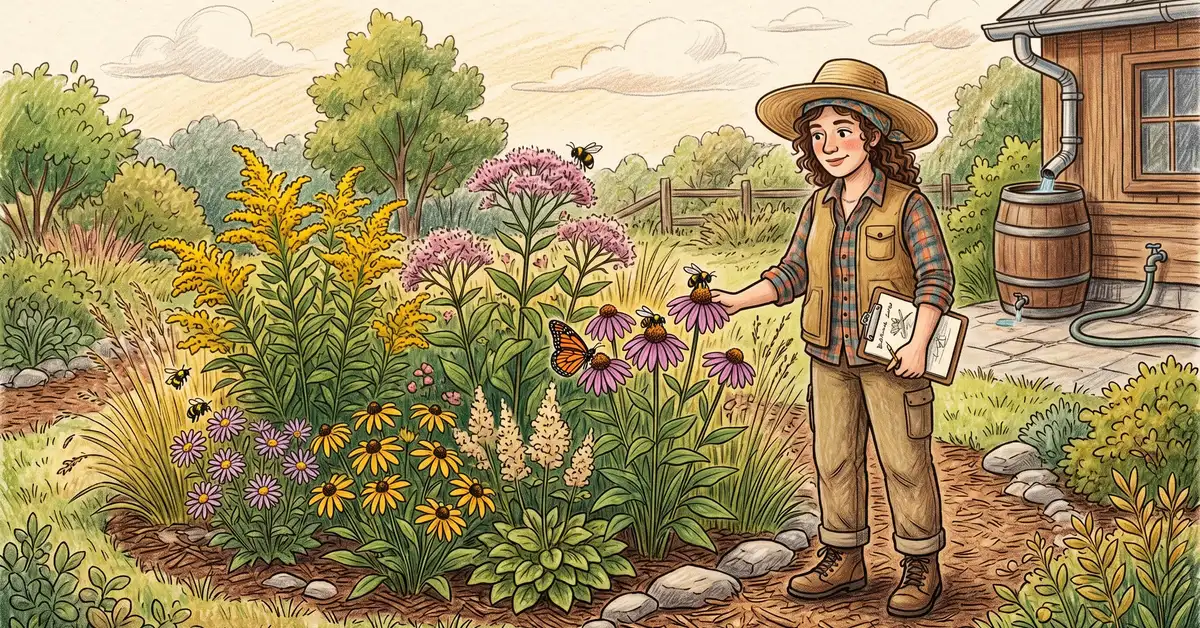
Rain gardens are the residential entry point into permaculture water management. They apply Bill Mollison's three water principles (slow it, spread it, sink it) on a scale that fits a regular yard, take one weekend to build, qualify for stormwater credits in many US cities, and feed a pollinator and bird population that turf lawn cannot. The science is well documented by the EPA and state extension services. The plant lists are widely published by Audubon and the Xerces Society. The math is straightforward.
What you will get below: the runoff math you need before you dig, the 5-step design process, the 3-zone planting framework, native plant species lists for US zones 4 to 9, the sites and conditions to avoid, and how this fits within the broader permaculture water management framework that includes swales, bioswales, dry wells, and rainwater harvesting.
Sources: EPA Soak Up the Rain program; University of Wisconsin Extension rain garden manuals; University of Minnesota Extension stormwater publications.
The permaculture water management framework

Bill Mollison's Permaculture: A Designers' Manual (Tagari, 1988) codifies water as one of the highest-priority design elements in any system. The three operating principles are simple: slow water down, spread it across the land, and sink it into the ground. Brad Lancaster expanded this in Rainwater Harvesting for Drylands and Beyond (Volumes 1 and 2) into 8 principles starting with "begin with long and thoughtful observation" and ending with "continually reassess your system."
Geoff Lawton's swale work at Greening the Desert in Jordan demonstrates the same framework at landscape scale: berms and ditches that catch runoff on contour, force it to infiltrate, and grow productive food forests on what was bare desert. A residential rain garden is the small-scale, single-house version of the same idea.
The reason this matters is the difference between two outcomes. Without intervention, rain hits an impervious surface (roof, driveway, road) and accelerates into a storm drain, eroding soil along the way and carrying pollutants into local waterways. With intervention, the same rain slows, spreads, and sinks where it falls, recharging groundwater, feeding soil biology, and growing plants instead of overloading the storm sewer.
The 5-step design process
Calculate your runoff (week 1)
Measure your contributing drainage area in square feet. For a roof, multiply length by width of the section that drains to a single downspout. Each 1,000 sq ft of US asphalt-shingle roof sheds about 600 gallons (2,270 liters) per 1 inch of rain. The EPA Soak Up the Rain calculator walks through the math.
Size the garden (20 to 30 percent rule)
Make the rain garden 20 to 30 percent of the drainage area. A 1,000 sq ft roof needs a 200 to 300 sq ft (19 to 28 sq m) garden. Sandier soils can use 20 percent. Clay-heavy soils need closer to 30 percent. The University of Wisconsin Extension Rain Gardens: A How-To Manual for Homeowners is the canonical US sizing reference and is available as a free download.
Site the garden (location rules)
Place at least 10 ft (3 m) from any building foundation, downslope of the runoff source, and on flat to gently sloping ground (less than 12 percent slope). Avoid septic drain fields, utility easements, and within 25 ft (7.5 m) of mature tree trunks. Run a percolation test: dig a 12 inch (30 cm) hole, fill with water, time the drain rate. Under 24 hours is good. Over 48 hours means you need soil amendment or a different site.
Build the basin (one weekend)
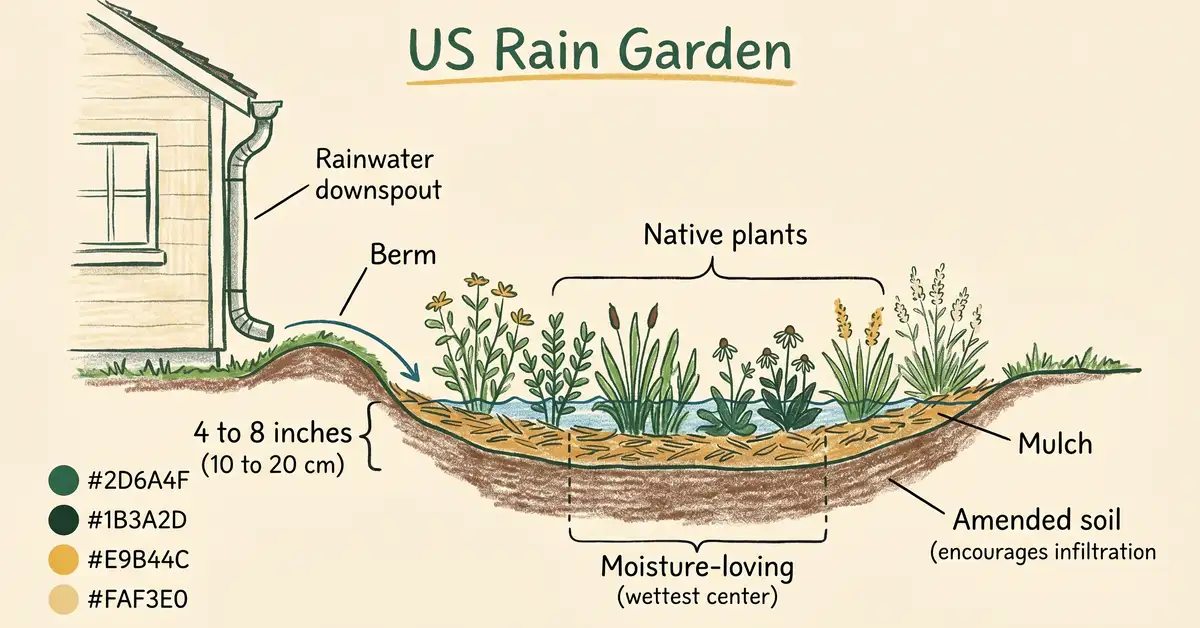
Dig a shallow depression 4 to 8 inches (10 to 20 cm) deep with gentle side slopes (3:1 or flatter). Pile the excavated soil into a curved berm on the downslope side, 6 to 12 inches (15 to 30 cm) tall, to hold the water in place. Amend the bottom 12 inches (30 cm) of soil with 30 percent compost and 20 percent coarse sand if your native soil is clay. Mulch with 2 to 3 inches (5 to 7.5 cm) of shredded hardwood after planting.
Plant in three zones (spring or fall)
Zone 1 in the center (wettest) gets water-tolerant species: cardinal flower, swamp milkweed, blue flag iris, joe-pye weed. Zone 2 transitional gets switchgrass, bee balm, black-eyed Susan. Zone 3 at the edges (driest) gets New England aster, little bluestem, prairie blazing star. Plant 1 plant per 1 to 2 sq ft (0.1 to 0.2 sq m). Use native species adapted to your USDA zone. Audubon publishes searchable native plant lists by zip code.
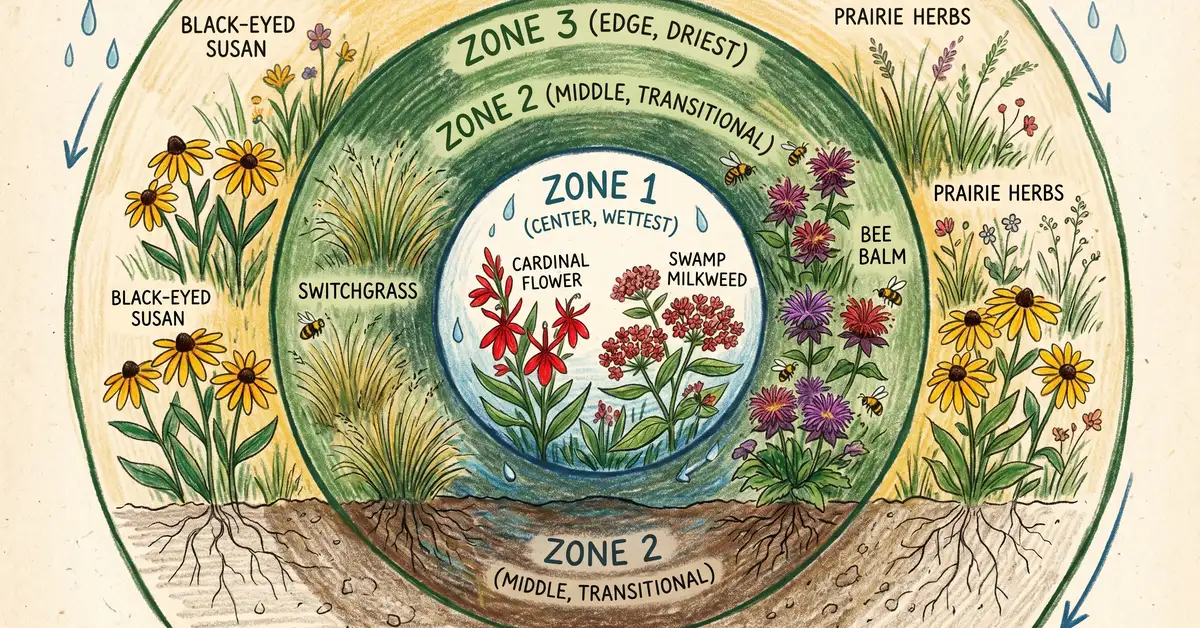
Why three zones matter
A rain garden is a wetland-to-prairie gradient compressed into 10 ft (3 m). The center holds water for 24 to 48 hours after rain (Zone 1, wet meadow species). The middle ring sees alternating wet and dry (Zone 2, transition species). The outer edge stays mostly dry (Zone 3, prairie species). Matching plants to their water tolerance is the difference between a rain garden that thrives for 30 years and one that becomes a weedy patch within 2 seasons.
The native plant lists for US zones 4 to 9
| Zone | Conditions | Recommended natives (US zone 4 to 9) |
| Zone 1 (Center) | Wettest, holds water 24 to 48 hr | Cardinal flower (Lobelia cardinalis), swamp milkweed (Asclepias incarnata), blue flag iris (Iris versicolor), joe-pye weed (Eutrochium purpureum), great blue lobelia (Lobelia siphilitica), turtlehead (Chelone glabra) |
| Zone 2 (Middle) | Alternates wet and dry | Switchgrass (Panicum virgatum), bee balm (Monarda didyma), black-eyed Susan (Rudbeckia hirta), wild bergamot (Monarda fistulosa), purple coneflower (Echinacea purpurea), milkweed (Asclepias tuberosa) |
| Zone 3 (Edge) | Driest, prairie-like | New England aster (Symphyotrichum novae-angliae), little bluestem (Schizachyrium scoparium), prairie blazing star (Liatris pycnostachya), goldenrod (Solidago spp.), butterfly weed (Asclepias tuberosa) |
Sources:; University of Minnesota Extension native plants for rain gardens.
Where not to put a rain garden
The percolation test is the gating step. Dig a 12 inch (30 cm) deep hole, fill with water, time how long it takes to drain completely. Less than 24 hours is excellent. 24 to 48 hours works with some amendment. Over 48 hours means heavy clay that will not drain fast enough to prevent mosquito breeding, and you need either heavy amendment with sand and compost, or a different site. University of Minnesota Extension's rain garden FAQ covers the percolation test protocol in detail.
The pollinator and bird math
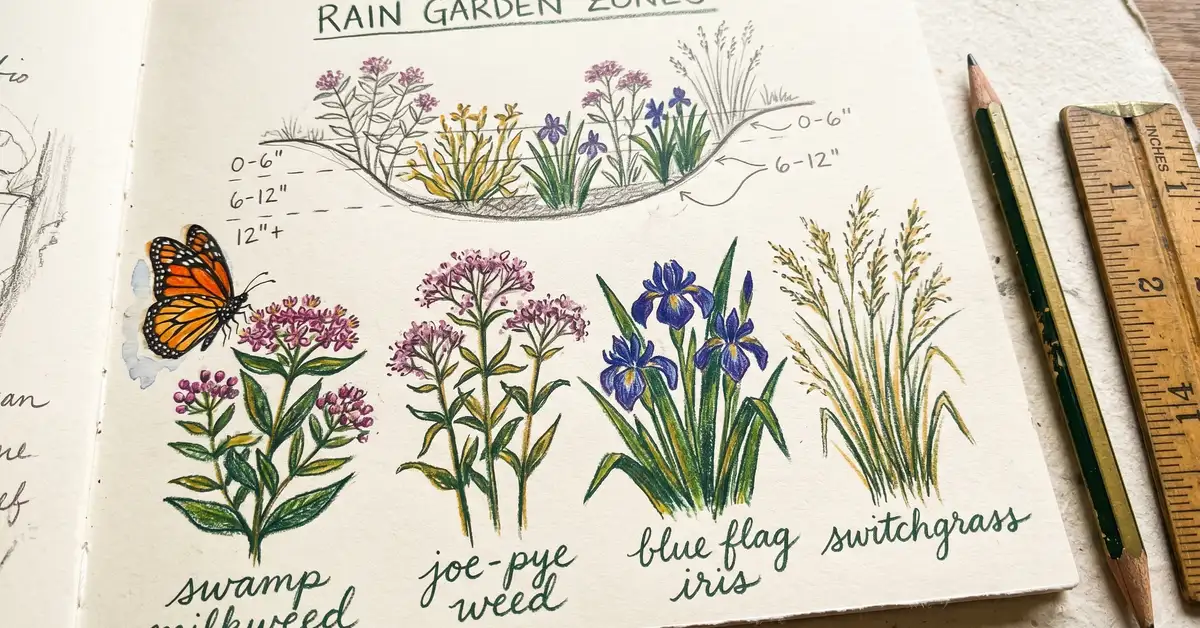
A rain garden planted with native species typically supports 8 to 10x more native bee diversity than the equivalent area of turf grass, plus 4 to 6x more bird species during nesting season. The Xerces Society and National Audubon Society's native plant guidance document these multipliers across decades of monitoring.
The mechanism is straightforward. Native bees and birds evolved alongside the plants on your local ecoregion list. Non-native ornamentals and turf grass provide little to no nectar, pollen, or seed for local species. A rain garden of native joe-pye weed, swamp milkweed, and switchgrass is a continuous summer-to-fall buffet for monarchs, native bees, hummingbirds, and seed-eating birds like goldfinches.
If you have read our piece on starting a permaculture community project, the rain garden is one of the smallest-scale entry points into the same broader principles: design for water, plant for pollinators, build for the long term.
Comparing the four water features
| Feature | Function | Best for |
| Rain garden | Contained basin, infiltrates one location | Residential yards, single downspout source |
| Bioswale | Linear channel, conveys + infiltrates | Along streets, parking lots, sidewalks |
| Swale (permaculture) | On-contour ditch + berm, food forest support | Sloping land, broader landscape |
| Dry well / French drain | Buried gravel pit or pipe, subsurface | Tight spaces where surface garden does not fit |
Sources: EPA Green Infrastructure guidance; USDA NRCS conservation practice standards.
US municipal incentive programs
Many US cities offer stormwater fee credits or cash incentives for residential rain gardens. Notable programs:
Minneapolis Minnehaha Creek Watershed District offers up to $5,000 per residential property for rain garden installation. See MCWD cost-share program.
Portland, Oregon's Bureau of Environmental Services runs the Clean River Rewards program with stormwater fee discounts of up to 35 percent for managing runoff on-site. See Portland Clean Rivers.
Washington DC's RiverSmart Homes program provides up to $1,200 in rebates for rain gardens, rain barrels, and permeable pavers. See DC DOEE RiverSmart Homes.
Philadelphia Rain Check program reimburses up to $2,000 for rain gardens, downspout planters, and depaving. See Philadelphia Water Department.
Check your municipal water authority and watershed district for current programs. Many programs also waive permits for residential installations under a threshold size (typically 500 sq ft / 46 sq m).
Maintenance: front-loaded, then minimal
Years 1 to 2 require active care: weekly weeding while natives establish, supplemental watering during droughts, mulch replenishment in spring. Plan on 4 to 6 hours per month during the first two growing seasons.
Years 3 to 5 the system stabilizes. Native plants out-compete weeds. Maintenance drops to 1 to 2 hours per month: spring cutback of last year's stems (leave seed heads through winter for birds), occasional weeding, mulch top-up every 2 to 3 years.
Years 5+ the rain garden runs itself with seasonal touch-ups. Cut back in early spring before new growth, divide overgrown clumps every 3 to 5 years, monitor that the basin still drains within 48 hours after rain. If drain rate slows, dig out a portion of the bed and amend the soil with sand and compost.
Get the Weekly Dig
One practical permaculture guide a week, written for gardeners who do this on weekends: permaculture design for real backyards. Free, no spam, unsubscribe any time.
Join the Weekly DigFrequently Asked Questions
What is a rain garden?
A shallow vegetated depression (4 to 8 inches / 10 to 20 cm deep) that captures, slows, and infiltrates stormwater runoff from roofs, driveways, and patios. Native deep-rooted plants filter pollutants. The EPA classifies it as green infrastructure.
How do I design a rain garden?
Five steps: calculate runoff, size at 20 to 30 percent of drainage area, site at least 10 ft from foundation downslope of runoff, dig 4 to 8 inches deep with berm on downslope side, plant in three zones from wettest (center) to driest (edges).
How does a rain garden fit permaculture water management?
It applies Mollison's three water principles: slow it, spread it, sink it. Lancaster expanded this to 8 principles in Rainwater Harvesting for Drylands and Beyond. It is a residential-scale version of swales used in landscape permaculture.
What plants should I use in a rain garden?
Natives in three zones. Zone 1 (wettest): cardinal flower, swamp milkweed, joe-pye weed. Zone 2: switchgrass, bee balm, black-eyed Susan. Zone 3 (driest): New England aster, little bluestem, prairie blazing star.
How big should a rain garden be?
20 to 30 percent of the drainage area. A 1,000 sq ft roof needs 200 to 300 sq ft of garden. Sandier soils 20 percent, clay 30 percent.
Where should I not put a rain garden?
Within 10 ft of a foundation, over a septic field, in low spots that already pool water, on heavy clay without amendment, within 25 ft of mature tree trunks, or on utility easements.
Will a rain garden breed mosquitoes?
No, if built correctly. The basin should drain within 24 to 48 hours after rain stops, well short of the 7 to 10 days mosquito larvae need.
What is the difference between a rain garden and a bioswale?
A rain garden is a contained basin that infiltrates water in one spot. A bioswale is a linear channel that conveys water across a slope while infiltrating along the way. Same principle, different geometry.
Resources
- EPA Soak Up the Rain program (sizing calculator and homeowner guidance)
- University of Wisconsin Extension, Rain Gardens: A How-To Manual for Homeowners
- University of Minnesota Extension, Rain Garden FAQ
- University of Minnesota Extension, Native Plants for Rain Gardens
- Audubon Native Plant Database (searchable by zip code)
- Xerces Society pollinator plant lists
- Brad Lancaster, Rainwater Harvesting for Drylands and Beyond
- Geoff Lawton, Greening the Desert (swale design at scale)
- EPA Green Infrastructure overview
- Portland Clean Rivers (stormwater rebate program)
- Washington DC RiverSmart Homes