
You want a native US fruit tree that yields hundreds of pounds at maturity, tolerates cold down to zone 4, has almost no serious pests, and gives you a freezer full of pudding ingredients every fall. American persimmon (Diospyros virginiana) is that tree. Here is what to plant, when it bears, how much it produces, and where to buy 90-chromosome stock that will survive your winters. planting depth and graft union height Chinese jujube, another low-input fruit tree
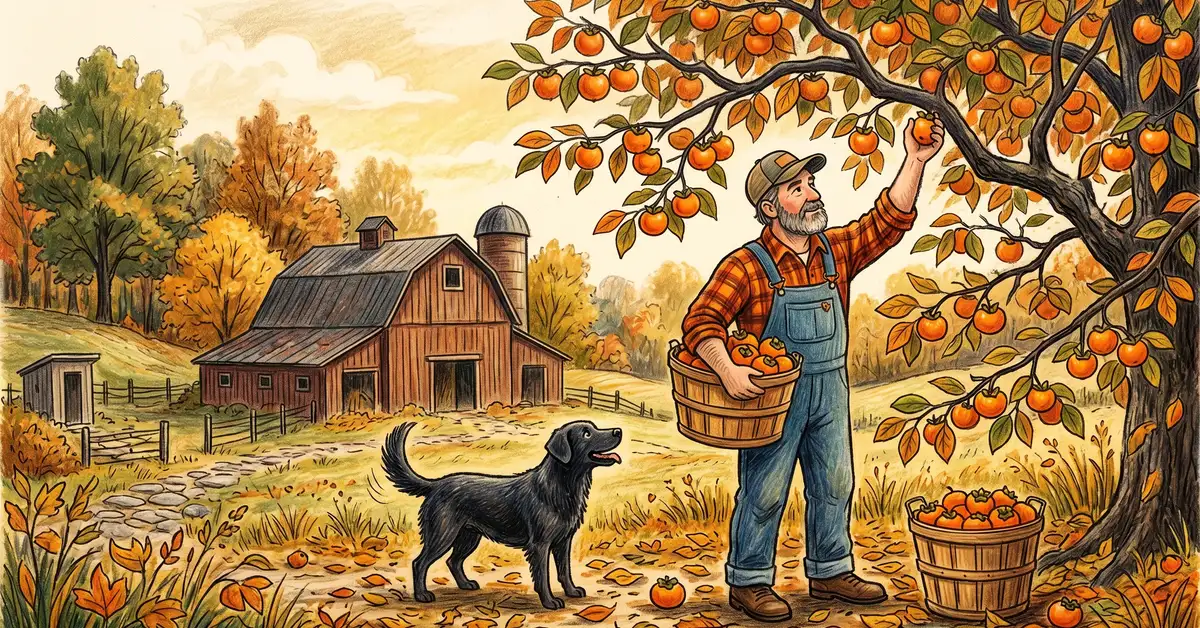
This is a homesteader piece, so it skips the philosophy and goes straight to the yield math, the cultivar choices, the pollination rules, and the pest risks. Persimmon is one of the highest-leverage trees in a US food forest. It bears late (after the apples are gone), stores well, processes into pudding and hoshigaki, and lives 50 to 75 years with minimal input. Mark Shepard plants them at New Forest Farm. Akiva Silver sells thousands of seedlings out of Twisted Tree Farm. The reason they bet on persimmon is simple: pound for pound at maturity, it beats apple in this region.
What you will get below: the 5-cultivar shortlist for US zones 4 to 9, yield curves by year, pollination decisions that determine whether you get fruit at all, the cold-hardy hybrid stock that gives you larger fruit, integration into a food forest guild, and the four pests and diseases that actually matter.
Sources:; Akiva Silver, Twisted Tree Farm field observations.
The species: Diospyros virginiana, native to most of the eastern US
The American persimmon, Diospyros virginiana, is native from Connecticut south to Florida and west through Iowa, Kansas, and Texas. The USDA Plants Database profile documents the full native range. It belongs to the ebony family (Ebenaceae) and is the northernmost member of a genus that includes Asian persimmon (D. kaki) and tropical mabolo.
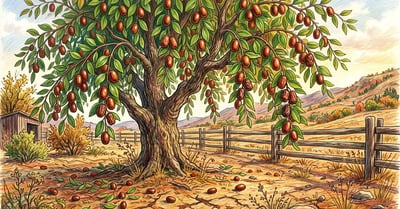
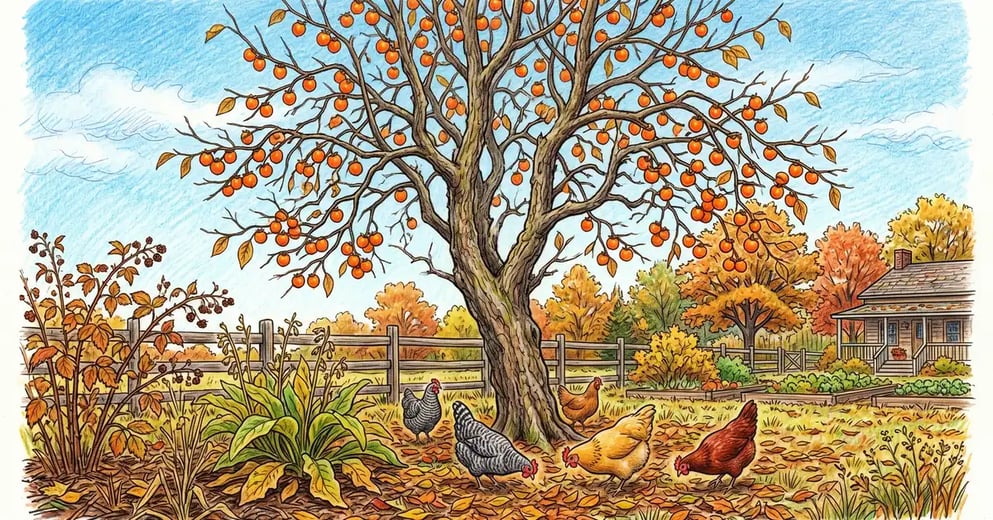
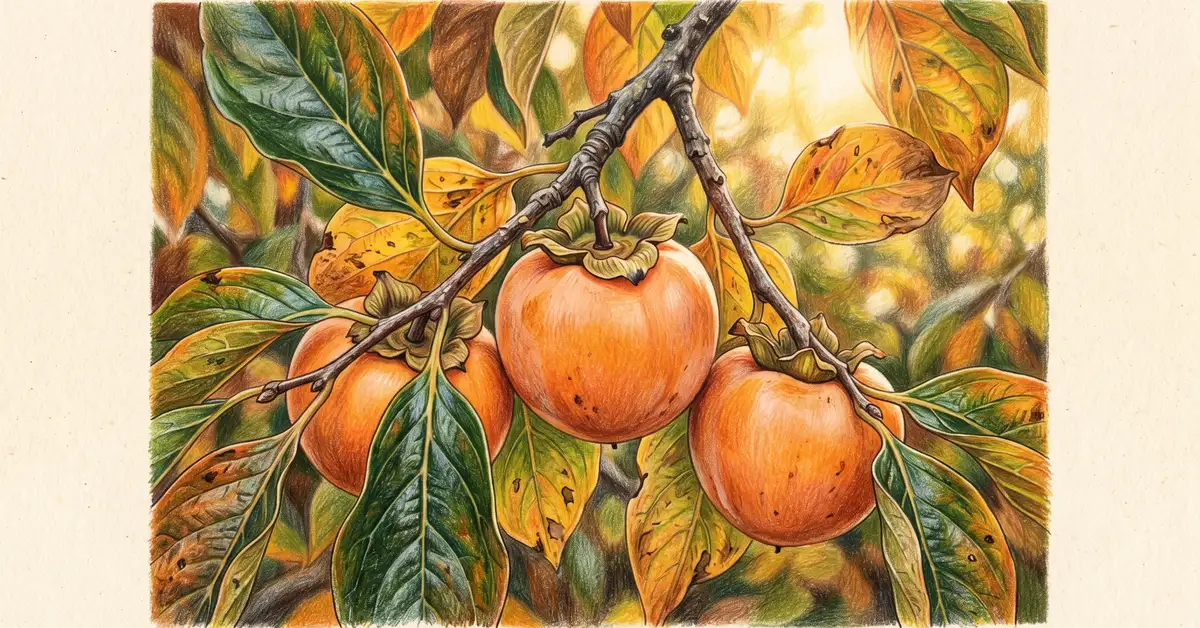
The trees grow 30 to 70 ft (9 to 21 m) tall in the wild, smaller in cultivation, with a deep tap root that makes mature trees nearly impossible to transplant. Bark is famously rough, broken into small square plates resembling alligator hide. Leaves are dark glossy green in summer, turning yellow to red in autumn. The fruit is 1 to 2 inch (2.5 to 5 cm) round, orange to amber at ripeness, with a persistent four-lobed calyx that stays attached after the fruit drops.
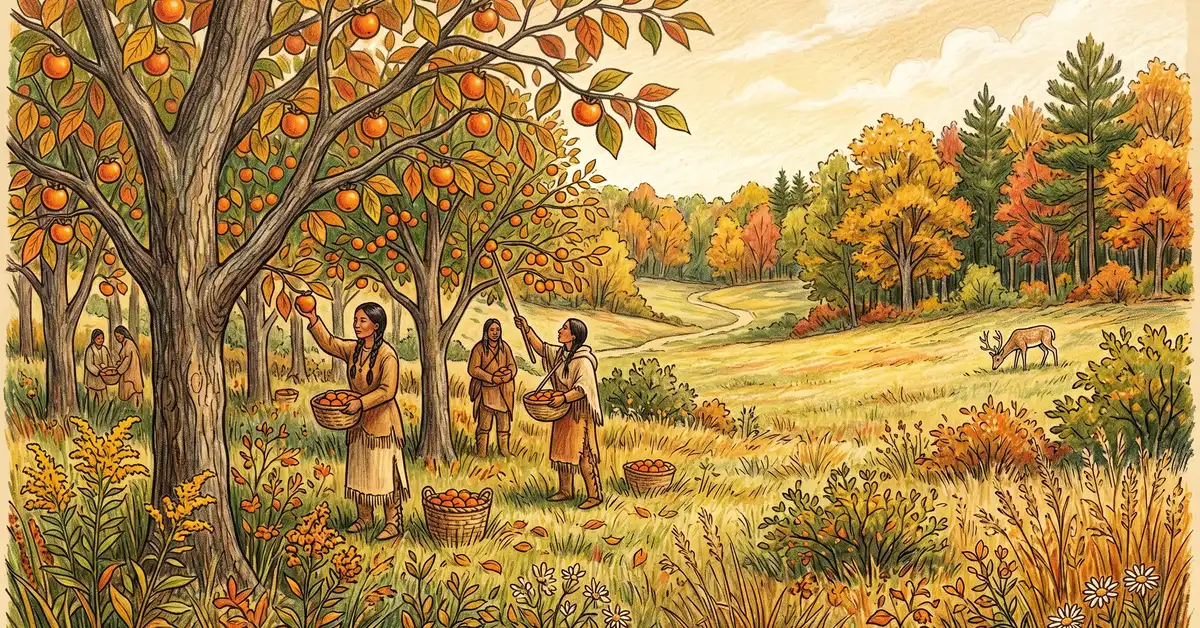
The name "persimmon" is one of a small number of English words borrowed directly from Native American languages. It comes from the Powhatan-Algonquian "pasiminan" meaning dried fruit. Captain John Smith documented the use of persimmons by the Powhatan people in his 1624 General History of Virginia, describing the fruit as "delicious as an apricot" once frosted. Indigenous peoples across the southeastern US dried persimmons into cakes for winter storage long before European contact.
The 90 versus 60 chromosome distinction (matters in cold zones)
American persimmon has two distinct genetic races. The 90-chromosome race is hardy to USDA zone 4 (some sources say zone 5b reliably). The 60-chromosome race is found in the southern US and is reliably hardy only to zone 6 or 7. This distinction matters enormously if you are buying trees for cold country.
The Indiana persimmon breeding program at the Indiana Nut Growers Association, particularly the work of Cliff England (England's Orchard, Kentucky), focuses on 90-chromosome cultivars. Jerry Lehman, James Claypool, and Elwin Meader (University of New Hampshire, 1969) developed the cold-hardy cultivars that now anchor US food forest plantings. Meader's namesake cultivar is the standard zone 4 to 5 choice because it is self-fruitful (produces fruit without a male pollinator) and ripens early enough to mature before the first hard freeze in northern states.
The 5-cultivar shortlist for US food forests
Meader (zone 4 to 9, self-fruitful)
Bred by Elwin Meader at the University of New Hampshire (released 1968), Meader is the workhorse for cold US zones. Parthenocarpic, so a single tree produces seedless fruit. Ripens late September to early October in zone 5, dropping fruit over a 4 to 6 week window. Smaller fruit (1 to 1.5 inch / 2.5 to 4 cm) but heavy production. Buy from One Green World or Twisted Tree Farm.
Prok (zone 5 to 9, parthenocarpic, larger fruit)
Discovered in Pennsylvania. One of the largest pure American persimmons (2 inch / 5 cm fruit). Parthenocarpic, ripens earlier than Meader, productive once established. Available from Edible Landscaping (Afton, Virginia) and Burnt Ridge Nursery.
Yates (H-118) (zone 5 to 9, requires male pollinator)
Indiana selection, extremely prolific bearer (recorded yields of 300+ lb / 136 kg at maturity). Needs a male tree within 50 ft (15 m). Fruit is medium (1.5 inch / 4 cm), sweet, ripens mid-October. Standard cultivar for serious homestead production where you have room for at least 2 trees.
Early Golden (zone 5 to 9, industry standard)
Discovered in Illinois in 1880, the oldest named American persimmon cultivar and the historical industry standard for commercial canning. Reliable producer, sweet flavor, ripens early. Needs a male pollinator. Available from most US persimmon nurseries.
Nikita's Gift (zone 5 to 9, hybrid with larger fruit)
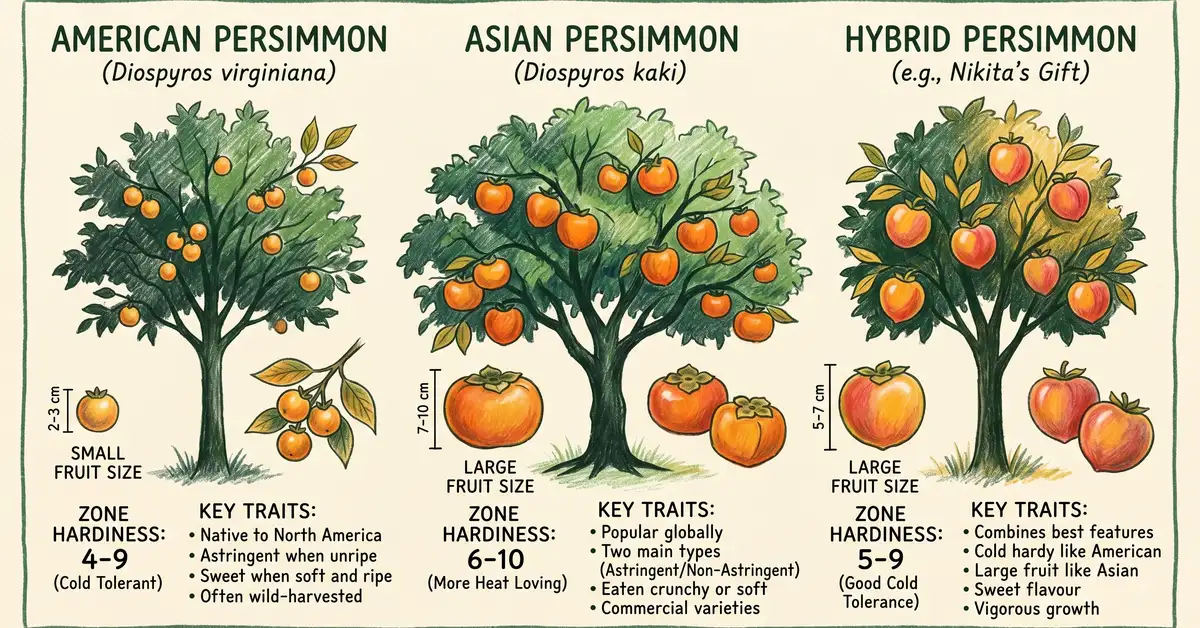
A D. virginiana x D. kaki hybrid developed at the Kyiv Botanical Garden, Ukraine, distributed in the US by Cliff England. Combines American hardiness with Asian fruit size (2 to 3 inch / 5 to 8 cm). Hardy to zone 5b reliably, zone 5a in protected microclimates. The single best choice if you want large fruit and live in a borderline zone for D. kaki. Buy from England's Orchard or One Green World.
Yield curves: what to expect each year
| Year | Yield (grafted) | Yield (seedling) | What to do |
| Year 1 to 3 | 0 | 0 | Protect from deer (5 ft / 1.5 m mesh tube), mulch heavily, water in droughts |
| Year 4 to 5 | 5 to 10 lb / 2 to 5 kg | 0 to 5 lb | First small harvest, test cultivar performance |
| Year 6 to 10 | 20 to 80 lb / 9 to 36 kg | 5 to 30 lb | Establish processing workflow (pulp, freeze, dry) |
| Year 10 to 15 | 50 to 150 lb / 23 to 68 kg | 30 to 100 lb | Full pollination established, peak vigour |
| Year 15+ | 100 to 300 lb / 45 to 136 kg | 100 to 250 lb | Mature production, harvest by tarp drop |
Sources:; Akiva Silver's Trees of Power (Chelsea Green, 2019) field data.
The food forest guild: what to plant with persimmon
Persimmon is a mid-canopy tree (30 to 50 ft / 9 to 15 m at maturity in cultivation) and pairs naturally with several food forest layers. Plant black locust (Robinia pseudoacacia) as a nitrogen fixer 15 to 20 ft (5 to 6 m) away. The locust matches persimmon's zone 4 to 9 range and fixes 100 to 200 lb of nitrogen per acre per year while the persimmon establishes.
Pawpaw (Asimina triloba) is the natural understory companion. Pawpaw tolerates partial shade and ripens in early September, giving you a sequential native fruit harvest that runs from pawpaw through persimmon through hazelnut. See our piece on food forest succession year by year for the sequencing logic.
Shade-tolerant ground covers under the persimmon canopy: ramps (Allium tricoccum) on the north side, ginseng (Panax quinquefolius) in deep partial shade, and Bocking 14 comfrey at the base for chop and drop biomass. Avoid planting walnut (Juglans nigra) closer than 50 ft (15 m) because the juglone allelopathy can stunt persimmon growth in some soils. Penn State Extension's black walnut toxicity guide covers the buffer distances.
Why persimmon fits a homesteader-scale food forest
Persimmon ripens in October to December, after apples are stored and before winter sets in. The fruit drops naturally over 4 to 6 weeks, so harvest is one tarp under the tree, shake, collect, freeze. Pulp processed by hand (squeeze through a colander) freezes indefinitely. One mature tree gives a family 100+ lb of fruit annually with maybe 4 hours total labor per year once established. The yield-to-labor ratio is one of the highest of any temperate fruit tree.
Pests, diseases, and what actually goes wrong
Persimmon has fewer serious pest problems than apple or pear, which is part of why it shows up in commercial food forest plantings. The four problems worth knowing about:
Deer browse (year 1 to 3). Young persimmons are heavily browsed. Use 5 ft (1.5 m) mesh tubes or fence the planting until trees are 6 ft (1.8 m) tall and beyond reach.
Squirrel and raccoon competition (year 5+). Once trees produce, expect 30 to 50 percent loss to wildlife unless you net the trees (impractical at scale) or plant enough to share. Most homesteaders treat wildlife pressure as a fixed tax on the harvest.
Persimmon wilt (Acremonium diospyri). A fungal disease that caused a major epidemic in the eastern US in the 1930s. Today it appears occasionally in the Southeast. No effective treatment. Sanitation (remove and burn infected trees) is the only management. Rare in the Northeast and Midwest. See NC State Extension's coverage.
Slow establishment and tap root sensitivity. Persimmon has a long tap root and resents transplanting. Buy small (1 to 2 year) bare root trees, plant promptly, and accept 30 to 50 percent first-year mortality on transplants. Direct seeding works well if you can protect the seedlings from rodents.
Nutrition: why persimmon belongs on a homestead
One raw American persimmon (about 25 g / 0.9 oz) provides roughly 32 calories, 8 g carbohydrates including 0.3 g fiber, and meaningful vitamin C (about 11 percent DV). Larger Asian persimmons provide more vitamin A precursors (beta-carotene) and manganese. The USDA FoodData Central database has the full nutrient profile for both species. The American persimmon is significantly higher in vitamin C than the Asian, which surprises most people.
Processing and preservation
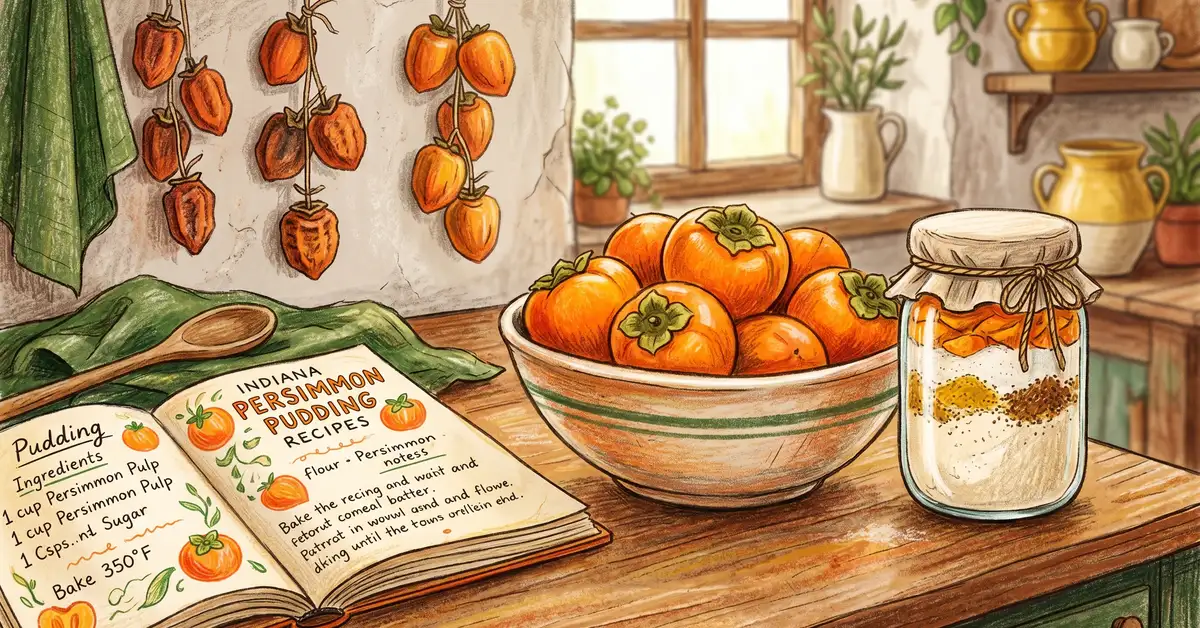
The two homestead workhorse outputs from American persimmon:
Persimmon pulp (frozen). Squeeze ripe fruit through a colander or food mill. The seedy mush separates into smooth pulp and waste. Freeze pulp in 1-pint containers. Yields about 1 lb of pulp per 2.5 lb of whole fruit. Use for pudding, pancake batter, ice cream, smoothies.
Persimmon pudding (Indiana state dessert). Indiana has held an annual persimmon festival in Mitchell, Indiana, since 1947. The recipe is essentially a dense baked custard with persimmon pulp, cream, eggs, sugar, and spices. The Purdue University horticulture department publishes the canonical Hoosier recipe.
For Asian and hybrid persimmons, hoshigaki (Japanese dried persimmon) is the premium preservation method. Peel firm astringent fruit, hang by stem strings outdoors with airflow, massage gently every few days for 3 to 6 weeks. Result is a chewy date-like fruit that stores for a year. Sells for $30 to $80 per pound at specialty markets. Detailed protocol on Hoshigaki California.
Get the Weekly Dig
One practical permaculture guide a week, written for gardeners who do this on weekends: food forest and guild designs that produce. Free, no spam, unsubscribe any time.
Join the Weekly DigWhere to buy: US nursery sources for 90-chromosome stock
Five US nurseries that consistently ship cold-hardy American persimmon (and the hybrids) to homesteaders:
England's Orchard and Nursery (McKee, Kentucky): Cliff England's operation, focused on hybrid persimmons (Nikita's Gift, Rosseyanka, Kassandra) and named American cultivars. Ships bare root in spring.
Twisted Tree Farm (Spencer, New York): Akiva Silver's operation, sells thousands of American persimmon seedlings and named cultivars annually. Specializes in seedling stock for food forest plantings.
Edible Landscaping (Afton, Virginia): Strong American persimmon selection including Prok, Yates, and male pollinators. Ships zone 5 to 9 hardy stock.
One Green World (Portland, Oregon): West Coast source for Meader, Nikita's Gift, and several Asian persimmons.
Burnt Ridge Nursery (Onalaska, Washington): Pacific Northwest nut and fruit specialist, carries Prok, Yates, and the Russian hybrids.
Frequently Asked Questions
What is an American persimmon?
Diospyros virginiana, a native US tree in the ebony family, hardy USDA zone 4 to 9, 30 to 70 ft tall, bearing 1 to 2 inch orange fruit that ripens late season.
How long does a persimmon tree take to fruit?
Grafted cultivars bear in year 4 to 6. Seedlings take 8 to 12 years. Asian persimmons (D. kaki) start at year 3 to 5. Hybrids like Nikita's Gift bear year 4 to 6 with larger fruit.
Do persimmon trees need a pollinator?
Most American cultivars need a male within 50 ft. Some (Meader, Prok, Early Golden) are parthenocarpic and self-fruitful. Asian persimmons range from self-fruitful (Fuyu, Jiro) to needing a pollinator.
What is the best American persimmon cultivar?
Zone 4 to 5: Meader or Prok. Zone 6 to 9: Yates or Early Golden. For larger fruit at borderline zones: Nikita's Gift hybrid.
What is the difference between American and Asian persimmon?
American is 30 to 70 ft, zone 4 hardy, small intensely sweet fruit, dioecious, needs frost. Asian is 20 to 30 ft, zone 7 hardy, larger fruit, often self-fruitful, ripens without frost.
Are persimmons native to North America?
Yes. Diospyros virginiana is native from Connecticut south to Florida and west to Iowa, Kansas, and Texas. The word comes from the Algonquian "pasiminan."
How much fruit does a persimmon tree produce?
5 to 10 lb at year 5, 50 to 100 lb at year 10, 100 to 300 lb at full maturity (year 15+). Standard food forest spacing of 30 ft gives 30 to 40 trees per acre.
Why are unripe persimmons astringent?
Unripe flesh contains soluble proanthocyanidin tannins that bind to mouth proteins, producing the puckering sensation. Ripening polymerizes the tannins into insoluble forms and removes the astringency.
Resources
- USDA Plants Database, Diospyros virginiana profile
- NC State Extension, Persimmon Production Guide
- Penn State Extension, Persimmon Production
- Purdue University, Persimmons (canonical Hoosier reference)
- USDA FoodData Central nutrient database
- England's Orchard (hybrid and named American cultivars)
- Twisted Tree Farm (Akiva Silver, seedlings and named cultivars)
- Edible Landscaping (Prok, Yates, male pollinators)
- One Green World (Meader, Nikita's Gift)
- Captain John Smith, General History of Virginia (1624 source for "persimmon")