
How Much Compost Does Sandy Soil Actually Need?
If you garden on sand, you already know the pattern. Water in, water gone. Fertilizer in, fertilizer gone. Everyone tells you to add compost, and you do, and by the following spring the soil looks pale and hungry again. lowering soil pH naturally find out how much sand you really have sandy soil that sheds water instead of absorbing it
The advice is right. The dosage and the timeline are where most gardeners get it wrong. Colorado State University Extension puts a real number on it: for a new vegetable or flower garden, 3 to 4 inches of plant-based compost incorporated into 8 to 12 inches of soil, where 3 cubic yards covers 1,000 square feet at 1 inch deep. That is roughly 9 to 12 cubic yards per 1,000 square feet for the establishment pass. Most people add a bag or two and wonder why nothing changed.
What we will cover:
- What sandy soil is doing physically, with the numbers
- Extension-backed compost rates for establishment and maintenance
- Why the famous "25,000 gallons per acre" claim does not survive contact with sand
- What to pair with compost so the organic matter actually sticks
Key Takeaway
Compost on sand is a recurring practice, not a one-time project. Sandy soil oxidizes organic matter fast because there is almost no clay to physically shelter it. Plan on a heavy establishment pass followed by annual top-ups indefinitely.
What Is Sandy Soil Actually Doing?
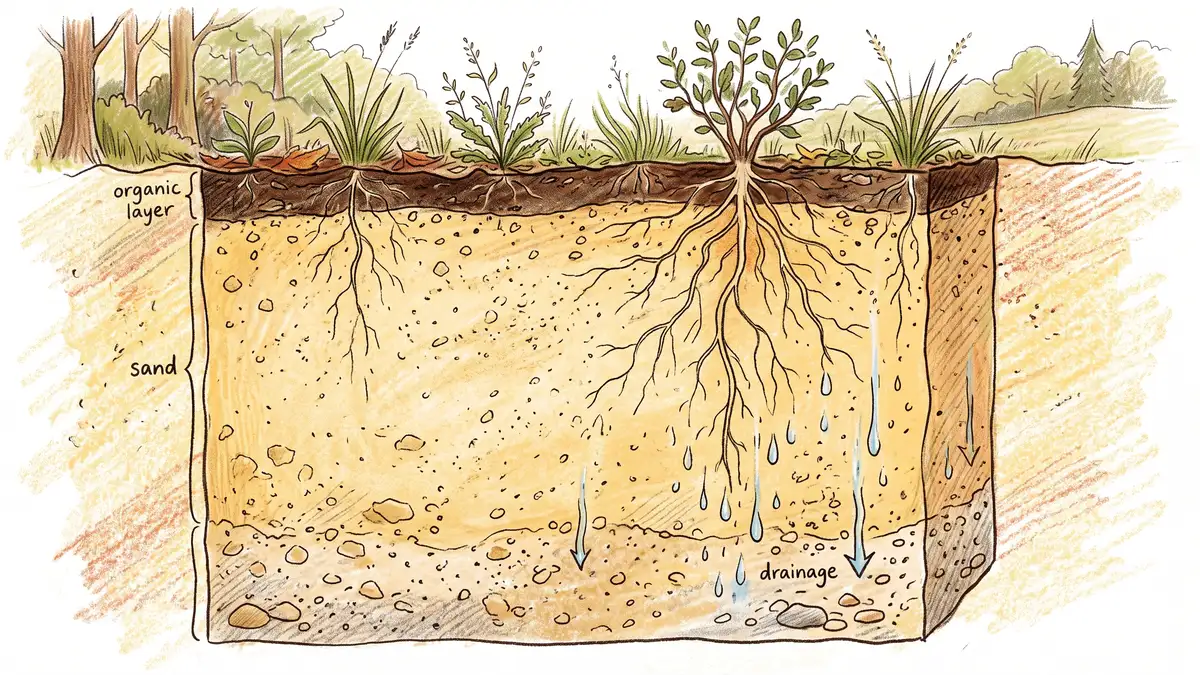
Two problems, both traceable to particle size. The USDA Soil Survey Manual defines sand particles as 0.05 to 2.0 mm, against clay at under 0.002 mm. A soil is classified as "sand" when more than 85% of the fine-earth fraction is sand. Loamy sand runs 70 to 90% sand. Those big particles pack with lots of large drainage pores and almost none of the small pores that hold water against gravity.
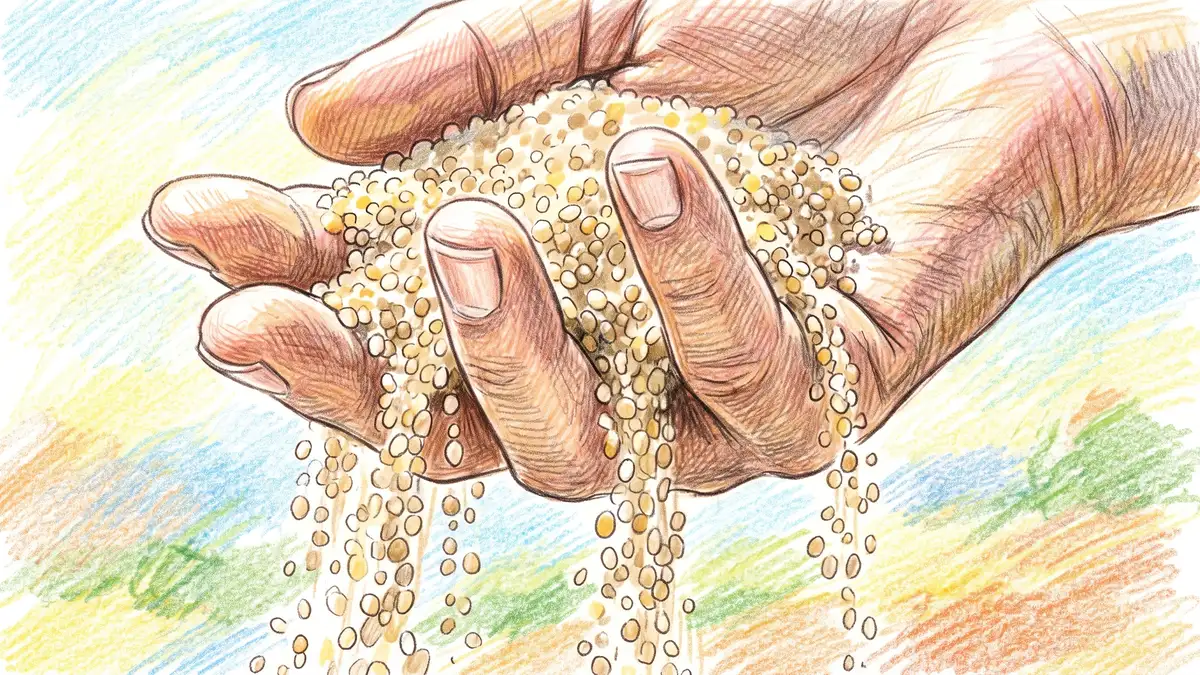
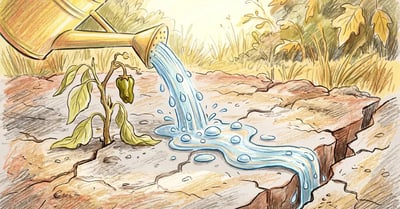
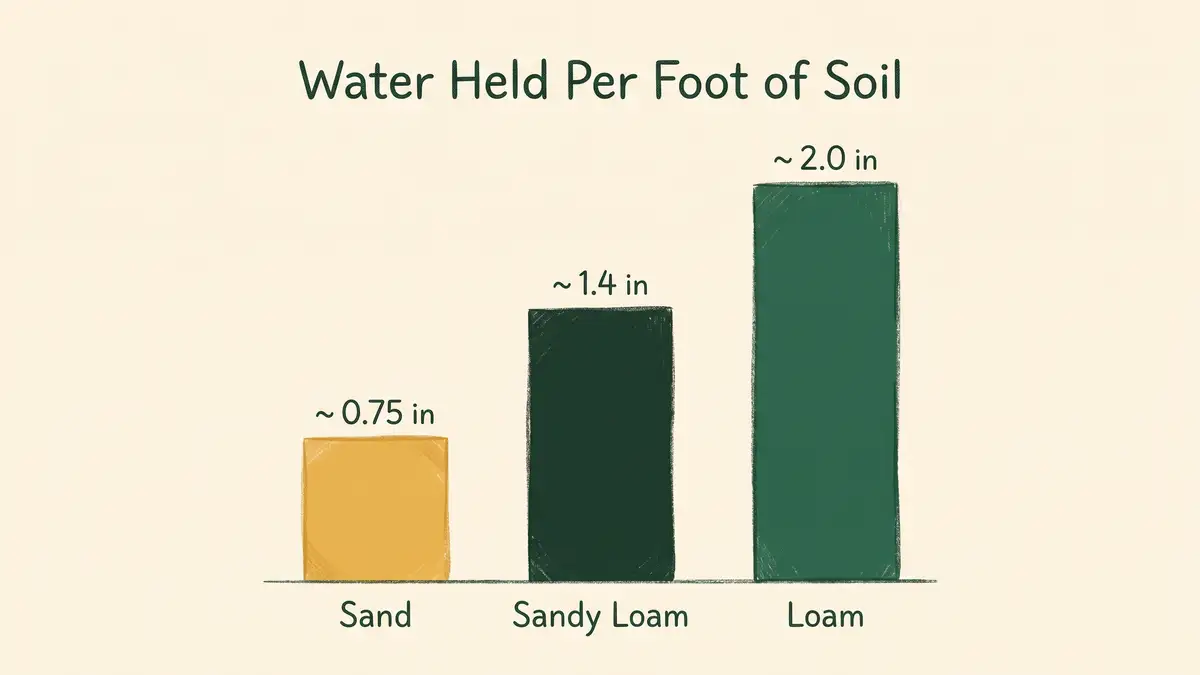
Problem one is water. University of Wisconsin Extension puts plant-available water at 0.25 to 0.75 inches per foot in coarse sand, 0.75 to 1.0 in fine sand, about 1.1 in loamy sand and 1.2 to 1.4 in sandy loam. Loam and silt loam manage 1.95 to 2.5 inches per foot. A two-foot root zone in coarse sand might store 0.5 to 1.5 inches total. In silt loam it would hold 4 to 5. That gap is your drought risk, and it is why sand needs watering every other day in July while your neighbor on clay waters weekly. USDA NRCS reports steady infiltration in sands above 0.8 inches per hour against 0.04 to 0.2 in clays.
Problem two is nutrients. Cation exchange capacity measures how many nutrient ions a soil can hold on charged sites. University of Georgia Extension gives sand at 1 to 5 meq/100 g, loam at 5 to 15, clay above 30, and soil organic matter at 200 to 400. Read that last figure again. Organic matter has roughly fifty times the nutrient-holding capacity of the sand it sits in. That is the entire case for compost on sandy ground.
What Are the Real Compost Rates?
Heavy once, light forever after. Extension services converge on similar numbers, and the split between establishment and maintenance is the part most guides skip.
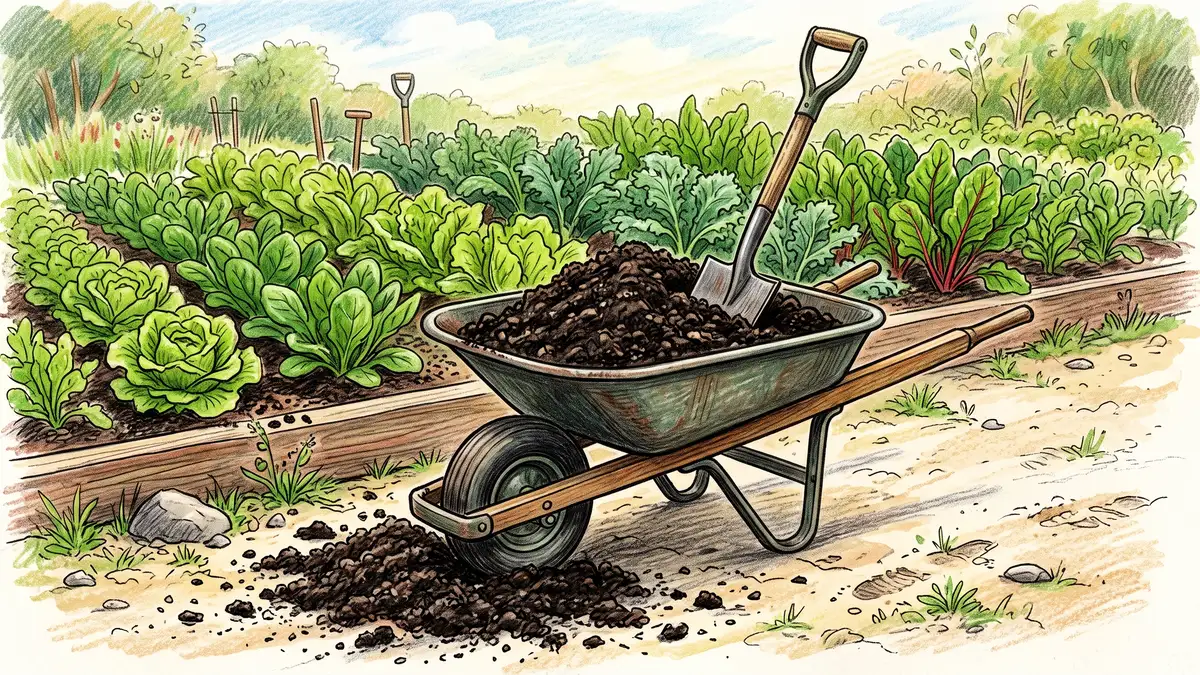
Establishment: 2 to 4 inches, incorporated deep
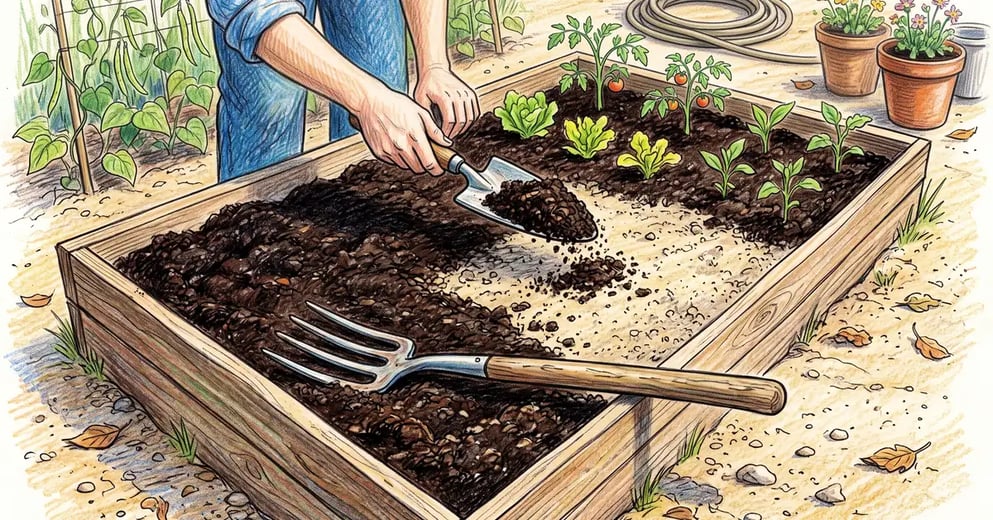
Colorado State recommends 3 to 4 in. of plant-based compost worked into 8 to 12 in. of soil for new vegetable beds. Washington State University Extension advises 1 to 3 in. incorporated to at least 6 to 8 in. On true sand, work at the upper end of both ranges.
Go deeper than the tiller reaches
Oregon State notes rototillers typically work only the top 4 to 6 in., with tractor units reaching 8 in. For deep-rooted crops they recommend amending to 10 to 12 in. Compost in the top 2 in. improves tilth but does nothing for the root zone where drought stress starts.
Maintenance: 0.25 to 1 inch annually
Once organic matter is up, Colorado State drops the recommendation to about 0.25 in. worked into 8 to 12 in. per year for established beds. On very sandy ground, 0.5 to 1 in. annually is more realistic because losses are faster.
Soil test before you keep piling it on
Colorado State's nitrogen guidance drops from 3 lb. per 1,000 sq. ft. at 0% organic matter to zero at 5% or more. Target soil is 4 to 5% organic matter. Past that you are adding phosphorus and salts you do not need.
Common Mistake to Avoid
Do not use high-nitrogen composts (heavy poultry manure or food-waste based) at establishment rates on sand. Oregon State cautions these should go on at lower rates to avoid nutrient imbalance and salt injury, and sandy soil has almost no buffering capacity to absorb the mistake. Use plant-based compost for volume, save the rich stuff for side-dressing.
Need the gear for this?
Bins and tumblers picked by yard size, with the honest trade-offs for each.
See the compost bin picksDoes 1% Organic Matter Really Hold 25,000 Gallons?
Not in sand, and this is worth knowing before you set expectations. You have seen the claim: every 1% increase in soil organic matter holds an additional 20,000 to 25,000 gallons of water per acre. It gets repeated constantly in regenerative gardening circles.
University of Florida IFAS actually went and measured it in sandy soil. Their fact sheet cites the NRCS-derived 20,000 gallon estimate, then reports their own laboratory results: every 1% increase in organic matter produced a 2.3% increase in water-holding capacity in sand and 1.3% in limerock, which worked out to roughly 10 gallons of water stored per acre-foot per 1% organic matter. That is three orders of magnitude below the popular figure.
The underlying science is more nuanced than either number suggests. Hudson's 1994 paper in the Journal of Soil and Water Conservation found that a silt loam at 4% organic matter held more than twice the available water of a comparable silt loam at 1%. Genuinely large effects, but in silt loam, not sand. A 2023 regional analysis in Frontiers in Soil Science concluded that texture and bulk density were the dominant drivers of available water-holding capacity, with soil organic carbon playing a secondary role, though it noted that in low-carbon sandy soils, adding carbon does increase water retention.
The honest version: compost on sand works, it just works gradually and through several mechanisms at once. You gain some water retention, a lot of nutrient-holding capacity, better aggregation, and a functioning soil biology. Expect an extra day between waterings after a few seasons, not a transformation into loam.
| Soil Texture | Available Water (in./ft.) | CEC (meq/100 g) |
| Coarse sand | 0.25-0.75 | 1-5 |
| Fine sand | 0.75-1.0 | 1-5 |
| Loamy sand | ~1.1 | 5-10 |
| Sandy loam | 1.2-1.4 | 5-10 |
| Loam | 1.95-2.5 | 5-15 |
| Soil organic matter | n/a | 200-400 |
Sources: University of Wisconsin Extension, University of Nebraska CropWatch, University of Georgia Extension
What Should You Pair With Compost?
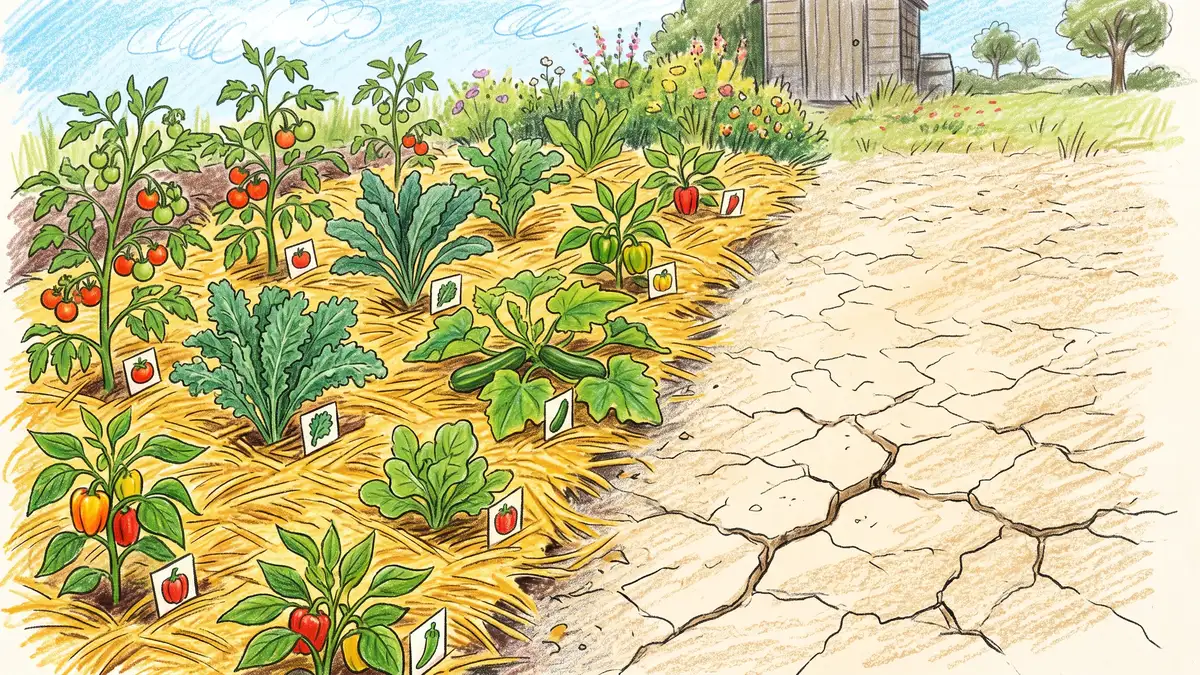
Mulch and living roots, because compost alone leaks away. Sandy soil is well aerated by nature, which means the microbial community burns through organic inputs faster than it would in clay, and there are no clay-organic complexes to shelter what survives. SARE's Building Soils for Better Crops covers this dynamic in detail: without physical protection inside aggregates, organic matter stays exposed to microbial attack.
Mulch is the highest-return companion practice. Oregon State recommends 2 to 4 inches of coarse compost, wood chips or bark maintained under shrubs and trees, and notes that routine mulching increases the effectiveness of the initial soil amendment because some of it gets incorporated over time. On sand, mulch does double duty: it cuts surface evaporation from soil that has very little water to spare, and it feeds the surface layer continuously.
Cover crops add the piece mulch cannot: roots. Root-derived organic matter is deposited directly into the profile at depth, where it contributes to aggregation in the zone that actually matters for drought. Rye, oats and clover all work, and they scavenge residual nitrogen that would otherwise leach straight through.
Why This Works: Stacking Functions
In permaculture, you look for elements that do several jobs at once. A cover crop on sandy ground holds soil against wind, feeds the fungal community, catches leaching nitrogen, and deposits organic matter at root depth rather than just on the surface. Compost alone is a single-function input. Compost plus mulch plus living roots is a system, and it is the difference between soil that improves and soil that resets every spring.
One more thing worth knowing. Research on Australian sandy soils, summarized in a Soil CRC meta-analysis of 270 field trials, found crop yield in sandy soils increased as surface organic carbon rose between 0.75% and 1.5%, and that adding clay helped up to a point: surface clay content of 6 to 10% supported optimal productivity, but yields declined once clay exceeded 15%. Adding mineral fines to sand is legitimate, but it needs calibration, which is why most home gardeners are better served putting the effort into organic matter and letting mineral amendment decisions follow a soil test.
Frequently Asked Questions
How much compost should I add to sandy soil?
For a new bed, 2 to 4 inches spread over the surface and incorporated into the top 8 to 12 inches. Colorado State Extension recommends 3 to 4 inches into 8 to 12 inches for vegetable and flower gardens, where 3 cubic yards covers 1,000 square feet at 1 inch depth. Washington State Extension advises 1 to 3 inches incorporated 6 to 8 inches deep. After establishment, drop to roughly 0.25 to 1 inch annually and let soil tests guide you toward a 4 to 5% organic matter target.
Is sandy soil good for plants?
It has real advantages: it warms early in spring, drains freely so roots rarely suffocate, and it is easy to work. Root crops like carrots and parsnips do particularly well in it. The drawbacks are low plant-available water (0.25 to 0.75 inches per foot in coarse sand versus around 2 in loam) and very low cation exchange capacity, so nutrients leach quickly. Managed with organic matter and mulch, sandy soil grows excellent gardens. Left bare, it grows very little.
How do you make sandy soil hold water?
Raise organic matter and cover the surface. Organic matter holds water directly and builds the aggregation that creates small pores. Mulch of 2 to 4 inches cuts evaporation from the surface, which matters enormously in soil that stores so little. Cover crops add roots and organic matter at depth. Be realistic about the scale: University of Florida measured a 2.3% increase in water-holding capacity per 1% increase in organic matter in sand, so this is a gradual gain, not an overnight fix.
How long does it take to improve sandy soil?
Years, not seasons. Moving soil organic matter from around 0.5% to 2% over a decade is a genuine achievement on sandy ground, because rapid decomposition and minimal physical protection work against you the whole time. You will notice practical improvements sooner than the soil test does: better seedling establishment and an extra day between waterings often show up within two or three seasons of consistent compost and mulch.
Should I add clay to sandy soil?
Possibly, but carefully. Australian research across 270 field trials found surface clay content of 6 to 10% supported optimal productivity in sandy soils, with yields declining above 15%. The application rates involved are large, in the range of tens of tons per acre, which is impractical for most home gardens. The reverse mistake is worse: adding modest amounts of sand to clay soil tends to produce a dense, concrete-like mixture rather than better drainage.
What is the best compost for sandy soil?
Plant-derived, low-salt, well-finished compost for the bulk of your volume, because you are applying it in quantity and you want fiber and stable carbon rather than a nutrient hit. Save higher-nitrogen composts based on manure or food waste for smaller side-dressing applications, since sandy soil has almost no buffering capacity against salt or nutrient excess. Our complete composting guide covers making your own, and the living soil guide covers what happens after it goes in the ground.
Get the Weekly Dig
One practical permaculture guide a week, written for gardeners who do this on weekends: composting that actually finishes and soil that feeds itself. Free, no spam, unsubscribe any time.
Join the Weekly DigResources
- Colorado State University Extension — Choosing a Soil Amendment (application rate tables)
- Oregon State University Extension — Improving Garden Soils With Organic Matter (EC 1561)
- Washington State University Extension — Organic Soil Amendments: How Much Is Enough?
- University of Florida IFAS — Raising Soil Organic Matter to Improve Water Holding Capacity (SS661)
- University of Wisconsin Extension — The Important Role of Soil Texture on Water
- University of Georgia Extension — Cation Exchange Capacity and Base Saturation
- USDA NRCS — Soil Survey Manual, Chapter 3: Soil Texture (PDF)
- USDA NRCS — Soil Health Guide: Infiltration (PDF)
- SARE — Building Soils for Better Crops: Amount of Organic Matter in Soils
- Soil CRC — Organic and Clay Amendments to Improve Sandy Soil Productivity