
You know which plants help each other (tomato + basil + marigold, carrot + onion, brassicas + dill). What you actually need is a calendar that tells you, month by month, when to start the seeds, when to transplant out, when to direct-sow, and which companion combinations belong in the ground together at each point in the season. That's what this article is. seasonal companion planting pairings
It's organised the way you'll actually use it: a quick reference table for USDA zones 5–8, then a month-by-month walkthrough from January through December, with the companion combinations that fit each window. Adjust by zone — every guidance below is zone 6 baseline; zone 5 shifts 2–3 weeks later, zone 7 shifts 1–2 weeks earlier, zone 8 shifts 3–4 weeks earlier. Soil temperature is more reliable than calendar date, so we've included the germination thresholds that actually matter.
The short answer (zone 6 baseline)
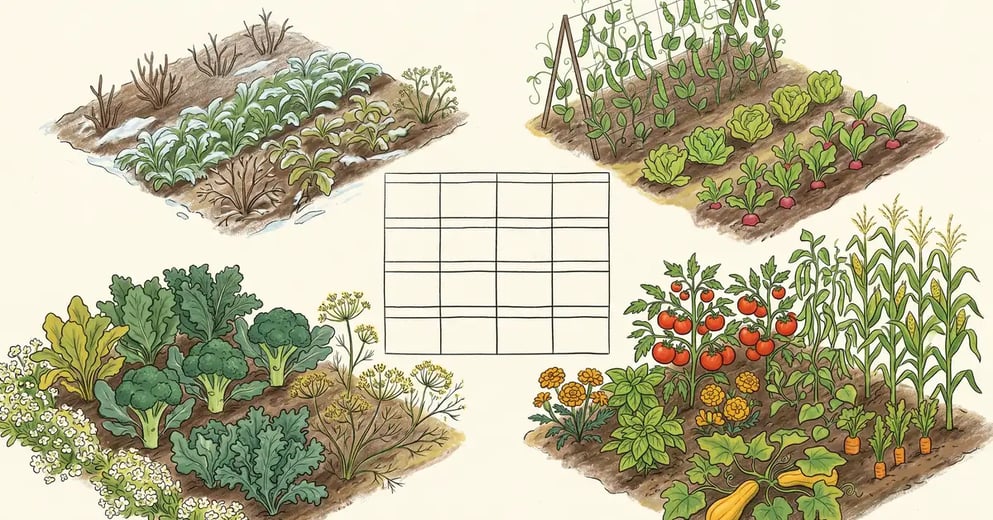
Jan–Feb: plan, order seeds, start onions and brassicas indoors. Mar: peas, spinach, radishes outdoors as soon as soil hits 40°F (4°C); start tomato/pepper/basil indoors 6–8 weeks before last frost. Apr: direct-sow lettuce, carrots, beets, more peas; harden off indoor starts. May: after last frost, plant tomatoes + basil + marigolds, peppers + basil, beans, corn, squash (Three Sisters). Jun–Aug: succession-sow beans/lettuce/radishes every 2–3 weeks; harvest. Aug–Sep: plant fall brassicas + dill + alyssum, fall carrots + onions, spinach. Oct–Nov: garlic, cover crops (white clover, rye, vetch). Dec: mulch beds, rest, plan next year. Use a soil thermometer ($8) — it's more reliable than the calendar.
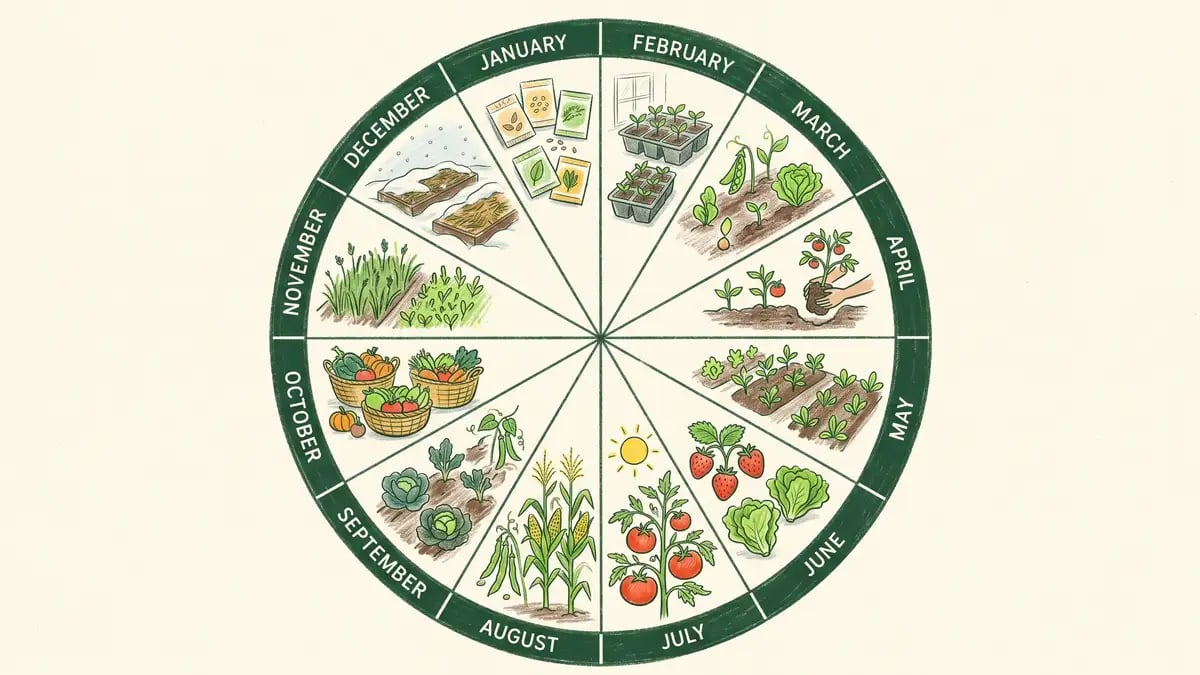
How to Translate "Month X" to Your Actual Garden
Two numbers run the calendar: your average last spring frost date and your average first fall frost date. Look them up by zip code through the Farmers' Almanac planting calendar or your nearest extension service. NC State Extension notes that "average" means a 50% chance of frost on or after that date — so add a 1–2 week safety buffer for tender transplants like tomatoes.
The second number worth knowing is soil temperature. Oregon State Extension publishes the canonical germination threshold table: peas, lettuce, spinach germinate at 40°F (4°C); carrots and beets need 50°F (10°C); beans and corn want 60°F (16°C); tomatoes, peppers, basil, and squash need 70°F+ (21°C+). Buy an $8 soil thermometer, push it 3 inches (7.5 cm) into the bed, wait two minutes, read the result. Anything you plant before the soil hits its threshold either rots or stalls.
| USDA zone | Average last spring frost | Average first fall frost | Growing season |
| Zone 5 | May 15 | Sep 30 | ~135 days |
| Zone 6 | May 1 | Oct 15 | ~165 days |
| Zone 7 | Apr 15 | Oct 30 | ~195 days |
| Zone 8 | Mar 15 | Nov 15 | ~245 days |
Source: Park Seed — First and Last Frost Dates by USDA Zone and Bonnie Plants — Frost Dates.
Every "Month X" reference below is zone 6 baseline. Zone 5: shift everything 2–3 weeks later. Zone 7: 1–2 weeks earlier. Zone 8: 3–4 weeks earlier. Before any planting, our complete companion planting chart covers which combinations actually work — this article tells you when to plant them.
Why this works (the permaculture insight)
Industrial agriculture treats a calendar as a logistics tool — when to spray, when to harvest, when to till. Permaculture treats it as a relationship map. Each month's planting window isn't just about the crop you put in the ground — it's about which neighbours go in at the same time. Peas planted alone in March give you peas. Peas planted in March alongside lettuce, spinach, and radishes give you four crops sharing the same soil, fixing nitrogen for the next round of summer plantings, and supporting each other against pests and weather. The calendar isn't just when. It's who with.
January — Plan, Order, Stratify
Outside, nothing is happening. Inside, this is when the season is decided. Order seeds early (good cultivars sell out by March). Sketch the layout — which beds get the spring greens, which get the summer heavy hitters, which get the fall brassicas. This is also the only month to cold-stratify certain perennial seeds (like sea kale or some native flowers) by sealing them in a damp paper towel in the fridge for 30–60 days.
Indoor seed-starting begins for slow growers. Onions and leeks (12–14 weeks before last frost) and celery (10–12 weeks) go under lights now. Cornell Cooperative Extension's planting dates guide confirms onions are the earliest practical seed-start for cool-temperate gardeners. Use a heat mat (75°F / 24°C soil) and grow lights on a 14–16 hour timer.
February — Brassicas and Peppers Indoors
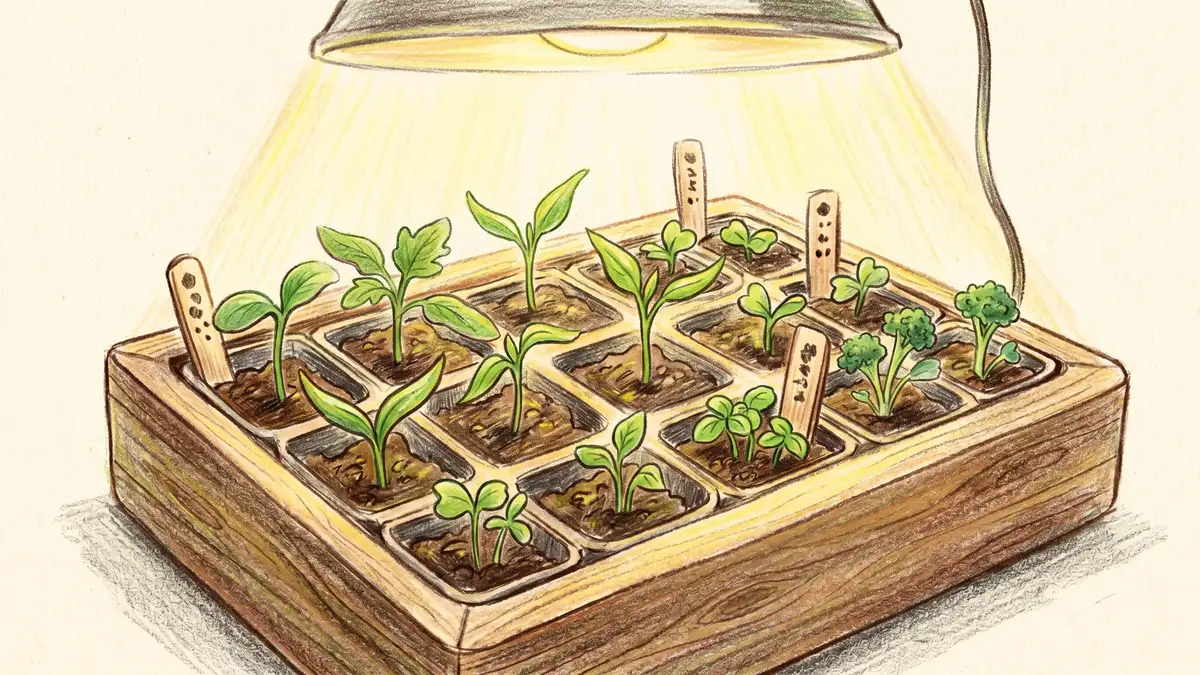
Late February is the start gun for indoor seed-starting in zone 6. Brassicas (broccoli, cabbage, cauliflower, kale) and peppers go in trays now — 8–10 weeks before last frost. Eggplant follows the same window. Use a heat mat for peppers and eggplant; brassicas germinate fine at room temperature.
Outside, if the soil thermometer reads above 40°F (4°C), garlic cloves planted last October are pushing green tips. Top-dress with compost. Order onion sets if you didn't seed-start in January.
Companion planning note: When you start tomato seeds in February or March, also start basil. Both transplant out at the same time, and basil grown alongside tomato from day one performs better than basil dropped in next to a mature tomato in June. Homestead and Chill's tomato companion guide has the full pairing protocol.
March — Peas, Spinach, Radishes; Tomatoes Indoors
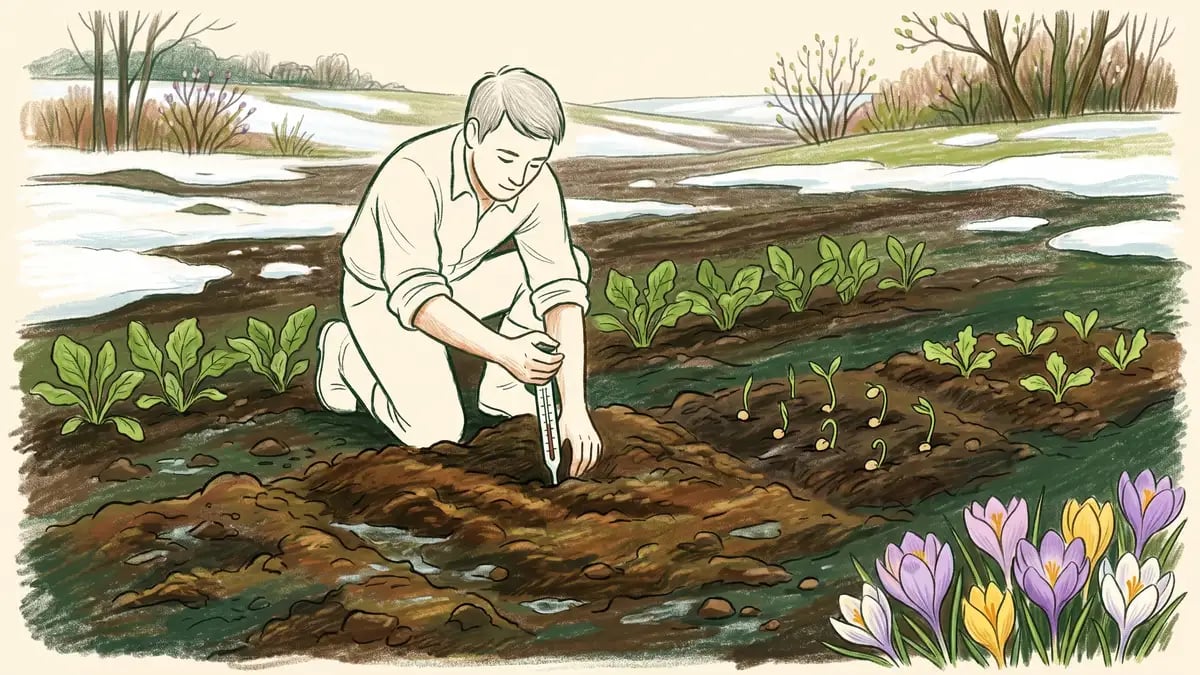
March is the first real outdoor month for cool-temperate gardeners. The trigger isn't the date — it's soil temperature at 40°F (4°C) and rising, plus a soil that crumbles in your hand instead of clumping into mud. Cornell's first planting dates guide calls this "as soon as soil can be worked," typically 4–6 weeks before last frost.
Direct-sow outdoors: peas (sugar snap, snow, shelling), spinach, lettuce, arugula, radishes, kale seed, mâche, fava beans (overwintered), parsley. Penn State Extension's seed planting guide PDF covers spacing for all of them.
Indoor starts: tomato, pepper (if not already), basil, eggplant, herbs (sage, oregano, thyme starts).
Spring companion combinations to plant together:
| Combination | Why it works | Spacing |
| Peas + lettuce + radish + spinach | Peas fix nitrogen for the leafy greens; radishes break soil and mature in 25 days, marking the row | Peas at trellis; greens and radishes interplanted between |
| Spinach + carrots (sown together) | Spinach matures and is harvested before the carrots size up; same bed produces twice | Alternate rows, 4 inches (10 cm) apart |
| Onion sets + lettuce | Onion volatiles deter aphids on the lettuce; lettuce shades onion bulbs in June heat | Onions in rows, lettuce filling between |
Source: Gardenary — 10 Easy Companion Planting Combos and Penn State Extension.
Our spring companion planting deep dive covers the full cool-season pairing logic. Start succession sowing now too — a small lettuce planting every 2 weeks beats one big planting that bolts all at once in June.
April — Hardening Off, Carrots and Beets
Indoor seedlings need hardening off — 7–14 days of gradual outdoor exposure before transplanting. Start with 1 hour of dappled shade and build up. Skip this step and your tomatoes sunburn the day after you plant them out.
Direct-sow outdoors: more peas (extend the harvest), carrots (now that soil is 50°F / 10°C), beets, chard, lettuce, kale, broccoli rabe, more radishes, turnips, parsnips, dill (self-seeding around the future tomato bed).
Transplant out (after last frost in zone 7+): hardened-off brassica starts, lettuce starts, parsley, hardy herbs.
Indoor: cucumber, melon, summer squash, winter squash (3–4 weeks before last frost — they hate root disturbance, so direct-sow if you prefer).
This is also the month to plan succession plantings of beans for June, July, and August. Mark dates on the calendar now, not later.
May — The Big Plant-Out
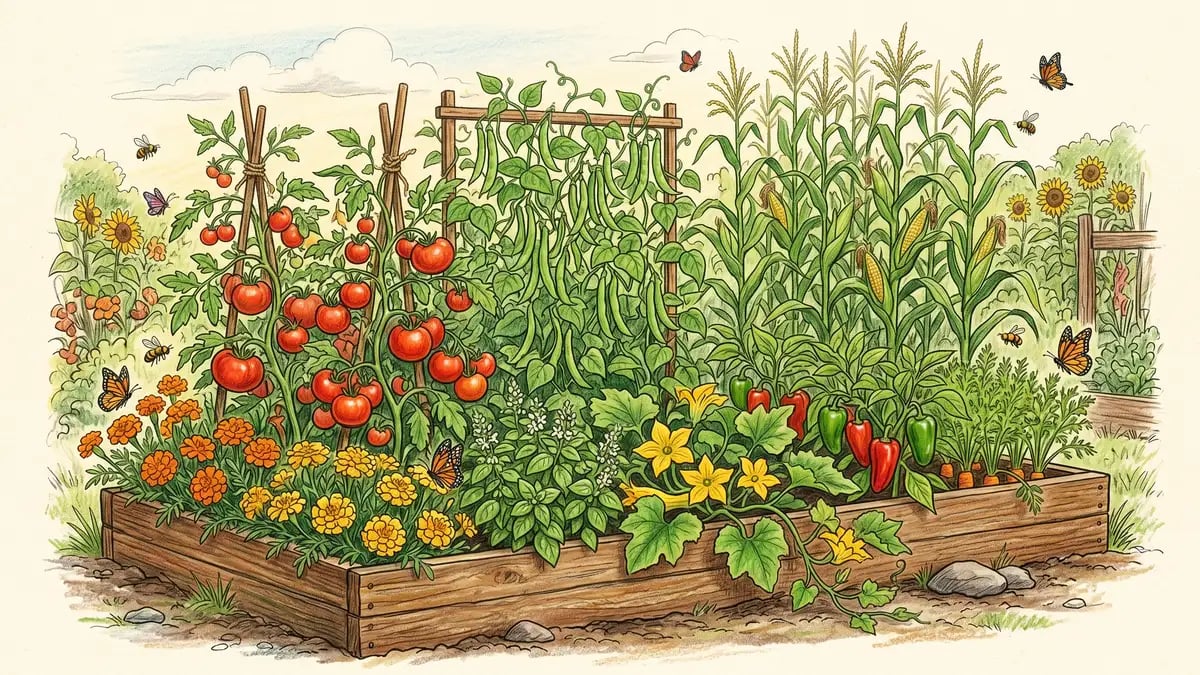
May is the high-stakes month. Last frost passes (around May 1 in zone 6, May 15 in zone 5) and the warm-season crops finally go in the ground. Audrey's Little Farm runs a useful primer on why planting too early — typically 1–2 weeks before last frost — kills more transplants than any pest. Soil temperature still drives the decision: tomatoes and peppers want 65°F+ (18°C+) at planting depth, ideally 70°F (21°C).
Transplant out (after last frost): tomatoes + basil + marigolds (the canonical trio); peppers + basil; eggplant; cucumbers (or direct-sow); melons; squash; pumpkins.
Direct-sow: bush beans, pole beans (with corn for Three Sisters), summer squash, sweet corn, cucumbers, sunflowers (companion + late pollinator support), nasturtiums.
This is the month for the iconic summer companion combinations:
| Combination | Why it works | Where to plant |
| Tomato + basil + marigold | Basil masks tomato scent from thrips and hornworms; marigold attracts hoverflies and confuses pests | 1 tomato per square, basil at corners, 1 marigold per 2 sq ft |
| Three Sisters: corn + beans + squash | Corn supports beans; beans fix nitrogen; squash shades soil and deters raccoons | Dedicated 4-square cluster after soil is 65°F (18°C) |
| Pepper + basil + parsley | Basil supports lacewings (pepper aphid predators); parsley attracts pollinators | 1 pepper per square, basil + parsley at corners |
| Carrot + onion (still-going) | Onion volatiles mask carrot scent from carrot rust fly | Alternating squares, 16 plants each at 3-inch (7.5 cm) spacing |
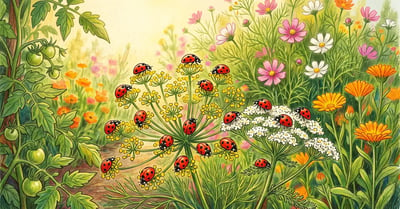
| Cucumber + dill + nasturtium | Dill attracts parasitic wasps targeting cucumber beetles; nasturtium acts as a trap crop | Cucumber on trellis; dill self-seeded; nasturtium sprawled at the base |
Source: Garden Betty — Three Sisters Garden Guide and Penn State Master Gardener York County (PDF above).
June — Mulch, Train, Succession Sow
By June, the spring crops are peaking and the summer crops are settling in. Three jobs this month: mulch deeply (3–4 inches / 7.5–10 cm of straw or wood chips around tomatoes, peppers, squash to conserve moisture and suppress weeds); train climbers (tomatoes to single or dual stems; pole beans up the trellis; cucumbers along their support); and continue succession sowing.
Succession sow (every 2–3 weeks): bush beans, lettuce (heat-tolerant cultivars only), radishes, carrots, more dill. Illinois Extension's succession planting chart (PDF) spells out the windows for every crop.
Harvest: overwintered garlic (when half the leaves yellow), peas (before they get starchy), spinach (before bolt), strawberries, lettuce, radishes, last of the cool-season greens.
This is also when fall brassica planning begins. Order seed for fall broccoli, cabbage, kale, and Brussels sprouts — they'll need to start indoors in early-to-mid July.
July — Peak Production, Fall Brassica Starts
July is the cruise month. Most of the garden is producing on its own. The two real tasks: start fall brassicas indoors (8–10 weeks before first fall frost — for zone 6 with Oct 15 first frost, that's mid-July) and direct-sow fall carrots, beets, and turnips mid-month.
Direct-sow: bush beans (last reliable round), summer lettuce (heat-tolerant), more dill, fall carrots, fall beets, turnips, fall peas (zone 7+).
Transplant out (early): Brussels sprouts seedlings if started in May (need 100+ days to mature before first frost).
Harvest: tomatoes (just starting), peppers, summer squash, cucumbers, beans, basil, blueberries, raspberries, currants.
If your tomatoes are showing yellow lower leaves, that's not a calendar problem — it's typically watering or nutrient. Consult our soil health guide on what's likely depleted by mid-summer.
August — Plant Fall Brassicas, Harvest Peak
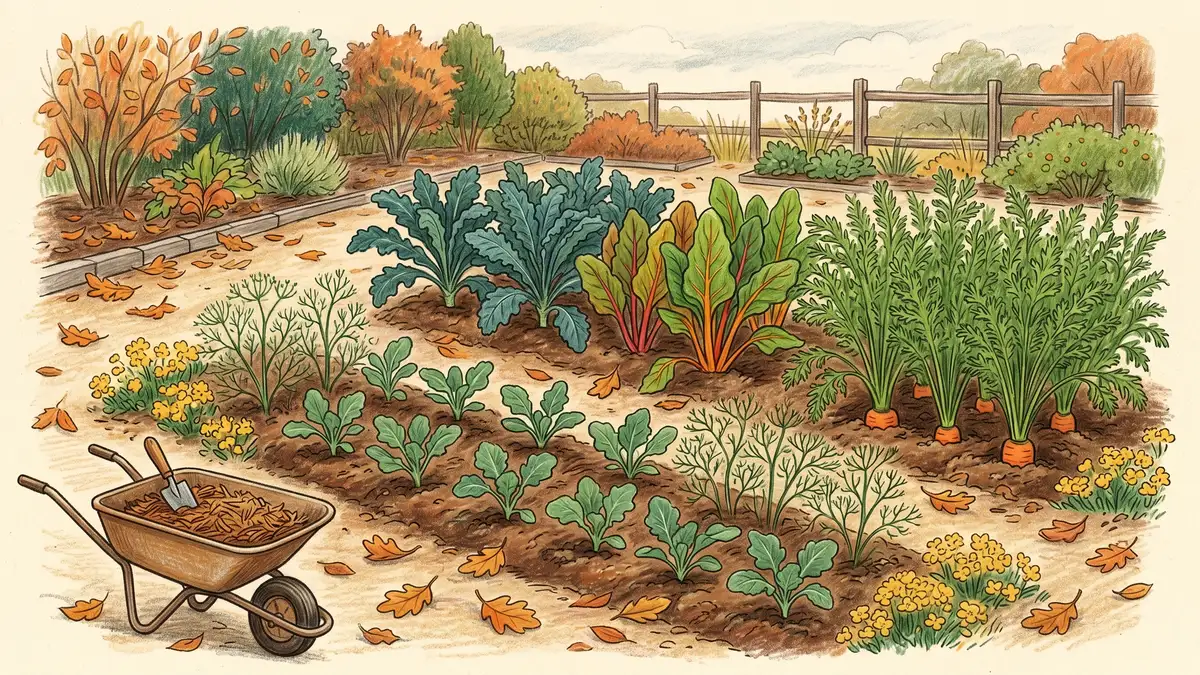
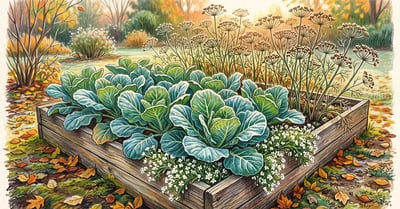
August is when the fall companion garden goes in. Transplant your indoor-started brassicas (broccoli, cabbage, cauliflower, kale, Brussels sprouts) into beds where the spring greens or peas finished. Pair them with dill (attracts parasitic wasps that target cabbageworms) and sweet alyssum (brings hoverflies). High Mowing Seeds' fall brassica guide covers the timing in detail — for zone 6, August 1–15 is the transplant window.
Direct-sow: spinach, lettuce, arugula, mâche, radishes, kohlrabi, fall turnips, garlic-precursor cover crops.
Harvest: peak tomato, pepper, eggplant, beans, summer squash, melons, sweet corn (1 ear per stalk for sweet corn), basil for pesto, cucumbers, blueberries, blackberries.
Companion combinations to install for fall:
| Combination | Why it works | Where to plant |
| Broccoli + dill + alyssum | Dill recruits parasitic wasps targeting cabbageworm eggs; alyssum brings hoverflies and ground beetles | Broccoli at 12-inch (30 cm) spacing; dill self-seeded among them; alyssum as edging |
| Carrots + onions (fall round) | Same scent-masking partnership; fall carrots are sweeter than summer ones | Alternating squares, sown by Aug 15 in zone 6 |
| Spinach + lettuce + radish (fall) | All cool-season; radishes mature first and mark the row; spinach overwinters in zone 6+ with mulch | Direct-sow from Aug 15 onward |
| Kale + chard + parsley | All deep-rooted greens that tolerate light frost; harvestable through November in zone 6, December in zone 7+ | Mid-bed, 8–12 inch (20–30 cm) spacing |
Source: High Mowing Seeds — Fall Planting Guide and UC Master Gardeners Santa Clara — Vegetable Planting Chart.
September — Garlic, Cover Crops, Last Spinach
September is transition. The fall brassicas are bulking up. Tomato production is winding down (frost preparation begins). Two important seeding jobs: plant garlic (mid-September in zone 5, late September in zone 6, October in zone 7+ — cloves need 6–8 weeks of root growth before hard freeze) and sow cover crops on any beds that won't be growing through winter.
Direct-sow cover crops: winter rye (zones 3–9), crimson clover (zones 6–9), hairy vetch (zones 4–9), white clover, oats (will winterkill — that's fine), buckwheat (only if 6 weeks before frost). USDA NRCS's cool-season cover crop research (PDF) covers the planting-date trade-offs for each.
Direct-sow vegetables: last spinach (overwinters), arugula, mâche, lamb's lettuce, last radishes (zones 7+).
Harvest: winter squash (when stems are dry and rinds are hard), pumpkins, last tomatoes, peppers, sweet potatoes, fall lettuce, kale, broccoli, dry beans.
October — Garlic, First Frost, Mulch
The first fall frost lands around October 15 in zone 6, October 30 in zone 7. Cover or harvest tender crops before frost. Brassicas, kale, chard, spinach, and root vegetables all tolerate frost and actually improve in flavour after a cold snap.
Plant garlic (zones 6–7 main window). 4 inches (10 cm) deep, 6 inches (15 cm) apart, pointed end up. Mulch with 4 inches of straw or shredded leaves. Hardneck cultivars for zones 4–7, softneck for zones 7+.
Mulch the food forest and perennial beds. The fall leaf flush is free organic matter — see our sheet mulching guide for converting them into next year's bed.
Harvest: apples, pears, late raspberries, fall brassicas (broccoli heads, cabbage, cauliflower as ready), Brussels sprouts (after frost), kale, chard, fall carrots, beets, parsnips (improved by frost), winter squash storage.
November — Cover, Mulch, Plan
By November, most beds are either covered in mulch, growing cover crops, or holding the last fall brassicas. Wisconsin Extension's monthly gardening guide calls this the "tucking in" month — protect overwintering crops, finish leaf cleanup, and start the next year's planning.
Tasks: top up mulch on garlic beds and overwintering spinach/kale; clean and store tools; review what worked this season; order next year's seeds while inventories are full.
Harvest: Brussels sprouts (best after multiple hard frosts), kale (deepens in flavour), parsnips, fall lettuce under row cover, last carrots before ground freezes.
December — Rest, Read, Plan
Genuine off-season in zones 5–7. The work is mostly indoors: review garden journals, sketch next year's layout, study companion combinations, and rest. In zones 8+, this is a productive month for cool-season crops (lettuce, brassicas, peas, garlic) — adjust the calendar accordingly.
Tasks: finalise seed orders for January delivery; prep indoor seed-starting space (lights, heat mat, trays, soilless mix); inspect and sharpen tools.
Common timing mistakes that kill the calendar
Planting too early. Tomatoes set out 1 week before last frost don't grow faster than ones set out 1 week after — they grow slower (cold soil stalls roots) and often die in late frost. Skipping hardening off. A week of gradual sun exposure is the difference between a tomato that thrives and one that bleaches white in 48 hours. Missing the fall planting window. Most gardeners forget August brassica planting and wonder why they have nothing to harvest in October. Set a calendar reminder. No succession sowing. One big lettuce planting bolts in June. Three small plantings spaced 2 weeks apart give you fresh lettuce from May through July. Trusting calendar dates over soil temperature. "May 15" doesn't mean anything if the soil is still 55°F — peppers will sit in cold soil and rot. Buy a thermometer.
Quick-Reference: Companion Combinations by Season
| Season | Top combinations | Avoid pairing |
| Early spring (Mar–Apr) | Peas + lettuce + radish + spinach; onion sets + lettuce; spinach + carrots | Tender warm-season crops outside |
| Late spring (May) | Tomato + basil + marigold; pepper + basil; cucumber + dill + nasturtium | Tomato + potato (shared blight); fennel anywhere |
| Summer (Jun–Aug) | Three Sisters (corn + bean + squash); carrot + onion; succession beans + lettuce + radish | Onions + beans (allium suppresses legumes) |
| Fall (Sep–Oct) | Broccoli + dill + alyssum; kale + chard + parsley; spinach + lettuce + radish; fall carrots + onions | Same brassica spot 2 years running (clubroot risk) |
| Winter (Nov–Feb) | Cover crops: rye + vetch + crimson clover; garlic mulched with leaves | Bare soil — leaves the bed exposed to erosion and weed seed |
Source: Texas A&M AgriLife — Vegetable Garden Planting Guide (PDF) and OSU Extension Monthly Garden Calendars.
Get the Weekly Dig
One practical permaculture guide a week, written for gardeners who do this on weekends: companion pairings that hold up under scrutiny, and the ones that do not. Free, no spam, unsubscribe any time.
Join the Weekly DigFrequently Asked Questions
What should I plant in my garden right now?
It depends on your USDA zone and the date, but the simple rule is: check soil temperature with an $8 thermometer, then match it to germination thresholds. Soil at 40°F (4°C)? Plant peas, spinach, lettuce, radishes. Soil at 50°F (10°C)? Add carrots, beets, chard. Soil at 60°F (16°C)? Add bush beans, pole beans, corn, squash. Soil at 70°F (21°C)? Plant tomatoes, peppers, basil, eggplant, melons. The calendar dates are guides; soil temperature is the actual signal.
What is the best month to start a garden?
March in zones 6–7, April in zone 5, February in zones 8+. That's when soil first hits 40°F (4°C) and you can direct-sow peas, spinach, and lettuce. If you're starting from scratch, late winter is also when you build the bed (sheet mulching) and order seeds — so the actual "start" is January or February. By March or April, you're planting into a prepared bed.
When should I plant vegetables by month?
Zone 6 baseline: Mar: peas, spinach, lettuce, radishes, parsley. Apr: carrots, beets, chard, brassica transplants, more peas. May: tomatoes, peppers, basil, beans, corn, squash, cucumbers, eggplant. Jun: succession beans and lettuce; mulch heavily. Jul: fall carrots, beets, turnips; start fall brassicas indoors. Aug: transplant fall brassicas; sow fall lettuce, spinach, kale. Sep: garlic, cover crops, last spinach. Oct: garlic, mulching, harvest. Nov–Feb: rest, cover crops, planning. Adjust by zone — earlier in 7–8, later in 4–5.
What are the best planting days?
By soil temperature and weather, not lunar phase. The Old Farmer's Almanac publishes a "best planting days" calendar based on lunar position — that tradition has cultural value but the scientific evidence for moon-phase planting effects is weak. Use it if you enjoy the structure; ignore it without missing anything important. The actual best planting day is one where soil is at the right temperature for the crop, no frost is forecast for the next 7 days, and the soil is workable (crumbles, doesn't clump).
Can I plant vegetables in summer?
Yes — summer is the second main planting window. Direct-sow bush beans, pole beans, summer squash, cucumbers, basil, dill, summer-tolerant lettuce cultivars, fall carrots (mid-July onward), and fall brassica seedlings (start indoors mid-July, transplant August). The trick is avoiding peak heat — sow in the late afternoon or on overcast days, water immediately, and shade tender seedlings if temps exceed 85°F (29°C). Heat-stressed transplants establish poorly.
When should I start seeds indoors?
Count backwards from your last frost date. Onions and leeks: 12–14 weeks before. Brassicas, peppers, and eggplant: 8–10 weeks before. Tomatoes and basil: 6–8 weeks before. Cucumbers, melons, squash: 3–4 weeks before (these dislike root disturbance — many gardeners direct-sow instead). Lettuce, herbs (parsley, cilantro): 4–6 weeks before. Grow a Good Life's seed-starting guide covers the full timing chart.
Should I follow a lunar planting calendar?
Lunar planting (the idea that above-ground crops should be sown during the waxing moon and root crops during the waning moon) is an old practice with weak modern evidence. Some gardeners report success with it; controlled studies show no statistically significant effect. If you want to use it, the framework is published in the Farmers' Almanac. If you prefer evidence-based timing, soil temperature and frost dates will give you the same or better results without the moon-phase tracking.
Resources
- Cornell Cooperative Extension — Planting Dates
- Cornell Cooperative Extension Tompkins — First Planting Dates
- Oregon State Extension — Soil Temperature for Vegetable Seed Germination
- Oregon State Extension — Monthly Garden Calendars
- Penn State Extension — Vegetable Seed Planting Guide (PDF)
- UC Master Gardeners Santa Clara — Vegetable Planting Chart
- UMN Extension — Planting Dates and Distances (PDF)
- Wisconsin Extension Portage — Monthly Gardening Guide
- Illinois Extension — Succession Planting Chart (PDF)
- NC State Extension — Average First and Last Frost Dates
- USDA NRCS — Cool-Season Cover Crop Planting Dates (PDF)
- Texas A&M AgriLife — Vegetable Garden Planting Guide 2025 (PDF)
- Park Seed — First and Last Frost Dates by USDA Zone
- Farmers' Almanac — Planting Calendar by Zip Code
- High Mowing Seeds — Fall Brassica Planting Guide