
Why Late Summer Is the Highest-Leverage Month in the Garden
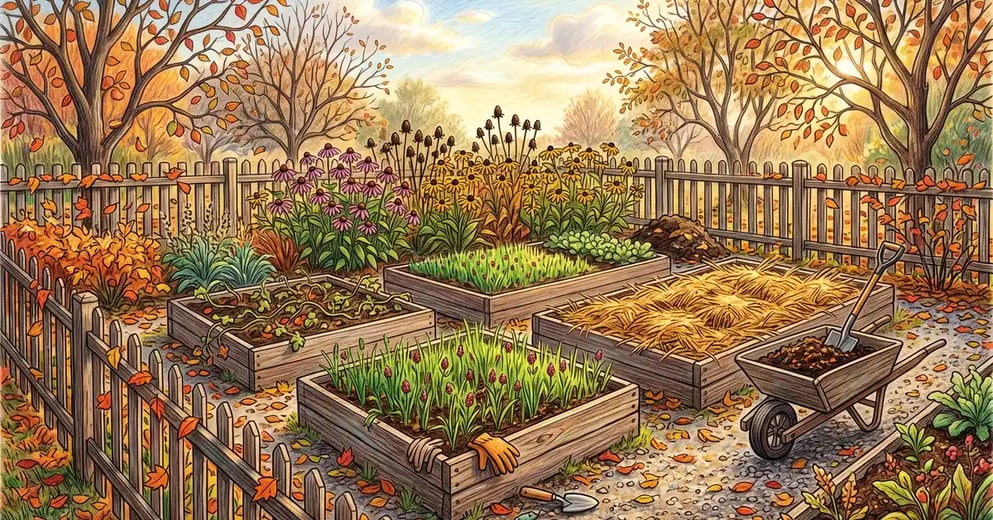
Almost everything you do between mid-August and the first hard freeze compounds. Cover crop seed sown now becomes next April's nitrogen. Leaves left where they fall become next year's beneficial insects. A bare bed loses nitrate all winter that you pay to replace in spring. Meanwhile the fall task most people prioritise, tidying, has the weakest evidence behind it. fall garlic planting windows by zone
A practitioner's version of permaculture fall prep: the seeding rates, the temperature thresholds, and an honest account of where "leave the leaves" is well supported and where sanitation still earns its place.
What you'll get:
- Cover crop seeding rates per 1,000 square feet, by species
- Documented nitrogen contributions, and how to estimate yours
- What overwinters in your leaf litter and hollow stems
- The four diseases that justify removing material
- A frost-relative timeline for the sequence
Key Takeaway
The evidence points one direction: keep the soil covered and keep something rooted in it. Cover crops cut erosion by up to 90 percent and hold 51 to 270 pounds of nitrogen per acre that would otherwise leach. Outside a short list of named diseases, tidiness buys you very little.
Which Cover Crop, at What Rate, by When?
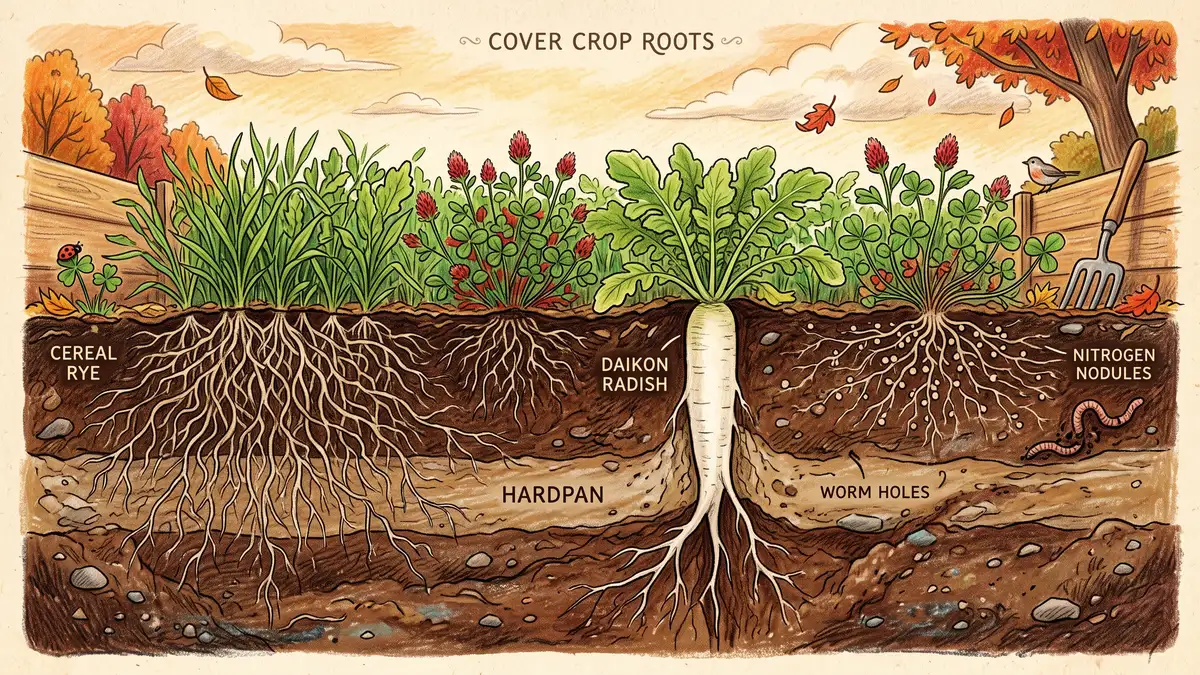
Match the species to your remaining window and what the bed lacks. Ohio State University Extension's cover crop review reports reductions of up to about 90 percent in erosion, 50 percent or more in nutrient runoff, and roughly 75 percent in sediment loading versus bare fallow, and puts cover crop nitrogen uptake at 51 to 270 pounds per acre, or 1.2 to 6.2 pounds per 1,000 square feet.
| Species | Drill Rate per 1,000 sq ft | What It Does |
| Cereal rye | 1.4 to 2.8 lb | Latest safe sowing, deep roots, allelopathic on small weed seeds |
| Oats | 1.4 lb | Winter-kills in cold zones, leaving a friable spring mulch |
| Hairy vetch | 0.34 to 0.46 lb | Nitrogen fixer, hardy through Zone 4 |
| Crimson clover | 0.23 lb | Fast N fixer, 3,500 to 5,500 lb dry matter per acre |
| Tillage radish | 0.18 to 0.28 lb | Taproot punches through compaction, winter-kills |
| Buckwheat | 1.5 to 2.5 lb | Late-summer catch crop, blooms fast, frost-tender |
Sources: SARE cereal rye, USDA NRCS oats, SARE hairy vetch, USDA NRCS crimson clover, USDA NRCS radish
SARE puts cereal rye's window at late summer to mid-fall in Zones 3 to 7, fall to mid-winter in Zone 8 and warmer, with late broadcast rescue seedings pushed as high as 300 to 350 pounds per acre. Buckwheat is the opposite case: SARE reports it establishes, blooms and matures in just 70 to 90 days, and should be killed within 7 to 10 days of flowering.
On nitrogen, SARE gives a usable field rule: credit hairy vetch with 2 to 3 pounds of nitrogen per acre per sunny day once full spring growth begins, so 25 sunny days before termination is roughly 50 to 75 pounds per acre. Crimson clover runs a carbon-to-nitrogen ratio near 14 to 1, meaning fast release, but needs to run to mid-May for measurable nitrogen. Radish taproots drive past 30 inches (75 cm), opening channels that persist after the root rots out. Our guide to winter cover crops covers termination.
Why This Works: Catch and Store Energy
Holmgren's second principle is usually illustrated with water tanks and solar panels. A fall cover crop is the cleanest garden example: it captures late-season sunlight that would fall on bare dirt, and residual nitrate that would flush out with winter rain, banking both until you want them. Ohio State puts nitrate leaching at around 37 percent of nitrogen loss from uncovered ground. A cover crop is a battery you plant.
How Deep Should Mulch Be, and Where Should It Not Go?
Two to four inches, and never against bark. Iowa State Extension is precise: 2 to 4 inches (5 to 10 cm) is effective, coarse mulches like wood chips at the higher end, fine ones like grass clippings at the lower. Deeper backfires: waterlogging, low soil oxygen, shallow rooting.
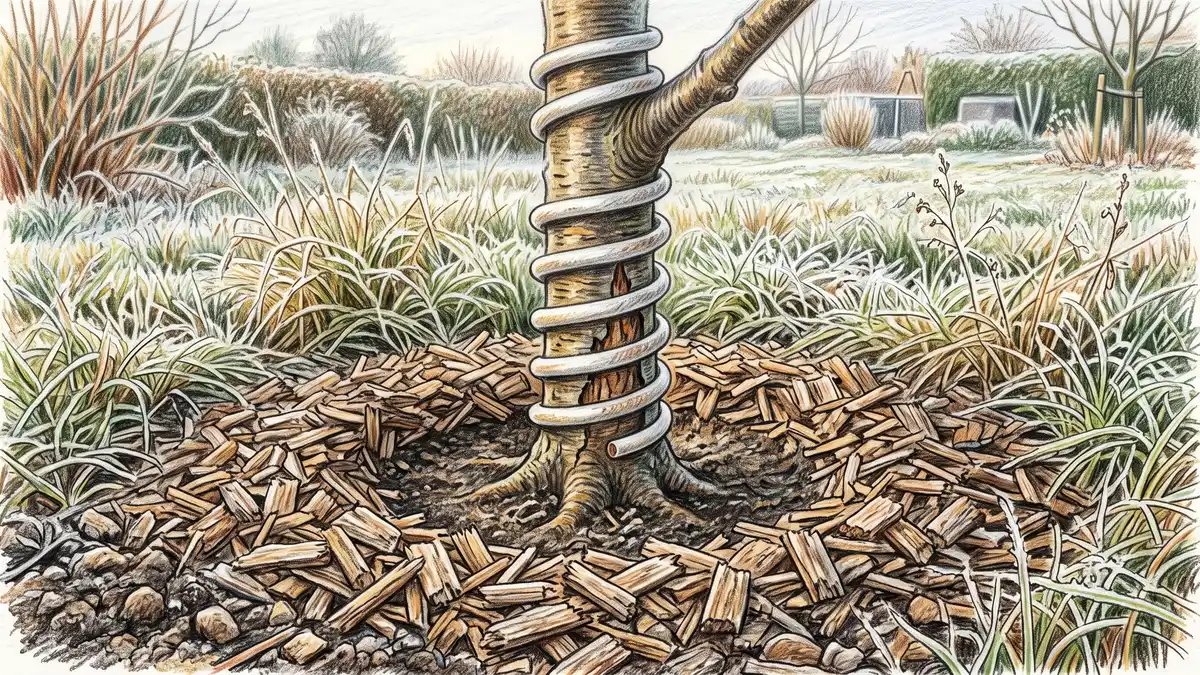
The crown and trunk rule matters more than depth. Feather mulch away from trunks and off perennial crowns entirely, because mulch against bark holds moisture where you least want it and invites rot and rodents.
Timing is what practitioners get wrong. Mulch perennials after the ground freezes. Winter mulch is not there to keep them warm, it is there to keep them consistently cold and stop freeze-thaw cycling heaving crowns out of the soil. Mulching early just gives voles a heated apartment.
What Actually Lives in the Leaves You Are About to Bag?
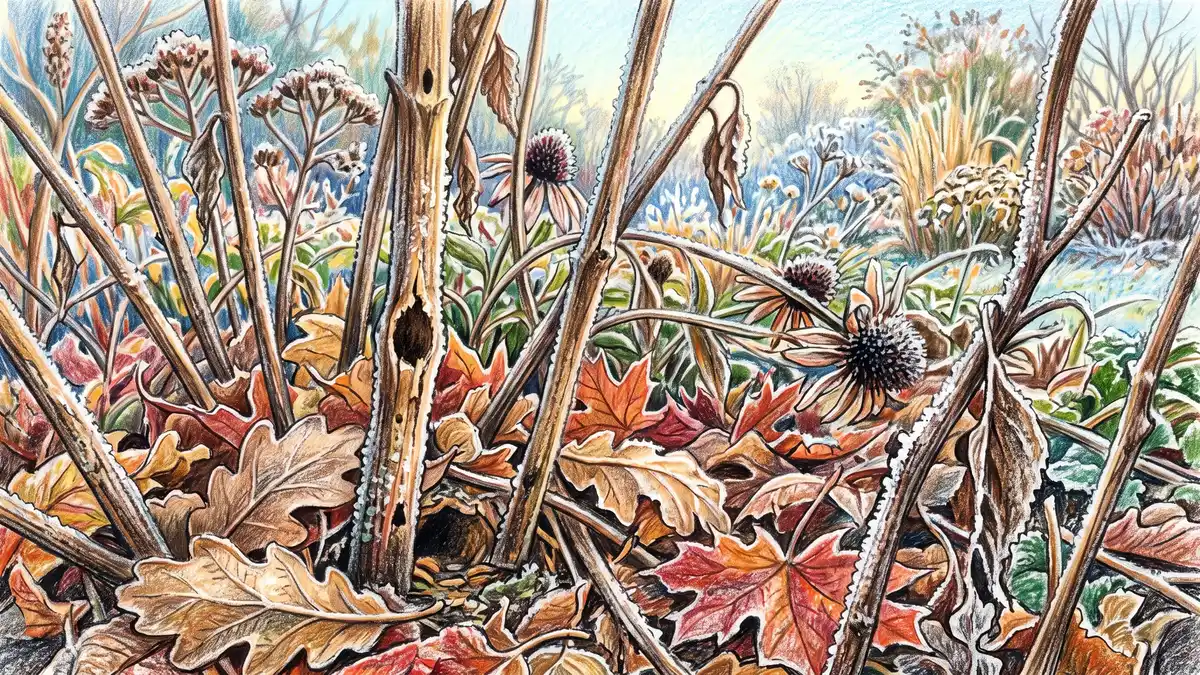
Most of your pest control workforce. The Xerces Society reports 70 percent of native bees nest in the ground and 30 percent in cavities such as hollow stems. Bumble bee queens overwinter just below the surface under leaf litter, and butterfly and moth larvae sit out the winter in the same layer.
Xerces' Leave the Leaves guidance asks for a layer a couple of inches thick, left unshredded, since shredding destroys the eggs and larvae in it. Standing stems matter equally: they hollow out as the plant dies back, and that cavity is the nest.
Also protect fruit trees from voles, which move under mulch and snow and girdle young bark. A spiral trunk guard plus a mulch-free ring at the flare costs a few dollars a tree.
When Removal Is Genuinely Justified
Four cases override "leave it". Tomato foliage infected with late blight, cucurbit vines with squash vine borer larvae inside, rose leaves with black spot, and apple or crabapple leaves with scab. University of Minnesota Extension is explicit on the last one: rake up and destroy fallen leaves before the first snowfall to break the cycle. Everything else can stay.
Why Does Fall Feeding Damage Woody Plants?
Because it tells the plant to grow when it should be hardening off. University of New Hampshire Extension advises avoiding high-nitrogen fertiliser from late August to mid-September, because it pushes a flush of soft growth with no time to lignify before the first freeze. That growth dies back, sometimes taking the shoot with it.
Fall is still the right window for slow amendments. Rock phosphate, lime and elemental sulphur need months of biological and chemical action, so October is efficient for them. Fast nitrogen in October is not.
Soil temperature explains why. Iowa State reports nitrification peaks around 90°F and slows rapidly below 50°F but continues until 32°F. Soluble nitrogen applied to warm autumn soil converts to leachable nitrate and washes away before spring roots exist. Soil life does not switch off either: a 2019 review put the lower limit for earthworm activity around 41°F (5°C) or lower.
What Should Actually Go in the Ground Now?
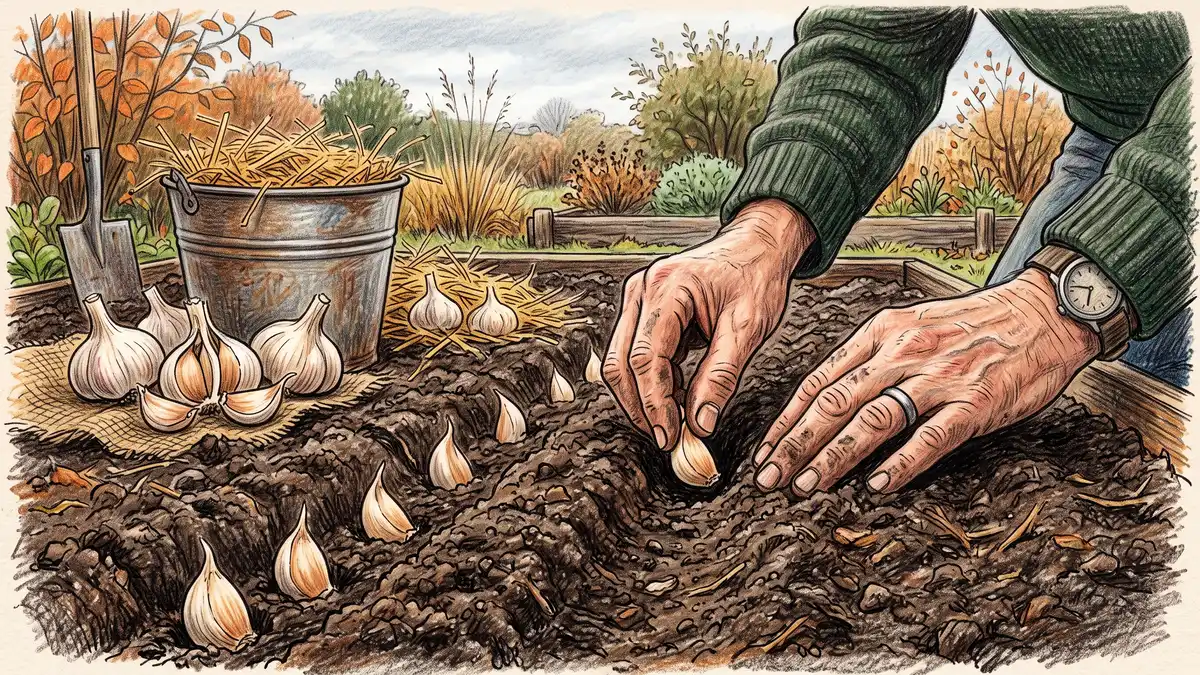
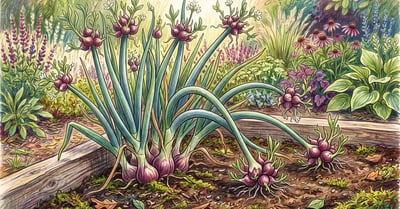
Garlic, and more overwintering vegetables than most people attempt. Plant garlic pointed end up, 2 to 3 inches (5 to 7.5 cm) deep, 6 inches (15 cm) apart, a few weeks before the ground freezes, then mulch. Roots establish through autumn while the top stays dormant. Our fall garlic companion guide covers what to put beside it.
Oregon State Extension lists vegetables withstanding heavy frost below 28°F: spinach, onions, garlic, leeks, rhubarb, rutabaga, broccoli, kohlrabi, kale, cabbage and collards, plus a rule worth internalising: between 40 and 98°F, every 18°F increase roughly doubles growth rate.
Low tunnels widen this. A University of New Hampshire study measured winter minima inside low tunnels running 20 to more than 40°F warmer than outdoor minima. Iowa State adds the operating detail: vent above 40°F outside, and get crops to full size by early November, because winter tunnels hold plants rather than grow them.
What Is the Actual Sequence?
Everything keys off your average first frost date, not the calendar month.
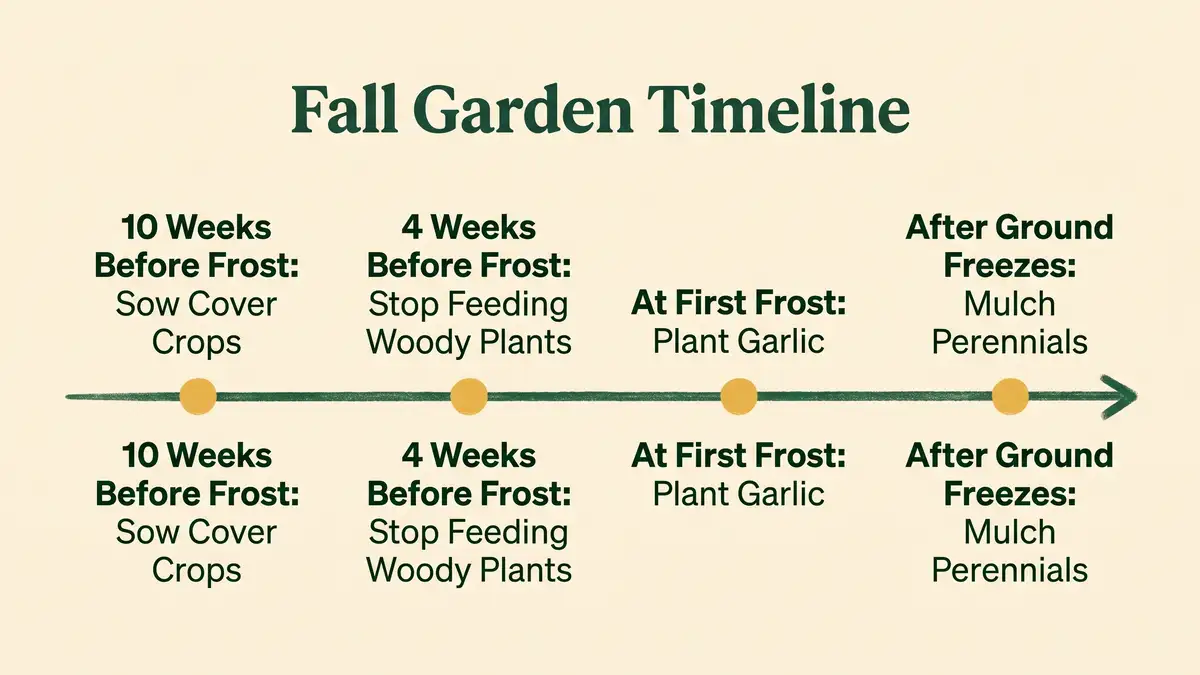
10 to 8 weeks before frost: sow legume covers
Hairy vetch and crimson clover need establishment time to nodulate. This is also the last window for buckwheat as a fast catch crop before frost kills it.
6 to 4 weeks before frost: oats, radish, stop feeding woody plants
Oats and tillage radish want enough bulk before they winter-kill. Cut all high-nitrogen applications to trees and shrubs now so growth hardens off.
4 to 2 weeks before frost: cereal rye, garlic, slow amendments
Rye still establishes in cold soil, so it is your late option. Plant garlic. Apply rock phosphate, lime or sulphur now to work over winter.
At frost: targeted sanitation only
Remove blighted tomato foliage, borer-infested squash vines, black-spotted rose leaves and scabby apple leaves. Leave every other stem and leaf standing.
After the ground freezes: mulch and guard
Now apply 2 to 4 inches of mulch over perennial beds, kept clear of crowns. Fit trunk guards on young trees. Deep-water woody plants once before freeze-up.
Why This Works: Produce No Waste
Leaves, stems and spent crops are not waste awaiting removal. They are next year's soil organic matter and this winter's insect habitat, already delivered exactly where needed. Permaculture instinct and entomology converge here, and the extension literature only breaks with them on a short, named list of pathogens. Mollison's framing holds: a problem is usually a yield you have not recognised yet.
Key Takeaway
Sow a cover crop, mulch 2 to 4 inches after the ground freezes, stop feeding woody plants four weeks before frost, and remove only the four disease categories that warrant it. Everything else you leave standing is doing work you would otherwise pay for.
Frequently Asked Questions
How do you prepare a garden for winter?
Work backwards from your average first frost. Sow legume cover crops 8 to 10 weeks before it, oats and radish at 4 to 6 weeks, and cereal rye up to 2 weeks before or later in mild zones. Stop high-nitrogen fertiliser on woody plants by roughly four weeks out. Plant garlic a few weeks before the ground freezes, and remove only diseased material. Once the ground has frozen, apply 2 to 4 inches of mulch over perennial beds, clear of crowns and trunks.
How do you improve garden soil over the winter?
Keep something growing in it, and cover what you cannot plant. Cover crops cut erosion by up to 90 percent versus bare ground and hold 51 to 270 pounds of nitrogen per acre in biomass rather than losing it to leaching. Fall is also right for slow amendments such as rock phosphate, lime and elemental sulphur. Avoid soluble nitrogen, because nitrification continues down to about 32°F and the resulting nitrate washes through before spring roots exist.
How do you prepare perennials for winter?
Water deeply once before the ground freezes, then leave top growth standing. Do not mulch until the soil has frozen, because winter mulch prevents freeze-thaw heaving rather than keeping roots warm, and early mulch mainly provides rodent shelter. Use 2 to 4 inches and keep it off crowns entirely. Skip fall nitrogen. For woody perennials, fit a trunk guard and leave a mulch-free ring at the flare.
Should you clean up the garden in fall or leave it standing?
Leave it, with four exceptions. Roughly 70 percent of native bees nest in the ground and 30 percent in cavities including hollow stems, so the leaf layer and standing stems are both occupied habitat. Xerces asks that leaves be left unshredded, since shredding destroys the eggs and larvae in them. The exceptions are late blight tomato foliage, squash vines with borer larvae, black-spotted rose leaves and apple scab leaves, which University of Minnesota Extension says to rake and destroy before the first snowfall.
What perennials should you cut back in fall?
Very few, and for disease reasons rather than tidiness. Cut back peonies if you have had botrytis, bearded iris foliage to reduce iris borer overwintering, and anything with obvious powdery mildew or leaf spot. Leave ornamental grasses, coneflower, rudbeckia, bee balm, joe pye weed and hollow-stemmed natives standing until spring, since they hold seed for birds and cavities for bees. Cut those in late spring once temperatures hold above 50°F. Our permaculture starting guide covers the seasonal rhythm.
Get the Weekly Dig
One practical permaculture guide a week, written for gardeners who do this on weekends: permaculture design for real backyards. Free, no spam, unsubscribe any time.
Join the Weekly DigResources
- Ohio State University Extension: Using Cover Crops to Improve Soil and Water Quality
- SARE: Managing Cover Crops Profitably, Cereal Rye
- SARE: Managing Cover Crops Profitably, Hairy Vetch
- SARE: Managing Cover Crops Profitably, Buckwheat
- USDA NRCS: Crimson Clover Cover Crop Fact Sheet (2024)
- USDA NRCS: Radish Cover Crop Fact Sheet (2024)
- Xerces Society: Leave the Leaves, Winter Habitat Protection
- Iowa State University Extension: Using Mulch in the Garden
- University of Minnesota Extension: Apple Scab
- Oregon State University Extension: Plant Cold-Hardy Vegetables for a Spring Harvest