Fall garlic is one of the highest-ROI crops a homesteader can plant: 1 pound of seed cloves yields 6 to 8 pounds of dried, cured bulbs at harvest, and once you save your biggest bulbs as next year's seed, your seed cost drops to zero. Plant in October, mulch heavily, harvest in July. The catch: what you plant beside it (and what you avoid planting beside it) makes a measurable difference to both garlic yields and the health of every other crop in the bed. first frost date planning the full fall garden timeline when to plant garlic what to grow beside leeks topsetting tree onions
The science here is unusually clear for companion planting. Garlic's organosulfur compounds (allicin, diallyl disulfide, ajoene) are documented in peer-reviewed trials to cut spider mite populations 44 to 65 percent on strawberries, aphids 60 to 90 percent, and diamondback moth damage 50 to 80 percent on brassicas. Conversely, those same compounds inhibit nitrogen fixation in beans and peas, which is why every responsible gardening source tells you not to plant legumes with garlic.
Quick answer
Plant garlic in fall (4 to 6 weeks before hard frost) alongside strawberries, brassicas (cabbage, broccoli, kale), beets, carrots, and lettuce. Avoid planting near beans, peas, or asparagus. Use 4 to 6 inch clove spacing in rows 10 to 12 inches apart, plant 2 to 3 inches deep, and mulch with 4 to 8 inches of straw depending on your USDA zone. Harvest in mid-July when the lower 3 to 5 leaves yellow, then succession-plant bush beans, lettuce, or buckwheat cover crop.
Why garlic gets planted in the fall
Hardneck garlic (Allium sativum var. ophioscorodon), the variety most homesteaders grow, requires 6 to 8 weeks of soil temperatures between 32 and 50 F to trigger vernalization. Without that cold period, cloves stay as unsegmented "rounds" instead of forming proper multi-clove bulbs. That's the entire reason fall planting matters: you're banking on winter to do the chemistry your garlic needs.
The window varies dramatically by zone. Gardening Know How's zone-by-zone planting guide and Sustainable Market Farming's documented timing recommend:
| USDA Zone | Optimal planting window | Mulch depth (straw) |
| Zones 0 to 3 | Early to mid September | 6 to 8 inches |
| Zones 3b to 5 | Late September to early October | 5 to 8 inches |
| Zones 5 to 6b | Mid to late October | 3 to 6 inches |
| Zones 7 to 8 | Early to mid November | 2 to 4 inches |
| Zones 9 to 10 | December to January (after soil cools below 50 F) | 1 to 2 inches (weed suppression) |
Sources:
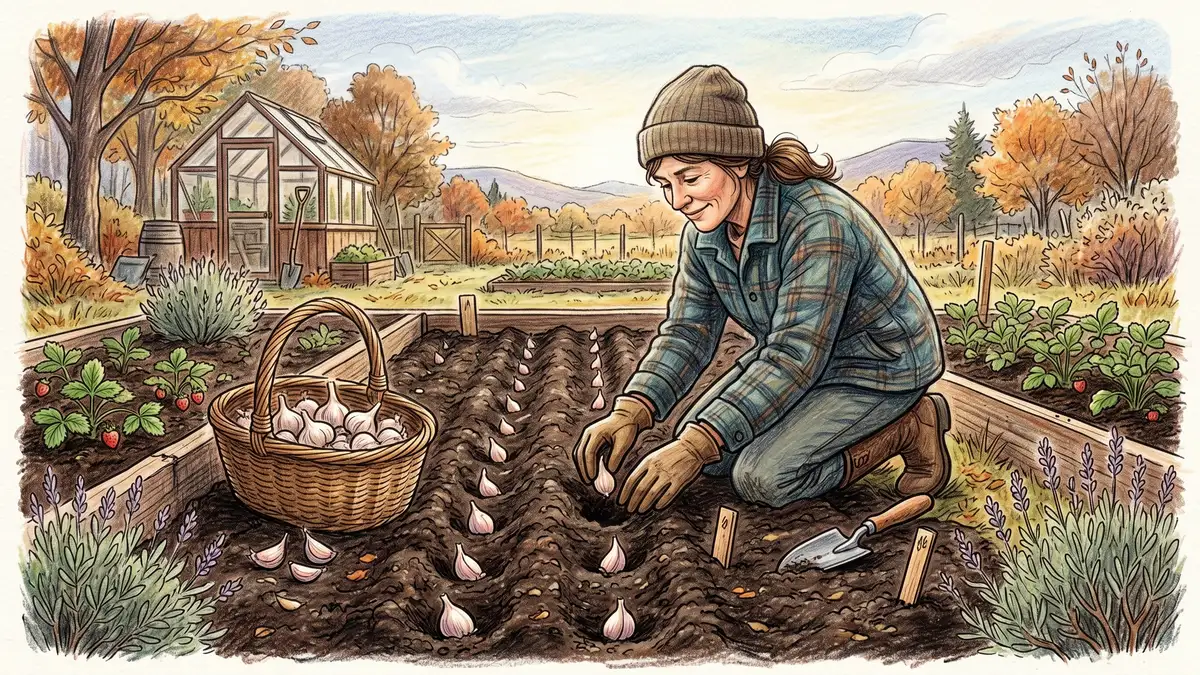
Plant cloves pointed-end-up at 2 to 3 inches deep, 4 to 6 inches apart in rows 10 to 12 inches apart. Savvy Gardening's spacing trial found that 6 inch spacing produces the largest individual bulbs, while 4 inch spacing yields more bulbs per row at the cost of slightly smaller heads. Cornell Cooperative Extension and Penn State Extension's garlic production guide both recommend the wider spacing for homestead production where bulb size matters.
The science of why garlic works as a companion plant
Garlic's pest-deterrent reputation isn't folklore. The active compounds, allicin (formed when cloves are crushed) and diallyl disulfide (DADS) released as root exudates, do measurable work in the soil and air around the plant. Recent research published on PMC's investigation of garlic root exudates and soil microbiome dynamics identified DADS as the most abundant volatile compound (44.4 percent of total volatile organic compounds in root exudates) and showed it generates reactive oxygen species in the soil that selectively suppress fungal pathogens while enriching beneficial microbes.
Why this works (the permaculture insight)
Garlic isn't doing one thing well; it's doing four things simultaneously. It's repelling pests through volatile compounds, suppressing fungal pathogens through soil chemistry, providing dual-harvest yield (scapes in spring, bulbs in summer), and conditioning soil for next year's rotation. This is the multi-functional element principle of permaculture in a single plant: one species earning its space through several vectors at once.
The pest-deterrent data come from controlled trials, not anecdote:
- Spider mites on strawberries: A 2013 Brazilian field trial published in PubMed's record on garlic interplanting against Tetranychus urticae showed 44 to 65 percent reduction in two-spotted spider mite populations, with effect strength scaling with garlic density (1 row, 2 rows, 3 rows tested).
- Diamondback moth on brassicas: 50 to 80 percent reduction in caterpillar damage on cabbage and broccoli when garlic is interplanted as a barrier.
- Aphids generally: 60 to 90 percent population reduction within days of garlic extract application or interplanting, per multiple trials.
- Japanese beetles: Documented repellency at concentrations as low as 0.45 percent w/v of garlic bulb extract in laboratory bioassays.
The good companions: what to plant with garlic
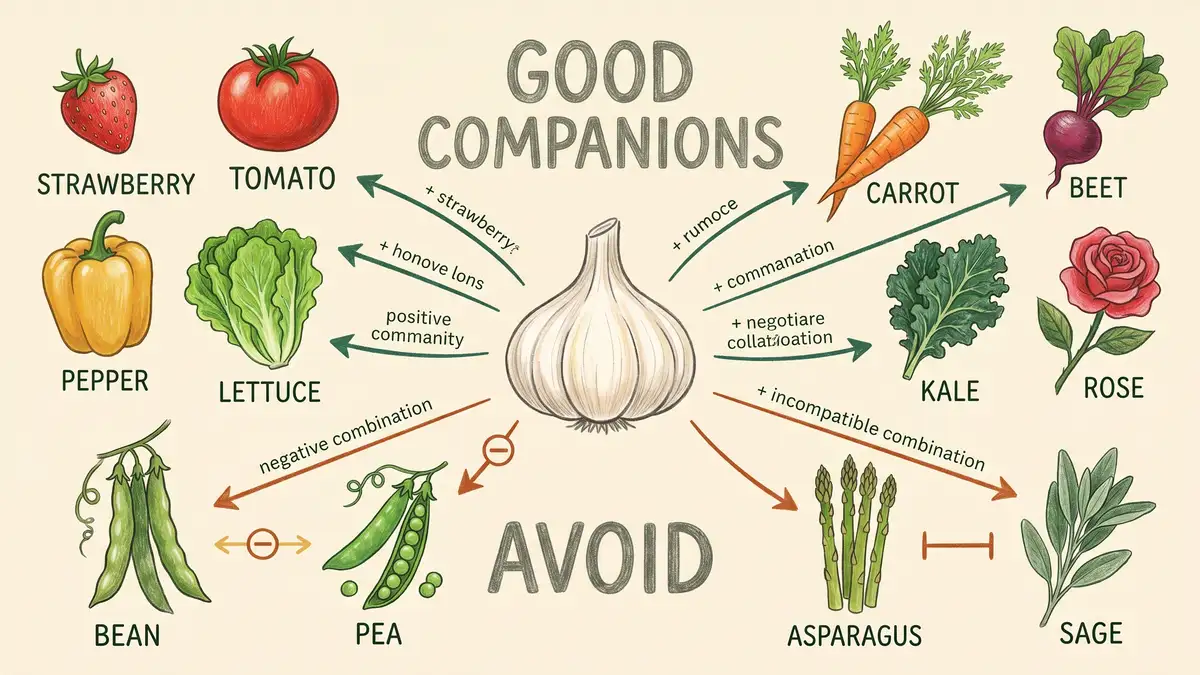
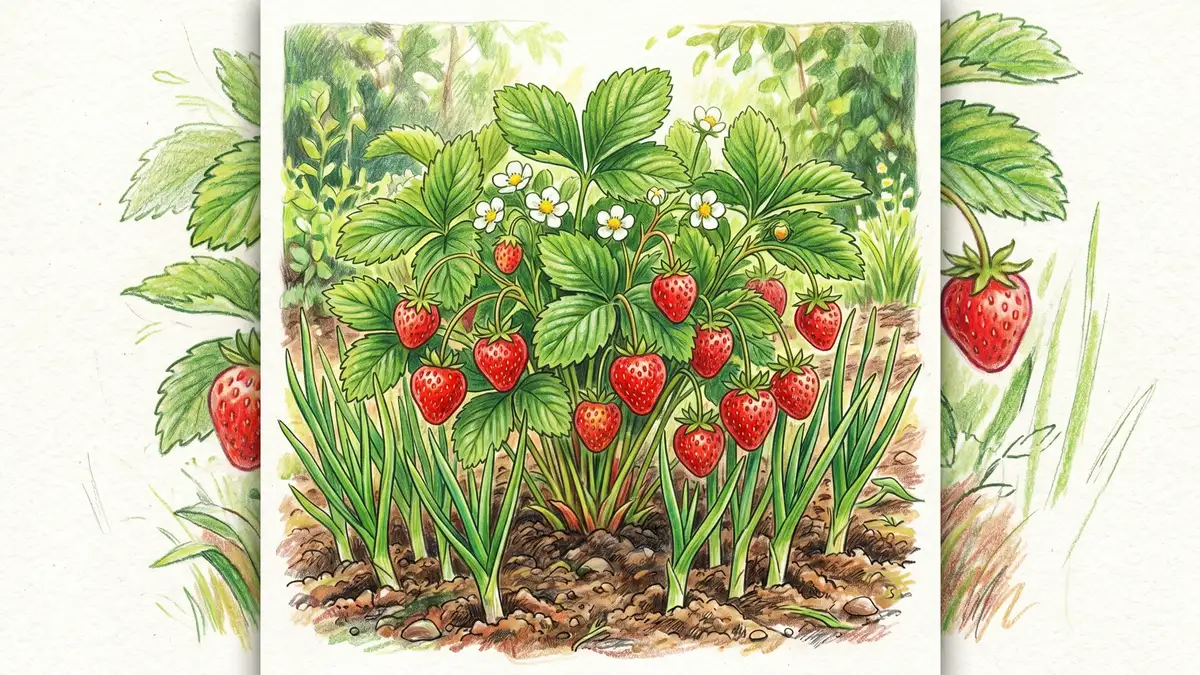
Strawberries (Fragaria x ananassa). The strongest research-backed garlic companion. Plant a wide-spaced double row of garlic with strawberries in the middle (about 6 inches between garlic and strawberry plants) rather than mixing them in the same row. The 65 percent spider mite reduction effect kicks in at moderate garlic density; very dense garlic plantings can stunt strawberry growth through allelopathy, so pace yourself.
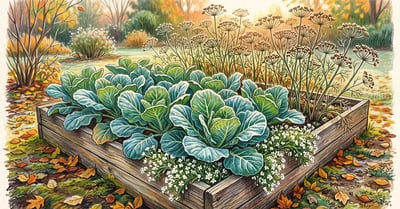
Brassicas (cabbage, broccoli, kale, kohlrabi). Garlic and brassicas occupy different soil depths (garlic roots 2 to 4 inches; brassica taproots 6 to 10 inches) and complement each other on pest pressure. Position brassica seedlings about 6 inches from garlic rows. In Zones 3 to 6, fall-planted garlic and winter-sown brassica seedlings reach maturity around the same window in late spring.
Beets and carrots. Both root crops penetrate well below garlic's shallow root zone (6 to 8 inches for beets, 8 to 12 inches for carrots) and benefit from garlic's documented soil-fungicide effect. Plant smaller beets or early carrots between garlic rows in early spring; harvest them as garlic approaches maturity in early summer.
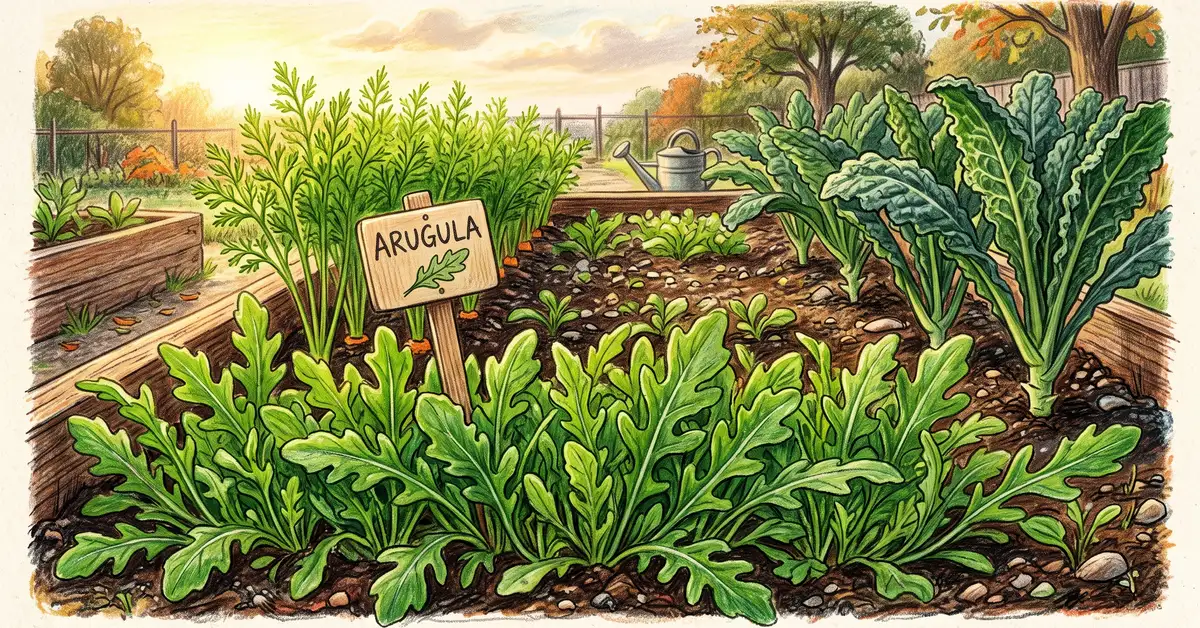
Lettuce, spinach, arugula, mustard greens. The space above garlic is empty all winter and most of early spring. Spring-planted lettuce and arugula reach harvest by late April or May, well before garlic finishes in July. Roots and Boots' intercropping notes on lettuce with garlic document this is one of the highest space-efficiency pairings available in early spring.
Tomatoes and peppers (post-harvest, not concurrent). Plant tomatoes and peppers in the bed after garlic is harvested in July, not concurrently. Garlic root exudates can inhibit pepper and tomato growth at high concentrations. The good news: research from PMC on garlic-conditioned soils shows pepper resistance to Phytophthora capsici increases 22 to 60 percent in soil where garlic recently grew, making this an excellent rotation sequence.
Roses and fruit trees. A tight ring of garlic cloves (2 to 3 inch spacing) at the base of rose bushes or around fruit trees deters Japanese beetles, voles, and rabbits. Plant in fall, harvest the following summer, replant or leave open.
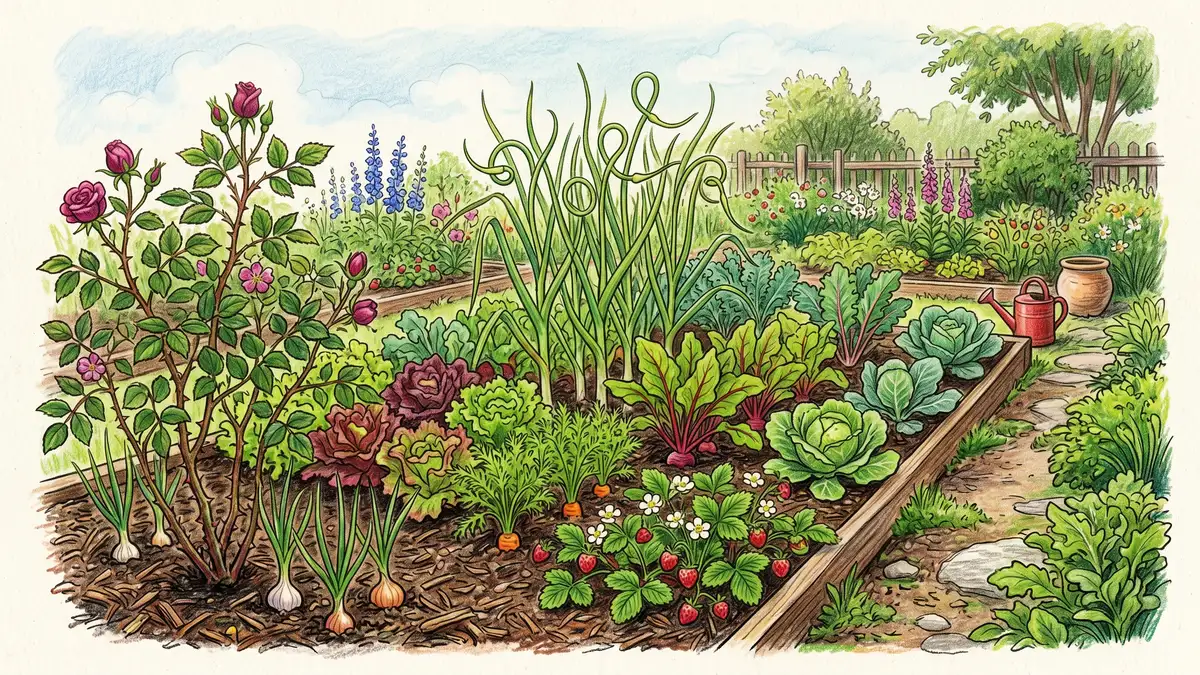
Companion compatibility at a glance
| Companion | Compatibility | Documented benefit / risk | Spacing from garlic |
| Strawberries | Strong (research-backed) | 44 to 65% spider mite reduction (peer-reviewed); allelopathy at very high garlic density | 6 inches |
| Brassicas (cabbage, broccoli, kale) | Strong | 50 to 80% diamondback moth and cabbage worm reduction | 6 inches |
| Beets, carrots | Strong | Different soil depths; sulfur soil-fungicide effect benefits roots | 4 to 6 inches |
| Lettuce, spinach, arugula | Strong (spring intercrop) | Fills empty space above garlic; harvest before garlic peaks | Between rows |
| Tomatoes, peppers | Post-harvest only | Garlic-conditioned soil improves Phytophthora resistance 22 to 60% | Plant after July harvest |
| Roses, fruit trees | Strong | Japanese beetle, vole, and rabbit deterrence | Tight ring at base, 2 to 3 inch garlic spacing |
| Beans, peas, all legumes | Avoid | Active inhibition of nitrogen fixation in root nodules | Different bed; 2 to 3 year rotation gap |
| Asparagus | Avoid | Competes for shallow soil; may inhibit asparagus growth | Different bed, 3 to 4 ft minimum |
| Sage, parsley | Avoid | Mutual stunting reported (traditional sources, weaker peer-reviewed support) | Different bed |
Sources:
What NOT to plant with garlic
Active allelopathic incompatibilities
Garlic doesn't just compete with these plants, it actively suppresses them through root chemistry. The legume-allium incompatibility is well documented in peer-reviewed research and is one of the few "companion planting myths" that turns out to be biologically real.
Beans and peas (and all legumes). Garlic root exudates inhibit nitrogen fixation in legume root nodules, effectively breaking the symbiosis between Rhizobium bacteria and the legume that gives legumes their fertility-building reputation. A Semantic Scholar entry on Allium sativum effects on legume nodulation documents this for cowpea and groundnut, with the recommendation to keep legume beds free of garlic for at least one full season for nodulation to recover. Don't intercrop, don't follow garlic immediately with beans, plan a 2 to 3 year gap.
Asparagus. Both crops compete for shallow soil resources and garlic appears to inhibit asparagus growth. Asparagus is a long-term perennial bed; garlic is an annual. Treat them as separate beds, ideally 3 to 4 feet apart minimum.
Sage and parsley. Documented in traditional sources but with weaker peer-reviewed support. Mutual stunting reported. Easy to avoid by giving them their own herb bed.
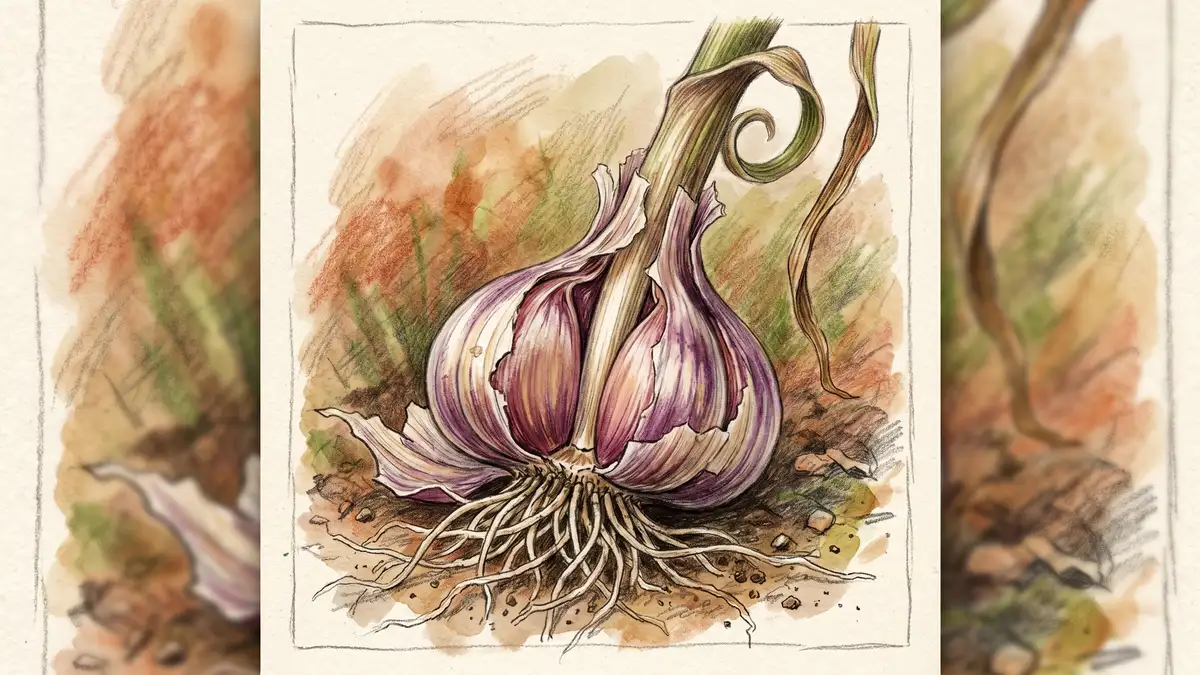
Mulching for overwintering: the step most growers underestimate
In Zones 3 to 6, mulching is not optional. Frost-heaving (the upward displacement of soil through repeated freeze-thaw cycles) will push shallowly-planted cloves out of the bed and kill them. Use straw (not hay, which has weed seeds) or shredded leaves at the depths in the table above.
Timing matters more than depth. Apply mulch after the soil has cooled but before it freezes solid, typically 2 to 4 weeks after planting once night temperatures are consistently in the upper 20s to low 30s F. Mulching too early traps heat and triggers premature top growth that gets killed by hard frost. Simple Garden Life's mulching guide walks through the timing math zone by zone.
In spring, pull mulch back 1 to 2 inches from the plant base as garlic shoots emerge to let the soil warm and prevent fungal disease. Keep a 2 to 3 inch layer through the season for weed suppression and moisture retention.
Planting and growing: a working plan
Source seed cloves (late summer)
Order hardneck cultivars from a regional grower in August or September: Music, German Extra Hardy, Chesnok Red, and Russian Red are reliable choices for Zones 3 to 7. Budget about $0.25 to $0.40 per clove. One pound of seed cloves contains 40 to 50 cloves and yields 6 to 8 pounds at harvest.
Prep the bed (2 to 3 weeks before planting)
Choose a bed with full sun and well-drained soil at pH 6.0 to 7.0. Avoid any bed where alliums (garlic, onion, leek) grew in the last 3 years. Work in 2 to 3 inches of compost. If you have time, plant a buckwheat cover crop in late August and turn it in 2 weeks before garlic planting.
Plant cloves and integrate companions (October, zone-dependent)
Break heads into individual cloves the day before planting. Plant pointed-end-up at 2 to 3 inches deep, 4 to 6 inches apart, rows 10 to 12 inches apart. If interplanting with strawberries or perennial brassicas, position those 6 inches from garlic rows. Water well after planting.
Mulch (2 to 4 weeks after planting)
Once soil has cooled to the low 30s F at night, apply 4 to 8 inches of straw mulch (zone-dependent, see table above). Use straw or shredded leaves, not hay or wood chips.
Spring intercropping (March to April)
Pull mulch back from emerging garlic shoots. Direct-seed lettuce, arugula, spinach, or beets between rows. Transplant brassica seedlings 6 inches from garlic rows. Cut and use scapes in June (this redirects energy into bulb growth).
Harvest (mid-July, zone-dependent)
Lower 3 to 5 leaves yellow and brown while upper leaves stay green. Loosen soil with a fork and lift; don't pull by the stem. Cure in a shaded, ventilated space for 2 to 3 weeks before trimming roots and stems. Save the largest bulbs as next year's seed.
What to plant after garlic in summer
Garlic harvest in mid-July leaves you 60 to 90 days of growing season in most temperate zones. Don't waste it. Strong succession crops:
- Bush beans (60 to 70 day varieties). Quick-cycle protein crop. Allelopathic concerns are minimal once garlic has been harvested and most root exudates have decomposed (about 2 to 3 weeks after lifting).
- Late lettuce, arugula, mustard greens. Fall-cycle salad crops thrive in cooling soil.
- Buckwheat (Fagopyrum esculentum) cover crop. Fast-growing, suppresses weeds, attracts pollinators, builds soil organic matter. Plant immediately after harvest, mow before flowering, turn in 4 to 6 weeks later.
- Fall brassicas. Late summer transplants of broccoli, cabbage, or kale can mature for fall and even early winter harvest in mild zones.
For more on building healthy garden ecosystems through smart species pairing, see our broader companion planting guide. For deeper soil-building strategies before and after garlic, our soil and composting pillar covers cover cropping, organic amendment, and pH management.
Common mistakes that kill fall garlic
Planting too late. Cloves need 2 to 4 weeks to establish roots before deep freeze. Late planting means weak spring emergence or winter die-off.
Planting too shallow. 1 to 1.5 inches is not enough in cold climates. Frost-heave will lift cloves out of the bed. Plant 2 to 3 inches deep minimum.
Replanting in old allium ground. White rot, fusarium, and onion maggot pressure builds in beds where alliums have grown recently. Rotate on a 3 to 4 year cycle minimum.
Skipping the mulch. Already covered. In Zones 3 to 6, this is non-negotiable.
Putting beans and peas next to garlic. The single most preventable companion-planting mistake. Plan rotations so legumes follow garlic by at least 2 years.
Overspacing companion plants too tight. 6 inches between garlic and brassica or strawberry is the sweet spot; closer than 4 inches and competition outweighs the pest-deterrent benefit. Closer to tomato companions works similarly: respect both root zones.
If you remember six things
(1) Plant in fall, 4 to 6 weeks before hard frost, hardneck for Zones 3 to 6. (2) Mulch heavily after soil cools but before it freezes solid. (3) Strawberries, brassicas, beets, carrots, lettuce: yes. Beans, peas, asparagus, sage: no. (4) Cut scapes in June to redirect energy into bulb growth. (5) Harvest when lower 3 to 5 leaves yellow, cure 2 to 3 weeks before storage. (6) Save your largest bulbs for next year's seed; your seed cost drops to zero by year 2.
Get the Weekly Dig
One practical permaculture guide a week, written for gardeners who do this on weekends: companion pairings that hold up under scrutiny, and the ones that do not. Free, no spam, unsubscribe any time.
Join the Weekly DigFrequently asked questions
What can I plant with garlic in the fall?
Strong fall companions for garlic include strawberries (perennial, plant once and benefit for years), kale and overwintering brassicas in mild zones, spinach and mustard greens (overwinter in Zones 7 to 9), and roses or fruit trees that benefit from garlic's pest-deterrent properties at their base. Plant the garlic at the same time as your perennial companions in October, then add spring-only intercrops like lettuce and beets the following March.
What should you not plant with garlic?
Avoid planting beans, peas, and any other legumes near garlic. Peer-reviewed research shows garlic root exudates inhibit nitrogen fixation in legume root nodules, effectively breaking the bacterial symbiosis legumes depend on. Also avoid asparagus (competes for shallow soil nutrients and may be inhibited by alliums), sage and parsley (mutual stunting reported in traditional sources). Plan a 2 to 3 year rotation gap before planting legumes in any bed where garlic grew.
Can you plant garlic with tomatoes?
Plant garlic in fall, harvest in July, then plant tomatoes in the same bed for the next season. Concurrent planting can produce mixed results because garlic root exudates inhibit tomato growth at high concentrations. The post-harvest rotation is better: research shows garlic-conditioned soils actually improve pepper and tomato resistance to Phytophthora pathogens by 22 to 60 percent. A small amount of garlic at the base of established tomato plants for pest deterrence is fine; full intercropping isn't.
How deep should I plant garlic?
Plant cloves 2 to 3 inches deep, pointed-end-up. Shallower than 2 inches and frost-heave will push them out of the bed in Zones 3 to 6. Deeper than 3 inches and emergence is delayed in spring. In very cold zones (3 and below), some growers go to 4 inches with confidence that mulch will keep heave at bay.
How far apart should I plant garlic cloves?
4 to 6 inches apart in rows 10 to 12 inches apart. The 6-inch spacing produces the largest individual bulbs; tighter 4-inch spacing yields more bulbs per row at the cost of slightly smaller heads. For interplanting with companions, position brassica seedlings, lettuce, or strawberries about 6 inches from garlic rows to minimize root competition.
When do I harvest fall-planted garlic?
Mid-July in most temperate zones, when the lower 3 to 5 leaves have yellowed and browned but the upper leaves are still green. The exact window depends on zone and variety: Zone 3 to 4 hardnecks finish around late July, Zone 5 to 6 in mid-July, Zone 7 to 8 in late June or early July. Lift with a fork rather than pulling, cure in a shaded ventilated space for 2 to 3 weeks before trimming and storing.
What can I plant after garlic harvest?
Bush beans (60 to 70 day varieties) work well once garlic root exudates have decomposed (about 2 to 3 weeks after lifting). Late lettuce, arugula, fall brassicas, and Japanese mustard greens fill the cool-season window. For soil building, buckwheat as a fast cover crop is excellent: plant immediately after garlic, mow before flowering, turn in for green manure 4 to 6 weeks later.
Resources
- Gardening Know How: Planting Garlic by Zone
- Penn State Extension: Garlic Production
- Cornell Cooperative Extension Tioga: Growing Garlic
- NC State Extension Burke: Growing Garlic
- Iowa State Extension: Growing Garlic in the Home Garden
- University of Minnesota Extension: Growing Garlic
- Oregon State Extension: Garlic Production Guide
- University of Illinois Extension: Growing Garlic Information Sheet (PDF)
- PubMed: Garlic interplanting reduces spider mites on strawberries (peer-reviewed)
- PMC: Garlic root exudates and soil microbiome dynamics
- Savvy Gardening: Garlic Spacing Trial
- 104 Homestead: Winter mulch depth for garlic by zone
- Sustainable Market Farming: Garlic almanac and planting time