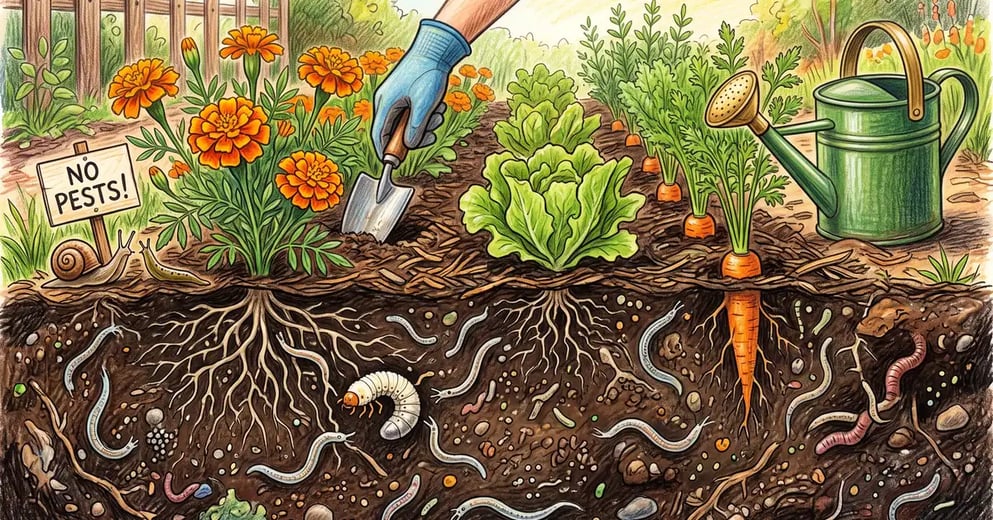

What Are Beneficial Nematodes, and How Do They Fit With Companion Planting?
Most gardeners meet the word "nematode" as a villain, the microscopic worm that leaves knobbly galls on tomato roots. But the soil holds two very different casts of nematodes. Beneficial nematodes are microscopic roundworms in the genera Steinernema and Heterorhabditis that hunt and kill soil-dwelling insect pests. Add them to moist soil and they go to work on the grubs and larvae chewing your roots, without touching your plants, your worms, or your family.
"Companion planting for beneficial nematodes" is really two complementary tactics under one roof. First, you can introduce predatory nematodes as a living pest control. Second, you can grow companion and cover crops, above all French marigold (Tagetes patula), that suppress the harmful plant-parasitic nematodes. Together they turn pest control into an ecosystem job rather than a spray. This guide covers both, plus how to apply nematodes correctly so they actually survive.
Key Takeaway
Beneficial nematodes are a predator you add; marigolds and cover crops are a defense you grow. Beneficial nematodes attack insect larvae like grubs and weevils, while French marigolds grown as a full-season crop suppress root-knot and lesion nematodes. Neither harms your plants, and both fit a biodiverse, low-spray garden.
How Do Beneficial Nematodes Actually Kill Pests?
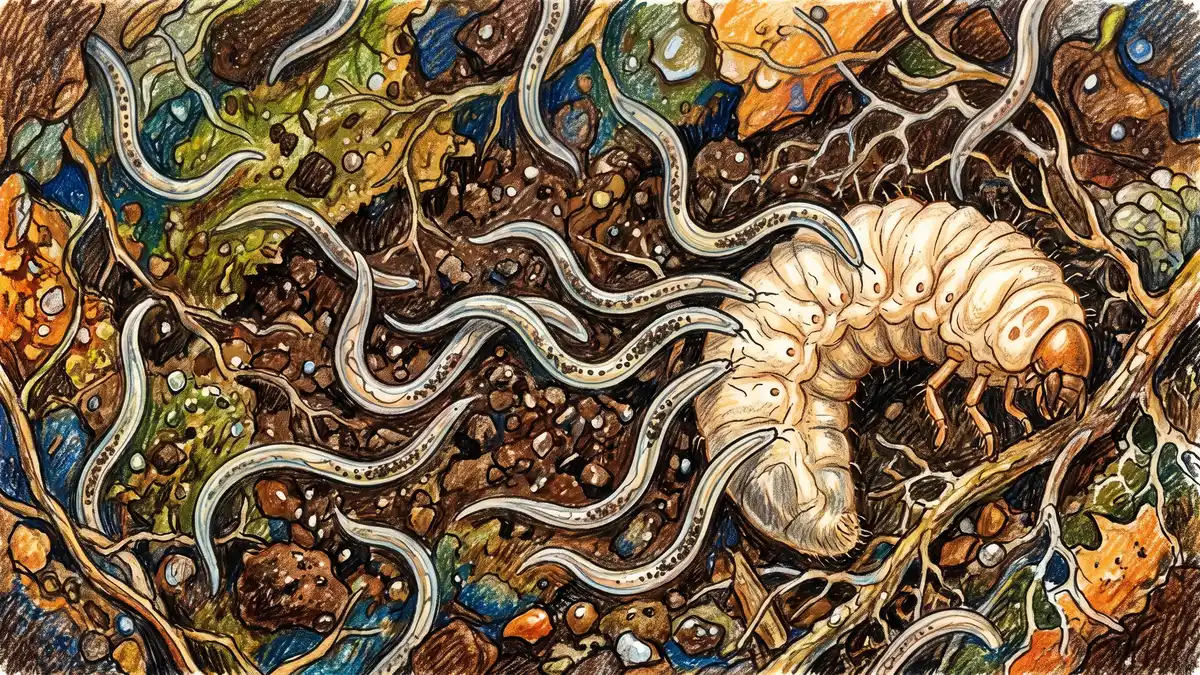
The mechanism is a partnership, and it is genuinely clever. Beneficial nematodes carry symbiotic bacteria inside their guts, Xenorhabdus for Steinernema and Photorhabdus for Heterorhabditis. The nematode's infective juvenile stage enters a pest through natural openings, then releases those bacteria. The bacteria multiply fast, producing toxins that kill the host, usually within 24 to 48 hours, and turn its insides into food. The nematodes feed, reproduce, and a new generation of hunters spreads out into the soil, a cycle documented across peer-reviewed nematology research.
Different species hunt differently, which matters when you match a product to a pest. Steinernema carpocapsae is an "ambusher," staying near the surface to catch mobile pests like cutworms, sod webworms, and flea larvae. Heterorhabditis bacteriophora is a "cruiser," actively moving deeper to find slow, sedentary targets like grubs. Many products combine both, and the University of Maryland Extension's guide to beneficial nematodes is a good starting point for picking the right one.
Which Garden Pests Do Beneficial Nematodes Control?
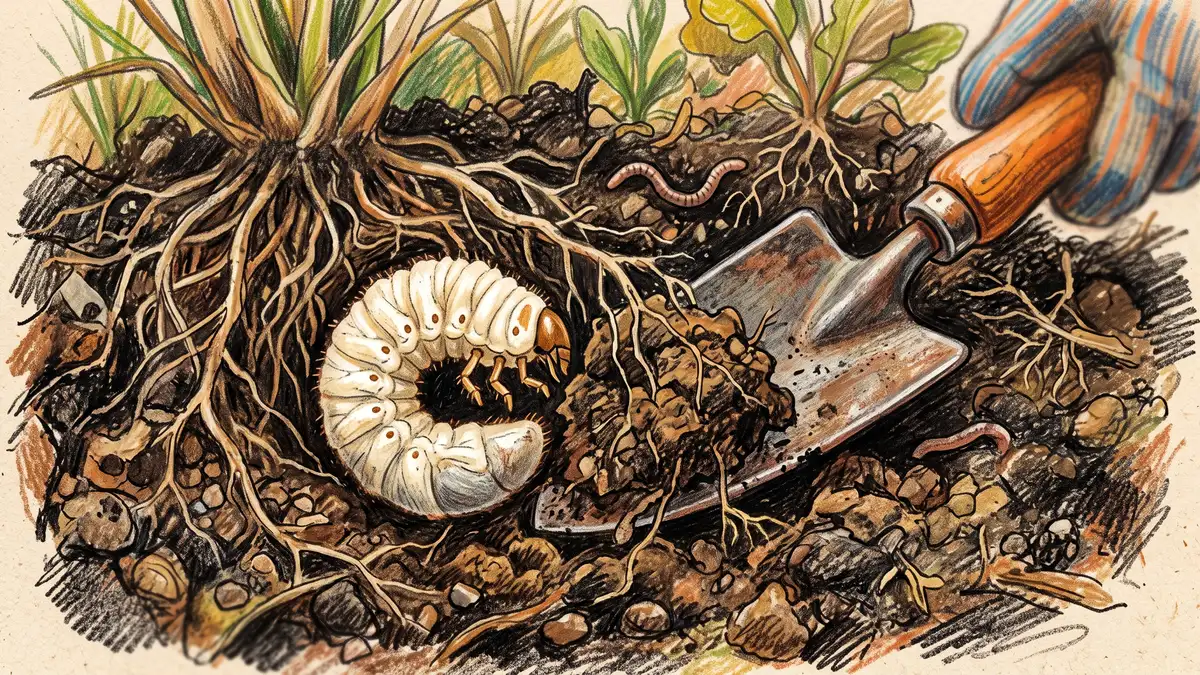
Beneficial nematodes shine against pests that spend part of their life in the soil. That includes Japanese beetle and chafer grubs, black vine weevil larvae, cutworms, sod webworms, fungus gnat larvae, and even flea larvae. Cornell University's IPM program reports that products based on Heterorhabditis bacteriophora can deliver more than 70% control of white grubs when applied at proper rates and watered in.
| Nematode | Style | Best For |
| Heterorhabditis bacteriophora | Cruiser (deep) | Grubs, root weevils |
| Steinernema carpocapsae | Ambusher (surface) | Cutworms, webworms, fleas |
| Steinernema feltiae | Intermediate | Fungus gnats, some flies |
Sources:

How and When Do You Apply Beneficial Nematodes?
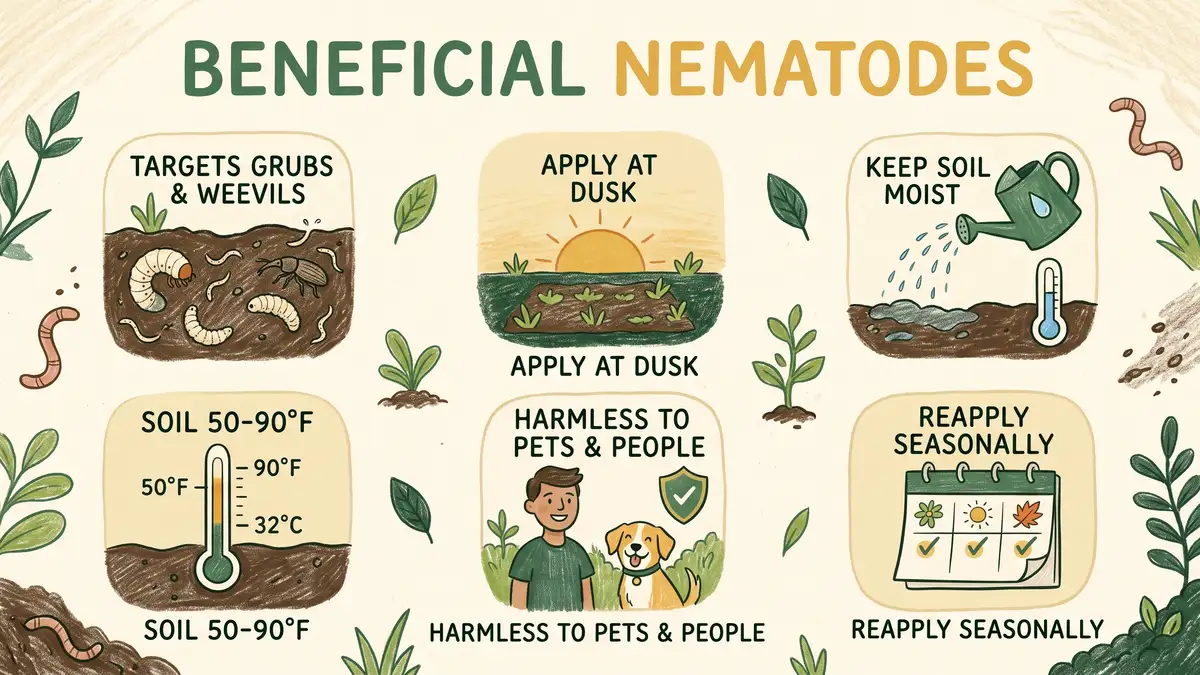
Beneficial nematodes are living animals, so timing and moisture make or break results. They are sold refrigerated on a sponge or gel; mix them with water and apply through a watering can or sprayer. Because ultraviolet light kills them quickly, apply in the evening or on an overcast day, and keep the soil damp before and after.
Wait for the right soil temperature
Aim for soil roughly 50 to 90°F (10 to 32°C). Cornell notes performance improves once soil is above about 68°F (20°C). A cheap soil thermometer in the root zone takes the guesswork out.
Pre-water the soil
Moisten the bed first. Nematodes travel in a film of water; dry soil strands them. Apply in the evening to dodge UV light.
Drench them in with plenty of water
Cornell AgriTech trials applied nematodes in the equivalent of 30 gallons of water per 1,000 square feet (about 1,150 L per 93 m²) to carry them into the root zone evenly. Water again afterward.
Keep it moist and reapply if needed
Keep the area damp for about two weeks. Populations decline over time, so reapply for heavy infestations or as a seasonal treatment against recurring pests like grubs.
Common Mistake to Avoid
The fastest way to waste money on beneficial nematodes is to apply them to hot, dry soil in the middle of a sunny day. Heat and UV light kill the infective juveniles within minutes to hours. Also check the expiration date and refrigerate them until use; these are live organisms with a short shelf life, not a shelf-stable chemical.
Where Does Companion Planting Come In?

Beneficial nematodes handle insect pests, but the notorious plant-parasitic nematodes, especially root-knot (Meloidogyne) and lesion (Pratylenchus) nematodes, need a different approach. This is where the right plants earn their keep. The University of Florida IFAS reports that marigolds can suppress 14 genera of plant-parasitic nematodes, driven largely by a compound called alpha-terthienyl in their roots. For deeper detail on the plant, see our guide to companion planting with marigolds.
Here is the catch most articles skip: marigolds work best grown as a full-season cover crop on the infested bed, not as a few plants tucked between tomatoes. A dense stand for a season starves and poisons the nematode population before you plant your main crop. Other proven options include sunn hemp (Crotalaria juncea) and biofumigant mustards, both covered in UF/IFAS guidance on managing nematodes with cover crops. Weaving these into a rotation is classic companion planting logic applied below ground.
Why This Works: Functional Biodiversity
Both tactics express one permaculture principle: a diverse, biologically active soil regulates its own pests. Predatory nematodes are part of a healthy soil food web, and nematode-suppressive plants add chemical and ecological pressure that no single spray can match. Instead of reacting to outbreaks, you stack functions so the garden holds pests in check on its own, the difference between fighting nature and partnering with it.
Frequently Asked Questions
What do beneficial nematodes kill?
Beneficial nematodes kill soil-dwelling insect pests, not plants. Common targets include Japanese beetle and chafer grubs, black vine weevil larvae, cutworms, sod webworms, fungus gnat larvae, and flea larvae. Different species specialize: Heterorhabditis bacteriophora is best for deep-dwelling grubs, while Steinernema carpocapsae ambushes surface pests like cutworms and fleas. They do not control adult flying insects or plant-parasitic nematodes such as root-knot nematode, so match the species to the life stage and pest you are actually seeing in the soil.
How do you apply beneficial nematodes?
Mix them with water and drench them into pre-moistened soil in the evening or on a cloudy day, since ultraviolet light kills them fast. Aim for soil temperatures around 50 to 90°F (10 to 32°C), with performance improving above about 68°F. Use plenty of water to carry them down to the root zone; Cornell trials used the equivalent of 30 gallons per 1,000 square feet. Keep the area damp for about two weeks afterward. Reapply for heavy infestations or as a seasonal treatment against recurring pests.
Are beneficial nematodes safe for pets and people?
Yes. Beneficial nematodes are specific to insects and pose minimal risk to plants, people, pets, earthworms, and most non-target arthropods, according to Cornell IPM. You do not need protective gear beyond ordinary garden sense, and there is no re-entry interval like there is with chemical pesticides. Children and pets can use the garden normally after application. This safety profile is a big part of why beneficial nematodes fit organic and permaculture gardens so well: they target pests precisely without collateral damage to the wider soil community.
Do marigolds really stop nematodes?
Yes, but with an important condition. French marigolds (Tagetes patula) release alpha-terthienyl from their roots, and UF/IFAS reports they can suppress 14 genera of plant-parasitic nematodes. The catch is that they work best grown as a dense, full-season cover crop on the affected bed, not as a handful of plants interplanted among vegetables for a few weeks. Grow a solid stand for a season, then follow with your susceptible crop. A few marigolds scattered in a bed look cheerful but give only limited nematode control.
Do beneficial nematodes kill root-knot nematodes?
No, and this is a common mix-up. Beneficial (entomopathogenic) nematodes target insects, not other nematodes, so they will not clear a root-knot nematode infestation. For plant-parasitic nematodes like root-knot (Meloidogyne) and lesion (Pratylenchus), your tools are suppressive cover crops such as marigolds and sunn hemp, crop rotation, resistant varieties, and building organic matter. Think of it as two separate jobs: add beneficial nematodes for insect grubs, and grow the right plants to manage the harmful, root-feeding nematodes.
How long do beneficial nematodes last in the soil?
It varies with moisture, temperature, and food supply. Under good conditions with available hosts, populations can persist and even reproduce for weeks to a few months, but numbers decline as prey runs out and as soil dries or cools. In practice, most gardeners treat them as a seasonal tool rather than a permanent fix, reapplying when a target pest reappears. Keeping soil consistently moist and rich in organic matter helps them survive longer, which ties back to overall soil health rather than a one-time application.
Get the Weekly Dig
One practical permaculture guide a week, written for gardeners who do this on weekends: companion pairings that hold up under scrutiny, and the ones that do not. Free, no spam, unsubscribe any time.
Join the Weekly DigResources
- University of Maryland Extension: Beneficial Nematodes
- Cornell University IPM: Heterorhabditis bacteriophora Fact Sheet
- Cornell AgriTech: Control of White Grubs in Turfgrass
- University of New Hampshire Extension: Sod Webworm Fact Sheet
- UF/IFAS: Cover Crops for Managing Root-Knot Nematodes (marigolds)
- UF/IFAS: Managing Nematodes and Soil Fertility with Sunn Hemp
- Clemson Extension: Biological Control Strategies in IPM
- PMC: Systematics and Phylogeny of Entomopathogenic Nematodes (peer-reviewed)