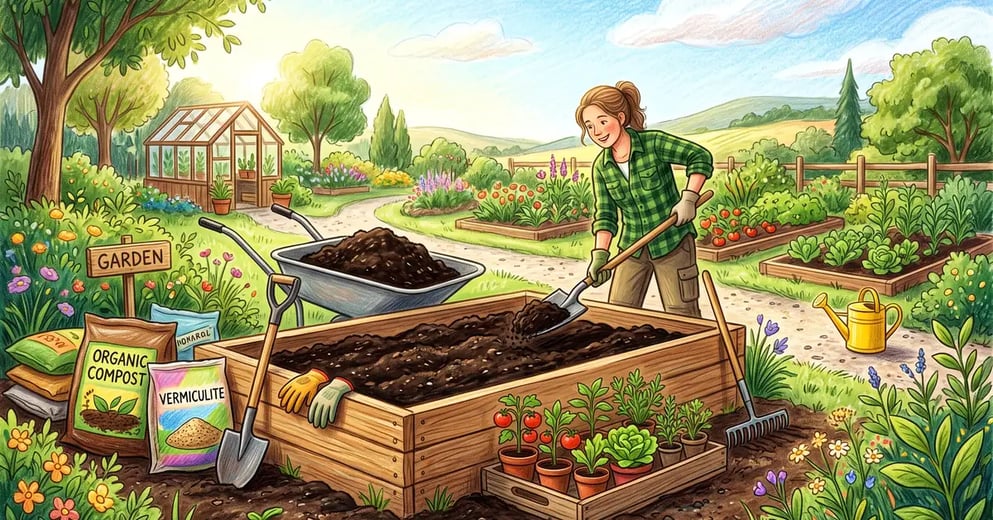

Here is the single most expensive mistake new raised-bed gardeners make: they build a beautiful bed, then fill it with the cheapest bagged "garden soil" or a scoop of native clay from the yard. A season later they are wondering why the soil has turned to concrete, water pools on top, and their vegetables sulk. The bed was never the problem. The fill was. when to reach for perlite instead of vermiculite which bagged product goes where
The short answer
The best soil for a raised garden bed is roughly half good compost and half a bulking material that keeps the mix open, such as quality topsoil, coconut coir or coarse vermiculite. Avoid straight bagged garden soil, pure topsoil and potting mix on their own. Aim for pH 6.0 to 7.0 and top up with compost every spring.
The good news is that the best raised bed soil is not complicated, and the recipes come straight from university extension services and the Square Foot Gardening method. You are really engineering a growing medium that drains fast but stays moist, holds nutrients, sits at the right pH, and stays loose for years. This guide compares the four realistic options side by side, tells you exactly what to avoid, and shows you how to calculate how much you need. If you have not built the bed yet, start with our guide to choosing a raised bed; if it is already built and empty, our layered method for filling a raised bed covers the cheapest way to get depth.
What you'll learn:
- The properties that make a raised bed soil actually work
- Four soil options compared on cost, drainage, biology and effort
- The two mixes worth making yourself, with exact ratios
- What never to fill a raised bed with, and why
- How to calculate volume and fill a deep bed affordably
Key Takeaway
A great raised bed mix balances drainage, moisture retention, and organic matter. The two reliable recipes are Mel's Mix (equal parts compost, coir or peat, and coarse vermiculite) and a topsoil-compost blend (roughly 50 to 70 percent quality topsoil to 30 to 50 percent compost). Never fill a bed with straight bagged garden soil, native clay, or potting mix alone.
What Makes the Perfect Raised Bed Soil?
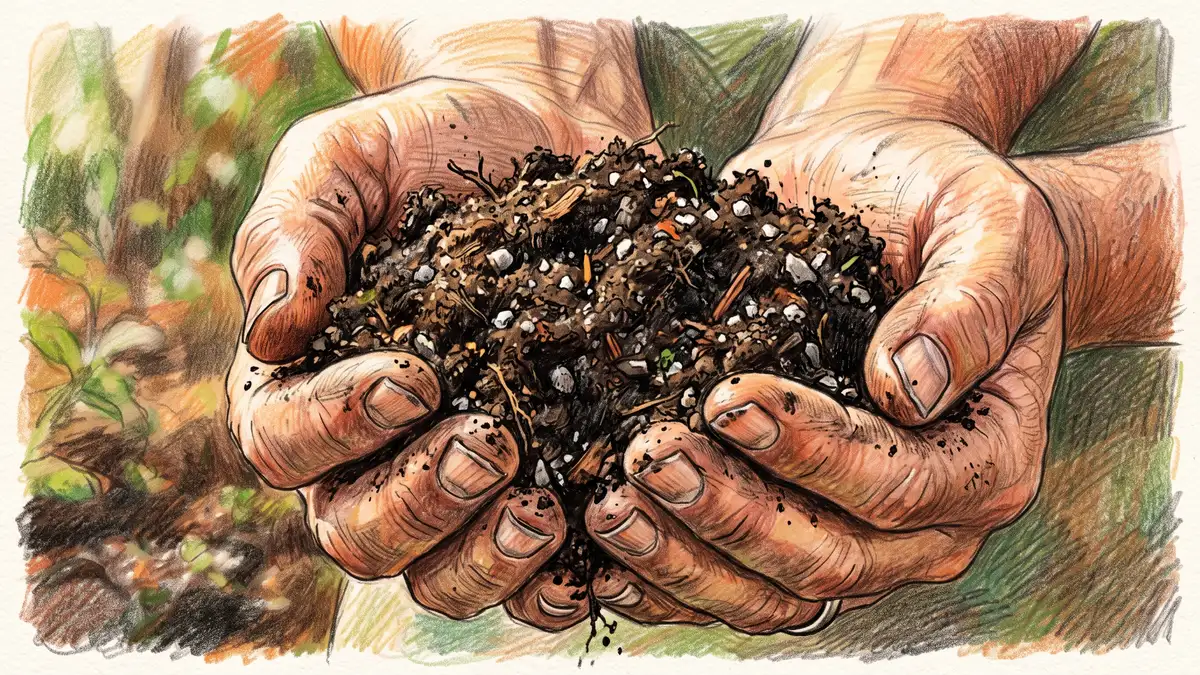
A raised bed soil has to do two opposite things at once. Oregon State University Extension stresses that the mix must be "light" and "well-drained," yet it also has to hold enough moisture to get plants through hot spells, because raised beds warm and dry out faster than ground-level soil. That balance comes from structure: stable crumbs, plenty of air pockets, and organic matter that acts like a sponge.
The other targets are simple. Aim for a pH of 6.0 to 7.0, which suits most vegetables, a loose and crumbly texture you can push your hand into, and organic matter you build toward 3 to 5 percent over the years, per Colorado State University Extension. Get those right and you have living, workable soil, the foundation of any healthy soil health plan.
The Four Raised Bed Soil Options, Compared
There are only four realistic ways to fill a raised bed, and they trade off against each other on cost, effort and how good the soil is in year three. The table below is the honest version. Note that the cheapest option per cubic foot is also the one that takes the longest to become good soil, and the most convenient option is the most expensive by a wide margin.
| Option | Rough cost | Effort | Best for |
|---|---|---|---|
| Mel's Mix compost, coir, vermiculite |
High per cu ft | Mixing required | Small, intensively planted beds under 12 inches deep where you want perfect texture from day one |
| Extension blend topsoil plus compost |
Low to medium in bulk | Bulk delivery, some mixing | Beds over about 16 cubic feet, where buying by the cubic yard is dramatically cheaper than bags |
| Bagged raised bed mix ready to use |
Highest | None, open and pour | One small bed, a balcony, or topping up an existing bed without ordering a bulk load |
| Layered fill wood base, mix on top |
Lowest | Highest, sourcing material | Deep beds of 18 inches or more, where filling entirely with purchased mix is not affordable |
Two of those you make yourself and they are covered in detail below. The other two are worth understanding before you spend money, so here is the honest case for each.
Mix 1: Mel's Mix, the Classic Recipe
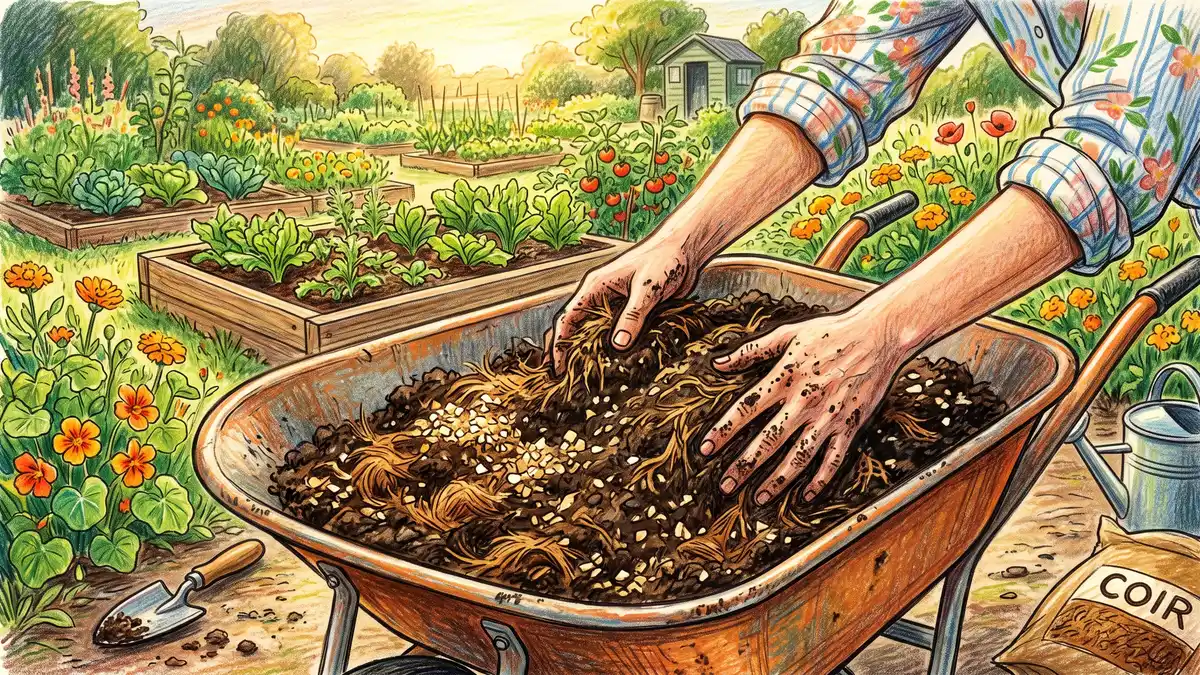
The most famous raised bed recipe is deliberately soilless. Mel Bartholomew's Square Foot Gardening method popularized Mel's Mix: one-third blended compost, one-third peat moss or coconut coir, and one-third coarse vermiculite, by volume. The Square Foot Gardening Foundation describes it as pH neutral, nutrient rich, friable, and well-draining without drying out.
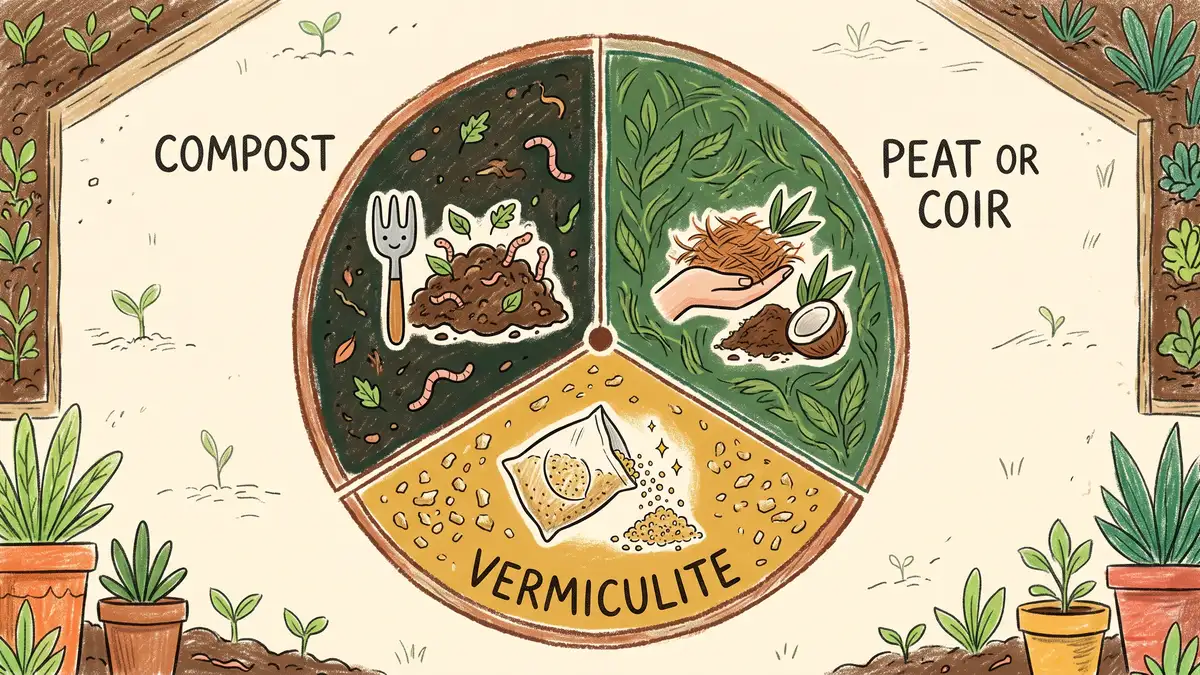
Each ingredient earns its place. Compost supplies nutrients and biology, and the recipe specifically calls for a blend of several compost sources so you get a broad spectrum of nutrients rather than the gaps of a single type. Coconut coir (a peat substitute many gardeners now prefer for sustainability) holds water and keeps the mix open. Coarse vermiculite is the clever part: it does not decompose, so it provides lasting structure and, thanks to its layered mineral form, a real ability to hold and release nutrients like potassium and magnesium. If you make your own compost, you can supply a third of this mix for free.
Mix 2: The Extension Blend, Topsoil and Compost
For bigger or cheaper beds, extension services favor a mineral-soil blend. Mel's Mix is superb but pricey at scale, so most university guides recommend combining good-quality topsoil with a generous but moderate amount of compost. The exact ratio varies a little by source, but they cluster tightly.
| Source | Recommended Blend |
| Mel's Mix (Square Foot Gardening) | 1/3 compost, 1/3 coir/peat, 1/3 vermiculite |
| UNH Extension | 70% topsoil, 30% compost |
| UMN Extension | 1/2 to 2/3 topsoil, 1/3 to 1/2 compost |
| UMD Extension | 1:1 to 1:2 compost to topsoil |
Sources:
The practical rule: aim for roughly half to two-thirds quality topsoil (look for a loam or sandy loam, not something very sandy or heavy with clay) and the rest good compost. If your topsoil is clay-heavy, mix in some coarse sand to loosen it. This gives you a stable, moisture-buffering bed that costs far less to fill than an all-purpose soilless mix.
Why This Works: Feeding the Soil Food Web
Compost is not just fertilizer; it is an inoculant that seeds your bed with the bacteria, fungi, and microscopic life that cycle nutrients to your plants. That is why every recipe leans on it. In permaculture terms, you are building a living soil that feeds itself, the same principle behind no-dig gardening: keep the soil alive and it does the work for you.
What Should You Never Fill a Raised Bed With?
Some tempting shortcuts will quietly wreck your season. Extension sources are consistent about the materials that fail in a raised bed, and it usually comes down to drainage and cost.
Common Mistake to Avoid
Do not fill a bed with straight bagged "garden soil," pure native clay, or potting mix alone. Bagged garden soil and clay compact and drain poorly, turning dense and crusty. Potting mix is designed for containers, so it is expensive by the cubic yard and dries out far too fast in a big bed. Topsoil on its own lacks the organic matter and structure vegetables need. The fix is always the same: blend a mineral or bulk component with plenty of compost.
When Is Bagged Raised Bed Mix Worth It?
Bagged mix is the most expensive way to fill a bed per cubic foot, and for one small bed it is still the right call. A 4 by 8 foot bed filled 6 inches deep needs 16 cubic feet, which is a lot of bags but not an unreasonable number. The same bed filled to 18 inches needs 48 cubic feet, and at that point you are carrying dozens of bags from a car boot for more money than a bulk delivery would cost.
The other honest use for bagged mix is quality control. Bulk topsoil varies enormously by supplier, and you do not really know what you are getting until it is in the bed. A bagged raised bed mix is a known quantity. If you have had a bad bulk delivery before, or you are filling a bed you intend to plant immediately, paying the premium buys you predictability.
Espoma Organic Raised Bed Mix
A ready-to-use organic mix with no synthetic fertiliser, sold in single cubic-foot bags.
My take: the safe default when you want a known quantity rather than a mystery bulk load. It is expensive by the cubic foot, so use it for one small bed, for the top layer of a deeper bed, or for annual topping up. Do not try to fill an 18 inch bed with it unless money is genuinely not the constraint.
Back to the Roots Organic Coir, 51 Quart Expanding Block
Compressed coconut coir that expands to roughly 51 quarts once soaked.
My take: this is the peat substitute in Mel's Mix and the cheapest way to buy the moisture-holding third of that recipe. One block goes a long way. Soak it in a wheelbarrow rather than a bucket, because it expands more than you expect, and check whether the product is buffered if you are planting straight into it.
Brut Worm Farms Organic Worm Castings
Pure worm castings, sold by the bag as a soil amendment rather than a bulk fill.
My take: not a fill material and not a substitute for compost. This is the biology top-up. A few quarts worked into the top few inches at planting is the single cheapest way to improve a mediocre bulk mix. If your budget only stretches to one amendment, make it this one rather than a bagged fertiliser.
Rapitest Soil Test Kit
A basic capsule-based kit covering pH plus nitrogen, phosphorus and potassium.
My take: worth the small outlay before you start amending blind. The pH reading is the one that matters most here, because the 6.0 to 7.0 window decides whether the nutrients already in your bed are actually available to plants. It is not laboratory accurate, and for a serious problem you still want a proper extension soil test, but it will tell you whether you have a problem at all.
What About the Layered Fill?
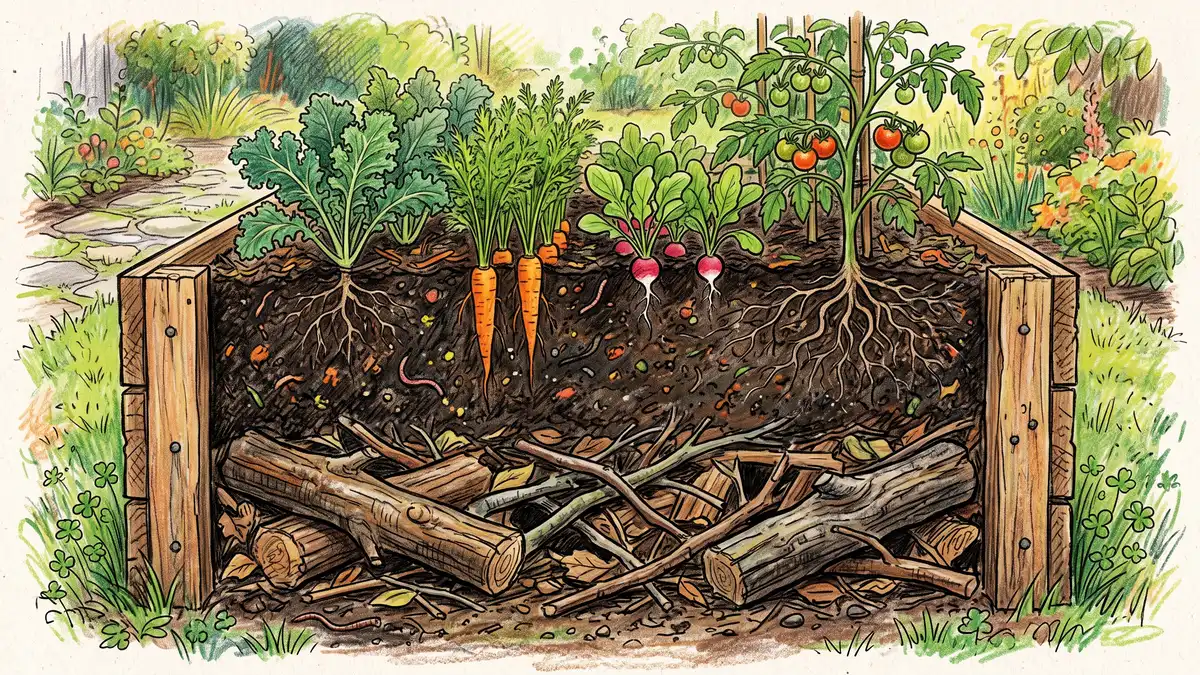
If your bed is deeper than about 18 inches, filling it entirely with purchased mix is the expensive mistake. Roots do the overwhelming majority of their work in the top 8 to 12 inches. Below that, the bed mostly needs to hold moisture and slowly release fertility, and coarse woody material does that job for free.
The approach is covered in full in our guide to filling a raised bed, and the short version is: logs and branches at the base, rough or partly finished compost above that, then your good mix in the top 8 to 12 inches. It cuts the purchased volume by roughly two thirds on a deep bed, and by year three the decomposed core is better soil than anything you could have bought. The trade-off is settling, which is significant in year one and needs topping up.
How Much Soil Do You Need?
The math is quick, and it saves you money and second trips. Multiply length by width by depth, all in feet, to get cubic feet. Bulk soil is sold by the cubic yard, and there are 27 cubic feet in a cubic yard, so divide by 27 to convert.
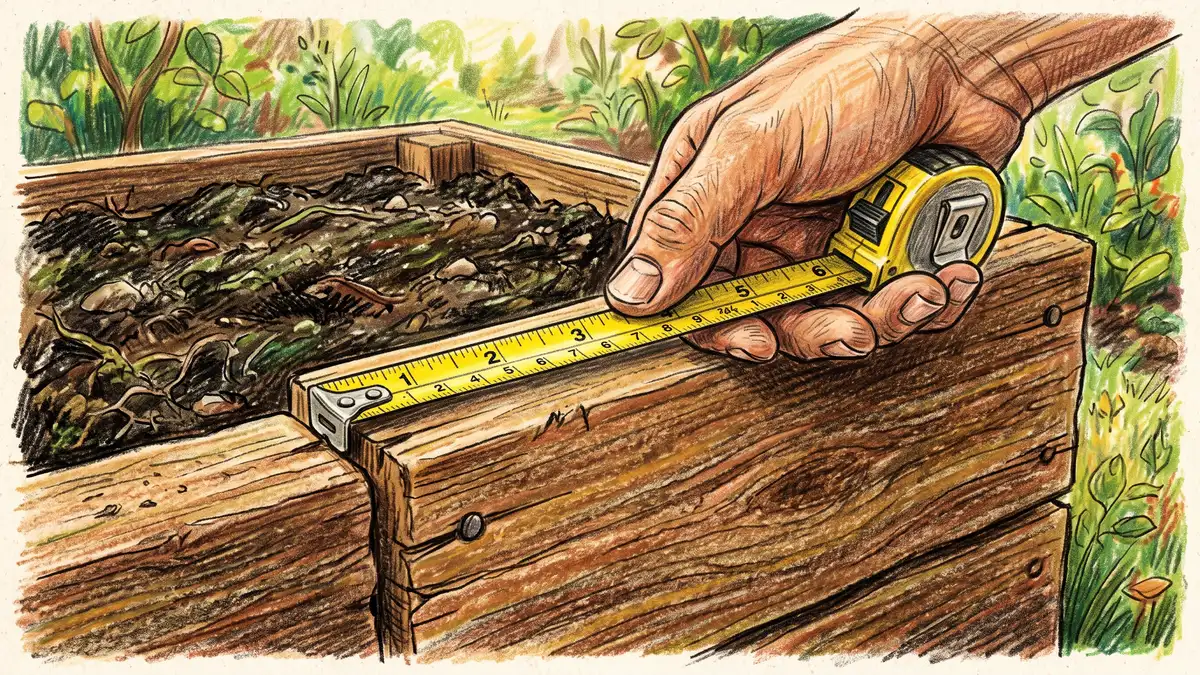
Measure in feet
Take length, width, and the fill depth. Convert inches to feet by dividing by 12, so a 6-inch depth is 0.5 feet and 12 inches is 1 foot.
Multiply for cubic feet
A 4-by-8-foot bed filled 6 inches deep is 4 x 8 x 0.5 = 16 cubic feet. Filled a full 12 inches deep, it is 32 cubic feet.
Convert to cubic yards
Divide cubic feet by 27. That 16 cubic feet is about 0.6 cubic yards; the deeper 32 cubic feet is about 1.2 cubic yards. Order a little extra for settling.
For a single small bed, bagged material is fine, but for anything larger, buying bulk soil and compost by the cubic yard is dramatically cheaper. Moisten the mix as you fill, which the Utah State University guide notes reduces settling once the season starts.
Need the gear for this?
Metal, cedar or DIY: what each costs over ten years and where each one fails.
Compare raised bed kitsHow Do You Fill a Deep Bed Without Breaking the Bank?
Tall beds need a lot of soil, and you do not have to buy all of it. The University of Maryland notes that beds for fruiting crops may be up to 24 inches deep, which is a huge volume to fill with premium mix. The permaculture-friendly answer is to bulk out the bottom with coarse organic matter. Clemson's guide to hugelkultur describes layering logs, branches, and leaves in the base of a deep bed; as they slowly break down they add fertility and hold moisture, while cutting the amount of purchased soil you need for the top.
Reserve your good soil mix for the top 8 to 12 inches, where roots do most of their work, and use the woody, leafy material below. Just plan for settling: organic-rich fills sink as they decompose, and Texas A&M Extension points out that higher-organic beds need more frequent topping up. Add a fresh inch or two of compost each spring and your bed keeps its depth and its fertility, which pairs perfectly with intensive companion planting.
Frequently Asked Questions
What is the best soil for a raised garden bed?
Two recipes are proven and reliable. The first is Mel's Mix from Square Foot Gardening: equal parts by volume of blended compost, coconut coir or peat moss, and coarse vermiculite. It is light, holds moisture, drains well, and sits near neutral pH. The second, favored by university extension services for larger or budget-conscious beds, is a blend of quality topsoil with compost, roughly 50 to 70 percent topsoil to 30 to 50 percent compost. Both work well. Choose Mel's Mix for small, intensively planted beds, and the topsoil-compost blend when you need to fill more space affordably.
Can I just use bagged garden soil or topsoil to fill my raised bed?
It is not recommended on its own. Straight bagged "garden soil" and pure topsoil tend to compact in a raised bed, drain poorly, and lack the organic matter vegetables need, so plants struggle and the surface crusts over. Potting mix has the opposite problem: it is designed for containers, dries out too fast in a big bed, and is expensive by the cubic yard. The reliable approach is to blend. Combine topsoil or a bulk soil with generous compost, or use a full soilless recipe like Mel's Mix. The compost is what turns dead fill into living, productive soil.
How much soil do I need for a 4x8 raised bed?
Multiply length by width by depth in feet. A 4-by-8-foot bed filled to a 6-inch depth needs 4 x 8 x 0.5 = 16 cubic feet, which is about 0.6 cubic yards. Filled to a full 12 inches, it needs 32 cubic feet, or roughly 1.2 cubic yards, since there are 27 cubic feet in a cubic yard. Order a little extra to allow for settling as organic matter decomposes. For a bed this size, buying bulk soil and compost by the cubic yard is far cheaper than dozens of individual bags.
Should I use peat moss or coconut coir?
Both hold moisture and keep the mix open, so either works in a raised bed recipe. The difference is largely environmental: peat moss is harvested from slow-forming peat bogs, so many gardeners choose coconut coir as a more renewable substitute, and the Square Foot Gardening Foundation explicitly allows coir in place of peat in Mel's Mix. One practical note with coir: its pH and salt content can vary by product, so buffered or pre-washed coir is worth seeking out. Peat is slightly acidic, which is usually offset by the compost and vermiculite in the mix, keeping the overall blend close to neutral.
Is bagged raised bed soil worth buying?
For one small bed, yes. For a big or deep bed, no. Bagged raised bed mix is the most expensive option per cubic foot, but it is a known quantity and requires no mixing, which makes it sensible for a single 4 by 8 foot bed at shallow depth, for a balcony planter, or for the top layer of a deeper bed. Once you are past roughly 30 cubic feet, bulk topsoil and compost delivered by the cubic yard costs a fraction of the same volume in bags. A reasonable compromise on a deep bed is bulk material below and a bagged mix in the top few inches where the roots are.
What is the difference between raised bed soil and garden soil?
Bagged products labelled "garden soil" are formulated to be dug into existing ground, not to stand alone. They are heavy, they compact under their own weight in a contained bed, and they drain poorly once they settle. Raised bed mixes are lighter and hold more air, usually because they contain a bulking material such as bark fines, coir or vermiculite alongside the compost. Potting mix sits at the other extreme: it is built for containers, so it drains very fast and dries out too quickly in the volume of a full bed. If you only remember one thing, it is that a raised bed needs a blend, and compost is the component that does the most work.
How often do I need to top up raised bed soil?
Plan on adding material every year. Organic matter breaks down over time, especially in the warm, moist conditions of a productive bed, so the soil level gradually sinks. Texas A&M Extension notes that mixes higher in organic matter need topping up more often. The easy fix is to spread a fresh inch or two of compost over the bed each spring, which restores depth, replaces nutrients, and keeps the soil biology fed. This annual habit is far less work than rebuilding a bed, and it steadily improves your soil toward that 3 to 5 percent organic matter sweet spot over the years.
Get the Weekly Dig
One practical permaculture guide a week, written for gardeners who do this on weekends: building living soil without buying it in bags. Free, no spam, unsubscribe any time.
Join the Weekly DigResources
- Square Foot Gardening Foundation — Mel's Mix Resources
- University of Minnesota Extension — Raised Bed Gardens
- University of Maryland Extension — Soil to Fill Raised Beds
- University of New Hampshire Extension — Raised Beds for Small-Space Gardening
- Oregon State University Extension — Raised Bed Gardening
- Colorado State University Extension — Soil Management and Fertilization
- Texas A&M AgriLife Extension — A Raised Bed Garden
- Clemson HGIC — Hugelkultur Gardening